Yeast Beta Glucan Guide for Functional Food Brands
Yeast Beta-Glucan Yangge Biotech supplies high-quality Yeast Beta-Glucan (β-1,3/1,6-glucan) derived from Saccharomyces cerevisiae, suitable for dietary supplements, functional foods, beverages, and nutraceutical formulations. We provide reliable bulk supply, consistent product specifications, COA and supporting documentation, sample support, and customized packaging solutions to meet your formulation and sourcing requirements. For product specifications, samples, and bulk pricing, contact Yangge Biotech today at info@yanggebiotech.com.
Yeast beta-glucan represents a transformative opportunity for functional food brands seeking to develop immune-supporting products that resonate with today's health-conscious consumers. Derived from the cell walls of Saccharomyces cerevisiae, this bioactive polysaccharide offers a unique β-1,3/1,6 structural configuration that distinguishes it from cereal-based alternatives.
For procurement managers and R&D engineers in the dietary supplement and pet food industries, understanding the nuances of this ingredient is essential to creating products that deliver measurable health benefits while meeting stringent quality standards. This guide walks through the science, sourcing strategies, and formulation considerations that matter most when selecting yeast beta-glucan for your product pipeline.
Understanding Yeast Beta Glucan: Composition, Benefits, and Mechanisms
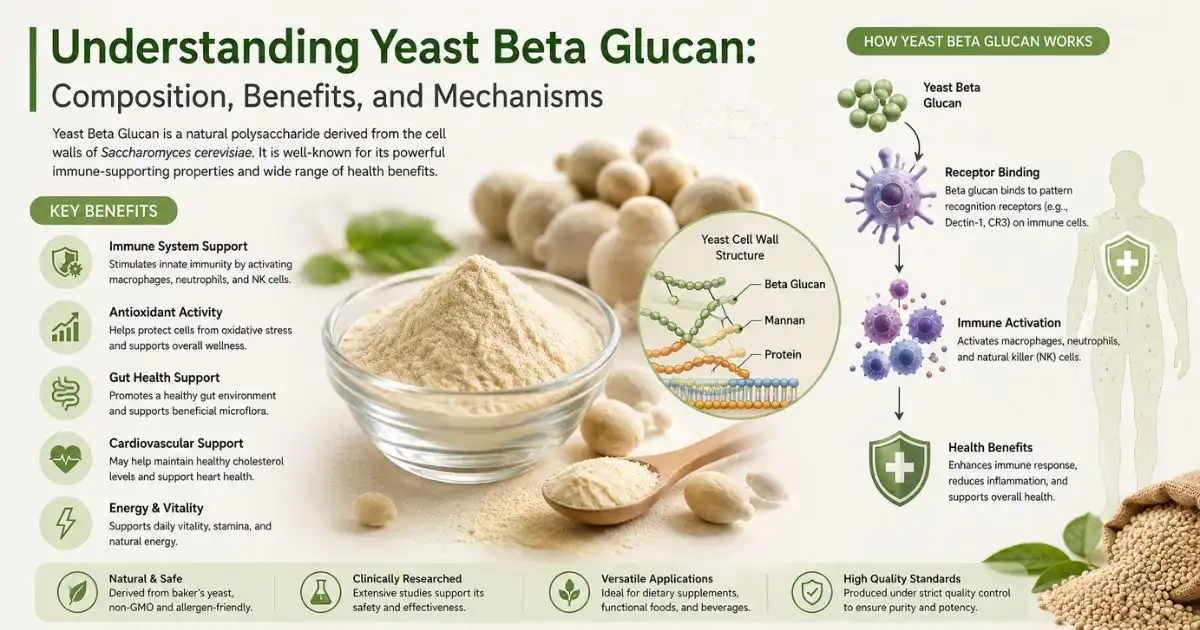
Through a multi-step processing process that removes proteins, lipids, and other cell waste, Yeast Beta-glucan, a complex polysaccharide, is removed from the cell walls of baker's yeast. This element is very useful because it has a special structure called β-1,3/1,6-D-glucan linkage. This structure is a triple-helix molecular arrangement that turns on the body's natural immune system without making inflammation worse. Because it is so specific, it can change the way biological responses work by getting immunity cells like macrophages and dendritic cells ready to fight by connecting to Dectin-1 receptors.
Key Bioactive Mechanisms
Yeast-derived polysaccharides can change the immune system because they are recognized by pattern recognition receptors in lymphoid tissue in the gut. When eaten, these molecules associate with Peyer's patches in the small intestine, which increases the release of cytokines and phagocytic activity. Adults who take 250–500 mg daily have measurable improvements in their resistance to upper respiratory tract infections and their recovery times. In addition to improving defense, study shows that it may also help lower cholesterol, speed up the healing of wounds, and protect against oxidative stress through antioxidants.
Structural Differentiation from Cereal Sources
Unlike oat or barley beta-glucans, which have β-1,3/1,4 links that are good for heart health, the yeast variant's branched structure is better at activating the immune system. This difference is very important for presenting products and making claims about their effectiveness. Oat beta-glucans are great as soluble fiber for lowering cholesterol, but yeast-derived material works on immune cell priming and pathogen defense mechanisms, so they can't be used together in the same way.
Comparing Yeast Beta Glucan to Other Immunomodulatory Ingredients
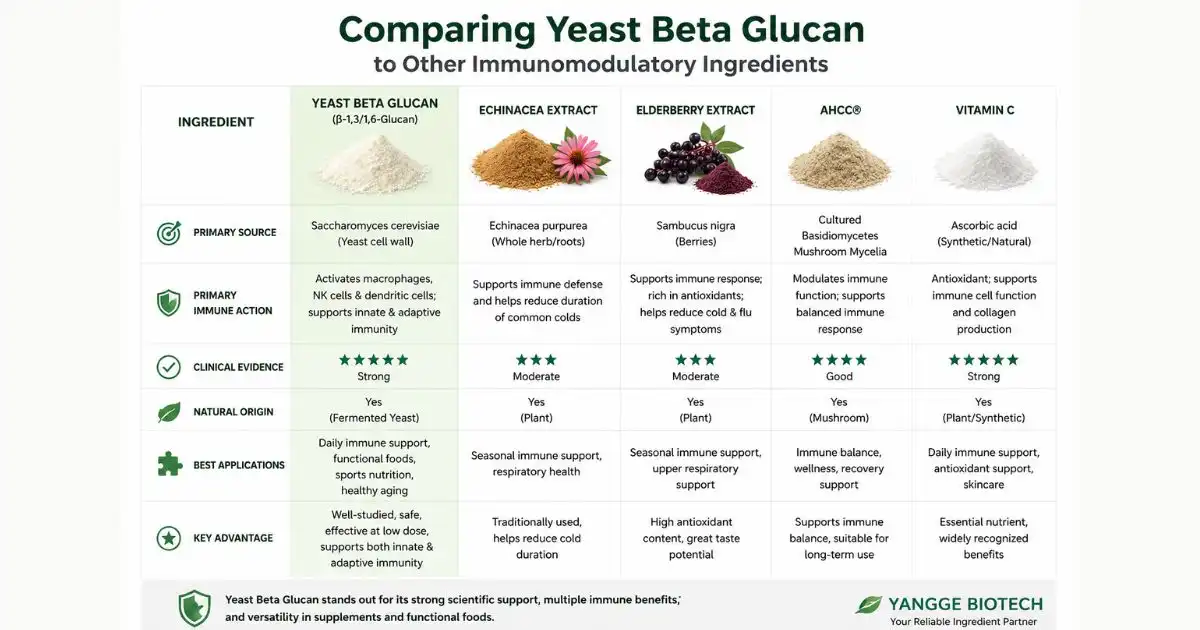
To find the best immune-boosting ingredient, you have to look at a number of factors, including proof that it works, how stable it is during processing, how well it is accepted by regulators, and how customers feel about it. The following comparison shows how Yeast Beta-glucan compares to other popular types:
| Ingredient | Primary Mechanism | Stability Profile | Typical Dosage | Key Limitation |
|---|---|---|---|---|
| Yeast Beta-glucan | Activation of the Dectin-1 receptor | Heat-resistant up to 200°C, pH 3–9 | 250 to 500 mg per day | Needs enzymatic assay confirmation |
| Mushroom Beta-glucan | Like immune priming | Not too stable with heat | 300 to 1000 mg per day | Variable purity; problems with source accuracy |
| Vitamin C | Antioxidant; help for cofactors | Breaks down in heat and light | 500 to 1000 mg per day | No direct engagement of defense cells |
| Echinacea Extract | Response mediated by alkylamide | Lacks resistance to oxidation | 300 to 500 mg per day | Debats about effectiveness; toxic potential |
This study shows that Yeast Beta-glucan has special benefits when it comes to heat processing, which is important for ultra-high-temperature drinks, baked goods, and molded pet foods. Because its molecules are stable, it can be used in high-shear mixing and pasteurization processes without losing any of its effectiveness. This is different from vitamins or plant products that break down in industrial settings.
Synergistic Formulation Opportunities
When yeast polysaccharides are mixed with nutrients that work well together, the total usefulness of the product goes up. Vitamin D increases the production of antimicrobial peptides and pairs well with zinc to help defense cells grow. Adding prebiotics like fructooligosaccharides to pet food causes a two-in-one effect: it boosts the immune system and improves the gut bacteria. These synergies let brands set their goods apart by making wellness claims that are backed up by science that involve more than one process.
Strategic Procurement of Yeast Beta Glucan for Functional Food Brands
To find high-purity Yeast Beta-glucan, you need to be careful about how the testing is done and how open the suppliers are. There are ongoing quality problems in the dietary supplement industry. Some products have a lot of alpha-glucan contamination or wrong total carbohydrate measurements that are shown as active beta-glucan content.
Critical Verification Protocols
For measuring Yeast Beta-glucan, purchasing managers must insist on Certificates of Analysis that list either the Megazyme Enzymatic Method or the USP assay. Standard HPLC carbohydrate panels can't tell the difference between starch (alpha-glucans) that isn't doing anything and β-1,3/1,6 structures that are. Material of the highest quality should have less than 3% alpha-glucan waste and more than 70% Yeast Beta-glucan purity. Yangge Biotech's Yeast Beta-glucan powder meets these strict standards and has been tested to be at least 70% pure. This ensures consistency in formulations and the accuracy of label claims.
Microbial limits (no Salmonella or E. coli), heavy metal thresholds (lead <1ppm or arsenic <1ppm), and organoleptic properties are some other ways to tell if something is of good quality. Any yeasty smell that stays after being cleaned means that the proteins were not cleaned well enough, which can cause allergies and regulatory problems. Suppliers who offer third-party lab retesting and PAH4 compliance (benzopyrene ≤10ppb) show they are committed to European legal standards, which is important for brands that want to sell their products in other countries.
Evaluating Supplier Capabilities
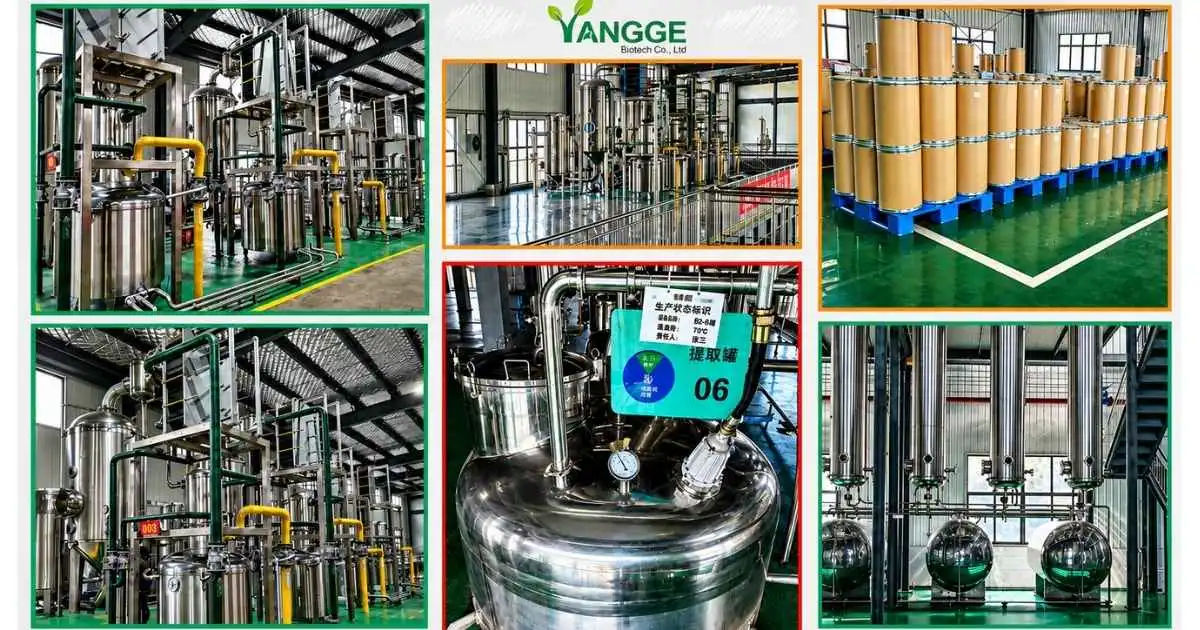
Along with analytical specifications, things like production scalability, minimum order flexibility, and technical support services should also be taken into account when choosing a supplier. Yangge keeps 50–100 kg of stock on hand, and the minimum order size is as low as 1 kg. This means that they can handle both small-scale R&D tests and large-scale business production. OEM packaging options make it possible for brands to streamline their supply chains while still keeping their own branding. Suppliers with ISO, HACCP, Kosher, or Halal approvals guarantee process controls that are very important for launching products in multiple countries.
Traceability is another requirement that can't be changed. Farm-to-table paperwork from growing yeast to extracting and purifying cell walls helps businesses follow new rules about being open about their supply chains. Yangge has direct relationships with partners who grow Saccharomyces cerevisiae. This makes it possible to track batches and make sure that the quality of the raw materials stays the same throughout production cycles.
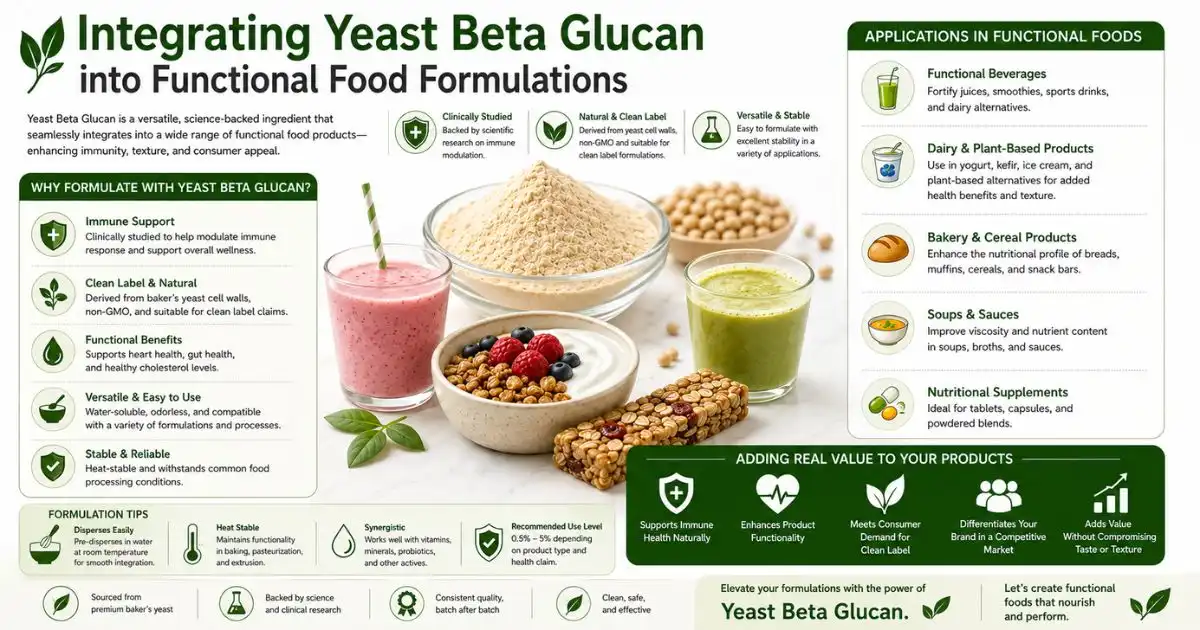
Integrating Yeast Beta Glucan into Functional Food Formulations
A successful product creation process strikes a balance between scientific goals for effectiveness, the realities of production, and market acceptance. Yeast Beta-glucan can be delivered in a number of different ways, each of which has its own technical issues.
Application-Specific Formulation Guidelines
Dietary Supplements (Capsules/Tablets): The fine, off-white to yellow powder mixes easily with fillers such as magnesium stearate and microcrystalline cellulose. For normal sealing, mass density needs to be taken into account. Yangge's material has high flow properties that keep automatic filling equipment from bridging. Doses usually run from 250 mg to 500 mg per serving, which means that once-daily or twice-daily plans can be made, based on how the product is marketed. When fat-soluble vitamins are mixed together, lipid capsule methods are needed to keep the vitamins stable and stop them from absorbing water.
Functional Beverages: The ingredient works well in water-based mixtures at concentrations up to 2% w/v because it is a water-soluble fiber. It doesn't change the taste of protein shakes, recovery drinks, or enriched waters because it has a bland taste. Stability testing should show that no precipitation happens during the product's shelf life (18 to 24 months on average), especially in acidic environments like those found in citrus-flavored drinks. The material doesn't lose any activity when it's heated to UHT, which lets you make products that can be stored at room temperature, which cuts down on the cost of shipping them in cold chains.
Pet Food Formulations: Adding it to extruded kibble or wet food recipes helps pets' immune systems when they are stressed out from weaning, boarding, or changes in their environment. Inclusion rates between 0.05% and 0.2% by weight provide accurate dosing while keeping the taste pleasant. The ingredient stays bioactive even when heated through extrusion processes (150–180°C), which makes it different from heat-sensitive probiotics that need to be applied after extrusion and then kept in the fridge.
Regulatory Compliance Pathways
Labeling rules help you avoid expensive changes to the recipe and delays in getting the product to market. Generally Recognized as Safe (GRAS) for food uses in the US means that Yeast Beta-glucan can be used in a lot of different ways without needing to be approved before it goes on the market. Structure-function claims like "supports immune health" are okay as long as they don't imply that the product treats diseases and have the FDA statement. According to EFSA guidelines, European laws also allow health claims about maintaining immune function, but each member state has its own rules about how the claims must be written.
The table below outlines regulatory considerations across major markets:
| Market | Regulatory Status | Permissible Claims | Labeling Requirements |
|---|---|---|---|
| United States | Food that is GRAS | Structure-function (with a caveat) | "Contains Yeast Beta-glucan" |
| European Union | New approval for food | Keeping the nervous system healthy | Must name the source of the Saccharomyces |
| Canada | Product for Natural Health | Helps keep the immune system healthy | NPN is needed for supplements |
These frameworks guide claim development and ingredient declaration strategies. Brands should work with regulatory consultants during product concept phases to align formulation choices with target market requirements, avoiding the pitfall of developing products that cannot be legally marketed in priority geographies.
Making Informed Decisions: How to Choose the Right Yeast Beta Glucan for Your Business
To choose the right ingredients for your business, you need to carefully look at a lot of different factors. When it comes to price, suppliers, technical help, and purity levels, procurement managers have to make trade-offs. This evaluation process is based on the following framework:
Quality Verification Hierarchy
Setting non-negotiable quality standards keeps expensive re-formulations and damage to the brand's image at bay. The most important thing is to check the Yeast Beta-glucan content using enzymatic assays; measuring total carbohydrates or giving generic "polysaccharide content" specifications doesn't guarantee the presence of bioactive materials. Make sure that batch-specific COAs show that the Yeast Beta-glucan is pure using Megazyme or a similar method, and that the amount of alpha-glucan contamination is measured separately.
Microbial safety tests should make sure that the supplement meets the following standards: total plate count <10,000 CFU/g, yeast and mold <1,000 CFU/g, coliforms not present, and pathogens (Salmonella, E. coli) not found. Because of worries about cumulative exposure, heavy metal profiles must meet pharmaceutical-grade standards. This is especially true for supplements that are taken every day for long periods of time. Yangge's compliance with European PAH4 standards gives them extra peace of mind about controlling process contaminants, which is something that is often forgotten until regulatory checks show they aren't following the rules.
Supplier Partnership Evaluation
In addition to looking at transactional quality parameters, you should also check how well suppliers can help with product development during formulation challenges and scale-up phases. Technical service teams that know a lot about food science can fix problems with stability, suggest the best processing parameters, and suggest pairings of ingredients that go well together. Suppliers who keep research partnerships with universities or contract testing labs show that they are dedicated to constant innovation and scientific proof.
When buying things from other countries, logistics skills are just as important. Flexible packaging from suppliers (1 kg for study purposes up to 25 kg for business use) makes inventory control easier at all stages of a product's lifecycle. Clear communication procedures, like being available 24 hours a day and providing detailed documentation in English, keep output from being held up, which costs a lot of money. Yangge is a trustworthy partner for North American and European brands that need to work their way through complicated foreign supply lines because the company has exported goods all over the world and has well-established quality management systems.
Avoiding Common Procurement Pitfalls
A lot of mistakes hurt the quality of the product and its chances of doing well in the market. If you only compare prices per kilogram, you don't take into account changes in purity. For example, a $50/kg material that is 80% pure has more biological content than a $40/kg material that is 60% pure, so the $50/kg material is more cost-effective per dose. Suppliers can disguise low-activity material as premium-grade if they don't check the testing methods. This leads to underdosed goods that don't provide the health benefits that were promised.
Supply chain weaknesses happen when people don't pay enough attention to sourcing security. When brands rely on a single source, they could be affected by changes in quality, limited capacity, or geopolitical factors that affect trade across borders. Having qualified backup suppliers on hand, even if they charge more, protects against market disruptions. Regular supplier audits, which should include site visits when possible, are a better way to make sure that the capabilities and certifications being shown are being met than just looking at the paperwork.
Conclusion
To find your way around the Yeast Beta-glucan market, you have to find a balance between science standards for effectiveness and the facts of buying things. The β-1,3/1,6 structural configuration derived from Saccharomyces cerevisiae has been shown to have immune-modulating benefits that are different from cereal alternatives. This makes it perfect for use in functional foods, dietary supplements, and pet nutrition.
To be successful, you need to carefully check your suppliers and pay attention to things like processing stability, following the rules, and making sure the formula works with the supplier's products. When brands put these things first, they set themselves up to make unique goods that are backed by solid science and reliable quality. The global market for immune health is still growing, which is good news for innovative businesses that get their high-quality products from honest, technically-savvy partners who want to push the boundaries of functional food innovation.
FAQ
What dosage of yeast beta-glucan provides effective immune support?
Clinical study shows that people should take 250 to 500 mg every day to boost their immune systems. This range sets off natural immune reactions without making inflammatory pathways too active. Pet food uses usually include 0.05-0.2% by weight of the end product. This means that the right dose should be chosen based on the animal's body weight and how much it eats.
How does yeast beta-glucan differ from oat beta-glucan?
Functional activity is based on the structure of the molecular links. Yeast sources have β-1,3/1,6 branching that binds to immune cell receptors, while oat beta-glucans have β-1,3/1,4 links that are best for lowering cholesterol by binding to bile acids. Even though they both have the name "beta-glucan," these ingredients are functionally different and serve different health positioning strategies.
Can yeast beta-glucan cause allergic reactions?
High-purity material (>70% beta-glucan) with few protein molecules doesn't pose much of an allergic risk. During the purification process, allergenic yeast proteins that cause sensitivities are taken out. Products that still smell like yeast or have a protein content above 5% are more likely to be dangerous and were not processed properly. Always check the protein specifications and make sure that sensitive groups get the right allergen testing.
Partner with Yangge for Premium Yeast Beta-Glucan Supply
Yangge Biotech provides pharmaceutical-grade Yeast Beta-glucan powder that meets the high standards that functional food brands in North America and Europe expect. Our material from Saccharomyces cerevisiae has been tested and found to be ²-1,3/1,6 pure and at least 70% pure. It comes with full documentation of enzymatic assays and full microbial and heavy metal testing. With standards for non-GMO, non-irradiated, and full European PAH4 compliance, we support clean-label placement for both pet food and dietary products.
Our ISO, HACCP, Kosher, and Halal standards make sure that our products are legal in all markets around the world. We also have flexible minimum orders (starting at 1 kg) that can be used for both research and development (R&D) and business production. Contact us or you can email our technical team at info@yanggebiotech.com to ask for samples, talk about OEM packaging options, or look into how to get competitive prices for bulk Yeast Beta-glucan supplier partnerships. Use our farm-to-table tracking and ready-to-ship 50–100 kg inventory to speed up the time it takes to build your immune health product.
References
1. Volman, J.J., Ramakers, J.D., and Plat, J. (2008). "Dietary modulation of immune function by β-glucans." Physiology & Behavior, 94(2), 276-284.
2. Murphy, E.A., Davis, J.M., and Carmichael, M.D. (2010). "Immune modulating effects of β-glucan." Current Opinion in Clinical Nutrition and Metabolic Care, 13(6), 656-661.
3. Vetvicka, V. and Vetvickova, J. (2014). "Glucan supplementation enhances the immune response against an influenza challenge in mice." Annals of Translational Medicine, 3(2), 22-28.
4. Stier, H., Ebbeskotte, V., and Gruenwald, J. (2014). "Immune-modulatory effects of dietary yeast beta-1,3/1,6-D-glucan." Nutrition Journal, 13, 38-45.
5. Babineau, T.J., Marcello, P., Swails, W., Kenler, A., Bistrian, B., and Forse, R.A. (1994). "Randomized phase I/II trial of a macrophage-specific immunomodulator (PGG-glucan) in high-risk surgical patients." Annals of Surgery, 220(5), 601-609.
6. Talbott, S.M. and Talbott, J.A. (2012). "Baker's yeast beta-glucan supplement reduces upper respiratory symptoms and improves mood state in stressed women." Journal of the American College of Nutrition, 31(4), 295-300.

Based on your location and order quantity, you will have the opportunity to receive a limited time free shipping promotion!
Who we are
Popular Blogs