What Is Berberine HCl Powder and Its Applications?
Yangge Biotech supplies high-quality Berberine Powder, a standardized botanical ingredient commonly used in dietary supplements, functional foods, and wellness formulations. Our Berberine Powder is produced with a focus on purity, consistency, and quality control, making it suitable for capsules, tablets, powders, and other supplement applications. We support bulk supply, customized specifications, and OEM solutions for brands and manufacturers worldwide. For product specifications, samples, certifications, bulk pricing, and OEM services, please contact Yangge Biotech at info@yanggebiotech.com.
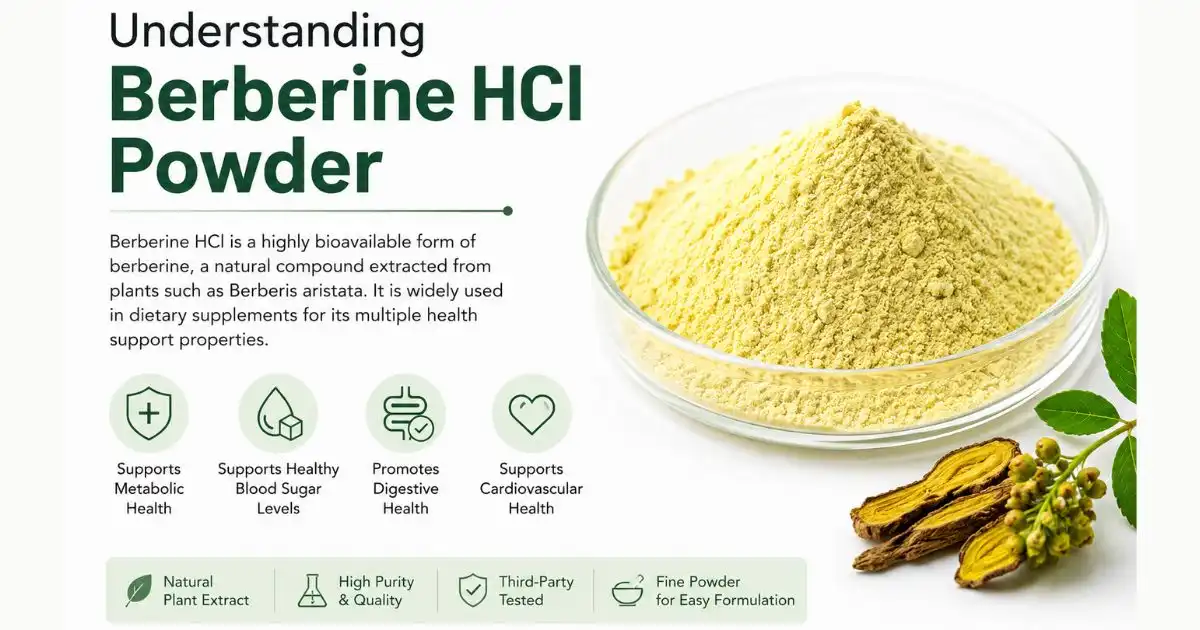
Berberine HCl (berberine hydrochloride) is a quaternary ammonium alkaloid compound extracted from various medicinal plants, including Coptis chinensis, Berberis aristata, and Phellodendron amurense. This bioactive compound serves as a standardized, high-purity ingredient for dietary supplements targeting metabolic health, cardiovascular wellness, and blood glucose regulation. Its hydrochloride salt form enhances stability and bioavailability, making it the preferred choice among supplement manufacturers developing evidence-based formulations for the North American and European markets.
Understanding Berberine HCl Powder
Chemical Properties and Differentiation
Berberine hydrochloride is the most commercially viable form of berberine alkaloids because it is more stable in crystal form and dissolves in a consistent way. Unlike berberine sulfate, which tends to absorb water when stored in damp settings, the hydrochloride form keeps its structure even when the environment changes. Through HPLC-verified extraction methods, the molecular conversion process guarantees a purity level of at least 97%. According to USP standards, Yangge's Berberine HCl Powder has a bright yellow color and particles that are 80 meshes in size, making it perfect for fast capsule filling operations.
The compound's quaternary ammonium structure lets it work specifically with biological processes, especially the AMP-activated protein kinase pathway. This molecular accuracy tells the difference between berberine hydrochloride that is used in medicine and raw plant products that have different amounts of alkaloids.
Bioavailability and Metabolic Mechanisms
Compared to free-base berberine, the hydrochloride form is better absorbed by the digestive system. However, only about 5% of the drug is actually bioavailable because it is broken down so quickly in the liver. Because of this limitation, supplement makers have come up with new ways to make the formula, like combining berberine with substances that help the body absorb it better or using microencapsulation technologies.
Berberine turns on AMPK, which is sometimes called the body's metabolic master switch. This makes skeletal muscle take in more glucose and lowers the production of glucose in the liver. There have been big improvements in insulin sensitivity markers in clinical studies, with effects that are about the same size as some drug treatments. The substance also changes lipid metabolism by stopping PCSK9 expression. This raises LDL receptor function and lowers cholesterol levels in the blood.
Health Benefits Backed by Research
Berberine works well for many metabolic factors, as shown by a lot of clinical studies. Meta-analyses of randomized controlled studies show that fasting blood glucose (dropping by 20 to 25 mg/dL on average), HbA1c levels (dropping by 0.6 to 1.0%), and LDL cholesterol (dropping by 20 to 30 mg/dL) all go down in a statistically significant way. Because of these results, berberine hydrochloride is now seen as an important ingredient for supplement brands that want to help people with diabetes and heart health.
Along with controlling blood sugar, berberine is also antimicrobial and can kill different gut diseases. It may also help maintain a healthy body structure by activating brown adipose tissue. Because the compound affects more than one target, it is especially useful for complex metabolic syndrome formulations where single-pathway interventions don't work.
Comparing Berberine HCl with Alternative Solutions
Berberine HCl Versus Pharmaceutical Agents
Berberine works just as well as metformin, which is the first drug prescribed for people with type 2 diabetes, in head-to-head research studies. A study published in 2008 in the journal Metabolism found that berberine lowered fasting plasma glucose and HbA1c just as much as metformin, but participants reported much fewer stomach problems. Supplement companies can market berberine-based products as extra metabolic health aids because they are generally safe. This is especially true for people who are looking for plant-based options or who are intolerant to pharmaceuticals.
The main difference is how the regulations classify them. Prescription drugs have to go through strict review processes, but berberine as an ingredient in dietary supplements can get products to market faster and give makers more options for how to make them. When making private-label products that need to adapt quickly to new metabolic health trends, procurement managers are aware of this advantage.
Natural Alternatives Comparison
Compared to other botanical metabolic modulators, such as alpha-lipoic acid or cinnamon extract, Berberine HCl has more clinical evidence and a bigger effect. Cinnamon's active compounds need much higher doses to have small effects on blood sugar, while alpha-lipoic acid mostly works as an antioxidant rather than directly changing metabolic pathways.
Table 1: Comparative Efficacy of Metabolic Health Ingredients
| Ingredient | Average Fasting Glucose Reduction | LDL Cholesterol Impact | Clinical Study Volume | Typical Dosage Range |
|---|---|---|---|---|
| Berberine HCl | 20 to 25 mg/dL | -20 to -30 mg/dL | 50 or more RCTs | 900 to 1500 mg per day |
| Cinnamon Extract | 8–12 mg/dL | -15 to -10 mg/dL | 20 or more RCTs | 1000 to 6000 mg per day |
| Alpha-Lipoic Acid | 5 to 8 mg/dL | Not much direct effect | 15 or more RCTs | 600 to 1200 mg per day |
| Chromium Picolinate | 3–6 mg/dL | -10 to -5 mg/dL | 25 or more RCTs | 200 to 1000 mcg per day |
Product creation teams use this information to make choices about formulation that balance claims of effectiveness, ease of dosing, and cost-of-goods. Because berberine is very strong per milligram, it can be taken in manageable amounts—usually two 500mg capsules a day—that meet the needs of consumers who want to follow through with their plans.
Powder Versus Capsule Formats for Industrial Sourcing
When it comes to buying, bulk berberine hydrochloride powder is better than pre-encapsulated types in many ways. Raw powder can be mixed to make unique formulations, doses can be precisely adjusted, and it can be added to a wide range of delivery systems, such as pills, liquid suspensions, and functional food matrices. Yangge keeps an ongoing stock of USP-grade powder with minimum orders of 1 ton. This makes sure that mid-sized supplement brands with production cycles of 3 to 6 weeks have a reliable supply chain.
The powder shape also makes it easier for a third party to test the whole thing before the end product is made. Quality-conscious brands usually have outside checks done on incoming raw materials to make sure they are free of microbes, have the right amount of alkaloids, and are free of heavy metals. These checks can be done more cheaply on bulk powder than on finished capsules.
Procurement Insights for Berberine HCl Powder
Supplier Selection Criteria
To find good berberine hydrochloride suppliers, you need to evaluate them systematically across a number of quality dimensions. GMP approval is the minimum standard, but purchasing managers are increasingly looking for sellers who can show complete quality management systems that include data on the stability of final products, the traceability of raw materials, and controls during production.
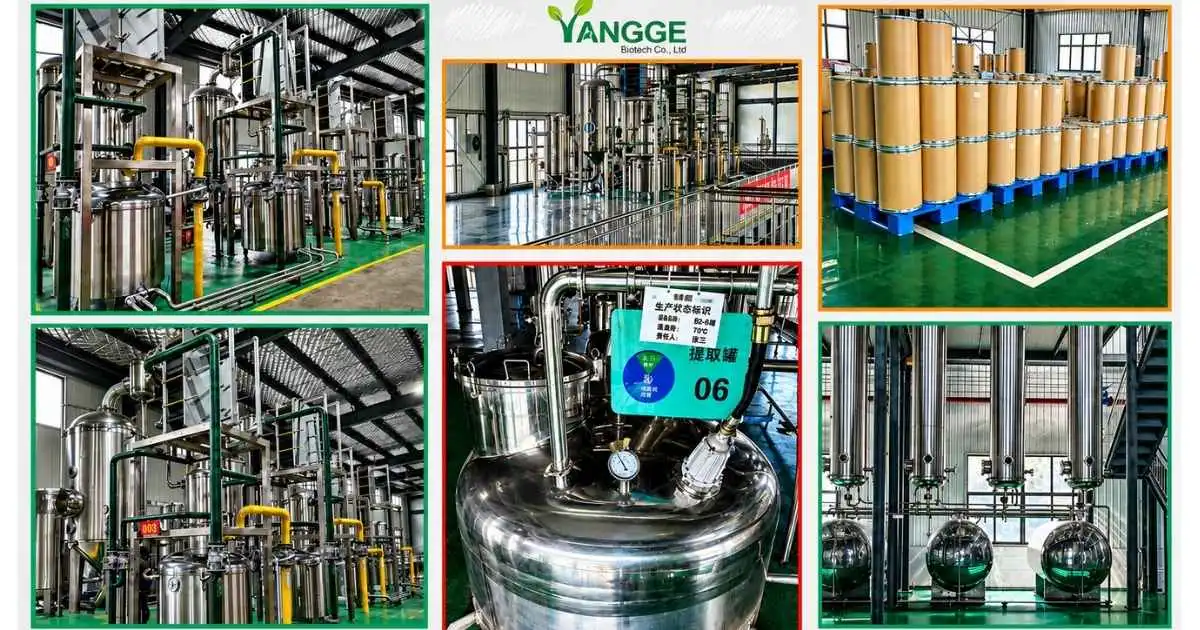
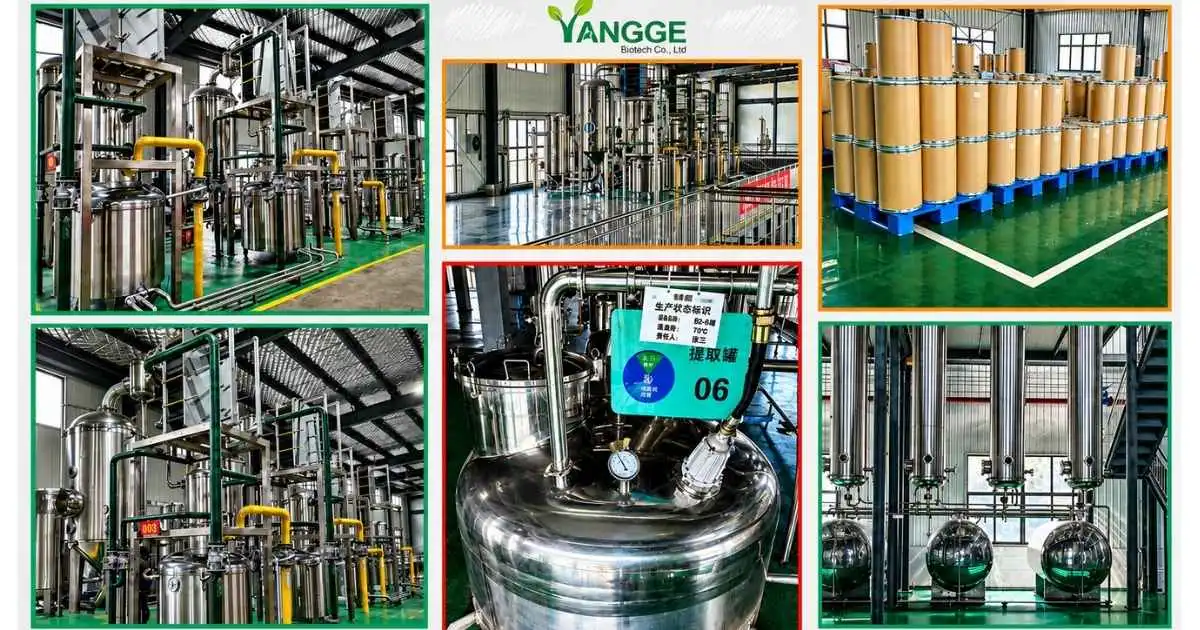
Yangge Biotech's ISO and HACCP certifications work with GMP compliance to make a quality system that meets the needs of foreign regulators in both North American and European markets. The company's vertical integration—from botanical sourcing to final extraction—ensures stability from lot to lot, which is very important for supplement brands that have to stick to strict product specs. Each shipment comes with a full set of safety panels and a certificate of analysis from a third party that says the purity has been HPLC-verified to be at least 97%.
The grid for making buying decisions should give more weight to a supplier's technical skills than just basic compliance. Can the supplier change the size of the particles for specific delivery systems? Does their analytical lab keep method validation records that are accepted by international regulatory bodies? These operational skills set strategic manufacturing partners apart from commodity suppliers and help them come up with new products.
Bulk Purchasing Dynamics and Pricing
The price of berberine hydrochloride depends on a lot of things, like the cost of botanical raw materials, how well the compound is extracted, the purity standards, and the requirements for certification. On the market right now, 97% HPLC-grade powder costs between $45.75 and $57.55 per kilogram for orders of 100 kg or more. If you want premium organic or wild-crafted specifications, you have to pay an extra 30 to 50 percent.
Unit economics are greatly affected by volume agreements. Annual orders for 500 kg to 1000 kg of raw materials usually get 10-15% better prices than spot purchases and also make sure that there is a steady supply even when the price of raw materials changes with the seasons. When purchasing managers try to find the best balance between saving money on capital and making sure they have enough supplies, they often set up deals with quarterly buy obligations that lock in lower prices while still letting them change their inventory as needed.
Price talks should get just as much attention as quality control tasks. Reliable providers pay for the costs of preparing certificates of analysis, keep reference samples for two to three years after production ends, and keep product liability insurance to cover their manufacturing operations. These seemingly unimportant factors protect supplement brands from quality problems further down the line that could lead to expensive product recalls or steps by the government.
Private Label and OEM Capabilities
In the category of metabolic health supplements, brands are becoming more important than generic products. Supplement brands can create their own unique blends of Berberine HCl and other ingredients that work well together, such as milk thistle, alpha-lipoic acid, or chromium complexes, through private label and original equipment manufacturer (OEM) manufacturing partnerships.
Yangge's OEM services go beyond just contract filling. They also offer formulation advice, stable testing, and custom package solutions. The company's applications knowledge helps development teams make mix goods that work on more than one metabolic route while keeping the ingredients safe and stable on the shelf. This collaborative method shortens the time it takes to bring new goods to market that fill specific needs within the metabolic health category as a whole.
When it comes to regulatory compliance issues, custom formulation services are especially helpful. OEM partners with a lot of experience help brands make the right structure-function claims. They help brands figure out the difference between legal wellness claims and illegal disease treatment claims that get the attention of regulators.
Ensuring Quality and Compliance in Berberine HCl Supply
Essential Certifications and Standards
In order to make sure the quality of the berberine supply chain, several checks must be made, starting with the plant source material and ending with the finished powder specs. GMP certification makes sure that factories keep the right environmental controls, equipment calibration, and training for their workers. However, certification alone isn't enough guarantee without supporting analysis documents.
Table 2: Yangge Berberine HCl Powder Specifications
| Parameter | Specification | Test Method |
|---|---|---|
| Appearance | Powder that is bright yellow | Seeing |
| Berberine Content | 97.0% | HPLC |
| Particle Size | 100% pass 80 mesh | Analysis of Sieves |
| Loss on Drying | -5.0% | USP <731> |
| Bulk Density | 40 to 60g/100ml | USP <616> |
| Heavy Metals | ≦10 ppm | ICP-MS |
| Arsenic | p.p.m. | ICP-MS |
| Lead | ≦3 ppm | ICP-MS |
| Total Plate Count | ≦1000 cfu/g | USP <2021> |
| Yeast & Mold | ≦100 cfu/g | USP <2021> |
| E. coli | Not good | USP <2022> |
| Salmonella | Not good | USP <2022> |
ISO 17025-accredited laboratory testing is an independent way to check what a supplier says. Brands should ask for more than just basic identity and purity testing. They should also ask for full safety panels that check for pesticide residues, aflatoxins, and heavy metals at levels that meet the requirements of California Proposition 65. Yangge keeps standard quality certifications along with Kosher and Halal certificates. This makes it easier for brands that cater to certain groups of customers to get into the market.
Organic certification makes things more complicated and costs more, but it lets brands that are trying to sell natural products position themselves as high-end. It's important for procurement teams to make sure that promises of organic products come from approved botanical sources and not just apply to operations further down the line.
Lab Testing Protocols and Traceability
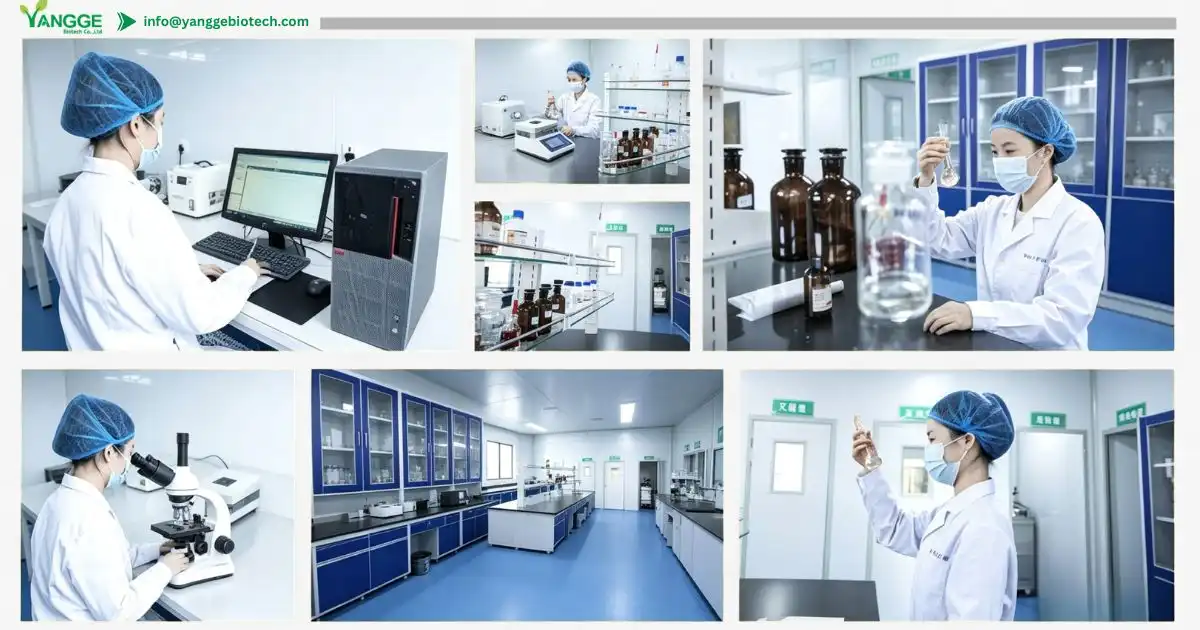
Comprehensive analytical testing starts with confirming the plant identity through both large-scale and close-up study. DNA barcoding is then used to prove the species. HPLC analysis measures the amount of berberine present while also looking for related alkaloids that could mean the raw material has been tampered with.
Modern quality programs use batch tracking to connect specific crop dates and places to lots of finished powder. This openness from farm to table lets you quickly find the reason for any quality problems and shows that you did your best during regulatory inspections or customer audits. Yangge's partnership with sustainable farming communities sets up direct source relationships that get rid of middlemen who could add risks of contamination or fraud.
Stability testing at high temperatures (40°C/75% RH for 6 months) predicts how long something will last in the real world and helps choose the right packaging materials. Berberine HCl is very stable when stored in cases that are properly covered and have moisture barriers. It usually stays more than 95% effective for 24 to 36 months.
International Regulatory Considerations
Berberine's regulatory status varies a lot between global markets, which makes it hard for brands that do business around the world to stay in compliance. Under FDA rules, berberine can be used as an ingredient in food supplements in the United States, as long as the goods don't make claims about treating diseases and follow current Good Manufacturing Practices. In the same way, Canadian law allows berberine to be used in Natural Health Products as long as the product is properly labeled and the dose is limited.
There is more legal diversity in European markets because each member state has its own classification system. In Germany, the Commission E recognizes plants that contain berberine for certain traditional uses. Other places may only allow berberine to be used in pharmacy channels. Before sending goods to European customers, procurement teams should make sure they know the country's specific requirements. This is because customs holds for non-compliant goods cause expensive delays and could make it harder to get into new markets.
According to Chinese export rules, berberine is a normal commodity, but it needs to be certified for phytosanitary reasons and come with standard export paperwork. Experienced providers like Yangge take care of these paperwork needs as part of their standard service. This makes sure that customs clearance goes smoothly and that logistics problems don't get in the way of production plans.
How to Maximize Berberine HCl's Value in Your Product Line
Application Opportunities Across Industries
Because it is so flexible, berberine hydrochloride can be used in more than just traditional capsule supplements. It can also be used in new product categories that reach a wider audience and make more money. Functional food uses have a lot of room to grow. For example, berberine-fortified nutrition bars, beverage powders, and meal replacement products are aimed at health-conscious customers who want easy metabolic support.
The nutraceutical industry is putting more and more emphasis on combination formulas that work on multiple health pathways at the same time. Berberine works well with milk thistle to help the liver in many ways, with coenzyme Q10 to help the heart, and with chromium and gymnema to make advanced glucose control products even better. These approaches with multiple ingredients cost more but give customers more value because they work on metabolic processes that are connected.
Pharmaceutical uses are a smaller but more important niche. Berberine is used as a building block for semi-synthetic derivatives that are being studied for a range of therapeutic uses. Berberine's antimicrobial and anti-inflammatory qualities are being used in acne treatments and skin health goods in a new category called cosmetic formulas.
Market Trends Driving Demand
The global berberine market is growing at rates that are higher than 8% per year. This is because more people are getting metabolic syndrome and more people want natural health options. North America and Europe are the biggest markets for supplements, but the Asia-Pacific area is seeing the most growth as traditional medicine knowledge meets modern supplement production.
Demographic tailwinds help the metabolic health area because people are living longer and having health problems related to their lifestyles, which keeps the demand for evidence-based wellness goods high. Because berberine has a lot of strong clinical evidence, it fits well with this trend. This is because smart consumers are looking more closely at how well ingredients work before they buy them.
Individualized diet is a new trend where berberine's many-target processes fit with people's wants to improve their overall health. Direct-to-consumer brands use genetic testing and microbiome analysis to suggest personalized supplement plans. Berberine is often used as a basic metabolic modulator in these plans.
Formulation Innovation and Delivery Technologies
Getting around berberine's natural absorption problems is what drives innovation in the supplement business. Microencapsulation technologies keep berberine molecules safe while they move through the stomach. They also allow focused release in the intestines, which makes absorption more effective. Liposomal delivery methods have shown promise in early tests, but they are still too expensive and unstable for widespread use in medicine.
Adding piperine (black pepper extract) is a cheap way to improve absorption, and clinical data shows that doses of 5 to 10 mg of piperine can increase bioavailability by 30 to 50 percent. This combination works well together and lets brands set their products apart by making claims about how well they work that are backed up by pharmacokinetic evidence.
Extended-release versions deal with berberine's short plasma half-life by keeping therapeutic blood levels steady for 8 to 12 hours at a time. These more advanced delivery systems are especially good for high-end products that need to be more expensive and have a stronger brand image because they are harder to make.
Conclusion
Berberine HCl is a highly proven and marketable ingredient for supplement brands that want to reach the growing metabolic health market. Its proven effectiveness in controlling glucose, managing lipids, and improving cardiovascular health opens up many product development paths for companies that want to stand out in competitive categories. Supply chain strategies that work well put an emphasis on supplier quality systems, thorough testing protocols, and regulatory compliance infrastructure that keep the brand's reputation safe and make sure products always work well.
The ingredient can be used in a variety of ways, from simple pills with just one ingredient to complex products with multiple pathways. This makes it possible for new products to be made. As concerns about metabolic health continue to grow around the world, berberine hydrochloride provides supplement brands with a research-backed answer that meets both consumer expectations for effectiveness and regulatory requirements.
FAQ
What distinguishes Berberine HCl from Berberine Sulfate?
Berberine HCl is the best option for making capsules and tablets because it stays more stable in solid dosage forms and doesn't absorb moisture as much as the sulfate form does. Once absorbed, both forms have the same effect on living things, but the hydrochloride's crystalline structure makes production more reliable and extends its shelf life.
How can I verify supplier authenticity and product purity?
Ask laboratories that are ISO 17025-certified to give you certificates of analysis that show HPLC purity verification, heavy metal screening, and microbiological testing. Reliable suppliers keep reference examples for verification and provide paperwork that is specific to each batch. Before forming long-term purchasing relationships, you might want to have initial items tested by a third party to make sure the supplier's claims are true.
What dosage ranges are typical in commercial formulations?
Berberine doses of 900 to 1500 mg per day, split into two or three doses, are usually used in clinical studies. Most commercial supplements come in capsule form and have a 500mg dose that is supposed to be taken twice a day. Combination formulas may use smaller amounts of berberine (300–500 mg per day) when combined with ingredients that work together to target the same metabolic pathways.
Are there significant drug interaction concerns?
Some cytochrome P450 enzymes are blocked by berberine, which could have an effect on medicines that are broken down through these routes. Products should have warnings on the labels that tell people to talk to their doctors before using, especially if they are taking diabetes, blood pressure, or blood thinners.
Partner with Yangge for Premium Berberine HCl Solutions
Yangge Biotech can help you make a metabolic health product by giving you pharmaceutical-grade Berberine HCl powder that meets the highest quality standards around the world. Our USP-grade 97% pure powder, along with its full Kosher, Halal, ISO, and HACCP standards, gives your business the quality base it needs. As a well-known company that makes Berberine HCl and keeps a 1-ton stock on hand, along with customizable OEM capabilities, we take away the uncertainty in the supply chain and allow for quick recipe innovation.
Our expert team works with your R&D team to improve formulations, make sure they follow all regulations, and speed up the time it takes to start your products. Contact us or email our procurement specialists at info@yanggebiotech.com to talk about your specific needs, get detailed product specifications, or set up sample testing that shows how committed we are to quality excellence.
References
1. Yin J, Xing H, Ye J. "Efficacy of berberine in patients with type 2 diabetes mellitus." Metabolism: Clinical and Experimental, 2008; 57(5):712-717.
2. Dong H, Wang N, Zhao L, Lu F. "Berberine in the treatment of type 2 diabetes mellitus: a systemic review and meta-analysis." Evidence-Based Complementary and Alternative Medicine, 2012; 2012:591654.
3. Lan J, Zhao Y, Dong F, et al. "Meta-analysis of the effect and safety of berberine in the treatment of type 2 diabetes mellitus, hyperlipemia and hypertension." Journal of Ethnopharmacology, 2015; 161:69-81.
4. Zhang Y, Li X, Zou D, et al. "Treatment of type 2 diabetes and dyslipidemia with the natural plant alkaloid berberine." Journal of Clinical Endocrinology & Metabolism, 2008; 93(7):2559-2565.
5. Cicero AF, Ertek S. "Metabolic and cardiovascular effects of berberine: from preclinical evidences to clinical trial results." Clinical Lipidology, 2009; 4(6):553-563.
6. Imenshahidi M, Hosseinzadeh H. "Berberine and barberry (Berberis vulgaris): A clinical review." Phytotherapy Research, 2019; 33(3):504-523.

Based on your location and order quantity, you will have the opportunity to receive a limited time free shipping promotion!
Who we are
Popular Blogs