Why Vegetable Carbon E153 Is the Best Natural Black Color for Food
If you are a formulation engineer or procurement manager searching for a clean-label black colorant that actually performs in real food matrices, e153 food coloring deserves a serious look. Vegetable Carbon Black E153 from Yangge Biotech is a 100% natural, plant-derived black pigment made from coconut shell carbonization. It is odorless, tasteless, and chemically inert making it one of the most stable and broadly accepted natural black colorants available to food manufacturers today across beverages, confectionery, and bakery applications.
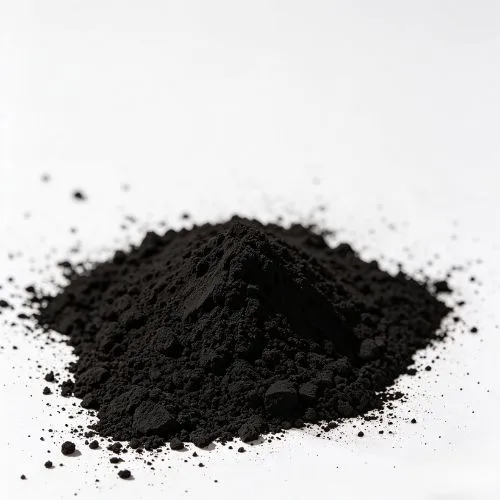
Understanding Vegetable Carbon E153: What It Is and How It's Made
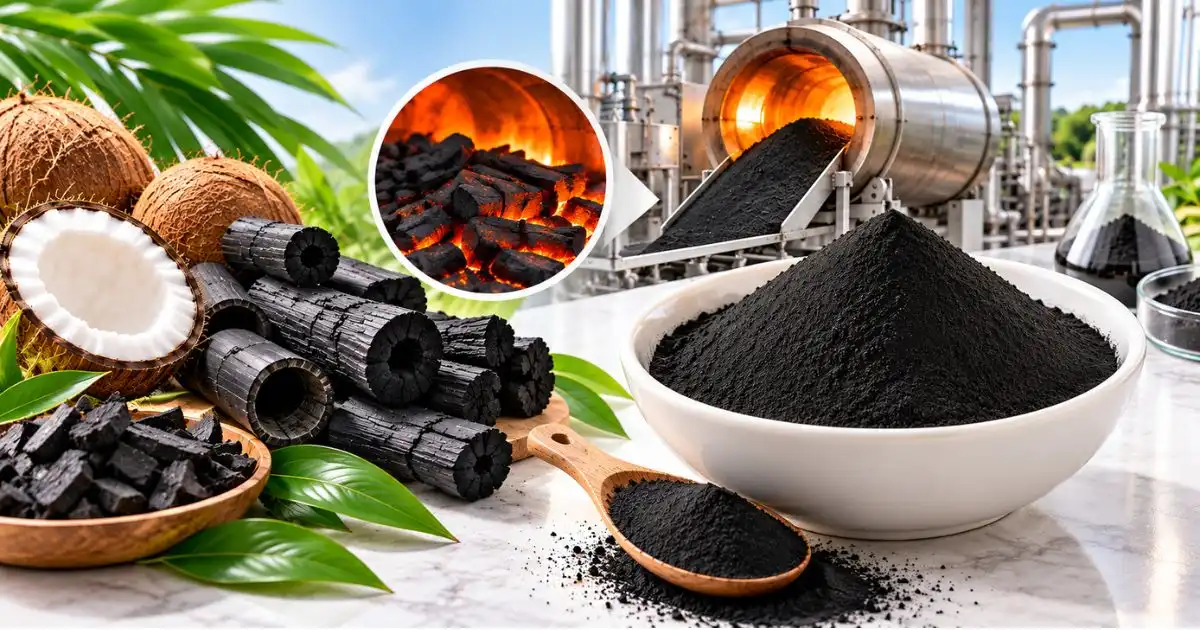
The Source and Production Method
Yangge's Vegetable Carbon Black E153 is made by carbonizing coconut shells in a controlled way at high temperatures. Through heat, this process turns organic plant matter into a fine, pure carbon structure. The end product is a black powder that has more than 95% carbon by weight when it is dry. During processing, no man-made chemicals are added, so the finished pigment is clean and safe to use with food.
Physical and Chemical Properties
The color is a fine black powder that doesn't have a smell or taste and doesn't mix with water or chemical liquids. It doesn't move into neighboring layers in multi-phase food systems because it is a scattered color and not a soluble dye. Its particles are usually smaller than 5 µm, which makes it easier to spread out on the surface and lowers the chance of clumping in suspension-based applications. It looks like a fine black powder and doesn't dissolve in water or organic solvents. It also has a carbon content of more than 95% (anhydrous basis) and loses less than 12% of its weight when it dries.
| Property | Specification |
|---|---|
| Appearance | Fine black powder |
| Solubility | Insoluble in water & organic solvents |
| Carbon Content | >95% (anhydrous basis) |
| Loss on Drying | <12% |
| Particle Source | Coconut shell (carbonized) |
| INS / EU Number | E153 |
Regulatory Compliance and Certifications
It is fully approved by EU Commission Regulation (EU) No 231/2012 and is on the list of approved food additives in the Codex Alimentarius. Yangge's e153 food coloring goods are certified as Halal and Kosher, and each batch is checked by separate foreign labs before it is sent out. Each lot comes with a Certificate of Analysis (COA), which backs up label claims and customs paperwork in a number of export markets.
Why E153 Stands Out: Benefits and Safety Compared to Other Black Food Colorings
Comparison With Common Alternatives
In food, not all black colorants work the same way. To help buying teams make choices based on facts, the table below shows how E153 stacks up against other commonly used options:
| Natural
| Colorant | Natural Origin | Heat Stability | pH Stability | Clean-Label Status |
|---|---|---|---|---|
| E153 Vegetable Carbon | Yes (coconut shell) | Excellent (>200°C) | Stable across pH 2–9 | Yes |
| E151 (Black PN) | No (synthetic azo) | Good | Moderate | No |
| Activated Charcoal | Yes | Good | Moderate | Conditional |
| Squid Ink | Yes | Poor | pH-sensitive | Yes |
| Caramel Color | Yes | Moderate | Variable | Conditional |
Safety Profile
Electrons can't react with E153. There is no interaction between it and active ingredients, flavor compounds, or co-additives. Heavy metal standards, such as arsenic below 3 mg/kg and lead below 2 mg/kg, must also be met by high-quality E153. For example, benzo(a)pyrene must be less than 50 µg/kg. These limits are set by both EU rules and JECFA standards. Before every shipment, Yangge's production process is checked against these limits in a lab that is not affiliated with Yangge.
Why Synthetic Black Dyes Fall Short
Consumer study shows that people are becoming less and less willing to accept manmade azo colors on ingredient labels. In the US natural retail channel, for example, E151 (Black PN) is not allowed in some EU member states and gets bad press. When formulating teams switch to a plant-based carbon black like e153 food coloring, they don't have to worry about label risk because the visual strength stays the same.
Application and Procurement: How to Source and Use E153 Effectively
Typical Food Applications
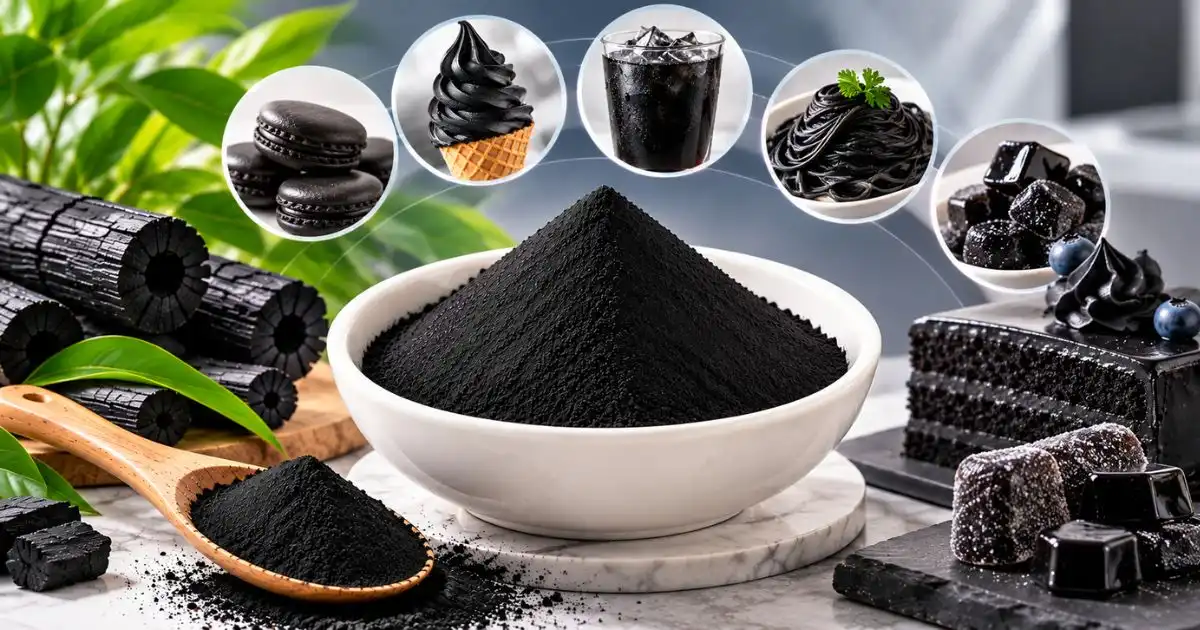
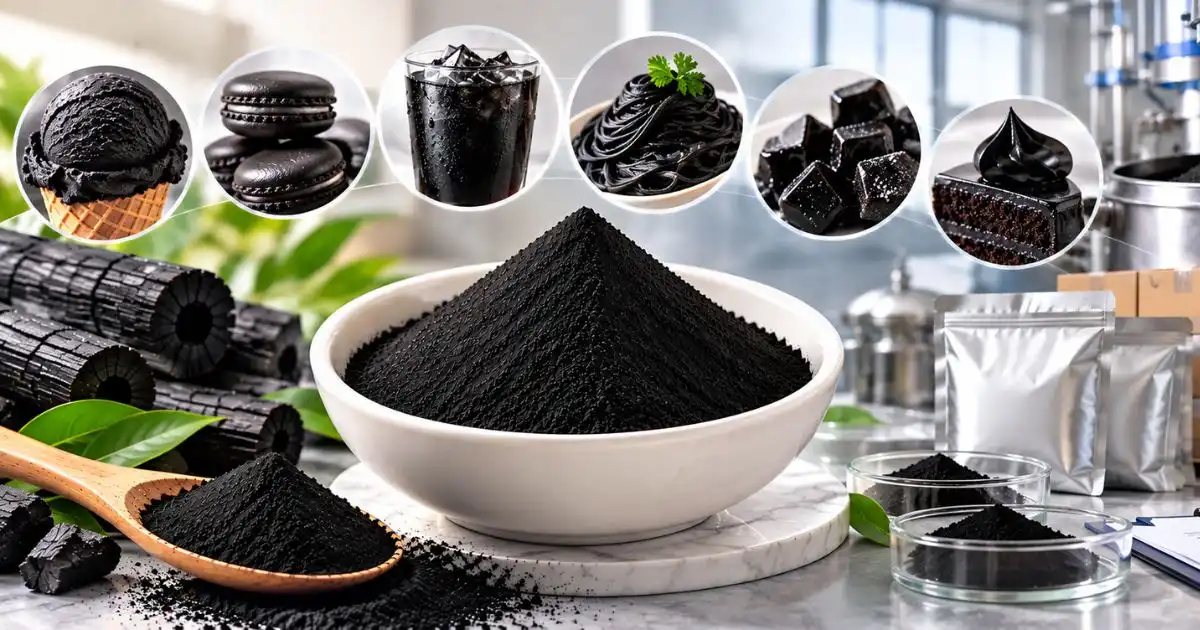
E153 works consistently with a lot of different types of food. These are the main areas of use where it provides measurable value:
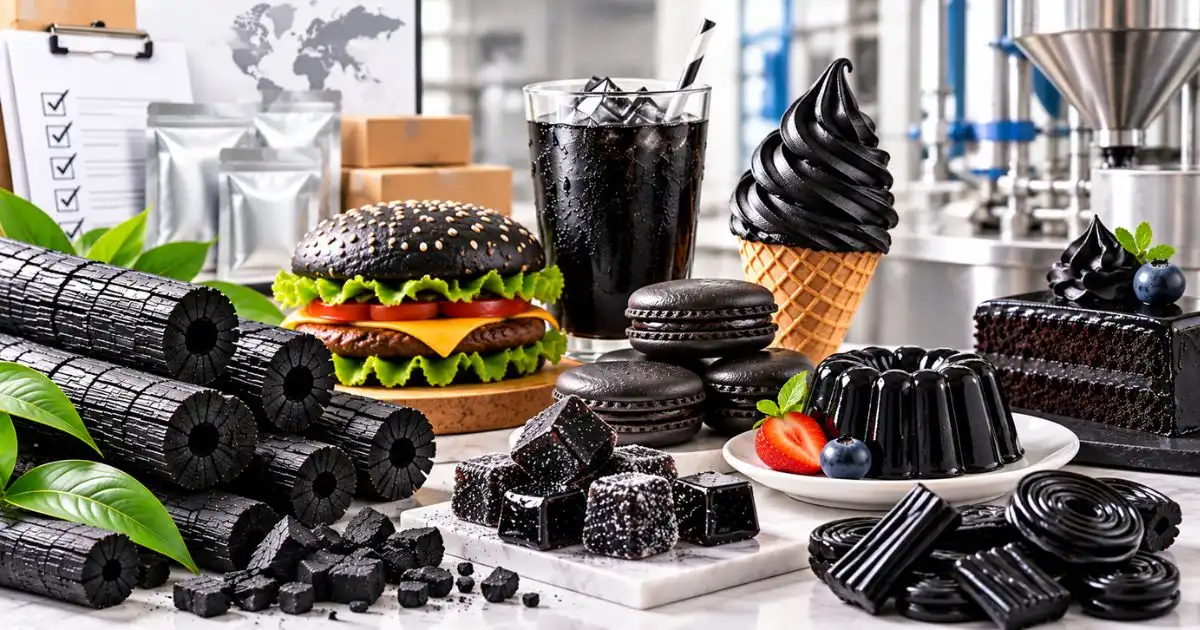
- Confectionery and hard candy: Provides a dense, glossy black finish on dragée shells and gummies without bleeding into adjacent color layers. A dosage of 0.1%–0.3% typically achieves deep black tones.
- Bakery and burger buns: Maintains full color intensity at baking temperatures exceeding 180°C, where organic dyes would fade or shift hue during the Maillard reaction.
- Beverages and coatings: When pre-dispersed in glycerin or syrup before hydration, E153 suspends evenly in liquid matrices, reducing sedimentation risk that often affects coarser-ground carbon pigments.
Because of these application benefits, E153 is a useful single-source option for teams that need to manage multiple SKUs across different product groups. This makes it much easier to qualify vendors.
What to Check When Sourcing in Bulk
When purchasing e153 food coloring, teams should make sure that the supplier meets four strict requirements: they must have a valid COA with PAH and heavy metal test results, they must confirm that the material they use comes from plants and not petroleum, they must have Halal and Kosher certification documents, and all of their batches must meet the same particle size requirements. Yangge sends all of these papers with every business order and gives away 10–30g samples for research and development before a purchase is made.
Making an Informed Decision: Choosing E153 for Your Food Products
Decision Criteria That Matter Most
Formulation teams usually wait to switch from a synthetic black dye because they aren't sure if the new dye will perform as well as the old one. The most important things to look at are the color depth at the goal dose, how the substance spreads in the specific food matrix, and how well it fits the requirements of the final market. E153 works "quantum satis" (as needed) in most EU food groups, which means there is no set upper limit for general use. This gives formulators freedom during development.
Managing the Transition
When switching from E151 to a natural black carbon pigment, accelerated stability tests need to be done again. That price is real. But Yangge's technical team gives formulators application data packages that include recommended dosage ranges, dispersion protocols, and pH compatibility data for beverage, confectionery, and bakery matrices. This cuts down on the testing process by a lot and gives them a reliable place to start instead of starting from scratch.
Limitations to Know Upfront
E153 can stick to tongue surfaces for a short time because it doesn't dissolve, but it washes off and doesn't stain tooth enamel. The US Food and Drug Administration (FDA) has not approved E153 as a food color additive for use on food labels in the US. Products made with E153 that are exported to the US market must have the right paperwork for that market. Before you commit to a formulation, Yangge's compliance team can give you advice on how well it fits with regulations in each market.
Conclusion
Vegetable Carbon Black e153 food coloring E153 is a natural option that has been used for a long time and is safe for food brands that need a uniform black color without using synthetic dye labels. It is the best choice for multi-category formulation teams because it is stable at high temperatures and low pH levels, comes from plants, and is widely accepted by regulators in the EU and around the world. Yangge's E153 comes with full approval paperwork, free samples, and technical application support—everything a procurement team needs to go from a trial run to confidently buying for commercial use.
FAQ
Is E153 the same as activated charcoal?
They are both made from similar raw materials, but they are processed in different ways. E153 is made to have pigmentary performance, with micronized particles for maximum color covering. Activated charcoal, on the other hand, is handled to have the most surface area for absorption. If you use activated charcoal as a colorant, it might also absorb flavor compounds or nutrients that are in your formula without you meaning to. Always ask for E153 that is safe for food and comes from a known plant source.
What is the regulatory status of E153 in the US versus the EU?
EU Regulation (EU) No. 231/2012 and Canadian law both give full approval to E153. The US Food and Drug Administration (FDA) does not currently list E153 as a food color additive that can be used in the US. Before labeling, companies that send finished goods to the US should look at regulatory guidance that is specific to that market.
How do I prevent dusting during factory handling?
Spread E153 out in a solvent like glycerin, syrup, or water ahead of time before adding it to the production line. This gets rid of the chance of fine-powder dusting and cross-contamination, and it also makes the color spread more consistent in liquid matrices.
What certifications does Yangge's E153 carry?
The Vegetable Carbon Black E153 from Yangge has been tested to meet USP grade standards and is confirmed as Kosher and Halal. Inspections of each package are done by foreign labs, and a full COA is given for each lot.
What is the typical usage dosage?
Many times, a deep black tone can be achieved with 0.1% to 0.5% by weight. The EU allows E153 at quantum satis for most types of food, so the real limit is set by cost and taste goals rather than a legal limit.
Request Your Free Sample of Yangge's Vegetable Carbon Black E153 Today
Yangge Biotech has 5 tons of Kosher/USP grade Vegetable Carbon Black E153 in stock and ready to ship right away on FOB or CIF terms. Our technical and sales team is ready to help you with your project, whether you need 10–30g for an R&D test or want to talk about bulk pricing as a qualified e153 food coloring manufacturer source. You can ask for your COA and application data package by emailing info@yanggebiotech.com or going to blog.yanggebiotech.com.
References
1. European Commission. Commission Regulation (EU) No 231/2012 Laying Down Specifications for Food Additives. Official Journal of the European Union, 2012.
2. Joint FAO/WHO Expert Committee on Food Additives (JECFA). Compendium of Food Additive Specifications: Vegetable Carbon. FAO JECFA Monographs, 2011.
3. Codex Alimentarius Commission. General Standard for Food Additives (CODEX STAN 192-1995), Revised 2023. FAO/WHO, 2023.
4. Downham, A., & Collins, P. Colouring Our Foods in the Last and Next Millennium. International Journal of Food Science & Technology, 2000.
5. Martins, N., Roriz, C. L., Morales, P., Barros, L., & Ferreira, I. C. F. R. Food Colorants: Challenges, Opportunities and Current Desires of Agro-Industries to Ensure Consumer Expectations and Regulatory Practices. Trends in Food Science & Technology, 2016.
6. Sigurdson, G. T., Tang, P., & Giusti, M. M. Natural Colorants: Food Colorants from Natural Sources. Annual Review of Food Science and Technology, 2017.

Based on your location and order quantity, you will have the opportunity to receive a limited time free shipping promotion!
Who we are
Popular Blogs