E153 Food Coloring Explained: Is It Vegan, Safe, and Heat Stable?
E153 food coloring, formally known as vegetable carbon black, is a natural black pigment derived from charred plant material most commonly coconut shells. It is widely recognized as vegan, allergen-free, and heat-stable up to temperatures exceeding 200°C, making it a dependable choice for food manufacturers replacing synthetic black dyes. Approved under EU Regulation (EU) No 231/2012 and accepted in Canada, E153 delivers consistent, deep black tones across confectionery, bakery, and coating applications without altering flavor profiles.
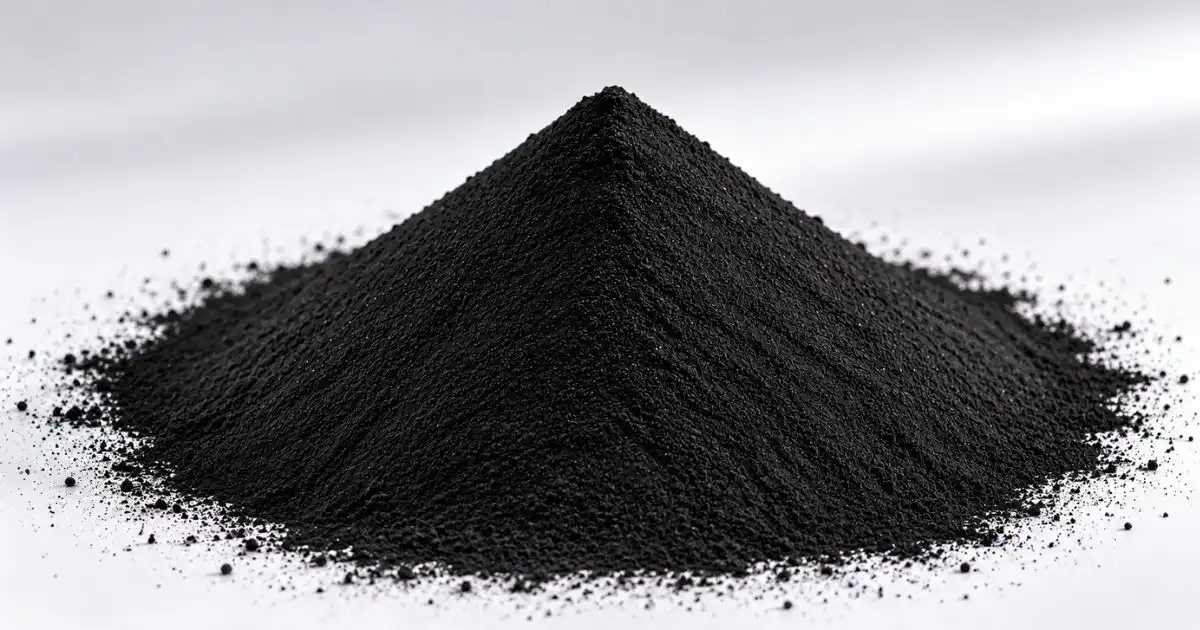
What Is E153 Food Coloring? Composition and Core Applications
What It's Made From
Coconut shells are turned into Yangge's Vegetable Carbon Black E153, a fine black powder that doesn't taste or smell good and doesn't mix with water or organic solvents. More than 95% of the dry base is carbon. This is what makes the pigment so strong and the color so stable. This part is known as E153 food coloring by the INS, and it's not a liquid dye but a scattered color.
Key Physical and Chemical Properties
| Property | Specification |
|---|---|
| Appearance | Fine black powder |
| Solubility | Insoluble in water and organic solvents |
| Carbon Content | >95% (anhydrous basis) |
| Particle Size | Mean diameter <5 µm |
| Heat Stability | Stable above 200°C |
| Extraction Method | HPLC verified |
This makes vegetable carbon black a good ingredient to use when the mixture needs to keep the color from running, be resistant to heat, or have a neutral flavor profile.
Industrial Application Range
A lot of different kinds of food use E153 carbon black. It gives sweets like licorice, hard candies, and jello beans a smooth, shiny black finish that doesn't leak into the next layer. It stays a deep black color in baked goods like black burger buns and cakes with charcoal themes, even when heated above 180°C, which is when most organic dyes break down. In dragée and pharmaceutical coating systems, it gives thin film layers a high level of opacity. This protects light-sensitive ingredients and makes the product look better.
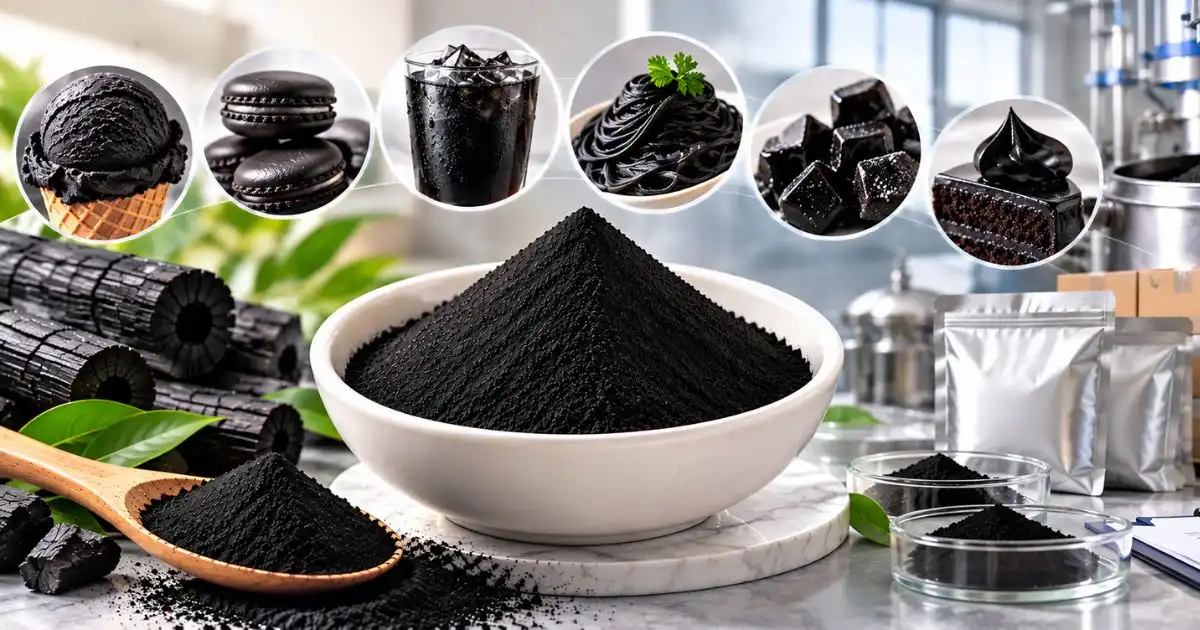
Is E153 Food Coloring Vegan and Diet-Compatible?
Plant Origin and Vegan Status
There are no animal parts in E153 food coloring because it only comes from plant sources, mostly coconut shells. This means it meets the usual standards for being vegan-friendly. You can add it to the ingredients list of brands that want to make plant-based or "clean label" products without changing the way they look.
Allergen Profile
E153 isn't a big allergy risk. Laws from the FDA (21 CFR 101.4) and the EU (No 1169/2011) say that it does not contain any common allergens. Since its chemical makeup is neutral, it doesn't mix with proteins in food. This means that problems with cross-reactivity are less likely to come up during formulation review.
Halal and Kosher Compliance
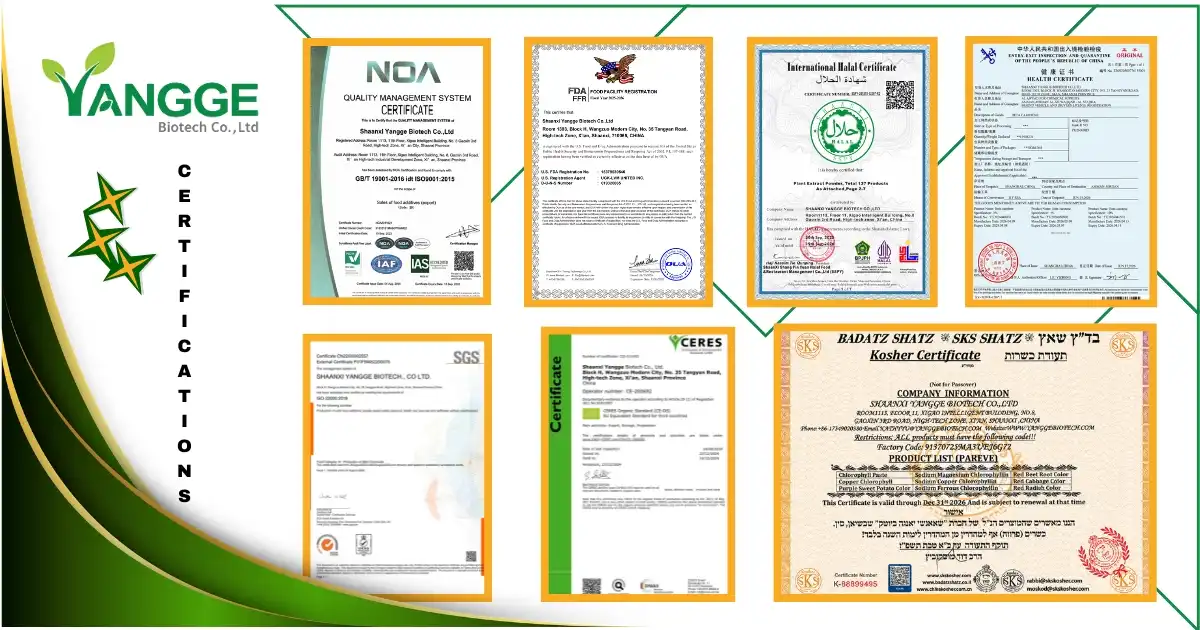
Yangge's Vegetable Carbon Black E153 has both Halal and Kosher licenses that can be shown and checked upon request. The COA can also be shown and checked. Firms that sell their goods in North America, the Middle East, and Southeast Asia need these papers very much because people there have to follow strict religious diet rules. To be sure of where the raw materials came from, always ask the seller for a COA and a specification sheet.
Safety Profile: What Procurement Managers Need to Know
Toxicological Standing
Two governing bodies, EFSA and JECFA, have looked at green carbon with the E153 food coloring marking and agreed that it is a safe food additive as long as it is used according to the rules that have already been set. There are inert parts in it, so it can go through the digestive system without being broken down. Chemical officials have paid close attention to synthetic azo dyes because they may have health effects. This makes it different from those colors.
Critical Safety Parameters to Verify
The test results from the seller should be looked at by procurement teams before they buy any E153 to make sure four things:
- Benzo(a)pyrene (PAH): The amount must be less than 50 µg/kg to make sure it doesn't cause cancer because of bad carbonization processes.
- Heavy metals: Mercury is less than 1 mg/kg, arsenic is less than 3 mg/kg, and lead is less than 2 mg/kg. An ICP-MS test proved this to be true.
- Moisture and ash content: It's important that the batch works well and has a high color load. The loss on drying should be less than 12%, and the sulfated ash level should be less than 4%.
Yangge has foreign labs that are known to be reliable check and test a shipment before sending it. The COA for each batch is available as a PDF file at this link: COA-Vegetable Carbon Black E153-YANGGEBIOTECH.pdf.
Recommended Usage Levels
According to the rules for Group II food ingredients, E153 can be used in EU-approved groups at quantum satis (as needed). Most of the time, a range of 0.1% to 0.5% by weight gives strong black tones in real life, such as in baked doughs and coatings.
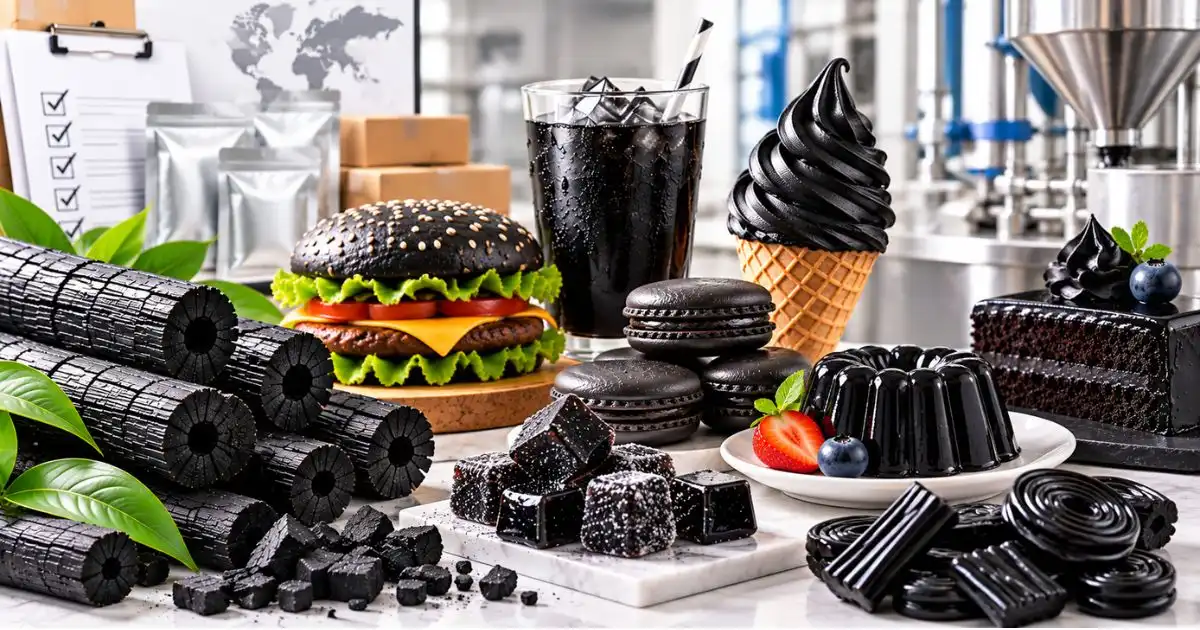
How E153 Compares to Other Black and Dark Colorants
Choosing the right black colorant requires weighing color performance, regulatory standing, and cost across your specific processing conditions. The table below offers a direct comparison.
| Attribute | E153 Vegetable Carbon | E150 Caramel Color | Synthetic Black (E151) |
|---|---|---|---|
| Origin | Plant (coconut shell) | Sugar | Synthetic azo dye |
| Vegan | Yes | Varies | Yes |
| Heat Stability | Excellent (>200°C) | Moderate | Moderate |
| Clean Label | Yes | Partial | No |
| Flavor Impact | None | Slight bitter/sweet | None |
| EU Approved | Yes | Yes | Yes |
| US FDA (food color) | Not listed as approved | Yes | Not approved |
| Halal/Kosher | Yes (Yangge) | Varies | Varies |
Anthocyanins from black carrot or elderberry are natural alternatives that can make black tones in acidic bases. However, they are very sensitive to pH and fade quickly in UV light and heat. If the pH level is right, the juice from beets will turn red. What about E153 food coloring? It stays black from pH 3 to 9 and even when it is heated to very high temperatures. On a technical level, this makes it the better choice for making sure that the color is the same across multiple SKUs.
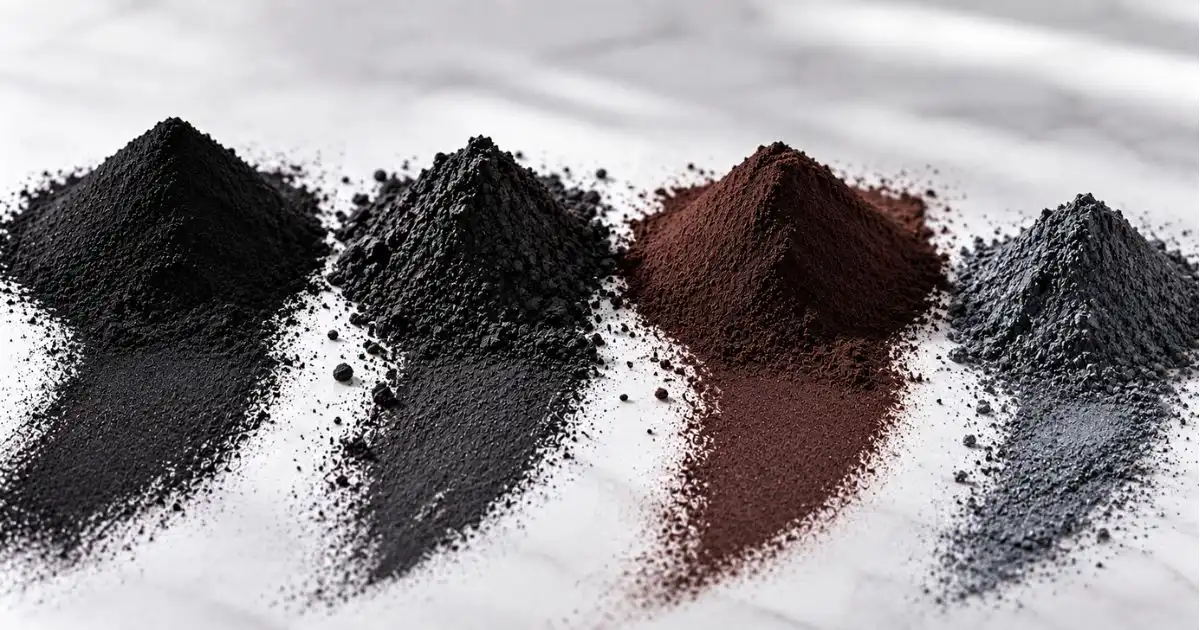
Buying Guide: How to Source E153 for Industrial Use
Evaluating Supplier Reliability
Someone you can trust that sells E153 food coloring should give you at least a full COA for each batch, an MSDS, a specification sheet that shows which plant the product came from, and valid third-party certifications. It is approved by ISO, HACCP, Halal, and Kosher, and all of Yangge's goods are checked in a lab before they are sent out. Free samples of 10–30g can be sent to test the product before a big order is placed.
Pricing, Stock, and Logistics
Yangge has five tons of Vegetable Carbon Black E153 (Kosher/USP grade) in stock right now, and it can be sent out right away. It's possible to ship FOB or CIF, and the smallest order size is 1 ton. Even though they are used at lower rates (0.1% to 0.5% vs. higher amounts usual with some alternatives), bulk prices are kept low enough to compete with the per-ton costs of manufactured alternatives.
Documentation for Multi-Market Compliance
Teams in charge of buying things to send to the EU, Canada, the Middle East, and Southeast Asia should gather the following: COA, MSDS, Halal and Kosher certificates, and letters of conformity from each country's government. When Yangge processes an order, these documents are sent along with it. This makes it easy to keep track of documents for various SKU registrations.
Conclusion
It is safe, doesn't change color when heated, and is vegan-friendly. Vegetable Carbon Black E153 is a good choice for formulators who want to switch from synthetic dyes. Because E153 food coloring doesn't mix with anything, tastes bland, and stays stable at different pH levels and temperatures, it can be used to cover things, make sweets, bake goods, and make drinks.
It works great in clean-label product lines after the right source verification, which includes heavy metal and PAH tests at the batch level. Yangge's E153 is approved as Halal, Kosher, and ISO, and it is in stock and can be shipped on a number of different terms to fit purchases made between 4 and 10 weeks from now.
FAQ
Is E153 approved for use in the United States?
E153 is fine in both the EU and Canada. E153 food coloring is not allowed to be used as a food color by the US Food and Drug Administration (FDA). Companies that make goods for the US market should find out what the rules are in their area of application. They may also need to look at other natural colorants for their US-bound goods.
Does E153 perform well in beverage applications?
Because E153 doesn't mix with water, it needs to be spread out correctly in systems that use water. It stays more even and doesn't settle if you use it as a paste that has already been spread out or as a solution in a glycerin or syrup base. There is less chance of reformulation when you work with a supplier that gives you powder samples and help that is tailored to your application.
Will E153 affect the taste of my product?
No, as little as 0.1% to 0.5% of vegetable carbon black doesn't smell or taste bad. As long as it doesn't combine with sweeteners, flavorings, or binders, it can be used with most foods.
Is E153 the same as activated charcoal?
Some of the materials they are made from are the same, but they are processed in different ways. E153's colors are spread out by micronizing it, and the activated charcoal is treated to make its surface area as big as possible so that it can soak up things. If you use activated charcoal as a colorant, the food might take in nutrients, tastes, or active ingredients that aren't supposed to be there.
How do I prevent dusting when handling E153 powder?
If you want to cut down on dust in production areas, use E153 in the form of a paste that has already been spread out or a liquid suspension. This also makes the spread of the final product more even.
Get Yangge's E153 Food Coloring — Request a Sample or Bulk Quote Today
Five tons of Vegetable Carbon Black E153 that is proven to be Halal and Kosher are in stock at Yangge Biotech. It can be shipped the same week. We are a trustworthy company that provides E153 food coloring and has ISO and HACCP certifications. We offer free 10–30g R&D samples, full paperwork packages, and tips on how to use our products in drinks, sweets, and baked goods. To get a price quote, send an email to info@yanggebiotech.com or visit blog.yanggebiotech.com with the details of what you need.
References
1. European Food Safety Authority (EFSA). Re-evaluation of vegetable carbon (E 153) as a food additive. EFSA Journal, 2012.
2. Joint FAO/WHO Expert Committee on Food Additives (JECFA). Compendium of Food Additive Specifications: Vegetable Carbon. FAO JECFA Monographs, 2006.
3. European Commission. Commission Regulation (EU) No 231/2012 laying down specifications for food additives listed in Annexes II and III to Regulation (EC) No 1333/2008. Official Journal of the European Union, 2012.
4. Downham, A., & Collins, P. Colouring our foods in the last and next millennium. International Journal of Food Science & Technology, 2000.
5. Hendry, G. A. F., & Houghton, J. D. (Eds.). Natural Food Colorants (2nd ed.). Springer Science & Business Media, 1996.
6. U.S. Food and Drug Administration (FDA). Summary of Color Additives for Use in the United States in Foods, Drugs, Cosmetics, and Medical Devices. FDA Technical Reference, 2023.

Based on your location and order quantity, you will have the opportunity to receive a limited time free shipping promotion!
Who we are
Popular Blogs