Which Is Better for Immunity, Yeast Extract or Oat Beta Glucan?
When product developers ask this question, the answer depends on what your formula is actually trying to do. For immunity-targeted applications immune cell activation, seasonal defense, or post-exercise recovery yeast extract beta glucan (specifically the β-1,3/1,6 structure from Saccharomyces cerevisiae) holds a measurable advantage. It binds Dectin-1 receptors on macrophages and dendritic cells, triggering a direct innate immune response. Oat beta glucan, with its β-1,3/1,4 linkage, is better suited for cardiovascular and fiber-related claims. Both are legitimate ingredients but they solve different problems.Contact us at info@yanggebiotech.com.
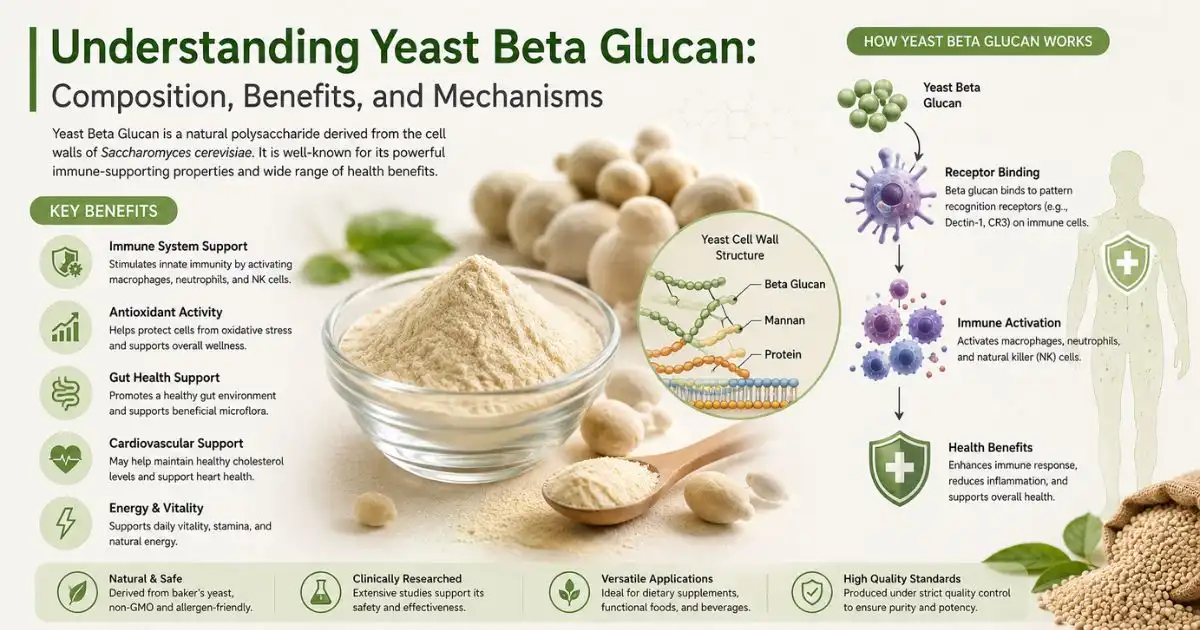
Understanding Beta Glucans and Their Immunity Benefits
What Makes Beta Glucan Bioactive?
Beta glucans are long chains of glucose molecules. How these molecules are linked together has a big effect on how cells work. Where the branching points are and how often they happen affect how immune receptors find the chemical and respond to it. A mostly straight shape found in forms derived from oats doesn't bind receptors as well as a bent triple-helix shape found in forms derived from yeast.
The β-1,3/1,6 Structure (Yeast Source)
B-glucan from yeast has β-1,3 links and β-1,6 side chains that make up its backbone. It can be used as a Pathogen-Associated Molecular Pattern (PAMP) since it is made up of branches. It can be found on immune cells by Dectin-1 and complement receptor CR3. A study in the Nutrition Journal in 2013 found that healthy adults who took 250 to 500 mg/day of yeast-derived β-glucan had a lot less trouble with their upper respiratory tract symptoms.
The β-1,3/1,4 Structure (Oat Source)
The β-1,3/1,4 linkages in oat beta glucan are mostly lined up in a straight line. The FDA lets oat beta glucan say that eating 3 grams or more of it every day lowers LDL cholesterol. Defense isn't its main job, but it does have an effect on it. The main things it does are keep the heart healthy and give you prebiotic fiber. If formulators want to lower cholesterol or add fiber for gut health, oat beta glucan is a better choice.
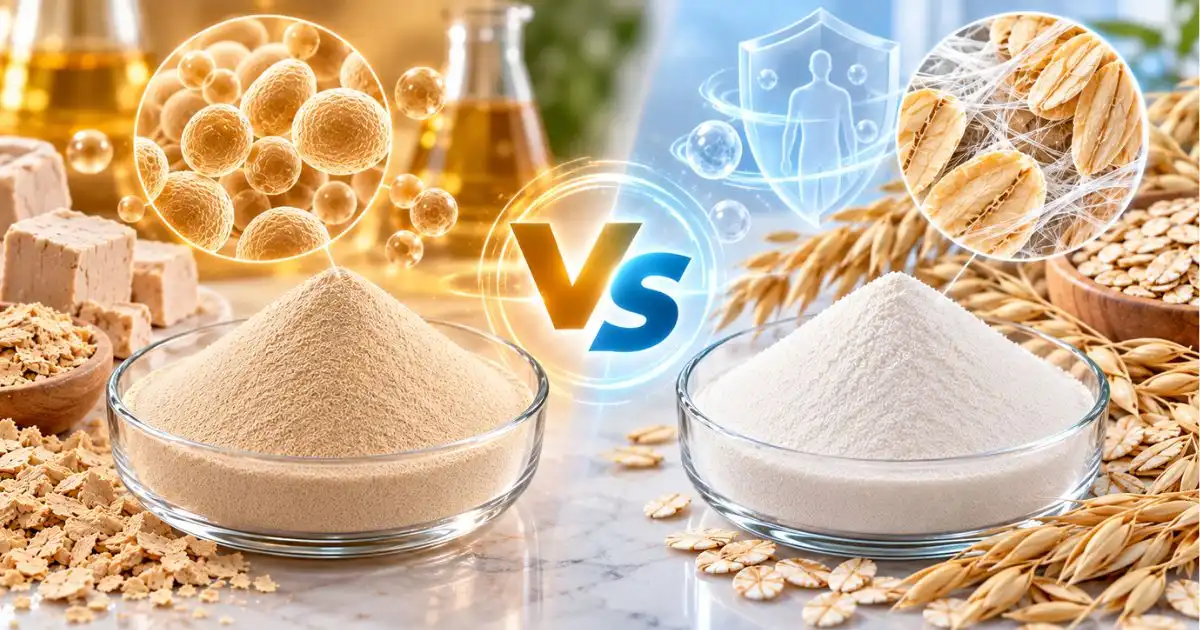
Yeast Extract Beta Glucan vs. Oat Beta Glucan Key Comparison for B2B Buyers
The structural difference between these two ingredients, oat beta glucan and yeast extract beta glucan, translates directly into formulation performance and regulatory positioning. Here is a side-by-side technical comparison to support your sourcing decision:
| Attribute | Yeast Beta Glucan (β-1,3/1,6) | Oat Beta Glucan (β-1,3/1,4) |
|---|---|---|
| Primary linkage | β-1,3 backbone + β-1,6 branches | β-1,3/1,4 linear chain |
| Main health function | Immune activation (innate + adaptive) | Cholesterol reduction, prebiotic fiber |
| Receptor target | Dectin-1, CR3 | Gut microbiota (fermentation) |
| Typical purity | ≥70% (immunomodulatory grade) | 30–70% (varies by processing) |
| FDA/EFSA positioning | Dietary supplement (immune support) | FDA-approved cholesterol health claim |
| Solubility | Both soluble and insoluble grades available | Primarily soluble |
Both ingredients hold their own in the right application. The table makes clear that if your product line centers on immune defense especially for seasonal wellness, athlete recovery, or gut-immune axis support yeast-derived glucan is the more suitable active ingredient.
Safety and Allergen Profile
Yangge's Yeast Beta-Glucan (β-1,3/1,6-Glucan) is Non-GMO, non-irradiated, and non-allergenic. It complies with Europe's PAH4 standard (Benzopyrene ≤10 ppb), which addresses a common QA concern for buyers supplying EU markets. Oat beta glucan carries a risk of gluten cross-contamination unless certified gluten-free, which adds a regulatory layer for sensitive-population products.
Regulatory Claim Landscape
Yeast beta glucan cannot carry the same FDA-authorized cholesterol claim that oat beta glucan holds. However, it qualifies under structure/function claim guidelines for immune support when dosed at clinically supported levels (250–500 mg/day). R&D and legal teams should verify claim language with a regulatory consultant before launch.
Procurement Considerations for B2B Clients
To find the right beta glucan ingredient such as yeast extract beta glucan, you need to do more than just look at the spec sheets. The way the purity was checked is just as important as the number itself.
| Specification | Yangge Yeast Beta-Glucan |
|---|---|
| Source organism | Saccharomyces cerevisiae cell wall |
| Purity | ≥70% (Glucan Enzymatic Method recommended) |
| Appearance | Fine, off-white to yellowish powder |
| Available forms | Soluble and insoluble |
| MOQ | 1 kg |
| Stock | 50–100 kg (in stock) |
| Packaging | 1 kg aluminum foil bag or custom |
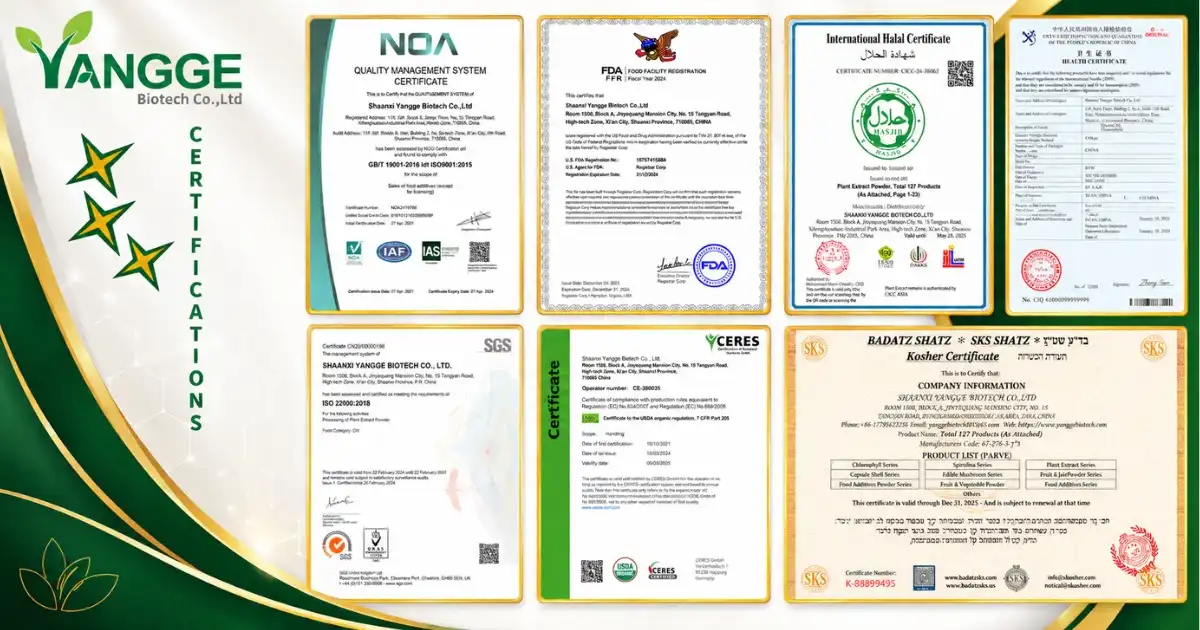
| Certifications | ISO, HACCP, Kosher, Halal, Non-GMO |
| OEM | Available |
Yangge Yeast Beta-Glucan is suggested as the starting material by the Glucan Enzymatic Method. The source is the cell wall of Saccharomyces cerevisiae. It needs to be at least 70% pure. The powder is fine and pale yellow to off-white. It comes in two forms: one that dissolves in water and one that does not. You can order as little as 1 kg, and we have 50–100 kg in stock. It comes in a 1 kg aluminum foil bag or a bag that is made just for you. The company is ISO, HACCP, Kosher, Halal, and non-GMO certified, and they also offer OEM.
Dosage and Formulation Planning
Buyers should be aware that regular HPLC methods for measuring total carbs can mistake flaws in alpha-glucan for flaws in beta-glucan, which can make purity numbers look better than they really are. If you want to find out if something has active β-1,3/1,6 content, you should always ask for the glycolytic method. To make sure that every CoA is valid, Yangge works with approved independent labs.
Supply Chain Reliability
Studies on people show that 250 to 500 mg per day is a good amount to help the immune system. If you feed animals, like fish and pigs, functional doses vary from product to product and are usually mixed into feed at rates chosen by your nutritionist based on the species and your health goal.
Application and Formulation Insights for Immunity-Boosting Products
Immune Supplement Capsules and Tablets
When yeast beta glucan is put into capsules or tablets, it works better than when it is mixed with water. Along with Zinc and Vitamin C, it makes for a good immunity stack. It can stay fresh for a long time in dry places because it is stable as a dry powder. It is easier to make hard capsules because the insoluble particles don't change how the mouth feels.
Functional Beverages and Dairy
Since a long time ago, the industry has had a problem with liquids getting gritty and sinking to the bottom. The soluble-grade yeast extract beta glucan fixes that problem. Before being pasteurized (heated to 121°C for up to 30 minutes), micronized or changed soluble forms can stay stable. They can also keep their clarity in healthy drinks, yogurt drinks, and sweetened oat milk replacements.
Pet and Animal Nutrition
One type of beta glucan found in yeast changes how biological responses work in aquaculture and pig nutrition. When there are a lot of shrimp in an area, this helps their natural defenses fight off bacterial pathogens like Vibrio. This raises their chances of life and feed conversion ratios (FCR). People in this active growth segment need to find alternatives to antibiotics, as do the people who make rules about them.
Making an Informed Decision: Which Beta Glucan Fits Your Business Needs?
The decision matrix is pretty simple to use once the product goals are known. β-1,3/1,6 yeast beta glucan is the best choice if your team is making supplements to boost the immune system, seasonal defense goods, formulas to help athletes heal, or food for animals. If the main claim is that the product lowers cholesterol or has fiber, then oat beta glucan is still the standard to follow.
Yeast beta glucan is good for companies that study the gut-immune axis because it helps the intestines work right and boosts immune responses in the mucosa. They don't have to use a second active ingredient, so they can be more creative with how they talk about the product.
From one source, you can get both soluble and insoluble types. This makes it easier to keep track of SKUs for all of your products, like softgels, ready-to-drink drinks, and pet treats.
Conclusion
Yeast extract beta glucan and Oat Beta Glucan are both good ingredients that have been studied a lot, but they do different things. The β-1,3/1,6 structure from Saccharomyces cerevisiae is better for making immune system-targeting products because it directly activates immunity cells, can be used with a wider range of forms (both soluble and insoluble), and has a strong clinical foundation.
FAQ
What is the difference between yeast beta glucan and oat beta glucan for immunity?
Yeast beta glucan has a β-1,3/1,6 structure that directly binds Dectin-1 receptors on macrophages, triggering innate immune responses. Oat beta glucan (β-1,3/1,4) primarily supports cholesterol reduction and prebiotic fiber functions. For immunity-specific claims, yeast-derived glucan has stronger clinical backing at doses of 250–500 mg/day.
Does yeast beta glucan cause yeast infections or contain gluten?
No. High-purity yeast beta glucan consists of purified, dead cell wall fragments not live yeast. Yangge's product is non-allergenic and tested under European PAH4 standards. It does not contain gluten and carries no yeast infection risk.
Why do different labs report different purity levels for the same batch?
Standard HPLC carbohydrate methods can misidentify alpha-glucan impurities as beta-glucan, inflating reported purity. Always specify the Glucan Enzymatic Method when requesting third-party verification of β-1,3/1,6 content.
What is the minimum order quantity from Yangge?
The MOQ is 1 kg, packaged in aluminum foil bags. Spot inventory of 50–100 kg is available, and OEM custom packaging is offered for scaling brands.
Can yeast beta glucan be used in hot beverages or processed foods?
Yes. It is thermostable at 121°C for up to 30 minutes and pH-stable from 2.0 to 12.0, making it suitable for UHT processing, extrusion, and hot-fill beverage production.
Request a Sample of Yangge Yeast Beta-Glucan Bulk Supply Available
A shape in yeast called β-1,3/1,6 can attach itself straight to Dectin-1 receptors on macrophages. This makes the immune system work. Oat beta glucan (β-1,3/1,4) lowers cholesterol and helps good bacteria grow. At doses of 250 to 500 mg per day, yeast-derived glucan has more scientific proof to back up claims that it makes defense stronger. For product inquiries, contact mailto: info@yanggebiotech.com.
References
1. Volman, J. J., Ramakers, J. D., & Plat, J. (2008). Dietary modulation of immune function by beta-glucans. Physiology & Behavior, 94(2), 276–284.
2. Talbott, S., & Talbott, J. (2009). Beta 1,3/1,6 glucan decreases upper respiratory tract infection symptoms and improves psychological well-being in moderate to highly-stressed subjects. Agro Food Industry Hi-Tech, 20(1).
3. Vetvicka, V., & Vetvickova, J. (2014). Immune-enhancing effects of Maitake (Grifola frondosa) and Shiitake (Lentinula edodes) extracts and beta-glucan. Annals of Translational Medicine, 2(2), 14.
4. Bohn, J. A., & BeMiller, J. N. (1995). (1→3)-β-D-Glucans as biological response modifiers: a review of structure-functional activity relationships. Carbohydrate Polymers, 28(1), 3–14.
5. Brown, G. D., & Gordon, S. (2003). Fungal beta-glucans and mammalian immunity. Immunity, 19(3), 311–315.
6. FDA. (1997). Food labeling: Health claims; oat and cardiovascular disease. Federal Register, 62(15), 3584–3601.

Based on your location and order quantity, you will have the opportunity to receive a limited time free shipping promotion!
Who we are
Popular Blogs