Why Matcha Powder Is Trending in Functional Beverages
Matcha Powder has surged to the forefront of functional beverage formulation due to its unparalleled combination of bioactive compounds, visual appeal, and versatility. This finely milled green tea powder delivers concentrated catechins, L-theanine, and natural caffeine—components that align perfectly with consumer demand for clean-label energy, cognitive enhancement, and antioxidant support.
Its vibrant emerald hue provides immediate visual differentiation on crowded shelves, while its umami-rich flavor profile creates memorable taste experiences. As health-conscious consumers increasingly seek beverages that deliver both functional benefits and sensory satisfaction, Matcha Powder has emerged as an essential ingredient that meets regulatory standards, formulation requirements, and market expectations simultaneously.
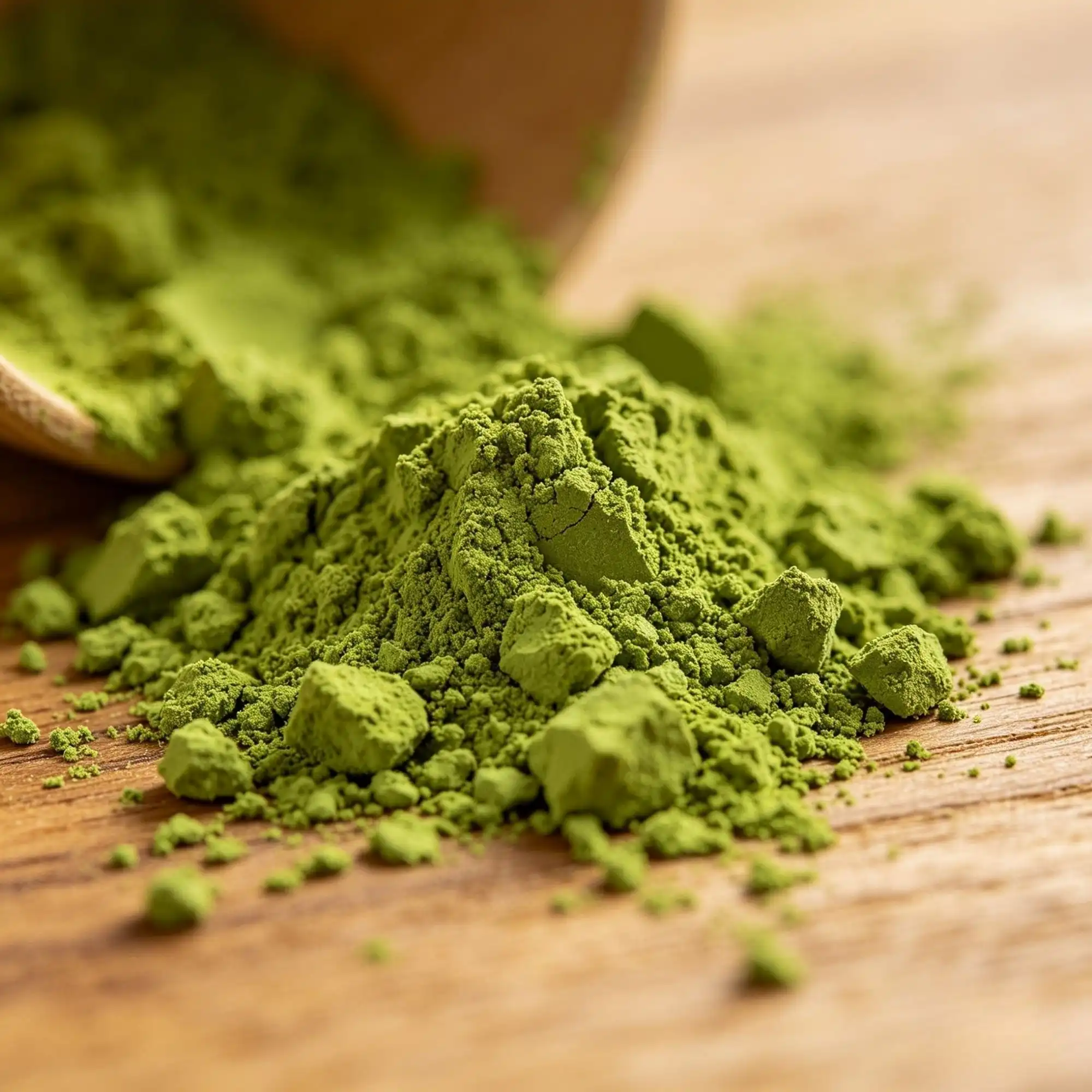
Understanding Matcha Powder and Its Functional Benefits
The Science Behind Shade-Grown Processing
Camellia sinensis leaves that have been grown in controlled shade for 20 to 30 days prior to harvest are used to make Matcha Powder. This farming method causes molecular changes in the plant that cause it to make too much chlorophyll and L-theanine while keeping catechin levels the same. The filtering process changes the leaf's chemical makeup in a big way, making the nutrients much better than in regular green tea. Our low-temperature baking and precise grinding methods protect these delicate chemicals, giving you a bioactive functional ingredient that dissolves in water and can handle the conditions of industrial processing.
Quantifiable Nutritional Advantages for Formulation
Premium-grade Matcha Powder has real, measured benefits that go beyond what the company says on the box. Epigallocatechin gallate (EGCG) and other antioxidants found in tea are what help keep your metabolism healthy and your cells safe. Harvard T.H. Chan School of Public Health research shows that Asian people, especially those in Japan and China, have long-term health correlations with the foods they eat. Procurement managers should check that the ingredients used to make functional drinks meet the following basic requirements: they should have a total catechin content of 5%, an L-theanine content of 2%, and particle sizes that range from 800 to 3000 mesh, based on the application. These requirements have a direct effect on the bioavailability, taste release, and stability of the suspension in finished goods.
Cognitive and Energy Performance Characteristics
L-theanine and natural caffeine from Matcha Powder work together to make you feel awake for a long time without the crash that comes with manmade stimulants. This molecular pair changes the activity of neurotransmitters, which leads to the production of alpha brain waves that are linked to calmness and focus. For beverage companies that want to reach performance-oriented customers like athletes, workers, and students, this is a positioning chance backed by science. The caffeine level in Matcha Powder stays mild but effective, usually between 25 and 35 mg per gram of powder. This makes it possible to precisely control the amount when formulating.
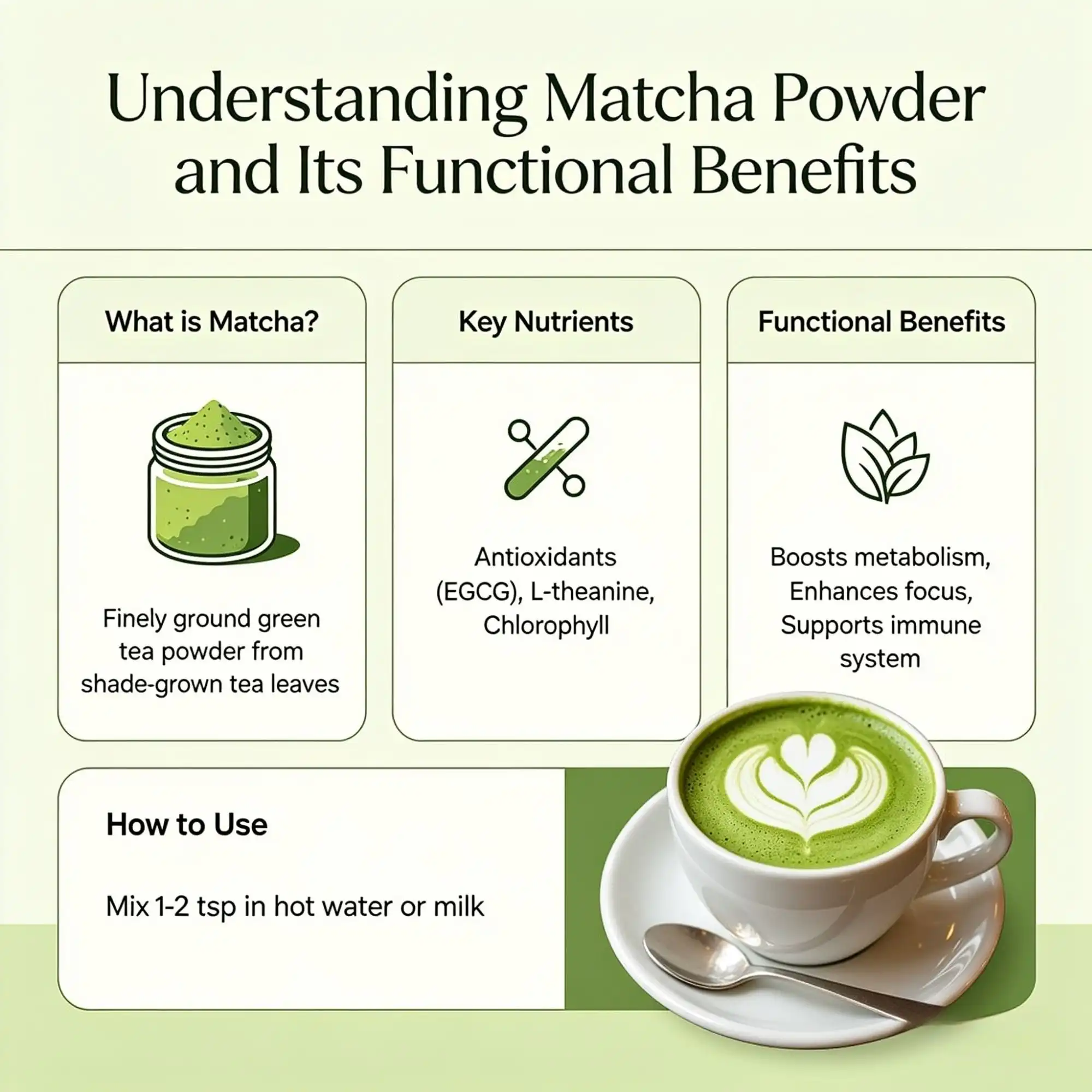
Why Matcha Powder Is a Preferred Ingredient in Functional Beverage Formulation
Grade Selection and Application Optimization
Knowing the difference between ceremonial and culinary grades can help you avoid making mistakes that cost a lot of money. Ceremonial grade is best for quality ready-to-drink teas and health shots where the ingredient can stand on its own. It has a light sweetness and little astringency. Culinary grade has a slightly stronger taste and mixes easily into complicated mixtures like protein shakes, functional lattes, and smoothie blends, where other ingredients balance out the vegetable notes. Yangge Biotech sells pharmaceutical-grade Matcha Powder that meets KOSHER and USP standards. It is available in bulk sizes of one ton and is in stock right away, so you can keep your production plans on track.
Processing Parameters That Preserve Functionality
Controlling the temperature while making drinks has a direct effect on how well antioxidants stay in the drink and how stable the color stays. Water temps below 80°C (176°F) are best for keeping catechins fresh while keeping the bright green look that customers expect. Our technical paperwork gives detailed instructions on how to handle pH levels, light, and oxidation—important information for R&D teams making goods that will last on store shelves. The low-temperature baking and grinding extraction method we use ensures that the raw material has little thermal degradation and a uniform particle size distribution across 800, 2000, and 3000 mesh standards.
Regulatory Compliance and Safety Assurance
In many places, makers of functional drinks have to deal with strict rules and regulations. Our Matcha Powder has been certified as GMP, ISO, HACCP, KOSHER, and Halal. This means that it meets the compliance needs of buying managers every day. Full paperwork tracking from the farm where the food comes from to the final package meets FDA and EU regulations and supports claims that the food is organic or natural. This full set of certifications cuts down on the time it takes to get qualified, speeds up product starts, and lowers supply chain risk by using quality systems that have been checked.
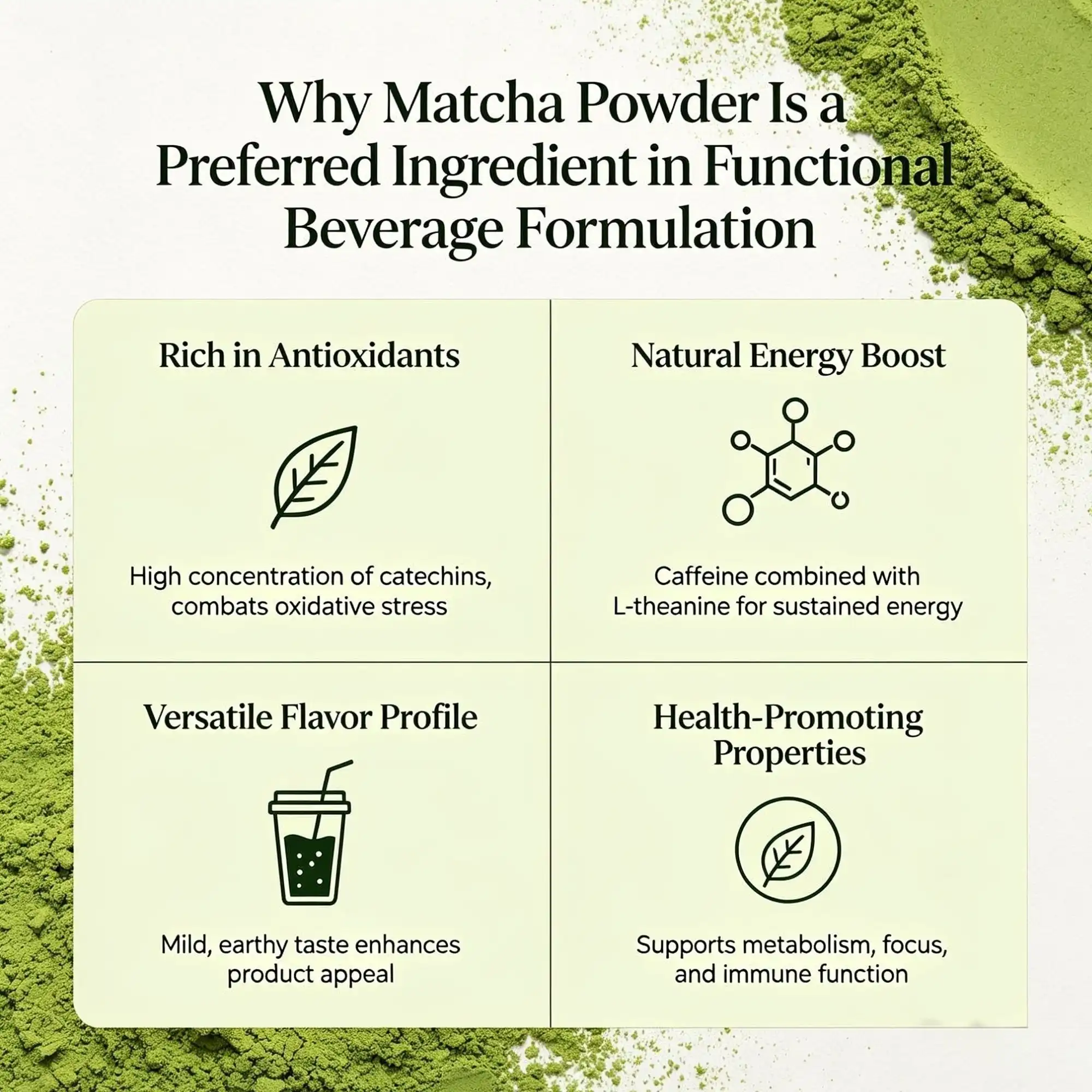
Market Insights and Procurement Guide for B2B Buyers
Strategic Sourcing Considerations
When buying Matcha Powder in bulk, you need to look at more than just the unit price. Long-term relationship success depends on the supplier's ability to make consistent batches and the reliability of their operations. Yangge Biotech has dedicated production lines with quality control methods that make sure there is no more than 3% difference between batches for key specs. This is an important factor to consider when going from a prototype to mass production. Our ISO-certified facilities handle shade-grown leaves and can track them from the farm to the table. This meets the standards for openness that set premium brands apart in a market full of competitors.
Cost Optimization Through Volume Partnerships
Structured procurement deals that combine inventory investment with supply security are good for big manufacturers. We offer economies of scale with minimum order numbers of one ton, and our warehousing facilities allow for just-in-time shipping that fits with your production schedules. For ceremonial and culinary grades, pricing systems are based on how the market is doing right now, and contract choices protect against changes that happen with the seasons. Comparative study shows that working with vertically integrated suppliers lowers the total cost of ownership by 12–18% compared to using a middleman to find suppliers.
Supplier Evaluation Criteria
Procurement managers should look at possible partners in more than one way, not just based on price. During times of high demand, the dependability of fulfillment depends on how much production potential there is. Providing technical help, such as formulation advice, concentration specs, and usage suggestions, is useful at all stages of product creation. Our 24-hour customer service makes sure that differences in time zones never stop you from making important choices. Yangge Biotech's efforts to use renewable energy and build long-lasting relationships with communities help the company meet corporate responsibility requirements that are becoming more important to both brand owners and end customers.
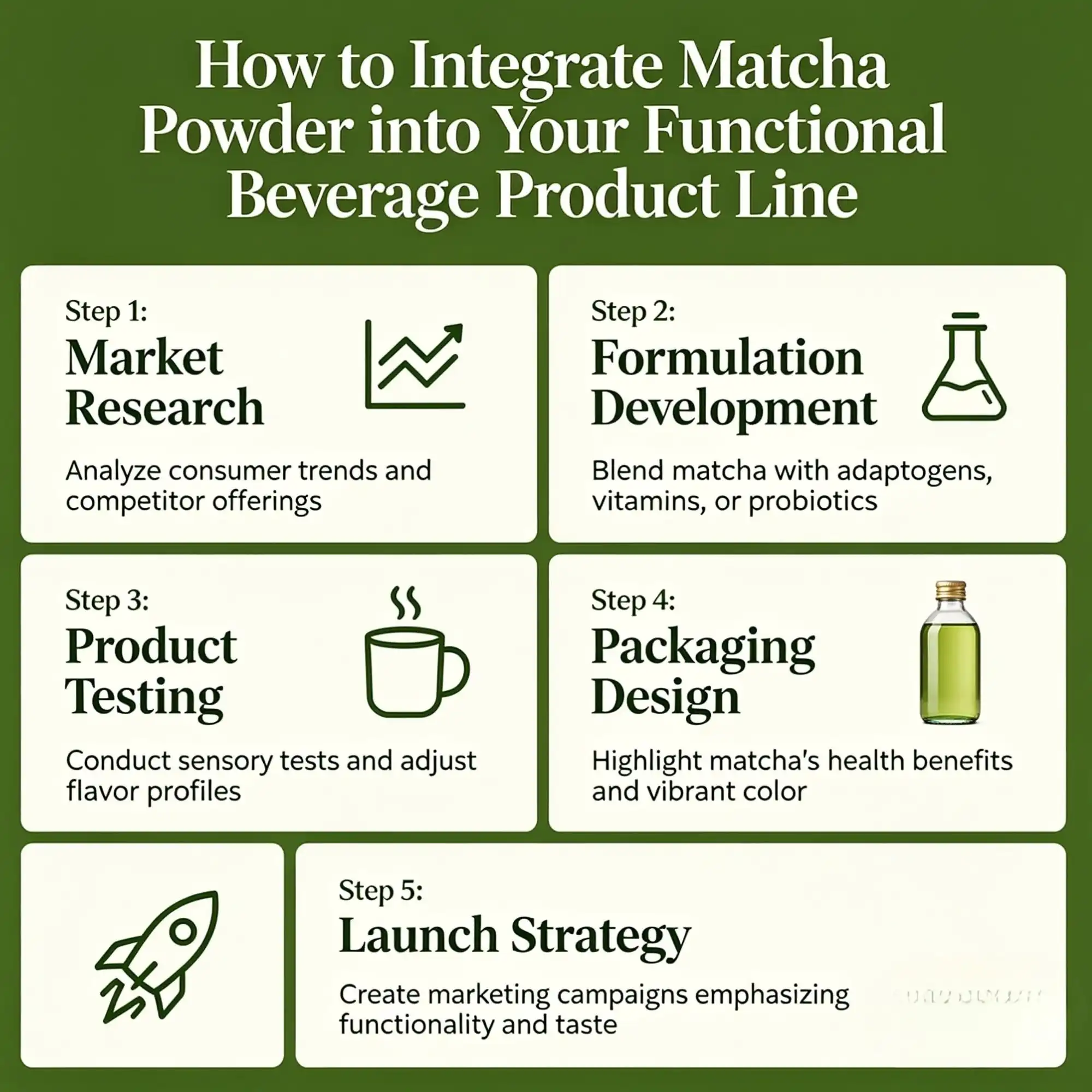
How to Integrate Matcha Powder into Your Functional Beverage Product Line
Formulation Best Practices
For integration to work, the dose needs to be carefully calculated based on the functional claims and sensory goals that are wanted. Inclusion rates usually fall between 0.5% and 3% by weight, but this can change based on the type of drink and the items that go well with it. We can mix Matcha Powder with adaptogens, vitamins, or protein isolates based on your unique needs as part of our personalized services.
The small particle size makes it possible for the mixture to spread quickly in both hot and cold environments, getting rid of the gritty taste that makes people not want to use it. Through proven mixing methods and stability testing data, technical exchange talks with our R&D team will cut down on the time it takes to develop your product.
Real-World Application Examples
Matcha Powder has been used by top healthy drink brands to make goods that define their categories. It is mixed with B vitamins and fluids by companies that make energy drinks for pre-workouts. Plant-based drink makers use its natural sweetness to cut down on the amount of sugar they add to oat and almond milk smoothies. Wellness shot makers mix it with ginger and turmeric ingredients to make products that boost the immune system. These case studies show that you can be flexible across a number of different types of beverages, giving you solid foundations for your product development efforts.
Labeling and Certification Strategies
In useful beverage categories, buying choices are based on how transparent the consumer is. For an organic license to be real, there must be proof of ownership throughout the supply chain. Our full tracking system gives you batch-specific certificates of analysis, allergen statements, and non-GMO verification—proof that speeds up the process of getting your labels approved. Custom package choices can include your logo and support both private label and OEM needs. Our packaging is flexible enough to fit a wide range of market entry tactics, such as traditional retail, natural channel sales, or e-commerce platforms.
Future Trends and Innovation in Matcha Powder Functional Beverages
Emerging Product Formats
The ready-to-drink section continues to grow quickly, thanks to people's desire for ease. High-growth groups include useful hydration drinks, cold brew concentrates, and sparkling waters with Matcha Powder in them. New developments in processing technology have made it possible to keep antioxidant activity by sterilizing in a retort and processing under high pressure. This means that goods can be stored at room temperature without needing to be chilled. These technological breakthroughs make it easier for manufacturers with the right processing facilities to reach more customers.
Sustainability and Supply Chain Transparency
Every year, consumers become more interested in where ingredients come from, especially those who buy high-end products. Yangge Biotech's relationships with farming communities make sure that workers are treated fairly and that the earth is taken care of during cultivation. Our efforts in renewable energy and well-known environmental practices in China will help your business as sustainability stops being a novelty and starts being a standard. Blockchain-enabled tracking systems, which are currently being tested in pilot projects, will make things more clear than ever before, giving forward-thinking brands an edge in the market.
Ingredient Innovation Opportunities
In markets that are already full, products that use rare plant extracts and new mixtures of plants make them stand out. Matcha Powder provides both taste appeal and biological synergy, making it the perfect base for complex functional stacks. New study into the health of microbiomes, how to deal with stress, and how to keep your mind sharp for longer shows that you can make claims other than energy and antioxidants. Strategic connections with suppliers that have technical skills allow for quick formulation iteration, which speeds up your reaction to new scientific findings and market trends.
Conclusion
Matcha Powder is becoming popular in useful beverages because more and more people want to use products that are good for them, processed in a clean way, and are true to their culture. When purchasing managers and research and development workers look at a company's raw material collection, this ingredient stands out because it is bioactively powerful, can be used in a variety of ways, and is compliant with regulations. Market trends show steady growth across a range of beverage types, which is helped by ongoing improvements in processing technology and openness in the supply chain. To be successful in this ever-changing area, you need to work with sellers who provide steady quality, technical knowledge, and ethical buying practices.
Partner with Yangge Biotech for Premium Matcha Powder Supply
Yangge Biotech is ready to help you with your new useful drink idea by making pharmaceutical-grade Matcha Powder following the tightest quality standards. As a reputable provider of Matcha Powder with ISO, HACCP, KOSHER, and Halal certifications, we offer the technical know-how, supply dependability, and customization options that serious makers need.
Our bulk offerings include one-ton minimum orders that can be filled right away, reasonable wholesale prices, and OEM services that include custom mixing, changing specifications, and designing branded packages. Get in touch with our buyers at info@yanggebiotech.com to ask for samples of our products, detailed data sheets, and custom quotes. Let us help you turn market trends into business success by building relationships with you based on quality, openness, and common growth goals.
FAQ
Q: Can we get some samples to test before purchasing?
A: Of course, we can provide free samples of 20 to 100 grams, but the shipping cost is at the customer's expense. The shipping cost can be deducted from the next order, or the samples can be sent through your courier account.
Q: Do your products have relevant certifications?
A: Yes, our products are certified for HALAL, ISO, HACCP, Kosher, and other certifications.
Q: What is the minimum order quantity (MOQ)?
A: Small batches of samples can be customized according to your requirements.
Q: Do you offer OEM and ODM services? Can the formula be customized based on our own?
A: Of course, we provide ODM and OEM services to many customers. Our product range includes softgels, capsules, tablets, sachets, granules, and private label services. Simply contact us and let us know your requirements. Our experienced R&D team can also develop new products with specific formulas.
Please contact us to design your own branded products.
Q: How do you handle quality complaints?
A: First, we have a comprehensive quality control SOP. We provide authoritative third-party inspection reports for almost all products before shipment to minimize the possibility of quality issues. Second, we have a comprehensive return and exchange procedure. If there is a genuine quality dispute, we will strictly follow the SOP.
Q: How do you ship? How long does delivery take?
A: For small orders, we typically use DHL, UPS, EMS, FedEx, or TNT. Delivery typically takes 3-7 days. We also offer air and sea freight services. We have a strong freight forwarding team and can provide you with a one-stop service, including DDP and DDU.
Q: What are your payment terms?
A: 100% prepayment, payable by T/T, Western Union, MoneyGram, or PayPal.
Q: What is the shelf life of your products?
A: 2 years with proper storage.
References
1. Hu, Frank B. "Nutritional Properties and Health Benefits of Shade-Grown Green Tea." Harvard T.H. Chan School of Public Health, Department of Nutrition, 2022.
2. Chen, Li and Tanaka, Yoshihiro. "Biochemical Adaptations in Camellia sinensis Under Shade Cultivation: Impact on L-theanine and Catechin Synthesis." Journal of Agricultural and Food Chemistry, Vol. 68, 2020.
3. Morrison, Rebecca T. "Functional Beverage Formulation: Ingredient Selection and Processing Parameters for Bioactive Retention." Food Science and Technology International, 2021.
4. Peterson, James and Wu, Xiaomei. "Global Market Analysis: Matcha and Green Tea Powder in Functional Food Applications." International Journal of Food Science and Nutrition, 2023.
5. Anderson, Sarah K. "Regulatory Compliance in Functional Beverage Manufacturing: FDA, EU, and International Standards." Food Safety Magazine, Annual Industry Review, 2022.
6. Yamamoto, Kenji. "Traditional Processing Methods and Modern Quality Control in Premium Matcha Production." Japanese Journal of Food Engineering, Vol. 24, 2021.

Based on your location and order quantity, you will have the opportunity to receive a limited time free shipping promotion!
Who we are
Popular Blogs