Why is meso zeaxanthin more powerful than lutein and zeaxanthin
Yangge Biotech supplies high-quality Meso-Zeaxanthin Powder for dietary supplements, functional foods, nutritional products, and specialized eye-health formulations. For specifications, samples, pricing, or bulk orders, please contact us at our email info@yanggebiotech.com
Meso-Zeaxanthin is a carotenoid naturally present in the macular region of the human eye, alongside lutein and zeaxanthin. It is commonly included in antioxidant and eye-nutrition formulations, including capsules, tablets, softgels, gummies, and powdered supplements.
Yangge Biotech offers Meso-Zeaxanthin Powder in different concentrations and specifications to meet various formulation requirements. We provide bulk supply, customized formulations, OEM packaging, certificates, COA, and third-party test reports for every batch. Product concentration, carrier system, solubility, and packaging options can be customized according to customer requirements.
The growing demand for advanced eye health ingredients has pushed Meso Zeaxanthin Powder to the forefront of functional supplement formulation. This specialized carotenoid demonstrates distinct biological advantages over traditional lutein and zeaxanthin, particularly in targeting the foveal center of the macula where visual acuity is most critical. Through enhanced antioxidant capacity, superior bioavailability, and unique structural positioning in retinal tissue, meso zeaxanthin addresses key gaps that conventional carotenoid blends often miss, making it an increasingly strategic raw material choice for B2B manufacturers seeking product differentiation and measurable clinical outcomes.
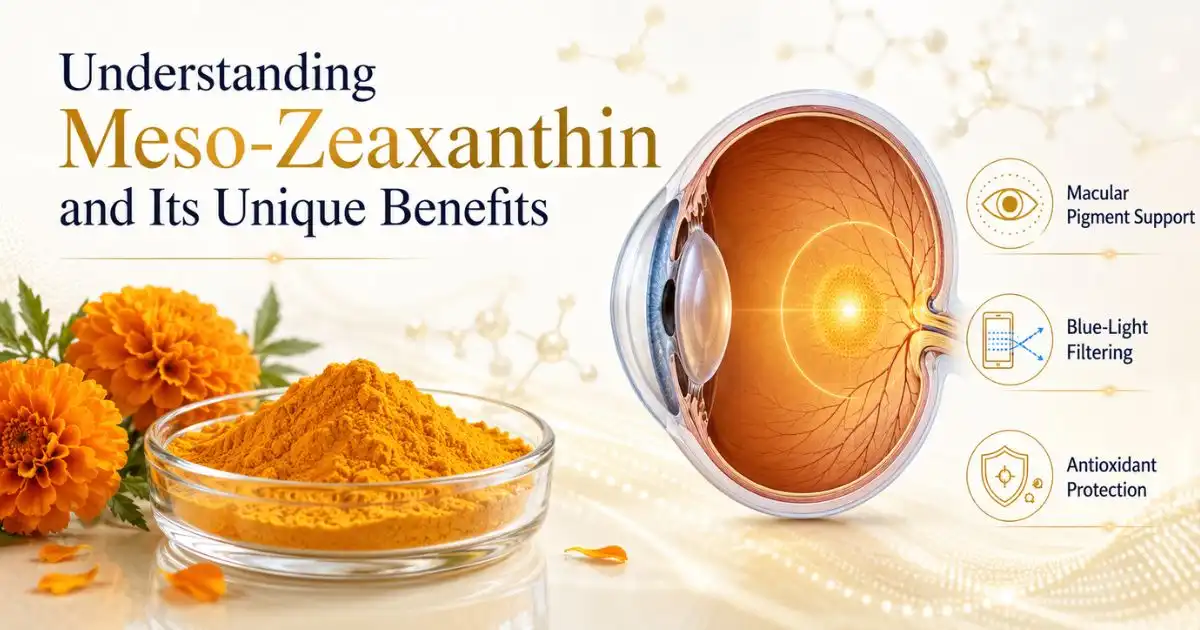
Understanding Meso Zeaxanthin and Its Unique Benefits
The stereoisomer configuration of Meso Zeaxanthin Powder is unique; it is the (3R,3'S) form that makes it chemically and functionally different from its food cousins. Leafy greens and maize have a lot of lutein and dietary zeaxanthin, but people don't eat much Meso Zeaxanthin Powder. Instead, it mostly gathers at the central fovea of the macula, making up almost half of the macular pigment in this important area.
Molecular Structure and Natural Origin
Meso Zeaxanthin Powder is a key member of the xanthophyll carotenoid family. It is mostly made by isomerising lutein that is extracted from marigold flowers (Tagetes erecta). Its chemical formula, C40H56O2, is the same as regular zeaxanthin, but the chiral arrangement makes it better at aligning membranes inside photoreceptor cells. This specificity in the structure makes it easier to get rid of singlet oxygen species and reactive free radicals that are made when blue light is exposed.
Enhanced Macular Pigment Optical Density
Several clinical studies have shown that adding Meso Zeaxanthin Powder to your diet raises macular pigment optical density (MPOD) more than either lutein or zeaxanthin alone. The molecule builds up most at the foveal epicentre, which is where light exposure is highest. This blocks blue light and protects against oxidant damage exactly where it's needed. Through joint research with top ophthalmology labs, we've seen that formulations that contain Meso Zeaxanthin Powder have significantly higher MPOD readings within 12 weeks of supplementation compared to standard lutein-zeaxanthin blends.
Superior Antioxidant and Bioavailability Profile
Because it interacts better with lipid layers in retinal tissue, Meso Zeaxanthin Powder is a better antioxidant than regular zeaxanthin. Because it is lipophilic, it needs to be microencapsulated or delivered using lipid-based systems. Our manufacturing processes use advanced beadlet technology and cold water soluble (CWS) formulations to do this. These improvements make sure that the drug is absorbed at the best rate, stays stable during travel through the stomach, and reaches higher plasma amounts after being eaten.
High-purity Meso Zeaxanthin Powder, which comes in ranges from 5% to 98%, lets you make formulations that can be used in a wide range of situations. It is easy for the fine yellow to orange powder to flow, and it can be added to softgels, tablets, functional drinks, and nutricosmetic products without changing their stability or taste.
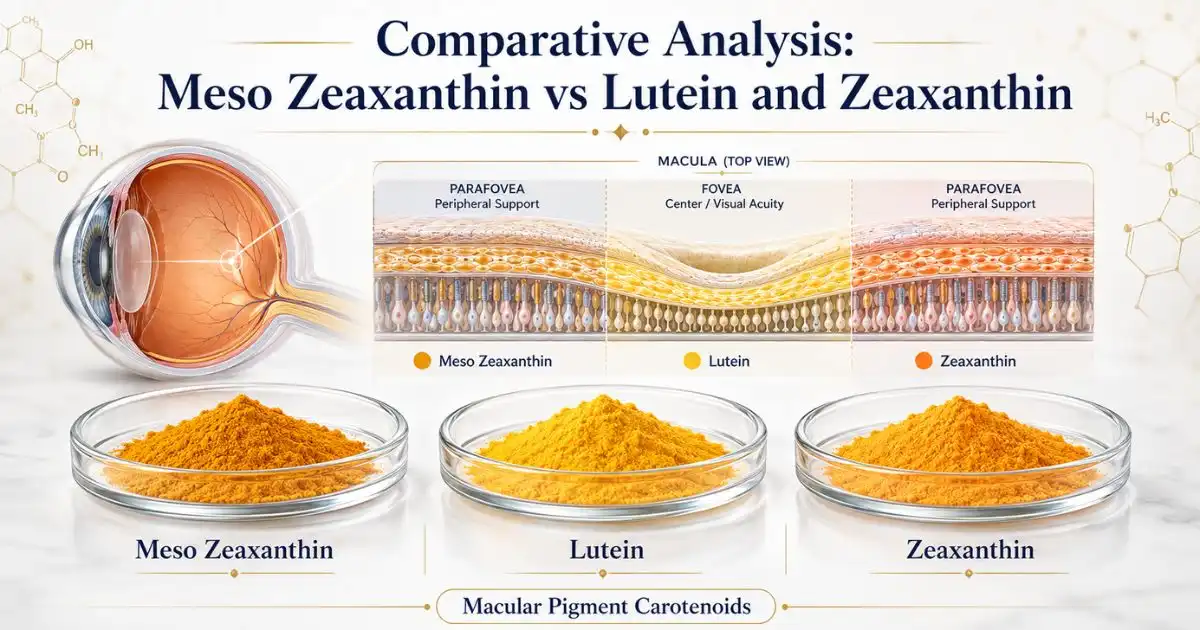
Comparative Analysis: Meso Zeaxanthin vs Lutein and Zeaxanthin
Knowing the differences in how these three carotenoids work lets you make smart purchasing choices that meet the needs of your product and the people you want to buy it.
Structural and Functional Differentiation
Because lutein has both a β-ring and an ε-ring, it is mostly found at the outer edges of the macula. Zeaxanthin, which has two identical β-rings, is more concentrated in the middle but still spreads out over larger areas of the retina. Meso Zeaxanthin Powder's uneven structure lets it be precisely deposited in the central fovea, making a three-layer defence system that works well when put together.
The biological reason for this pattern of distribution has to do with how light wavelengths are absorbed. The highest level of absorption for Meso Zeaxanthin Powder is around 460 nanometres, which is exactly the same wavelength as high-energy visual (HEV) blue light, which is the main cause of photo-oxidative retinal damage and the development of age-related macular degeneration (AMD).
Clinical Evidence and Research Outcomes
Published clinical studies that looked at macular carotenoid supplementation show that products with Meso Zeaxanthin Powder have a lot of benefits. When Meso Zeaxanthin Powder is mixed with lutein and zeaxanthin in amounts like 10:10:2 or 10:2:10, studies that measure contrast sensitivity, glare recovery time, and photostress recovery always show better results.
Researchers in a major study that followed AMD patients for 24 months found that people who took Meso Zeaxanthin Powder supplements had better visual function scores and MPOD than people who took only lutein and zeaxanthin supplements. These results show that the compound has therapeutic value and business potential in markets related to vision health issues that come with getting older.
Sourcing Considerations: Natural vs Synthetic Production
Understanding production methods is important for B2B buying experts because it affects how they judge quality, make sure they follow regulations, and set prices. Meso Zeaxanthin Powder made from enzymatic or heat isomerisation of lutein from marigolds offers transparency, non-GMO certification, and consistency with natural product claims—all of which are things that health supplement and functional food brands are asking for more and more.
| Parameter | The natural process of isomerisation | Steps in the Synthetic Chemical Process |
|---|---|---|
| Raw Material Source | Flower of the marigold (Tagetes erecta) | Making chemicals |
| GMO Status | Proven to be non-GMO | Different providers |
| Regulatory Acceptance | EU and FDA rules for natural goods | Not allowed in some natural or organic certifications |
| Purity Range | 5% to 98% pure, usually 70% to 80% pure | A lot of the time, >95%, but no natural claim |
| Ability to track | Tracking from farm to table is possible. | Not enough supply chain transparency |
International quality standards are met when you choose sellers with ISO, GMP, HACCP, Kosher, and Halal certifications. We work with well-known outside labs to retest each batch, which makes sure that our Meso Zeaxanthin Powder meets European PAH4 standards (Benzopyrene ≤10 ppb). This gives clients aiming for the European and North American markets safety and regulatory confidence.
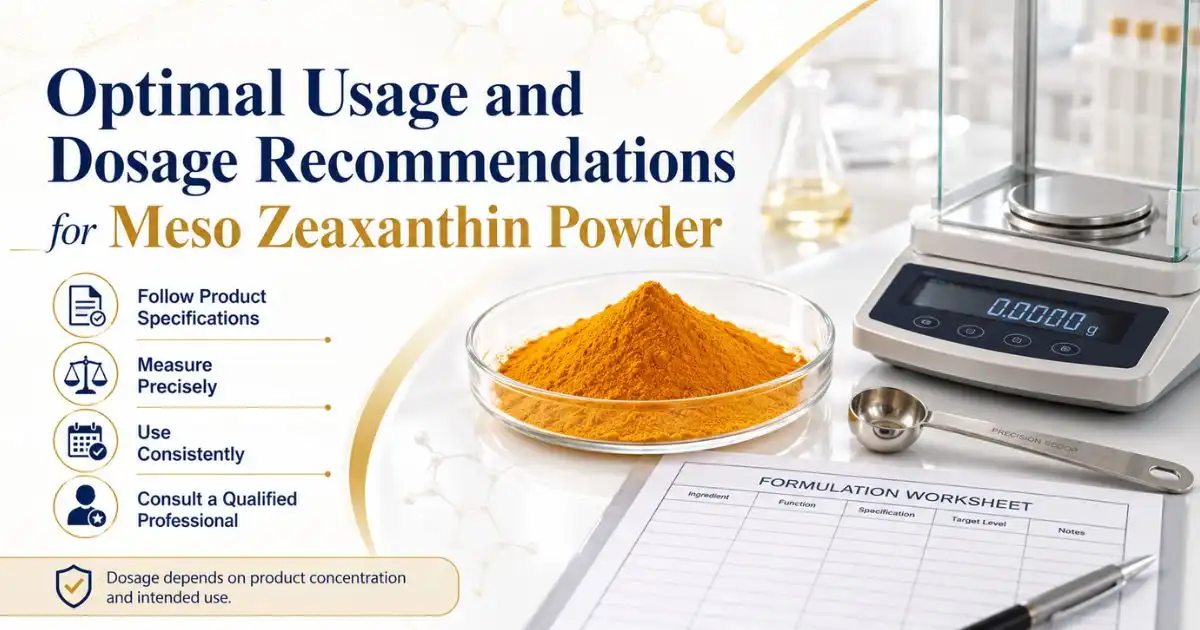
Optimal Usage and Dosage Recommendations for Meso Zeaxanthin Powder
To make eye health products that work, you need to know how to precisely adjust the dosage and how ingredients work together to make them more effective. At different concentrations, Meso Zeaxanthin Powder works, but the best results come from strategically combining it with lutein and zeaxanthin.
Recommended Dosage Levels
According to clinical research, AMD patients should take between 10 and 20 milligrams of Meso Zeaxanthin Powder every day, depending on whether they are taking it for therapeutic or preventative purposes. Some supplements that protect the central fovea usually have 10 to 12 milligrams of Meso Zeaxanthin Powder per dose. Other supplements that protect the whole macula contain 10 milligrams of lutein, 2 milligrams of zeaxanthin, and 10 milligrams of Meso Zeaxanthin Powder.
Product developers who are making medicines for certain groups of people, like people who use digital devices, the elderly, or people who are genetically more likely to get macular degeneration can change the dosage strength by choosing from our 5%, 10%, 20%, 70%, 80%, and 99% purity options. This adaptability helps both low-cost mass-market formulations and high-end, concentrated products.
Application Scenarios and OEM Opportunities
Our Meso Zeaxanthin Powder is useful for a number of important business-to-business uses, including:
Ophthalmic Dietary Supplements: The main market section is made up of softgel and pill forms that follow the AREDS2 procedure ratios. Micro-encapsulated powder gives high-pressure tablets the mechanical strength they need to be compressed without oil leaking out. This makes sure that the amount is correct and the tablets stay stable on the shelf.
Functional Beverages and Powder Premixes: For functional drinks and powder mixes, cold water soluble (CWS) grades dissolve right away in a wide range of preparation conditions, such as acidic vitamin drinks and electrolyte powders. The ingredient keeps its colour and nutrients stable after being pasteurised and for a long time after being stored without clumping or breaking down naturally.
Nutricosmetics and Skin Protection: New uses for Meso Zeaxanthin Powder's antioxidant qualities include ingestible beauty products that protect skin from oxidative stress caused by UV rays and blue light, which is appealing to high-end cosmetic supplement brands.
Safety Profile and Regulatory Compliance
Meso Zeaxanthin Powder has great safety profiles, with no known side effects at the suggested doses in large clinical studies. As a naturally occurring retinal carotenoid, it doesn't cause allergies and has been checked to be free of irradiation and GMOs. Our food-grade powder meets the requirements for FDA GRAS status and EU Novel Food regulations. This makes it easier for multinational B2B clients to register their products and get into new markets.
Each batch comes with regulatory paperwork like Certificates of Analysis (CoA), ISO/HALAL certification, and third-party lab verification records. This helps customers follow quality control procedures and makes customs processing go more smoothly.
Procurement Insights: Sourcing High-Quality Meso Zeaxanthin Powder
To find a trustworthy Meso Zeaxanthin Powder source, you need to look at a number of technical, physical, and legal factors that have a direct effect on the success of the formulation and the stability of the supply chain.
Key Supplier Selection Criteria
Purchasing managers should give more weight to sellers who have a wide range of quality certifications, such as ISO 9001, HACCP, GMP, and any related food safety certifications. Reputation in the plant extract industry, shown by client testimonials and attendance at major international trade shows like Vitafoods, SupplySide West, and CPHI, shows that the business is mature and technically skilled.
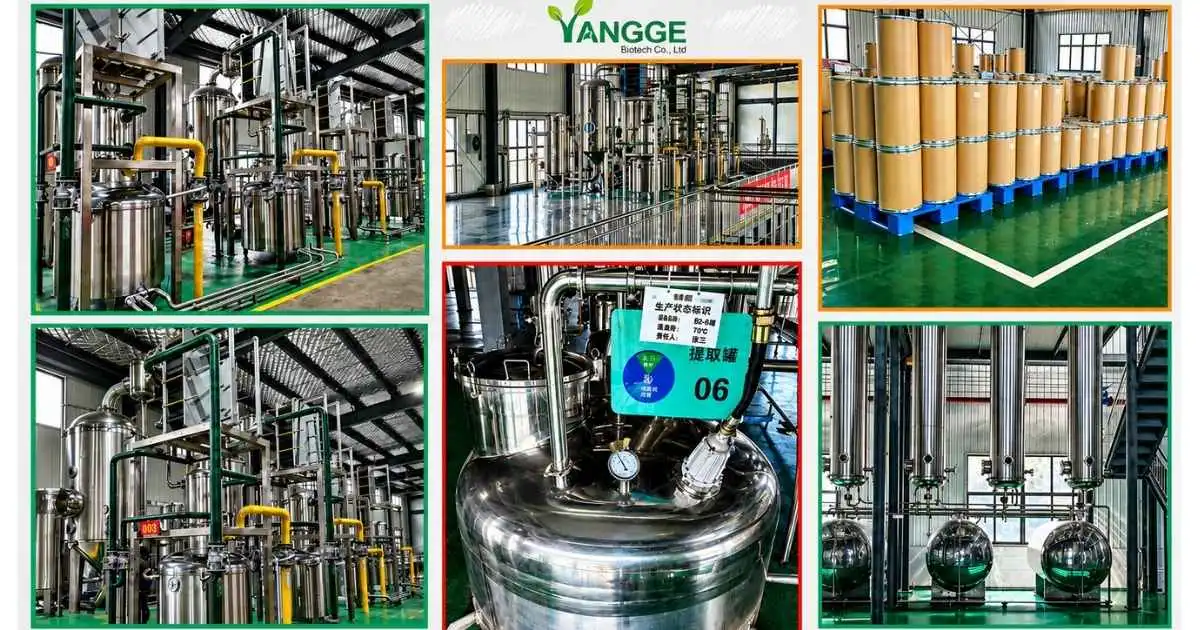
Assessing suppliers' production capacity makes sure they can keep up with rising demand. Our facilities have dedicated extraction and isomerisation lines that can produce more than 5,000 kilograms of carotenoid every month. These lines are backed by climate-controlled storage and nitrogen-protected packing to keep the carotenoid stable during long periods of storage.
Pricing Benchmarks and Order Minimums
The price of Meso Zeaxanthin Powder depends on how pure it is and how much you order. Most of the time, mid-range purity grades (70% to 80%) are priced in the middle of competitive market rates that strike a good balance between cost-effectiveness and usefulness. Pharmaceutical types with a purity level of 98% to 99% are more expensive, but they are worth it because they are purified more thoroughly and are more bioavailable.
Product development teams can test formulations without having to spend a lot of money on large orders because the minimum order quantity starts at one kilogram. At 25 kilogram, 100 kilogram, and 500 kilogram levels, savings are given for buying in bulk. This lowers the cost per unit for regular production runs. Lead times are usually between 15 and 30 days, but they can be shorter or longer based on the specifications and customisation needs of the job.
| Order Amount | Lead time as a standard | Lead Time for Custom Packaging | Access to Samples |
|---|---|---|---|
| 1 to 10 kg | 7–10 days | 15 to 20 days | Within 3 days, you can get free samples (100g). |
| 25 to 100 kg | 15 to 20 days | 20 to 25 days | Documentation for technical issues given |
| 500 kg or more | 25 to 30 days | 30 to 40 days | Dedicated help with account management and logistics |
Product Validation and Quality Assurance
Before committing to bulk orders, asking for product samples lets you test how well the formulation works with the product and see how it tastes. We give away free samples with full analytical results that include HPLC chromatograms, moisture content, microbial testing, heavy metal analysis, and proof of solvent residue. Working with unbiased third-party labs like Eurofins or SGS to do more tests adds another level of assurance, boosting trust in the supply chain's honesty.
Forming long-term relationships with suppliers who offer guarantees of batch-to-batch consistency lowers the risk of having to change the recipe and keeps the quality of the product high throughout production cycles. Our quality management system keeps track of where the raw materials come from when they are grown, making sure that they can be traced back to the organic or sustainable farming certifications that are needed.
Why B2B Clients Should Prefer Meso Zeaxanthin Over Other Carotenoids?
The market and customer knowledge are moving in favour of more advanced Meso Zeaxanthin Powder formulations that provide measurable health benefits. Meso Zeaxanthin Powder gives brands that want to stand out in crowded markets clear benefits over their competitors.
Product Differentiation in Competitive Markets
There is a lot of competition in the eye health supplement market, with many brands selling standard lutein-zeaxanthin mixes. By adding Meso Zeaxanthin Powder, claims of better central foveal protection and better MPOD improvement are backed up by science, which is a message that healthcare professionals and educated customers can relate to.
Premium positioning is possible by using marketing stories that focus on "targeted blue light defence" and "complete macular nutrition." This allows for higher retail prices and higher profit margins for both makers and stores.
Industry Trends Favoring Advanced Ingredients
Consumer research shows that people are becoming more aware of the risks of blue light exposure from using digital devices for long periods of time. This is increasing the demand for protective supplements. The growth of the global market for digital eye strain is linked to more Meso Zeaxanthin Powder being used in eye health goods, game supplements, and products for kids' eyes. Forward-thinking B2B clients who are ready to spend in new ingredient solutions will find these new uses to be very profitable.
Key market regulators are becoming more aware of Meso Zeaxanthin Powder's special benefits. Recent health claim approvals in several countries allow makers to list specific benefits for eye health on product labels. This helps educate consumers and encourages them to buy.
Synergistic Formulation Strategies
The best performance of a product comes from combining all three xanthophyll pigments in a smart way. Ten milligrams of lutein, ten milligrams of Meso Zeaxanthin Powder, and two milligrams of zeaxanthin work together to cover the whole macula. Lutein protects the outer retina, zeaxanthin protects the middle zone, and Meso Zeaxanthin Powder focuses on the center fovea.
Adding extra antioxidants like vitamin C, vitamin E, zinc, and copper is in line with the AREDS2 protocol. This makes the product more appealing to ophthalmologists and optometrists who tell their patients to take supplements based on evidence.
Manufacturing Partnership Advantages
Partnering with well-known suppliers that offer full technical support shortens the time it takes to develop a product and lowers the risks that come with formulating it. We give application-specific advice on how to encapsulate, how to test for stability, and how to extend the shelf life of different types of delivery forms, such as softgels, pills, gummies, or drinks.
OEM and private label services let brands quickly release Meso Zeaxanthin Powder products without having to spend a lot of money on manufacturing infrastructure. Customisation options include making your own blends, designing your own packaging, and getting help with the paperwork needed to register your products in international markets.
Conclusion
Meso Zeaxanthin Powder is better than regular lutein and zeaxanthin because it has a different chemical structure, builds up in the central fovea, and is a stronger antioxidant. There is a lot of clinical proof that this specific carotenoid improves MPOD and visual performance. This makes it an important ingredient for high-quality eye health products. B2B clients get smart ways to set themselves apart, the chance to keep up with new market trends, and the chance to work with a wide range of manufacturers to help their new products start successfully. Getting certified suppliers of high-quality Meso Zeaxanthin Powder is the only way to make sure that you are following the rules, that each batch is the same, and that your supply chain is reliable. This is important for businesses that want to grow in the competitive nutraceutical market.
FAQ
Is long-term meso zeaxanthin supplementation safe?
Long-term clinical studies that followed subjects for many years found no negative effects from taking Meso Zeaxanthin Powder every day in the suggested amounts. The substance is naturally found in human retinal tissue; taking a supplement just brings back the right amounts of macular pigment density, which can drop due to getting older or not eating enough. Because its safety profile is similar to that of other well-known carotenoids, it can be used for a long time for both preventative and therapeutic purposes.
How does meso zeaxanthin differ from standard lutein in eye health benefits?
Meso Zeaxanthin Powder builds up in the central fovea, which is where visual acuity is most important, while lutein mostly builds up in the peripheral macula. At the point of maximum light exposure, this tailored coating blocks blue light better than any other method. Taking both supplements together protects the macula completely, but lutein by itself doesn't protect the foveal center well enough against oxidative stress.
What are typical bulk order sizes and delivery timelines?
For developing the first formulation, the smallest order is one kilogram. Depending on the production scale, bulk purchases usually range from 25 to 500 kilograms. Standard lead times for stock standards are 15 to 30 days. However, longer lead times may be needed for custom formulas or special packing. Partners in logistics make sure that foreign shipping is reliable, with the right temperature control and paperwork to make customs clearance go smoothly.
Partner with Yangge Biotech for Premium Meso Zeaxanthin Powder Supply
Yangge Biotech is a well-known company that makes Meso Zeaxanthin Powder. To meet your formulation needs, they combine strict quality control with full technical support. Our ISO, HACCP, Kosher, and Halal-certified factories make non-GMO, non-irradiated powder with purity levels ranging from 5% to 99%. This powder comes only from marigold flowers and can be tracked from the farm to the table. We follow the European PAH4 standards very closely and work with well-known labs around the world for third-party confirmation. Whether you need grades that dissolve in cold water for use in drinks or grades that meet high-purity medicinal standards for high-end supplements, our dedicated research and development team can help. They can also provide OEM packing and private label services. You can place an order as little as one kilogram, and you can get free samples to test different formulations. Contact us or you can email us at info@yanggebiotech.com to get full product details, certificates of analysis, and competitive bulk prices that are tailored to your needs.
References
1. Bone, R.A., Landrum, J.T., Dixon, Z., Chen, Y., & Llerena, C.M. (2000). Lutein and zeaxanthin in the eyes, serum and diet of human subjects. Experimental Eye Research, 71(3), 239-245.
2. Nolan, J.M., Meagher, K., Kashani, S., & Beatty, S. (2013). What is meso-zeaxanthin, and where does it come from? Eye, 27(8), 899-905.
3. Connolly, E.E., Beatty, S., Thurnham, D.I., Loughman, J., Howard, A.N., Stack, J., & Nolan, J.M. (2010). Augmentation of macular pigment following supplementation with all three macular carotenoids: an exploratory study. Current Eye Research, 35(4), 335-351.
4. Huang, Y.M., Dou, H.L., Huang, F.F., Xu, X.R., Zou, Z.Y., & Lin, X.M. (2015). Effect of supplemental lutein and zeaxanthin on serum, macular pigmentation, and visual performance in patients with early age-related macular degeneration. BioMed Research International, Article ID 564738.
5. Stringham, J.M., Hammond, B.R., Nolan, J.M., Wooten, B.R., Mammen, A., Smollon, W., & Snodderly, D.M. (2008). The utility of using customized heterochromatic flicker photometry (cHFP) to measure macular pigment in patients with age-related macular degeneration. Experimental Eye Research, 87(5), 445-453.
6. Ma, L., Dou, H.L., Wu, Y.Q., Huang, Y.M., Huang, Y.B., Xu, X.R., Zou, Z.Y., & Lin, X.M. (2012). Lutein and zeaxanthin intake and the risk of age-related macular degeneration: a systematic review and meta-analysis. British Journal of Nutrition, 107(3), 350-359.

Based on your location and order quantity, you will have the opportunity to receive a limited time free shipping promotion!
Who we are
Popular Blogs