How does almond protein behave in high-heat baking versus cold beverages
Yangge Biotech supplies high-quality Almond Protein Powder, a nutritious plant-based protein ingredient made from carefully selected almonds. For product specifications, samples, pricing, or bulk orders, please contact us at our email address info@yanggebiotech.com
Almond Protein Powder has a mild nutty flavor and is suitable for protein shakes, nutritional supplements, bakery products, snack bars, functional foods, and vegan formulations. Yangge Biotech provides bulk supply, OEM packaging, quality certificates, COA, and third-party test reports for every batch.
Almond protein performs distinctly across temperature extremes, revealing critical functional differences that impact product development. In high-heat baking environments, this plant-based ingredient undergoes controlled denaturation, enhancing structural integrity while contributing to moisture retention and protein enrichment. Conversely, in cold beverage applications, it maintains exceptional solubility and emulsification properties, creating smooth mouthfeel without heavy stabilization systems. Understanding these behavioral contrasts enables formulators to strategically select appropriate specifications—whether 50%, 70%, or 90% protein concentrations to optimize performance, batch consistency, and consumer acceptance across diverse food matrices.
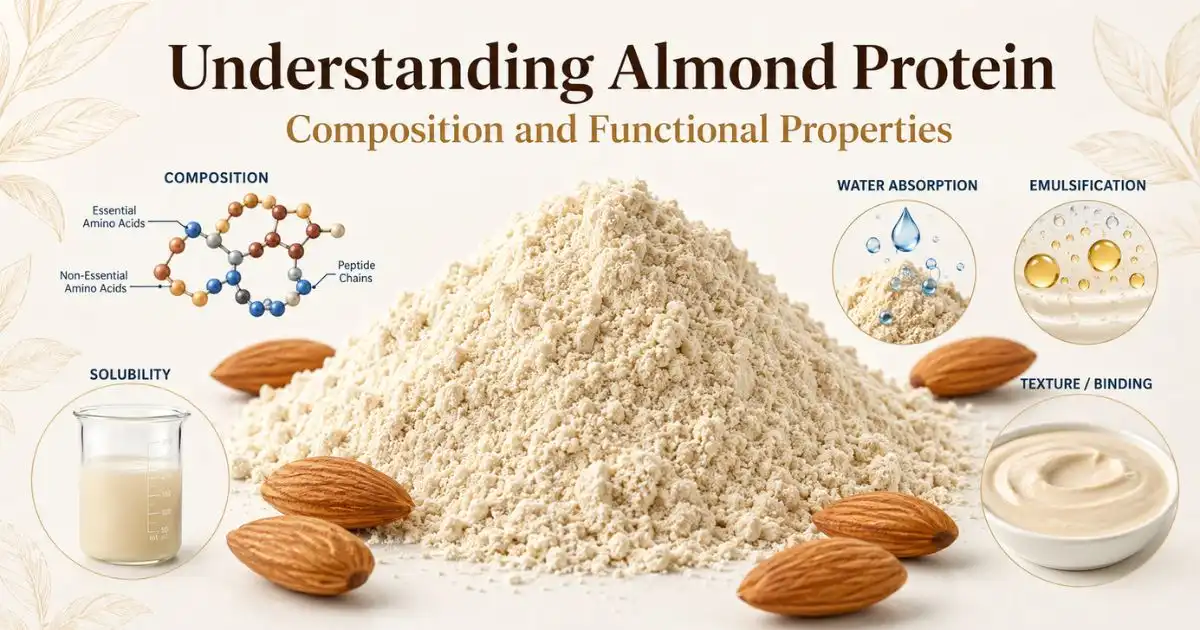
Understanding Almond Protein: Composition and Functional Properties
Molecular Architecture and Amino Acid Profile
Almond protein comes from the seed part of Prunus dulcis, extracted through advanced aqueous or enzymatic methods that protect its native globulin and albumin fractions. There is a lot of branched-chain amino acids and a lot of arginine in the amino acid composition (9–11% of the total protein). These are important for making muscle protein. This profile places almond-derived proteins competitively against soy and pea alternatives, giving digestibility rates topping 85% based on PDCAAS methods.
Almond protein's bioactive peptides show that they are useful for purposes other than nutrients. Yangge's almond protein powder, which is extracted using HPLC, keeps the integrity of the amino acids and meets protein specifications of 50%, 70%, and 90%, which gives you precise control over the formulation. The white powder look means there isn't much oxidation, which is a key quality indicator for long-term safety.
Comparative Functional Characteristics
When compared to other plant proteins, almond-based ingredients have unique physicochemical properties that affect how they are made. The neutral to pleasant nutty flavor profile means that masking agents are not needed as much as they are with pea or hemp proteins. Because of this sensory benefit, costs will go down and label statements will be clearer.
| Plant Protein Source | Protein Content (%) | Primary Functional Advantage | Typical Allergen Concern |
|---|---|---|---|
| Almond (Yangge) | 50-90 | Superior flavor, heat stability | Tree nut allergen |
| Pea Isolate | 80-85 | High protein density | Minimal allergens |
| Soy Isolate | 90-92 | Excellent emulsification | Common allergen |
| Rice Protein | 70-80 | Hypoallergenic profile | Minimal allergens |
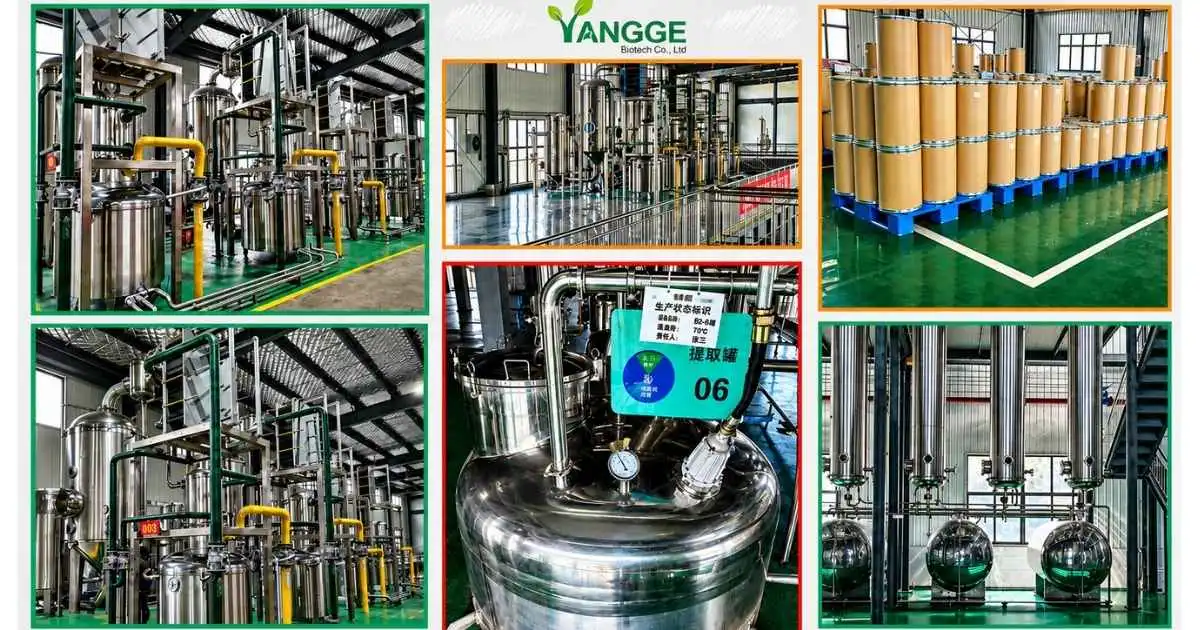
Yangge uses HPLC as an extraction method that keeps the delicate protein structures whole, keeping the functional qualities that are needed for both heat processing and cold chain applications. This level of technical accuracy directly addresses concerns about batch-to-batch consistency that come up during procurement, especially for manufacturers who have to follow strict GMP and ISO standards.
Processing Parameter Sensitivity
When it comes to pH levels, moisture levels, and thermal factors, almond protein exhibits flexible behavior. Protein solubility is best at normal pH (6.5–7.5), which makes it perfect for ready-to-drink mixes. When things are acidic (pH 4.2–4.6), the globulin fraction goes through controlled polymerization. This is helpful in cultured dairy alternatives because it makes gel networks that feel like yogurt.
Managing moisture is especially important for shelf-stable products. Almond protein has a special lipid-protein structure that protects against oxidation and improves its ability to bind oil, even after defatting. This feature keeps the texture of protein bars from breaking down over time, which is a problem that often happens with whey-based formulations.
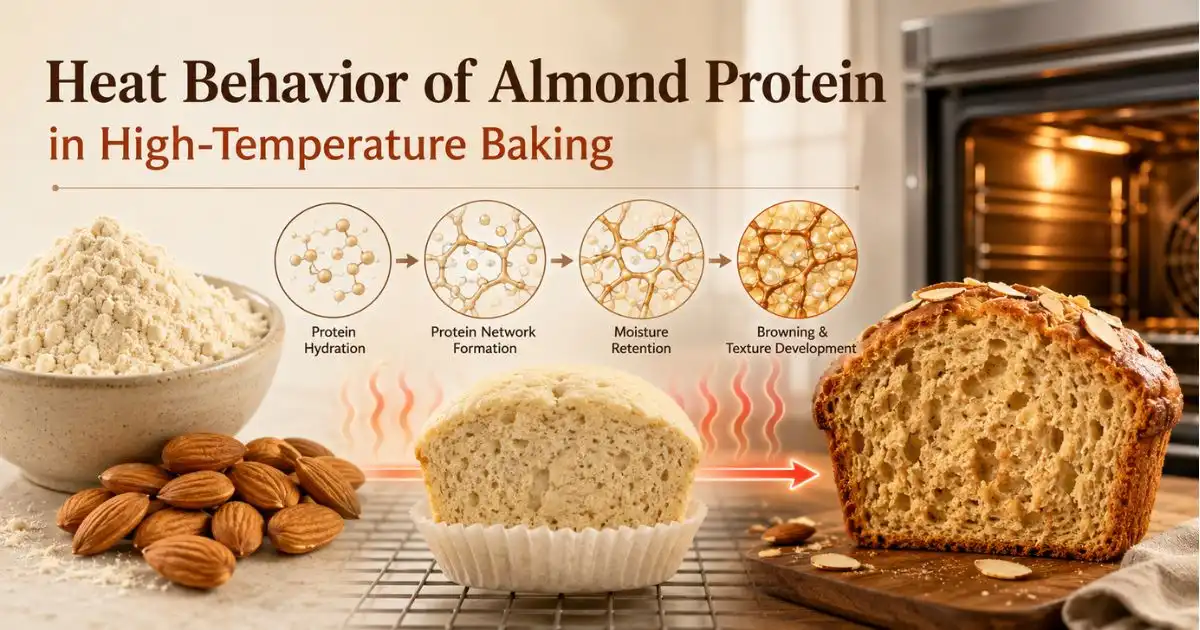
Heat Behavior of Almond Protein in High-Temperature Baking
Structural Transformations During Thermal Processing
Baking at temperatures between 160°C and 220°C causes proteins to denature in a controlled way, allowing tertiary and quaternary structures to unfold without breaking down completely. Almond protein keeps its molecular flexibility, while animal-based proteins can become rubbery when cooked too much. The mix of amino acids, especially the smaller amount of sulfur-containing amino acids compared to whey, makes it so that proteins don't cross-link as much when heated.
Almond protein helps to form the crumb structure during typical baking stages that last between 15 and 30 minutes by binding water. Almond protein powder naturally contains 12–15% fiber, which helps keep moisture in the dough and prevents the dry, crumbly texture that is common with high-protein baked goods. This dual feature solves problems for formulators while also providing nutritional value that health-conscious customers will like.
Managing Browning and Flavor Development
When temperatures are high, the Maillard reaction between reducing sugars and free amino groups speeds up. This makes flavor and browning compounds that are unique to the food. This reaction is heightened by the arginine-rich profile of almond protein, which can be good or bad depending on how the product is positioned. For handmade breads or whole-grain recipes, better browning helps get the color and nutty notes you want in the crust.
To control too much browning, strategic formulation changes are needed. Almond protein can be combined with other plant proteins to reduce color development, as can lowering the amount of sugar, changing the pH with stabilizing agents like sodium bicarbonate, and so on. Yangge offers a range of standard choices (50%, 70%, and 90%), which gives formulators more freedom. Lower protein concentrations naturally have more leftover carbohydrates and fats, which affect how they react to heat in different ways than high-purity isolates.
Commercial Bakery Applications and Case Studies
When protein levels reach 8 to 12 percent of flour weight, industrial bakeries that add almond protein to protein-rich breads notice an improvement in specific volume and a softer texture. The sandwich bread was successfully remade by a European bakery chain using 70% almond protein concentrate, resulting in 6g of protein per slice and a 10-day shelf life that satisfied customers. Being gluten-free and vegetarian-friendly went well with the clean-label image.
Almond protein is good for muffins and cakes because it doesn't hold too much water and isn't too dense. Almond protein powder can replace 20 to 30 percent of wheat flour, and the remaining fat content helps to give the food a smooth, satisfying texture. Almond protein can withstand standard industrial baking without the need for special equipment modifications, which makes it easier to integrate into production lines that are already in place.
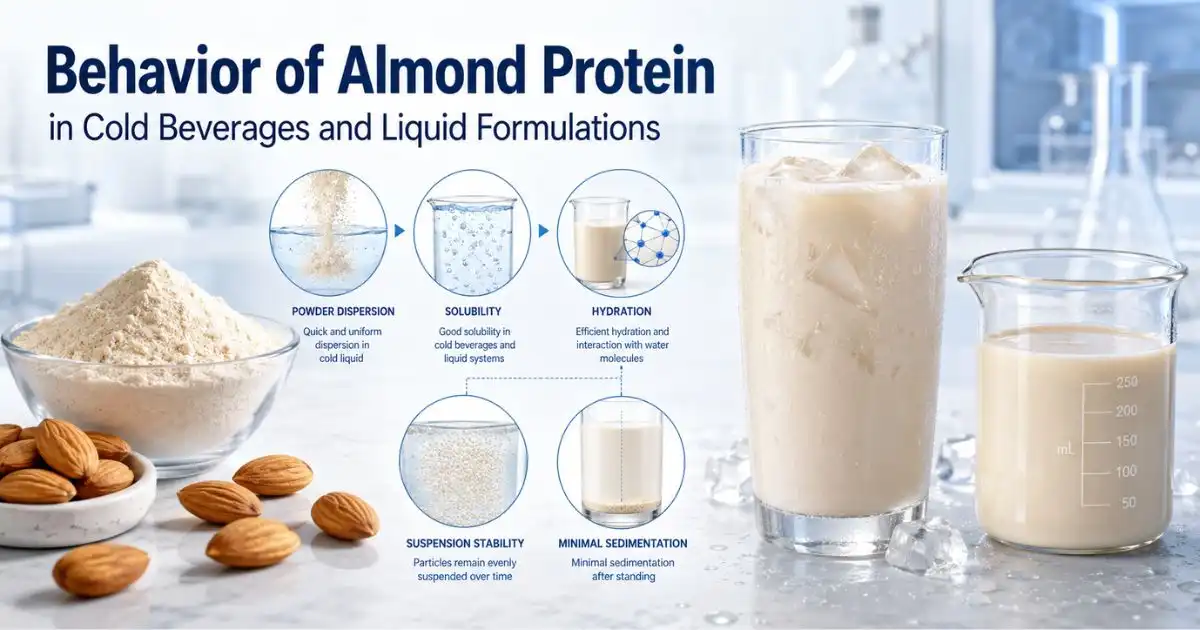
Behavior of Almond Protein in Cold Beverages and Liquid Formulations
Solubility Dynamics and Protein Dispersion
Making cold drinks is more difficult technically because of the way the proteins are distributed, how they feel in the mouth, and how clear they look. When handled correctly, Almond protein dissolves into a colloidal solution without being overly sheared by mechanical means. Because it is compact and dissolves in water, the albumin fraction, which makes up about 30 to 40 percent of all proteins, plays a big role in this behavior.
To make a stable solution, you need to know the isoelectric point (pI) close to pH 4.5, which is the point at which proteins dissolve the least. Yangge's almond protein keeps its dispersion throughout its shelf life even though sports nutrition drinks are usually made with a pH range of 6.8 to 7.2. Almond protein has a lower viscosity than options made from grains because of its low carbohydrate content, which allows for more protein to be added without becoming too thick.
Emulsification Properties and Texture Optimization
Almond protein's remaining lipid part works as a natural stabilizer, keeping oil-in-water emulsions stable. This is common in functional drinks with omega-3 oils or fat-soluble vitamins. This amphiphilic property gets rid of or greatly reduces manufactured emulsifiers like polysorbate, helping to meet the clean-label goals that health-conscious customers and regulatory bodies are increasingly calling for.
Texture modification in plant-based milk replacements benefits from almond protein's neutral contribution to mouthfeel. Pea protein can make foods feel chalky, and soy protein can make foods taste like beans after eating them. Almond protein, on the other hand, mixes easily into high-end products. Beverage makers who want to appeal to sports and fitness fans like it when the full amino acid profile and nice sensory qualities work together.
Comparative Performance Against Dairy and Plant Proteins
Whey protein is still the best for use in cold drinks because it dissolves easily and amino acids are absorbed quickly. Beyond just being nutritionally equivalent, almond protein has other benefits, such as being allergen-free and environmentally friendly. The fiber content gives you extra health benefits related to feeling full and digestive health that whey can't give you.
Almond protein needs a lot less flavoring to be accepted by consumers when compared to pea protein, which is the most popular plant-based alternative. Almond protein beverages regularly receive higher ratings from sensory groups for overall flavor and clean aftertaste. This means less money spent on formulation and an easier-to-read label, both very important in competitive drinking markets where the cost of ingredients has a direct effect on profit margins.
Formulation teams should think about ways to mix ingredients that use protein sources that work well together. When Yangge's 70% almond protein is combined with smaller amounts of rice protein, the amino acids work better together and the cost of the raw materials is reduced. Adding natural stabilizers like guar gum (0.1 to 0.3%) or gellan gum stops settling during distribution. This is especially important for RTD forms that are stable at room temperature but will be vibrating during logistics.
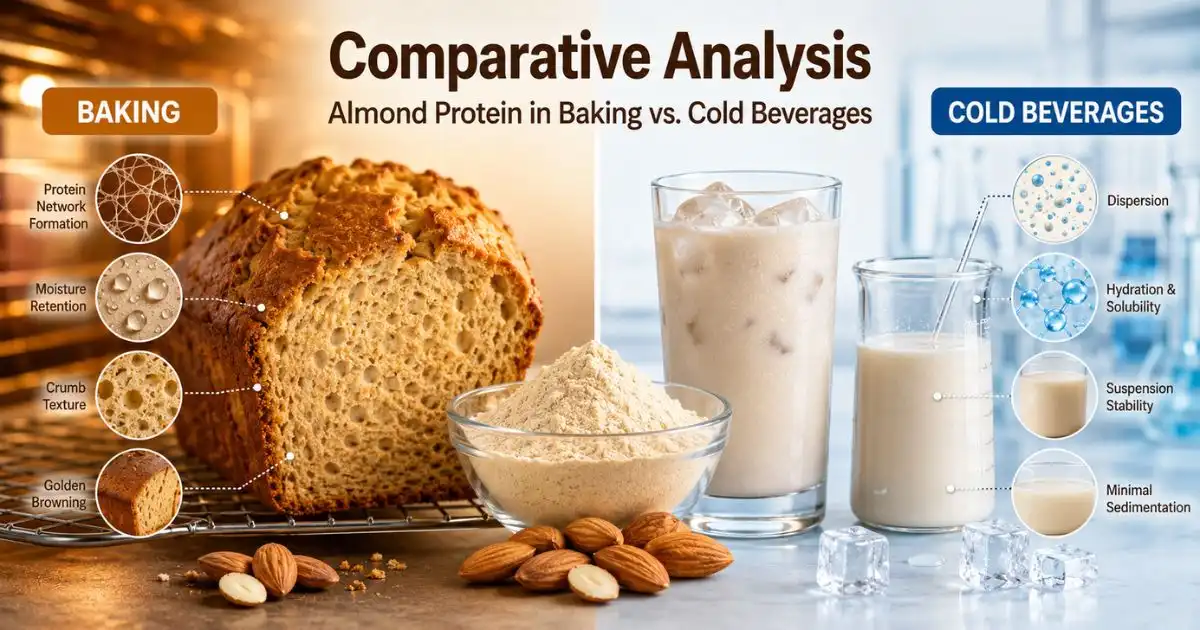
Comparative Analysis: Almond Protein in Baking vs. Cold Beverages
Functional Behavior Across Temperature Spectrums
Due to basic differences in the structure needs of proteins, Almond protein performs differently when subjected to heat stress compared to cold processing. Partially denatured proteins interact better with each other, creating structural matrices that are useful in baking. It's important to choose the right standard based on the end use when making cold drinks because they need native structures that stay intact and keep the colloidal stability.
Professionals in buying should use decision models that put protein concentration in order of importance based on the needs of the application. The 50% specification is good for baked goods where the leftover fats and fibers add to the texture in a good way. The 90% specification is good for beverage uses that need to get the most protein into a meal while staying within caloric limits. This is especially true in sports nutrition groups that want to get 20 to 30 grams of protein per serving.
Strategic Ingredient Selection for Product Development
Manufacturers who are making product lines with two or more uses have to make tough sourcing decisions. Keeping separate specifications for each ingredient improves performance but makes inventory more complicated and raises the minimum order quantities. Yangge can produce a lot of products and offer a variety of shipping choices, so they can help clients with both specialized optimization and standard ingredient platforms.
| Application Category | Recommended Specification | Key Performance Indicator | Typical Usage Rate |
|---|---|---|---|
| High-protein bread | 50–70% | Moisture retention, crumb softness | 8-12% of flour weight |
| Protein bars | 70% | Binding, shelf-life stability | 15–25% of total weight |
| RTD beverages | 70-90% | Solubility, mouthfeel | 2-5% of total volume |
| Protein shakes (powder) | 90% | Protein density, dispersibility | 60–80% of blend |
More and more, organic certification and non-GMO proof affect buying choices. This is especially true for goods aimed at North American and European markets, where openness is valued by both regulators and consumers. Yangge's FDA-approved, Kosher, and Halal certifications provide the necessary paperwork for international trade. This makes it easier for buyers to follow the rules in environments with lots of regulations.
Cost-Performance Optimization Strategies
The cost of raw materials makes up a big part of the cost of goods sold (COGS) for final goods. This makes price-performance rates very important for staying competitive. Due to the cost of farming and processing, almond protein has historically been more expensive than other plant proteins. Strategic buyers arrange long-term supply deals that keep prices stable and make sure that almonds are always available. This is especially important because climate change can affect almond crops in their main growing areas.
Quality concerns go beyond the amount of protein present and include testing protocols for heavy metals, pesticide residues, and microbiological contamination. Concerns about these issues are addressed by Yangge's promise to test every package in an international lab. This provides the tracking paperwork that big food companies are increasingly requiring as they implement strict supplier qualification programs. Standardized extraction methods allow batches to be consistent, which lowers formulation variability and protects against costly production fails.
Selecting and Procuring Almond Protein for Your Business Needs
Evaluating Supplier Capabilities and Certifications
Almond protein procurement criteria should place an emphasis on both product quality and technical help skills. Formulators who are having trouble with an application need expert support that is quick to respond and knows both the science of the ingredients and the engineering of the process. As a committed R&D partner, Yangge Biotech Co., Ltd. helps clients with formulation optimization, stable testing methods, and scale-up proof.
Certification files show that a provider is dedicated to quality systems and following the rules. Yangge's almond protein powder has FDA approval, which means that the way it is made meets the strict food safety standards needed to enter the U.S. market. Halal and Kosher certifications make markets bigger, which is especially helpful for companies that want to reach a wide range of customers or enter the Middle East and specialized North American markets.
GMP and ISO certifications give you peace of mind about the quality of your products and the methods you use to control quality. These certificates are very important when a customer audits or when a big retailer's seller qualification program requires third-party proof. When suppliers keep full certification portfolios that are recognized by all regulatory authorities, the paperwork that comes with international trade is a lot lighter.
Logistics Considerations for International Sourcing
Minimum order amounts, wait times, and shipping processes all have a big effect on planning purchases, especially for smaller makers or those starting new lines of products with unclear volume forecasts. Yangge's shipping choices are flexible enough to meet the needs of a wide range of customers, from those who are just starting to make prototypes and need small samples to those who are making a lot of them and need container-load shipments.
Almond protein can be shipped safely across temperature zones without having to be refrigerated because it looks like a white powder and has a low moisture content (<6%). There are many types of packaging, from multi-wall paper bags that can be used in factories to food-grade containers that are designed to fit the handling systems of each customer. Knowing these management factors when negotiating with suppliers keeps the supply chain from getting messed up later on, which can stop production lines.
Expected lead times should take into account the time it takes to remove and process the materials, test them for quality, and ship them internationally. Expert buyers keep enough safety stock on hand to cover production needs for 60 to 90 days, weighing the costs of keeping inventory against the risk of losing supply. Setting up dual-source strategies gives you more security, but the costs of moving between providers who use different processing methods may mean that you need to re-validate your formulation.
Customization Opportunities and Private Label Partnerships
OEM and private label options let brand owners make their products stand out while using their suppliers' skills in processing ingredients and making sure quality standards are met. Yangge works with clients to create unique protein specifications, mixed formulations that include almond protein and other ingredients that go well with it, and packaging designs that fit particular manufacturing processes or market positions.
Customization includes analysis requirements that might go beyond what is normally expected. More and more, customers in high-end markets want more thorough testing for things like oxidative stability markers, specific amino acid measurement, or allergen testing that looks at more than just tree nuts to make sure there isn't any cross-contamination. These value-added services make the relationship between a seller and a customer stronger and help the brand place itself around quality and openness.
Almond protein sourcing can be profitable if the functions of the ingredients are in line with how well the product works and how much the customers think it's worth. Premium pricing that supports higher ingredient costs while providing margin-accretive product portfolios is justified by brands that successfully leverage almond protein's special qualities clean flavor, complete nutrition, and useful versatility.
Conclusion
Almond protein behaves differently in high-heat baking than in cold beverage applications, so it's important to choose the right specifications based on performance goals. The controlled denaturation and moisture-binding properties of thermal processing are useful, while the excellent solubility and clean sensory profiles of cold formulations are also useful. When choosing partners, people who work in procurement have to look at things like protein concentration, certification profiles, and the technical help that suppliers offer. Yangge offers a variety of standards (50%, 70%, and 90%) to meet a wide range of application needs. They are backed by thorough approvals and helpful customer service. Formulators can improve product quality, processing efficiency, and market placing by understanding these differences in performance across the growing landscape of plant-based ingredients.
FAQ
Is almond protein suitable for allergen-sensitive product lines?
Almond protein is derived from tree nuts, which are considered a major allergen by the FDA and other international organizations. To avoid cross-contamination, products containing almond protein need to have clear allergy labels and separate production lines. This ingredient can be used in recipes that are dairy-, soy-, or gluten-free, so it can help people who are sensitive to those ingredients while also being safe for people who are not allergic to tree nuts. Although rice and pea proteins lack almond protein's superior flavor profile and functional benefits, they are still good options for manufacturers looking to appeal to a wide range of allergy-friendly consumers.
How does almond protein compare to whey for muscle-building applications?
Leucine is the main amino acid that starts muscle protein production, and research shows that when you eat the same amount of almond and whey proteins, the amounts of leucine are about the same. Whey is digested more quickly, which makes the acute amino acid spikes that people like right after working out. The fiber in almond protein slows down processing, allowing for a more consistent release of amino acids, making it ideal for eating between meals or for resting at night. Athletes who don't eat dairy because they can't handle lactose or because they want to follow moral guidelines can build muscle just as well with almond-based products, as long as they get enough protein each day.
What criteria should guide bulk almond protein purchasing decisions?
Specifications for buying things should put an emphasis on protein concentration that matches the needs of the application, certificates that match the target markets, and the technical help that the seller offers. Ask for records of analysis that show the amount of protein, moisture, bacterial testing, and heavy metal screening that was done. Look at how lead times, minimum order quantities, and payment terms fit into the cycles of production planning. Costly reformulations can be avoided by trying samples in real formulas before committing to large orders. Supply chain disruptions that stop output and hurt customer relationships can be avoided by building relationships with suppliers like Yangge that offer stable quality, quick contact, and a range of delivery choices.
Partner with Yangge for Premium Almond Protein Solutions
Yangge Biotech Co., Ltd. stands ready to support your product innovation with our Best Almond protein Powder, available in 50%, 70%, and 90% specifications to match your precise formulation requirements. Our seed-derived ingredient, rich in essential amino acids and protein, carries FDA approval alongside Halal and Kosher certifications—ensuring smooth market entry across diverse regulatory environments. As an established almond protein manufacturer, we deliver gluten-free, vegetarian-friendly solutions with exceptional fiber content and minimal carbohydrates, perfect for health-focused product positioning.
Contact us or reach out to info@yanggebiotech.com to discuss how our technical team can optimize your formulations, whether you're developing heat-stable baked goods or cold-process beverages. We offer personalized customer service, profitable pricing structures for bulk orders, and flexible packaging solutions tailored to your production systems. Our commitment to on-time shipments and continuous availability means your ingredient supply never becomes a production bottleneck. Connect with a trusted almond protein supplier dedicated to your success.
References
1. Phillips, S.M., & Van Loon, L.J. (2011). "Dietary protein for athletes: From requirements to optimum adaptation." Journal of Sports Sciences, 29(sup1), S29-S38.
2. Mäkinen, O.E., et al. (2016). "Foods for special dietary needs: Non-dairy plant-based milk substitutes and fermented dairy-type products." Critical Reviews in Food Science and Nutrition, 56(3), 339-349.
3. Raikos, V., Campbell, L., & Euston, S.R. (2007). "Effects of sucrose and sodium chloride on foaming properties of egg white proteins." Food Research International, 40(3), 347-355.
4. Day, L., et al. (2013). "Proteins from land plants – Potential resources for human nutrition and food security." Trends in Food Science & Technology, 32(1), 25-42.
5. Boye, J., Zare, F., & Pletch, A. (2010). "Pulse proteins: Processing, characterization, functional properties and applications in food and feed." Food Research International, 43(2), 414-431.
6. Traoré, T., et al. (2017). "Influence of heat treatment on protein structure and in vitro protein digestibility of baobab seed flours." Food Chemistry, 240, 344-353.

Based on your location and order quantity, you will have the opportunity to receive a limited time free shipping promotion!
Who we are
Popular Blogs