Why Choose Gardenia Blue as Natural Food Coloring?
Gardenia Blue Powder from Yangge Biotech is a high-quality natural blue food color produced from carefully selected gardenia fruit using advanced extraction and processing technology. With its vibrant blue appearance, good water solubility, and reliable color performance, Gardenia Blue Powder is suitable for a wide range of applications, including beverages, confectionery, bakery products, dairy products, desserts, functional foods, dietary supplements, and cosmetic formulations. Yangge Biotech supplies multiple specifications, including E30, E60, E80, E100, and E200, to meet different formulation requirements. We provide bulk supply, customized specifications, OEM/ODM services, COA, technical documentation, and samples for customers worldwide.
Contact Us: For Gardenia Blue Powder samples, specifications, COA, bulk pricing, or OEM/ODM solutions, please contact Yangge Biotech Co., Ltd.
Email: info@yanggebiotech.com
Choosing the right natural food coloring matters more than most procurement managers realize. Gardenia Blue stands apart because it combines exceptional pH stability, heat resistance, and clean-label compliance in one ingredient. Extracted from Gardenia jasminoides Ellis fruits through enzymatic biotransformation, this natural blue pigment maintains its vibrant hue across pH 4.0–8.0 without fading when heated to 120°C for 60 minutes. Unlike spirulina extract or butterfly pea flower, which struggle in acidic conditions, this pigment offers manufacturers a reliable, regulatory-compliant solution that meets consumer demand for natural ingredients while solving persistent formulation challenges.
Understanding Gardenia Blue and Its Advantages as a Natural Food Coloring
Botanical Origins and Extraction Process
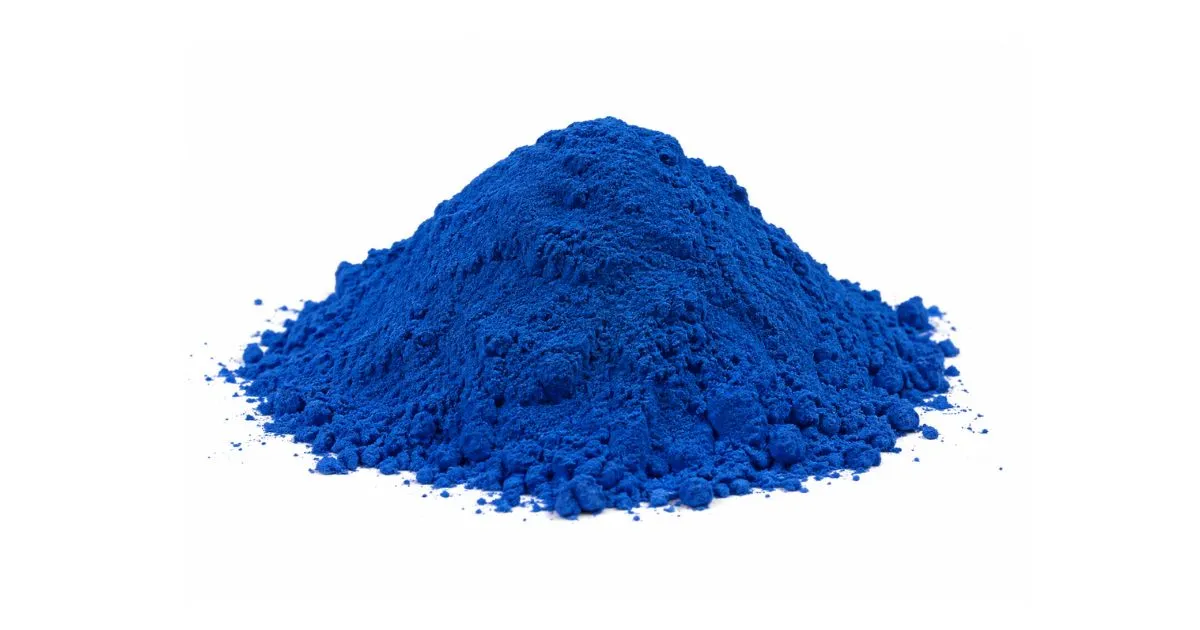
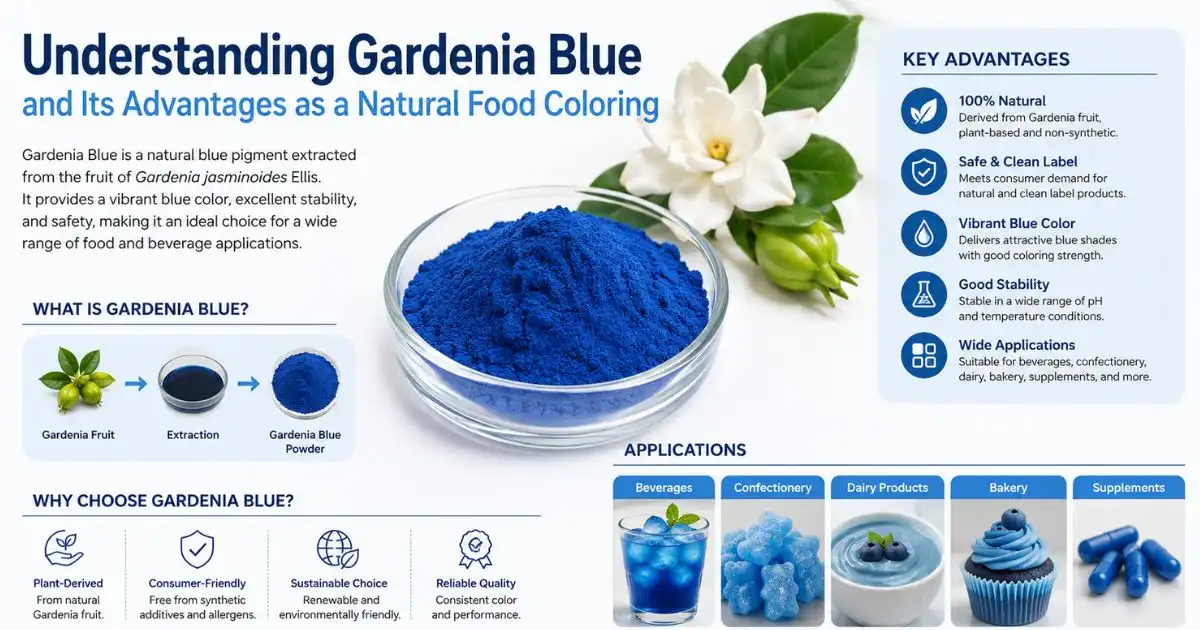
Cape jasmine, or Gardenia jasminoides Ellis, has bright orange flowers that are high in geniposide. These chemicals are changed into stable blue pigments through controlled fermentation and enzymatic hydrolysis. The steps in the production process are very clear: extracting the fruit, changing it with enzymes, fermenting it with amino acids, refining, concentrating, and drying it. Genipin, which comes from geniposide, forms a complex with amino acids through this biotransformation. The result is a dark blue powder that dissolves completely in both water and ethanol solutions.
HPLC-grade processes are used in the extraction method to make sure that the results are pure and consistent. With options like E30, E60, E80, E100, and E200, manufacturers can choose the color intensity that best fits the needs of their specific applications. The color is a fine powder that ranges in color from light gray to dark blue. At normal usage levels, it has no smell or taste.
Health and Safety Advantages Over Synthetic Alternatives
As more people read chemical lines, natural colorants are replacing synthetic dyes more and more. This plant color doesn't have any added chemicals, so it can be used in clean-label products. Some people avoid FD&C Blue No. 1 (Brilliant Blue FCF) or Blue No. 2 (Indigo Carmine) because they think they are bad for their health, but this plant-based option doesn't have that problem.
Even though it is chemically solid, the pigment has a great attraction for proteins. It doesn't absorb much water and doesn't break down easily in normal food processing conditions. The material is still safe to eat after being tested and meeting strict standards for food-grade uses. This nutrient is very useful for companies that want to get certified as Kosher, Halal, or organic because it meets these standards when checked properly.
Superior Stability in Food Processing
Temperature resistance makes this color stand out. While spirulina-based blues break down above 60°C, this material can be heated to 120°C for long amounts of time without losing its color. This steadiness is very important for companies that make baked goods, boiled sweets, or sterilized drinks.
The pH tolerance of the color gets rid of common manufacturing problems. Within the range of 4.0 to 8.0, the color tone stays the same—it doesn't change to purple in acidic conditions like anthocyanin-based blues do. Because of this, the ingredient can be used in fruit-flavored drinks, fizzy soft drinks, and acidic candies where other natural blues can't. Calcium, magnesium, and aluminum ions don't cause much disturbance, but the color gets a little darker in more acidic surroundings.
| Processing Parameter | Gardenia Blue Performance | Typical Natural Blue Alternatives |
|---|---|---|
| Maximum Stable Temperature | 120°C for one hour | 45°C to 60°C (Spirulina) |
| pH Stability Range | 4.0 to 8.0 (no change in color) | 6.0 to 8.0 (Spirulina); 3.0 to 6.0 turns purple (Anthocyanins) |
| Protein Binding | A strong connection | Different |
| Heat Processing Compatibility | Baking, pasteurization, and UHT | Only cold or gentle processing |
Comparison with Other Natural Blue Pigments
When the pH level is neutral, butterfly pea flower extract gives off beautiful blues. But when the pH level drops below 6.0, it turns purple or pink. Because of this sensitivity, it can't be used in acidic goods. Even though spirulina extract is healthy and high in protein, it can become unstable at high temperatures and add earthy tastes. The colors of these alternatives change from batch to batch, which makes quality control harder.
This pigment comes from gardenias and has better brightness and uniform tonal quality. The process of making the product controls the color value precisely, which lowers dosage differences between runs of production. Manufacturers say there are fewer problems with reformulating and more consistent colors. This saves money and time during the product creation cycle.
Key Quality and Procurement Considerations for Gardenia Blue
Critical Certification and Supplier Selection Factors
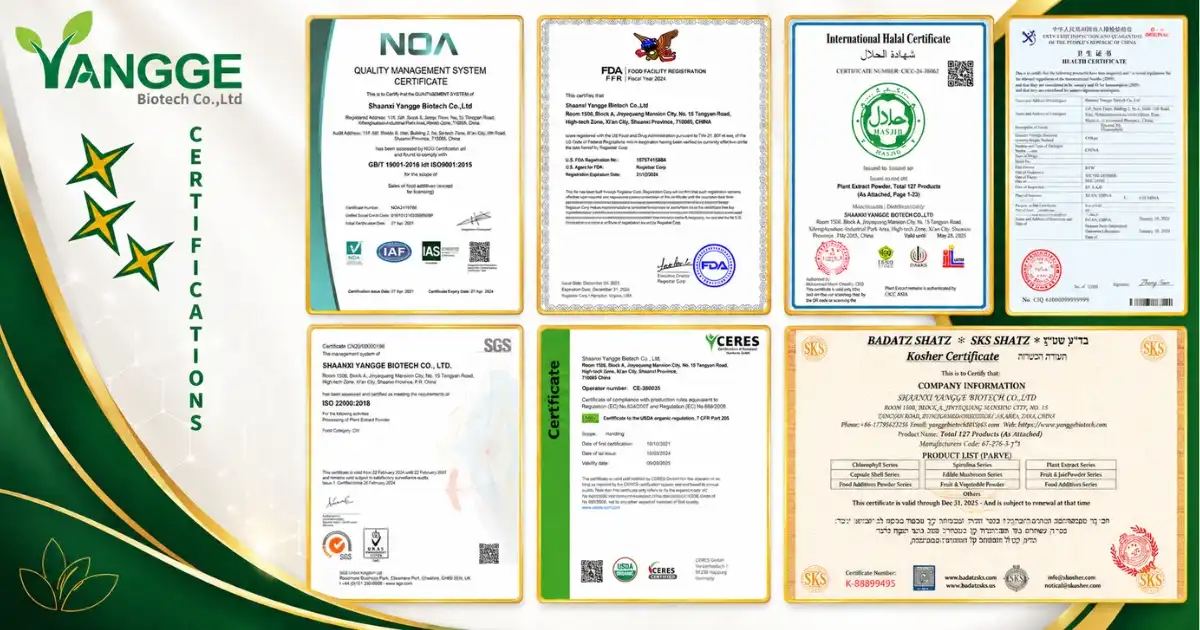
When purchasing teams look at providers, they should put an emphasis on full certification packages. To get a general idea of a quality management system, look for ISO, HACCP, Kosher, and Halal certifications. These certificates show that the company is committed to uniform production standards and being able to track its products.
For manufacturers, batch consistency is one of the most important things. To see how color values vary, ask for certificates of analysis (COA) from more than one production lot. Suppliers of good quality keep E-value specifications within a ±5% range. Spectrophotometry testing at about 590nm gives objective data on color measuring that should be sent with every package.
Geniposide residue measurement with HPLC shows how well the product was made. Geniposide that hasn't been completely converted by enzymes stays in the body and adds bitter and herbal notes. Premium types have less of this waste because the fermentation process is better. Before placing a bulk order, you should always ask for organoleptic testing data and do your own sensory evaluation using diluted water solutions.
Pricing Structures and Order Optimization
The color value determination has a direct effect on the price. More powerful tinctures with higher E-values (E100, E200) cost more, but they work better and require less of a dose. To find the real value, use cost-per-unit-color instead of cost-per-kilogram. Standard specifications usually have a 10 kg minimum order quantity, but custom formulations may need bigger commitments.
At 50 kg, bulk discounts start to make a difference. There are more price breaks at 100 kg, 500 kg, and 1,000 kg order amounts. Long-term supply deals that last between 6 and 12 months get better prices and give priority to sharing when supply is low. These plans also keep budgets stable when market prices change because of changes in the availability of raw materials.
Most of the time, payment terms are as follows: 30% deposit, then 70% due before shipping. After showing a history of on-time payments, established relationships may be able to get net-30 or net-60 terms. When doing business across borders, letter of credit agreements make it easier to do bigger deals and protect both sides.
Logistics and Regulatory Compliance Considerations
Lead times are usually between 2 and 3 weeks for stock specifications and between 4 and 6 weeks for custom formulations that need specific E-values or more testing. Seasonal factors affect the abundance of raw materials. For example, harvest times affect the supply in the fall. Planning purchases around these cycles keeps delays from happening out of the blue.
Regulatory situation is very different from one area to the next. The ingredient is widely accepted in Asia, such as in China (GB 28311-2012), Japan, and Korea. However, it is not specifically approved as a food colorant in the EU and the US under the present rules of the FDA and EFSA. Gardenia Blue falls into this same regulatory grey area, meaning products that are going to be sold in the West need to think carefully about this limit.
Manufacturers who send goods to Asia find this pigment very useful for meeting local tastes and government rules. The ingredient is also used in some cosmetics, which are regulated in a way that is different from how it is used in food. Before you start formulating, make sure you know what rules apply to your product group and the market you want to sell it to.
Cultivation and Processing Insights Relevant to Quality and Supply Stability
Agricultural Factors Influencing Pigment Quality
Gardenia jasminoides Ellis does best in warm areas with acidic (pH 5.0–6.5) soils that drain well. The type of soil has a big effect on the amount of geniposide in fruit, which directly affects the color yield. Fruits that are grown in areas with steady rainfall and moderate temperatures have the best chemical profiles for extracting pigments.
Long-term supply stability is ensured by farming methods that are good for the environment. To keep the soil healthy and lessen their effect on the environment, responsible providers use crop rotation, organic fertilization programs, and integrated pest control. These methods also keep heavy metals from building up in fruits, which is important for meeting strict safety standards for lead, arsenic, and cadmium.
The timing of harvesting affects the concentration of geniposide. When fruits are picked when they are at their ripest, they have more pigment and a stronger color. Handling raw materials properly after harvesting, such as by drying and storing them properly, protects their biological purity before they are processed. Temperature-controlled keeping stops enzyme breakdown that would lower the effectiveness of extraction otherwise.
Advanced Processing Technologies
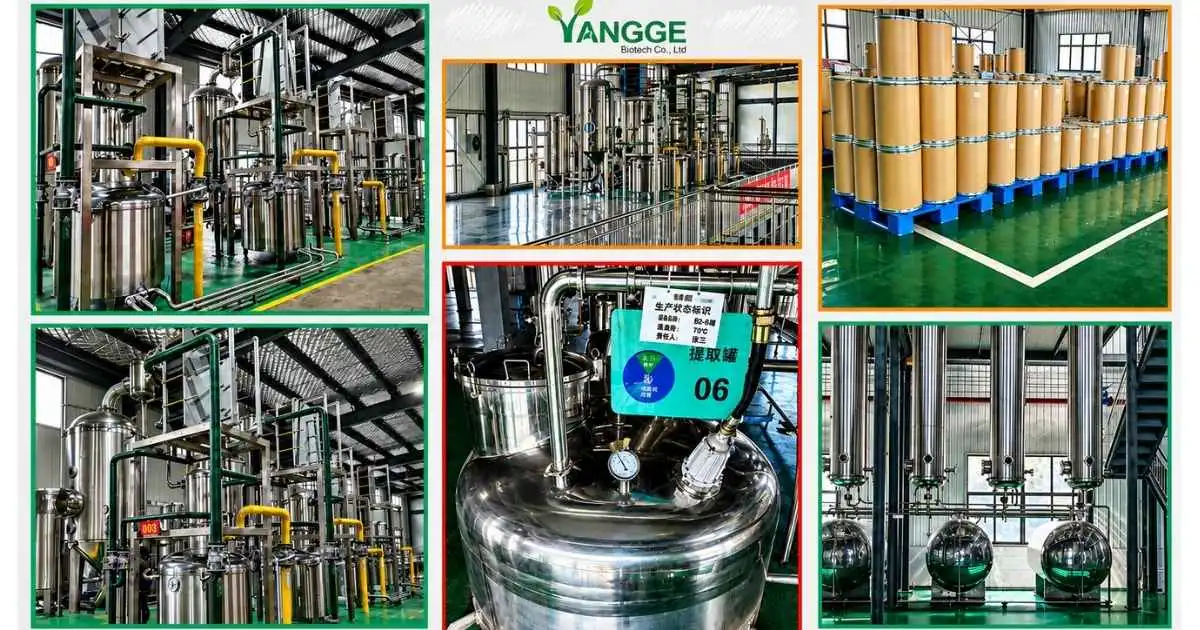
Modern extraction facilities use chromatography and membrane filters to get the most color back while getting rid of other impurities. Compared to traditional extraction methods, these technologies make cleaner final products that are easier to dissolve and have fewer off-flavors.
The most important part of quality control is the enzymes processing step. Under controlled pH and temperature settings, beta-glucosidase enzymes break down geniposide into genipin. The blue chromophore is made by the condensation reaction that follows with amino acids. Process variables like enzyme quantity, reaction time, temperature, and pH have a big effect on the end color.
You can turn liquid concentrates into stable powders by spray-drying or freeze-drying them. Spray-drying is more cost-effective for large quantities, while freeze-drying better protects heat-sensitive parts for higher grades. When encapsulation technologies are used, they make light steadiness better, which fixes the main problem with this pigment class.
| Quality Parameter | Testing Method | Premium Grade Specification | Standard Grade Specification |
|---|---|---|---|
| E-Value (How Strong the Color Is) | 590nm spectrophotometer used for | E200 ±5% | E60–E100 ±10% |
| Geniposide Left Over | HPLC | <0.5% | <2.0% |
| Heavy Metals | ICP-MS | <1.0 mg/kg | <3.0 mg/kg |
| Total Number of Plates | Cultures of Microbes | less than 500 CFU/g | less than 1,000 CFU/g |
| pH with a 1% solution | pH Scale | 4.5 to 7.0 | 4.0 to 8.0 |
| Solubility | Checking Out Visually | 100% water soluble, doesn't form crystals | Water-soluble; a little haze is fine |
Environmental Resilience and Supply Chain Risk Management
Changes in the climate make it hard to get the raw materials that farmers need. Leading sellers spread their buying across several growth areas to protect against problems caused by bad weather, and they increasingly rely on natural colorants like Gardenia Blue to maintain product consistency when traditional crops fluctuate. This geographic spread makes sure that supplies are always available, even when the seasons aren't in season.
Good sellers keep extra finished color powder on hand to cover two to three months of normal demand. This way of managing supplies keeps customers from having to wait for production to be stopped for repairs, government checks, or unexpected problems with the quality of raw materials.
Tracking systems keep track of each batch from the farm where it starts to the final packaging after it has been processed. Progressive suppliers are using blockchain-enhanced tracking more and more, which makes it easy to check sourcing claims and quality attributes. This openness builds trust and makes it easier for procurement teams doing checks of suppliers to do their due research.
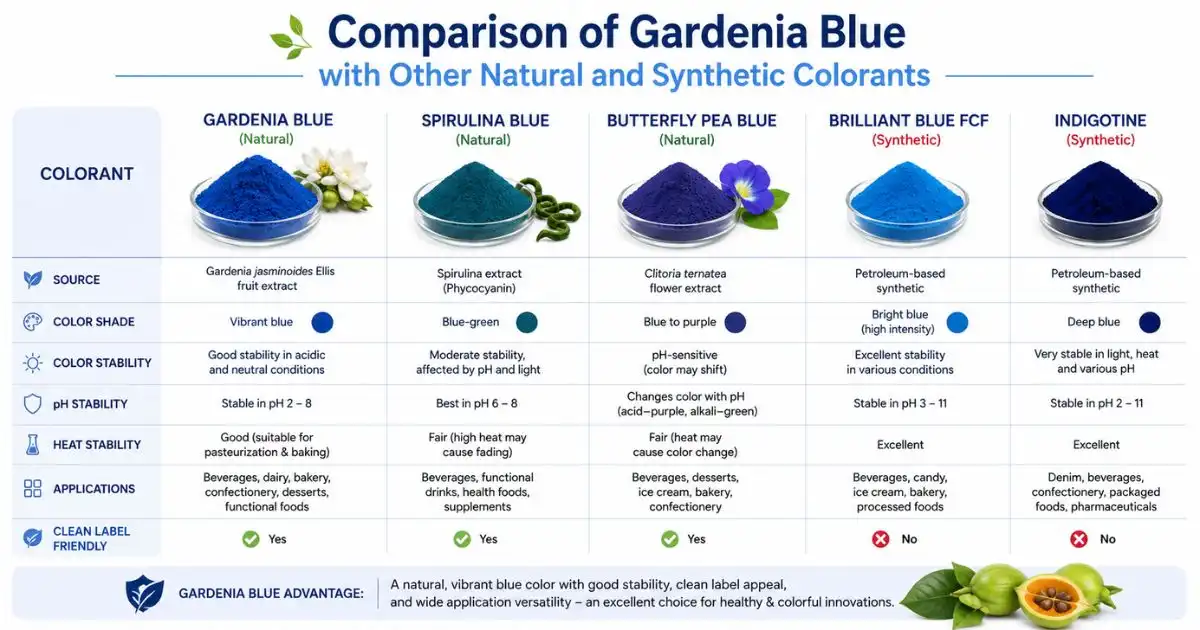
Comparison of Gardenia Blue with Other Natural and Synthetic Colorants
Performance Against Alternative Natural Blues
Spirulina extract (phycocyanin) is good for you in more ways than just coloring, but it doesn't work at high temperatures. Spirulina can't be used in products that need to be pasteurized, baked, or filled hot. The gardenia-based alternative doesn't break down in these hot conditions, which means it can be used in more situations.
Anthocyanins from butterfly pea flowers give drinks and desserts beautiful blue colors when the pH level is neutral to slightly alkaline. They turn a bright purple and pink in acidic (pH below 6.0) conditions, though, which means they can't be used in fizzy drinks, fruit drinks, or sour candies. This behavior that depends on pH needs careful preparation work and limits how flexible it can be.
Both spirulina and butterfly pea extracts change color from batch to batch because of things like farming and the time of year. The enzyme production process for this gardenia pigment gives better control over the specifications, so there is less need to change the formula when moving batches. When keeping color standards across production runs, quality control managers like this level of stability.
Advantages Over Synthetic Dyes
Brilliant Blue FCF (FD&C Blue No. 1) and Indigo Carmine (Blue No. 2) are two synthetic blues that are very stable and give off strong colors at low usage rates. However, consumers are becoming more and more interested in natural alternatives, even though synthetic dyes work better technically. Clean label programs that force companies to change the way their products are made create a strong market pull for plant-based colorants.
As time goes on, regulations get tighter over manmade dyes. In some places, goods that contain certain synthetic colorants are limited in how they can be used or must have warning signs. Natural options avoid these governmental problems and meet customer needs for ingredients that are easy to recognize.
The color from gardenia fills in the performance gap between natural and man-made choices. It is still not as stable in light as manufactured dyes, but it is more stable in heat and pH than most natural options. This medium performance rating meets the needs of clean labels without lowering the quality of the product or shortening its shelf life in ways that are not acceptable.
Sensory Considerations and Shelf-Life Performance
At normal use rates (0.01% to 0.1%), premium grades of this natural pigment don't taste much, so product flavor profiles are kept. Bad grades with a lot of remaining geniposide may add herbal and bitter notes. Before buying in bulk, sensory evaluation during sample testing makes sure that the balance of the flavors is okay.
When stored frozen, the pigment keeps its color very well, keeping its strength through many freeze-thaw cycles. Because of this quality, it works well for ice cream, frozen desserts, and frozen drinks. Protein-rich recipes benefit from the pigment's strong protein affinity, which keeps color in place and stops it from moving around in stacked products.
The biggest problem is that light stability. When colors are exposed to strong sunshine or UV light for a long time, they fade over time. This problem can be fixed with opaque packaging, UV-resistant containers, or formula sealing. Products with short shelf lives or dark packages don't mind this limitation, but clear-bottle drinks that need to stay stable for a longer time may need extra stabilization methods.
Why Gardenia Blue is the Preferred Choice for B2B Food Industry Buyers
Application Versatility Across Product Categories
Why B2B buyers in the food industry should choose Gardenia Blue. Manufacturers of drinks like the color because it stays stable in fizzy and acidic systems. Blue sports drinks, flavored waters, and useful drinks use this ingredient to make them look good without affecting their taste or safety. Because it dissolves completely in water, it spreads out evenly and doesn't settle or make rings in bottles.
Hard candies, gummies, and fondants are all examples of confectionery uses. The ability to withstand heat makes it possible to incorporate during the cooking processes used to make hard candies. On the other hand, the protein affinity helps gelatin-based gummies by evenly binding color throughout the structure. The color is used by bakers in frosting, cake batters, and other decorative projects that will be heated up.
This ingredient keeps the color of dairy products like yogurt, ice cream, and flavored milk very stable. The ability to bind proteins gives these protein-rich materials bright, even coloring. The pigment's freeze-thaw stability is especially helpful for frozen uses because it keeps its look during distribution and storage.
Quality Assurance and Supply Chain Transparency
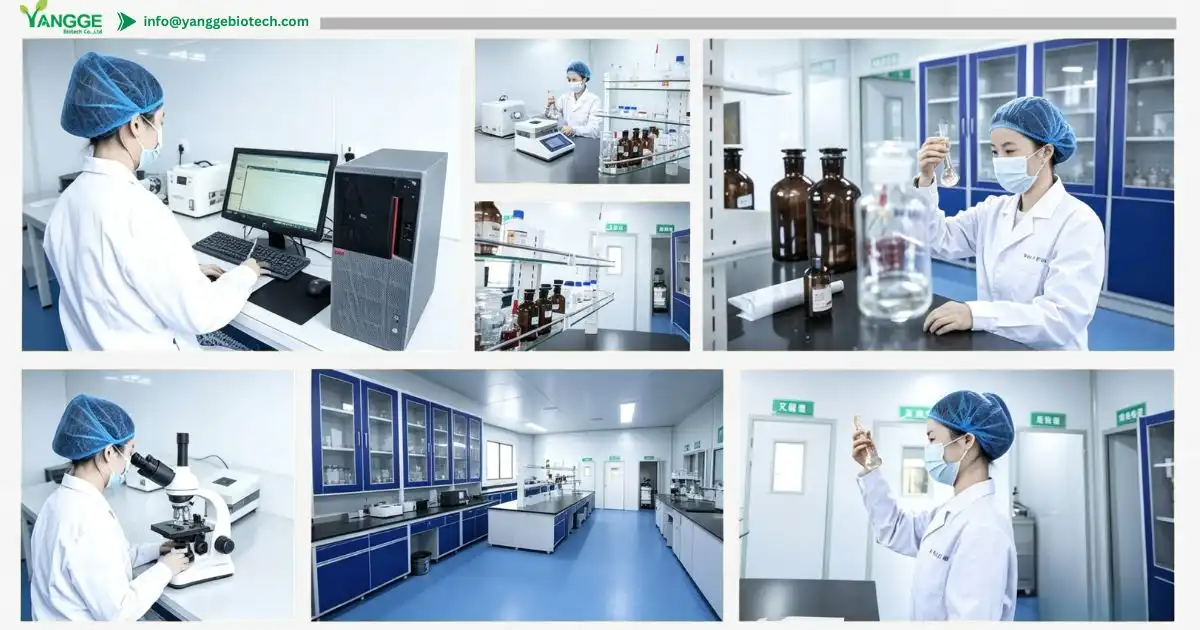
Good Manufacturing Practice (GMP) standards and thorough quality control methods are used by reputable suppliers. To make sure they meet standards, multistage testing procedures look at raw materials, samples of the process, and finished goods. Some of these protocols are heavy metal analysis by ICP-MS, color value measurement, residue analysis, and microbiological testing (total plate count, yeast/mold, pathogens).
Verification by a third-party lab gives seller claims more weight. Independent testing makes sure that the specs are met and that the product meets international safety standards. As part of the seller approval process, purchasing teams should ask for current test results from a third party that cover microbiology, heavy metals, and color traits.
Service level agreements (SLAs), which are part of supply agreements, protect buyers from inconsistent quality. These agreements spell out the acceptable ranges of specifications, how to fix material that doesn't meet specifications, and who is responsible for paying for testing. Good deals keep disagreements to a minimum and make sure that both parties know what is expected of them in terms of quality.
Market Trends and Future-Proofing Product Lines
The market for natural colorants is growing quickly because of clean label reformulation. Market study shows that 73% of customers actively look for products with natural ingredients. Millennials and Generation Z are especially likely to want these kinds of goods. When brands use natural colorants, they put themselves in a good situation to stay relevant in the market.
Regulatory trends around the world favor natural ingredients. In the European Union, there are strict rules about synthetic colorants. In North America, consumer advocacy groups push brands to use natural alternatives. Formulating with plant-based colorants helps you stay ahead of changes in regulations and lowers the risk of having to redo the formula as standards get stricter.
The market for natural blue colorants is still not fully supplied compared to rising demand. This imbalance between supply and demand opens up chances for brands that can stand out by using natural ingredients to give their products a bright blue color. Early adoption sets up supply relationships before the market tightens and could limit availability or drive up prices.
Conclusion
In conclusion, there aren't many natural blue colorants that meet both clean-label and professional performance standards. The gardenia-derived pigment talked about in this piece solves important problems like pH stability, heat resistance, and batch consistency that happen with other natural blues. Its benefits over spirulina extract and butterfly pea anthocyanins, along with its clean label credentials that go beyond synthetic dyes, make it the perfect choice for companies that want to switch to using natural ingredients.
It can be used in a lot of different ways, like in drinks, sweets, and dairy products. Buying from approved suppliers with quality assurance methods eases some of the worries that come with using natural colors, and when the colorant in question is Gardenia Blue, these quality checks become even more critical due to its superior stability across various formulations. Setting up reliable buying relationships for this specific pigment gives you a competitive edge as customer tastes and government rules continue to favor natural ingredients.
FAQ
What makes this natural blue pigment more stable than spirulina extract?
The enzymatic method of production makes chemical structures that can't be broken down by heat. The phycocyanin proteins in spirulina break down between 45°C and 60°C, but this color stays stable when heated to 120°C for long amounts of time. Because of this basic chemistry difference, it can be used in baked goods, prepared drinks, and other heat-processed foods where spirulina can't.
Does the pigment work in acidic beverages?
Standard grades keep their colors stable from pH 4.0 to 8.0 without discoloring or changing the hue. Most carbonated soft drinks, fruit drinks, and sports drinks fall into this range. If your product has a pH level below 3.5, you may need acid-resistant versions or basic stability tests to make sure it works well in your unique formulation.
How does pricing compare to synthetic blue dyes?
Per kilogram, natural colors usually cost three to five times more than manufactured ones. When comparing cost-per-application, however, and taking into account market placement benefits, the price premium becomes smaller. Clean-label goods usually have higher prices at stores, which makes up for the difference in the cost of the ingredients. For regular users, buying in bulk and signing long-term contracts make economics even better.
What certifications should I verify before purchasing?
Give priority to suppliers who have the ISO, HACCP, Kosher, or Halal certifications that are needed for your product. Ask for certificates of analysis that show the product meets the requirements for microbiological safety, E-value, and heavy metal compliance (lead <3.0 mg/kg and arsenic <2.0 mg/kg according to GB 28311-2012). Testing records from a third party give your supplier's claims more weight and back up your quality assurance paperwork.
Partner with Yangge for Premium Natural Blue Pigment Solutions
Yangge Biotech specializes in high-quality natural food colorants backed by comprehensive certifications including ISO, HACCP, Kosher, and Halal approvals. Our network of Gardenia Blue pigment powder suppliers makes sure that the specifications are the same across a range of E-values (E30–E200), so they can meet the needs of a wide range of applications, from drinks to sweets. We follow strict GMP production standards and can track your food from the farm to the table.
Third-party testing confirms this, and we offer technical help throughout the entire product creation cycle. To test the quality of our pigments in your recipes, you can ask for free samples and full specification sheets. Get in touch with our purchasing experts at info@yanggebiotech.com to talk about the natural colorants you need, the minimum order amounts, and unique solutions. Visit blog.yanggebiotech.com for additional technical resources and application guidance.
References
1. Smith, J.L., & Chen, W. (2021). Natural Food Colorants: Chemistry, Stability and Applications in Modern Food Processing. Academic Press.
2. Rodriguez, M.A., et al. (2020). Comparative Analysis of Natural Blue Pigments in Beverage Applications. Journal of Food Science and Technology, 57(8), 2845-2856.
3. International Food Additives Council. (2022). Global Regulatory Status of Natural Colorants: A Comprehensive Review.
4. Zhang, H., & Kumar, P. (2019). Enzymatic Production of Gardenia Blue Pigment: Process Optimization and Quality Control. Food Chemistry, 285, 301-309.
5. European Food Safety Authority. (2023). Safety Assessment of Natural Food Colorants from Botanical Sources. EFSA Journal, 21(3), e07842.
6. Williams, T.R., & Park, S.J. (2022). Clean Label Trends and Consumer Preferences for Natural Ingredients in Food Products. Market Research Quarterly, 45(2), 112-128.

Based on your location and order quantity, you will have the opportunity to receive a limited time free shipping promotion!
Who we are
Popular Blogs