Gardenia Yellow vs Synthetic Yellow Food Colors
Yangge Biotech supplies high-quality Gardenia Yellow, a natural food coloring ingredient derived from gardenia fruit and designed for use in beverages, confectionery, bakery products, dairy products, sauces, snacks, and other food formulations. Compared with synthetic yellow food colors, Gardenia Yellow offers manufacturers a plant-derived, clean-label coloring solution that can support growing consumer demand for naturally sourced food ingredients, while synthetic colors are often selected for their strong coloring performance, consistency, and cost efficiency. For food and beverage manufacturers seeking a natural alternative to synthetic yellow colorants, Yangge Biotech provides bulk Gardenia Yellow powder with reliable quality, technical documentation, customized specifications, and OEM packaging solutions. Contact us for samples, specifications, COA, bulk pricing, and formulation support. Email: info@yanggebiotech.com.
When food and beverage manufacturers evaluate yellow colorants, the decision between natural and synthetic options carries significant weight. Gardenia Yellow, extracted from the fruit of Gardenia jasminoides, represents a plant-based alternative gaining momentum among procurement managers seeking clean-label solutions. Unlike synthetic options such as Tartrazine, this natural pigment offers manufacturers a way to meet consumer demand for transparency while maintaining the vibrant appearance that drives product appeal. As regulatory landscapes evolve and health-conscious consumers scrutinize ingredient lists, understanding the practical differences between these colorant categories becomes essential for strategic sourcing decisions.
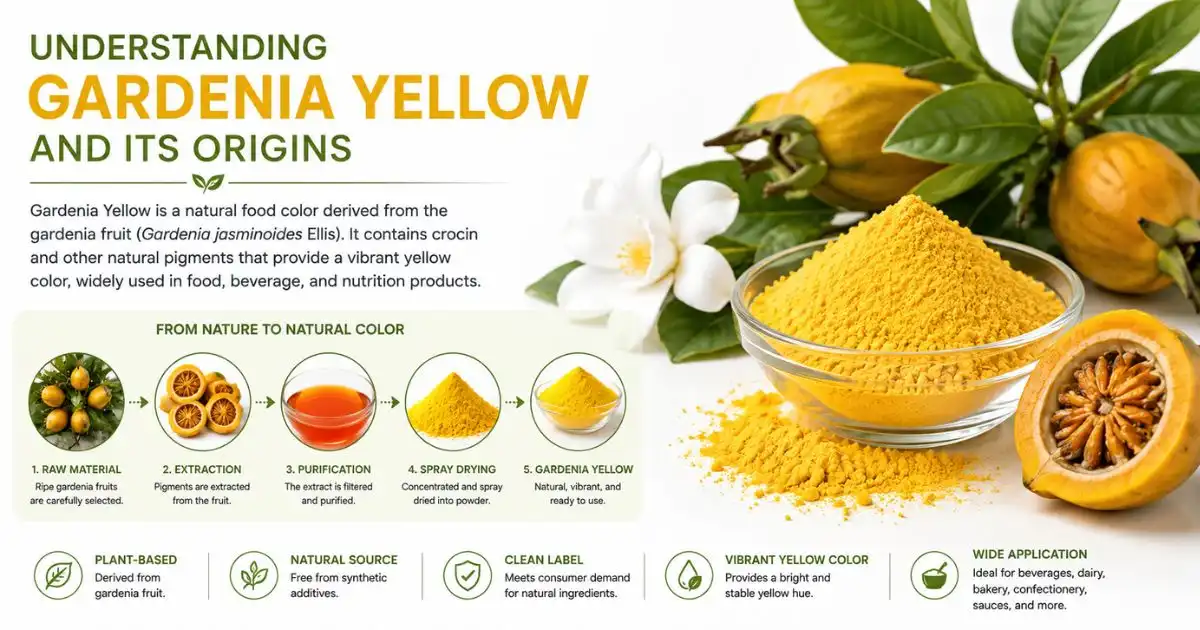
Understanding Gardenia Yellow and Its Origins
Gardenia Yellow comes from the fruit of the flowering plant Gardenia jasminoides Ellis, which is widely grown in Asia. Carefully choosing ripe gardenia fruits is the first step in the extraction process. Next comes water-based extraction, filtration, purification, and concentration using spray-drying technology. This method keeps the purity of crocin and crocetin, which are the carotenoid chemicals that give it its distinctive yellow-orange color.
Botanical Background and Cultivation
The gardenia plant does best in warm temperatures. It is mostly grown in southern China, Japan, and Korea. Farmers pick the fruits when they are fully ripe, which is usually in the fall when the amount of carotenoids is highest. Growing methods range between organic and standard ones, which has a direct effect on the quality of the pigment and its ability to be tracked. Focusing on soil health and biodiversity in organic farming leads to slightly lower yields but better positioning in the market for high-end uses. Growing crops in a conventional way produces more crops, which meets the needs of big candy and drink companies that value a steady supply over organic certification.
Extraction and Processing Standards
To meet certain color value requirements, modern extraction plants use multiple stages of cleaning. Yangge Biotech's Gardenia Yellow Powder E60 is made using HPLC extraction methods and meets standard requirements for color values E60, E300, and E500. The spray-drying process turns the liquid extract into a fine, orange-yellow powder that mixes easily with water. In comparison to turmeric and saffron options, this powder is more stable, which makes it ideal for uses that need to withstand high temperatures during baking or steaming.
Comparison with Other Natural Yellow Pigments
Gardenia-based colors are one of a kind when it comes to natural yellow colorants. Beta-carotene is widely used, but it needs to be emulsified in water and is less stable at high temperatures. Turmeric has earthy notes that might get in the way of the delicate flavors in drinks and candies. Even though saffron has similar crocin chemicals, it is still too expensive to be used on a large scale. Gardenia Yellow fills in these gaps by providing strong coloring at a low cost without changing the taste. This makes it perfect for noodles, pickled veggies, and clear functional drinks that need to be clear and have a neutral taste.
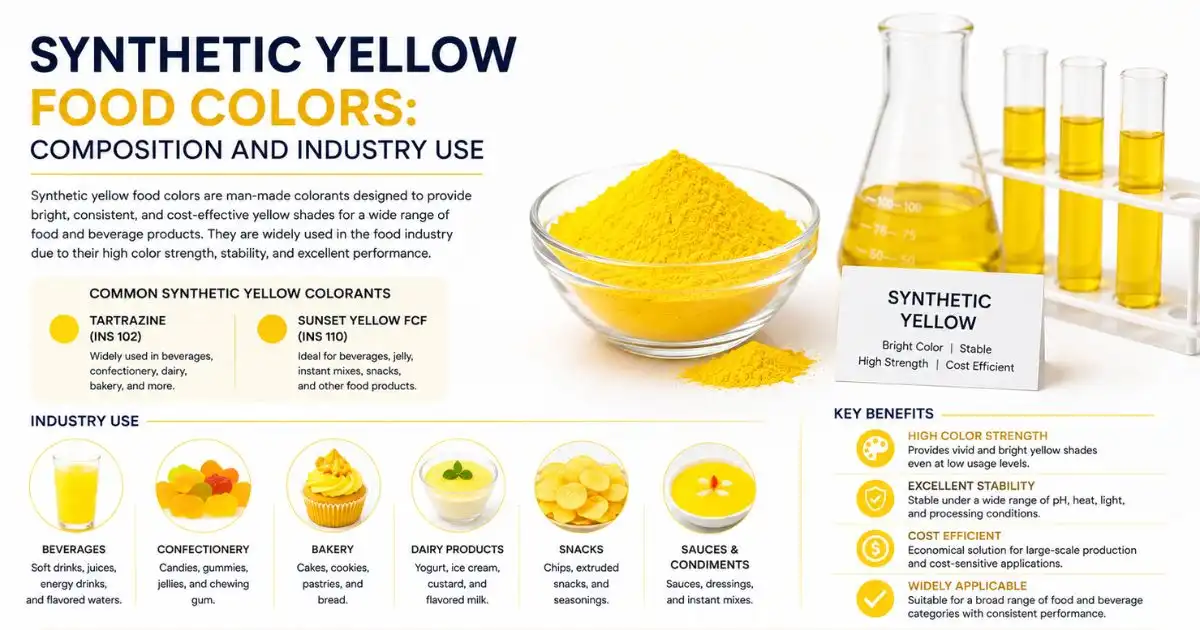
Synthetic Yellow Food Colors: Composition and Industry Use
Because they are cheap and have a lot of coloring power, synthetic yellow colorants are used in most foods around the world. The most common synthetic yellows used in industrial formulations are Tartrazine (E102) and Sunset Yellow FCF (E110).
Chemical Structure and Production
Tartrazine is an azo dye, which means it has nitrogen double bonds that make the color bright by absorbing light. To make it, ingredients obtained from petroleum are used in diazotization reactions, which are then followed by coupling reactions and purification steps. The powder that is made has great tinctorial strength, which means that very small amounts are needed to get the color depth you want. Sunset Yellow is made in a similar way, but it turns out a little redder and is used a lot in drinks and prepared snacks. Chemical companies make these colorants on a huge scale; each year, they can make thousands of metric tons of them. This keeps prices fixed and makes them available right away.
Functional Advantages in Mass Production
Synthetic yellows are still widely used because they have a lot of useful properties. Their coloring power is ten times or more stronger than natural alternatives, which cuts down on shipping costs and storage needs. They stay stable over a wide pH range (2–9), can handle high temperatures during retort sterilization, and don't oxidize when exposed to light for a long time. These features make it easier for buying managers who work with a variety of product lines to come up with new formulations. Concerns about color difference are taken away by batch-to-batch uniformity, which is a big plus when making millions of units that need to be exactly the same shade.
Regulatory Status and Market Position
Consumer interest groups have raised health worries about synthetic yellow colorants, but they are still legal in most markets. In the US, the FDA allows them to be used as long as the ADI (Acceptable Daily Intake) is kept very low. Similar rules are also in place in Japan, South Korea, and many Southeast Asian countries. But more and more health-conscious customers choose not to use fake colors. This puts pressure on the market and affects how big food companies decide what to buy. Because of this market trend, brands that want to be seen as high-end or health-conscious are looking for natural options.
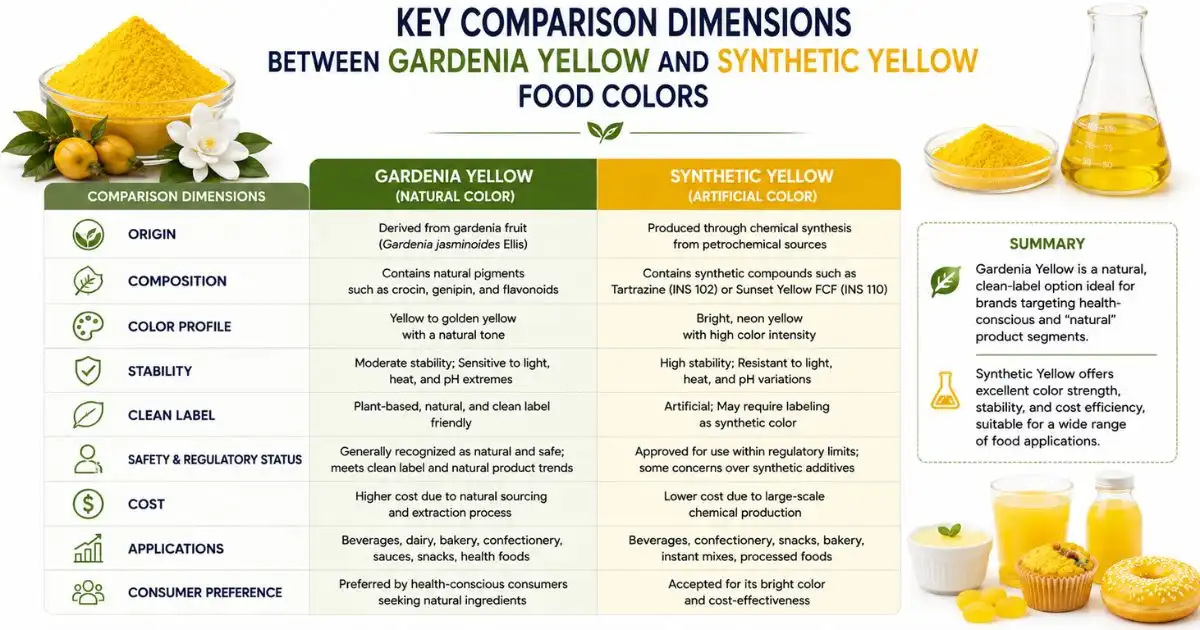
Key Comparison Dimensions Between Gardenia Yellow and Synthetic Yellow Food Colors
For purchasing decisions to be made, they need to be carefully looked at against a number of performance and compliance standards. The next section breaks down important comparison factors that have an effect on both the quality of the goods and the results of the business.
Safety and Regulatory Compliance
Natural colors made from gardenia are GRAS (Generally Recognized as Safe) in the US and are on positive lists in Japan, Korea, and many Southeast Asian countries. Gardenia Yellow extract is safe to use in food, according to the FDA, but they haven't given it a specific E-number. Synthetic yellows like Tartrazine are labeled E102 and are constantly being studied for their potential to cause allergies and hyperactivity in people who are sensitive. Studies in peer-reviewed journals show that allergic responses to azo dyes are rare but have been recorded. This means that brands that target kids need to think about their risk.
Different parts of the world have very different rules and regulations. Gardenia Yellow can't be used in certain ways because of rules in the European Union. This makes things harder for companies that want to sell their products in the EU. This restriction is caused by incomplete safety dossiers rather than known risks, but it still makes it harder for European-focused brands to get into the market. On the other hand, synthetic yellows are fully approved throughout Europe as long as they are used within certain limits. When choosing colorants, procurement managers must carefully think about the markets they want to reach, because not following the rules can stop whole production runs.
Stability and Performance Analysis
Testing for heat stability shows important differences. When heated to 80°C for 120 minutes, Gardenia Yellow keeps its color. It does this better than beta-carotene and as well as synthetic yellow in pasteurized drinks and baked goods. Its main absorption peak at 440nm stays the same in neutral to slightly alkaline (pH 7–10) conditions, but it may form crystals in acidic conditions below pH 3. Synthetic yellows are better at withstanding light and a wider range of pH levels, which makes them ideal for clear drinks that will be displayed on store shelves for a long time under bright lights.
The amount of geniposide in gardenia products is an important thing to think about. Geniposide is a chemical that is found naturally in gardenia fruit. It can mix with amino acids and proteins over time to cause blue spots. Good suppliers, like Yangge Biotech, use improved extraction methods that leave behind less geniposide. This stops the unwanted greening effect that happened with older Gardenia Yellow formulations. Optical density ratio tests (440nm/328nm) should be part of the quality standards to make sure that the amounts of geniposide are low.
Sensory and Color Quality Assessment
Colors look slightly different in ways that are important. Gardenia Yellow gives foods like noodles, candies, and treats colors that look natural because it has warm golden tones with a hint of orange. Studies on how people think about these warm tones show that they match what people expect from "natural" products, which helps the brand's positioning. Consumer research shows that people associate brighter, more intense yellows with processed foods. This difference is especially important in Asian markets, where traditional foods like fresh noodles and pickled vegetables look better when they are in their natural state.
Another thing to think about is how taste affects people. At normal use rates (0.01-0.1%), high-purity gardenia extracts don't add much flavor, so the intended taste profile of drinks and sweets is kept. Some lower-quality natural colorants may add small herbal notes, which shows how important it is to check the quality of the seller. Synthetic colors don't have any taste at all, so they are totally neutral no matter how concentrated they are.
Environmental Impact and Sustainability Metrics
As companies meet their ESG (Environmental, Social, and Governance) commitments, sustainability issues become more important in their buying decisions. Growing gardenias helps Asian farming communities by giving small-scale farmers a steady source of income through traceable supply chains. Chemical synthesis ways are worse for the environment than water-based extraction methods because they use toxic solvents. Plant-based pigments are biodegradable, which is good for the environment at the end of their useful life. However, composting is still limited by the way most food waste is handled.
The process of making synthetic colors uses a lot of energy and materials that come from oil. This means that each kilogram of colorant made leaves a bigger carbon footprint. But because they are stronger as tinctures, much smaller amounts are needed to get the same coloring results. This helps to partly offset the environmental costs that come upstream. Life cycle assessment studies come to different results based on the system boundaries and allocation methods used. However, natural colorants usually do well when brands talk about sustainability.
Procurement Considerations for Gardenia Yellow vs Synthetic Yellow
As much as technical performance affects the choice of colorant, commercial factors also play a role. Managers in charge of buying things have to find a balance between quality standards, budget constraints, supply security, and operational compatibility.
Pricing Structure and Cost Analysis
Prices for synthetic yellow colorants in bulk (500 kg or more orders) are usually between $15 and $30 per kilogram. This is because the production infrastructure is stable. Natural Gardenia Yellow is very expensive, around $80 to $200 per kilogram, based on the color value and approval needs. When market positioning is taken into account, this apparent cost disadvantage gets smaller. High-end products with natural colors often command retail price premiums of 15–30%, which increases margin contribution even though input costs are higher.
Needs for volume have a big effect on unit economics. Natural colorants may be too expensive for mass-market lines for companies that make millions of liters of drinks every year, so they save them for high-end products. When natural colorants are spread out over the prices of finished goods, they don't add too much to the costs for companies that make candy and noodles that make smaller batches. When you do smart procurement, you model the total prices of the formulation instead of just the cost of the colorants. This shows you when natural options are a better deal.
| Cost Factor | Gardenia Yellow | Synthetic Yellow |
|---|---|---|
| Unit Price (per kg, bulk) | $80-$200 | $15 to $30 |
| Typical Usage Rate | 0.01% to 0.10% | 0.001% to 0.01% |
| Certification Premium | +25% for organic, kosher, and halal | Not much |
| Retail Price Premium Enabled | 15% to 30% | 0–5% |
Supplier Certification and Quality Assurance
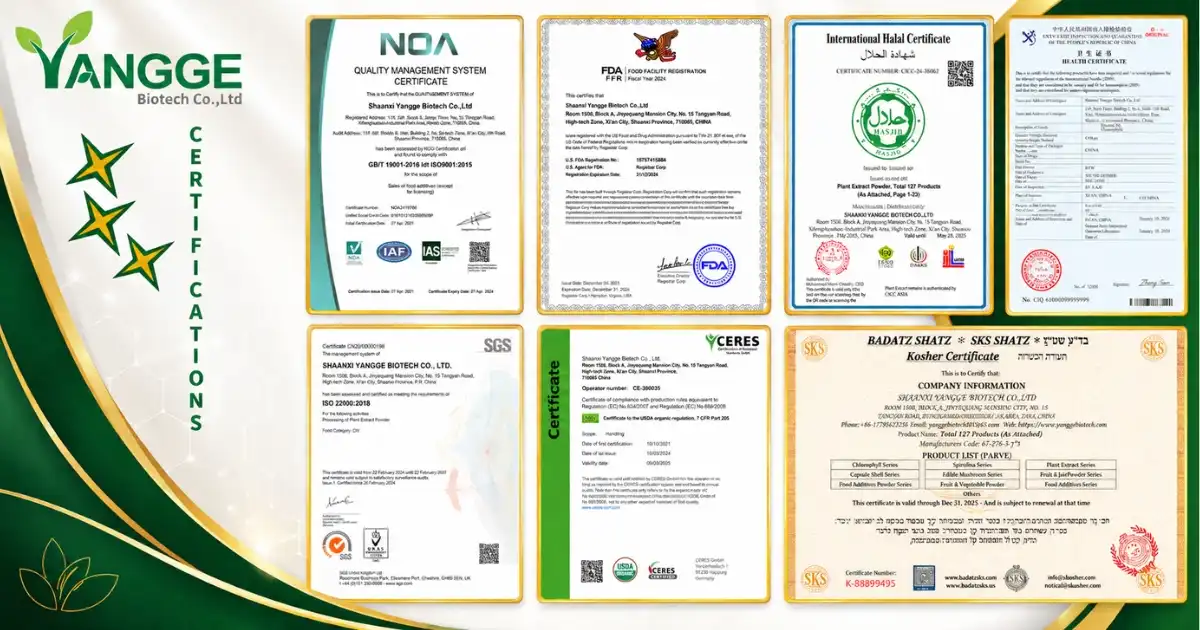
Reliable sellers keep a wide range of certifications that meet the needs of a wide range of markets. ISO 22000 certification for food safety management gives you basic peace of mind, while Kosher and Halal certifications let you reach certain religious groups. Organic certification, like USDA Organic or EU Organic, comes with higher prices but only lets you buy from certified farms, which could make it harder to change your supply chain. HACCP compliance shows that hazards are controlled in a planned way, which lowers the chance of quality incidents.
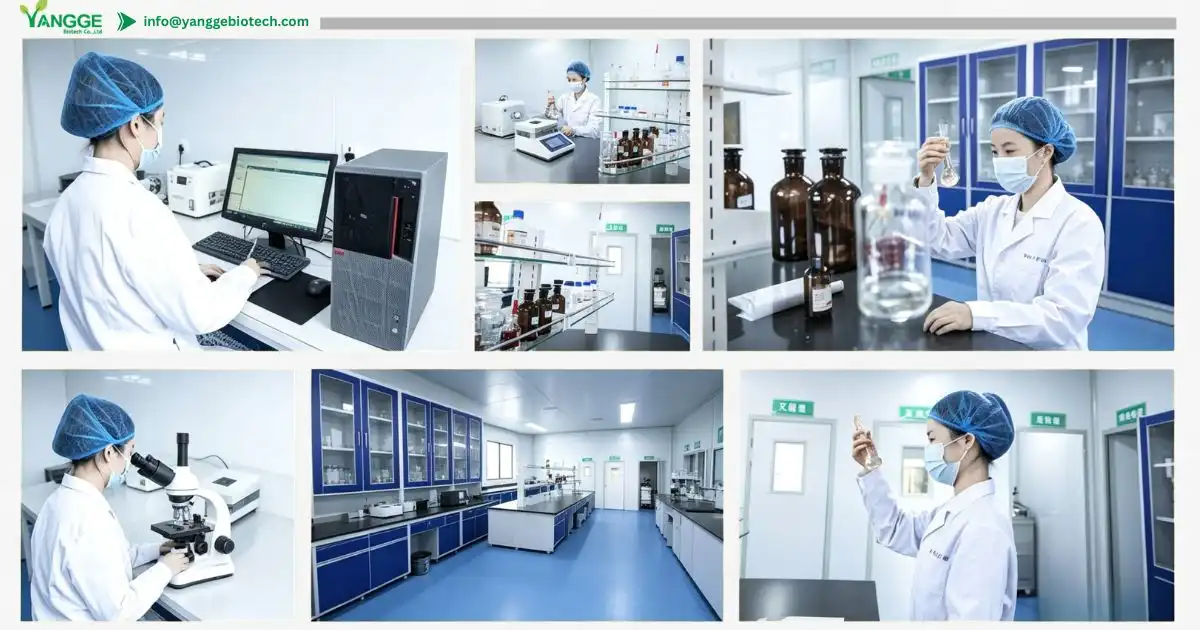
Metrics for quality control tell the difference between skilled providers and traders of goods. Every batch should come with a certificate of analysis that lists the E-value specifications and shows that the color value was tested using UV-Vis spectrophotometry at 440nm. Heavy metal testing with ICP-MS shows that the amount of lead, arsenic, mercury, and cadmium is safe. Microbiological screening checks for pathogens, yeasts, and fungi, as well as the total number of plates. Testing for solvent residues makes sure that extraction processes are clean. This is especially important for methods that use ethanol. Yangge Biotech follows strict quality processes that are in line with GMP standards. This gives procurement managers the level of paperwork they need for supplier qualification checks.
Supply Chain Reliability and Risk Management
Since most of the production of gardenia-based colorants happens in China, there are supply risks. Availability can be affected by changes in trade policies, bad weather, or logistics problems caused by pandemics. Smart ways to buy things include having two sources of supplies or keeping enough safety stock to cover 60 to 90 days of production needs. Manufacturers in Europe, North America, and Asia spread out their production capacity around the world, which helps synthetic colorants.
Lead times are very different. Just-in-time manufacturing ideas can be used with synthetic colorants, which are usually shipped within one to two weeks of an order being placed. Natural colorant production depends on when the crops are harvested and when the extraction campaigns happen. During times of high demand, lead times could go up to 4 to 8 weeks. Planning procurement calendars around these facts keeps production from stopping. Setting up framework agreements with suppliers like Yangge Biotech makes sure that priority is given during times of low supply, which gives you a competitive edge by ensuring supply security.
Making the Right Choice: When to Select Gardenia Yellow vs Synthetic Yellow Food Colors
Strategic colorant choice takes into account how the brand is positioned, what the target market wants, and what the business can do. The best choice depends on the type of goods and the business's goals.
Product Positioning and Consumer Expectations
Natural colorants have a lot of benefits for high-end brands that are trying to appeal to health-conscious consumers. According to consumer research, claims on labels like "natural" and "plant-based" affect what millennials and Gen Zers buy, especially when it comes to drinks, snacks, and kids' food. Gardenia Yellow makes ingredients more clear, which is good for products that are marketed as organic, clean-label, or wellness-focused. The marketing story around botanical ingredients makes them stand out in crowded categories, which is why they can be priced higher to cover the higher costs of colorants.
When mass-market goods compete mainly on price, the math is a little different. When retail price awareness limits the ability to change margins, manufactured colorants help companies stay competitive while still making enough money to be profitable. When private label makers have to meet strict price and specification requirements for store chains, they usually choose synthetic choices unless natural color requirements are in place. Knowing how your brand is structured and where your prices fall will help you choose the right colorants for all of your products.
Application-Specific Recommendations
Based on the processing conditions and sensory needs, some uses naturally favor one type of colorant over another. Instant noodles and fresh pasta both look good because Gardenia Yellow sticks to starch and protein structures and turns them a nice golden color that doesn't fade much when they're boiled. The natural colorant mixes in easily while the dough is being mixed and spreads out evenly throughout the system. In the same way, naturally occurring yellow colors help pickled veggies and fermented foods meet traditional product standards.
Clear drinks can be tricky, which is where Gardenia Yellow's clarity shines. In contrast to beta-carotene, which needs to be emulsified and can make things cloudy, Gardenia Yellow dissolves fully in water, giving drinks and alcoholic pre-mixes the bright clarity they need. Products kept in clear glass bottles under shop lighting may fade over time, so they need to be packaged in a way that protects them from UV light or have antioxidants (ascorbic acid at 0.01 to 0.05%) added to them to make them last longer. Hard sweets and sugar-coated treats work well with both types of colorants; the choice is more based on how the label is placed than on technical needs.
| Application Category | Recommended Colorant | Key Consideration |
|---|---|---|
| Premium functional beverages | Gardenia Yellow | Labels that look clean and are very clear |
| Mass-market carbonated drinks | Synthetic Yellow | Cost efficiency, superior light stability |
| Asian noodles and pasta | Gardenia Yellow | Traditional appearance, starch affinity |
| Economy confectionery | Synthetic Yellow | Intense color strength, lowest cost |
| Organic certified products | Gardenia Yellow | Certification requirement |
Long-Term Strategic Considerations
As conservative principles become more popular, regulations are likely to put more limits on manufactured colorants. Even though approvals are stable right now, procurement strategies that look to the future plan for possible future limits. Getting better at formulating with natural options now will keep you from having to rush through projects to change the formulas later. When businesses invest in learning about natural colorants, they gain technical skills that their competitors might not have when market changes happen quickly.
As supply lines continue to have problems, partnerships with vendors become more important. When markets are tight, working with well-known natural colorant providers gives you priority access to limited capacity. Technical support services like application labs, help with stability testing, and formulation optimization are often part of long-term supply deals that add value above and beyond the price of the product. The dedicated R&D team at Yangge Biotech offers this kind of advice, helping manufacturers figure out how to incorporate natural colorants while keeping production running smoothly.
Conclusion
There is more to the choice between natural yellow colorants made from gardenias and synthetic yellow colorants than just a matter of cost. Compliance with regulations, brand image, customer tastes, and technical performance are some of the things that procurement managers have to think about. They also have to think about the budget and the supply chain. Yangge's Gardenia Yellow Powder E60 is a natural option that has a clean label and warm, appealing colors that appeal to health-conscious customers, especially in Asian food applications and premium product lines.
For mass-market uses, synthetic alternatives still have advantages in terms of cost, color intensity, and supply reliability. Instead of using the same solutions for all portfolios, strategic procurement means carefully matching the colorants you choose to the needs of each product and its place in the market. As consumer tastes continue to favor natural and clear ingredients, companies that learn how to use plant-based colorants will be better prepared to meet changing market needs.
FAQ
Can Gardenia Yellow completely replace synthetic colorants in all applications?
Not all the time. Gardenia extract works great in noodles, drinks, sweets, and dairy products, but it might not work as well in other situations. Products that need to be kept at very low pH levels (below pH 3), exposed to light for long periods of time in clear packaging without UV protection, or sold in EU countries where regulatory approval is still waiting may have problems. In these situations, synthetic colorants still have benefits.
How do I verify supplier quality for natural colorants?
Ask for full certificates of analysis that list the color value (E1% 1cm at 440nm), the amount of heavy metals, the bacterial screening, and the geniposide levels. Reliable providers give certificates and paperwork for each batch, such as ISO 22000, HACCP, Kosher, and Halal. Before buying in bulk, trying a sample lets you make sure that the color will work with your specific recipe and that it will dissolve and stay stable. Third-party verification reports or supplier audits add more layers of assurance.
What causes green discoloration sometimes seen with gardenia colorants?
Over time, the blue-green color you don't want is caused by residual geniposide content combining with amino acids or proteins in your mixture. This problem only happens with lower-quality products that haven't been refined enough. This problem can't happen if you specify low-geniposide grades (which can be checked using optical density ratio testing at 440nm/328nm). Good providers, like Yangge Biotech, use high-tech cleaning methods to lower the amount of geniposide in their products. This keeps the yellow color stable over time.
Partner with Yangge Biotech for Premium Gardenia Yellow Solutions
With our high-quality Gardenia Yellow Powder E60, Yangge Biotech is ready to help you switch to natural yellow dyes. Our plant is certified by ISO, HACCP, Kosher, and Halal, and it consistently makes high-quality natural pigments. We back this up with strict quality control and full expert support. It doesn't matter if you make drinks, sweets, noodles, or unique foods; our experienced team can help you with formulations that are perfect for your needs. We keep strong supply lines that can be tracked from the farm to the table.
This makes sure that deliveries are always on time, even when the market is tough. Get a taste of our gardenia yellow supplier products today to see for yourself how well they work. Contact us or you can email us at info@yanggebiotech.com or go to blog.yanggebiotech.com to learn more about all of the natural plant products we offer to food makers around the world.
References
1. Delgado-Vargas, F., Jiménez, A. R., & Paredes-López, O. "Natural Pigments: Carotenoids, Anthocyanins, and Betalains – Characteristics, Biosynthesis, Processing, and Stability." Critical Reviews in Food Science and Nutrition, 2000.
2. Scotter, M. J. "The Chemistry and Analysis of Annatto Food Colouring: A Review." Food Additives & Contaminants: Part A, 2009.
3. Downham, A., & Collins, P. "Colouring Our Foods in the Last and Next Millennium." International Journal of Food Science & Technology, 2000.
4. Sigurdson, G. T., Tang, P., & Giusti, M. M. "Natural Colorants: Food Colorants from Natural Sources." Annual Review of Food Science and Technology, 2017.
5. Mortensen, A. "Carotenoids and Other Pigments as Natural Colorants." Pure and Applied Chemistry, 2006.
6. Rodriguez-Amaya, D. B. "Natural Food Pigments and Colorants." Current Opinion in Food Science, 2016.

Based on your location and order quantity, you will have the opportunity to receive a limited time free shipping promotion!
Who we are
Popular Blogs