Can Ergothioneine Be Used in Functional Food Products?
Yangge Biotech supplies high-quality Ergothioneine Powder, a high-purity antioxidant ingredient suitable for dietary supplements, functional foods, beverages, healthy-aging formulations, and cosmetic or skincare products. With excellent stability and formulation versatility, Ergothioneine Powder is an ideal raw material for manufacturers developing premium antioxidant, cellular-health, wellness, and beauty products. Yangge Biotech offers ≥99.9% Ergothioneine Powder, bulk supply, customized packaging, OEM/ODM services, and technical documentation such as COA, TDS, MSDS, specifications, and third-party test reports. Contact us today for bulk pricing, samples, product specifications, or customized solutions. Email: info@yanggebiotech.com.
Yes, Ergothioneine can absolutely be used in functional food products and is rapidly emerging as a premium ingredient in the nutraceutical and functional food industry. This rare, sulfur-containing amino acid derivative offers exceptional antioxidant properties and remarkable stability during food processing.
Ergothioneine's unique cellular transport mechanism via the OCTN1 transporter enables targeted delivery to mitochondria, making it particularly valuable for high-end anti-aging and longevity-focused formulations. As regulatory pathways continue to develop, including GRAS status in the United States, this "longevity vitamin" presents significant opportunities for brands seeking differentiation in competitive markets.
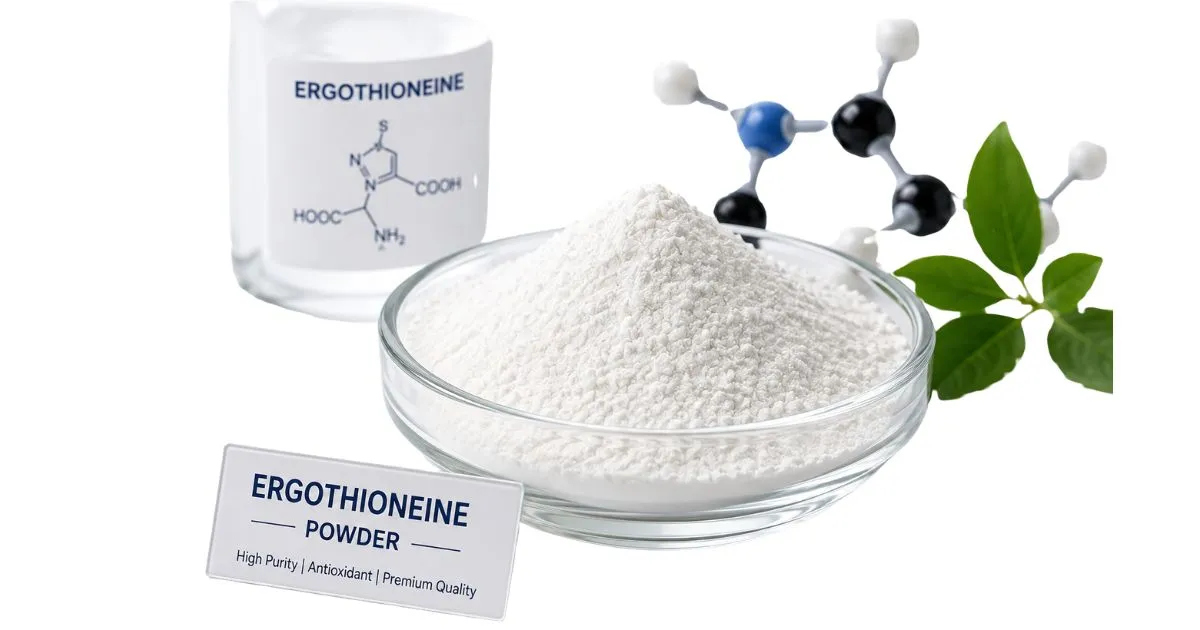
Understanding Ergothioneine and Its Health Benefits
This antioxidant comes from nature and has a special chemical formula (C9H15N3O2S, molecular weight 229.3) that makes it more stable than other antioxidants like Glutathione, NAC, and CoQ10. The thiol group and aromatic imidazole ring of the molecule make it very resistant to oxidation while still being able to effectively remove free radicals.
Cellular Protection and Anti-Aging Properties
The molecule is a strong antioxidant that protects cells and slows down the aging process by building up in mitochondria and cell nuclei. According to studies published in reputable journals, it can protect DNA from oxidative damage and lower the signs of cellular senescence. Unlike most antioxidants, which do nothing, this amino acid derivative actively concentrates in tissues that are under a lot of oxidative stress, like the skin, eyes, and liver.
Cognitive Enhancement and Neuroprotection
Neuronal mitochondria could be protected from reactive oxygen species in clinical tests, which could have cognitive benefits. The compound easily crosses the blood-brain barrier and builds up in brain tissue, where it may help with memory and protect against the cognitive decline that comes with getting older. This process meets the growing demand from consumers for useful foods that help keep the brain healthy and clear.
Immune Modulation and Safety Profile
The compound has a great safety profile, with few known side effects. This makes it even more appealing as a functional element. It can change the immune system by lowering inflammatory cytokines and helping immune responses stay balanced. Toxicological studies show that it doesn't have any bad effects at doses that are much higher than what is normally found in supplements. This means that it can be used every day in food items.
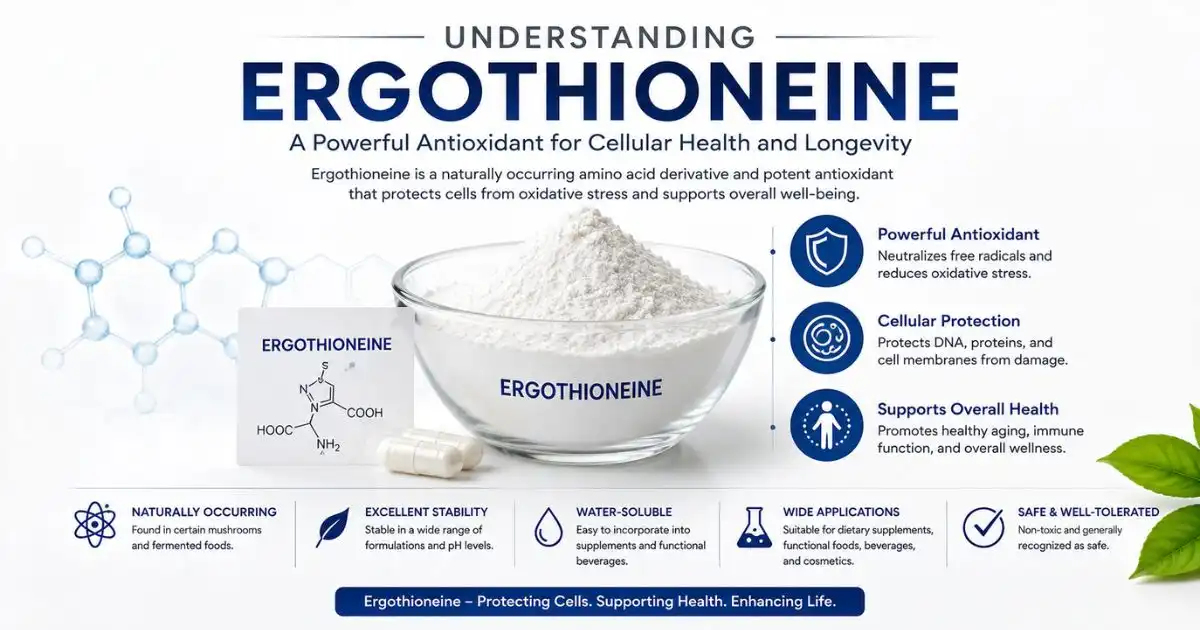
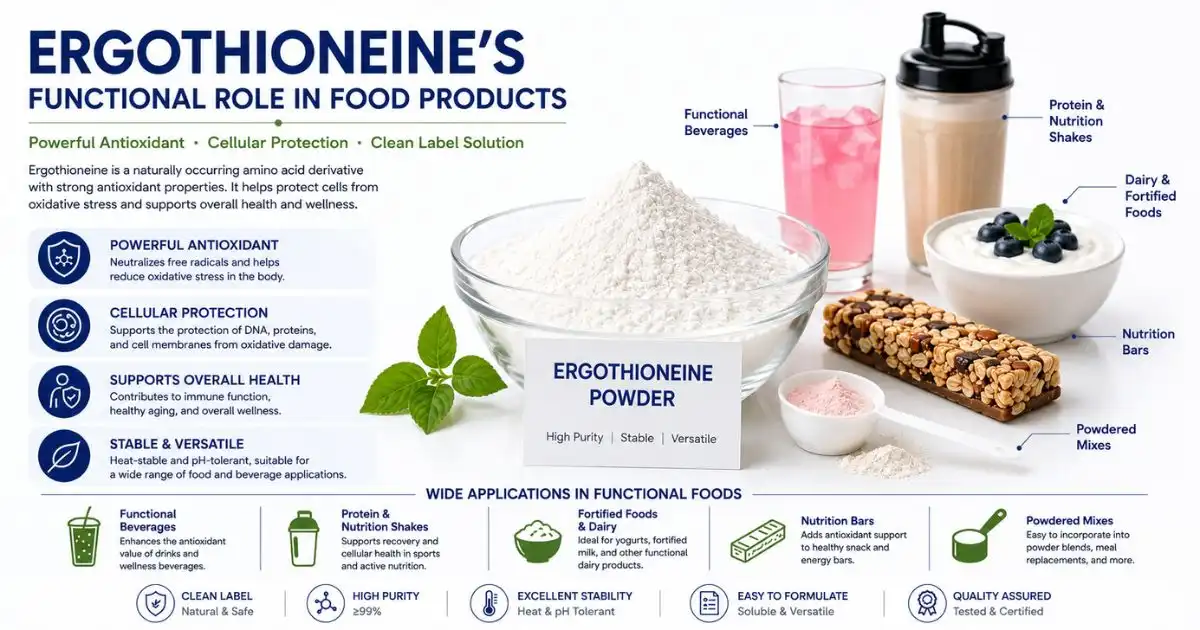
Ergothioneine's Functional Role in Food Products
In order for the compound to work in the body, it needs to be absorbed well and be bioavailable through a specific transporter called OCTN1. This specific cellular uptake pathway explains why the human body has developed unique ways to store it. This suggests that it is very important to human physiology and is why it has been called a possible "longevity vitamin."
Absorption and Bioavailability Enhancement
Depending on the type of food and other nutrients that are eaten at the same time, bioavailability tests show that absorption rates can range from 25 to 45%. When combined with nutrients like Vitamin C, antioxidant routes that work together can help the body absorb more. The compound is easily dissolved in water, which makes it easy to add to beverage systems. Its neutral pH compatibility also makes formulations flexible for a wide range of uses.
Chemical Stability Across Food Matrices
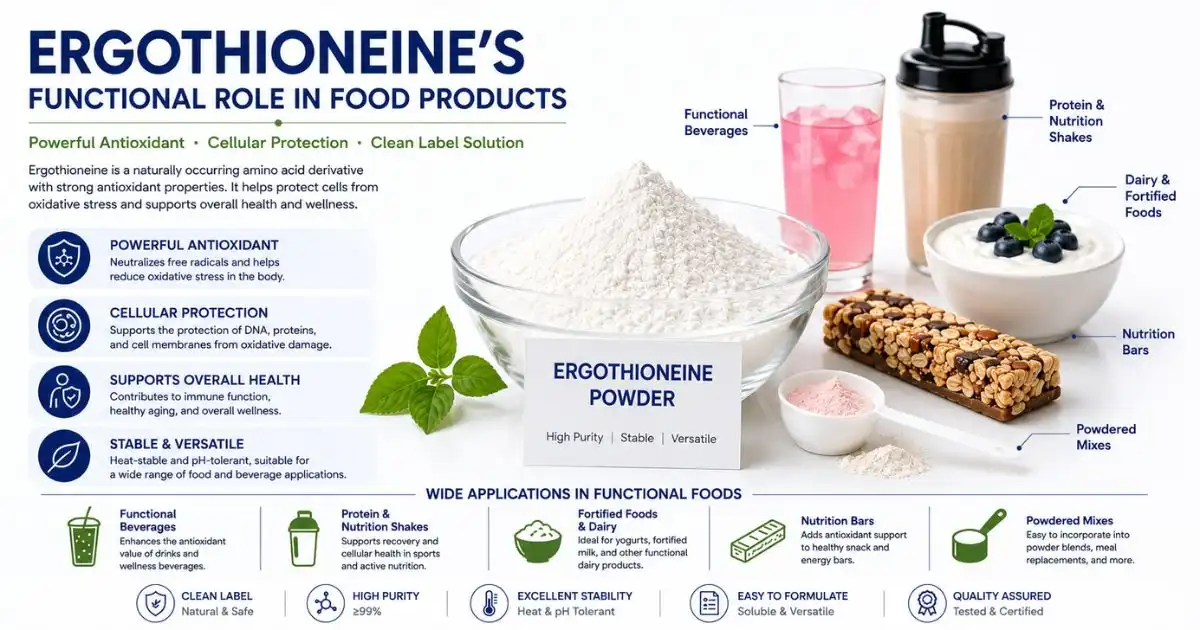
Chemical stability testing shows that this antioxidant is very strong in situations where other antioxidants break down quickly. The compound stays active after being pasteurized, sterilized in a retort, and kept in conditions that allow it to last longer. Because it is stable, it works well in a wide range of food types, including ready-to-drink drinks, nutrition bars, functional dairy products, and dietary supplements. Ergothioneine demonstrates exceptional resilience in this regard, as this amino acid product keeps working even after being heated to temperatures above 120°C, while ascorbic acid and flavonoids break down during processing.
Real-World Application Case Studies
Leading functional food brands have successfully added the substance to high-end lines of products aimed at health-conscious customers. Enhanced water, sports recovery drinks, and anti-aging elixirs sold with a focus on life are all examples of beverages that use this technology. It is used as a differentiating ingredient in brain performance and cellular health formulas by nutrition bar makers. Several European supplement companies have made high-dose capsules with it and other antioxidants that work well together. These capsules have high prices and are well received by the market.
Sourcing and Procurement Considerations for Ergothioneine
Procurement experts have to carefully weigh their supply options when looking for this high-end ingredient, weighing natural choices made from fermentation against synthetic ones. Knowing these differences affects how the government positions the product, how consumers see it, and eventually how well it sells in health-conscious groups.
Production Methods and Quality Standards
| Production Method | Purity Level | Regulatory Status | Typical Application |
|---|---|---|---|
| Mushroom Extraction | 50–85% | Traditionally used in food | Supplements for whole foods |
| Bacterial Fermentation | 95–99% | New food or GRAS coming | High-end vitamins |
| Precision Biosynthesis | ≦99.9% | Needs approval from regulators | Formulations for pharmaceutical use |
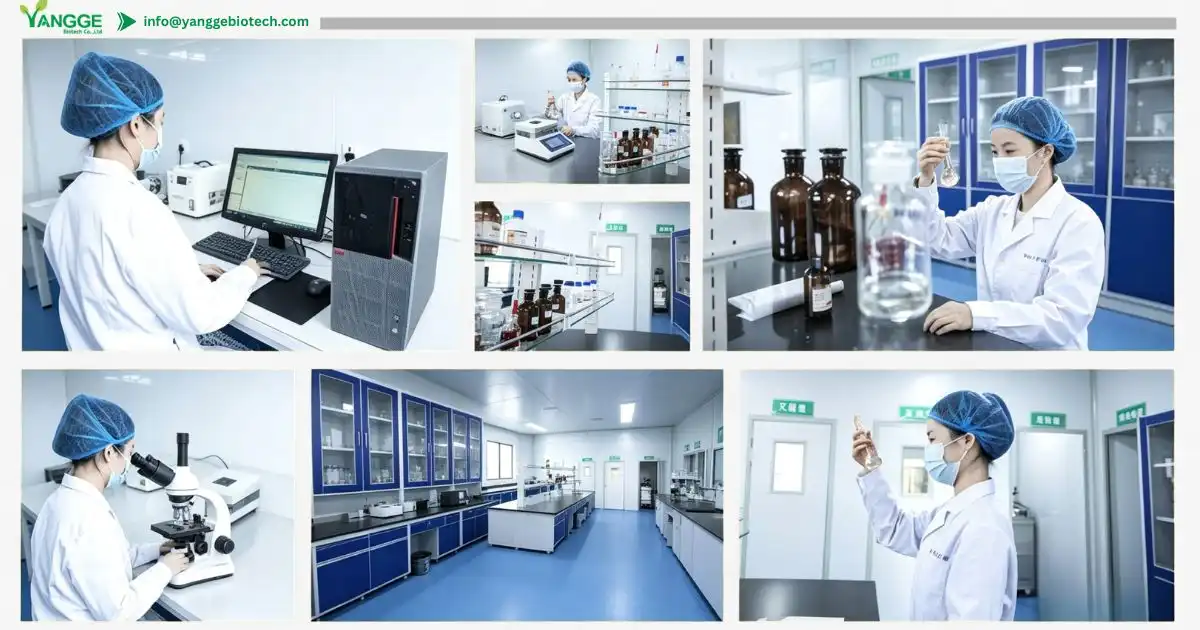
Modern biosynthesis techniques make it possible to make materials that are very pure and meet medicinal standards. Precision fermentation makes Yangge's Ergothioneine Powder ≥99.9% pure, which is proven by HPLC testing and confirmed by Eurofins test results. This is more pure than what is required by industry standards and makes sure that there is little difference between batches.
Certifications and Quality Assurance
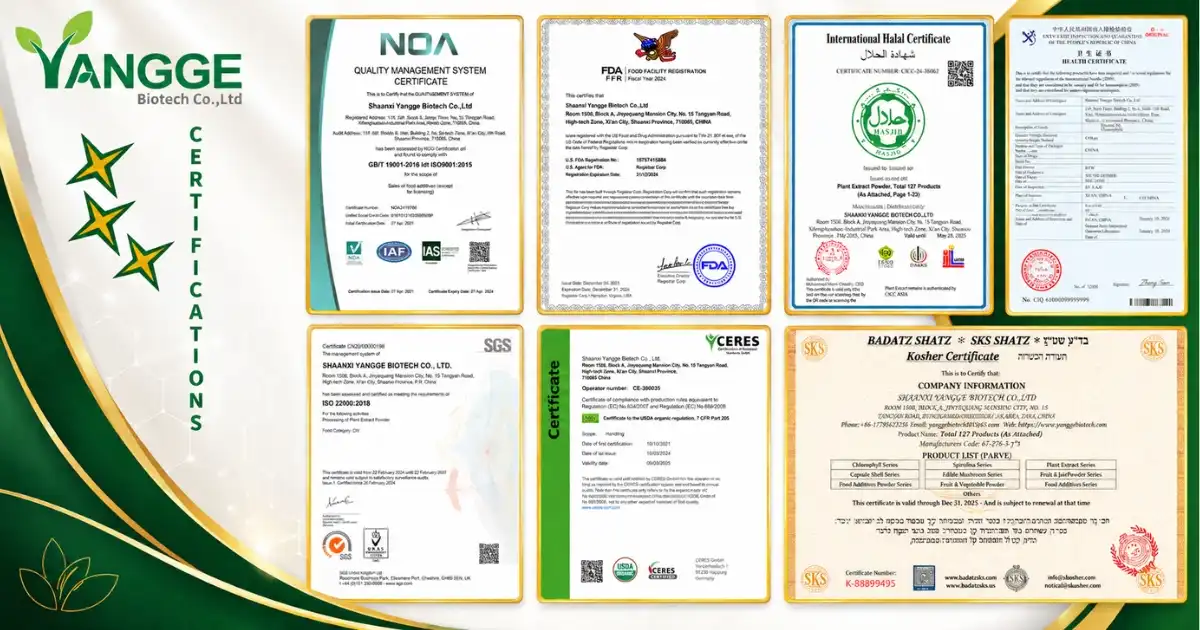
When making purchases, companies should give more weight to suppliers with full portfolios of certifications. Important certifications include FDA registration, Halal, Kosher, ISO9001, and Non-GMO verification. These qualifications not only make it easier to get into markets in different areas, but they also show that strict production standards are being followed. Suppliers who keep GMP facilities and provide full tracking paperwork show that they care about quality assurance in more ways than just following the rules.
Pesticide residue screening to EU standards, heavy metal analysis, microbiological testing, and stability validation should all be part of the testing protocols. Reliable sellers include a Certificate of Analysis with every batch, which proves the product's quality, identity, and lack of contamination. Eurofins testing is the gold standard for proof; it provides independent confirmation that is needed for regulatory reports and quality claims.
Logistics and Minimum Order Considerations
You can get bulk powder in a variety of formats, from 1 kg aluminum foil bags to custom packaging that fits the needs of your manufacturing process. The minimum order quantity is usually based on the purity grade and the needs of the packaging. Because the material is hygroscopic, it is important to keep the temperature stable during shipping and protect it from moisture. International shipments must include paperwork that shows they follow the rules. This includes health certificates and customs statements that are specific to functional food products.
Comparing Ergothioneine to Other Antioxidants for Functional Food Use
This amino acid derivative is better than other antioxidants like Glutathione, NAC, and CoQ10 because it reduces oxidative stress more effectively without the stable issues that come with other choices. The comparison shows clear benefits for formulation scientists and product makers who want the best performance and steadiness over time. Ergothioneine stands out in this comparison, as its unique stability and bioavailability directly support the superior efficacy highlighted above, making it the preferred choice for long-lasting formulation reliability.
Performance Advantages Over Conventional Antioxidants
| Antioxidant | Stability (Heat) | Cellular Uptake | Dose Range (mg/day) | Primary Limitation |
|---|---|---|---|---|
| Ergothioneine | Very good | Transport that is active (OCTN1) | 5–25 | Cost, not enough knowledge |
| Glutathione | Bad | Not enough absorption | 250 to 500 | Damage in the GI system |
| NAC | Moderate | Not active diffusion | 600 to 1200 | Sulfur smell and taste problems |
| CoQ10 | Good | Needs a fat matrix | 100 to 300 | Not soluble in water |
| Vitamin C | Bad | Transport that is full | 500 to 2000 | Very fast oxidation |
Because the substance is not affected by heat, it can be used in any recipe without any problems. Glutathione breaks down in the digestive system, but this amino acid product is absorbed whole and builds up in the right places. CoQ10 can't be absorbed without lipid carriers, which limits its use in water-based systems. This water-soluble compound, on the other hand, works well in beverage formulations.
Synergistic Formulation Strategies
When this substance is mixed with Vitamin C, they work together to create antioxidant benefits that are stronger than either one alone. When it comes to water, ascorbic acid quickly gets rid of free radicals, but the amino acid version protects cells over time. This synergy increases the antioxidant power of the whole while working around the problems of each part separately. Formulation scientists are combining it with polyphenols, carotenoids, or tocopherols more and more to make all-around antioxidant mixtures that consumers who want to protect their cells in a holistic way will like.
Market research shows that people are becoming more interested in new, effective antioxidants that are backed by clinical research instead of generic vitamin formulations. Brands that use this compound as the main ingredient in their products say that health-conscious customers are willing to pay more for them and often buy them again. The compound's chemical description as a "longevity vitamin" with specific cellular transporters really hits home with smart people who are looking for new useful ingredients.
Best Practices for Incorporating Ergothioneine in Functional Food Products
To get the most out of a compound's safety and effectiveness in functional foods, formulation scientists need clear dosage suggestions and application guidelines. Figuring out the best ways to incorporate ingredients into a product guarantees its performance while staying in line with regulations in all target markets.
Dosage Recommendations and Formulation Guidelines
According to clinical research, the best daily doses for antioxidant and cell protection are between 5 and 25 mg. Each dose of functional drinks usually has 5–10 mg, and capsule vitamins can have 15–25 mg. Given how expensive the ingredient is, these levels strike a balance between how well they work and how much they cost. Formulation pH tolerance ranges from 3.0 to 7.5, so it can be used for everything from acidic drinks to neutral dairy products without any stability issues.
When making, you should think about how well the substance dissolves in water (about 200 mg/mL) and how neutral it tastes, which means you don't have to use as much flavor masking. The off-white to white powder look mixes well with light-colored grids and doesn't cause discoloration. Heat stability lets ingredients be processed and sterilized in a retort or hot fill without losing their effectiveness, which means they can be used for more things than just ingredients that need to be kept cold.
Quality Control and Stability Testing
Strict quality control protocols should include identity confirmation using HPLC, purity verification above 99%, and stability testing under accelerated conditions, with Ergothioneine as the target compound. Studies on its stability show that the substance stays active for more than 24 months when kept in sealed cases at room temperature and away from too much moisture. During the intended shelf life, real-time stability programs should keep an eye on the product's potency, appearance, and microbial quality.
Analytical methods must use tested HPLC techniques that can tell the difference between the L-isomer and possible contaminants. Third-party testing by labs like Eurofins offers the independent checks that are needed for regulatory applications and to reassure customers. Monitoring consistency from batch to batch makes sure that all batches of a product work the same way and backs up claims of quality in marketing materials.
Marketing and Labeling Strategies
Regulatory requirements vary from market to market. For example, in the US, structure-function claims for dietary supplements are generally allowed, but disease claims are limited. Depending on where the food comes from and how it was made, European markets may need Novel Food approval. Labels should make it clear where the chemical comes from naturally, that it is an antioxidant, and that it protects cells in a way that doesn't break the rules for claims.
Products in the crowded antioxidant category can be distinguished by marketing tactics that focus on the idea of a "longevity vitamin" and the unique way that OCTN1 is transported. Consumers who know what they're talking about are more likely to trust educational material that talks about mitochondrial protection and proof from peer-reviewed research. Premium placement is in line with the cost structure of the ingredient and appeals to groups that care more about effectiveness than price.
Conclusion
Adding this uncommon amino acid derivative to functional foods is a good idea for companies that want to attract high-end, health-conscious customers. Its special way of getting into cells, high level of stability, and interesting story about how long it lasts make it stand out from other antioxidants while also solving important formulation problems. Ergothioneine fits seamlessly into this strategy, as its unique cellular uptake via the OCTN1 transporter and exceptional resistance to oxidation directly support the stability and longevity claims that premium functional products rely on.
Getting high-purity materials from approved sources makes sure that you follow the rules and that the products work well in a variety of settings. As more clinical evidence comes in and more people learn about this compound, the first companies to market products with it will have a competitive edge in the quickly changing functional food market. To be successful in this new category, procurement professionals should look at suppliers' purity standards, certification portfolios, and technical support skills.
FAQ
Is Ergothioneine Safe for Daily Consumption?
A lot of toxicological tests have shown that the substance is very safe; no bad effects have been reported at doses that are many times higher than what is normally found in supplements. The fact that the substance is naturally found in foods like mushrooms suggests that it has evolved to be tolerated. According to regulatory reviews, it is safe to take every day in doses between 5 mg and 25 mg.
How Does Bioavailability Differ Between Food Matrices and Supplements?
Bioavailability stays the same, usually between 25 and 45%, in properly made food matrices and supplement capsules. No matter what form of transportation is used, the specialized OCTN1 transporter makes absorption easier. Giving Vitamin C at the same time may help the body absorb it better through different routes. When dosage levels are the same, beverage applications have bioavailability that is about the same as capsule supplements.
Which Suppliers Provide High-Quality Bulk Ingredients?
Purchasing teams should give more weight to suppliers who offer ≥99% purity tested with HPLC, full traceability documentation, and a range of certifications such as ISO9001 and Non-GMO. Yangge Biotech is a good example of these standards because they offer pharmaceutical-grade materials that have been approved by Eurofins, meet EU standards for pesticide residues, and come in a range of flexible packing options, from 1 kg quantities to custom bulk setups that are good for large-scale production.
Partner with Yangge for Premium Ergothioneine Supply
Ergothioneine from Yangge Biotech is a reliable source for functional food brands all over the world. Our ≥99.9% pure powder, which has been tested by Eurofins and meets strict EU standards, makes sure that your products work as well as possible and follow the rules. We help businesses get into markets in North America, Europe, and Asia by holding a wide range of approvals, such as Halal, Kosher, FDA, ISO9001, and Non-GMO.
Our research and development team can help you make sure that this high-quality ingredient works well in drinks, vitamins, and functional foods by giving you expert formulation support. Contact us or email our experts at info@yanggebiotech.com to ask for samples, talk about custom requirements, or look into OEM business possibilities. You can find more technical resources and application guides to help you with your product development efforts at blog.yanggebiotech.com.
References
1. Cheah, I. K., & Halliwell, B. (2012). "Ergothioneine; antioxidant potential, physiological function and role in disease." Biochimica et Biophysica Acta, 1822(5), 784-793.
2. Borodina, I., Kenny, L. C., McCarthy, C. M., et al. (2020). "The biology of ergothioneine, an antioxidant nutraceutical." Nutrition Research Reviews, 33(2), 190-217.
3. Williamson, R. D., McCarthy, F. P., Manna, S., et al. (2020). "L-(+)-Ergothioneine significantly improves the clinical characteristics of preeclampsia in the reduced uterine perfusion pressure rat model." Hypertension, 75(2), 561-568.
4. Servillo, L., D'Onofrio, N., Longobardi, L., et al. (2018). "Ergothioneine products derived by superoxide oxidation in endothelial cells exposed to high-glucose." Free Radical Biology and Medicine, 108, 8-18.
5. Halliwell, B., Cheah, I. K., & Tang, R. M. (2018). "Ergothioneine - a diet-derived antioxidant with therapeutic potential." FEBS Letters, 592(20), 3357-3366.
6. Cheah, I. K., Tang, R. M., Yew, T. S., et al. (2016). "Administration of pure ergothioneine to healthy human subjects: Uptake, metabolism, and effects on biomarkers of oxidative damage and inflammation." Antioxidants & Redox Signaling, 26(5), 193-206.

Based on your location and order quantity, you will have the opportunity to receive a limited time free shipping promotion!
Who we are
Popular Blogs