Why Astaxanthin Powder Is a Top Antioxidant Ingredient
For the health supplement, skincare, and functional food businesses, Astaxanthin Powder made from Haematococcus pluvialis microalgae is one of the most powerful natural antioxidants on the market. Its powerful ability to fight free radicals, even stronger than Vitamin E and beta-carotene, makes it a key ingredient for B2B sourcing workers who want to make their product lines stand out. This complete guide covers the important things that buying managers and research and development teams need to know about sourcing, quality standards, and possible uses for this premium ingredient so that they can safely add it to their products and stay ahead of the competition in the market.
Understanding Astaxanthin Powder and Its Antioxidant Properties
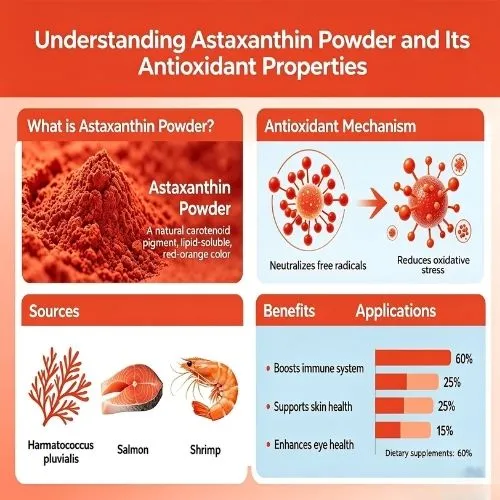
The natural pigment that was taken from Haematococcus pluvialis has amazing protective properties because of the way its molecules are structured. Astaxanthin Powder is different from other antioxidants because its carbon chain is longer. This lets it cross cell membranes fully, protecting cells from both inside and outside surroundings. A number of peer-reviewed studies have shown that it is 6,000 times more powerful as an antioxidant than vitamin C and 550 times more powerful than vitamin E.
Superior Free Radical Neutralization
The unique dark red powder has the (3S, 3'S) stereoisomer in it, which is more biologically active than manufactured options. Because of the way it is naturally arranged, the molecule can very effectively get rid of peroxyl radicals and singlet oxygen. Clinical studies have shown that people who took 4 to 12 mg of it every day had significant drops in oxidative stress markers. This supports its use in nutrition products.
Multi-Sector Applications
Purchasing teams in a wide range of businesses know how useful this ingredient is for making new products. Health supplement companies use it in anti-aging products, and cosmetics companies use its skin-protecting qualities to make high-end skin care brands. To meet customer demand for clean-label goods, the food and drink industry is using this natural colorant and functional ingredient more and more. Animal nutritionists also like it because it helps fish and chickens' immune systems and makes their colors look better.
Regulatory Compliance and Safety Profile
In the US, the chemical is still considered Generally Recognized As Safe (GRAS), and regulatory bodies have confirmed that it is safe at certain amounts. Clinical safety tests regularly show that it is well tolerated at suggested doses, so it can be used by a wide range of people. Professionals in charge of buying things can be sure that this ingredient will meet the standards set by the FDA, the EU, and other foreign organizations that regulate food supplements and additives.
Comparing Astaxanthin Powder to Other Market Options
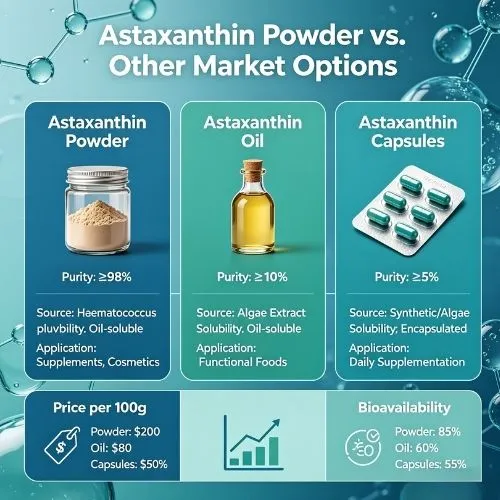
To compare different types and sources, you need to know the detailed differences that affect how well the formulation works and how good the final product is. Compared to oil solutions or beads, the Astaxanthin Powder form is more stable, easier to handle, and can be mixed into more than one substance.
Natural Versus Synthetic Sourcing
Microalgae-derived natural powder only has the (3S, 3'S) isomer, which study has shown to have the best protective and bioavailability properties. Synthetic copies made from petrochemical sources are made up of a racemic mixture that only has 25% of the naturally active isomer, which makes them much less effective. The chiral HPLC analysis proves for sure that the source is real, which is an important quality control step for B2B buyers who want clear ingredient information. Natural extraction costs more, but it works better, so it's worth the extra money for brands that want to place themselves in quality-conscious markets.
Powder Format Advantages
When kept properly, microencapsulated powders have a longer shelf life of 24 to 36 months, longer than liquid extracts, which break down quickly due to oxygen. It is easy for manufacturing teams to weigh, mix, and put the powder into pill, capsule, and sachet forms. Variants that are cold water dispersible (CWD) can be used in beverages, which opens up more recipe options. The concentrated powder (usually fixed to 2%, 2.5%, 5%, or 10% active content) makes it possible to precisely control the dose during production.
Purity Specifications and Testing Methods
High-performance liquid chromatography (HPLC) is the best way to figure out the results of a test because it gives exact measurements that UV spectrophotometry can't match. Suppliers who care about quality give full certificates of analysis that include microbial counts, heavy metal levels (lead <3ppm, arsenic <1ppm, mercury <0.1ppm), and residue fluid tests. Professionals in charge of buying things should give preference to sellers who can provide proof of consistent active ingredient content from one batch to the next.
Procurement Insights: Navigating the Astaxanthin Powder Market
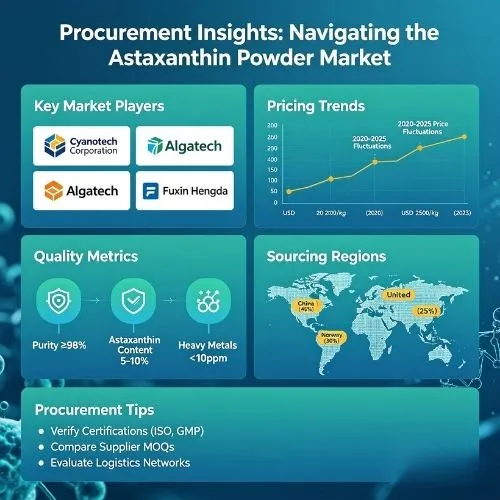
To make sure the supply chain is reliable and the standard of the products stays the same, strategic buying looks at more than just unit price. The global Astaxanthin Powder market has grown up, giving B2B buyers a lot of choices for suppliers in different parts of the world.
Supplier Certification Requirements
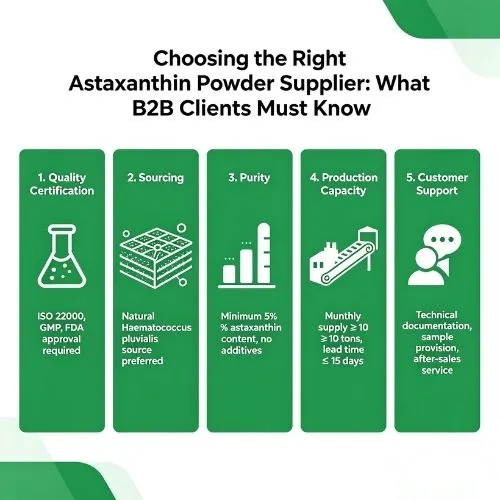
The best producers have complete quality control systems that include GMP, ISO 22000, HACCP, and organic certifications from the USDA or EU. These references show that the company has a strong quality control system that can produce consistent materials that meet foreign standards. Suppliers who work with independent labs like Eurofins and SGS to do third-party checks give customers even more peace of mind. Beyond looking at paper credentials, buying teams can figure out how reliable a provider is by asking for facility audit records and checking out their production capabilities.
Pricing Structures and Value Assessment
The price on the market is usually between $800 and $2,500 per kilogram, but it depends on how strong it is, whether it is certified, and how much you order. By figuring out the cost-per-gram of the active ingredient, you can accurately compare values for different specs. This shows why it's important to look at specifications: a 2% powder that costs $1,000/kg has the same amount of active ingredients as a 1% powder that costs $500/kg. When you commit to buying a lot of something, you can often get better prices. This is why working with a seller is good for regular buyers. The total landing cost is also affected by the cost of transportation, the minimum order quantity (usually 1 to 25 kg), and the terms of payment.
Supply Chain Considerations
Reliable sellers keep enough stock on hand (50–100 kg is a normal range), so they can quickly fill rushed orders. Just-in-time production is supported by standard shipping times of one to three days for in-stock items. Getting to know providers who offer a range of flexible packing choices, such as 1 kg aluminum foil bags and custom configurations, makes the getting and dealing process easier. Talking about wait times for bigger orders and making supply deals guards against changes in the market and lack of raw materials.
Choosing the Right Astaxanthin Powder Supplier: What B2B Clients Must Know
Picking the right supplier has a direct effect on the standard of the products, following the rules, and the long-term success of the business. The right partner offers more than just reasonable prices. They also offer scientific knowledge, quality assurance, and quick customer service.
Quality Assurance Infrastructure
Premium providers use multistage testing procedures that include checking the raw materials, keeping an eye on the process, and analyzing the final product before releasing it. Batch tracking systems keep track of the whole chain of custody, from growing the algae to extracting it and putting it in capsules. Being open about the extraction methods (supercritical CO2 is the best solvent-free way) shows that you care about product quality. Suppliers who offer pre-shipment sample testing through labs chosen by the customer show that they are sure of their quality standards.
Technical Support Capabilities
Experienced sellers give recipe advice that includes things like how stable the ingredients should be, how much of them should be used, and how well they work with other ingredients. Working together in R&D helps improve the performance of products and solve problems with design. Having access to application experts who know the rules that apply in different markets speeds up the process of making new products. When coming up with new goods or joining new market categories, this expert partnership is very helpful.
Long-Term Partnership Potential
By looking at a supplier's image through customer references and their place in the industry, you can find patterns of reliability. Businesses that have been running the same way for a number of years show that they are stable. Respondent channels of contact and specialized account management make it easier to process orders and solve problems. When suppliers engage in new technology and more space, it shows that they are committed to meeting the wants of growing customers. All of these things together decide whether a relationship with a seller will help a business grow or make it harder to run with their Astaxanthin Powder.
Maximizing the Value of Astaxanthin Powder in Your Product Line
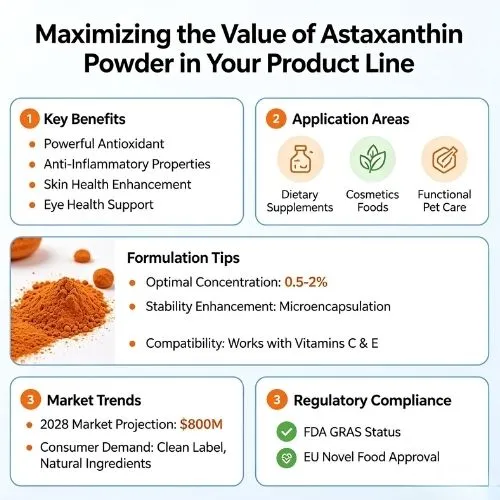
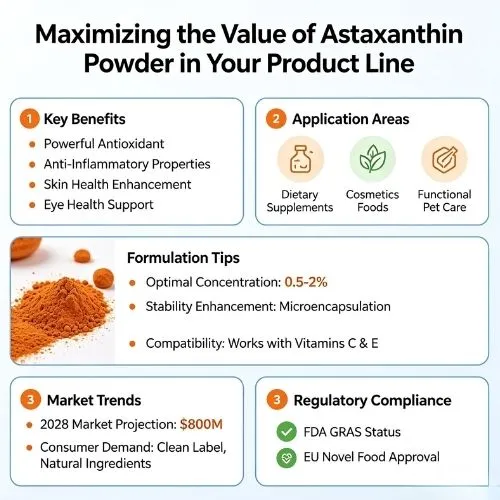
Strategically adding ingredients goes beyond just making the product; it also involves placing it in the market, navigating regulations, and talking to customers. Knowing the specific needs of an application helps a product work better and make more money.
Application-Specific Formulation Strategies
Nutraceutical makers usually aim for 4–12 mg daily doses, which need to be carefully calculated based on the Astaxanthin Powder strength. Putting this ingredient together with antioxidants that work well with it, like vitamin E or coenzyme Q10, makes products that protect against oxidative stress in a more complete way. Topical versions with amounts of 0.01-0.1% work well for cosmetic uses, where the natural red pigment makes the product look nice and serves a purpose.
People who make drinks have to choose different types of CWD and think about how stable the pH is, because very acidic conditions can break down carotenoid structures. Understanding these technical needs during the creation of a product keeps it from having to go through expensive rounds of reformulation.
Regulatory Compliance Across Markets
Different parts of the world have different rules about how to use this element. Under DSHEA rules, it can be added to nutrition products in the US, but Novel Foods rules say it has to be followed when selling it in Europe. Different places have different documentation needs. Some places need very detailed safety dossiers. When you work with providers who have experience with foreign trade, you can be sure that the labels, paperwork, and customs clearance are done correctly. Market entry delays can be avoided by consulting with regulators early on in the product development process.
Marketing and Differentiation Opportunities
More and more people are learning about the health benefits of antioxidants, which is good for brands that focus on using natural products that are backed by science. Consumers who care about their health and choose clean-label goods appreciate products that are clear about where their ingredients come from (microalgae versus manufactured production).
References to clinical studies that back up certain health claims make marketing messages stronger. The natural history of the ingredient, from growing algae in clean conditions to being extracted using modern technology, makes for an interesting brand story. Products that advertise uniform strength and third-party tests help customers trust the product and support its high price.
As health trends among consumers and science proof come together, this ingredient is in a good position to continue growing in the market. New studies looking into brain health, eye health, and exercise recovery open up new areas of use beyond the standard anti-aging stance. Purchasing teams that keep an eye on these changes can spot market chances and make sure they have enough ingredients before demand goes through the roof.
Conclusion
High-quality Astaxanthin Powder made from Haematococcus pluvialis is a great natural antioxidant choice that procurement pros will want to look into. Because it has been scientifically proven to work, is approved by regulators, and can be used in many different ways, it can be used in nutrition, cosmetic, and functional food products. To do good sourcing, you need to give more weight to providers with strong quality systems, full certifications, and proof of technical knowledge. Strategic relationships with dependable makers allow for steady product quality, following the rules, and placing in the market that is competitive. Long-term formulation investment is supported by the ingredient's broad market appeal and growing body of study.
Partner with Yangge for Premium Astaxanthin Powder Supply
Yangge Biotech specializes in meeting the strict needs of foreign B2B clients by sending pharmaceutical-grade natural products. Our 10% uniform Astaxanthin Powder from Haematococcus pluvialis goes through HPLC verification and third-party testing through relationships with Eurofins and SGS. This makes sure that it is real and pure.
With certificates in GMP, ISO 22000, Halal, and Kosher, we help you follow the rules in all global markets. The full paperwork backs up the claims that our dark red powder is Non-GMO, Non-Irradiated, and Allergen-Free. Custom specs, OEM packing, and mixed formulas are some of the flexible services that can be used to meet your product needs. We can respond to your needs by delivering orders of at least 1 kg within 1 to 3 days from our 50-100 kg stock inventory. You can talk to our technical team about your formulation needs and ask for analysis data by emailing info@yanggebiotech.com. Find out why some of the biggest companies that make Astaxanthin Powder trust Yangge as a trusted source for their ingredients.
References
1. Ambati, R.R., Phang, S.M., Ravi, S., & Aswathanarayana, R.G. (2014). Astaxanthin: Sources, Extraction, Stability, Biological Activities and Its Commercial Applications. Marine Drugs, 12(1), 128-152.
1. Capelli, B., Bagchi, D., & Cysewski, G.R. (2013). Synthetic Astaxanthin is Significantly Inferior to Algal-Based Astaxanthin as an Antioxidant and May Not be Suitable as a Human Nutraceutical Supplement. Nutrafoods, 12(4), 145-152.
3. Fassett, R.G. & Coombes, J.S. (2011). Astaxanthin: A Potential Therapeutic Agent in Cardiovascular Disease. Marine Drugs, 9(3), 447-465.
4. Guerin, M., Huntley, M.E., & Olaizola, M. (2003). Haematococcus Astaxanthin: Applications for Human Health and Nutrition. Trends in Biotechnology, 21(5), 210-216.
5. Kidd, P. (2011). Astaxanthin, Cell Membrane Nutrient with Diverse Clinical Benefits and Anti-Aging Potential. Alternative Medicine Review, 16(4), 355-364.
6. Yuan, J.P., Peng, J., Yin, K., & Wang, J.H. (2011). Potential Health-Promoting Effects of Astaxanthin: A High-Value Carotenoid Mostly from Microalgae. Molecular Nutrition & Food Research, 55(1), 150-165.

Based on your location and order quantity, you will have the opportunity to receive a limited time free shipping promotion!
Who we are
Popular Blogs