What is vegetable carbon E153 used for
Vegetable carbon E153 is a natural food coloring agent that is created through the controlled carbonization of plant products like bamboo, coconut shells, or wood. This harmless color adds a deep black tint to a wide range of products, from sweets and baked goods to drinks and health supplements, without changing the taste or making the ingredients less stable. Vegetable carbon E153 has become a clean-label option that satisfies customer demands and strict compliance requirements across international markets as government scrutiny of synthetic colors increases.
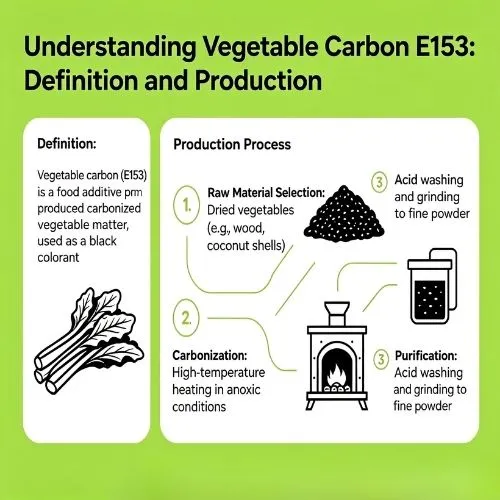
Understanding Vegetable Carbon E153: Definition and Production
What Exactly is Vegetable Carbon E153?
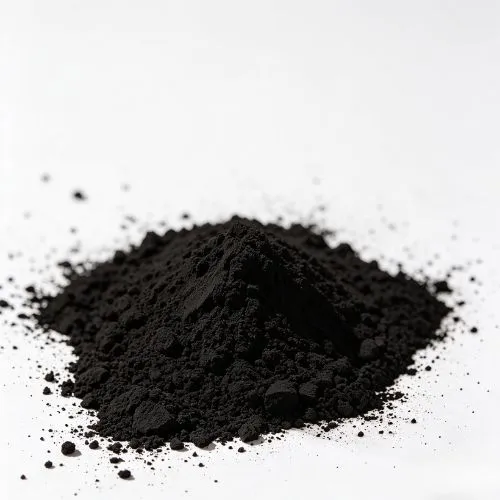
Vegetable carbon E153 is a microcrystalline form of practically pure elemental carbon that is made only from vegetable sources. Unlike manufactured carbon blacks, which come from oil, this colorant comes from plant materials that can be used over and over again. In the carbonization process, plant matter—mostly bamboo in Yangge's formulations—is heated under controlled air conditions. This turns organic chemicals into stable carbon particles. This method of production is in line with promises to sustainability and produces a product that meets international standards for food safety. The fine powder that is made has great color strength; only a small amount is needed to get deep black colors in final goods.
How is Bamboo-Sourced Carbon Black Produced?
Our production process starts with bamboo that is taken in a way that doesn't harm the environment. Bamboo grows back quickly without having to be replanted. The raw material goes through pyrolysis at temperatures between 500°C and 600°C in places with little air. This process gets rid of volatile chemicals while keeping more than 95% of the pure carbon. After carbonization, the material is micronized to get the best particle size distribution, which is usually less than 5 micrometers.
This makes sure that the particles are evenly spread in different structures. Checking the quality with HPLC, screening for heavy metals with ICP-MS, and checking for polycyclic aromatic hydrocarbons (PAHs) to make sure levels stay below 50 µg/kg for benzo(a)pyrene are all very strict. This level of technical accuracy guarantees consistency from batch to batch, which is very important for big manufacturers who need to know how their products will work during different production processes.
Regulatory Status and Safety Considerations
Vegetable carbon E153 is approved by EU Regulation No 231/2012 and is accepted by the Joint FAO/WHO Expert Committee on Food Additives (JECFA), which allows it to be used "quantum satis," or "as much as necessary," in the majority of food categories. Based on thorough toxicological studies, the European Food Safety Authority (EFSA) has set limits for what is considered an acceptable daily amount.
But procurement workers who are looking to sell to people in the US should know that FDA rules currently limit its use as a straight food colorant. This means that different formulation tactics are needed for that market. Our certificates of analysis show exactly how much arsenic (<3 mg/kg) and lead (<2 mg/kg) is in the product, as well as how much water is in it (<12%) and how much sulfated ash is in it (<4.0%). This lets your quality control teams make sure that the product meets both regional and international standards.
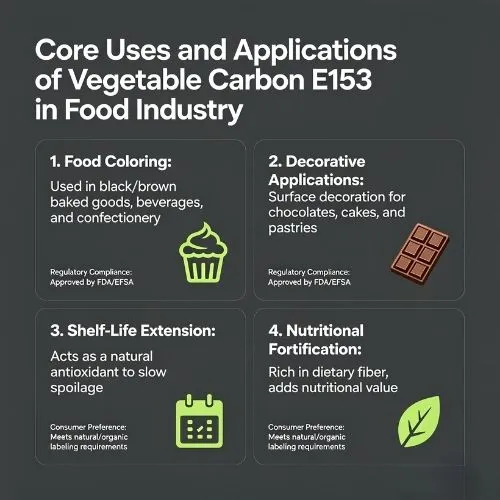
Core Uses and Applications of Vegetable Carbon E153 in Food Industry
Applications in Bakery and Confectionery Products
Vegetable carbon E153 has been quickly accepted by the baking industry for unique items such as charcoal-infused buns, artisan bread, and themed pastries. When baked at high temperatures, like during Maillard reactions and caramelization, organic dyes break down. But this carbon pigment keeps its color when the core temperature is above 180°C. Candy makers like Vegetable carbon E153 because it keeps the colors from shifting between layers of fine licorice, hard sweets, and jelly beans, which would make them look less appealing.
Depending on the level of strength you want, the recommended dose rates are usually between 0.1% and 0.5%. However, because the formulation is flexible, these rates can be changed to meet the needs of the production. Because the pigment doesn't dissolve in either water or fat, it works physically, covering surfaces instead of dissolving. This keeps color from bleeding in systems with more than one component.
Beverage and Supplement Formulations
More and more, companies that make energy drinks and useful drinks are using Vegetable carbon E153 to make goods that look unique and appeal to health-conscious consumers. The colorant stays steady at pH levels between 2.5 and 8.0, which is important for acidic drink mixtures that contain citric or phosphoric acids. In dietary supplement uses, especially for coatings on capsules and tablets, Vegetable carbon E153 gives very high opacity in thin layers.
This successfully hides light-sensitive active ingredients like vitamins and plant extracts while keeping the fast disintegration profiles. Our Vegetable carbon E153 comes from bamboo and meets the standards for not being GMO, allergen, or radioactive. This backs up clean-label claims that customers like. When kept in sealed aluminum foil packaging that is kept away from light and moisture, storage stability lasts longer than 24 months. This means that your product will work the same way throughout its shelf life.
Cosmetic and Personal Care Applications
In addition to being used in food, pharmaceutical-grade Vegetable carbon E153 is also used by people who make charcoal masks, soaps, and oral care items. The pigment's small particles and matte finish make skin care products that claim to help with cleansing look nice. At 25°C, readings of density of about 1.7 g/ml make it easier to figure out the right doses when going from pilot runs to commercial production. The lack of smell and taste in the material keeps sensory confusion from happening, which is a big plus compared to activated charcoal goods that might still contain volatile organic compounds from the activation process.
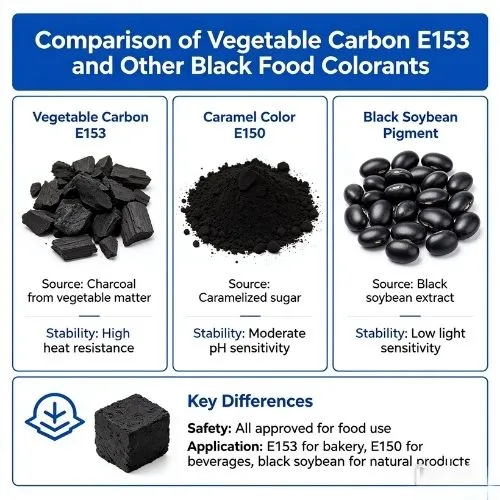
Comparing Vegetable Carbon E153 to Other Black Food Colorants
Vegetable Carbon versus Activated Charcoal
Vegetable carbon E153 and activated charcoal are both made from plants, but there are important changes in how they are processed that make them different. To activate something, it is treated with oxidizing gases or chemicals at very high temperatures. This makes microporous structures that are best for binding rather than coloration. Because of its porosity, activated charcoal can bind nutrients, flavors, and even active medicine ingredients. This is not a good quality for food recipes where the interactions between ingredients need to be predictable.
The inactive form of Vegetable carbon E153 only improves the color of foods without changing their nutritional value or messing up fortification programs. Regulatory classifications make these materials even more different: Vegetable carbon E153 is regulated as a colorant, while activated charcoal may be regulated as a processing help or food ingredient, depending on the country and the use.
Natural Alternatives: Caramel Colors and Botanical Extracts
Black caramel colors (E150a–d) are water-soluble alternatives, but they aren't very stable at high temperatures and are sensitive to pH, which means they can't be used in all situations. When the pH level is high, caramel colors can change to dark ones. Depending on how they are made, they may add a little sweetness or bitterness. Plant-based black pigments, like those from black carrot or squid ink, are natural choices, but they don't always have the strength or low cost of carbon-based colorants.
Vegetable carbon E153 has better covering power, which means that less of it is needed to get the appropriate level of opacity. This saves money when making a lot of things at once. Because the pigment is chemically inert, it doesn't combine with other parts of the recipe. This means you don't have to worry about the precipitation or color changes that can happen with natural colors based on anthocyanins.
Performance Metrics for Procurement Decisions
When buying managers look at black colorants, they should look at more than just the starting cost per kilogram. The real cost-in-use is based on color strength per unit weight. Because Vegetable carbon E153 has a lot of pigments, it is often a better value than other options that need higher doses. Stability patterns under working conditions like heat, shear, and pH changes have a direct effect on how well and consistently products are made.
Regulatory support in target markets affects how quickly and easily a new product can be made and sold. Clean-label compatibility is becoming more and more important as consumers want ingredients that they can recognize driving product development strategies. Our bamboo-sourced Vegetable carbon E153 takes all of these things into account and offers a mix of performance, compliance, and sustainability traits that help brands stand out in crowded markets.
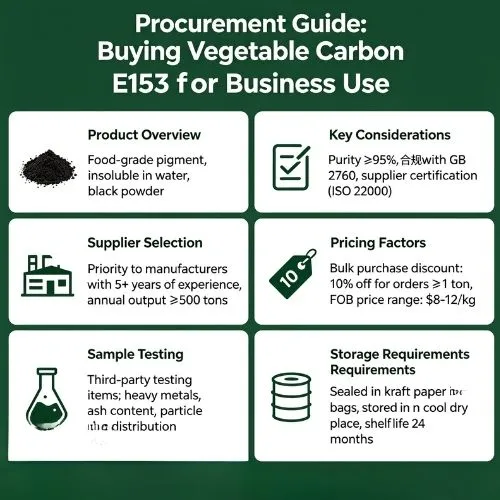
Procurement Guide: Buying Vegetable Carbon E153 for Business Use
Supplier Evaluation Criteria
To find a reliable Vegetable carbon E153 provider, you need to carefully look at their technical skills and quality control methods. Certifications like ISO 22000, HACCP, and GMP give manufacturers basic peace of mind that their processes follow food safety rules. Kosher and Halal licenses make it easier for goods that are aimed at certain groups of people to reach new customers. When Yangge Biotech works with independent testing labs, specs are checked by a third party. This lowers the risk in the supply chain for your purchasing processes.
Documentation that shows where the raw bamboo comes from and how it is packaged at the end makes the audit trail clear, which supports claims of sustainability and business responsibility. To make sure the quality of each package meets your standards, make sure you get thorough certificates of analysis with each one. These should include microbial testing results, particle size distribution data, and heavy metal screening.
Minimum Order Quantities and Packaging Options
Our base order size of 1 kilogram covers both R&D samples and pilot production runs, so formulation teams can see how well the product works before committing to bulk sales. Standard packaging in aluminum foil bags keeps the quality of the product safe while it's being stored and shipped. Custom package designs are also available for private label or special handling needs. Keeping inventory levels between 50 and 100 kilograms ensures quick delivery, which is important for production plans that can't wait for long lead times. OEM package services help brand owners who need custom labels, translations into other languages, or their own container forms. This adaptability is especially helpful for contract makers who work with many clients whose needs are different.
Pricing Factors and International Logistics
The price of Vegetable carbon E153 depends on a number of factors, such as the cost of getting the raw materials, the amount that is made, the quality standards, and the requirements for approval. Material that comes from bamboo is usually more expensive than materials that come from wood because they are more sustainable and have uniform quality profiles. Tiered pricing systems that help big manufacturers save money are made possible by volume agreements.
When sending goods internationally, it's important to make sure that dangerous materials are properly labeled. Vegetable carbon E153 is usually not dangerous, but some places need special paperwork. Our transportation partnerships make sure that the paperwork for clearing customs is correct, which makes things easier for your buying teams. You can set up payment terms and credit agreements to work with the times you buy things. This helps you control your cash flow and makes sure you always have supplies.
Conclusion
Vegetable carbon E153 has become an important tool for companies that want to make clean-label products without losing how they look or how well they follow the rules. Its unique mix of natural origin, high stability, and multiple uses solves important problems in the creation of modern foods and supplements. As more people want clear ingredient lists and environmentally friendly production, this colorant made from bamboo puts your goods at the center of innovation and responsibility.
The technical requirements we've listed—ranging from optimizing particle size to setting limits on heavy metals—help you make smart purchasing choices that meet both performance and quality assurance standards. Vegetable carbon E153 gives reliable results that help with both manufacturing efficiency and market differentiation, whether you're making unique baked goods, functional drinks, or high-end candies.
Partner with Yangge: Your Trusted Vegetable Carbon E153 Manufacturer
Yangge Biotech can help you reach your formulation goals by providing you with high-quality Vegetable carbon E153 powder made from bamboo that meets the strict requirements of modern food, drink, and supplement production. As a well-known Vegetable carbon E153 provider, we offer technical know-how and helpful customer service. We offer sample sizes from 1 kg up to bulk sales, and our products are certified as ISO, HACCP, Kosher, and Halal.
Our farm-to-table tracking method makes sure that every batch shows that we are committed to quality and sustainability. If you need certificates of analysis, scientific data sheets, or samples that are specifically made for your purpose, please email us at info@yanggebiotech.com. This is for purchasing managers, R&D teams, and formulation engineers. Our support team is available 24 hours a day, 7 days a week. They can help you with improvement of dosages, regulatory compliance, and custom package solutions that make your purchasing easier and speed up the development of your products.
FAQ
Q: Can we get some samples to test before purchasing?
A: Of course, we can provide free samples of 20 to 100 grams, but the shipping cost is at the customer's expense. The shipping cost can be deducted from the next order, or the samples can be sent through your courier account.
Q: Do your products have relevant certifications?
A: Yes, our products are certified for HALAL, ISO, HACCP, Kosher, and other certifications.
Q: What is the minimum order quantity (MOQ)?
A: Small batches of samples can be customized according to your requirements.
Q: Do you offer OEM and ODM services? Can the formula be customized based on our own?
A: Of course, we provide ODM and OEM services to many customers. Our product range includes softgels, capsules, tablets, sachets, granules, and private label services. Simply contact us and let us know your requirements. Our experienced R&D team can also develop new products with specific formulas.
Please contact us to design your own branded products.
Q: How do you handle quality complaints?
A: First, we have a comprehensive quality control SOP. We provide authoritative third-party inspection reports for almost all products before shipment to minimize the possibility of quality issues. Second, we have a comprehensive return and exchange procedure. If there is a genuine quality dispute, we will strictly follow the SOP.
Q: How do you ship? How long does delivery take?
A: For small orders, we typically use DHL, UPS, EMS, FedEx, or TNT. Delivery typically takes 3-7 days. We also offer air and sea freight services. We have a strong freight forwarding team and can provide you with a one-stop service, including DDP and DDU.
Q: What are your payment terms?
A: 100% prepayment, payable by T/T, Western Union, MoneyGram, or PayPal.
Q: What is the shelf life of your products?
A: 2 years with proper storage.
References
1. Joint FAO/WHO Expert Committee on Food Additives. "Specifications for Food Additives: Vegetable Carbon." JECFA Monographs, Vol. 15, 2018.
2. European Food Safety Authority Panel on Food Additives and Nutrient Sources. "Re-evaluation of Vegetable Carbon (E 153) as a Food Additive." EFSA Journal, Vol. 10, No. 4, 2012.
3. Richardson, M.L. and Bowron, J.M. "The Fate of Pharmaceutical Chemicals in the Aquatic Environment: A Review." Journal of Pharmacy and Pharmacology, Vol. 37, No. 1, 1985.
4. Downham, A. and Collins, P. "Colouring Our Foods in the Last and Next Millennium." International Journal of Food Science & Technology, Vol. 35, No. 1, 2000.
5. Scotter, M.J. "The Chemistry and Analysis of Annatto Food Colouring: A Review." Food Additives & Contaminants: Part A, Vol. 26, No. 8, 2009.
6. Carocho, M., Morales, P., and Ferreira, I.C.F.R. "Natural Food Additives: Quo Vadis?" Trends in Food Science & Technology, Vol. 45, No. 2, 2015.

Based on your location and order quantity, you will have the opportunity to receive a limited time free shipping promotion!
Who we are
Popular Blogs