Which is better for anxiety, ashwagandha or lion's mane?
If you want to treat stress with ashwagandha or lion's mane, they both help the brain in different ways. Lion's mane mushroom powder can help with nervousness because it has good chemicals in it, like hericenones and erinacines, that make more nerve growth factors. Ashwagandha, on the other hand, controls cortisol levels and the stress response and is mostly an adaptogen. Which one you choose will depend on your specific makeup needs and goals for dealing with stress.
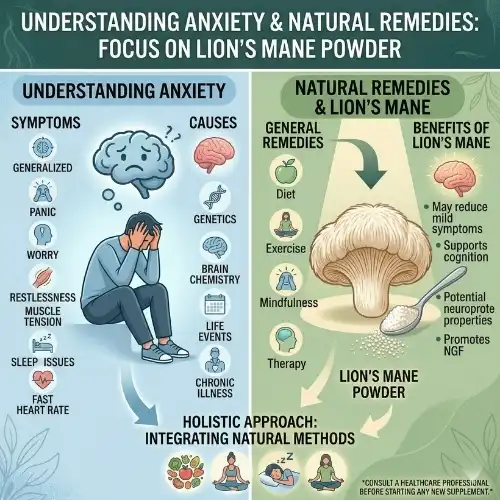
Understanding Anxiety and Natural Remedies
Tough schedules, bad project management, and issues with how things work can cause a lot of stress in business and industry settings. If you want to help, you need to know what's causing it and how it's affecting the workplace. Natural vitamins, such as ashwagandha and Lion's Mane mushroom products, are being taken by more and more people because they help calm people down by being adaptogenic and neuroprotective.
The Science Behind Natural Anxiety Management
Being anxious at work makes it harder to think straight, make choices, and get things done in general. Long-term worry boosts cortisol levels, which makes it harder to think clearly and keep your feelings in check. This makes fight-or-flight reactions last for a long time. The biochemical tracks that these natural chemicals take take care of these bodily responses.
It changes the hypothalamic-pituitary-adrenal system because it has withanolides in it. There are bioactive chemicals in the Lion's Mane mushroom (Hericium erinaceus) that can get into the brain from the blood. Both of these products can help with business-to-business health buying tactics that focus on tried-and-true ways to deal with stress.
Why These Supplements Stand Out in Professional Settings
Natural ways to treat anxiousness are becoming more popular in business health programs because they are safe and helpful in many ways. In contrast to drug treatments, these plant products offer long-term help without the risk of becoming dependent on them. This makes them great for long-term health plans for employees that need results that can be counted on.
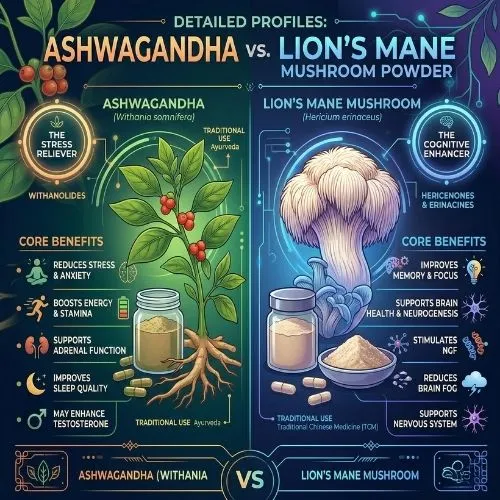
Detailed Profiles: Ashwagandha vs. Lion's Mane Mushroom Powder
This in-depth review compares both pills and looks at how they work and what benefits they provide. It tells buying workers everything they need to know to pick the best places to buy things.
Ashwagandha: The Adaptogenic Powerhouse
Shatavari (Withania somnifera) helps the body stay balanced when it is under a lot of stress. Within 60 days of taking vitamins, people in a clinical study saw a big drop in their cortisol levels. Also, they were better able to deal with stress and did worse on tests of fear.
Pure ashwagandha goods have between 1.5% and 12% active withanolides. Most of the time, higher doses make people feel calmer, but the best number for each person relies on their stress level and other body factors. When buying, make sure that the extract is standardized, that it is confirmed as organic, and that each batch is the same. This will help you get good results from your recipes.
Lion's Mane: Neuroprotective Brain Support
This is not how lion's mane mushroom powder works. Instead of changing stress chemicals, it focuses on neuroregeneration and brain improvement. Erinacines are found in the mycelium and hericenones are found in the fruiting body. They both help the body make nerve growth factors, which are good for brain health and dealing with stress.
Lion's Mane Mushroom Extract (Hericium erinaceus) from Yangge is a fine, yellow-brown powder that is made from mycelium and fruiting bodies that have been carefully picked. The amount of beta-glucans in our product stays above 25% and the amount of alpha-glucans stays below 5%. This gets rid of the problems that come with grain fillers that come from bad sources. Each batch is checked by a third party for heavy metals. To meet European PAH4 standards, the amounts of lead and arsenic must be below 2ppm and 1ppm, respectively.
Comparative Bioavailability and Formulation Considerations
The way each pill is made has its own issues that make them less effective at calming you down. The chemicals in ashwagandha work best with lipophilic carriers or liposomal transfer systems. To get the beneficial polysaccharides out of Lion's Mane, however, the indigestible chitin cell walls need to be broken down in the right way.
The ways used for processing have a big effect on the bioavailability results. Lion's mane mushroom powder that was made by extracting the mushrooms with both water and alcohol is better absorbed than powder that was made by grinding dried mushrooms. This level of difficulty in extraction affects the price of the product, but it ensures that the finished product will be therapeutically effective.
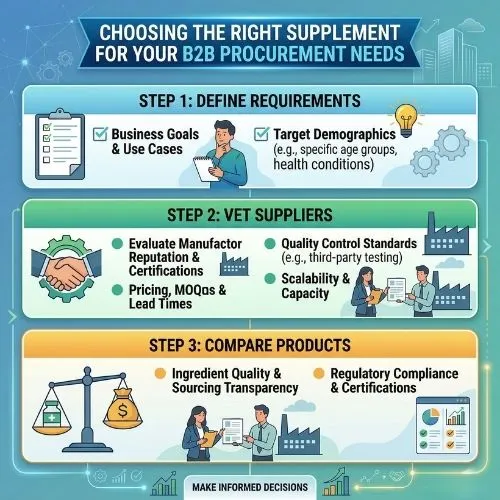
Choosing the Right Supplement for Your B2B Procurement Needs
When you buy a lot of natural vitamins, the most important things are quality, cleanliness, and being able to trust the seller. This way of reviewing covers important things to think about when buying both the ashwagandha and Lion's Mane tactics.
Quality Assurance and Certification Standards
Providers you can trust have strict quality control systems that check the raw materials, make sure the extraction process is regular, and test the finished product. It's important to have papers that show you follow GMP, provide scientific proof (if needed), and have third-party tests done to check for identity, potency, and contamination.
This is what the Lion's Mane Extract from Yangge Biotech does, and it has been approved by ISO, HACCP, Kosher, and Halal sources. Our solutions are free of GMOs and allergens, and they meet strict European standards. For example, they have benzopyrene levels below 10 ppb, which was proven by testing in a different lab. This method works in a lot of different foreign places to make sure that rules are followed.
Supplier Evaluation Criteria
Suppliers need to know a lot about technology, be available all the time, and offer quick customer service for business-to-business relationships to work. The ability to make things, keep track of goods, make changes, and show proof of legal compliance are all important things that need to be looked at.
When making medicines to treat worry, it's especially important to have a steady supply chain. This is because stable amounts of bioactive compounds affect how well the treatment works. Those who sell standardized extracts with set strength ranges make formulation planning more reliable than those who sell whole herbs whose potency can change.
Cost-Effectiveness Analysis for Bulk Orders
Costs for high-end plant extracts depend on how hard they are to get, how standardized they are, and how much money is spent making sure they are of good quality. It costs more to get higher-grade extracts, but because they are more concentrated, they often have better cost-per-dose economics in finished goods.
When you buy specialty extracts, the least amount you can usually get is between 1 kg and 25 kg. You can get a deal if you promise to buy more. The extraction ratio has a lot to do with how much lion's mane mushroom powder costs. For example, 10:1 extracts cost a lot more than ground mushroom goods that are just ground up.
How to Incorporate Lion's Mane Mushroom Powder or Ashwagandha into Corporate Wellness Programs?
If you want to make sure that your workers stay safe while still getting the most health benefits from these vitamins, you should know the right amounts, forms, and safety rates before adding them to health programs.
Dosage Protocols and Administration Methods
It has been shown that taking 300 to 600 mg of ashwagandha every day can help with anxiety. Most of the time, two different amounts of ashwagandha are given to keep blood levels steady. Lion's mane mushroom powder should be taken every day in amounts between 500 mg and 1000 mg. Higher doses are often used as part of routines to make the brain work better.
It's easiest to mix powders with drinks and make your own mixes with them. However, pills let you decide how much you take and make them last longer. It's best to take ashwagandha in the evening because it might make you sleepy. Lion's Mane, on the other hand, is better for your brain, so you should take it in the morning.
Safety Considerations and Contraindications
When planning an exercise plan, it's important to keep in mind that both supplements are safe when taken by healthy people, but there are times when they shouldn't be used. Because it might not work well with immunosuppressant drugs, ashwagandha shouldn't be taken while pregnant. The only side effect of Lion's Mane, on the other hand, is that some people may have trouble digesting it.
Ashwagandha should not be used by people who are already sick, especially those with inflammatory diseases. Comprehensive health screenings help find problems with the program before it starts, which makes members feel safer and less worried about their duty.
Integration Success Stories and Implementation Strategies
In business health programs that use these supplements well, employee happiness goes up, absences due to stress go down, and measures of cognitive ability go up. Giving people the option to take vitamins or creating stress management programs with pills and awareness training are both ways to put this into action.
Because it directly relieves stress, ashwagandha is often chosen in high-stress industry settings. On the other hand, lion's mane mushroom powder is best for tech companies. Most good programs give workers both options so they can pick the foods that will help them reach their health goals.

Making an Informed Decision: Key Factors for B2B Buyers
It's important to use thorough evaluation models when making buying decisions. These models should look at things like cost, effectiveness, source reliability, and market positioning, all of which affect the program's long-term success.
Effectiveness Comparison Matrix
Numerous studies have shown that these vitamins are useful, and they work well with each other rather than against each other. Lion's Mane is great for saving neurons and making the brain work better, while Ashwagandha is great for lowering stress levels and helping you sleep better.
Knowing about these changes at the molecular level can help you deal with stress. When you're stressed out, ashwagandha can help because it lowers cortisol. On the other hand, Lion's Mane may help with cognitive worry that is caused by mental fatigue or brain fog better.
Market Trends and Future Considerations
Both supplements are becoming more popular as people learn more about functional foods and nootropics. Lion's mane mushroom powder is becoming more popular for its brain health benefits. A study of the market shows that businesses are continuing to add health programs, which means they need to deal with reliable suppliers all the time.
The rules and regulations are always changing, and there is more focus on standards and quality control. Suppliers who are strict about following the rules and make testing methods clear are more likely to build long-term relationships with customers.
Risk Mitigation Strategies
Diversifying the supply chain keeps quality standards high and lowers the risk of becoming too dependent on one source. Getting to know a few good providers gives you backup options that won't change the regularity of the formula or the company's ability to follow the rules. You need things like certificates of analysis, letters of regulatory compliance, and stable data that backs up claims about how long something will last. Comprehensive processes for qualifying sellers lower the risks of buying while keeping the standard of the products the same over long-term relationships.
Conclusion
Lion's Mane and ashwagandha can both help with anxiety, but they do so in different ways in the body. This means picking a seller and making a plan for creation are very important steps when buying something. The adaptogenic properties of ashwagandha directly control stress hormones, and the healing properties of lion's mane help with the mental parts of worry. Wellness programs at work can get healing benefits, but they need to be carefully planned so that they work well. This means thinking about quality standards, dosage rules, and how reliable the provider is.
Partner with Yangge for Cordyceps Militaris Extract
With our excellent Lions Mane Powder, Yangge Biotech Co., Ltd. is prepared to assist you in developing cardiovascular health products. powder formulations. Our USP-grade, 100% water-soluble powder offers concentrated SCOBY advantages in a stable, brown-yellow powder structure while retaining unique Lions Mane Powder characteristics. Our goods satisfy a variety of market demands and guarantee 12-month shelf stability thanks to extensive certifications including Kosher, Halal, and non-GMO status.
Our experienced team provides technical support throughout your product development journey, from initial formulation guidance to scale-up assistance. With 1-ton inventory availability and 25KG packaging options, we accommodate both prototype development and commercial production needs. Contact our specialists at info@yanggebiotech.com to discuss your specific requirements and discover why leading manufacturers choose Yangge as their trusted Lions Mane Powder supplier for innovative health product solutions.
FAQ
Q: Can we get some samples to test before purchasing?
A: Of course, we can provide free samples of 20 to 100 grams, but the shipping cost is at the customer's expense. The shipping cost can be deducted from the next order, or the samples can be sent through your courier account.
Q: Do your products have relevant certifications?
A: Yes, our products are certified for HALAL, ISO, HACCP, Kosher, and other certifications.
Q: What is the minimum order quantity (MOQ)?
A: Small batches of samples can be customized according to your requirements.
Q: Do you offer OEM and ODM services? Can the formula be customized based on our own?
A: Of course, we provide ODM and OEM services to many customers. Our product range includes softgels, capsules, tablets, sachets, granules, and private label services. Simply contact us and let us know your requirements. Our experienced R&D team can also develop new products with specific formulas.
Please contact us to design your own branded products.
Q: How do you handle quality complaints?
A: First, we have a comprehensive quality control SOP. We provide authoritative third-party inspection reports for almost all products before shipment to minimize the possibility of quality issues. Second, we have a comprehensive return and exchange procedure. If there is a genuine quality dispute, we will strictly follow the SOP.
Q: How do you ship? How long does delivery take?
A: For small orders, we typically use DHL, UPS, EMS, FedEx, or TNT. Delivery typically takes 3-7 days. We also offer air and sea freight services. We have a strong freight forwarding team and can provide you with a one-stop service, including DDP and DDU.
Q: What are your payment terms?
A: 100% prepayment, payable by T/T, Western Union, MoneyGram, or PayPal.
Q: What is the shelf life of your products?
A: 2 years with proper storage.
Q: Is the packaging environmentally friendly?
A: We attach great importance to environmental protection and are constantly improving our product packaging. Some products are packaged in recyclable paper. Packaging materials are carefully selected to ensure product safety during transportation and storage, and to minimize environmental impact. We are committed to achieving a balance between environmental friendliness and practicality in our product packaging, and to contributing to sustainable development.
References
1. Chandrasekhar, K., Kapoor, J., & Anishetty, S. (2012). A prospective, randomized double-blind, placebo-controlled study of safety and efficacy of a high-concentration full-spectrum extract of ashwagandha root in reducing stress and anxiety in adults. Indian Journal of Psychological Medicine, 34(3), 255-262.
2. Mori, K., Inatomi, S., Ouchi, K., Azumi, Y., & Tuchida, T. (2009). Improving effects of the mushroom Yamabushitake (Hericium erinaceus) on mild cognitive impairment: a double-blind placebo-controlled clinical trial. Phytotherapy Research, 23(3), 367-372.
3. Pratte, M. A., Nanavati, K. B., Young, V., & Morley, C. P. (2014). An alternative treatment for anxiety: a systematic review of human trial results reported for the Ayurvedic herb ashwagandha (Withania somnifera). Journal of Alternative and Complementary Medicine, 20(12), 901-908.
4. Lai, P. L., Naidu, M., Sabaratnam, V., Wong, K. H., David, R. P., Kuppusamy, U. R., & Malek, S. N. A. (2013). Neurotrophic properties of the Lion's mane medicinal mushroom, Hericium erinaceus. Journal of Traditional and Complementary Medicine, 3(3), 168-175.
5. Salve, J., Pate, S., Debnath, K., & Langade, D. (2019). Adaptogenic and anxiolytic effects of ashwagandha root extract in healthy adults: A double-blind, randomized, placebo-controlled clinical study. Cureus, 11(12), e6466.
6. Wong, K. H., Naidu, M., David, P., Abdulla, M. A., Abdullah, N., Kuppusamy, U. R., & Sabaratnam, V. (2012). Neuroregenerative potential of lion's mane mushroom, Hericium erinaceus, in the treatment of peripheral nerve injury. International Journal of Medicinal Mushrooms, 14(5), 427-446.

Based on your location and order quantity, you will have the opportunity to receive a limited time free shipping promotion!
Who we are
Popular Blogs