What type of matcha is healthiest?
Purchasing managers and R&D workers often ask: "What kind of matcha is the healthiest?" when they are looking for high-quality green tea ingredients to use in products. The answer is to choose ceremonial-grade, organic-certified Matcha Powder that is processed at low temperatures to keep all of its bioactive ingredients. Ceremonial-grade varieties have much higher amounts of EGCG catechins, L-theanine, and chlorophyll than culinary-grade varieties. This means they are better at fighting free radicals, which is important for health-related uses. Organic certification ensures that strict farming standards are met while also getting rid of any chemical residues. This directly meets legal requirements and customer safety expectations, which are very important in today's global supply chains.
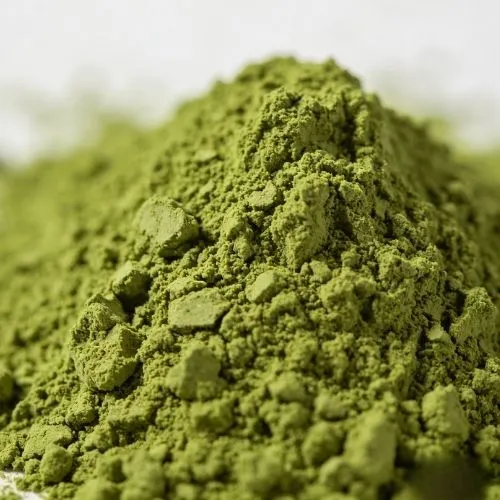
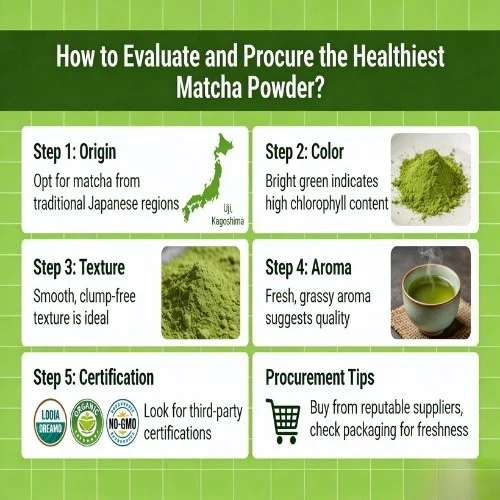
Understanding What Makes Matcha Healthy
The Nutritional Foundation of Premium Matcha
The unique way that Camellia sinensis plants are grown they are shaded on purpose for 20 to 30 days before they are picked gives matcha its excellent health profile. This farming action causes the plant's body to respond with stress reactions that make it produce high levels of chlorophyll and amino acids. The resulting leaves have high amounts of tea polyphenols, especially epigallocatechin gallate (EGCG), which makes up 10–18% of the weight in premium types.
When you steep tea, the nutrients stay in the wasted leaves. But when you eat freshly milled powder made from whole leaves, you get all of the nutrients. This includes nutrients like potassium and iron as well as vitamins A, C, E, and K in amounts that can be measured. The inclusion of L-theanine, which can be more than 18mg per gram in ceremonial varieties, works together with naturally occurring caffeine to improve brain function without the crash that comes with synthetic stimulants.
Antioxidant Capacity Across Matcha Classifications
Lab tests show that the antioxidant activity of different types of matcha varies a lot. Oxygen Radical Absorbance Capacity (ORAC) values for ceremonial-grade samples are always higher than 1,500 units per gram, while values for culinary-grade varieties are usually between 800 and 1,200 units. This difference comes from when the leaves were picked, how they were processed, and when they were harvested.
The freshest, youngest leaves that are used in ceremonies have the highest levels of protective catechins because they haven't had time to fully develop their cell structures or allow phenolic chemicals to degrade yet. People who work in procurement should know that these biological differences have a direct effect on how well functional ingredients work. Products made with high-EGCG Matcha Powder can back up better antioxidant claims, meeting the paperwork needs for FDA compliance and getting into international markets.
Organic Certification Standards and Supply Chain Integrity
Organic certification is more than just a marketing tool; it sets up a way for all the products used in agriculture to be tracked back to their original source. For USDA Organic and Japanese Agricultural Standard (JAS) licenses, farmers must test the soil, not use synthetic chemicals, and show proof of their farming methods over several growing seasons. We only work with certified organic farms that are audited by inspectors once a year to make sure that our Matcha Powder meets the standards for residue-free use that are important for medicinal and cosmetic uses.
The certification method solves a basic problem with buying things: it makes the supply line clear. Third-party verification gets rid of the need for suppliers to self-report, and it provides the proof of compliance needed for government filings and quality management systems. Organic Matcha Powder also gets a higher price in consumer markets, where clean-label trends continue to influence buying choices across all age groups.
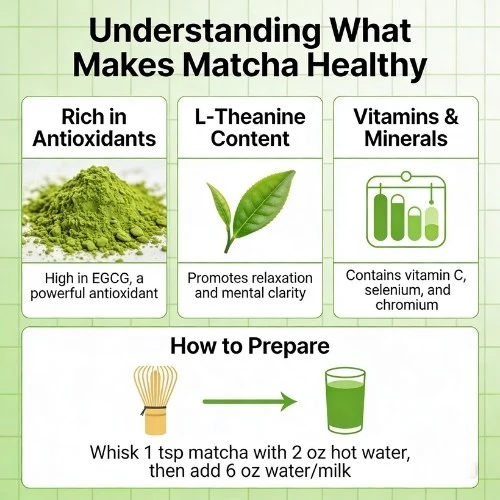
Types of Matcha and Their Health Characteristics
Ceremonial Grade Versus Culinary Grade: Health Implications
The difference between ceremonial and culinary-grade matcha has a big impact on how well it delivers nutrients and how it can be used. For ceremonial production, only the top leaf groups picked during the first flush are used. This is when the amino acid levels are highest and the fiber content is lowest. Right away, these leaves are steamed to stop oxidation. They are then left to dry naturally and ground on a granite stone at temperatures below 40°C to keep the volatile chemicals. The powder that is made has particles that are between 5 and 15 microns (2000 to 3000 mesh), which gives it its smooth texture and bright green color.
This grade keeps the most L-theanine and catechin intact biochemically, which makes it perfect for functional drinks and nutrition supplements where absorption is important. For culinary-grade Matcha Powder, leaves that were picked later have cell walls that are fully formed and more chlorophyll breakdown. Even though they are still good for you, culinary grades are better for flavoring things where other ingredients can hide the stronger taste because they are more astringent and have fewer amino acids.
Whole-Leaf Consumption: Matcha Versus Standard Green Tea Powder
True Matcha Powder vs. regular green tea powder is an important difference that is often missed in buying specs. Green tea powder is made from tea leaves that have been dried, oxidized to different degrees, and then manually ground. This process lowers the absorption of catechins and gets rid of the unique amino acid makeup that was created by shading the fruit before harvest. Tencha processing includes growing in the shade, steaming, de-veining, air-drying, and grinding at a low temperature to make real matcha.
The de-veining step gets rid of the roots and veins that are made of fibers. This makes the pure leaf tissue more nutrient-dense. This difference affects both the nutritional value and the legal classification of a product when it is being made. Certain health claims can be made about true Matcha Powder that can't be made about general green tea products. This gives true matcha a competitive edge in the supplement market.
Regional Variations and Terroir Effects on Health Properties
Terroir, which is made up of soil type, temperature, and farming methods, affects the phytochemical nature of matcha based on where it comes from. Japanese Matcha Powder from the Uji, Nishio, and Shizuoka regions is grown using traditional ways that have been improved over hundreds of years and volcanic soil that is full of minerals. Chinese matcha, especially matcha from Zhejiang province, is cheaper and still has good catechin levels, though the amino acid profiles may be different from Japanese matcha.
Korean and new U.S. makers add interesting new factors to the study of how weather affects polyphenol production. Instead of making assumptions about where things come from, our sourcing approach relies on batch-specific lab tests. We keep in touch with farms in a number of different regions, which gives us a lot of buying options and makes sure that every supply meets strict standards for tea polyphenol content, particle fineness, and microbial safety, no matter where it comes from.
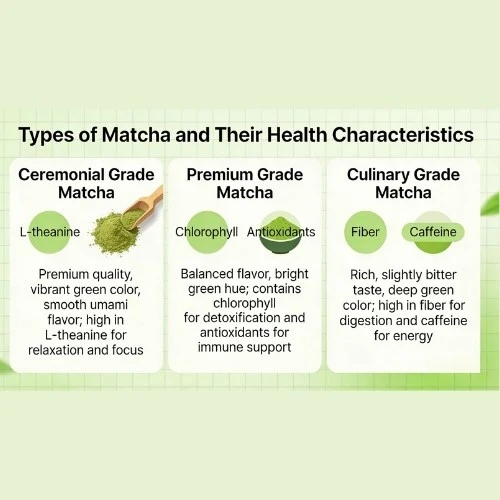
How to Evaluate and Procure the Healthiest Matcha Powder?
Critical Quality Metrics for Industrial Procurement
To make smart buying choices, you need more than just looking at something and tasting it. You need to be able to measure it. Product placement is based on caffeine content analysis. Ceremonial grades usually have 25–35mg of caffeine per gram of Matcha Powder, while culinary types may have up to 40mg because they are harvested later. The amount of chlorophyll in a plant directly affects how long it grows in shade and how well it is processed. To find high-quality material, spectrophotometric research measuring chlorophyll A and B levels is used. The fineness of the particles affects how stable the suspension is in beverage uses and how bioavailable the supplement is.
With every mass shipment, we include a particle size distribution study report that shows what percentage of the material goes through 2000-mesh and 3000-mesh screens. To keep food fresh, the moisture content must stay below 4% so that enzymes don't break it down and microbes don't grow. Oxidation markers found using color space analysis (CIELAB values) show how stable chlorophyll is over time. This helps with choices about packing and dates for expiration.
Third-Party Certification and Traceability Requirements
To follow the rules, you need to keep records that can be checked from the farm to the finished product. Our quality control system uses ISO 22000, HACCP, and GMP standards. Each output lot is given a unique tracking code that connects to a specific harvest date and field location. Third-party lab testing at approved facilities gives reports of analysis for heavy metals (such as lead, cadmium, mercury, and arsenic), pesticide residue panels that go beyond what the EPA requires, microbial pollution screens, and radionuclide testing to address issues after Fukushima.
Kosher and Halal approvals, which can be requested, make the market accessible to a wide range of consumers. We keep full chain-of-custody records that meet FDA prior notice requirements and EU novel food laws. This system for tracking is very important for quality checks and meets the growing need for openness from both regulators and end users.
Supplier Evaluation: Balancing Quality and Commercial Viability
In addition to unit price, alignment across a number of other factors is also needed for buying partnerships to work. We tell potential customers to ask for samples that come from real production batches instead of examples that have been carefully made. Before committing to bulk sales, our sample policy lets you try out different formulations and make sure the analysis is correct in amounts between 100g and 500g. Check with suppliers to see if they offer expert support. Can they help you find the best specs for your application?
Our research and development team helps with improving stability, coming up with ways to hide flavors, and finding ways to make products last longer. When processes need to be scaled up, production capacity is important. Our plant keeps a one-ton inventory of Kosher/USP-grade material in 800, 2000, and 3000 mesh specifications, so it is always available without minimum order fees. Scheduled supplies and subscription models work with production planning to get rid of the need for last-minute orders and the higher freight costs that come with them.
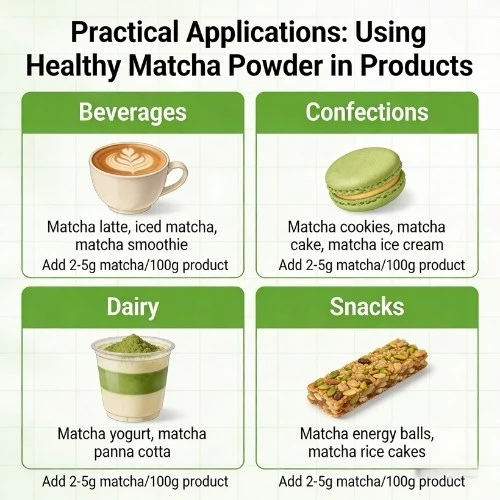
Practical Applications: Using Healthy Matcha Powder in Products
Formulation Strategies for Maximum Nutritional Retention
To make finished goods with matcha's natural health benefits, you need to know about its thermal sensitivity and oxidative weakness. EGCG catechins break down a lot above 80°C, which is why they need to be added at low temperatures when making drinks. Instead of hot breakdown, cold process mixing keeps the bioactive structure. Micro-encapsulation technologies keep phenolic chemicals safe during high-heat exposure in baked goods and sweets, but they release them when the food is digested.
pH buffering keeps colors from fading; keeping recipes between pH 5.5 and 7.0 keeps the bright green color that people associate with freshness. Our expert team works together to come up with stabilization plans that are perfect for your matrix, whether it's made of dairy, plants, or water. Adding natural emulsifiers like lecithin or gum arabic improves consistency of dispersion. This keeps bottled beverages from settling and makes sure that the dose is the same from one production run to the next.
Product Development Aligned with Wellness Trends
The need for useful ingredients among consumers opens up possibilities in many types of products. Matcha Powder is used in weight loss products because it has thermogenic qualities. For example, research shows that EGCG mixed with caffeine boosts fat oxidation by about 17% during mild activity. Cognitive-enhancement goods use the way that L-theanine and caffeine work together to make you aware and relaxed without jitters. Beauty-from-within products use matcha's anti-inflammatory and antimicrobial qualities to improve skin health.
Through unique mixing, our OEM services help you get from idea to market quickly. Based on your recipe requirements, we mix Matcha Powder with additional ingredients such as collagen peptides, MCT oil, adaptogens, or prebiotic fibers. There are many types of custom packaging, from bulk food-grade bags for co-packers to retail-ready stick packs that have your name, branding, and nutritional panel built in.
Processing and Packaging Considerations for Health Preservation
Protective packaging tech is needed to keep matcha's nutritional value while it's being shipped. Light quickly breaks down chlorophyll and oxidizes catechins. Opaque, nitrogen-flushed packaging has a much longer shelf life than clear vessels. We use multi-layer laminating bags with oxygen shields and resealable seals that keep powder fresh even after it's been opened. Changes in temperature during shipping speed up the work of enzymes, so cold-chain handling may be worth the extra cost for high-value ceremonial grades.
In wet places, desiccant bags stop water from getting inside. Optimizing the packaging size strikes a balance between keeping product fresh and making it easier to handle. Institutional users benefit from 5–10kg bulk containers, while smaller brands may prefer 500g units that limit the time the container is open. Our flexible packaging works for a range of operating sizes, and we can give you advice on expiration dates based on how you store and distribute your goods.
Addressing Common Concerns and Questions About Matcha Healthiness
Safety Considerations and Quality Assurance Testing
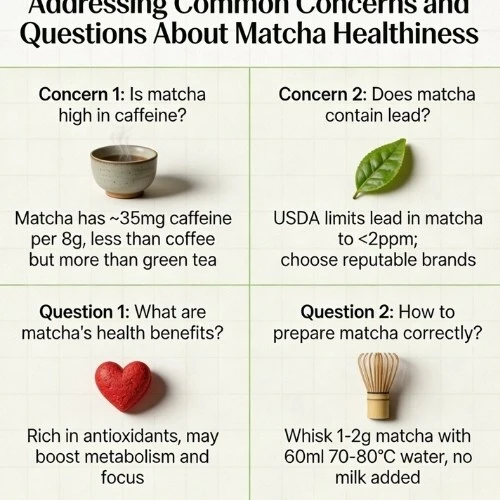
As part of responsible buying, possible contaminants that could harm product safety and brand image are taken care of. Heavy metal buildup in tea plants depends on the soil and how polluted the environment is. Lead levels are especially worrisome in places where there are a lot of factories or a history of using leaded fuel. Before we can work with a farm as a provider, we have to test the soil, and when we test the end product, we make sure that the concentrations are well below the FDA action levels and the EU maximum residue limits.
Pesticide residue screening uses LC-MS/MS and GC-MS/MS to look at more than 400 compounds. This makes sure that organic claims for Matcha Powder can stand up to regulatory review. If you don't dry and store things properly, you increase the chance of microbial exposure. We use environmental tracking programs and regular pathogen testing for Salmonella, E. coli, and counts of mold and yeast. Labels should have allergen statements (if handled in a facility that also handles soy, dairy, or tree nuts), country of origin statements, and health claim warnings that meet FTC standards for proof.
Scientific Evidence for Weight Management Applications
Controlled clinical studies have been done on the metabolic benefits of Matcha Powder, which gives marketers the proof they need to make honest marketing promises. A study in the American Journal of Clinical Nutrition showed that EGCG-rich green tea extract made people burn 4% more calories over 24 hours than a placebo. The thermogenic action comes from catechins, which preserve norepinephrine and send messages that make fat mobilization last longer. In a different study that looked at exercise ability, drinking matcha before moderate-intensity runs increased fat burning by 17% compared to control groups.
The L-theanine part helps by lowering the amount of stress-related cortisol that is released, which usually makes people store fat around their middle. When making weight loss products, these processes back structure-function claims that are legal according to DSHEA rules, as long as the language doesn't imply disease treatment. We offer scientific research packages that help with making claims that are legal. This will help your regulatory affairs team find the line between what is legal for marketing and what is illegal for treatment claims.
Caffeine Sensitivity and Consumption Guidance
The amount of caffeine in different types and ways of consuming Matcha Powder is very different, so it's important to be clear about this for the safety of consumers. Ceremonial-grade matcha has about 25 to 35mg of caffeine per gram of powder, which is 70 to 100mg in a standard 2-4g dose. This has the same quantity as brewed coffee, but it works differently because L-theanine changes how it works. Because it is picked later, when methylxanthine synthesis is at its highest, culinary-grade matcha may have a little more caffeine.
People who are sensitive should only consume in the morning and not in the afternoon, when it can mess up their sleep patterns. Product labels should make it clear how much caffeine is in each dose, include warnings for people who are pregnant or nursing, and tell people with heart problems to talk to a doctor before using the product. Our recipe help includes figuring out how much caffeine is in a product and giving labeling advice that makes sure it follows FDA rules for drinks and good manufacturing practices for supplements.
Conclusion
To choose the best type of Matcha Powder, you need to know how farming methods, processing methods, and quality control systems work together. Ceremonial-grade, organic-certified choices have the highest nutritional value and have been shown to be safe and traceable. Because shade-grown, stone-milled, whole-leaf powder is better biochemically, it can be used to make supplements, drinks, and useful foods that work better. Those who work in procurement can benefit from forming partnerships with suppliers who offer open testing, expert help, and a range of customization options. As the need for clean-label, bioactive ingredients keeps growing, quality Matcha Powder positioned with the right scientific support and regulatory compliance makes it easier to stand out in health markets that are already very crowded.
Partner with a Trusted Matcha Powder Supplier
Yangge Biotech specializes in providing pharmaceutical-grade Matcha Powder that meets the strict requirements of companies that make health supplements, cosmetics, and functional foods. Our Kosher and USP-certified material ships in large amounts, up to a ton, and is available right away in 800, 2000, and 3000 mesh sizes. We support OEM partnerships by offering a wide range of customization services, such as unique blending with superfoods that work well together, custom package design that includes your name, and concentration changes that meet your exact formulation needs.
Our organic, HACCP, and ISO certifications, along with our farm-to-table tracking, provide the documentation infrastructure your quality management system demands. Contact us or email our scientific team at info@yanggebiotech.com to get certificates of analysis, talk about the needs of your application, and set up shipping of samples for formulation trials.
FAQ
Q: Can we get some samples to test before purchasing?
A: Of course, we can provide free samples of 20 to 100 grams, but the shipping cost is at the customer's expense. The shipping cost can be deducted from the next order, or the samples can be sent through your courier account.
Q: Do your products have relevant certifications?
A: Yes, our products are certified for HALAL, ISO, HACCP, Kosher, and other certifications.
Q: What is the minimum order quantity (MOQ)?
A: Small batches of samples can be customized according to your requirements.
Q: Do you offer OEM and ODM services? Can the formula be customized based on our own?
A: Of course, we provide ODM and OEM services to many customers. Our product range includes softgels, capsules, tablets, sachets, granules, and private label services. Simply contact us and let us know your requirements. Our experienced R&D team can also develop new products with specific formulas.
Please contact us to design your own branded products.
Q: How do you handle quality complaints?
A: First, we have a comprehensive quality control SOP. We provide authoritative third-party inspection reports for almost all products before shipment to minimize the possibility of quality issues. Second, we have a comprehensive return and exchange procedure. If there is a genuine quality dispute, we will strictly follow the SOP.
Q: How do you ship? How long does delivery take?
A: For small orders, we typically use DHL, UPS, EMS, FedEx, or TNT. Delivery typically takes 3-7 days. We also offer air and sea freight services. We have a strong freight forwarding team and can provide you with a one-stop service, including DDP and DDU.
Q: What are your payment terms?
A: 100% prepayment, payable by T/T, Western Union, MoneyGram, or PayPal.
Q: What is the shelf life of your products?
A: 2 years with proper storage.
Q: Is the packaging environmentally friendly?
A: We attach great importance to environmental protection and are constantly improving our product packaging. Some products are packaged in recyclable paper. Packaging materials are carefully selected to ensure product safety during transportation and storage, and to minimize environmental impact. We are committed to achieving a balance between environmental friendliness and practicality in our product packaging, and to contributing to sustainable development.
References
1. Weiss, D.J., & Anderton, C.R. (2003). Determination of catechins in matcha green tea by micellar electrokinetic chromatography. Journal of Chromatography A, 1011(1-2), 173-180.
2. Venables, M.C., Hulston, C.J., Cox, H.R., & Jeukendrup, A.E. (2008). Green tea extract ingestion, fat oxidation, and glucose tolerance in healthy humans. American Journal of Clinical Nutrition, 87(3), 778-784.
3. Dietz, C., Dekker, M., & Piqueras-Fiszman, B. (2017). An intervention study on the effect of matcha tea, in drink and snack bar formats, on mood and cognitive performance. Food Research International, 99(1), 72-83.
4. Kochman, J., Jakubczyk, K., Antoniewicz, J., Mruk, H., & Janda, K. (2021). Health benefits and chemical composition of matcha green tea: A review. Molecules, 26(1), 85.
5. Graham, H.N. (1992). Green tea composition, consumption, and polyphenol chemistry. Preventive Medicine, 21(3), 334-350.
6. Unno, K., Furushima, D., Hamamoto, S., Iguchi, K., Yamada, H., Morita, A., Horie, H., & Nakamura, Y. (2018). Stress-reducing function of matcha green tea in animal experiments and clinical trials. Nutrients, 10(10), 1468.

Based on your location and order quantity, you will have the opportunity to receive a limited time free shipping promotion!
Who we are
Popular Blogs