What should I not mix spirulina with?
Thyroid hormones, drugs that weaken the immune system, and blood thinners like warfarin should not be mixed with spirulina and pure phycocyanin extract anyway. This is because the interactions might make the drugs not work as well or cause side effects that are hard to tell what will happen. When you mix spirulina-based ingredients with high-dose vitamins or substances that contain heavy metals, they may not be as bioavailable and the mixture may not be as stable. Companies that make health aids or useful foods have to make sure that the ingredients work well with each other. This is to make sure that the goods are safe, that they follow the rules, and that customers trust them. This is very important when they need to make a lot of blue spirulina extract that is very pure.
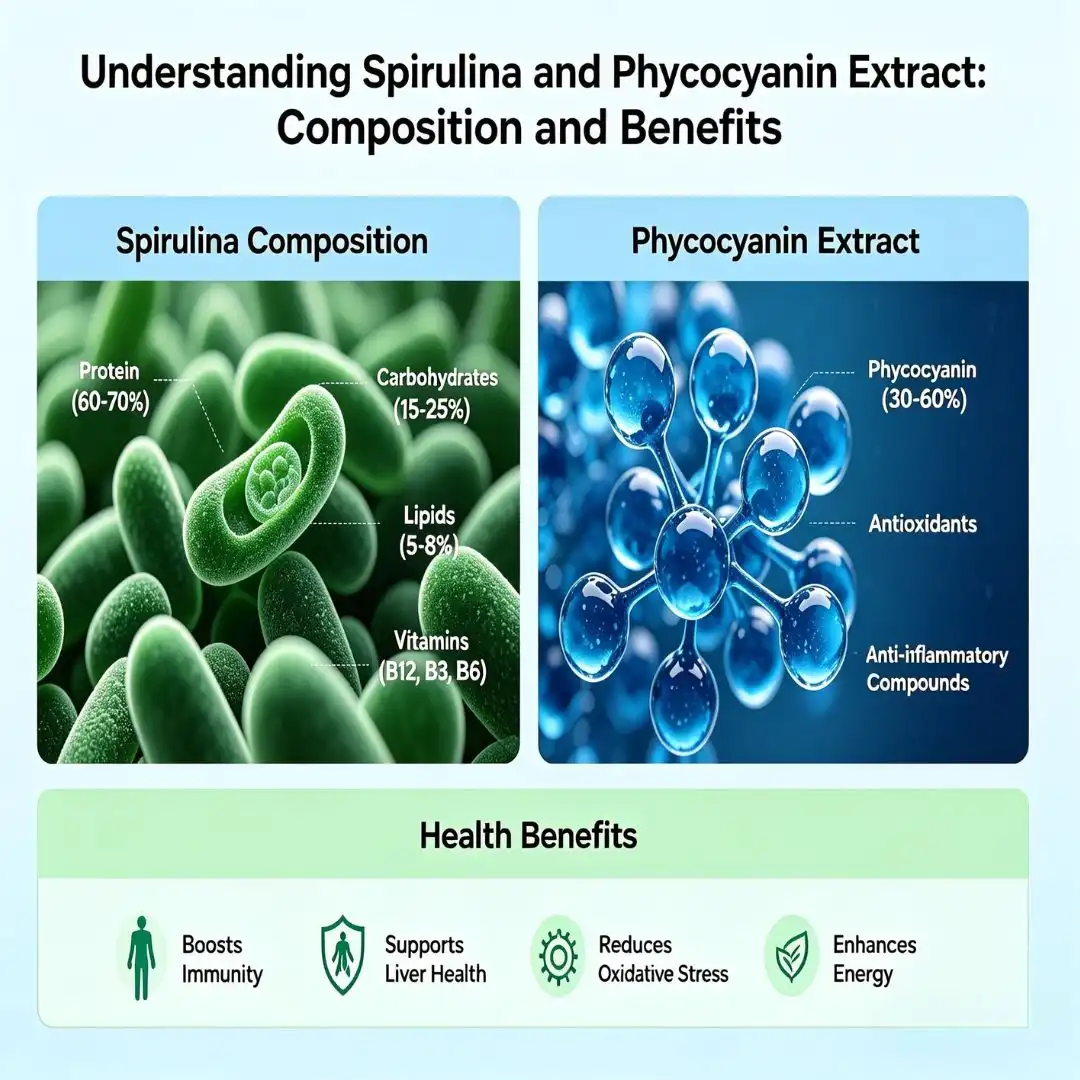
Understanding Spirulina and Phycocyanin Extract: Composition and Benefits
Another name for spirulina is Arthrospira platensis. It is one of the healthiest microalgae you can find. Between 55 and 70% of it is protein, and it also has vitamins, minerals, and fatty acids that are good for you. This blue-green algae does best in salty water that is not too deep. It has been used as a food supplement for many years because it is full of good nutrients.
What Makes Phycocyanin Extract Unique?
The photosynthesis colors of spirulina were used to make phycocyanin extract, which is a concentrated good chemical. Whole spirulina powder only gives you nutrition. This bright blue protein complex, on the other hand, has many other useful benefits as well. Most of the time, the extract is a better antioxidant than normal spirulina powders. Formulators can use healthy colorants that don't need to be labeled, which is very helpful.
What kind of pure and useful the product is depends on how it is removed. High-Performance Liquid Chromatography (HPLC) extraction makes sure that the levels of phycocyanin are at their best. Higher purity grades, such as E6, E10, E18, E25, or E40, can be seen in the results. Businesses that buy and sell things need to make sure that each batch has the same quality and biological activity. These standards are very important for them.
Regulatory Compliance and Quality Considerations
If a company wants to make something from spirulina, they have to follow strict rules. In the US, the Food and Drug Administration (FDA) is in charge of phycocyanin as a colorant. When it comes to food chemicals, markets in Europe have to follow Regulation (EC) No 1333/2008. To make sure safety and quality, these systems need a lot of paperwork, the ability to keep track of goods, and regular ways to test them.
Quality control isn't just checking off boxes to make sure things are done right. Professional buyers decide which sellers to work with based on standards such as GMP, ISO, Kosher, and Halal certifications. These things show that the products are well-made and that the supply line is honest. To make sure that the goods meet the standards for medicinal or food-grade products, they should be tested for bioburden, recognition through mass spectrometry, and solvents that are still present.
When R&D teams know how raw spirulina powder and processed phycocyanin extract are made, they can pick the best ingredients for each job. There are parts of chlorophyll, minor minerals, and cell walls in whole spirulina that might not work well with some recipes. Pure extracts, on the other hand, release bioactives more precisely and have less of an effect on the matrix.
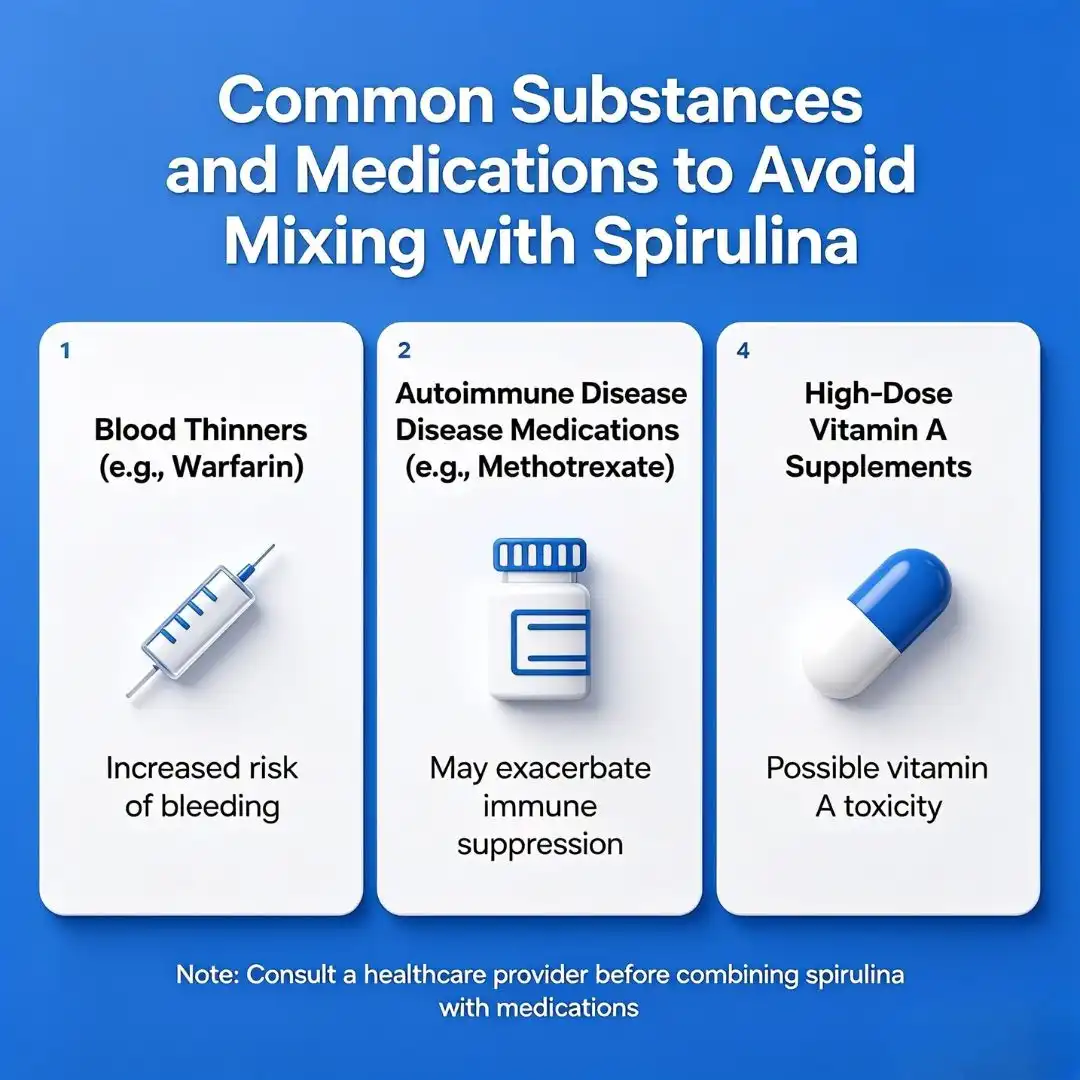
Common Substances and Medications to Avoid Mixing with Spirulina
It can be harder to make a safe and useful product when the ingredients in it react with each other. Because spirulina has many different biochemicals, it might not mix well with some foods and drugs. This means that when new things are made, they need to be carefully thought out.
Immunosuppressants and Immune Modulators
The immune system is strengthened by spirulina because it changes the amounts of cytokines and makes natural killer cells work harder. The drug works less well when mixed with immunosuppressants like cyclosporine, tacrolimus, or corticosteroids that are given to people with inflammatory diseases or who have had organ transplants. Although algae can help the immune system, this could work against the goals of treatment by making drugs less effective or causing the immune system to react in ways that aren't wanted.
Formulation teams that make products for health-conscious people need to think about who they are making the products for. Things that have spirulina products in them need to have clear labels and warnings on them. People who have long-term illnesses that need immune medicine need to pay extra attention to this.
Blood Thinners and Anticoagulants
Vit K and algae both have chemicals that might change the way blood clots. Bad things might happen if you mix it with blood thinners like warfarin, heparin, or the newer direct oral anticoagulants (DOACs). Because vitamin K naturally stops blood from clotting, warfarin might not work as well and the chance of thrombosis may go up.
Nutritional labels need to include information about the vitamin K amount for useful foods or drinks that have spirulina added to them. Because the company is open, both doctors and customers can decide if a product is safe for them to use with the blood thinners they are prescribed.
Thyroid Medications and Iodine Interactions
Some types of seaweed have more iodine than spirulina, but this type doesn't. It does have trace minerals, which may change how well thyroid hormones are taken. Levothyroxine and other thyroid replacement drugs need to be taken in the same way every time so that blood levels stay the same. It may be harder to change your dose if you eat spirulina at the same time because it may change how quickly you receive nutrients or add different amounts of iodine.
Companies that want to sell health supplements should think about these combos when they make supplements with more than one ingredient. It can help keep a product's charm and avoid problems by giving clear instructions or ideas on how to use it.
Heavy Metals and Contamination Risks
Pollution worries come from the fact that spirulina can naturally take heavy metals from the place where it grows. Lead, mercury, cadmium, or arsenic can be found in large amounts in foods sold by people who haven't been checked out. Eating these foods regularly is very bad for your health. When these toxins mix with minerals that are good for you, they can make the minerals less accessible and raise the risk of getting sick.
It's important to follow the rules when picking a source and making sure the work is good because of this worry. When people buy spirulina and phycocyanin extract, they need to make sure that the sources are checked for heavy metals and that the results are recorded in Certificates of Analysis (COAs) for each batch.
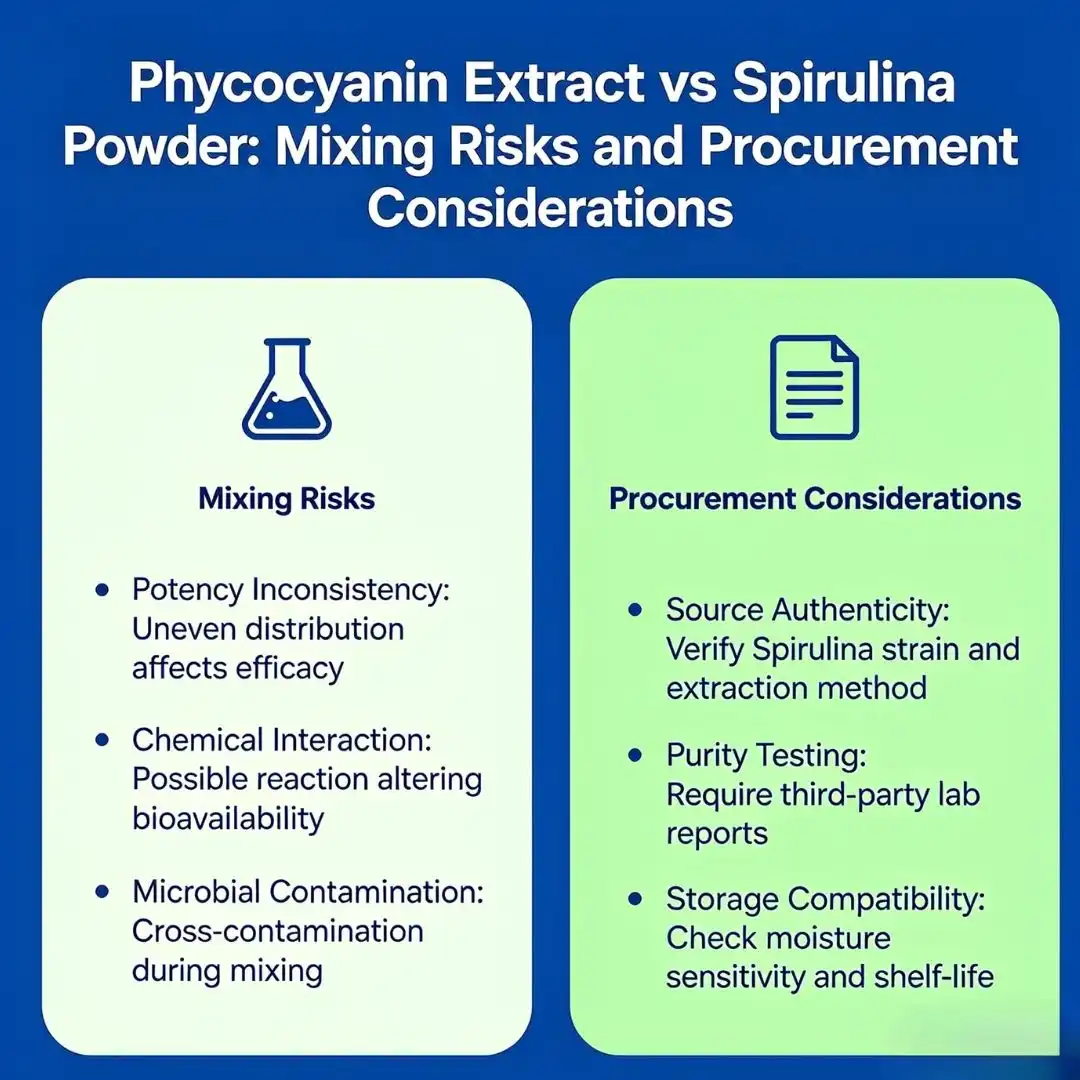
Phycocyanin Extract vs Spirulina Powder: Mixing Risks and Procurement Considerations
It is important to know the main differences between whole spirulina powder and pure phycocyanin extract so that you can make smart decisions about how to make products and where to buy them. There are changes in more than just the amount; there are also changes in biochemical patterns, stable traits, and suitability for use.
Concentration and Bioactive Intensity
That is, phycocyanin extract has a lot more of the blue protein that you want than whole spirulina powder. By dry weight, regular spirulina has about 14–20% phycocyanin, but goods that have been cleaned up have more than 90% clarity at the E25 grade level. Because the concentrations are different, accurate dosage figures are needed to make sure that bioactive compounds are not given too much, which could have bad effects or waste expensive ingredients.
When formulators work with liquids instead of powders, they have to deal with more problems. Phycocyanin in liquid form is not always stable, so it needs to be treated carefully when it comes to pH, light, and temperature while it is being cleaned and kept. Powder types last longer, but if the moisture control doesn't work, they may be hard to mix back together or clump.
Compatibility with Other Ingredients
It's very important that all the ingredients in drinks with more than one, like vitamin mixes, green drinks, or enriched drinks, work well with each other. Too much heat, chemical agents, and pH levels that are too high or too low can all damage the structure of phycocyanin's proteins. It might not work as well and be less solid if it is mixed with acidic plant products, steps that involve high temperatures, or chemicals that make peroxide.
As part of the research and development (R&D) process, you need to test the product to make sure it works well. To quickly do stability studies, formulation teams can ask possible sources for examples. These studies look at things like color retention, protein structure, and sensory qualities under real-life production and storage conditions.
Sourcing Considerations for Bulk Procurement
When buying phycocyanin extract in bulk, it's not as easy as when buying whole spirulina powder. An extract generally costs more because it takes more steps to make, but it has more concentrated usefulness that may lower total formulation costs by lowering the rates of inclusion that need to be used.
You can get phycocyanin extract from Yangge Biotech in different quality types (E6, E10, E18, E25, and E40) so it can be used in a lot of different ways. Our extracts have been checked by the FDA, are Kosher, and are Halal. They also come with a lot of paperwork to back them up, such as HPLC analysis, microbe testing, and heavy metal screening. We keep a one-ton stock on hand to meet production plans, and we offer FOB and CIF shipping options to meet the needs of logistics in other countries.
Buying managers can get more from their sellers if they sell ingredients and also offer professional help. If you know about the extraction method, the concentration needs, and the suggested uses, you can make the best recipes and solve problems more quickly when they happen.
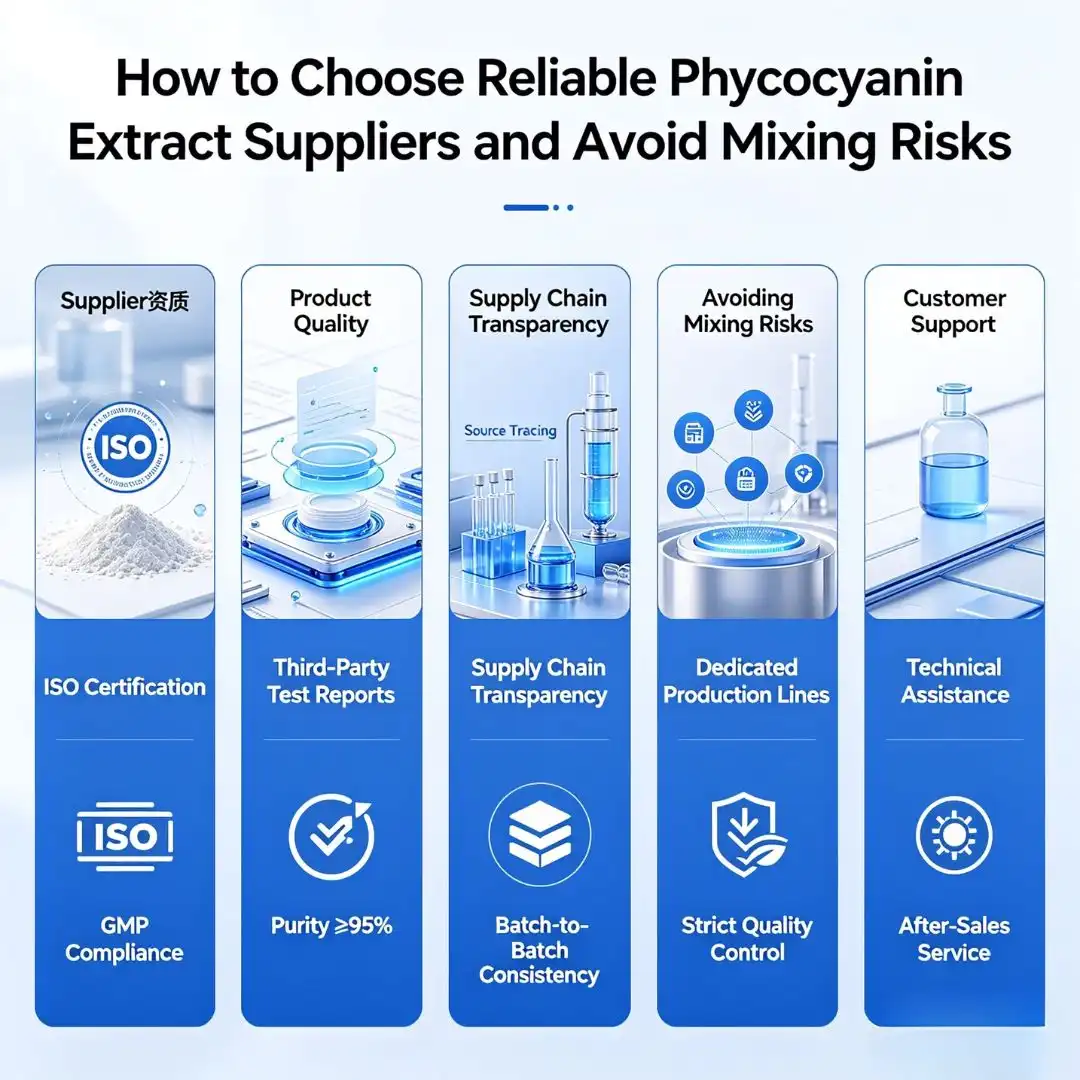
Best Practices for Using Spirulina and Phycocyanin Extract Safely in Products
Strong safety rules and quality control help build a brand's image and protect both makers and end users. These things happen at every stage of the supply chain, from getting the raw materials to sending the finished goods to customers while using spirulina and phycocyanin extract.
Dosage Protocols and Labeling Transparency
To find the right dose levels, you need to strike a mix between goals for safety and goals for success. Most clinical studies on spirulina supplements look at amounts of 1 to 8 grams per day. However, concentrated extracts have the same health effects with a lower rate of inclusion. Labels must make it very clear how to use the product, how much of an active ingredient there is, and how much of a portion a person should eat.
Customers are more likely to trust a business that is open and honest. This is the law in all global markets. When phycocyanin is used as an ingredient that is good for you instead of just a colorant, the Supplement Facts screen should show the right amount. This difference is important for shoppers who care about their health and want chemicals that do more than just look good.
Quality Control Measures and Supplier Audits
Checking the seller's credentials is the first step in thorough quality control. Other steps include reviewing new materials as they come in, keeping an eye on the work that's being done, and checking the finished product. Manufacturers are dedicated to making great products, so they test them in many ways. These include making sure they are who they say they are, that they work, that they are clean, and that they don't have any contaminants.
You can see for yourself how things are made, how quality checks work, and how paperwork is handled during supplier audits. These tests show things that paper certificates don't, like how to keep tools in good shape, train workers, keep the workplace safe, and fix problems. The end is always the same because of these things working together.
You can check with Yangge Biotech or get reviews from other people to see that we are serious about making good items. The companies we work with follow GMP rules, and each batch of goods is checked by quality control labs before it is sent out. Even more proof that things meet requirements before they are shipped comes from testing them in international labs.
Traceability and Documentation Requirements
Traceability from farm to table used to just be a business tool, but now it's a must. The government wants to see more and more of the whole supply line. They need records that show how things got from where they were grown to where they were made to where they were sold. This makes it easy to fix quality issues fast and builds trust among B2B buyers who are worried about brand risks.
Now that we have digital tracking systems, we can always see records of when things were planted, when they were harvested, how they were processed, the test results, and the shipping papers. These tools help with compliance reporting and give buying teams the details they need to do the right amount of due research for their own clients.
Case Applications in Product Development
Top supplement brands show that careful planning and use of sources can help you do well in the market. More and more, companies that make plant-based protein powder are adding phycocyanin extract to make the powder healthier and give it a natural blue color that people who like clean labels like. Functional drink makers use the extract's ability to stay stable in liquids to make drinks that look good and say they are high in antioxidants.
Scientists have found that phycocyanin can be used on the face. Its bright color and ability to reduce inflammation work well together. The fact that these extracts are used in a variety of fields shows how useful they can be when added to well-thought-out recipes that have been carefully checked for safety.
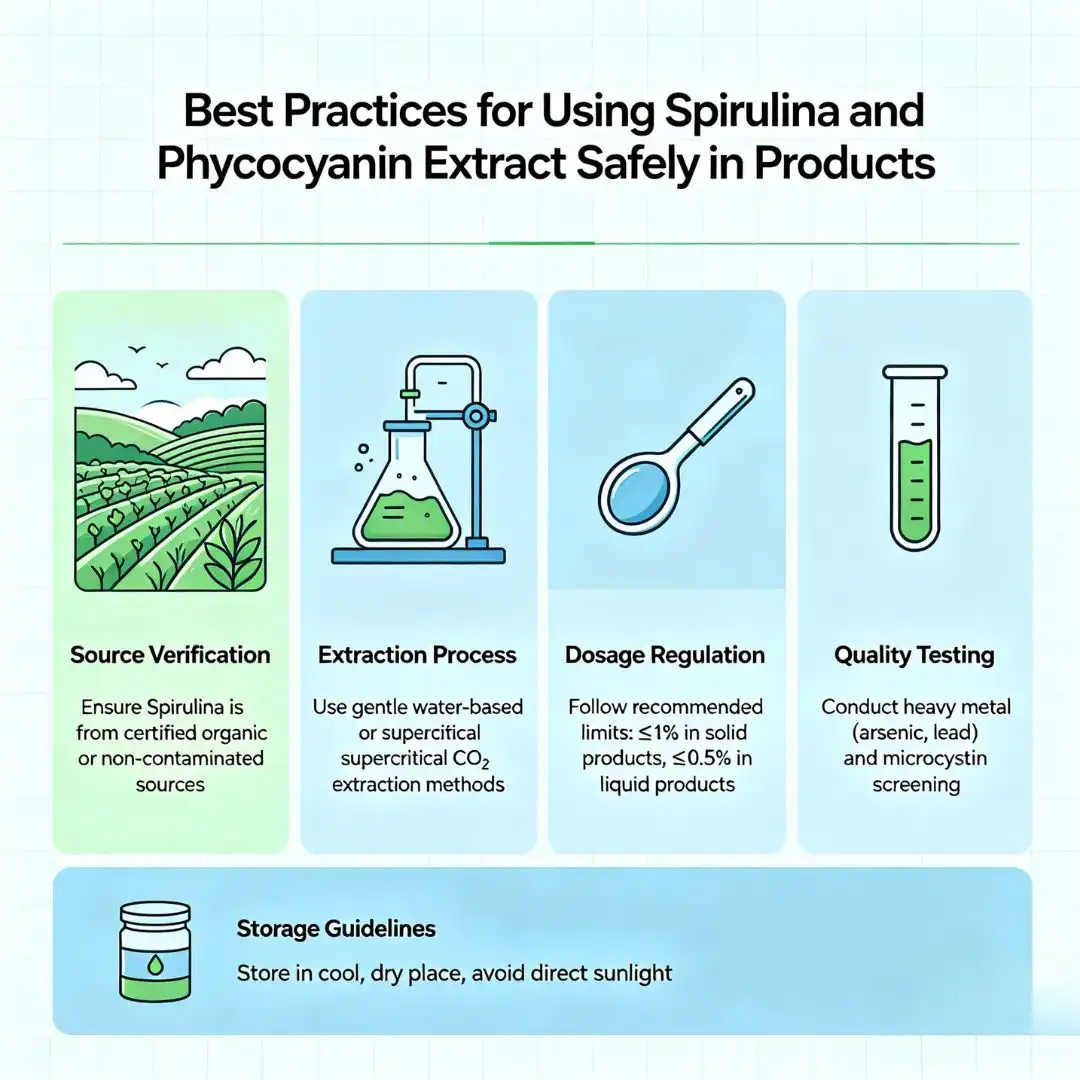
How to Choose Reliable Phycocyanin Extract Suppliers and Avoid Mixing Risks?
Picking a seller is one of the most important things you can do when buying products because it affects the quality of the product, how well you follow the rules, and the long-term success of your business. A planned review method can help you find partners who can meet your strict manufacturing needs when sourcing phycocyanin extract.
Purity Verification and Analytical Documentation
For example, you could ask for Certificates of Analysis that show the purity levels using recognized testing methods such as HPLC or UV-Vis spectrophotometry. Suppliers with a good name don't use standard sheets for testing results; instead, they give results that are unique to each batch. There are several separate ways to check the purity that have nothing to do with each other. In this case, spectral analysis, protein measurement, and contamination screening can all be used together to get a full picture of the quality.
The E-value specs (E6, E10, E18, E25, and E40) show how much phycocyanin is there. Things with higher values are more pure. Keep your cost and performance goals in mind as you match these specs to the needs of your recipe. For food-grade uses, grades E10 to E18 might be fine, but for medical or beauty uses, grades E25 or higher are typically needed.
Certification Verification and Regulatory Compliance
A product meets safety and production standards if it has a real certificate from a well-known group. As you look for providers, make sure they have the most recent GMP certification, organic credentials (USDA, EU Organic), religious credentials (Kosher, Halal), and any food safety approvals you need, such as FDA registration or HACCP.
Ask to see pictures of the real papers instead of believing what they say. Check certificate numbers with the groups that gave them as often as you can. Companies don't work with buyers who lie about their credentials or run their businesses without being watched over properly because of this care.
Production Capacity and Supply Reliability
Before you choose a provider, make sure they can meet your number needs while still meeting your quality standards. Find out how the collection is run, where the plants are growing, and what the harvest center can do. If sellers have extra stock on hand, they can handle sudden rises in demand or problems in the supply chain that would usually stop production lines.
One ton of different kinds of phycocyanin extract is kept on hand by Yangge Biotech so that they can quickly meet the needs of present customers and send samples to people who might want to do business with them. Growing spirulina, removing it, and packing it are all part of our fully integrated supply chain. This gives us full control over quality and delivery times.
Sample Programs and Technical Support
Sample programs from good sellers let R&D try out the products before they buy a lot of them. You can test for recipe fit, stability, and sensory review with sample amounts between 10 and 30 grams without spending a lot of money. This way of buying things saves money and helps you make smart decisions.
What makes great companies different from average ones is their technical support. There is more value than just the base ingredient itself when you can talk to experienced sales people who know how to extract it, how hard it is to use, and what the government requires. New goods can be made faster, and problems that come up during the creation process can be fixed more quickly.
Communication Channels and Negotiation Terms
Make clear rules for how to talk that take into account different time zones, languages, and ways that people would like to do business. To get in touch with a reliable service, you can email, call, or videoconference, and they'll answer at a time that works for your business. Misunderstandings and delays are more likely to happen when there are barriers in the way of talking.
To get good deals, you need to know how the market works and how it changes with the seasons. You also need to know how much you are willing to buy. When prices are clear and take into account different levels of purity, different packing options, and different shipping terms, it is possible to make accurate cost models. Getting a supply deal that lasts a long time could help you get better prices and make sure that capacity is used when demand is high.
Conclusion
Any item that needs to work with spirulina and phycocyanin extract needs to know all about the possible connections, quality needs, and source abilities. It is safer for people and the medication works better when it is not mixed with immunosuppressants, blood thinners, or thyroid drugs. Formulators can make better decisions that balance cost and performance goals when they know the difference between concentrated extracts and whole spirulina powder. When strict quality control measures, verification methods, and source checks are used, the end result is high-quality goods that meet government standards and earn customers' trust. Businesses can succeed in the world's most difficult markets by building strategic relationships with their suppliers. These relationships give them the professional help, paperwork, and reliability they need.
Partner with Yangge Biotech for Premium Phycocyanin Extract Supply
With a wide range of approvals, strict quality control, and quick expert help, Yangge Biotech can make phycocyanin extracts that are safe for use in medicine. People who make supplements, functional foods, and makeup need natural colorants that they can trust and that have been shown to have bioactivity. Our E10, E18, and E25 USP-grade extracts meet those high standards. All the items you need for your production are here. We have a one-ton collection, FDA approval, Kosher and Halal certification, and help for OEM recipes like powder mixes, capsules, tablets, and gummies.
Contact us or info@yanggebiotech.com will let you talk to our buyers about your specific phycocyanin extract needs, ask for samples, or set up a time to visit our plant. Let us show you how Yangge Biotech's closed-loop supply chain, eco-friendly growing methods, and high quality standards can help you make your goods better and sell more of them.
FAQ
Q: Can we get some samples to test before purchasing?
A: Of course, we can provide free samples of 20 to 100 grams, but the shipping cost is at the customer's expense. The shipping cost can be deducted from the next order, or the samples can be sent through your courier account.
Q: Do your products have relevant certifications?
A: Yes, our products are certified for HALAL, ISO, HACCP, Kosher, and other certifications.
Q: What is the minimum order quantity (MOQ)?
A: Small batches of samples can be customized according to your requirements.
Q: Do you offer OEM and ODM services? Can the formula be customized based on our own?
A: Of course, we provide ODM and OEM services to many customers. Our product range includes softgels, capsules, tablets, sachets, granules, and private label services. Simply contact us and let us know your requirements. Our experienced R&D team can also develop new products with specific formulas.
Please contact us to design your own branded products.
Q: How do you handle quality complaints?
A: First, we have a comprehensive quality control SOP. We provide authoritative third-party inspection reports for almost all products before shipment to minimize the possibility of quality issues. Second, we have a comprehensive return and exchange procedure. If there is a genuine quality dispute, we will strictly follow the SOP.
Q: How do you ship? How long does delivery take?
A: For small orders, we typically use DHL, UPS, EMS, FedEx, or TNT. Delivery typically takes 3-7 days. We also offer air and sea freight services. We have a strong freight forwarding team and can provide you with a one-stop service, including DDP and DDU.
Q: What are your payment terms?
A: 100% prepayment, payable by T/T, Western Union, MoneyGram, or PayPal.
Q: What is the shelf life of your products?
A: 2 years with proper storage.
References
1. Eriksen NT. "Production of phycocyanin—a pigment with applications in biology, biotechnology, foods and medicine." Applied Microbiology and Biotechnology, 2008.
2. Romay C, González R, Ledón N, Remirez D, Rimbau V. "C-phycocyanin: a biliprotein with antioxidant, anti-inflammatory and neuroprotective effects." Current Protein and Peptide Science, 2003.
3. Sekar S, Chandramohan M. "Phycocyanin—a novel therapeutic agent with antioxidant and anti-inflammatory activities." International Journal of Pharmaceutical Sciences Review and Research, 2008.
4. Batista AP, Gouveia L, Bandarra NM, Franco JM, Raymundo A. "Comparison of microalgal biomass profiles as novel functional ingredient for food products." Algal Research, 2013.
5. Becker W. "Microalgae in human and animal nutrition." In Handbook of Microalgal Culture: Biotechnology and Applied Phycology, Blackwell Science, 2004.
6. Kannaujiya VK, Richa, Sinha RP. "Thermokinetic stability of phycocyanin and phycoerythrin in food-grade preservatives." Journal of Applied Phycology, 2016.

Based on your location and order quantity, you will have the opportunity to receive a limited time free shipping promotion!
Who we are
Popular Blogs