Is chaga good for joints?
Yes, the high quantity of bioactive substances in chaga mushrooms makes them look like they might be good for supporting joint health. High-quality chaga extract has anti-inflammatory and antioxidant properties thanks to its polysaccharides, beta-glucans, betulinic acid, and melanin complexes. These work by targeting the main causes of joint pain and cartilage breakdown. According to research, these compounds help control inflammatory pathways and lower oxidative stress in connective tissues. This makes chaga an important ingredient for people who are making joint health supplements for people who want natural alternatives to traditional drug treatments.
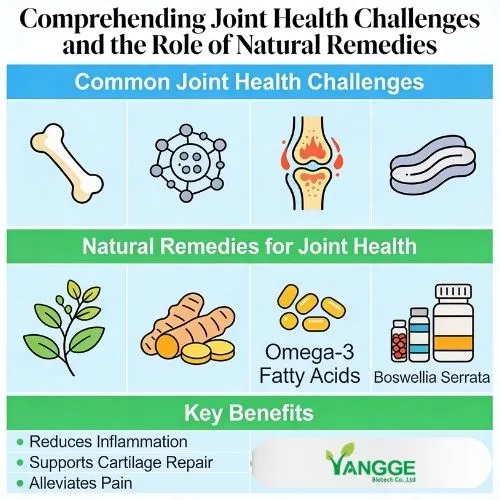
Comprehending Joint Health Challenges and the Role of Natural Remedies
The Global Burden of Joint Disorders
Osteoarthritis, rheumatoid arthritis, and other joint problems affect hundreds of millions of people around the world, costing a lot of money in medical bills and time lost from work. The World Health Organization says that musculoskeletal disorders are the main cause of disability, with joint disorders making up a big part of this problem. These numbers keep the market for successful treatments that make it easier to move around, lower pain, and keep quality of life high.
Limitations of Conventional Pharmaceutical Approaches
Nonsteroidal anti-inflammatory drugs, corticosteroids, and disease-modifying agents are some of the most common pharmaceutical medicines for joint problems. They help with symptoms but often have side effects. Complications in the intestines, risks to the heart, and worries about long-term safety have led both healthcare workers and patients to look into complementary methods. Because of this shift in thinking, natural plant ingredients are now seen as important parts of complete joint health plans.
Market Dynamics Favoring Botanical Solutions
More and more, regulatory agencies are recognizing that food supplements can help keep muscles and bones healthy, as long as companies back up their claims with good scientific proof. The FDA's structure-function claim framework and the EFSA's botanical guidelines papers spell out the rules for how joint health goods can be sold legally. In the meantime, buyer choice polls regularly show a strong interest in ingredients derived from plants that are seen as safer alternatives with good risk-benefit profiles. These trends that are coming together are good for business people who want to invest in chaga-based products.
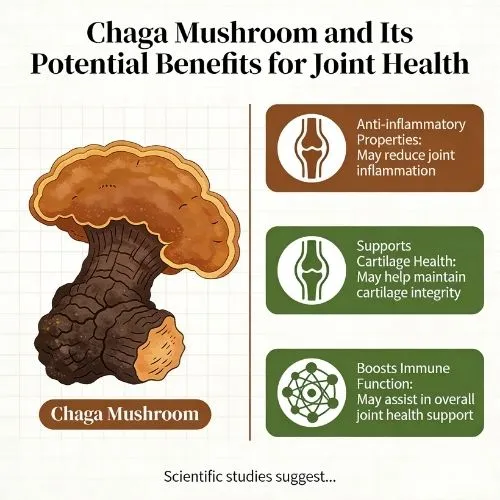
Chaga Mushroom and Its Potential Benefits for Joint Health
Bioactive Compound Profile
Chaga's healing power comes from the special phytochemicals that make it up. During its long growth cycle on birch trees, the fungus builds up very high levels of antioxidant chemicals. It does this by taking betulin from the host and changing it into betulinic acid. Inflammatory molecules that cause joint tissue breakdown are stopped by this triterpene in chaga extract, which makes it an anti-inflammatory.
Beta-glucans, especially β-(1,3)-(1,6)-D-glucans, are another important part of chaga's bioactive makeup. These polysaccharides have effects on the immune system that can change how it reacts to things, which could affect how inflammatory joint problems are treated. Melanin complexes add to the body's antioxidant defenses, fighting free radicals that speed up the breakdown of cartilage and inflammation in the joints.
Mechanisms Supporting Joint Health
Scientists have found that chaga can stop the production of pro-inflammatory cytokines like tumor necrosis factor-alpha and interleukin-6. These cytokines are important parts of the inflammatory chain that damages joints. Studies using cell culture models and animals show that cyclooxygenase-2 and inducible nitric oxide synthase are expressed less. These are two enzymes that are important for inflammation pain pathways. Even though there aren't many human clinical studies yet, there is strong proof that chaga should be included in joint health products.
Product Forms and Application Flexibility
When purchasing chaga to make supplements for joint health, it comes in a number of different forms that can be used with different formulations. Due to chitin cell walls, absorption is limited in raw powder, but it is a cheap way to get a lot of ingredients. Standardized extracts made with hot water or two different solvents give concentrated bioactives that are easier for the body to absorb. Specifications for extracts usually list the amount of polysaccharides (10% to 40%) or the concentration ratios (5:1, 10:1), which makes it possible to precisely control the mixture.
These different forms make it possible to add them to pills, tablets, powdered drink mixes, functional drinks, and even put them on the skin to help with localized joint pain. This makes it possible for brand owners and original equipment makers to make product ideas that fit specific market positioning strategies. These strategies can be used for anything from high-end clinical supplements to health products for the general public.
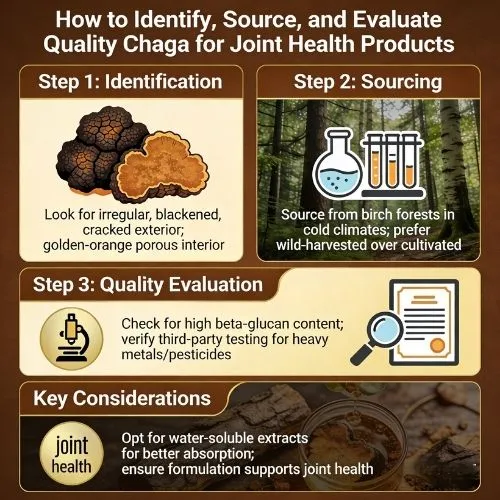
How to Identify, Source, and Evaluate Quality Chaga for Joint Health Products?
Wild-Harvested Versus Cultivated Material
Verification of authenticity is one of the most important issues in buying. Phytochemical profiles of wild-harvested chaga extract from birch woods in Siberia, Northern Canada, or Alaska are better than those of artificially grown alternatives, but they cost more. Over years of growth, wild examples build up bioactive chemicals, which give them their distinctive black outer layer and orange inner core. If you grow chaga on artificial substrates, you can harvest it faster, but the betulinic acid level may be lower because the chaga doesn't associate with the birch host.
Specifications for buying things should make it clear where the materials come from, how they are harvested, and how they can be identified as plants. Transparency is important for tracking requirements that are being pushed by regulatory authorities and health-conscious customers. Suppliers who provide specific harvest location documents, such as geographical data and forest management certificates, show this.
Chemical Markers and Quality Specifications
Lab tests are the only way to be sure of the quality of something. High-performance liquid chromatography checks the levels of polysaccharides, and thin-layer chromatography checks the fingerprints of specific compounds. Reliable providers give out Certificates of Analysis that list these factors along with heavy metal screening, microbial testing, and chemical residue testing.
Manufacturers who want to sell their products in Europe must now follow EU rules for polycyclic aromatic hydrocarbons. Regulatory acceptance is ensured by specifications that demand total PAH4 compliance and benzopyrene levels below 10 ppb. Third-party testing by approved labs like Eurofins adds more layers of verification that make quality assurance programs stronger and make it easier for foreign shipments to get through customs.
Supplier Evaluation Framework
To find trusted chaga providers, you need to do a lot of research, not just compare prices. The people who work in procurement should look at the supplier's ISO 9001, HACCP, organic (USDA, EU Organic), and any GMP paperwork that is needed. When possible, site checks show what kinds of production tools are used, what kinds of extraction methods are used, and what kind of quality control equipment is there.
When it comes to yearly wild-harvested goods, supplier capacity and store stability need to be carefully looked at. Production planning is affected by minimum order amounts, wait times, and stock availability. Building ties with suppliers and keeping a 50–100 kg stock on hand makes sure that materials are available for the start of new products while plans are being made for larger production as demand grows.
Comparing Chaga with Other Mushrooms for Joint Health Formulations
Chaga's Distinctive Position in Functional Mycology
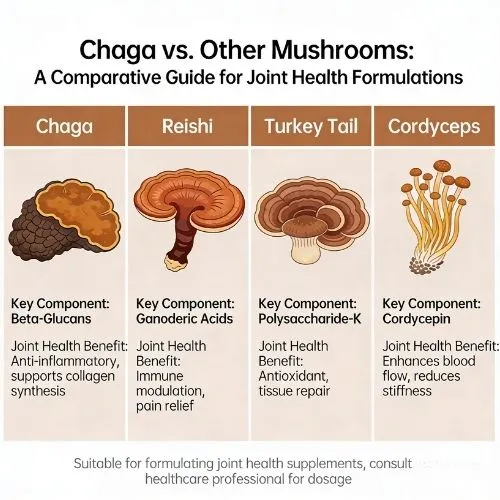
Several types of medical mushrooms are good for your joints, but chaga has special benefits for certain formulation methods. Reishi (Ganoderma lucidum) has strong anti-inflammatory benefits through triterpene acids, and there is a lot of clinical evidence to support immunity modulation. Turkey Tail (Trametes versicolor) contains polysaccharide-K and polysaccharide-peptide molecules that can help the immune system. Based on its bioactive traits and how well-known it is among consumers, each species fills a different market area.
Chaga stands out because it is one of the most powerful antioxidants known to science. In tests that measure oxygen radical absorbance ability, it regularly ranks among the best botanical materials. Because of this, chaga is a good ingredient for formulas that focus on reducing oxidative stress and managing inflammation. The betulinic acid content, which comes from birch host trees, gives this mushroom species chemical marks that other mushroom species don't have. This lets the company make unique product positioning claims.
Formulation Synergies and Combination Strategies
More and more, progressive formulators are combining mushroom extracts that work well together to provide full joint support that targets a number of disease processes. Chaga extract adds antioxidant and anti-inflammatory properties, Reishi boosts immune system function, and Turkey Tail adds more carbohydrate variety. These combination recipes meet what customers want for "mushroom complex" goods, which they see as being more valuable than single-ingredient options.
Manufacturing issues affect how possible a combo is. Standardized extracts with known amounts of polysaccharides allow for uniform formulation from batch to batch, which is very important for increasing output. When making a new product, you need to test its solubility, taste, and stability under different handling conditions. When buying teams and research and development groups work together, they can make sure that the ingredients they choose meet both quality standards and manufacturing requirements.
Market Positioning Insights
Consumer knowledge studies show that different types of mushrooms are recognized at different levels. Reishi has a good image in Western markets because it has been sold as a supplement for decades. Chaga's popularity has grown a lot in the past few years, thanks to media coverage that focuses on its "superfood" qualities. Through integrative cancer uses, Turkey Tail became more well known. These differences in how people see things affect marketing tactics and the prices that finished goods can be sold for in stores.
For B2B stakeholders, knowing these factors helps them decide how much to spend in inventory of ingredients and what products to develop first. Chaga is used in joint health products that appeal to people who want to try new, research-backed ingredients that aren't found in most products. This placement helps with premium price strategies and sets brand portfolios apart in supplement markets that are very competitive.
Risks, Side Effects, and Regulatory Compliance to Consider When Sourcing
Safety Profile and Contraindications
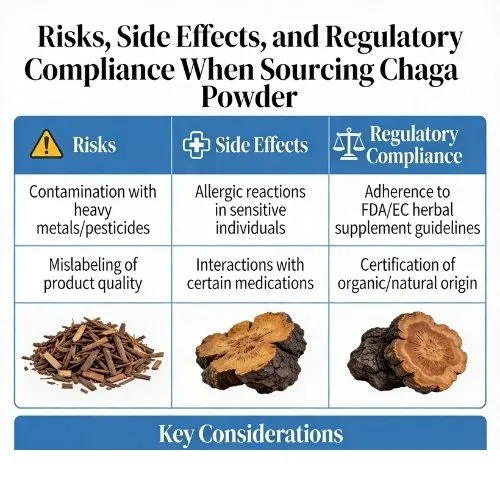
Chaga is safe when used in traditional ways and according to chemical data that is available. Reports of bad events are still not common in supplement monitoring systems. But theoretical worries should be taken into account when making products and marking them. Because chaga has antiplatelet properties thanks to betulinic acid and similar compounds, it may mix badly with blood thinners. Product labels should have the right warnings telling people who are taking blood-thinning drugs to talk to their doctors.
Oxalate content is another thing to think about. Oxalic acid builds up in chaga, which could be a problem for people who already have kidney disease or are more likely to get kidney stones. Responsible companies put warning labels on their products that target these groups. This shows that they care about customer safety and lowers their risk of being sued.
Regulatory Landscape Navigation
Different places have different rules about how to regulate chaga extract, which affects what health claims are allowed and how the product must be labeled. In the US, the Dietary Supplement Health and Education Act says that chaga is a dietary supplement. This means that claims about its structure and function must be backed up by evidence, but claims that it can treat diseases are not allowed. When manufacturers make structure-function claims, they have to let the FDA know and include the needed disclaimer wording.
The Novel Food Regulation and plant drug guidelines make the rules for selling food in the European Union more strict. Even though chaga has been used in food in the past, different types of extract and concentration amounts may cause new food tests. Because the EFSA is strict on plant health claims, it is important for claims to be carefully backed up or limited to general wellness statements. When purchasing goods for European markets, workers must make sure that suppliers follow EU rules and get the necessary paperwork for imports.
Quality Assurance Protocols
Strong quality control systems keep a brand's image safe and make sure it follows the rules. Some of the things that should be tested in a batch are the product's identity (using microscopic and chemical analysis), its potency (using standardized marker quantification), its purity (checking for microbial limits and contaminants), and its stability (setting the right shelf-life parameters). Clear quality standards are set by supplier deals that spell out these testing needs along with clear acceptance criteria.
Traceability systems that keep track of the flow of materials from harvesting to packaging meet legal standards and allow for quick action if quality problems arise. Electronic batch records, barcode tracking, and source qualification programs are all important parts of a quality assurance system that works with the rules that apply to the dietary supplement business.
Conclusion
The chaga mushroom offers great chances for businesses that are making joint health goods for the growing natural wellness market. With rising customer knowledge, good safety data, and scientific proof supporting anti-inflammatory and antioxidant processes, chaga extract is a useful ingredient for formulations. Procurement success requires diligent supplier evaluation emphasizing quality verification, regulatory compliance, and supply chain reliability.
The market for joint health ingredients is still changing as demand grows due to changes in population and as regulations become more stable. Strategic investments in high-quality chaga sourcing, along with strict quality control and new clinical evidence, allow manufacturers to make unique products that meet both regulatory standards and consumer expectations for natural joint support solutions that work.
FAQ
Q: Can we get some samples to test before purchasing?
A: Of course, we can provide free samples of 20 to 100 grams, but the shipping cost is at the customer's expense. The shipping cost can be deducted from the next order, or the samples can be sent through your courier account.
Q: Do your products have relevant certifications?
A: Yes, our products are certified for HALAL, ISO, HACCP, Kosher, and other certifications.
Q: What is the minimum order quantity (MOQ)?
A: Small batches of samples can be customized according to your requirements.
Q: Do you offer OEM and ODM services? Can the formula be customized based on our own?
A: Of course, we provide ODM and OEM services to many customers. Our product range includes softgels, capsules, tablets, sachets, granules, and private label services. Simply contact us and let us know your requirements. Our experienced R&D team can also develop new products with specific formulas.
Please contact us to design your own branded products.
Q: How do you handle quality complaints?
A: First, we have a comprehensive quality control SOP. We provide authoritative third-party inspection reports for almost all products before shipment to minimize the possibility of quality issues. Second, we have a comprehensive return and exchange procedure. If there is a genuine quality dispute, we will strictly follow the SOP.
Q: How do you ship? How long does delivery take?
A: For small orders, we typically use DHL, UPS, EMS, FedEx, or TNT. Delivery typically takes 3-7 days. We also offer air and sea freight services. We have a strong freight forwarding team and can provide you with a one-stop service, including DDP and DDU.
Q: What are your payment terms?
A: 100% prepayment, payable by T/T, Western Union, MoneyGram, or PayPal.
Q: What is the shelf life of your products?
A: 2 years with proper storage.
Partner with Yangge for Premium Chaga Extract Solutions
Yangge Biotech is an expert at providing top-notch chaga extract that meets the high standards needed by picky B2B buyers in the supplement, functional food, and beverage industries. Our wild-harvested chaga goes through an advanced dual-solvent extraction process that keeps its full bioactive potential and delivers standardized polysaccharide amounts ranging from 10% to 40% with guaranteed batch stability. Every production run meets EU PAH4 guidelines (benzopyrene ≤10 ppb) and goes through a lot of tests by Eurofins to make sure it is safe for microbiology, heavy metals, and herbicide residues.
As a well-known provider of chaga extract, we keep our ISO, HACCP, Kosher, and Halal certifications up to date to help us reach customers around the world. Our expert team gives you full formulation help, instructions on the extraction method, and usage suggestions that are made to fit the needs of your product. We can meet the needs of both small-scale product development samples and large-scale commercial production thanks to our 50-100 kg stock inventory and flexible OEM packing solutions starting from 1 kg minimum orders.
Our farm-to-table traceability method makes sure that the whole supply chain is clear. This meets the standards for organic certification and supports your brand's pledge to authenticity. Contact Us our team or email at info@yanggebiotech.com to ask about product details, sample availability, and price for chaga extract relationships that provide quality, compliance, and dependability to help your joint health product success.
References
1. Kim YO, Park HW, Kim JH, Lee JY, Moon SH, Shin CS. Anti-cancer effect and structural characterization of endo-polysaccharide from cultivated mycelia of Inonotus obliquus. Life Sciences. 2006;79(1):72-80.
2. Park YK, Lee HB, Jeon EJ, Jung HS, Kang MH. Chaga mushroom extract inhibits oxidative DNA damage in human lymphocytes as assessed by comet assay. BioFactors. 2004;21(1-4):109-112.
3. Zheng W, Miao K, Liu Y, Zhao Y, Zhang M, Pan S, Dai Y. Chemical diversity of biologically active metabolites in the sclerotia of Inonotus obliquus and submerged culture strategies for up-regulating their production. Applied Microbiology and Biotechnology. 2010;87(4):1237-1254.
4. Najafian M, Jahromi MZ, Nowroznejhad MJ, Khajeaian P, Kargar MM, Sadeghi M, Arasteh A. Phloridzin reduces blood glucose levels and improves lipids metabolism in streptozotocin-induced diabetic rats. Molecular Biology Reports. 2012;39(5):5299-5306.
5. Glamočlija J, Ćirić A, Nikolić M, Fernandes Â, Barros L, Calhelha RC, Ferreira IC, Soković M, van Griensven LJ. Chemical characterization and biological activity of Chaga (Inonotus obliquus), a medicinal "mushroom". Journal of Ethnopharmacology. 2015;162:323-332.
6. Balandaykin ME, Zmitrovich IV. Review on Chaga medicinal mushroom, Inonotus obliquus (higher Basidiomycetes): realm of medicinal applications and approaches on estimating its resource potential. International Journal of Medicinal Mushrooms. 2015;17(2):95-104.

Based on your location and order quantity, you will have the opportunity to receive a limited time free shipping promotion!
Who we are
Popular Blogs