How to prepare traditional matcha tea?
To make traditional matcha tea, you mix high-quality Matcha Powder into hot water to make a colorful, foamy drink that is rooted in Japanese culture. First, sift 1-2 grams of finely ground green tea powder into a bowl that has already been heated. Then, add about 60–80ml of water that has already been heated to 70–80°C. Finally, use a bamboo chasen to whisk the mixture quickly and in a zigzag pattern until a smooth, emerald foam forms. This practice, which goes back hundreds of years, turns high-quality tencha leaves into a taste that is a perfect mix of umami richness and subtle sweetness. It also gives you a lot of antioxidants and energy that lasts all day.
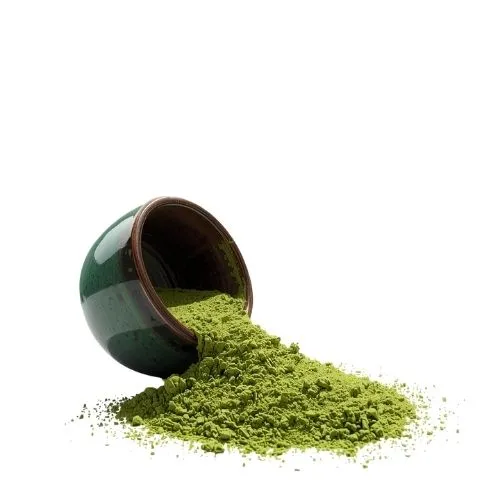
Understanding Matcha Powder Foundation for Perfect Traditional Tea
What Distinguishes Authentic Matcha from Standard Green Tea Powder?
Matcha Powder comes from Camellia sinensis leaves that have been grown in the shade and then denied sunshine for 20 to 30 days before being picked. This special way of growing plants makes too much chlorophyll and raises the amount of L-theanine to 1.5% to 2.5% by dry weight. This gives green tea its characteristic sweet umami flavor that you don't find in regular green teas. After the tencha leaves are picked, they are baked at low temperatures and controlled humidity levels. After that, they are ground on granite stones, which keeps the volatile odor chemicals and gets particle sizes between 800 and 3000 mesh.
Ceremonial Grade versus Culinary Grade Specifications
Ceremonial-grade varieties only come from the first spring crop and have a bright green color, a smooth mouthfeel, and little astringency. These high-quality choices have 18–25% tea polyphenols, with EGCG (epigallocatechin gallate) making up 60–65% of all catechins. The particles are finely sifted until they hit 3000 mesh, which means they dissolve completely in water and leave no gritty residue.
Culinary-grade replacements use leaves that were picked later and have a stronger astringency that cuts through fats and sugars in food uses. This makes them cost-effective options for making a lot of drinks and adding them to baked goods. When clients buy in bulk, they usually reserve ceremonial grades for high-end lines of products aimed at health-conscious consumers and cooking specs for mass-market sweets and drinks.
Active Compounds and Their Stability Challenges
Premium green tea extract has a bioactive matrix that includes catechin polyphenols (12–18%), caffeine (2.5–3.5%), and amino acids, with L-theanine being the most important. These chemicals can break down when they come into touch with light, air, and high temperatures while being stored or transported. The green color comes from chlorophyll a and b, which break down in 48 hours when exposed to air. This causes the color patterns to change to brownish-yellow tones, which show oxidation damage. To keep the purity of the ingredients throughout the supply chain, procurement requirements must include technologies for packing like nitrogen flushing, UV-protective multilayer films, and temperature-controlled transportation.
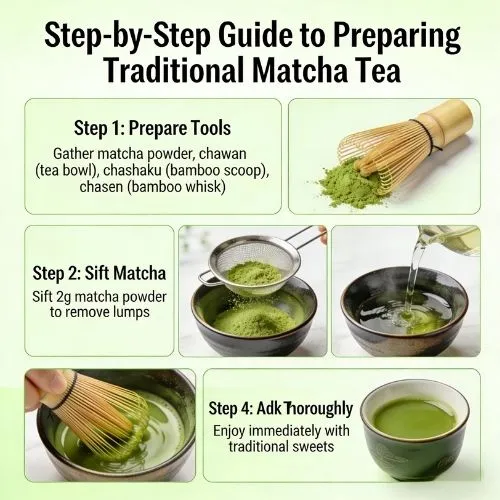
Step-by-Step Guide to Preparing Traditional Matcha Tea
Essential Tools and Equipment Selection
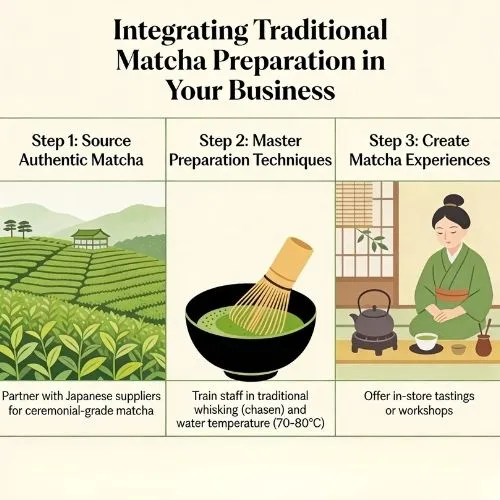
For the real deal, you need a bamboo whisk (chasen) with 80 to 120 fine spikes that make the signature microfoam texture that can't be made with metal tools. The bent bamboo tines create shear forces that keep the particles in place while adding 20–50 micrometer-sized air bubbles. A bamboo scoop (chashaku) gives exact 1-gram portions, which is important for business activities because it ensures consistent dosage. The porcelain bowl (chawan) provides thermal mass that keeps the water temperature stable while whisking. This keeps the water from cooling too quickly, which stops foam from forming. When R&D teams make preparation instructions for restaurant partners, they should include these factors for OEM beverage goods.
Temperature Control and Water Quality Parameters
The temperature of the water has a big effect on how fast extraction works and how the final product tastes. The best temperature range is between 70°C and 80°C because it allows L-theanine to dissolve most easily while reducing the extraction of bitter catechins, especially EGCG, which dissolves more easily above 85°C. To keep calcium and magnesium ions from sticking to tea polyphenols and giving the tea unpleasant metallic notes, the water hardness should stay below 50 ppm total dissolved solids. Water that has been deionized or filtered and has a normal pH (6.5-7.2) is the best for taste because it lets the natural umami and grassy sweetness take center stage.
Whisking Technique and Foam Development
Sift 1-2 grams of finely ground powder through a 200-mesh strainer to separate any pieces that have stuck together while it has been stored. Add 60–80ml of the prepared water and whisk right away in quick M- or W-shaped motions, making sure to keep the whisk in contact with the bowl bottom to create swirling flow patterns. The strong action should last for 30 to 45 seconds, or until the surface is covered with a uniform layer of foam bubbles that are less than 1 mm across.
If you don't whisk well enough, the bits that aren't dissolved will settle quickly, making the texture uneven, which is bad for how customers see the product in business settings. To make sure that quality measures can be repeated, production managers who teach baristas or come up with automated preparation systems must stress the importance of standardizing techniques.
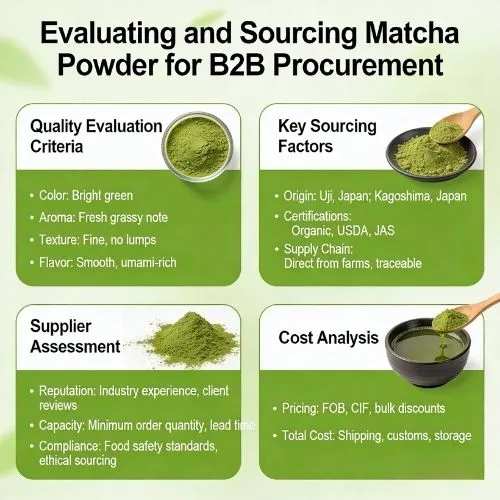
Evaluating and Sourcing Matcha Powder for B2B Procurement
Origin Verification and Terroir Impact on Quality
Japanese production areas, like Uji in Kyoto Prefecture, Nishio in Aichi Prefecture, and Shizuoka, have farming techniques that go back hundreds of years and affect the complexity of flavors and active compound profiles. Uji-sourced types are more expensive because the volcanic soil is high in potassium and magnesium, which helps the production of amino acids during the shading time. Yangge Biotech keeps clear farm-to-table tracking systems that record farming methods, harvest times, and processing conditions. This meets the needs of regulations for organic certification and non-GMO verification, which are being asked for more and more by North American and European markets.
Critical Supplier Evaluation Criteria
In addition to origin claims, buying teams must check analytical reports that say the food meets FDA and EU standards for herbicide residue, heavy metal contamination (lead <2.0 ppm, arsenic <1.0 ppm), and microbial limits (total plate count <10,000 CFU/g). Our ISO, HACCP, KOSHER, and Halal certifications show that we handle quality in a planned way at every step of the production process.
Using laser diffraction to look at particle size distribution should confirm that D90 values match the given mesh ratings. Particles in the 800 mesh should be about 15 to 20 micrometers in size, those in the 2000 mesh should be about 5 to 8 micrometers, and those in the ultra-fine 3000 mesh should be less than 5 micrometers. This is because sub-5 micrometer distributions improve bioavailability in nutraceutical capsule formulations.
Knowing these basic details helps you make smart decisions when you're talking about buying in bulk. We keep 1-ton quantities of KOSHER and USP-grade types in stock, which cuts down on wait times and supports just-in-time production plans. We use a low-temperature baking extraction method that keeps heat-sensitive catechins better than traditional steam processing. This gives us Matcha Powder amounts that meet or exceed the stated specs, as shown by HPLC analysis. New types of packaging, like paper bags that are vacuum-sealed and have one-way valves for releasing gas, make it possible to store food at controlled temperatures below 20°C for an extra 18 to 24 months.
Balancing Cost and Quality in Bulk Orders
Ceremonial-grade prices are usually between $80 and $150 per kilogram in market quantities. This is because the stone milling process is very labor-intensive and only the first harvest is sold. The cost of culinary grades is $30 to $60 per kilogram, but they still work well as useful ingredients in food additives. When you commit to a volume of more than 100 kilograms, you can often get better price and customized service terms, like free sample packages for trying your formulation. To get a good idea of how a product will work in real life, purchasing teams should ask for stability studies that show catechin preservation under accelerated aging conditions (40°C, 75% relative humidity).
Integrating Traditional Matcha Preparation in Your Business
Product Development Opportunities Across Market Segments
Higher-priced ceremonial-grade powder makes ready-to-drink canned teas, cold-brew concentrates, and high-end café menus stand out. Its better taste and better presentation make it worth the extra money. As you can see, the bright green look photographs very well, which helps social media marketing tactics that get millennials and Gen Z consumers involved. For mass-market uses like matcha lattes, protein powder mixes, energy bars, and baked goods, culinary specs work best because the stronger astringency balances out the sweetness of the ingredients without affecting the antioxidant delivery.
Yangge Biotech provides a wide range of mixed services that include combining green tea extract with other botanicals like spirulina, moringa, or ashwagandha to make unique superfood mixes that target specific health goals. These custom recipes help OEM brand owners who want to make their supplements stand out in markets that are already full of them. Our technical team gives advice on how to use our products based on the different ways they are processed. For example, spray drying instant drink powders needs different particle size requirements than compressing tablets or filling capsules.
Staff Training and Quality Standardization
If a food service business uses traditional preparation, they need to set up training rules to make sure that baristas keep up a steady level of whisking force, water temperature accuracy, and dose accuracy when working with Matcha Powder. Sensory evaluation groups should do calibrations every three months, comparing prepared drinks to reference standards to find differences between batches or change in the way they were prepared. Written standard operating procedures that list all the parameters, such as the time it takes to warm the bowl before using the whisk and the number of strokes used, make it possible to get the same results in different places and shift rotations.
Sustainability stories really hit home with health-conscious customers who care about fair sources and taking care of the environment. In order to work with farming groups, we use sustainable development models that make sure they are fairly compensated, that the health of the soil is protected, and that processing centers use green energy. China has given these practices environmental recognition, and they also provide marketing material that improves brand authenticity when shared through digital interaction campaigns and packaging stories.
Future Trends and Innovation in Matcha Tea Procurement
Demand Drivers Reshaping Market Dynamics
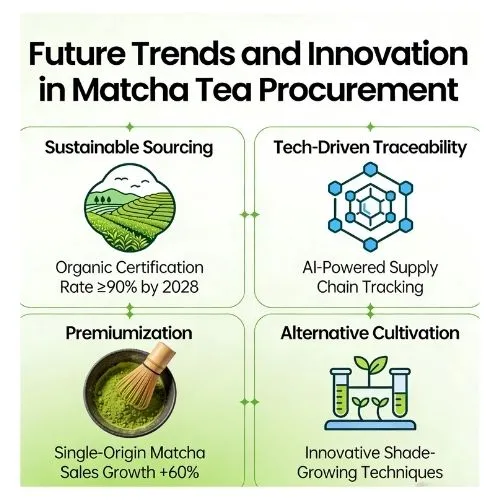
The global green tea extract market is expected to grow at rates higher than 8% per year until 2028. This is because of trends toward clean label reformulation and new healthy beverages. Organic certification has gone from being a niche choice to a standard requirement. In a poll of U.S. procurement managers, 63% said that organic verification was a must-have for qualifying suppliers. This change shows that people are ready to pay 15–25% more for goods with the USDA Organic or EU Organic seals. This means that brands that get certified supply chains early can make more money.
Ultra-premium status is given to specialty types of Matcha Powder like those made from certain cultivars (like Samidori or Yabukita), single-origin estate lots, and ritual grades that are picked during specific times of the year. These limited-edition items let specialty stores and high-end hotel chains make exclusive stories about their products that support higher profit margins. This builds customer loyalty by making the products seem rare and authentically made by hand.
Technological Integration in Supply Chain Management
Digital platforms that support subscription-based purchasing models make it easy to plan your budgets because they offer regular product replenishment, automatic reorder triggers based on consumption patterns, and clear price structures. Blockchain-based tracking systems let customers scan QR codes to see full supply chain histories, from specific farm plots to processing timestamps to final packing dates. More and more, regulators are looking closely at claims of authenticity. These technologies help businesses stand out in markets where concerns about fake goods hurt customer trust.
We bought technology-enabled inventory management systems that let us see what we have in stock in real time, use predictive analytics to guess how much we will harvest, and send out automatic quality alerts when storage conditions change from what we've set. This infrastructure helps big buyers who need to coordinate with many production sites that have different lead times and just-in-time delivery dates.
Conclusion
Traditional ways of making Matcha Powder affect important buying choices that have an effect on the quality of the product, its place in the market, and its long-term success. We looked at the science reasons why real stone-milled powder is different from cheaper options. We also looked at ways to prepare the powder that keep the bioactive compounds intact. Finally, we came up with ways to evaluate suppliers based on purity, approval, and reliability in shipping. The difference between ceremonial and cooking grades is directly related to strategies for dividing the target market into groups.
This makes it possible to precisely match product specifications with brand design and customer demographics. Technical factors like particle size, tea polyphenol levels, and moisture content limits must be written into contracts to make sure that each batch is the same across multi-year supply deals. Yangge Biotech has strong quality systems, an easy-to-understand infrastructure for tracking, and flexible formulation services that make us key partners that can help big growth plans in the functional food and drink markets, which are changing quickly.
FAQ
Q: Can we get some samples to test before purchasing?
A: Of course, we can provide free samples of 20 to 100 grams, but the shipping cost is at the customer's expense. The shipping cost can be deducted from the next order, or the samples can be sent through your courier account.
Q: Do your products have relevant certifications?
A: Yes, our products are certified for HALAL, ISO, HACCP, Kosher, and other certifications.
Q: What is the minimum order quantity (MOQ)?
A: Small batches of samples can be customized according to your requirements.
Q: Do you offer OEM and ODM services? Can the formula be customized based on our own?
A: Of course, we provide ODM and OEM services to many customers. Our product range includes softgels, capsules, tablets, sachets, granules, and private label services. Simply contact us and let us know your requirements. Our experienced R&D team can also develop new products with specific formulas.
Please contact us to design your own branded products.
Q: How do you handle quality complaints?
A: First, we have a comprehensive quality control SOP. We provide authoritative third-party inspection reports for almost all products before shipment to minimize the possibility of quality issues. Second, we have a comprehensive return and exchange procedure. If there is a genuine quality dispute, we will strictly follow the SOP.
Q: How do you ship? How long does delivery take?
A: For small orders, we typically use DHL, UPS, EMS, FedEx, or TNT. Delivery typically takes 3-7 days. We also offer air and sea freight services. We have a strong freight forwarding team and can provide you with a one-stop service, including DDP and DDU.
Q: What are your payment terms?
A: 100% prepayment, payable by T/T, Western Union, MoneyGram, or PayPal.
Q: What is the shelf life of your products?
A: 2 years with proper storage.
Partner with Yangge Biotech for Premium Matcha Powder Supply
Yangge Biotech specializes in sending pharmaceutical-grade green tea extracts to companies in North America and Europe that make health supplements, drinks, and cosmetics. These extracts have to meet the strict requirements of these companies. Our KOSHER and USP-certified inventory has 1-ton stock levels that can be shipped right away, so there are no delays in delivery that can throw off production plans. Our special low-temperature processing method keeps the delicate catechin structures while meeting particle fineness standards of 800 to 3000 mesh. This meets the needs of a wide range of applications, from ready-to-drink drinks to capsule supplements.
In addition to using high-quality raw materials, we also offer full customization services, such as creating your own proprietary blend, integrating your logo, and changing the shape of your packaging to fit your brand's design. Our expert team can help with formulation issues like solubility problems, taste hiding, and making sure the product stays stable throughout its shelf life. Contact us or email info@yanggebiotech.com to ask for samples, get help with specifications, or talk about bulk prices.
References
1. Horie, H., & Kohata, K. (2000). Analysis of tea components and their functions. Journal of Chromatography A, 881(1-2), 425-438.
2. Weiss, D. J., & Anderton, C. R. (2003). Determination of catechins in matcha green tea by micellar electrokinetic chromatography. Journal of Chromatography A, 1011(1-2), 173-180.
3. Shimizu, M., Kobayashi, Y., Suzuki, M., Satsu, H., & Miyamoto, Y. (2000). Regulation of intestinal glucose transport by tea catechins. Biofactors, 13(1-4), 61-65.
4. Goto, T., Yoshida, Y., Kiso, M., & Nagashima, H. (1996). Efficient radical scavenging activity of tea catechins using a micellar electrokinetic capillary chromatography. Bioscience, Biotechnology, and Biochemistry, 60(5), 929-932.
5. Kochman, J., Jakubczyk, K., Antoniewicz, J., Mruk, H., & Janda, K. (2021). Health benefits and chemical composition of matcha green tea: A review. Molecules, 26(1), 85.
6. Graham, H. N. (1992). Green tea composition, consumption, and polyphenol chemistry. Preventive Medicine, 21(3), 334-350.

Based on your location and order quantity, you will have the opportunity to receive a limited time free shipping promotion!
Who we are
Popular Blogs