What purity levels are available for Blue Spirulina powder?
Blue Spirulina powder is available in multiple purity levels, typically measured by phycocyanin concentration expressed as E-value (color value). The most common commercial grades include E10, E18, and E25, with E18 being the standard specification containing approximately 25% phycocyanin. These color values directly indicate the intensity and purity of the blue pigment, allowing procurement professionals to select the appropriate grade based on formulation requirements, regulatory compliance, and cost considerations for their specific applications in food, beverage, and nutraceutical manufacturing. Contact us to get detailed specifications, COA paperwork, or sample amounts for formulation testing, email our procurement specialists at info@yanggebiotech.com. We give clear quotes that represent the current state of the market and use volume-based pricing to protect distributor margins while keeping the end product affordable.
Understanding Blue Spirulina Powder Purity Levels
The percentage of the potent blue pigment taken from Arthrospira platensis is directly related to how pure the phycocyanin extract is. The E-value method, which uses spectrophotometric analysis to measure color intensity at particular wavelengths, is used to measure this concentration accurately. The E-value, which is directly related to the phycocyanin percentage content, is the standard way for suppliers and buyers to talk about purity levels.
What Do E-Values Mean in Commercial Specifications?
The E-value system is a standard way to measure pigment concentration; higher numbers mean more pigment. E10 is the entry level of purity, good for situations where saving money is more important than color intensity. The most common standard, E18, has about 25% phycocyanin and strikes a good mix between performance and price. E25 is very pure and has about 30% phycocyanin, which makes it a good choice for pharmaceutical-grade vitamins and high-end cosmetics that need the most antioxidant action.
These differences change more than just the strength of the color. Higher quality grades usually dissolve better in water, have fewer off-flavors, and are more stable during processing and storage. Manufacturers who work with beverages like the E18 and E25 specifications because they ensure consistent color development even when the pH level changes or the temperature is raised.
How Extraction Methods Impact Final Purity
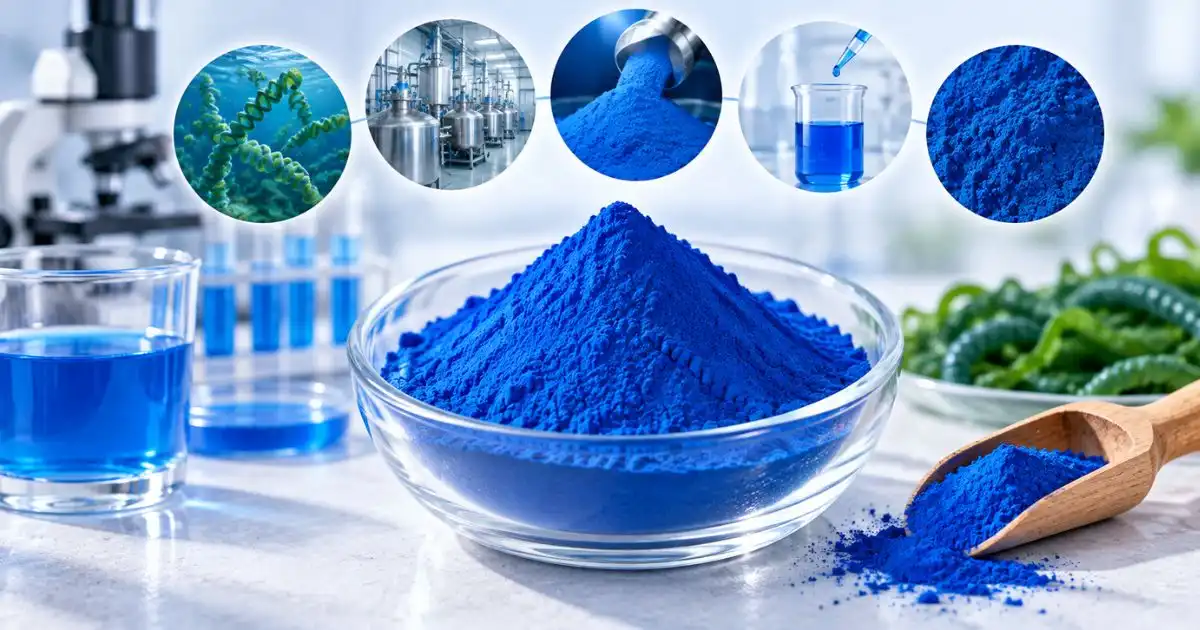
From whole spirulina algae to pure Blue Spirulina powder, there are complex extraction and filtering steps that decide the amount of purity at the end. The phycocyanin is concentrated by first extracting water, then membrane filtering, and finally chromatography. Chlorophyll, polysaccharides, and other cell components are removed. The liquid extract is then turned into a steady powder using spray-drying technology, which keeps the bioactivity.
To get consistent E-values from batch to batch, advanced suppliers use multiple purification steps that are watched by HPLC (High-Performance Liquid Chromatography). This careful testing makes sure that an E18 specification from a reputable manufacturer keeps its 24-26% phycocyanin content across different production runs. This is a very important thing for distributors to keep in mind when managing their clients' expectations for color matching and formulation stability.
A good phycocyanin powder usually has between 60 and 70% protein. This is the protein-pigment mixture that gives the product both nutritional value and colorant utility. Because it has both of these qualities, it is better than synthetic alternatives that only add color and not any health benefits.
Key Factors Influencing Blue Spirulina Purity
The quality of the raw materials is what makes it possible to reach the goal pure levels. When Blue Spirulina is grown in controlled environments with the right amounts of nutrients, consistent light exposure, and water quality monitoring, the biomass has a higher baseline phycocyanin content. The results of cultivation are also affected by where the plants are grown; some places naturally produce more pigments than others.
Yangge Biotech gets spirulina from carefully chosen farms that keep records of the product's journey from the farm to the extraction facility. We can be sure of the quality of our starting materials because we have control over the whole supply chain. This directly affects our ability to make E10, E18, and E25 grades that meet predictable specifications. Our partnership approach with cultivation communities makes sure that practices are sustainable and that the quality of the biomass meets the standards needed for pharmaceutical-grade uses.
Processing Technology and Quality Control
How well an extraction works depends on how well the process is optimized and how advanced the equipment is. Controlling the temperature during extraction keeps the phycocyanin from breaking down, and precise filtering gets rid of any impurities that could throw off readings of purity.
Blue Spirulina is particularly sensitive to these conditions, so the same careful temperature control and filtration that protect phycocyanin also preserve its vibrant color and nutritional value. During production, automated tracking systems keep an eye on key factors and make changes when they become out of range.
Our factory has ISO 22000, HACCP, and GMP certifications, and there are quality control labs that test products in real time while they are being made. Each batch goes through a thorough study that includes:
- Verification of the spectrophotometric E-value at 620nm wavelength absorption
- HPLC proof of the amount of phycocyanin present
- Heavy metal screening (below detection levels for lead, arsenic, mercury, and cadmium)
- Microbiology tests to check for yeast, mold, pathogens, and total plate count
- Verification of allergens and non-GMO confirmation
These rules make sure that our E18 guideline always gives us 25% phycocyanin with a protein level of between 60% and 70%. This meets the standards for both FDA food additives and the EU Novel Food Regulation. Every package comes with Certificate of Analysis (COA) paperwork, which gives wholesalers the technical clarity they need to follow the rules and give customers peace of mind.
Certification Impact on Purity Assurance
Third-party approvals are an independent way to make sure that promises of purity and factory standards are true. Kosher and Halal certifications are especially important for distributors who work with customers in the Middle East and Europe, where religious dietary rules affect buying decisions. These certifications need ongoing audits of the facility and the ability to track ingredients, which strengthens quality management systems as a whole.
Our Kosher and Halal approved production lines only use certain tools for certified batches. This keeps the purity needed by certifying bodies and prevents cross-contamination. With this ability to separate, we can provide USP-grade material for supplement makers who need proof of pharmaceutical-level purity along with food-grade materials for use in drinks and sweets.
Comparing Blue Spirulina Purity with Related Products
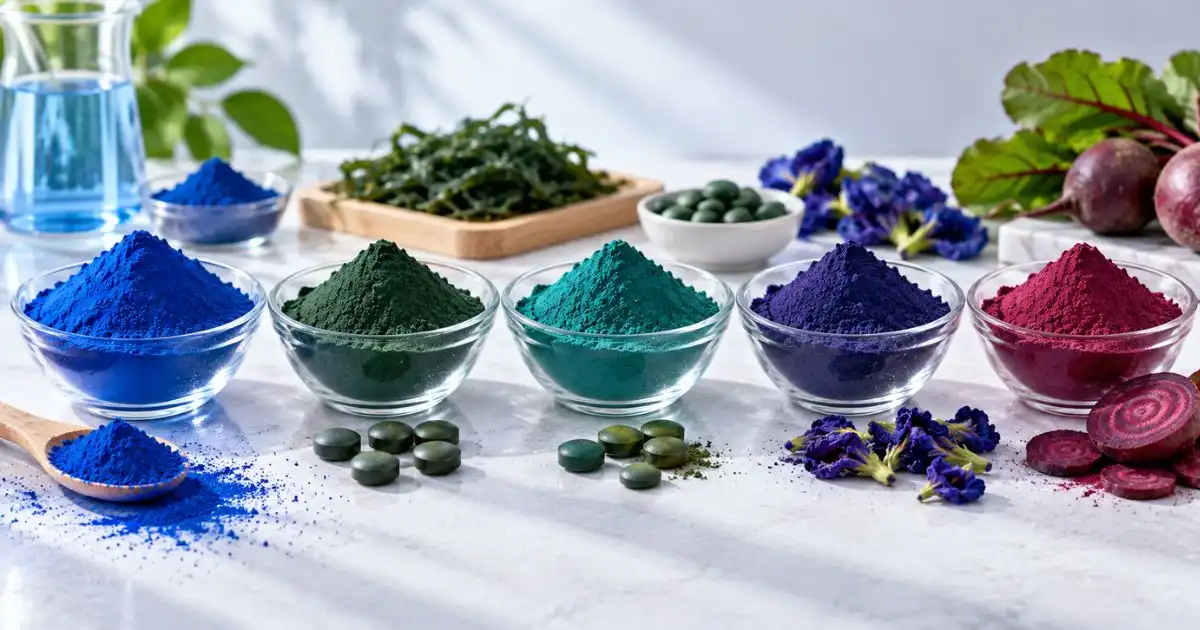
There is a big difference between whole Green Spirulina powder and extracted phycocyanin, which changes how the product is used and where it stands in the market. Whole spirulina has all the nutrients you need, as well as chlorophyll (which gives it its green color) and phycocyanin (which gives it its blue color), as well as lipids, carbohydrates, and the full range of nutrients. Even though this composition is very healthy, it has a "swampy" taste and a greenish color that makes it hard to use in consumer products.
By selectively extracting phycocyanin, chlorophyll and other parts are taken out, leaving only the blue pigment-protein complex. This method gets rid of the unpleasant taste of whole spirulina while focusing its colorant and antioxidant qualities. In the end, they made a product that mixes easily into drinks, sweets, and supplements without changing the taste or color.
Comparison Between Product Forms:
| Characteristic | Whole Green Spirulina | Blue Spirulina Extract (E18) | Premium Extract (E25) |
|---|---|---|---|
| Phycocyanin Content | 8–15% | ~25% | 30% |
| Color Profile | Blue-green | Bright cyan-blue | Strong blue |
| Taste Profile | Strong, like algae | Mild and neutral | Almost no taste |
| Primary Applications | Green smoothies and nutritional supplements | Drinks, sweets, and sports diet | Pharmaceutical additives and high-end makeup |
| Water Solubility | Moderate (needs to be spread out) | Excellent (eliminates right away) | Better (a clear answer) |
| Typical Price Point | $15 to $30/kg | $80-$150/kg | $180 to $280/kg |
This comparison shows why procurement professionals often keep both kinds of spirulina on hand: Whole Green Spirulina for nutritional goods that need to be cheap, and purified phycocyanin for uses where the clean-label blue color supports higher prices. As a result, distribution strategies often divide customers into groups, with smaller speciality brands tending toward E25 specifications and larger manufacturers basing their formulations on E18 performance-to-cost ratios.
Organic Certification Considerations
Organic approval adds another level to the debate about purity, but it deals with farming methods instead of color concentration. Organic phycocyanin comes from Blue Spirulina that was grown without using manmade fertilizers or pesticides. This makes it appealing to companies that value sustainability and clean production. But getting organic approval can make it harder to get supplies and raise prices by 20 to 40 percent compared to normal farming.
The choice between organic and standard specs is based on the price-sensitiveness of the target market. In Europe, organic certification is often necessary for products to be sold in stores. In North America, on the other hand, food manufacturers may put more importance on Kosher and non-GMO certification than organic status. Our production capacity includes both conventional and organic-certified lines, so wholesalers can find the right certification profile for their mix of clients without having to sacrifice E-value standards.
How to Select the Right Purity Level Based on Application Needs
Instead of thinking that higher E-values always lead to better results, application needs should drive pure selection. A cost-benefit analysis needs to look at more than just the prices of the ingredients. It also needs to look at how well the formulation works, how well it follows the rules, and how the end consumer feels about it in certain market segments.
Nutraceutical and Dietary Supplement Applications
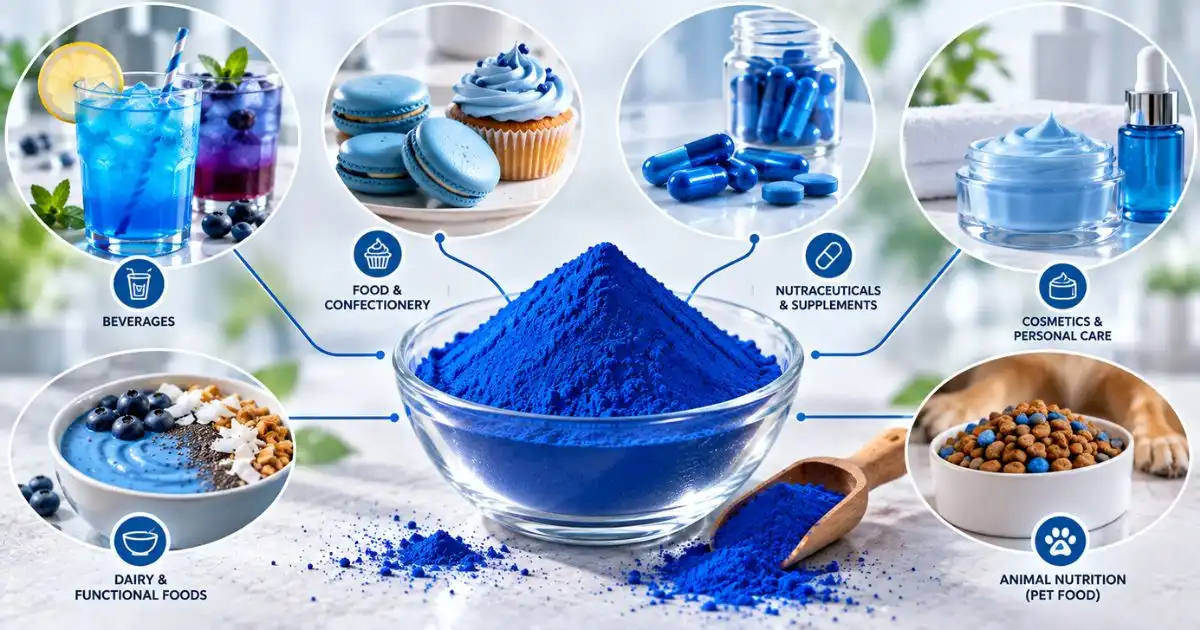
Supplements that claim to help the immune system and provide antioxidants usually list E18 or E25 grades to make sure that each dose has enough phycocyanin. When it comes to capsules and tablets, the E18 specification is often used because the enclosed format makes it impossible to see the color, so dosage accuracy is more important than extreme purity. Powder vitamins and ready-to-mix drinks often move up to E25 to look better and stand out in the market.
Yangge Biotech offers a wide range of OEM services to supplement brands, such as custom powder blends, encapsulation, tablet pressing, and gummy candy production. Our minimum order number of 25 kg works for both new brands that are testing the market and established brands that are increasing production. We keep more than a tonne of E18 standard in stock all the time, so we can quickly fulfill the monthly orders of clients with frame agreements.
Our phycocyanin powder has 60–70% protein, which adds to its nutritional value beyond the color itself. This lets brands make marketing claims that stress both the antioxidant and protein benefits. This dual purpose works especially well for sports nutrition companies that make recovery products for after a workout. The natural blue color visually shows that the product contains useful ingredients.
Food and Beverage Manufacturing
Manufacturers of drinks that want to use E18 standard instead of synthetic Blue No. 1 in sports drinks, functional waters, and carbonated drinks say it gives the right amount of color strength at concentrations of 0.02-0.05% by weight. Some natural colorants can be hard to spread, but this one doesn't because it dissolves easily in water. This makes production easier and cuts down on the need for filtration.
E18 is stable during the cooking and moulding processes, which makes it useful for making sweets, hard candies, and chocolates with a coating. Phycocyanin that has been properly handled can handle short periods of up to 80°C without losing its color. However, long-term contact to heat or extreme pH conditions can change the color to green. Formulation advice on pH buffering and processing parameters helps manufacturers get the best color stability.
Application-Specific Purity Recommendations:
| Product Category | Recommended E-Value | Typical Usage Rate | Key Considerations |
|---|---|---|---|
| Carbonated drinks | E18 | 0.02% to 0.04% | Stable pH and light protection in packaging |
| Powders with protein | E18 or E25 | 0.1% to 3% | Color intensity, ability to mix, and compatibility with flavours |
| Candy supplements | E18 | 0.05 to 0.15% | Stability under heat during production, effect on texture |
| Frozen treats and ice cream | E10 or E18 | 0.03 to 0.08% | Cold processing is better and cheaper |
| Best smoothie mixes | E25 | 0.15 to 0.4% | Appeal to the eye, business difference |
| Serums for beauty | E25 | 0.5% to 2.0% | Skin compatibility and antioxidant activity |
Industrial Bulk Procurement Strategy
Distributors who run bulk businesses have to weigh the costs of keeping goods against the benefits of steady supplies and lower prices for large orders. Frame deals with set delivery dates help cash flow the most while also getting better prices and first picks when supplies are low. Our flexible packing choices, such as 1 kg aluminum foil bags for samples and one-of-a-kind production, and 25 kg drums for bulk production, meet the needs of a wide range of clients.
Instead of just focused on per-kilogram pricing, price negotiations should take into account the total landed cost, which includes freight, storing conditions, and managing the product's shelf life. Our logistics team plans DHL, FedEx, and sea freight options based on how quickly the order needs to be delivered and where it needs to go. They also know how to handle customs paperwork for Halal and Kosher-certified shipments to Middle Eastern markets and FDA-regulated imports to the US.
Ensuring Quality Assurance in Your Blue Spirulina Procurement
The first step in evaluating a supplier is to make sure that the manufacturing credentials and certifications are real. Instead of depending only on images of certificates, ask certification groups for facility audit reports. This is because paperwork fraud does happen in the markets for commodity ingredients, and Blue Spirulina is no exception—its rising popularity has made it a target for mislabeling and adulteration. Legitimate suppliers like it when customers are open and honest, and they give thorough answers to technical questions about testing protocols, traceability systems, and extraction methods.
When you test a sample, you should not only look at its color, but also see how well it dissolves, if any residues are present, and how it tastes. Simple tests that dissolve in water show if the formulations are compatible, and tests that look at taste and smell can find quality problems that spectrophotometric analysis might miss. When you test samples from different sources under the same conditions, you get objective data that you can use to make choices about buying.
Certificate Documentation and Testing Protocols
Every package should come with a full Certificate of Analysis paperwork that lists:
- Batch number, creation date, and expiration date
- E-value standard with the real result of the test
- The amount of phycocyanin found by HPLC analysis
- The amount of protein and moisture
- Results of heavy metal tests (Pb, As, Hg, and Cd)
- What the microbiological tests (TPC, yeast, mold, pathogens) found
- Declaration of allergens and GMO status
- Proof of certification (Kosher, Halal, or organic registration numbers)
Yangge Biotech gives full MSDS (Material Safety Data Sheet) information on how to handle, store, and stay safe that is needed for government regulations and worker safety programs. Our quality control department keeps records for seven years, so if there are quality issues with a batch later on, they can be looked into.
Building Reliable Supplier Relationships
Long-term supply security depends on both parties being aware of what the business needs and the limits of their operations. To help suppliers make the best decisions about inventory and production schedules, procurement managers should talk to them about forecast visibility, seasonal demand patterns, and specification flexibility. Suppliers should also let buyers know ahead of time about repair shutdowns, problems with getting raw materials, or changes to regulations that could affect the supply chain.
Our account management method gives dedicated contacts to distributors that do more than $100,000 in sales each year. This makes sure that they get personalized service and are given priority when capacity is limited. During regular business reviews, people talk about market trends, what competitors are doing, and new ways of making things that could help clients with their product development plans. With this style of consultative relationships, sellers become strategic partners who help both companies grow.
When dealing with the complicated world of international trade, communication infrastructure is very important. Our team works during business hours in Asian, European, and American time zones, and our expert and marketing staff speak English fluently, which gets rid of the language barriers that make B2B relationships harder. Responding to commercial emails in less than four hours on average and providing same-day technical support show that the company is dedicated to its clients' success.
Conclusion
To choose the right purity levels for phycocyanin powder, you have to weigh the needs for technical performance against the costs and dependability of the supply chain. Specifications E10, E18, and E25 are all used for different things. E18 is becoming the most popular choice for most food, drink, and supplement making tasks. When procurement professionals know how extraction methods, licensing requirements, and quality assurance processes affect purity specs, they can make smart buying choices that meet both current production needs and long-term business goals.
The switch from man-made blue colorants to natural ones is both a chance and a task for manufacturers and distributors. Those who learn the technical details of phycocyanin specifications and build relationships with dependable suppliers will be able to compete in markets that are becoming more driven by consumer preferences for clean labels and changes in regulations that favor natural ingredients, with Blue Spirulina emerging as a prime example of a natural alternative that meets both performance and labeling demands.
FAQ
What phycocyanin percentage should I specify for beverage applications?
Manufacturers of drinks can usually get a good color strength with E18 standard (about 25% phycocyanin) at use rates of 0.02% to 0.05% by weight. This quantity gives a bright blue color while keeping costs low. Premium functional drinks may choose the E25 specification to help them stand out in the market and get the most antioxidants, but the extra color benefit fades after a certain concentration. The final rate of use relies on the color strength that is wanted, the pH level, and how the ingredients in the formulation are interacting with each other.
How do I verify that E-value specifications match actual product quality?
Ask for a Certificate of Analysis that includes spectrophotometric test results at a wavelength of 620nm and HPLC confirmation of the phycocyanin percentage. When working with new suppliers or making sure that production batches are ready for important uses, it is important to have independent verification tests done by recognized labs. A useful way to tell if something is of high quality is to see how well it dissolves in water. For example, premium specifications dissolve fully in 30 seconds when water at room temperature is stirred, leaving no residue or sediment that can be seen.
What shelf life should I expect from different purity levels?
Phycocyanin powder stays true to its specifications for 24 months after it was made as long as it is kept in sealed aluminum foil containers in cool, dry, dark places. Higher purity grades (E25) may be a little more stable over time because they contain fewer impurities, but how the product is stored has a bigger effect on its longevity than its initial purity level. Do not put it in direct sunlight, high humidity (above 60%), or temperatures above 25°C to keep the color and strength from slowly fading over time.
Partner with a Trusted Blue Spirulina Supplier for Your Manufacturing Needs
Yangge Biotech is an expert in making high-quality phycocyanin powder with full E-value standards, including E10, E18, and E25. All of our products are made in ISO 22000 and GMP-compliant facilities that are certified Kosher and Halal. We keep an inventory that is always more than 1 tonne of E18 specification. This makes sure that distributors and manufacturers can always get the products they need on time and with good quality.
Our OEM services help with custom recipe development, such as making gummies, encapsulating, and mixing superfood powders. This lets supplement brands cut down on their supply chain partners while keeping quality control high. Our flexible packing and transportation skills can meet a wide range of operating needs in global markets, from small-batch samples in 1 kg aluminum bags to bulk shipments in 25 kg drums.
Contact us to get detailed specifications, COA paperwork, or sample amounts for formulation testing, email our procurement specialists at info@yanggebiotech.com. We give clear quotes that represent the current state of the market and use volume-based pricing to protect distributor margins while keeping the end product affordable.
References
1. Grand View Research. (2022). Natural Food Colors Market Size, Share & Trends Analysis Report.
2. Spirulina Industry Association. (2021). Phycocyanin Extraction and Standardization Methods. Food Technology Journal, 45(3), 78-89.
3. FDA. (2023). Color Additives Permitted for Use in Foods - Code of Federal Regulations Title 21.
4. European Food Safety Authority. (2021). Scientific Opinion on Spirulina and Phycocyanin as Novel Food Ingredients. EFSA Journal, 19(4).
5. Journal of Applied Phycology. (2020). Optimization of Phycocyanin Extraction from Arthrospira platensis: Spectrophotometric Quantification and Stability Assessment. Volume 32, pp. 2789-2801.
6. Nutrition Business Journal. (2023). Natural Colorants Market Trends and Procurement Strategies for Food Manufacturers.

Based on your location and order quantity, you will have the opportunity to receive a limited time free shipping promotion!
Who we are
Popular Blogs