What is the difference between E153 and synthetic colors?
When sourcing black colorants for food manufacturing or pet food applications, procurement managers often face a fundamental question: should they choose Carbon Black E153 or synthetic color alternatives? The answer hinges on understanding that E153, derived from vegetable sources like coconut shells through carbonization, functions as an inert pigment offering superior heat stability and clean-label appeal. Synthetic colors, by contrast, are chemically synthesized dyes or lakes that dissolve or disperse differently, often raising regulatory and consumer acceptance concerns. This distinction affects everything from product performance during processing to market compliance and brand positioning.
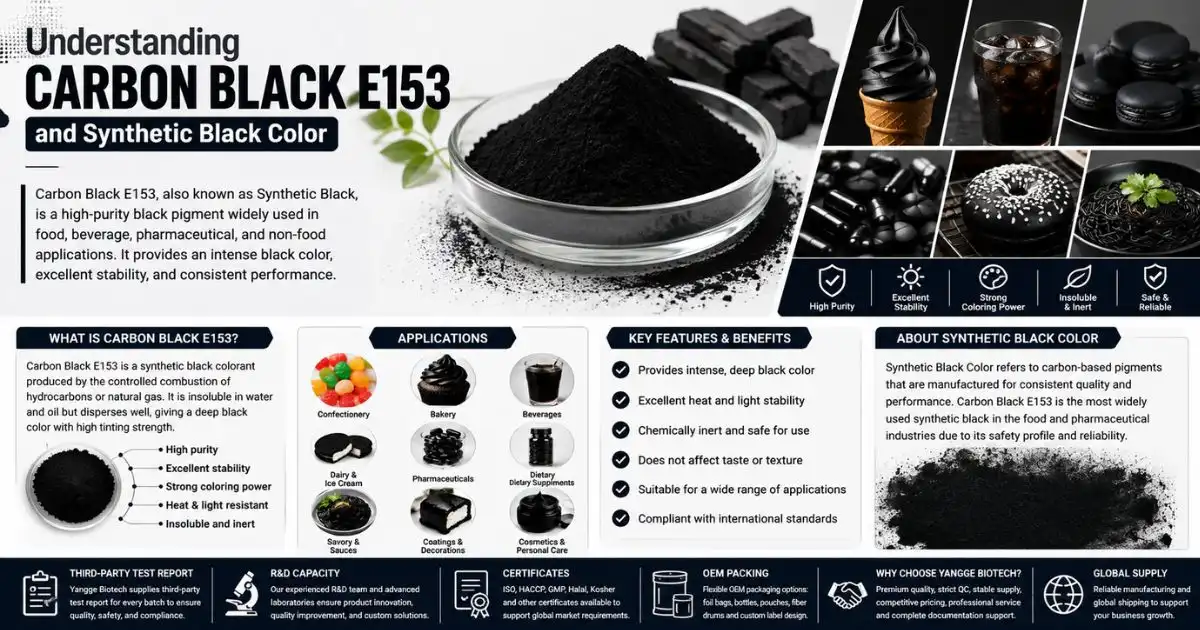
Understanding Carbon Black E153 and Synthetic Colors
What is Carbon Black E153?
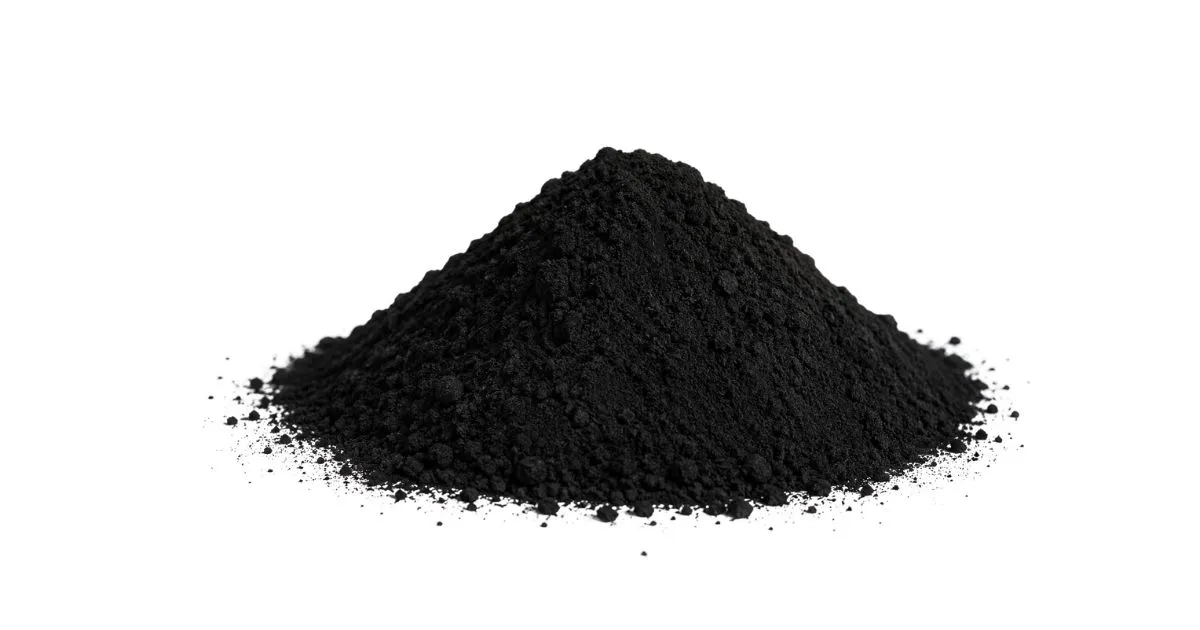
Vegetable Carbon Black E153 is a natural black food coloring that is made by carbonizing plants in a controlled way. At Yangge Biotech, we mostly get E153 from coconut shells. This makes a black powder that has no smell, no taste, and no chemical properties. The INS designation E153 confirms that it is a legal food additive in a number of places, though the level of regulatory acceptance varies by region.
E153 is mostly made up of pure elemental carbon with a micro-crystalline structure. Its carbon content is more than 95% when it is not mixed with water. This pigment doesn't dissolve; instead, it spreads out mechanically. This is why it is so resistant to changes in pH, heat above 200°C, and degradation caused by light. Unlike activated charcoal, which goes through extra steps to make its surface area bigger so it can absorb more, E153 is milled to make sure that the particles are the right size to spread color in food.
Common Synthetic Color Categories
There are three main groups of synthetic colorants that procurement teams should be aware of. Azo dyes, like Allura Red AC and Tartrazine, have nitrogen-nitrogen double bonds that give colors a lot of life. However, they are getting more and more attention because they might cause allergies. Triarylmethane dyes, such as Brilliant Blue FCF, dissolve very well in water, but they may crystallize in some pH conditions. Concerns about the safety of coal tar derivatives, which were important in the past but are now mostly phased out, sped up the move toward safer colorants.
These man-made choices usually work as liquid dyes that molecularly blend into food systems, making it hard to see through when you want to hide things. Because they are chemically reactive, they can react with active ingredients in nutraceutical uses or change color when exposed to acidic media. This can make formulation more difficult than it would be with neutral pigments like E153.
Regulatory Landscape and Food-Grade Approvals
Global legal standards for colorants make buying them hard and require a careful evaluation of suppliers. The European Union fully accepts E153 under Commission Regulation (EU) No 231/2012, which lets it be used Quantum Satis (as needed) in most Group II foods. Canada does the same and allows veggie carbon to be used as a colorant.
The US is a very important exception: the FDA clearly doesn't allow E153 as a food color additive. This means that companies that sell their products in North America have to change their recipes and use approved alternatives like fruit and vegetable juices or iron oxides. This difference in regulations shows how important it is to check the needs of the target market before committing to large purchases. Yangge Biotech keeps a lot of paperwork, like Halal, Kosher, and ISO licenses, to make sure that their buying is legal in many places.
Safety Profiles and Toxicity Considerations
When figuring out the risk of black colorants, three main safety factors play a big role and have a direct effect on purchasing decisions. Polycyclic Aromatic Hydrocarbons (PAHs) are the main worry for E153. High-quality grades must have Benzo(a)pyrene levels below 50 µg/kg to get rid of the carcinogenic risks that come with poor carbonization. Yangge Biotech's E153 goes through a thorough ICP-MS test that confirms the following heavy metal limits: arsenic less than 3 mg/kg, lead less than 2 mg/kg, and mercury less than 1 mg/kg.
Different synthetic colorants are toxic in different ways. For example, some azo dyes break down into aromatic amines that set off regulatory alarms. Every so often, the European Food Safety Authority (EFSA) looks at the Acceptable Daily Intake (ADI) levels for synthetic colors and sometimes lowers the levels that are allowed based on new toxicological information. This change in regulations creates unpredictability in the supply chain, which is mostly avoided by vegetable-derived E153 because it is inert and has a safety record that spans decades of industrial use.
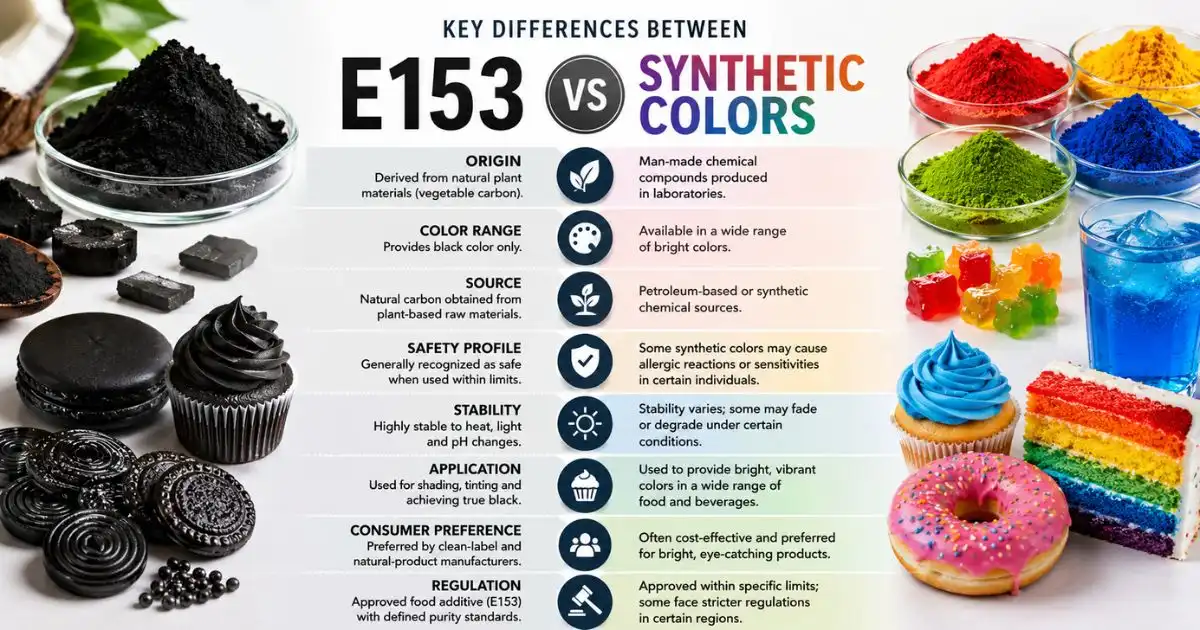
Key Differences Between E153 and Synthetic Colors
Chemical and Physical Characteristics
The main difference between these types of colorants is how their molecules behave in food systems. As of now, Carbon Black E153 is still a solid pigment with particles that are usually less than 5µm in diameter. Because of this physical dispersion, opacity is created by light absorption instead of chemical dissolution. This is why E153 keeps its color no matter the pH, water activity, or ionic strength.
Different synthetic colors have different levels of solubility, from fully soluble in water (most azo dyes) to oil-dispersible (some lakes). Because manufactured colorants dissolve easily, they can move through multi-layered candies, causing color bleeding that makes the product look bad. Synthetic dyes are more likely to break down when they come into contact with trace metal ions, which are often found in natural ingredient formulations. This is because the molecules are spread out more.
| Property | Carbon Black E153 | Synthetic Colors |
|---|---|---|
| Solubility | Insoluble in water and organic solvents | Typically water-soluble (varies by type) |
| Heat Stability | Stable above 200°C | Degrades at 120-180°C depending on type |
| pH Stability | Unaffected by pH 2-11 | Often shifts hue in acidic/alkaline conditions |
| Light Fastness | Excellent (no fading) | Moderate to poor (photodegradation common) |
Stability Under Processing Conditions
Carbon Black E153 is a key performance differentiator in thermal processing, as it has a direct effect on the yield and consistency of the finished product. High-temperature short-time (HTST) pasteurization or baking processes that go above 180°C don't change the intense blackness of E153. We've seen this stability in places where the Maillard reaction and high oven temperatures would normally destroy organic dyes, like on black burger buns and charcoal-themed pastries.
When these things happen, synthetic colorants often break down, causing the color to fade, the hue to shift toward dark or gray tones, or the pigment to completely break down. Because of this, the product has to be reformulated or the process has to be changed, which raises the cost of production. Because E153 is more stable than other materials, it gives manufacturers more options for how to make their products, so they can find the best processing parameters without sacrificing color performance.
Environmental Impact and Sustainability
As brands try to meet customer expectations and meet corporate responsibility requirements, sustainability issues are becoming more and more important in their purchasing decisions. Vegetable Carbon Black E153 comes from renewable biomass sources, like coconut shells, which are waste products from farming. Yangge Biotech keeps track of food from farm to table by working with farming communities to make sure safe buying practices that help people in rural areas make a living.
To make synthetic colors, petrochemicals are used as raw materials, and the chemical reactions that are used are very energy-intensive and produce dangerous trash. It turns out that E153 is better at biodegradability because it breaks down naturally without staying in the environment as microplastic like contaminants. This environmental benefit helps clean-label positioning and fits with cycle economy ideas that brands that care about the environment will like.
Typical Application Sectors
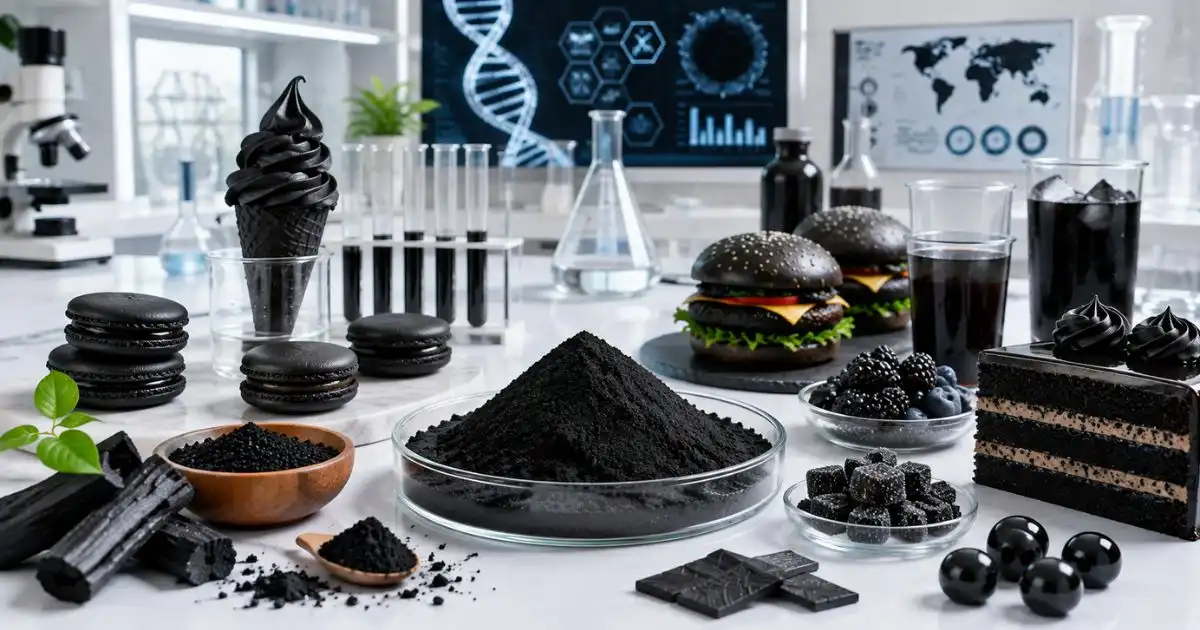
When buying teams know where each type of colorant really shines, they can better match technical needs with practical business facts. E153 is the most popular color for licorice, jello beans, and hard candies because it can hide differences in the colors of the raw materials and give glossy black finishes that don't bleed into layers of different colors. Pet food companies are using E153 more and more for black kibble recipes because it is safe and stable during processing.
Synthetic colors are still very popular in drinks and frozen treats because they dissolve easily and spread out evenly in liquids. Synthetic dyes can be clear, which is good for some uses. However, the move toward opacity and visual effect is driving more expensive ice creams and new frozen treats to use E153. For cosmetic uses, E153 works best for eyeliners and mascaras because it doesn't smudge and doesn't irritate the eyes.
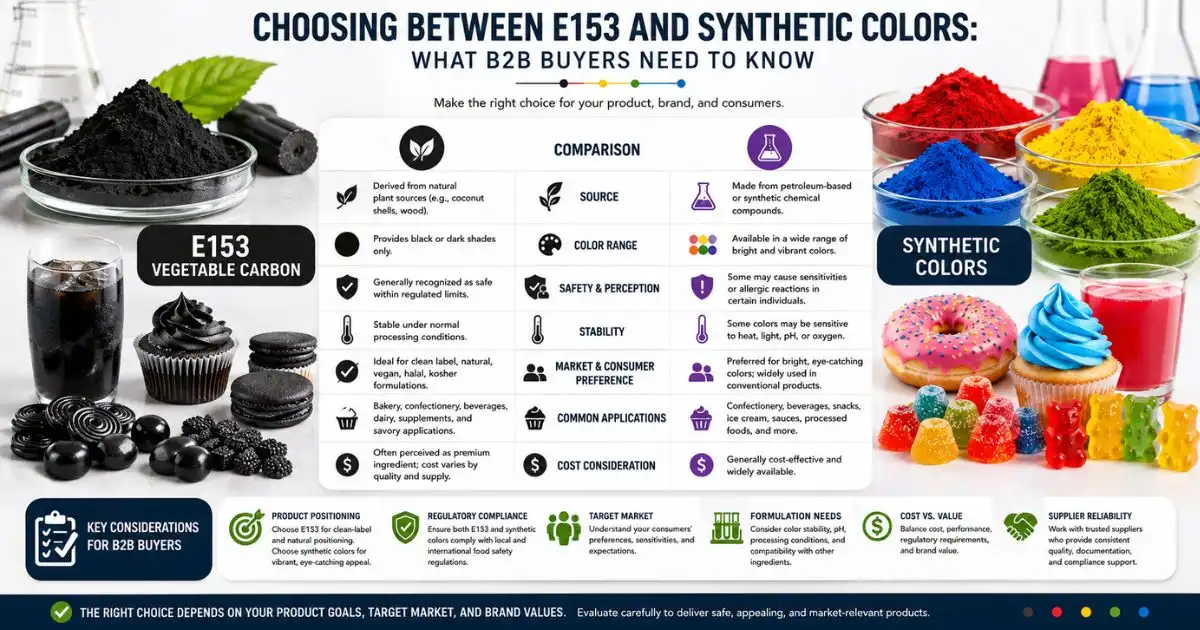
Choosing Between E153 and Synthetic Colors: What B2B Buyers Need to Know
Quality Indicators for Food-Grade E153
When purchasing managers look at E153 suppliers, they should focus on certain quality standards that can predict how well the products will work. A carbon level of more than 95% guaranties the highest pigment load and the best cost-effective composition. Loss on drying should stay below 12%, and sulfated ash should be below 4%. This is to keep the ash from having too much water, which could help microbes grow or make shipping more expensive by adding extra weight.
Particle size distribution has a big impact on how regular the spread is and how the final product looks. Black spots or streaks that show up on poorly processed E153 are less likely to happen if the suppliers offer mean particle diameters below 5µm and narrow distribution curves. Yangge Biotech uses laser diffraction analysis to make sure that the particle sizes are the same across production lots. This makes sure that the colors are the same from batch to batch, which makes R&D scaling and production planning easier.
The most important safety factor is still the amount of PAHs present, especially benzo(a)pyrene, which must be less than 50 µg/kg. Ask a lab from a different company to confirm this specification, because the wrong way of carbonizing can concentrate these cancer-causing compounds. Manufacturers you can trust give you Certificates of Analysis (COAs) that show that they tested for PAHs using gas chromatography-mass spectrometry (GC-MS) and checked for heavy metals using inductively coupled plasma mass spectrometry (ICP-MS).
Certification Documentation Requirements
To make supply chains that follow the rules, you need to keep a lot of paperwork that meets the requirements of both government agencies and company quality control rules. Food Safety System Certification (FSSC 22000) or a similar third-party audited quality management system that shows process controls should be easy for suppliers to give. Halal and Kosher certifications are important for businesses that want to sell to people in the Middle East and Israel. They open up new business opportunities.
Documentation for regulatory compliance must include specification sheets that prove compliance with EU Regulation 231/2012 for E153 and list all factors that were tested against codex limits. The GHS style for safety data sheets (SDS) tells you how to handle the product and what hazards it contains. The allergen labels make sure that it doesn't contain the 14 main allergens that are banned in the EU and the US. Yangge Biotech keeps up-to-date copies of all compliance documents that can be accessed through our customer portal. This makes the procurement process more efficient.
| Certification Type | Relevance to E153 Procurement | Yangge Biotech Status |
|---|---|---|
| FSSC 22000 / ISO 22000 | Verifies food safety management systems | Certified |
| Halal Certification | Required for Middle Eastern markets | Certified |
| Kosher Certification | Essential for Jewish dietary compliance | Certified |
| Non-GMO Verification | Supports clean-label claims | Applicable (plant-derived) |
| Organic Certification | Growing market segment | Available upon request |
Supplier Evaluation and Compliance Record
In addition to certifications, procurement due diligence should look at the practical skills of the seller to see if they can predict the long-term viability of a relationship. The manufacturing capacity shows how many orders can be filled without lowering the standard, which is especially important for launching new products on a big scale. Yangge Biotech keeps 5 tons of USP-grade E153 in stock so that we can quickly meet pressing needs. We can also support contracts for up to 100 tons per year through constant production.
Technical support is what sets strategic partners apart from commodity suppliers. Manufacturers who offer application advice help research and development teams improve dispersion methods, keep tools from getting stained, and solve formulation problems. We offer free 10- to 30-gram samples for bench-scale tests, so procurement teams can make sure the product works before buying a lot of it. Our technical team is available for consultations 24 hours a day, 7 days a week, so that global operations can go on as planned.
Traceability tools show that the supply chain is open, which is something that audit protocols and sustainability reporting rules are asking for more and more. Ask for proof of where the raw materials come from, such as proof of where the coconut shells come from and that they were harvested in a way that doesn't harm the environment. Yangge Biotech's partnerships at the farm level ensure full traceability and support community development projects that are in line with the company's goals for corporate social responsibility.
Market Pricing and Availability Trends
The total cost of ownership, not just the unit price, must be taken into account in the cost analysis for E153 procurement. Carbon Black E153 offers high tinting strength and stability, which directly supports its cost efficiency. Even though synthetic colors might look like they are cheaper per kilogram, you usually have to use more of them to get the same color intensity. E153 usually works well at inclusion rates between 0.1% and 0.5%, and its high filling power lowers the total amount of material used.
Food-grade E153 costs between $15 and $35 per kilogram, based on the grade, the amount ordered, and the licensing needs. The higher price of USP-grade material is due to its higher purity and stricter analytical testing. If you buy more than one ton, you can get big savings on the price, and you can even negotiate for yearly contracts that include delivery schedules. Yangge Biotech has affordable price systems that show how our supply chain is fully integrated, from getting the raw materials to packaging them up at the end.
When compared to synthetic colors that are affected by changes in the price of petrochemical feedstock, E153's supply remains pretty stable. The availability of coconut shells changes with the seasons, but supply problems can be avoided by established manufacturers like Yangge Biotech who strategically manage their inventory. We suggest that procurement teams set up framework agreements with lead times of 4 to 6 weeks for first orders and 2 to 3 weeks for repeat purchases once specifications are confirmed.
Case Studies and Practical Applications of E153 and Synthetic Food Colors
Successful E153 Deployment in Food Manufacturing
A European candy company came to us to change the recipe for their Halloween-themed licorice. They wanted to get rid of a synthetic black dye blend that broke down during production, making color batches that were not consistent. After getting samples from Yangge Biotech, their R&D team did dispersion tests and found that E153 at a concentration of 0.3% gave them deeper black tones than their old synthetic system at a concentration of 0.5%. This saved them 18% on the cost of raw materials.
Our E153's ability to withstand temperatures up to 135°C made a huge difference in their cooking process. Previous manufactured colors lost 15 to 20 percent of their color at this stage, so they had to be overdosed to make up for it. E153 kept the full color strength during processing, so there was no need for correction runs. In the next production year, there were no complaints from customers about color differences, compared to 23 complaints the year before about synthetic colorants.
The fact that E153 is used in pet food shows how versatile it is beyond human consumption. A high-end pet food brand in North America that was making black-coated kibble had trouble with synthetic colors leaking into the packing films while they were being stored, which made the food look bad. When we switched to Yangge Biotech E153, the migration problem went away because the insoluble pigment stayed mechanically attached to the surface of the kibble. It worked for the brand to label their product as "naturally colored" on the packaging, which led to a 12% higher retail price than similarly colored competitors.
Challenges with Synthetic Colors and E153 Solutions
Synthetic color instability shows up in a number of different failure modes that E153 successfully fixes. When manufactured dyes are exposed to lights in stores, they break down photochemically, which fades the color within weeks. Customers told the bakery that their artificially colored goods looked gray after 72 hours under LED lighting, so they moved to E153 when they were making black-themed cupcakes for store displays. Light-fastness of E153 totally got rid of this problem, making the product seem fresher for longer while it was on the shelf.
When working with manufactured colors, pH sensitivity can be a pain, especially when making acidic fruit-flavored candies. When a company making black cherry gummies mixed their synthetic black dye with citric acid, the color changed to a reddish brown. Because E153 is chemically neutral, it kept true black tones no matter what the pH was. This let taste be improved without affecting color. This stability goes all the way to alkaline conditions, which can happen in some bakery settings where leavening agents would change the colors of synthetic dyes.
Equipment staining is a problem that procurement teams need to think about in addition to the cost of raw materials. Synthetic colors get into the machinery used to process plastic and rubber, which means that longer cleaning periods are needed between production runs to avoid cross-contamination. Because E153 is made up of particles, it is easier to remove mechanically, but because the particles are so small, dust control steps are needed. We suggest getting E153 in the form of a paste or a glycerin dispersion to keep dust out of the air and make it easier to add to mixing systems.
Optimization Tips for Color Application
To get the best results from E153, you need to understand how dispersion works in a way that is different from how manmade dyes are handled. It is very important to pre-disperse in high-shear environments because adding dry E153 powder directly to low-viscosity systems makes clumps that show up as black spots. Making a slurry with glycerin or propylene glycol that is 10–20% E153 is what we recommend. This pre-dispersion should then be added during the mixing steps.
Temperature sequencing changes the final color uniformity, especially in mixtures with fat. When E153 is added during the aqueous phase, it doesn't clump like it does when it is added to melted fats. Some companies successfully add E153 to chocolate by mixing it with cocoa powder first, using the fact that the particles are all about the same size to make the distribution even. Before going from trial batches to production, the quality of the dispersion should be checked under a microscope to find any particles that are still not mixed in.
Dosage optimization finds the best mix between color strength, cost-effectiveness, and the chance of staining your teeth. In the EU, E153 is allowed as Quantum Satis, but there are real limits around 0.5-0.7%. This is where too much dosing starts to lose its effectiveness in making things black and starts to raise the cost of the raw materials. Consumer perception testing should look at how likely it is to stain the mouth, since insoluble E153 can stick to tongue surfaces for a short time. For formulations meant for kids, lower doses may be needed to avoid this concern, but E153 is easier to wash off than synthetic lakes.
Future Trends and Innovations in Black Food Colorants
Emerging Natural Alternatives
The "clean label" movement pushes scientists to find new black pigments that come from plants instead of carbon-based materials. Gourmet uses squid ink extract are growing in popularity because it gives foods deep black colors and umami flavors that go well with them. Costs more (3–5 times as much as E153), supply can't be increased easily, and shellfish-allergic people may be allergic to it. Because of these things, squid ink can only be used in high-end niche uses and not in mass production.
Anthocyanin-based alternatives like black carrot concentrate and elderberry extract give dark purple tones that get close to black at high concentrations. The anthocyanins' pH dependence is still a problem because they turn red in acidic circumstances, which limits their usefulness. They can't be used in baked goods or items that have been heated because they change temperature during processing. Even though these are the downsides, some makers mix these natural colors with E153 to get certain visual effects while still following clean label rules.
Activated bamboo charcoal is a material that is similar to Carbon Black E153 made from coconuts. It could be different by telling stories about its sustainable source. Brands that care about the earth like bamboo because it grows quickly and stores carbon. Technically, it still works about the same as Carbon Black E153 made from coconut, but regulatory approvals are taking longer in some places. Yangge Biotech is keeping a close eye on these changes and is ready to expand our portfolio of raw material suppliers as market needs and regulatory frameworks change.
Innovations in E153 Formulations
Particle engineering that improves dispersion properties without changing the chemicals is at the center of technological progress in making E153. Nano-scale milling methods lower the average particle width to less than 1 µm. This makes color uniformity much better in difficult situations, like clear drinking systems where regular E153 can settle, where it can cause problems. These ultra-fine types are very expensive, but they solve certain technical problems that make their price worth it in high-value formulas.
Surface treatment changes are another area of innovation. For example, E153 particles can be coated to make them more compatible with oil stages or keep them from sticking together while they're being stored. When used in chocolate, lecithin-coated E153 shows better dispersion and cuts mixing time by 30–40% compared to uncoated material. Yangge Biotech works with application labs to make these special grades, and they can make custom formulas for customers who have specific processing needs.
Companies that can't do high-shear mixing can make manufacturing easier with pre-dispersed E153 systems. Water-based dispersions with 20–30% color loading make solutions that can be pumped into production streams. This means that no dust needs to be handled, which saves money on labor costs. Glycerin-based systems offer longer shelf life for manufacturers who prefer to store their goods at room temperature instead of in the fridge. In exchange for slightly higher unit costs, these comfort forms make operations more efficient, which is good for the economy as a whole.
Regulatory Changes on the Horizon
As time goes on, regulations for food colorants tend to get stricter, with a focus on purity requirements and limits on contaminants. The European Commission looks over E-number specifications every so often. Recently, they talked about PAH limits that might get stricter than they are now. Manufacturers who are proactive, like Yangge Biotech, can already get benzo(a)pyrene levels below 20 µg/kg, which is well below the current limits. This puts our clients ahead of any possible regulatory tightening.
The US Food and Drug Administration (FDA) still doesn't allow E153 to be used in food, but the food industry is still looking into ways to get approval. To handle petitions, a lot of toxicological data and exposure studies are needed, which takes years and costs a lot of money. We're keeping a close eye on these developments because FDA approval would change the market in North America. At the moment, our U.S. clients are mostly interested in using E153 in pet food or cosmetics, which are areas where the FDA has approved it.
Global attempts to harmonize laws through Codex Alimentarius are slowly bringing regional rules into line, but there are still big differences. This fragmentation makes it harder for multinational companies that work in more than one market to buy things. The technical team at Yangge Biotech gives regulatory advice that is specific to the target markets. This helps clients deal with these complicated issues and avoid costly compliance failures.
Sustainability and Clean-Label Procurement Strategies
Beyond technical performance and cost, corporate commitments to sustainability are driving decisions about which colorants to use more and more. When compared to synthetic colors, E153 has a smaller carbon footprint, especially when bought from companies like Yangge Biotech that use renewable energy to make their products. When compared to traditional manufacturing that relies on fossil fuels, our processing facilities that are powered by solar energy use 40% less energy.
The ideas of the circular economy are put into practice in E153 sourcing by using farm waste that would otherwise have to be thrown away. When coconuts are processed for food and beauty products, the shells are thrown away. E153 production turns this trash into useful raw materials. This use of waste streams for something useful is in line with zero-waste manufacturing ideas. It creates positive environmental stories that help brands stand out.
Clean-label marketing is likely the most important market factor that affects the purchase of colorants. Consumer research shows that people like ingredient names that are easy to remember and claims that the food comes from natural sources. The terms "plant carbon" or "vegetable carbon" used on ingredient lists work better than synthetic color E-numbers, even if the consumer doesn't know much about these materials. This benefit in how people see it can lead to price power and brand loyalty that make it okay for E153 to cost more than synthetic options.
Conclusion
There are more reasons to choose Carbon Black E153 over synthetic colors than just a technical one. These include brand positioning, regulatory compliance, and sustainability alignment. E153 is more stable at high temperatures and low pH levels, so the color will stay the same under a wide range of handling conditions. It also supports clean-label claims that appeal to modern customers. Synthetic options are still useful in some situations where their solubility or clarity makes them more suitable, but it's clear that natural colorants like E153 are becoming more popular.
Professionals in procurement have to judge sellers on a wide range of factors, such as their analytical skills, portfolios of certifications, availability of technical help, and the openness of their supply chains. When you figure out the total cost of ownership, you should include the fact that high-quality E153 lowers the risk of reformulation and improves processing yield. Companies that work with forward-thinking E153 makers can quickly adapt to changes in the market while keeping product quality and customer trust as regulations change and pressures to be more environmentally friendly grow.
FAQ
Is Carbon Black E153 safe for all food categories?
E153 is Quantum Satis approved across most EU food categories under Group II classifications. This means that manufacturers can use it as needed to get the color effects they want. Important exceptions include foods for babies and kids younger than 36 months, which can't have E153. There are no such limits on pet food applications because animal feed rules are different from human food rules. Destination market research is still very important, especially for exports from the U.S., where FDA rules mean that different colorants must be used. Yangge Biotech gives you regulatory advice that is specific to the markets you want to reach, making sure that your products are legal before you invest in production.
How does the shelf life of E153 compare to synthetic colors?
When stored in moisture-barrier cases, E153 stays the same color for 36 months at room temperature. This shows that it is very stable during storage. Synthetic colors usually have shelf lives of 24 months, but some dyes that are unstable and easily broken down by oxygen may have shorter shelf lives. Because E153 is inert, it doesn't respond chemically while it's being stored. However, watching its physical properties should show any changes in moisture levels that might affect its flowability. We suggest using first-in, first-out inventory management and keeping E153 in cool, dry places below 25°C to get the most out of its shelf life.
What criteria identify reliable E153 suppliers?
Instead of just looking at raw material supplier certifications, figuring out how reliable a supplier is should focus on their analytical skills, especially in-house testing for heavy metals and PAH content. Certifications from a third party, like FSSC 22000, make sure that process controls and tracking systems work. Technical support that is easy to get through responsive sample programs and application help shows that the business cares about its customers. Yangge Biotech stands out by keeping an inventory on hand so that orders can be filled quickly, having a full list of certifications that includes Halal and Kosher approvals, and being open about its sourcing practices and sustainability efforts so that partnerships can work well for a long time.
Partner with Yangge for Premium Carbon Black E153 Supply
Yangge Biotech is ready to help you get the black colorant you need. They keep USP-grade Vegetable Carbon Black E153 in stock in 5-ton quantities so they can deliver it right away. Our Kosher and Halal-certified material meets the strict cleanliness standards that food and pet food companies that want to sell to quality-conscious customers expect. As a well-known company that makes E153, we offer a lot of paperwork, such as Certificates of Analysis that show the PAH content is less than 50 µg/kg and that the heavy metal levels meet EU Regulation 231/2012 standards.
We encourage buying managers and R&D engineers to ask for free 10–30g samples for dispersion testing and trial production. This way, they can check the performance without taking any risks before committing to buy in bulk. Our technical team can help you with specific application problems, like making dispersion protocols work better or figuring out how to meet regulatory requirements in all of your target markets. Different logistics needs can be met by our flexible delivery options, such as FOB and CIF terms. Our competitive pricing structure for Carbon Black E153 supplier relationships rewards long-term partnerships and volume commitments.
Contact or email Yangge Biotech at info@yanggebiotech.com right now to talk about your colorant needs, get detailed specs, or set up shipping of samples. We have decades of experience with natural extracts and are dedicated to environmentally friendly ways of sourcing, so your supply chain will be safe.
References
1. European Commission. (2012). Commission Regulation (EU) No 231/2012 laying down specifications for food additives listed in Annexes II and III to Regulation (EC) No 1333/2008. Official Journal of the European Union.
2. Joint FAO/WHO Expert Committee on Food Additives (JECFA). (2006). Compendium of Food Additive Specifications: Vegetable Carbon. FAO JECFA Monographs.
3. European Food Safety Authority (EFSA). (2010). Scientific Opinion on the re-evaluation of vegetable carbon (E 153) as a food additive. EFSA Journal, 8(12).
4. Joint FAO/WHO Expert Committee on Food Additives (JECFA). (2011). Safety evaluation of certain food additives: prepared by the Seventy-third meeting of the Joint FAO/WHO Expert Committee on Food Additives. WHO Food Additives Series.
5. Branen, A. L., Davidson, P. M., Salminen, S., & Thorngate, J. H. (2001). Food Additives. 2nd ed. Marcel Dekker.

Based on your location and order quantity, you will have the opportunity to receive a limited time free shipping promotion!
Who we are
Popular Blogs