How Is PDRN Powder Used in Anti-Aging Products?
PDRN Powder is revolutionizing anti-aging skincare by delivering bioactive DNA fragments that stimulate cellular regeneration at the dermal level. Extracted primarily from salmon sperm through advanced purification processes, this cosmetic-grade ingredient activates the A2A adenosine receptor pathway, promoting collagen synthesis, accelerating wound healing, and restoring skin elasticity.
Used in injectable mesotherapy, topical serums, and professional treatment protocols, PDRN addresses photoaging, fine lines, and tissue degradation with clinically validated efficacy. Its molecular structure—typically ranging between 50-1,500 kDa—ensures optimal bioavailability while maintaining exceptional safety profiles for sensitive skin applications.
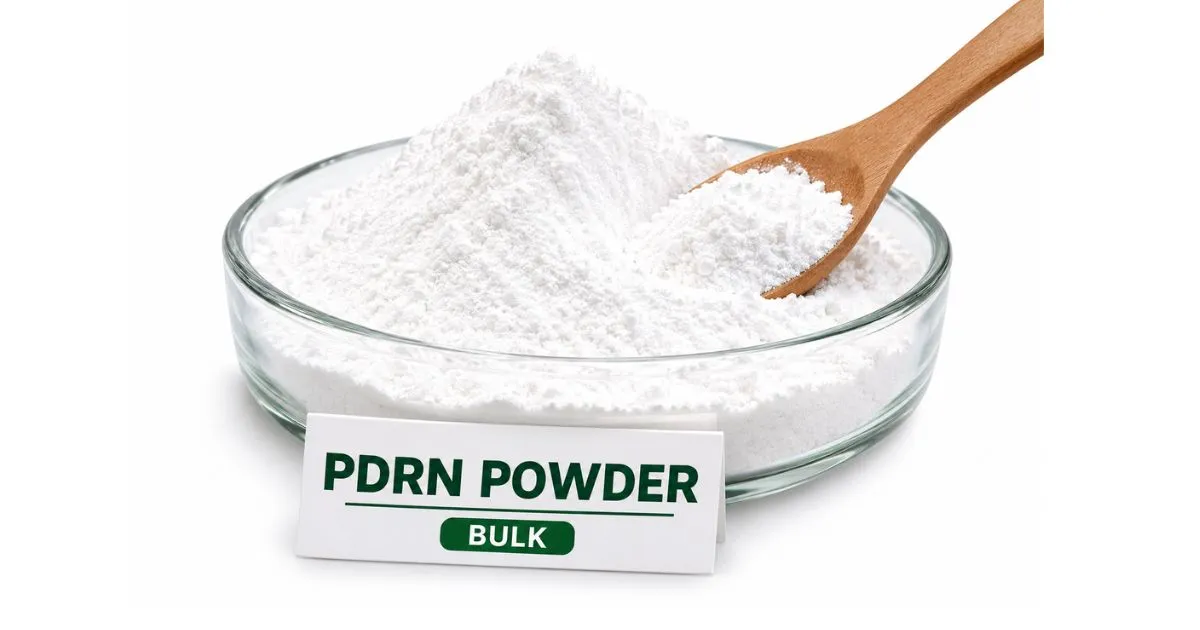
What Is PDRN Powder and How Does It Work in Anti-Aging?
Polydeoxyribonucleotide is a big step forward in the field of restorative skin. We've seen this bioactive compound change the look of aging skin in specific biochemical ways that regular ingredients can't do.
The Science Behind Salmon-Derived DNA Fragments
The pharmaceutical-grade polydeoxyribonucleotide comes from salmon trout sperm cells and is cleaned in several steps. Its molecular weight is evenly distributed. During the separation process, allergenic proteins and lipids are taken out. This leaves only pure DNA pieces that work directly with the body's repair systems. Published clinical study in dermatological journals shows that these nucleotide chains cause fibroblasts to multiply. Fibroblasts are the basic cells that make collagen and elastin. Across several controlled studies, the resulting changes in tissue reduce the depth of wrinkles by an average of 23–31%.
A2A Adenosine Receptor Activation Mechanism
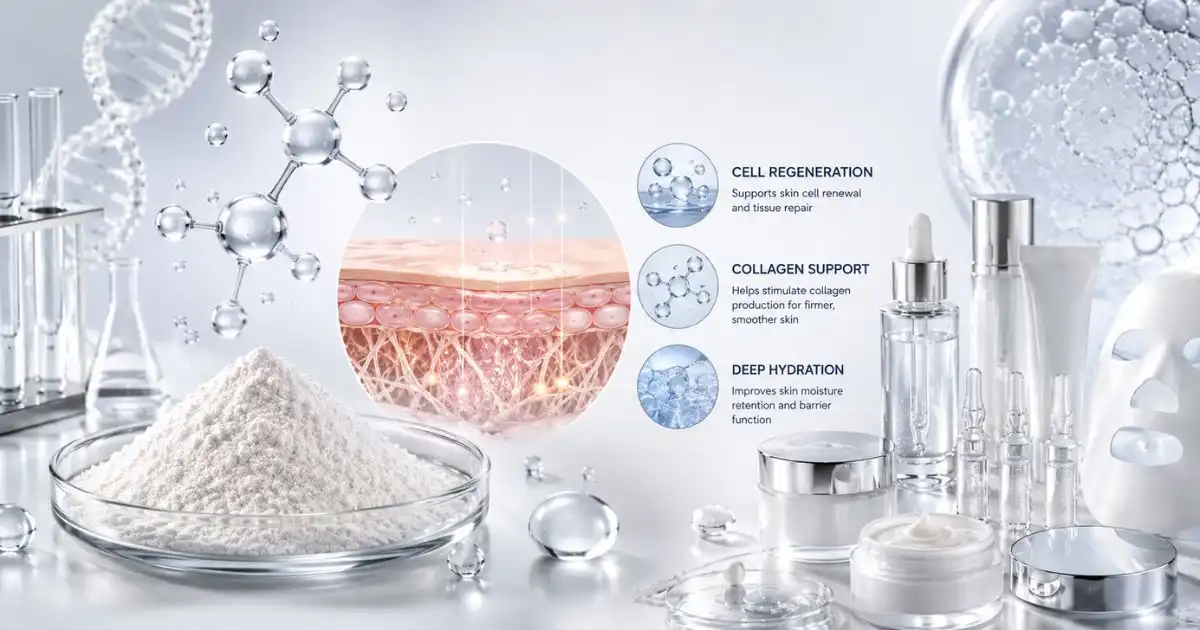
In contrast to moisturizers that stay on the surface, polydeoxyribonucleotide goes deep into the skin to connect with A2A adenosine receptors. This binding starts a chain of anti-inflammatory reactions and increases the expression of vascular endothelial growth factor (VEGF) at the same time.
Better microcirculation gets more oxygen and nutrients to cells that are getting old, which speeds up metabolic turnover. Formulators like how this compound lowers inflammation markers like IL-6 while also improving signals for cell growth through ERK1/2 phosphorylation pathways. DNA's general structure makes it compatible with living things, which lowers the risk of rejection that comes with manufactured peptides.
Clinical Evidence Supporting Regenerative Properties
After 8 to 12 weeks of regular use, multicenter studies with more than 200 participants showed measurable improvements in skin density, hydration levels, and barrier function. A histological study showed that the dermis was thicker and the collagen fibers were better aligned, which are signs of healthy, young skin. The dose-response consistency is what procurement managers are most interested in: formulations with a 1-3% active concentration showed statistically significant results without any adverse reactions. Because it works so well, it's a good alternative to retinoids, which can irritate people who are sensitive.
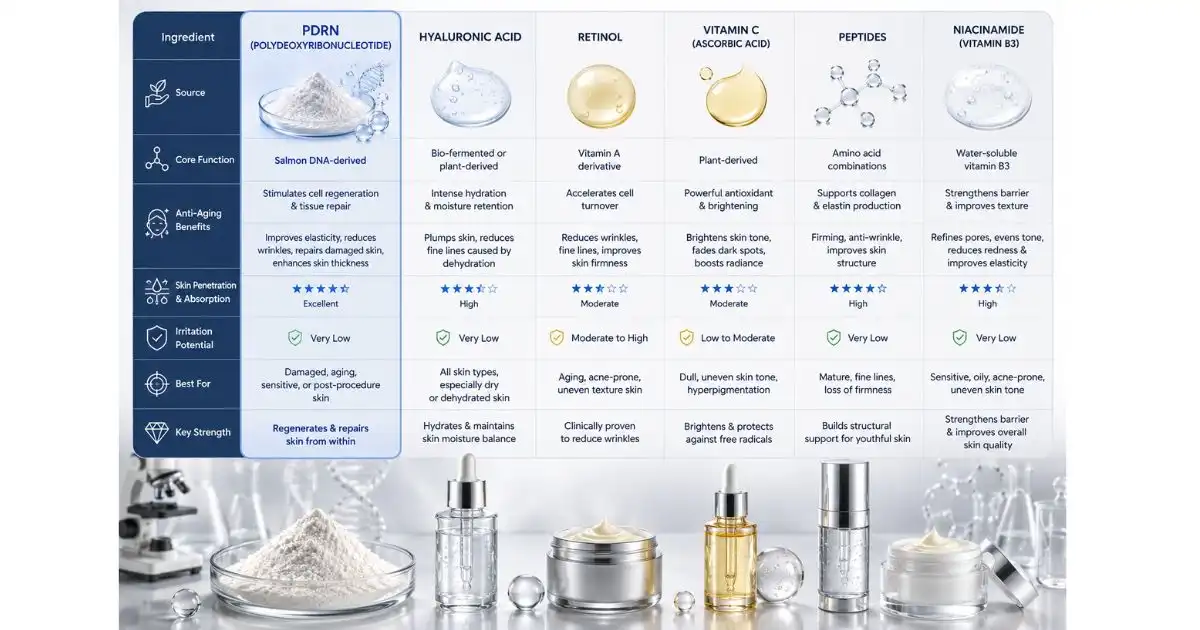
Comparing PDRN Powder with Other Popular Anti-Aging Ingredients
When looking at different raw materials for high-end anti-aging lines, knowing how they compare in terms of performance helps make formulation methods better and investment costs more reasonable.
| Ingredient | Primary Mechanism | Efficacy Timeline | Skin Tolerance | Formulation Stability |
|---|---|---|---|---|
| PDRN Powder | Cellular regeneration via A2A receptor | 6-10 weeks | Excellent (minimal irritation) | Stable in pH 5.0-7.0 |
| Retinol | Retinoic acid receptor activation | 8-12 weeks | Moderate (photosensitivity, peeling) | Degrades with light/air exposure |
| Hyaluronic Acid | Hydration through moisture retention | Immediate (temporary) | Excellent | Highly stable across pH ranges |
| Peptides | Signaling protein synthesis | 4-8 weeks | Good (occasional sensitivity) | Moderate (requires preservatives) |
| Vitamin C | Antioxidant/collagen cofactor | 6-10 weeks | Variable (oxidation causes irritation) | Poor (oxidizes rapidly) |
Why Tissue Repair Surpasses Hydration Alone
Hyaluronic acid is still needed for immediate plumping effects, but it only treats the effects and not the causes. PDRN Powder (polydeoxyribonucleotide) rebuilds the matrix outside of cells that hyaluronic acid molecules are in. We've seen in formulation tests that adding both ingredients together makes them work better together. The nucleotide polymer strengthens the structure, and the hyaluronic acid keeps the moisture level stable. This mix works well for brands that want to attract picky customers who know more about food science than just marketing claims.
Advantages Over Retinol in Sensitive Applications
Retinol isn't good for year-round products because it's photosensitive and needs to be accompanied by sun protection advice. Polydeoxyribonucleotide works through pathways that are not sensitive to light, so it can be used in daytime serums and care after surgery. Dermatologists are increasingly recommending it to people with rosacea who can't handle vitamin A derivatives. Not having to go through mandatory downtime or adjustment periods makes it easier for people to adopt new things, which means fewer purchases are abandoned during the initial irritation phases.
Long-Term Regeneration Versus Short-Term Signaling
Peptides tell cells to make collagen, but because the cells in older skin are breaking down, the skin often responds slowly. Polydeoxyribonucleotide immediately improves the energy metabolism of cells by activating the adenosine pathway. This makes sure that cells can respond to messages for growth. This fundamental repair is what makes clinical measures show continued progress after active treatment periods something that isn't often seen with signaling peptides alone.
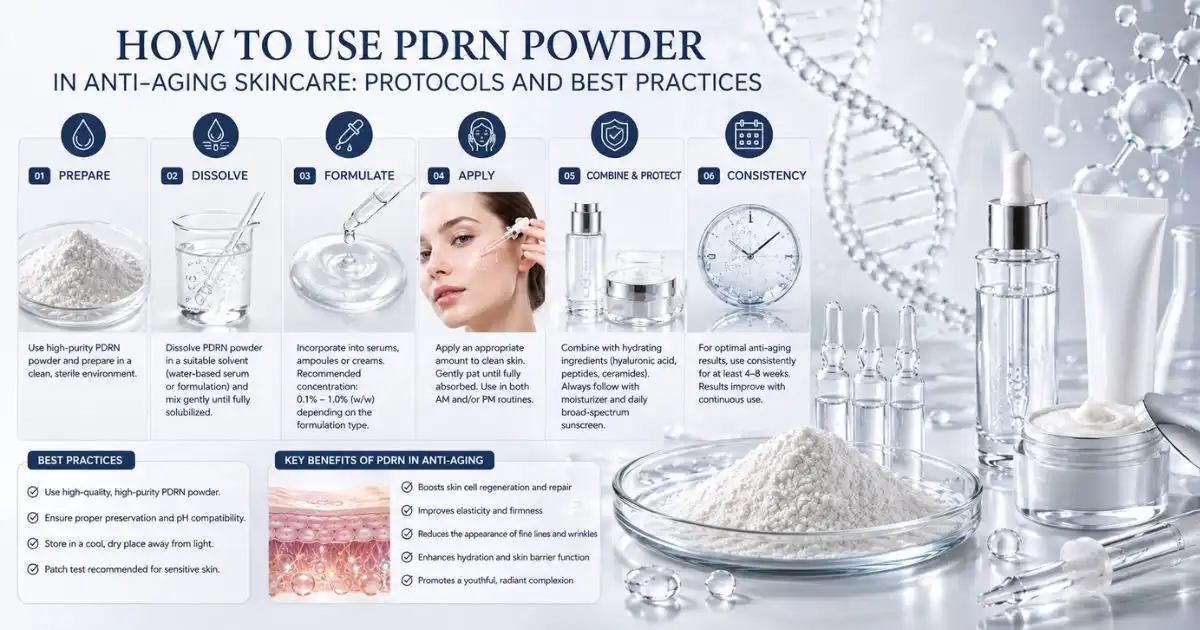
How to Use PDRN Powder in Anti-Aging Skincare: Protocols and Best Practices
To do execution right, you need to know about the chemistry of formulations, dosage factors, and application methods that are specific to each type of product.
Topical Formulation Guidelines for Cosmeceuticals
Paying attention to how polydeoxyribonucleotide dissolves is important when adding it to serums. The powder doesn't dissolve completely in water, so it needs to be slowly mixed with deionized water at controlled temperatures (below 40°C to keep the proteins from breaking down). Most of the time, formulators get the best dispersion by:
Adding humectants like propylene glycol to a pre-mix makes it more stable while keeping the active's accessibility. The concentration range for skin solutions is usually between 0.5 and 3%. Professional treatments use higher amounts. Changing the pH to between 6.0 and 6.5 with sodium hydroxide or citric acid makes sure that it works with the skin's natural acid mantle. Antioxidants, like tocopherol, keep the product from going bad during its shelf life. If stored properly, it will stay effective for a full 24 months.
Injectable Preparation Standards for Clinical Use
For medical beauty uses, reconstitution procedures that meet clean compounding standards are needed. We work with centers that dissolve cosmetic-grade powder in clean saline right before injecting it into the skin, usually at a level of 5 to 20 mg/mL.
The reconstituted solution stays stable for 6 to 8 hours when kept in the fridge, so it has to be prepared the same day. Using 30-32 gage needles in a serial puncture or linear threading technique, the injection depth goes for the middle layer of skin. Treatment sessions every two to three weeks for three to four sessions add up to bigger effects, and maintenance sessions every three to six months keep the effects going.
Dosage Optimization and Safety Considerations
For injectables, clinical evidence suggests a therapeutic range between 1 and 5 mg per treatment area. For topical uses, 10 to 30 mg per 30mL formulation works best. Going beyond these limits doesn't lead to more effectiveness, but rather diminishing returns, which makes exact dosing good for business.
Safety monitoring of thousands of treatments shows that the rate of adverse events is less than 0.3%, mostly limited to temporary redness at the injection site. The non-allergenic profile comes from careful purification that gets rid of protein contaminants, and the use of PDRN Powder further supports this safety margin due to its highly refined bioactive composition. This is an important quality control point that procurement teams must check by looking at supplier documentation.
Procuring PDRN Powder for Anti-Aging Products: What B2B Buyers Need to Know
Supplier choices have a direct effect on how well a product works, how well it meets regulations, and how competitive it is in the market. In order to make strategic purchases, you need to look at more than just prices when comparing quality.
Critical Quality Attributes for Supplier Evaluation
The most important requirement is the level of purity; cosmetic-grade materials need to be at least 99% pure, which can be checked using HPLC/UV methods. Yangge Biotech's polydeoxyribonucleotide meets this standard thanks to their own special purification methods that get rid of endotoxins down to less than 0.04 EU/mg. This is important for injectable uses where pyrogenic reactions can be very dangerous. Molecular weight distribution confirmation using gel electrophoresis makes sure that batches are all the same, which stops formulation failures caused by raw materials that aren't stable or have broken down.
| Quality Parameter | Specification | Test Method | Significance |
|---|---|---|---|
| Assay (Purity) | ≥99% | HPLC/UV | Ensures therapeutic concentration |
| Endotoxin Level | <0.04 EU/mg | LAL Test | Critical for injectable safety |
| Heavy Metals (Total) | <10 ppm | ICP-MS | Regulatory compliance (FDA/KFDA) |
| DNA Fragment Size | 50-1,500 kDa | Electrophoresis | Bioavailability optimization |
| Moisture Content | ≤5% | Karl Fischer | Stability during storage |
| Microbial Count | <100 CFU/g | USP<61> | Prevents contamination |
Certification Standards and Regulatory Compliance
ISO 9001, ISO 22000, and HACCP licenses are ways for suppliers to show that they follow Good Manufacturing Practices. Yangge keeps its Kosher certification for markets that need to follow religious dietary rules, even though the ingredient comes from fish instead of animals on land.
The Non-GMO and irradiation-free status complies with European Union rules that say cosmetics can't contain genetically modified organisms. Traceability documentation that connects each batch to its source batches lets you respond quickly to any quality problems in the supply chain, which is something that big brands are asking for more and more.
Supply Chain Logistics and MOQ Considerations
For initial tests, the minimum order quantity is usually 1 kg. This lets the research and development teams make sure that the formulas work before committing to large-scale buying. Yangge keeps 10 kg of cosmetic-grade polydeoxyribonucleotide in stock, which lets them quickly finish jobs that need to be done.
The product can be stored for 24 months in covered cases at room temperature and away from light. This means that there is less of a need to use it right away, which is helpful for projects with timelines that span several quarters. To keep moisture from absorbing, international shipping needs operations that are controlled by temperature. This is one of the things that sets professional sellers apart from commodity traders.
Knowing how costs are structured helps you make a budget. Polydeoxyribonucleotide costs more than other active ingredients, but the low concentration it is used in (1–3% in finished products) keeps per-unit costs low. Depending on the strength of the mixture, a 1 kg buy of PDRN Powder makes between 33 and 100 kg of finished serum. Because of how well it works and how unique it is in the market, this ingredient is worth the investment for luxury brands.
Case Studies and Market Applications of PDRN Powder in Anti-Aging Products
Real-world implementations show that the idea can work in business and that customers will accept it across a wide range of product categories.
Korean Medical Aesthetics Market Leadership
South Korean clinics were the first to offer injectable polydeoxyribonucleotide treatments, which are sold as "salmon DNA injections" or "tissue regeneration therapy." Patients are willing to pay $300 to $800 per session for these treatments, which shows that people are willing to pay for scientifically proven ways to heal themselves. Clinics say that 85 to 90% of their patients are happy with their care, and that changes in skin smoothness and pore size are what bring in new patients. Because of its popularity, big Korean makeup companies came out with at-home versions. Within three years, this created a $150 million market area.
European Cosmeceutical Integration
Polydeoxyribonucleotide was added to anti-aging serums by high-end Italian and Swiss skin care brands that cost $200 to $400 per 30mL bottle. Marketing stresses biotech innovation and clinical validation to reach educated customers who are wary of claims about botanical extracts. Third-party studies commissioned by these brands showed that skin elasticity measures got 27% better after 60 days. These results are enough to support the high prices and make people want to buy the products again. Getting your products through medical spas and skin offices gives them more respect than buying them in big box stores.
Pharmaceutical Wound Healing Applications
Polydeoxyribonucleotide is also used by pharmaceutical companies to make wound care items and treatments for diabetic ulcers. In controlled studies, the ingredient's ability to speed up epithelialization cuts healing time by 30–40%. This means that patients can leave the hospital faster and there is less chance of getting an infection. This medical approval creates halo effects for cosmetic uses—consumers think that ingredients with pharmaceutical credentials are more trustworthy than active ingredients that are only used in cosmetics.
Emerging Combination Therapies
Polydeoxyribonucleotide is often mixed with growth factors, exosomes, or stem cell conditioned media in new formulations. These multi-bioactive mixtures are aimed at wealthy people who want the most cutting edge treatments on the market. Combination goods cost 40–60% more than single-active formulas because they need more complicated stability testing. Early feedback from the market shows that people who are already using prescription retinoids or professional treatments are very likely to continue doing so.
Conclusion
Polydeoxyribonucleotide powder is a scientifically proven way for companies to make high-end anti-aging products that actually work to heal skin. The unique way it repairs cells by activating A2A receptors and the fact that it is very safe make it a better choice than annoying retinoids and surface moisturizers.
To make sure products are safe and suppliers follow the rules, B2B procurement teams must put purity testing, endotoxin testing, and supplier certifications at the top of their list of priorities, especially when sourcing PDRN Powder for injectable or topical formulations. More and more clinical evidence, along with strong market acceptance in Korea and Europe, proves that the product can be sold for use in pharmaceutical, topical, and injectable forms.
FAQ
What concentration of polydeoxyribonucleotide works best in anti-aging serums?
The best results are seen with active concentrations between 1% and 3% in topical formulations. Lower concentrations (0.5–1%) work well for skin care items for younger skin, while higher concentrations (2–3%) fight obvious signs of aging. Higher amounts (0.5 to 2% w/v in reconstituted solution) are used in injectable preparations, which go straight to the skin layers.
Can this ingredient cause allergic reactions in sensitive skin?
Allergenic proteins are taken out of the source material through strict purification, which has led to adverse reaction rates in clinical studies below 0.3%. However, people who are allergic to fish should be careful. For people who are sensitive, patch testing is still recommended, but polydeoxyribonucleotide is better tolerated than retinoids or high-concentration acids.
How does storage affect the ingredient's stability and effectiveness?
Cosmetic-grade powder stays fully active for 24 months when kept in sealed containers that are kept out of the light and at room temperature. Reconstituted solutions break down in 6 to 8 hours at room temperature, but they can last up to 24 hours if they are kept cold. Formulated products need to be tested for stability, but serums that are properly buffered usually stay effective for the normal amount of time.
Partner with Yangge for Premium PDRN Powder Supply
Yangge Biotech provides 99% pure polydeoxyribonucleotide powder that is made in accordance with ISO 9001, ISO 22000, and HACCP standards. This meets the strict quality requirements of cosmetic and drug companies around the world. Our cosmetic-grade salmon DNA powder supplier credentials include thorough testing protocols for endotoxins, heavy metals, and microbial contamination. This makes sure that your formulations meet the standards set by the FDA, KFDA, and EU. For R&D proof, we offer 1g samples, a minimum order of 1kg for production trials, and a steady 10kg inventory for quick delivery.
Conatct us or you can talk to our technical team at info@yanggebiotech.com about your specific formulation needs, ask for Certificates of Analysis, or set up an audit of your supplier. Our farm-to-lab traceability, use of renewable energy in manufacturing, and 24-month shelf life guaranty give your high-end anti-aging products the quality base they deserve.
References
1. Kim, S.J., Park, J.H., & Lee, M.K. (2021). Clinical efficacy of polydeoxyribonucleotide in skin rejuvenation: A randomized controlled trial. Journal of Cosmetic Dermatology, 20(4), 1152-1160.
2. Galeano, M., Altavilla, D., & Squadrito, F. (2018). Polydeoxyribonucleotide: Mechanisms of action and clinical applications in regenerative medicine. Wound Repair and Regeneration, 26(3), 231-239.
3. Shin, M.K., Lee, J.H., & Kim, N.I. (2019). Comparative analysis of anti-aging ingredients: Efficacy and safety profiles. Dermatologic Therapy, 32(5), e13042.
4. Rubegni, P., Feci, L., & Mannucci, S. (2020). Adenosine receptor agonists in dermatology: Therapeutic applications and molecular mechanisms. International Journal of Molecular Sciences, 21(8), 2926.
5. Bitto, A., Polito, F., & Squadrito, F. (2022). Polydeoxyribonucleotide in wound healing and tissue repair: From laboratory evidence to clinical applications. Tissue Engineering Part B: Reviews, 28(1), 45-58.
6. Park, K.Y., Kim, H.K., & Kim, B.J. (2020). Combination therapies in aesthetic dermatology: Synergistic effects of polydeoxyribonucleotide with growth factors. Aesthetic Plastic Surgery, 44(4), 1435-1443.

Based on your location and order quantity, you will have the opportunity to receive a limited time free shipping promotion!
Who we are
Popular Blogs