What Is Meso Zeaxanthin Powder Used for in Supplements?
Meso Zeaxanthin Powder is a premium carotenoid ingredient commonly used in eye-health and nutraceutical formulations. As one of the carotenoids found in the macular pigment, meso zeaxanthin is often formulated together with lutein and zeaxanthin in supplements designed to support macular and visual health. Its antioxidant properties also make it a valuable ingredient for advanced dietary supplement and functional nutrition products. Yangge Biotech provides high-quality Meso Zeaxanthin Powder for B2B applications, with options suitable for supplement manufacturers, nutraceutical brands, and customized formulations. For product specifications, bulk orders, and sourcing inquiries, please contact Yangge Biotech at info@yanggebiotech.com.
Meso Zeaxanthin powder serves as a critical raw material for eye health supplements, targeting the central macula where this carotenoid naturally accumulates. Unlike dietary lutein or standard zeaxanthin, this specialized ingredient fills the nutritional gap at the foveal center, providing superior blue light filtration and antioxidant defense against age-related macular degeneration. B2B buyers ranging from supplement brand owners to functional food manufacturers require this ingredient to formulate evidence-based products that deliver measurable macular pigment optical density improvements. Understanding its sourcing, formulation advantages, and procurement standards enables manufacturers to meet growing market demand while ensuring product efficacy and regulatory compliance across international markets.
Understanding Meso Zeaxanthin and Its Role in Supplements
Meso Zeaxanthin is the (3R,3'S)-stereoisomer of zeaxanthin, which is a structure that isn't likely to be found in food sources. While lutein and zeaxanthin make up most of the macula's outer layer, this isomer is mostly found at the foveal core and makes up about half of the macular pigment there. Because of this pattern of spread, it is essential for all-around retinal safety plans.
The Unique Molecular Profile
This carotenoid's chiral structure makes it easier for membranes to line up properly inside photoreceptor cells. This makes it better at getting rid of singlet oxygen and free radicals. It blocks high-energy visible blue light that comes from digital screens and everyday lighting. Its molecular formula is C40H56O2 and its absorption peak is close to 460 nm. Because of this biochemical sensitivity, formulas that don't contain this ingredient often fail to improve macular pigment optical density. This is especially true for people whose metabolic routes from lutein precursors aren't working as well as they should.
Natural Sources Versus Supplement Form
While small amounts can be found in some fish species and some foods, they are not enough for therapeutic doses. This carotenoid is made in factories by controlled isomerization of lutein taken from marigold flowers (Tagetes erecta), which ensures consistent purity and potency. The powdered supplement form has benefits for production, such as accurate dosing, longer shelf life when kept in an inert environment, and the ability to work with a wide range of formulations, such as softgels, tablets, and functional drinks. Because of these qualities, it is the best option for business-to-business purchases because it gets rid of the batch-to-batch unpredictability that comes with whole-food sources.
To stop reactive degradation, manufacturing standards say that products must be stored in cases that are tightly closed and shielded from light. Good providers keep stock of 50 kg to 100 kg, which makes it easy to meet the needs of medium-sized production runs quickly. The move toward standard extracts is due to the need for consistent clinical outcomes and simplified regulatory paperwork, which are both important for getting into the North American and European markets.
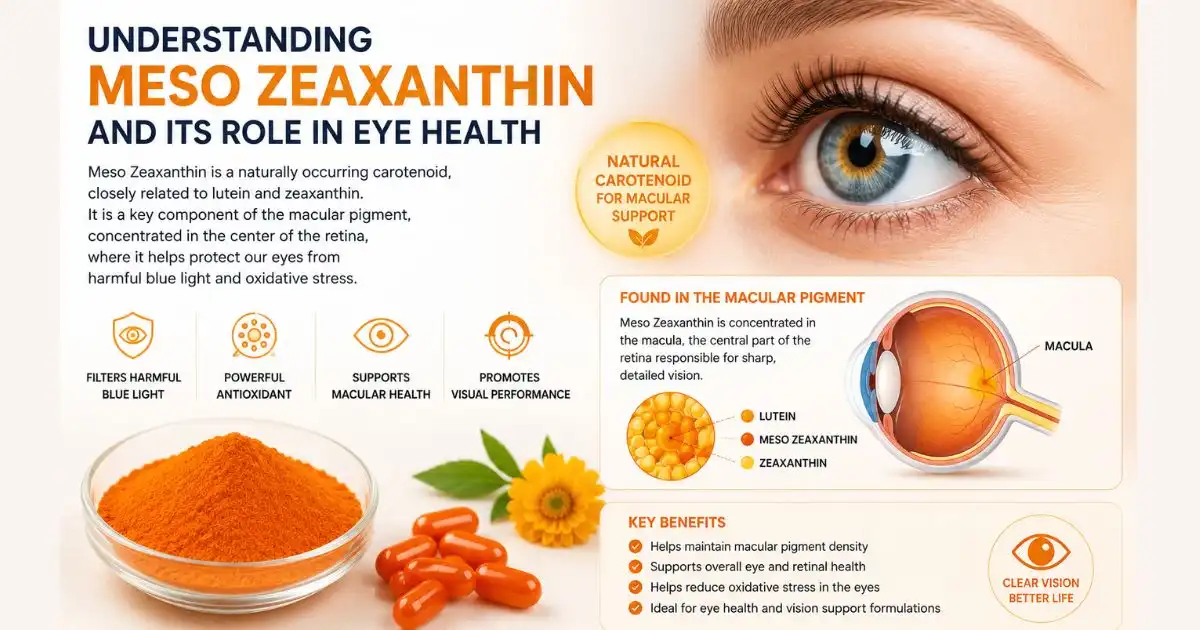
Key Benefits of Meso Zeaxanthin Powder in Eye Health Supplements
There is proof from clinical trials that this pigment protects vision in more than one way. After the Age-Related Eye Disease Study 2 (AREDS2), research was published that showed products with all three macular carotenoids—lutein, zeaxanthin, and this particular isomer—worked better than dual-component alternatives at increasing the density of macular pigment and making contrast perception better.
Protection Against Age-Related Macular Degeneration
By making the retina's natural defense system stronger, supplements directly treat the causes of dry AMD. The 10:10:2 ratio (lutein:zeaxanthin:Meso Zeaxanthin in milligrams) has been shown to work better in clinical studies, lowering the time it takes to recover from photo stress and the ability to see clearly in bright light. This method works together to get the best antioxidant effects in the whole macular area, from the edges to the center of the fovea. Over the course of 12 months, people who took supplements with full formulas saw measurable increases in the optical density of macular pigment, which was linked to fewer signs of disease development.
Antioxidant Capacity Beyond Ocular Health
Neutralizing UV-induced free radicals is one of its main jobs, and studies have shown that it is 150% more effective than β-carotene at getting rid of reactive oxygen species. This power comes from better membrane integration, which lets the molecule stop oxidative damage at the points where cells meet, which is where lipid peroxidation starts. In addition to protecting retinal cells, antioxidants in the body also help keep vascular endothelial health and may help keep cognitive function, which means that this ingredient could be used in a wider range of supplements for healthy aging.
Dosage Parameters and Safety Profile
Standard formulas include 10 mg daily doses in mix products, which is in line with the rules used in clinical trials. Safety studies show that it is well tolerated by a wide range of people, and that the suggested doses have not been linked to any negative effects. In the US and EU, this carotene is recognized by regulatory agencies as a dietary supplement, and only standard labeling requirements need to be met. For business-to-business clients, this proven safety record makes it easier to back up product claims and lowers legal concerns, which speeds up the time it takes to bring new formulations to market.
Because the ingredient is lipophilic, it needs to be delivered through oil-based frameworks or microencapsulation methods. Cold water-soluble (CWS) versions can be added to functional drinks and cheese fortification projects, which solves formulation problems in the liquid supplement category. Specifications for purity range from 5% to 99% to meet a wide range of application needs. Higher concentrations are only used for special softgel goods that need very little excipient content.
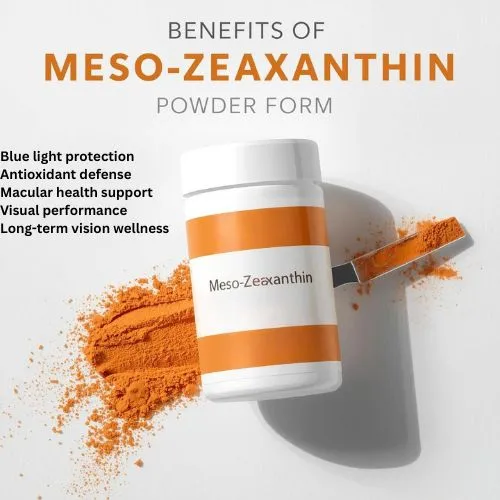
Comparing Meso Zeaxanthin Powder with Other Eye Health Ingredients
Before you buy something, you need to know how this carotenoid works with and varies from similar chemicals. While lutein is easy to find in many foods and zeaxanthin helps keep the macula healthy around the edges, neither of them specifically targets the foveal center.
| Parameter | Meso-Zeaxanthin | Lutein | Standard Zeaxanthin |
|---|---|---|---|
| Macular Distribution | Foveal center (50%) | Peripheral zones | Mid-peripheral zones |
| Dietary Availability | Minimal | High (leafy greens) | Moderate (corn, eggs) |
| Blue Light Absorption | 40% more efficient | Moderate | Moderate |
| Metabolic Conversion | Direct utilization | Converts to meso form | Independent pathway |
| Clinical Dosage | 10mg (combination) | 10-20mg | 2mg (combination) |
Synergistic Formulation Strategies
The "Total Macular Nutrition" method uses all three types of carotenoids together to copy the way pigments are distributed naturally. Researchers have confirmed that adding the Meso Zeaxanthin isomer to lutein-zeaxanthin formulations makes visual performance measures better in a statistically significant way. These metrics include contrast sensitivity in bright situations and chromatic discrimination. This synergy makes expensive formulations worth the extra cost, since people want science-backed goods with measured results more than they want individual nutrients.
Powder Versus Capsule Forms for Manufacturing
Buying powder in bulk has many benefits for business-to-business clients. It is easy to handle and can be put into a variety of delivery systems, such as pressed tablets that need to be dry-blended, two-piece hard capsules, and emulsified softgels. Just-in-time manufacturing adjustments can be made to powder inventory, which lets recipe changes be made without throwing away pre-encapsulated stock. Stability tests show that powder that is stored properly stays active for 24 months, which allows for longer production planning cycles.
Conversely, pre-encapsulated forms make it harder to customize the recipe and raise the cost per unit by adding more processing steps. Buying powder directly from the maker simplifies the supply chain. This is especially helpful for companies that run private label departments or OEM services where formula variation is used to set themselves apart from competitors.
Purity Standards and Certification Requirements
The best way to check the identity and purity of isomers is to use high-performance liquid chromatography (HPLC) with chiral column separation. Certificates of Analysis (CoA) must show that manufactured carotenoids have not gotten into the sample and that it meets European PAH4 standards (Benzopyrene ≤10 ppb). Non-GMO certification, allergen testing, and processing without irradiation are basic standards that buyers who care about quality and are targeting luxury market groups expect.
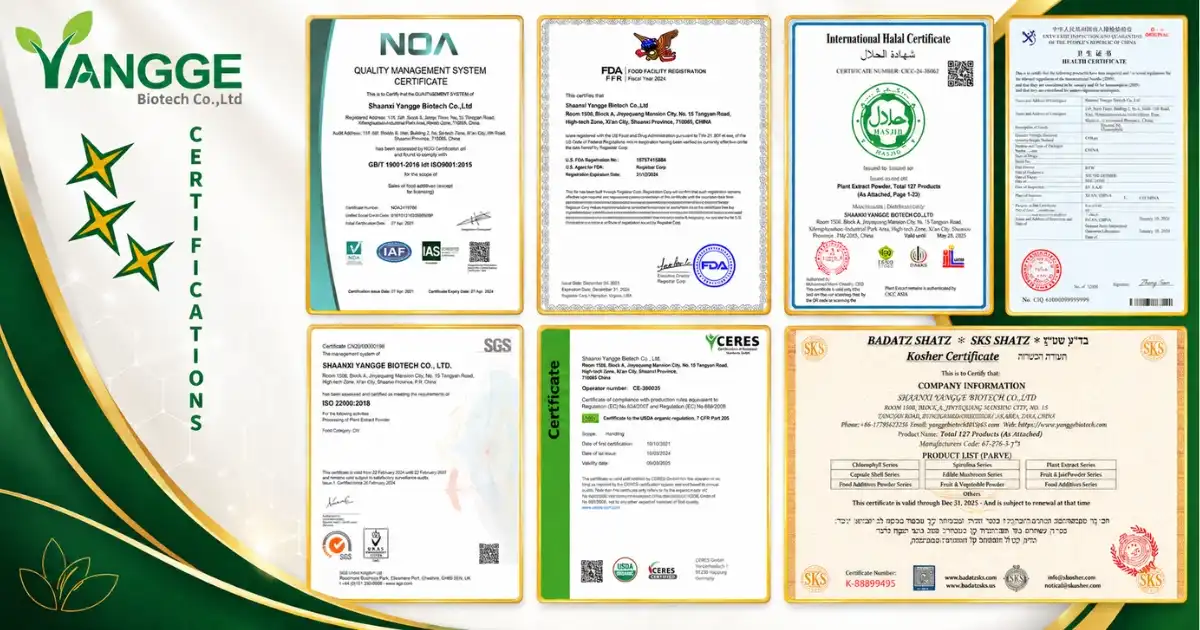
ISO, HACCP, Kosher, and Halal certifications expand market access, particularly for brands serving diverse consumer demographics or exporting to regions with specific religious dietary requirements. Supplier partnerships with accredited testing laboratories enable rapid third-party verification, addressing buyer concerns about authenticity in a market where adulteration risks persist. Transparency throughout the supply chain from marigold cultivation to final powder packaging—builds the trust necessary for long-term procurement relationships.
How to Procure Meso Zeaxanthin Powder: Best Practices for B2B Clients
To be successful at buying Meso Zeaxanthin, you need to find a mix between quality control, lowering costs, and following the rules. The whole process of buying something usually takes between 4 and 8 weeks, from the first question to the business order being filled and the samples being tested. To keep risks to a minimum, structured evaluation methods are needed.
Supplier Qualification Criteria
GMP-certified factories show they follow modern good manufacturing practices, which makes sure that each batch is the same and that contamination is kept to a minimum. Third-party audit reports or site audits check that methods for keeping records, training employees, and calibrating tools are all working properly. Documentation that links finished powder to source marigold farms meets the due diligence needs of brands that stress ethical sourcing and sustainability stories.
Request comprehensive technical data sheets detailing physical characteristics (appearance, particle size distribution), chemical specifications (assay by HPLC, moisture content, heavy metals), and microbiological limits (total plate count, yeast/mold, pathogens). Stability data under accelerated conditions (40°C/75% RH) predicts shelf life performance, informing packaging decisions and expiration dating strategies.
Pricing Dynamics and Bulk Ordering Strategies
Market pricing correlates directly with purity specifications and order volume. Entry-level 5-10% standardized powders suitable for combination formulas command lower per-kilogram costs, while pharmaceutical-grade 98-99% pure isolates target premium softgel applications at elevated price points. Minimum order quantities typically start at 1kg for sampling purposes, scaling to 25kg or greater for production runs that justify freight optimization and volume discounts.
| Specification Grade | Purity Range | Primary Application | MOQ (Production) | Typical Lead Time |
|---|---|---|---|---|
| Standard Powder | 5-20% | Combination tablets/capsules | 25-50kg | 2-3 weeks |
| High-Concentration | 70-80% | Premium softgels | 10-25kg | 3-4 weeks |
| CWS Microencapsulated | 99% active | Functional beverages | 5-10kg | 4-6 weeks |
| Pharmaceutical Grade | ≥98% HPLC | Clinical trial materials | 1-5kg | 4-8 weeks |
Payment terms often include deposit requirements (30-50% upon order confirmation) with balance due before shipment or against bill of lading. Letter of credit arrangements provide security for larger transactions, particularly when establishing relationships with new suppliers. Negotiating framework agreements with annual volume commitments secures preferential pricing and priority allocation during peak demand periods.
Regulatory Compliance Across Markets
US dietary supplement rules, which are regulated by the FDA, say that manufacturers must follow current Good Manufacturing Practice (cGMP) standards. Batch records must show that ingredients' identities are checked and that methods for checking for contaminants are followed. The European Union's Novel Food Regulations and EFSA safety assessments cover ingredients that were introduced after 1997. However, Meso Zeaxanthin made from marigold lutein usually falls under traditional use exemptions when it is made using standard isomerization processes.
Japan's regulatory framework mandates notification under the Foods with Function Claims system, requiring scientific substantiation for any health-related marketing claims be backed up by science. Suppliers who provide regulatory support documents, such as ingredient safety dossiers and label claim explanation, speed up the approval process and lower the time it takes for foreign launches to hit stores. Actively working with regulatory affairs experts during buying avoids costly delays in reformulation or problems entering the market.
Customs classification under Harmonized System codes determines import duties and documentation requirements. Proper classification as carotenoid extracts (HS code 1302.19 or similar depending on jurisdiction) ensures smooth customs clearance, avoiding misclassification penalties or shipment delays. Experienced suppliers furnish commercial invoices, certificates of origin, and phytosanitary certificates as standard export documentation, facilitating efficient logistics coordination.
Future Trends and Innovations in Meso Zeaxanthin Supplementation
The global eye health supplement market projects robust growth, driven by aging demographics and digital device proliferation increasing blue light exposure concerns. Market analysts forecast compound annual growth rates exceeding 7% through 2030, with premium formulas featuring complete macular carotenoid profiles capturing disproportionate value share.
Bioavailability Enhancement Technologies
New delivery methods use nanoemulsion and liposomal packaging to boost absorption rates. This gets around the problem of lipophilia, which makes drugs less bioavailable when people are on a low-fat diet. These advanced formats allow for lower doses or faster onset of macular pigment increases, which gives new brands a chance to stand out. New products are being made for specific groups of people thanks to partnerships between companies that supply raw materials and companies that make specialized formulations. These products range from veggie gummies to sports nutrition drinks for e-sports players who are worried about getting tired from staring at screens all day.
Strategic Opportunities for B2B Stakeholders
OEM and ODM service providers can make more money by coming up with their own formulas that have been proven to work in clinical trials or customer opinion studies. New supplement brands can compete with well-known supplement companies by using white-label plans that include the whole Meso Zeaxanthin trio along with educational marketing materials. Vertical integration strategies give you control over quality, cost, and intellectual property protection, from getting the raw materials to delivering the finished goods.
Distribution partnerships that focus on certain channels, like optometry offices, specialty health stores, or telemedicine platforms, make sure that the placement of the product is in line with customer education and expert support programs. As preventive nutrition insurance grows in some markets, putting clinically proven formulations in a position where practitioners can recommend them could open up sales channels that are eligible for reimbursement that weren't available to supplement categories before.
Geographic expansion into Asia-Pacific markets could lead to growth, especially in countries like Japan, South Korea, and urban China that are getting older and where efforts to raise knowledge about eye health are becoming more popular. Localized formulations that take into account regional eating habits and preferred delivery formats, backed by regional clinical data, increase the chances of successfully entering new markets. Suppliers who offer regulatory support and market entry consultation add value beyond just providing raw materials; they become key partners in global expansion plans.
Conclusion
Meso Zeaxanthin powder fills in a major gap in complete macular health formulas by providing focused protection to the foveal center, where regular carotenoids fail to do so. When buying this kind of specialized ingredient, B2B buyers need to make sure the ingredients are pure by using chiral HPLC analysis, looking at the certification profiles of suppliers, and making sure there is clear paperwork for tracking the ingredients back to their source.
Complete macular carotenoid formulations offer synergistic benefits that support their high price, while new delivery technologies and growing application categories present strategic opportunities for companies that are focused on innovation. As markets around the world value eye health products based on science more, it becomes important to build trusting relationships with qualified providers in order to get a piece of this fast-growing market. Manufacturers can meet changing customer needs and stay ahead in fast-paced foreign markets by making smart purchasing choices that balance quality, compliance, and cost-effectiveness.
FAQ
What distinguishes this carotenoid from standard zeaxanthin?
The Meso Zeaxanthin isomer has a special (3R,3'S) stereochemistry that lets it selectively accumulate at the foveal nucleus. Dietary zeaxanthin, on the other hand, concentrates in the middle to outer macular regions (3R,3'R configuration). Because of this difference in distribution, regular zeaxanthin can't protect the central macula well enough. This is where the density of cone photoreceptors is highest and where visual acuity starts. When both isomers are mixed together, they fill the whole macular area, blocking blue light and protecting against free radicals as much as possible.
How do manufacturers verify ingredient purity?
The best way to analyze chemicals is with chiral high-performance liquid chromatography, which separates stereoisomers based on the three-dimensional structure of their molecules. Standard HPLC can't tell the difference between zeaxanthin isomers, so chiral column analysis is needed to prove identification and find signs of fraud. Reliable providers give out Certificates of Analysis that show purity numbers, tests for residual solvents, heavy metal screening, and microbiological safety factors. Validation by a third-party lab in an accredited facility boosts credibility, especially for suppliers who work with quality-conscious customers.
What are typical formulation ratios in commercial products?
A 10:10:2 mg mix of lutein, zeaxanthin, and Meso Zeaxanthin has been shown to work in clinical studies, which is similar to the normal makeup of macular pigment. For people who have trouble breaking down lutein, some advanced formulations use 10:2:10 ratios that focus on the meso isomer. The recommended daily amount of carotenoids is between 20 and 25 mg, which can be taken in the form of softgels once a day or tablets with split doses. When setting dosing guidelines, manufacturers should look at published clinical trials to make sure that claims are true and to see how well their products compare to similar ones on the market.
Partner with Yangge for Premium Meso Zeaxanthin Supply
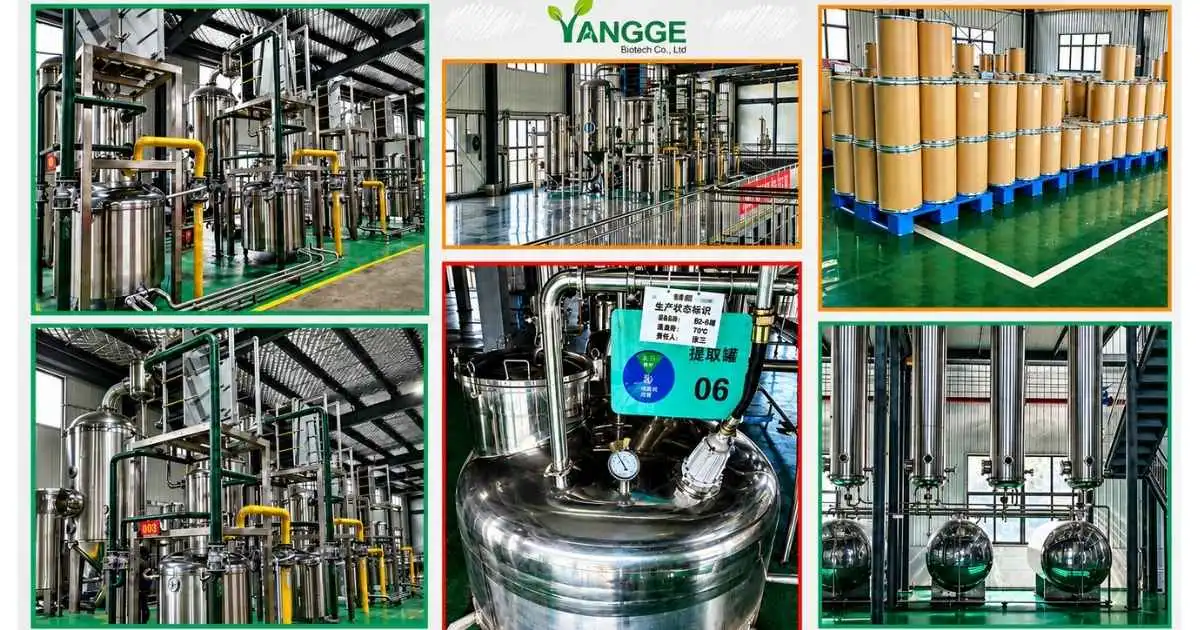
Yangge Biotech makes pharmaceutical-grade carotenoids that are used in the nutraceutical and functional food industries for tough B2B needs. Our Meso Zeaxanthin powder provider can provide a wide range of specs, from 5% standardized extracts to 99% CWS microencapsulated formats, so they can meet the needs of a wide range of formulations. Our inventory is made under strict chiral HPLC checks that make sure it meets European PAH4 standards and Non-GMO protocols. It is also certified as ISO, HACCP, Kosher, and Halal. Directly getting marigold flowers from farms that practice sustainable farming means that there are no liquid leftovers and the whole process can be tracked from the farm to the finished powder.
We can support both pilot projects and large-scale production with choices for OEM packing, a minimum order size of 1 kg, and a well-kept inventory that lets us fill orders quickly.Contact us or email our technical team at info@yanggebiotech.com to get samples, look over full CoA paperwork, and talk about getting help with unique formulation for your next eye health idea. Visit blog.yanggebiotech.com for additional research insights and application guidance.
References
1. Bone, R.A., & Landrum, J.T. (2010). Dose-dependent response of serum lutein and macular pigment optical density to supplementation with lutein esters. Archives of Biochemistry and Biophysics, 504(1), 50-55.
2. Connolly, E.E., Beatty, S., Thurnham, D.I., et al. (2010). Augmentation of macular pigment following supplementation with all three macular carotenoids. Investigative Ophthalmology & Visual Science, 51(9), 4777-4781.
3. Ma, L., Dou, H.L., Wu, Y.Q., et al. (2012). Lutein and zeaxanthin intake and the risk of age-related macular degeneration: a systematic review and meta-analysis. British Journal of Nutrition, 107(3), 350-359.
4. Nolan, J.M., Loskutova, E., Howard, A.N., et al. (2014). Macular pigment, visual function, and macular disease among subjects with Alzheimer's disease. Journal of Alzheimer's Disease, 42(4), 1191-1202.
5. Stringham, J.M., & Hammond, B.R. (2008). Macular pigment and visual performance under glare conditions. Optometry and Vision Science, 85(2), 82-88.
6. Thurnham, D.I. (2007). Macular zeaxanthins and lutein – a review of dietary sources and bioavailability and some relationships with macular pigment optical density and age-related macular disease. Nutrition Research Reviews, 20(2), 163-179.

Based on your location and order quantity, you will have the opportunity to receive a limited time free shipping promotion!
Who we are
Popular Blogs