What is Blue Spirulina powder used for in foods?
Blue Spirulina powder has emerged as a game-changing ingredient in the food and beverage industry, addressing one of the most pressing challenges manufacturers face today: replacing synthetic blue dyes with natural, clean-label alternatives. Extracted from Arthrospira platensis through advanced purification methods, this vibrant blue pigment technically known as phycocyanin delivers the striking cyan hue consumers desire without the regulatory concerns and health controversies surrounding artificial colorants like FD&C Blue No. 1. Beyond its visual appeal, blue spirulina brings functional antioxidant properties and a neutral taste profile that seamlessly integrates into diverse food matrices, from functional beverages and dairy alternatives to confectionery and sports nutrition products. As a dependable Blue Spirulina seller, contact us at info@yanggebiotech.com to request samples, discuss bulk pricing, or learn more about our custom formulation services tailored to your brand's goals and target market.
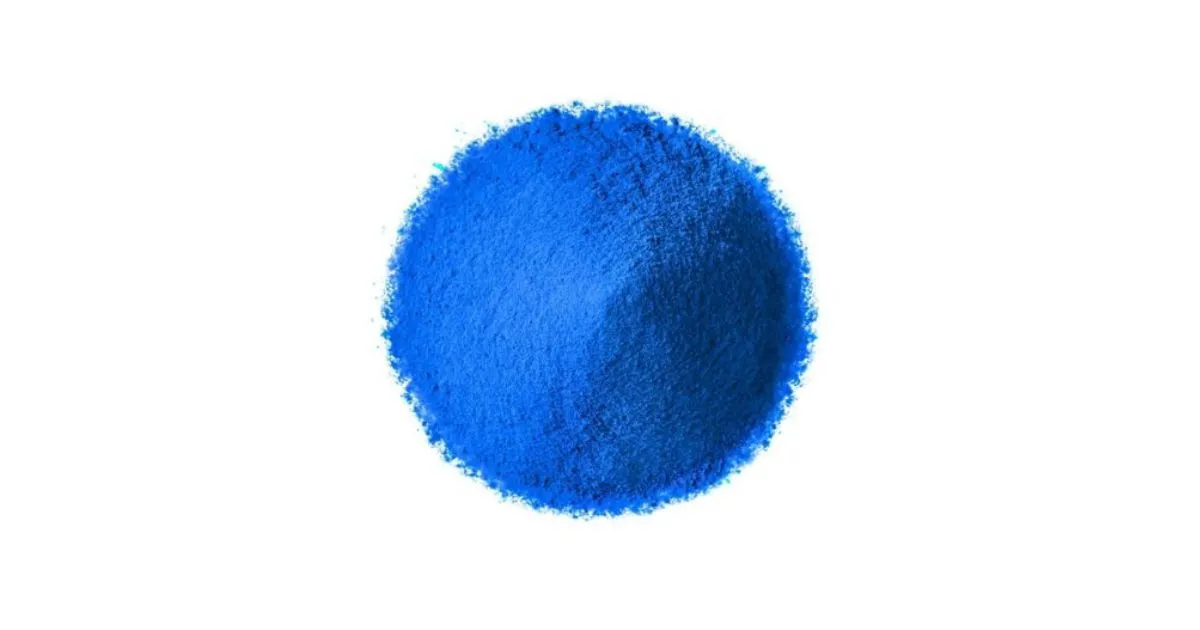
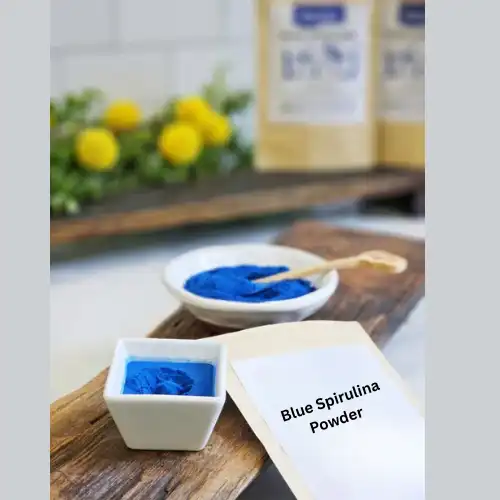
Understanding Blue Spirulina Powder and Its Nutritional Profile
The blue protein pigment phycocyanin is naturally found in spirulina microalgae. Blue Spirulina powder is a high-tech way to get it out of the algae. Whole green spirulina looks and tastes like the sea and is green. On the other hand, this processed ingredient only has the healthy blue part. Even so, Blue Spirulina is still very healthy. About 60–70% of it is protein, and it has a lot of antioxidants. Besides being a natural colorant, it can also be used as a superfood.
What Makes Phycocyanin Special
Something that makes phycocyanin unique is that it has unique chemistry qualities that make it useful in business. In normal pH ranges, this protein that dissolves in water stays stable and doesn't leave any residue behind. The specs for the E-value tell us how intense the color is, which impacts how well it works for a given reason and how cheap it is. Standard standards like E18 work well enough for most food and drink uses. Higher-purity E25 types are used in pharmaceutical or high-end makeup recipes that need colors that stand out more.
Safety and Regulatory Status
Because it has been allowed by officials in many important countries, Blue Spirulina is a trusted ingredient. In North America, the chemical is GRAS, and in Europe, it meets the requirements for having food ingredients. It's useful for some market groups because it has certifications like Kosher and Halal approval. It helps wholesalers working in the Middle East and Europe a lot because religious food needs affect what they buy. When factories follow ISO, HACCP, and GMP rules, they make sure that the quality stays the same and that they follow strict rules for importing.
Organic Versus Conventional Sourcing
The teams that buy things have to look at the organic price and see how it fits with their market positioning goals. Organic Blue Spirulina is more expensive, but it shows off your business better and appeals to people who care about their health. Not only are the plants grown in different ways, but they are also taken out in different ways. One way to get an organic license is to clean the plants only with water and no chemicals. When it comes to mid-range products, standard types are less expensive but still have the same nutritional and color benefits.
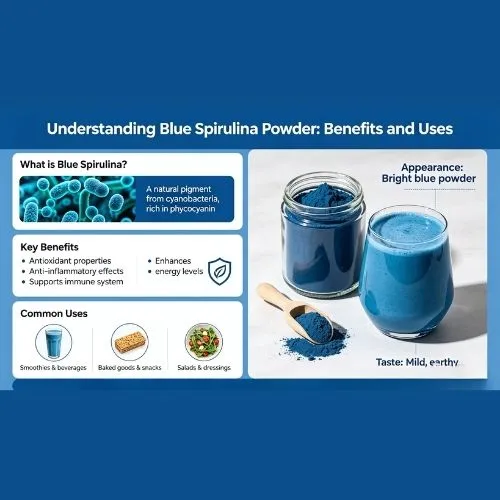
Applications of Blue Spirulina Powder in Food Products
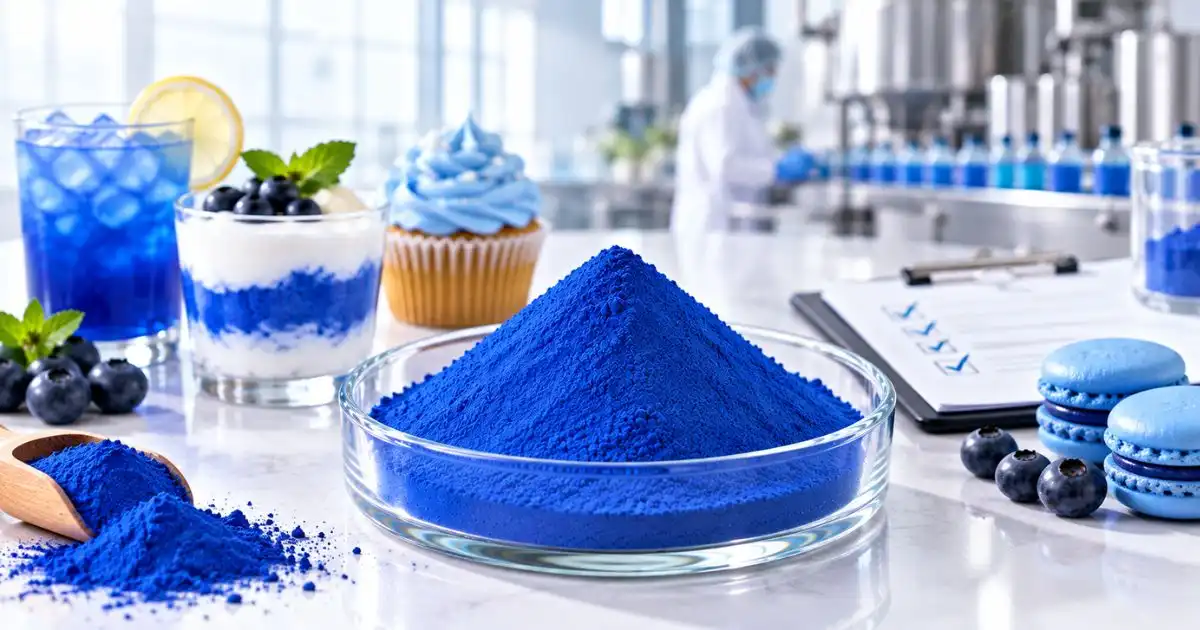
Blue Spirulina powder can be used in many kinds of food because it mixes well with other ingredients and takes away quickly when mixed with water. Manufacturers like that it can keep the color the same without changing the taste. This is one of the best things about plant products, which sometimes add bad tastes or need to be mixed with something else.
Beverage Innovations
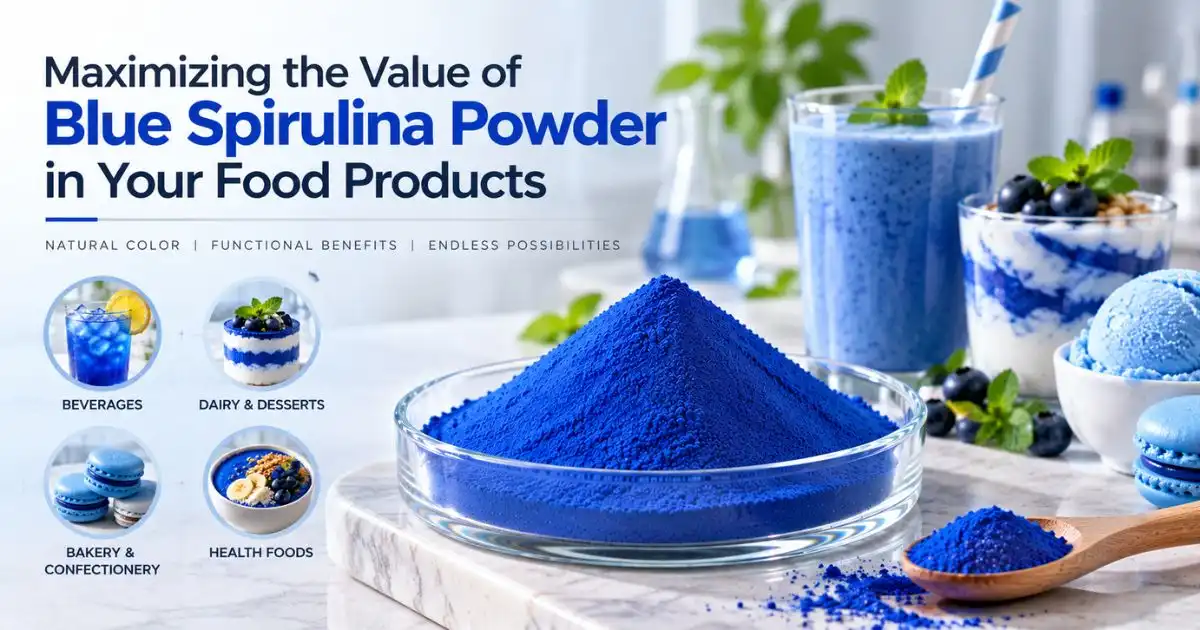
Blue Spirulina's products, which look good and make you think of health benefits right away, are mostly sold in functional drinks. Smoothie brands use the powder to make color effects and looks that remind people of the ocean in the tropics. It's added to protein shake recipes to help them stand out on store shelves that are already full of other things. Since it fully dissolves, instant drink mixes can use it. This is better than some plant colorants because it doesn't settle like those do. For drinks, the ingredient can work in standard processing conditions, but manufacturers need to know that it can't handle high acidity—pH levels below 4.0 may cause precipitation unless acid-stable formulations are noted.
Dairy and Plant-Based Alternatives
Blue Spirulina is added to ice cream, yogurt, and non-dairy frozen treats to change the way they taste and look. If you don't need to be careful with heat, the powder works well for cold processing. For food companies that make plant-based yogurt, it helps them add color and a claim that the yogurt is a superfood. This ingredient has also been added to special cottage cheese, cream cheese spreads, and dairy-based dips for people who are trying to eat healthier.
Confectionery and Bakery
Candy makers use Blue Spirulina instead of man-made dyes in gummies, marshmallows, and hard candies to keep the bright blues that customers expect without using dirty colors. You can use this in frostings, glazes, and treats that don't need to be baked. When phycocyanin gets above 60°C, it breaks down. This means that a lot of color is lost, which makes it hard to work with baked goods. Manufacturers who are smart don't add Blue Spirulina to dough or batter. Instead, they use it as an icing or a skin treatment on baked goods after they are baked.
Below is a snapshot of typical applications and their formulation considerations:
| Name of the Product | Dosage Range That Is Normal | Main Point | Notes on Processing |
|---|---|---|---|
| Drinks That Do Things | 0.02% to 0.1 % | A natural colorant and antioxidant | Keep the pH above 4.5 and keep it away from heat for a long time. |
| Powders that have protein | 0.05 to 0.15% | Some color and a superfood boost | Very stable in dry blends |
| Sweets and Gummies | 0.03 to 0.08% | To avoid this, use natural colors. | For use in the steps of finishing or cold processing |
| Frozen desserts | 0.02% to 0.06% | Label is clean and looks good. | While the base is being made, mix. |
Emerging Applications
Blue Spirulina is being used more and more as a unique ingredient in health food bars, meal replacement shakes, and superfood mixes to show that the product is good for you. It's said that more and more new brands want to get into the "Instagram-worthy" food market. When people see how new foods look on social media, they want to try them. It goes well with plant-based, vegan, and allergen-free meals, which is what the market wants right now.
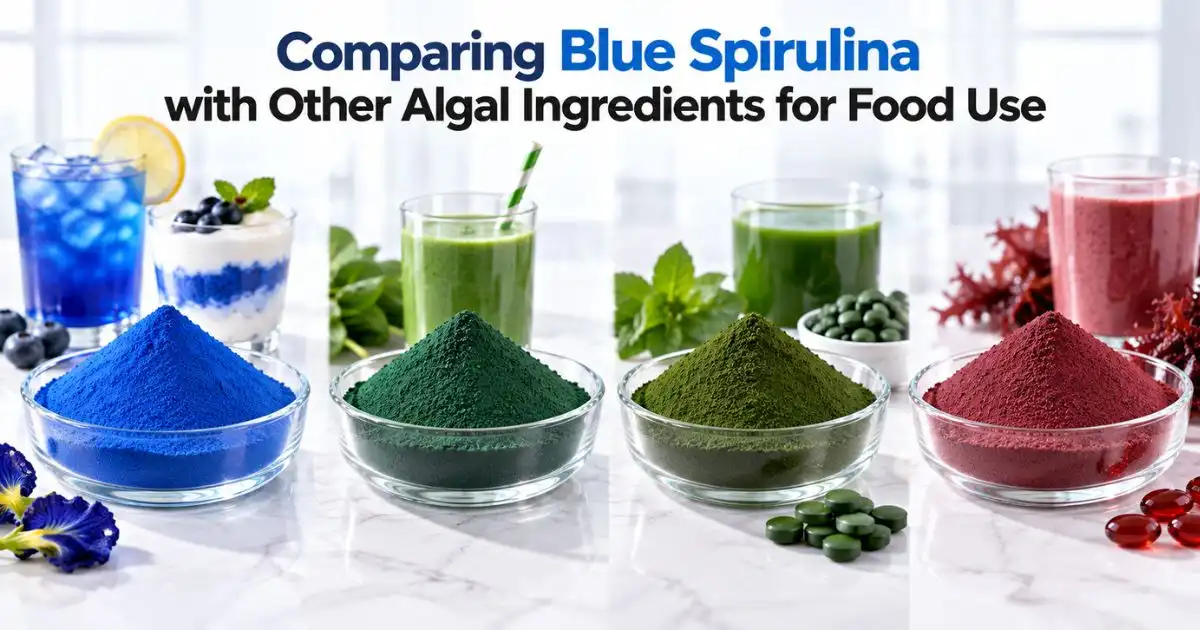
Comparing Blue Spirulina with Other Algal Ingredients for Food Use
When buying leaders know how Blue Spirulina stacks up against other algae ingredients, they can make better decisions about where to get it that are in line with customer standards and product goals.
Blue Spirulina Versus Green Spirulina
They both come from the same kind of algae, but they are taken out in very different ways. A lot of people don't like the taste of green spirulina because it tastes earthy and fishy because it keeps its many colors. Because phycocyanin is kept separate, Blue Spirulina can be used in delicate foods and drinks with fruit flavors. The colors are also very different. Colors that are too green can make it hard to create with, but clear blue can be mixed with more natural colors to make more colors. Some nutrients are kept in green spirulina longer than in Blue Spirulina, so its total nutrient density is slightly higher. However, Blue Spirulina's phycocyanin part has more antioxidant power.
Blue Spirulina Versus Chlorella
Chlorella is another well-known algae ingredient. It is good for you in many ways, but it can't change the color of food. It can only be used in health products where taste and look don't matter because it is dark green. According to ORAC values, Blue Spirulina has more antioxidants than chlorella, which supports more persuasive marketing. The way formulation behaves is very different. The body needs to break down chlorella's tough cell walls before it can use it. But phycocyanin's protein structure lets it dissolve and be used right away.
Powder Versus Tablet Forms
Bulk powder is still the best way to make food because it is easy to work with and can be dosed in different ways. In the market for health supplements, tablets are used. The extra steps needed to make them are worth it because they make things easier for customers. Pills need to be chewed or broken up before they can be mixed with drinks or dry mixes. This means that the cost structures are different. For instance, powder has better unit economics for people who buy 25 kg cases or more of it.
The comparison below highlights key decision factors:
| Factor | Blue Spirulina | Green Spirulina | Chlorella |
|---|---|---|---|
| A Look at Color | Bright blue cyan | Blue-green | Blue-green |
| Changes in Taste | Not bad at all | Mostly sea-based | Gritty and grassy |
| Antioxidants are important. | A lot of phycocyanin | Level and wide range | It's not too much chlorophyll. |
| How Water Breaks Down | It dissolves in 100% | Breaks down in part | Bad (has to be dealt with) |
| Good Value for Money | High-end | Moderate | Moderate |
| The main reason for using | A natural colorant and superfood | Adding to your nutrition | a supplement for cleansing |
Procurement Considerations for Blue Spirulina Powder in Food Manufacturing
A good way to buy Blue Spirulina is to make sure of quality, dependability, and low cost at the same time. People who buy food and are in charge of production or distribution networks need suppliers who know how the complicated export and import of food works.
Evaluating Supplier Credentials
Portfolios of certificates are used to judge providers. With ISO 9001, you can handle quality, HACCP, you can keep food safe, and Kosher or Halal, you can sell to certain groups of people. Documentation that shows how the algae was grown, extracted, and packaged lowers the risk of contamination and helps with following the rules when clearing customs. Supply chains that keep a minimum stock level of 1 ton give wholesalers the supply security they need to keep from running out of stock, which hurts their relationships with customers.
Understanding E-Value Specifications
The E-value method checks how much phycocyanin is present and how bright the color is. In turn, this changes the amount that needs to be taken and the price of the finished product. The E10 specs are good for low-cost uses that only need a modest amount of color strength. Most of the time, E18 is used for food and drinks because it is a good price-to-function ratio. When it comes to high-end goods or uses that only need a small amount to work, E25 is as pure as pharmaceutical grade. If buyers want to be sure that the requirements are met, they should ask for COA paperwork that shows that the E-values have been confirmed by HPLC testing.
Pricing Dynamics and Volume Discounts
The price of spirulina biomass on the market changes based on quantity, demand, and the amount that can be extracted. By making framework deals with sellers, prices are locked in for 6 to 12 months. This keeps sales margins safe from price changes. The prices go down by 100 kg, 500 kg, and 1000 kg, and you can only order 25 kg at a time. People who buy Blue Spirulina should think about how to keep it. It needs to be kept in cool, dark, and dry places for the longest periods of time.
Here's how different specifications align with typical procurement scenarios:
| More about the E-value | How much phycocyanin there is | Great for | Putting the price in place | Target Buyer |
|---|---|---|---|---|
| E10 | ~15–18% | Mostly cheap drinks and big candy | First steps | Companies that make things that are cheap |
| E18 | ~25% | For daily uses, sports nutrition, and high-end drinks | Price on the market | Dealers and names in the middle price range |
| E25 | ~35–40% | Medicines, high-end makeup, and very expensive foods | How luxurious it is | People who make specialty things |
Lead Times and Logistics
The lead time for standard requirements is two to four weeks, but the lead time for custom formulas is longer. If you need to send samples or small items quickly, you can use an express delivery service like DHL or FedEx. Sea freight can be used for big container loads. When people plan their shopping trips, they should think about how long it takes to clear customs, which depends on the rules of the target country. Suppliers who offer flexible packaging, like 1 kg aluminum foil bags for test sales and 25 kg drums for regular production, can meet the needs of a range of working sizes.
Documentation and Compliance
All of the necessary paperwork in one package speeds up the customs process and meets the needs of quality control. It is important to have Certificates of Analysis (COA) that show E-values, protein levels, and microbial boundaries. As well as allergen statements, GMO-free promises, and regulatory compliance letters that are unique to each country, there are also Material Safety Data Sheets (MSDS) that tell you how to handle the product. In order to help wholesalers who work with more than one market, suppliers who keep document files that are already translated and organized for major target countries are very useful.
Maximizing the Value of Blue Spirulina Powder in Your Food Products
Blue Spirulina isn't just for color; it can also be used in smart ways. People can use it to make better recipes, sell their goods better, and plan for the future when they are creating new products.
Formulation Best Practices
How well a product works and how much it costs are both affected by the right dose. A color can usually be seen starting at a strength of 0.02%. The quantity can be changed based on how strong you want it to be and if there are any competing ingredients. Phycocyanin is unstable in UV light and high temperatures, so companies that make it should test it in all the places it will be kept. Food can stay fresh longer on the shelf by adding antioxidants or using clear packaging. You should test the ingredient in mixed-up combinations because it might change the color in strange ways when mixed with fats, proteins, and other colorants.
Storage and Handling Protocols
The right way to handle a product keeps the money you've spent safe and makes sure that each batch works the same. Things won't stick if you keep packages somewhere cool (below 25°C), out of direct sunshine, and with low humidity. If you have any extras after it's been opened, put them in sealed cases with oxygen absorbers. Show the people who make the things how to put them back together again. Using room-temperature water to slowly hydrate the proteins keeps them from sticking together, which could lead to different colors in the end products.
Marketing and Positioning Advantages
It is a well-known fact that people really like products that contain well-known superfood ingredients. People who sell Blue Spirulina can say a lot of things about it: it's a natural source of color, it's high in nutrients and vitamins, and it has a clean label. When brands talk about their products, they use phrases like "powered by phycocyanin" or "ocean superfood" to make them stand out in crowded categories. Because the ingredient is attractive, it helps social media work better—vibrant blue products get more attention and user-generated content. When distributors offer new brands, they should stress these marketing benefits along with the practical needs.
Future Outlook and Innovation Opportunities
Around the world, rules on man-made colors are getting tighter, which is good for the market for natural colorants. Plant-based living, functional foods, healthy sources, and new ways to make things look better are just a few of the growth trends that Blue Spirulina fits into. Distributors of ingredients can offer a bigger range of goods because some ingredients are used in both personal care and cosmetics. Soon, new technologies like microencapsulation might be able to solve the issues that come up with heat stability. This would let them be used in restaurants in ways that weren't possible before. The businesses that use Blue Spirulina are now ahead of their competitors who still use fake options, which customers are turning away from more and more.
Conclusion
Blue Spirulina powder meets important industry needs by being a natural, useful, and eye-catching ingredient that meets clean-label requirements for use in food, drinks, and supplements. Healthy drinks, plant-based foods, sweets, and sports nutrition can all use it. Being able to back up their health claims and make their products more appealing gives companies an edge in the market. If you want to be good at procurement, you should look at seller certifications, know what E-value standards are, and set up reliable supply chains that keep prices low and quality solid. As people's tastes shift toward clean and natural goods, Blue Spirulina is a smart buy that will protect product lines for the future and open up new market opportunities.
FAQ
What is the difference between E18 and E25 blue spirulina specifications?
The e-value tells you how bright the color is and how much phycocyanin there is. E18 is the standard for coloring food and drinks because it works well and doesn't cost too much. About 25% of it is phycocyanin. E25 is more pure; it has 35–40% phycocyanin and is usually used in beauty or medicine. It costs a lot more and makes the color darker with less of it. The buying teams should make their choice based on what the program needs and how much money they have.
Can blue spirulina be used in acidic beverages?
It is normal for phycocyanin to settle when the pH level falls below 4.0. This makes sediment in acidic drinks. Businesses that make acidic drinks need to use certain kinds of phycocyanin that don't break down in acid or raise the pH level of the drink. Other ways to keep the suspension together are to mix it with high pressure or add carbs that tie the particles together.
Does blue spirulina work in baked goods?
Because they are sensitive to heat, they can only be used in traditional baking. When it is baked, phycocyanin breaks down above 60°C, which takes away a lot of the color. It works best in foods that don't need to be baked, frostings, glazes, and skin care items that are added after the food has been cooked. Some companies use it successfully to add color to baked goods that aren't heated up, while others only use it for looks.
Is blue spirulina water-soluble or oil-soluble?
Blue Spirulina can only be broken down in water. It won't mix with pure oils or fat-based systems like cocoa butter, which would leave marks if they were added straight. To give white chocolate or treats made with fat color, mix the powder with very little water or an emulsion of water first. You can also use fat-specific recipes that can be mixed with oil.
Partner with Yangge for Reliable Blue Spirulina Supply
Over a ton of high-quality phycocyanin powder is always in stock at Yangge Biotech, ready to be sent right away to companies around the world that make food, drinks, and ingredients. The needs for E10, E18, and E25 are met by this powder. You can use our Kosher and USP-grade Blue Spirulina in a lot of different products, from functional drinks to superfood recipes that you make yourself. It comes in powder, pill, tablet, and gummy forms. We make sure we follow all global rules by having ISO, HACCP, Halal, and Kosher certifications.
These give procurement leaders the quality guarantee and tracking paperwork they need. You can use different types of packing for any size business. For example, you can use 1 kg aluminum foil bags to try new goods or 25 kg drums for mass production. As a dependable Blue Spirulina seller, you can email our team at info@yanggebiotech.com to get samples or talk about bulk prices. You can also look into our custom formulation services that fit your brand's goals and target market.
References
1. Chen, T., & Wong, Y. S. (2018). Phycocyanin: Biochemistry, Health Effects, and Biotechnology Applications. Journal of Applied Phycology, 30(4), 2363-2375.
2. Martelli, F., Cirlini, M., & Fogliano, V. (2020). Natural Food Colorants: Stability, Application, and Consumer Perception. Annual Review of Food Science and Technology, 11, 351-371.
3. Sahay, R., & Yadav, S. (2019). Spirulina Phycocyanin: Extraction, Purification, and Industrial Applications. Food Reviews International, 35(6), 567-589.
4. Global Market Insights. (2021). Natural Food Colors Market Analysis: Industry Trends and Forecast 2021-2027. Market Research Report Series.
5. Rodriguez-Garcia, I., & Guil-Guerrero, J. L. (2022). Functional Properties of Microalgae in Food Systems: Color, Nutrition, and Bioactivity. Comprehensive Reviews in Food Science and Food Safety, 21(2), 1456-1480.
6. European Food Safety Authority (EFSA). (2020). Safety Assessment of Spirulina-Derived Phycocyanin as a Food Additive. EFSA Journal, 18(5), e06089.

Based on your location and order quantity, you will have the opportunity to receive a limited time free shipping promotion!
Who we are
Popular Blogs