What is Carbon Black E153 used for in food products?
Yangge Biotech Carbon Black E153, also known as Vegetable Carbon Black E153, is a fine black pigment produced from plant-based materials such as bamboo through controlled carbonization and purification. It provides a deep black color and is suitable for applications such as bakery products, confectionery, beverages, seasonings, dietary supplements, cosmetics, and other formulations, subject to applicable local regulations. Yangge Biotech offers bulk supply, customized specifications, OEM packaging, samples, COA, MSDS, and technical documentation for business customers. Contact Yangge Biotech for product specifications, samples, pricing, or OEM/ODM inquiries. Email: info@yanggebiotech.com
Carbon Black E153, also known as vegetable carbon or vegetable black, serves as a natural black pigment extensively utilized in food manufacturing, confectionery, bakery products, and pet food applications. This plant-derived colorant provides intense black hues without synthetic additives, meeting the growing demand for clean-label ingredients across North American and European markets.
Food manufacturers deploy vegetable carbon E153 to achieve striking visual effects in trendy products like black burger buns, activated charcoal ice cream, Halloween-themed candies, and premium licorice formulations. Unlike synthetic dyes, this natural colorant maintains stability under high processing temperatures while aligning with consumer preferences for recognizable ingredient names on product labels.
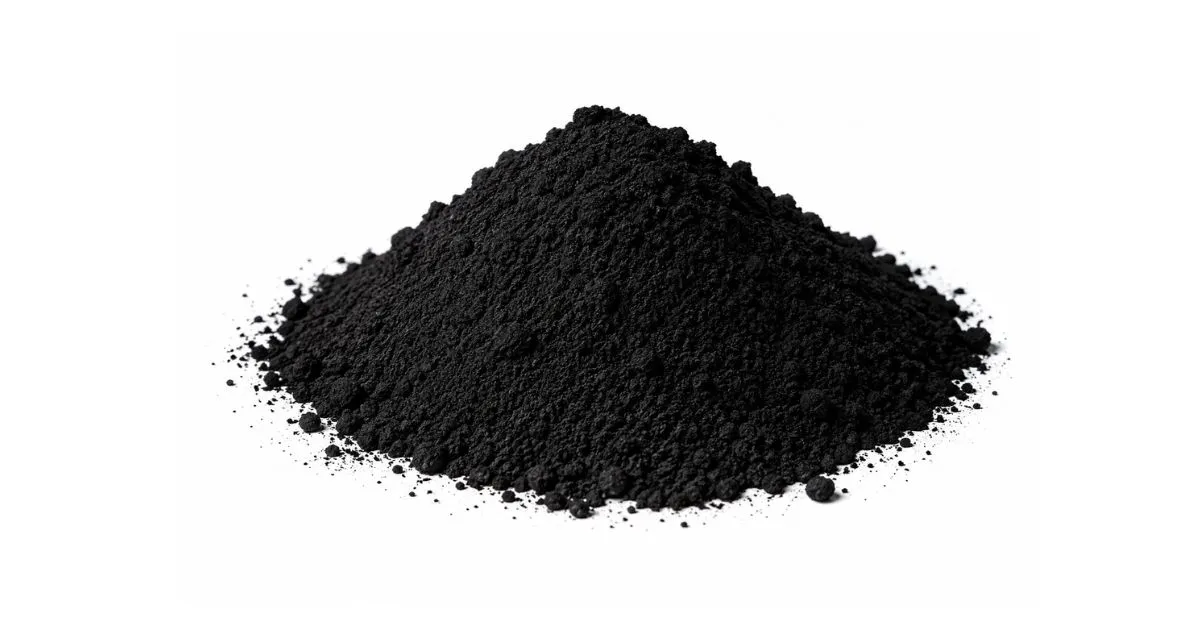
Understanding Carbon Black E153 Properties and Safety
What Exactly is Vegetable Carbon Black E153?
There is a food-safe color called Carbon Black E153 that comes from carbonizing plant products like coconut shells and bamboo. Controlled thermal breakdown in oxygen-poor settings is used in the production process to make micro-crystalline carbon that is mostly pure elemental carbon.
Our Yangge formula comes from bamboo that is grown in a way that doesn't harm the environment. It is then processed using HPLC extraction methods to make sure that the particles are all the same size and that the color is very intense. The black powder that is made has no smell or taste, which makes it perfect for uses where flavor balance is important.
Key Physical and Chemical Properties
You can see why procurement managers and research and development experts like food-grade Carbon Black E153 over other colorants by looking at its technical specs. The carbon content is usually higher than 95% when it is dry, which gives it great coverage power even at low dosage rates. The micronized particle size, which is usually less than 5 micrometers across, keeps the particles from sticking together and makes sure they are spread out evenly in production matrices. Synthetic dyes that dissolve in water are different from Carbon Black E153, which stays chemically insoluble in water, alcohols, and lipid systems. It works as a suspended pigment instead of a dissolved colorant.
Because it doesn't dissolve, it's very useful in layered sweets where color migration between layers would ruin the look. The pigment is very stable at high temperatures, keeping its color strength at processing temperatures above 200°C. This is very important for baking and high-temperature extrusion processes that are popular in making pet food.
Safety Profile and Regulatory Compliance
Quality control procedures for Carbon Black E153 are based on three important safety factors that have a direct effect on choices about what to buy. Polycyclic aromatic hydrocarbons (PAHs) are the main concern because they can introduce compounds that can cause cancer if the carbonization process is not done correctly. Benzo(a)pyrene levels stay below 50 µg/kg in premium-grade Carbon Black E153 from approved sources like Yangge. This is well below the limits set by JECFA and EU Commission Regulation No 231/2012.
ICP-MS analysis checks for heavy metal contamination below strict limits: arsenic below 3 mg/kg, lead below 2 mg/kg, and mercury below 1 mg/kg. These standards protect both end users and manufacturers from breaking the rules, which could lead to product recalls. Pay attention to the amount of moisture and ash waste as well. Loss on drying is usually less than 12%, and sulfated ash is less than 4%. This makes sure that makers get the highest pigment concentration per unit cost.
Our Carbon Black E153 has many certifications, such as Kosher and Halal, and it also meets USP grade standards. This means that it can meet the needs of a wide range of customers, from those who follow religious dietary laws to those who expect pharmaceutical-grade quality. Before being shipped, each production batch is inspected by international labs, and thorough Certificates of Analysis show where the precursor materials came from to back up claims of being vegan and clean-label.

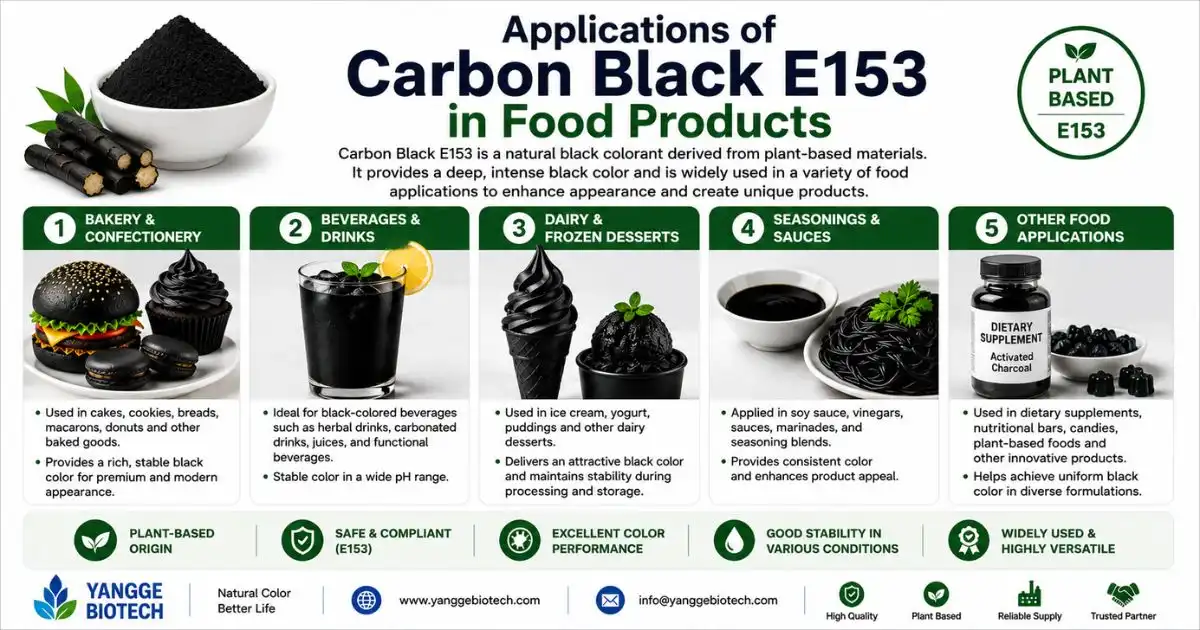
Applications of Carbon Black E153 in Food Products
Primary Food Categories Utilizing Vegetable Carbon
Various areas of food making use Carbon Black E153, with each using different useful qualities of this natural pigment. Companies that make sweets use Carbon Black E153 in things like jello beans, hard candies, and high-end licorice because it hides color differences that happen between batches of natural ingredients. The pigment gives a glossy, deep black finish that doesn't bleed into other colored layers in multicolored treats. This keeps the visual lines clear, which is something that manmade dyes don't always do.
With the trendy food movement's love of charcoal-themed goods, bakery apps have gone thru the roof. Carbon Black E153 is used to make black burger buns, pizza crusts, and artisan breads because it keeps the bread very black during the Maillard reaction that happens during baking. Organic dyes usually break down at core temps above 180°C, but Carbon Black E153 stays the same color from mixing to the end stages of browning because it is thermally stable.
Pet food manufacturers are a growing market for Carbon Black E153, especially those who make high-end and specialized nutrition mixes. People who are looking for something different to look at in a busy store will like black food and treats, and the natural origin fits with marketing messages about healthy ingredients. Because the pigment is chemically inert, it doesn't react with nutritional additives, vitamins, or protein matrices. This keeps the product stable over time.
Comparison with Alternative Black Colorants
| Colorant Type | Color Strength | Stability in Heat | How Water Dissolves | Status of Regulation (US/EU) | The main problem |
|---|---|---|---|---|---|
| Carbon Black E153 | Very good | >200°C | Not soluble | US banned; EU okayed | Limitations on geography |
| Bright Black BN (E151) | good | Moderate | Soluble | Accepted in the US and the EU | Could bleed in layered items |
| Activated charcoal | Different | Very good | Not soluble | Each case on its own | May take in tastes and nutrients |
| Oxide of iron black | Moderate | Very good | Not soluble | Accepted in the US and the EU | Undertones of metal |
Knowing these differences helps procurement professionals match the qualities of a colorant to the needs of a particular manufacturing process. Activated charcoal and Carbon Black E153 both come from the same raw material, but the way they are processed makes them have different functional profiles. Activated charcoal has a lot of surface area, which makes it good for adsorption. It may bind flavor compounds or nutritional elements without meaning to. Carbon Black E153 goes thru controlled particle size that makes it perfect for dispersing pigments without causing unwanted binding.
Regulatory Landscape Across Key Markets
International food makers face a big problem: figuring out how to deal with different sets of rules. Under the E-number method, all member states of the European Union agree that Carbon Black E153 is legally acceptable for most food types in Group II classes. In the same way, Canadian law allows Carbon Black E153 to be used in a wide range of food applications. The only major exception is FDA rules in the US, which currently do not allow Carbon Black E153 to be used as a straight food color additive.
Manufacturers who want to sell their products in North America need to switch to different colorants, like iron oxides or fruit and vegetable juice concentrates, depending on the type of food and the color effects they want. This difference in regulations makes it harder for multinational brands that need standard formulations across regions to buy the things they need. For the supply chain to work well, it's important to work with providers who understand these differences and can offer legal options for different local markets.
Procurement Insights: How to Source Carbon Black E153 for Food Products
Identifying Reliable Supplier Networks
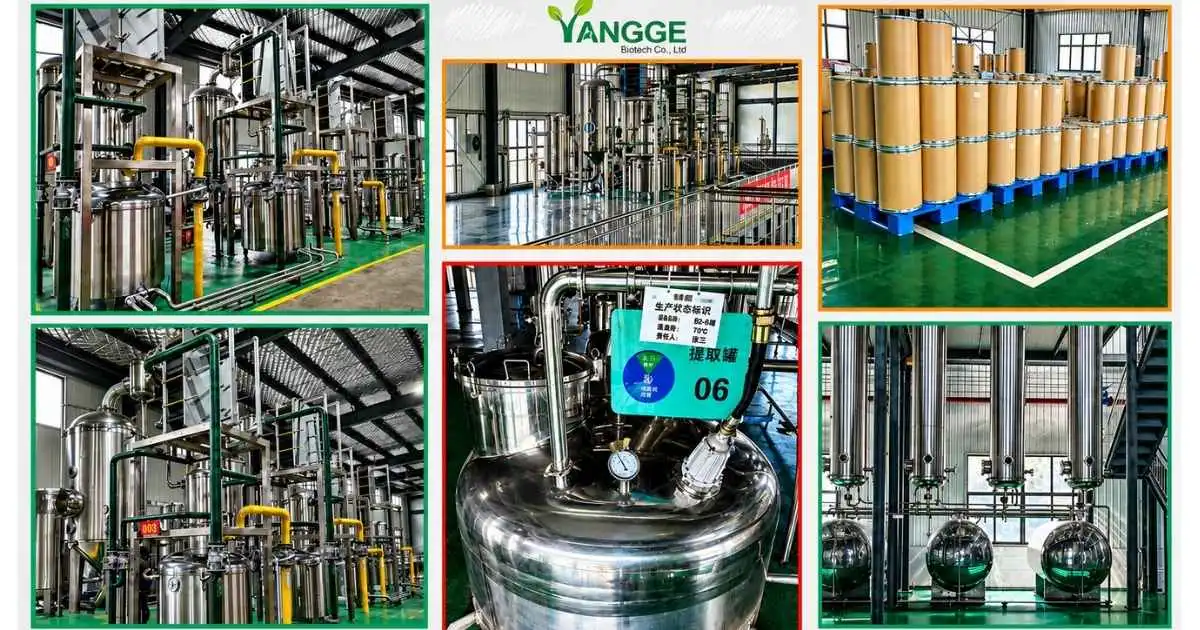
There are more than just price factors that need to be taken into account when looking for food-grade Carbon Black E153. Certified manufacturers with supply chains that are vertically integrated make it easier to track where the raw materials come from all the way to the final packaging. Thru our relationships with communities that grow bamboo in a way that doesn't harm the environment, Yangge Biotech makes sure that the quality of our fodder is always high and supports social development projects that are in line with our corporate responsibility goals.
Procurement pros should check manufacturing certifications like ISO quality control systems, HACCP food safety routines, and GMP compliance documentation when looking at possible suppliers. These certifications show that the quality is controlled in a planned way, rather than the randomness that can happen from batch to batch that happens with smaller producers. Ask for facility audit reports from reputable third-party inspection firms, paying special attention to steps taken to avoid contamination and methods for checking raw materials.
Premium suppliers are different from commodity vendors because they offer technical support. Manufacturers with dedicated research and development (R&D) teams can help with dispersion optimization, figuring out the right dosage rates for different uses, and fixing problems with processing like particles sticking together or equipment staining. We have customer service available 24 hours a day, 7 days a week to answer technical questions that come up during production runs or scale-up stages.
Pricing Structures and Order Requirements
Figuring out what makes Carbon Black E153 costs what it does lets you negotiate better deals and make more accurate budget projections. Finding the right raw materials costs about 35 to 40 percent of the total cost of the finished product. The prices of bamboo and coconut shells change depending on crop yields and demand in the region. An extra 30 to 35 percent of production costs go to processing costs like carbonization energy costs, micronization equipment operation costs, and quality testing.
| Purchase Amount | Price Range for a Normal Unit | Think About the MOQ | Lead Time |
|---|---|---|---|
| Sample amounts (10–30g) | Sincere thanks | Only for R&D review | 3 to 5 working days |
| Small amount (50–200 kg) | Premium prices | Checking out small runs of production | Two to three weeks |
| Most orders (500–2000 kg) | Prices as usual | Needs for regular production | 3 to 4 weeks |
| Bulk deals (more than 5 tons) | 12 to 18% off for volume | Supply deals every year | Deliveries on time |
We have 5 tons of Kosher and USP grade Carbon Black E153 in stock and ready to ship right away. This gives makers the freedom to buy what they need when demand goes up unexpectedly or when they are trying out new products. Standard packaging choices include 25 kg multilayer paper bags with PE layers to keep out wetness. However, custom packaging solutions can be made to fit specific handling needs or systems that do the filling automatically.
Logistics and Supply Chain Optimization
Delivery terms have a big effect on landed costs and how you manage your inventory. FOB (Free On Board) pricing means that buyers are responsible for the goods once they leave the port of origin. This can save companies money if they already work with freight forwarders and can consolidate their goods. CIF (Cost, Insurance, and Freight) agreements make supplied costs clear, which is especially helpful for smaller producers that don't know much about logistics or who are only buying small amounts and can't consolidate.
When planning lead times, you should think about when the goods will be made, how they will get shipped internationally, and how they will get thru customs. Standard production runs take three to four weeks from the time the purchase order is confirmed until the shipment leaves the origin port. Depending on the destination port, ocean freight can add another two to four weeks. For urgent needs, air freight speeds up delivery, but at cost prices of 4–6 times ocean rates, this is only a good option for critical production needs or high-value product launches.
Making an Informed Decision: Quality Comparison and Selection Guide
Evaluating Quality Through Objective Criteria
To judge the quality of Carbon Black E153, you need to set measured standards that are in line with your business goals. Standardized tinting strength tests measure color intensity, which tells you how much to use to get the hue depths you want. Premium grades have 95–100% tinting power compared to reference standards. This means that makers can get the darkness they want with less pigment, which lowers the cost of formulation and reduces the chance of texture changes.
Dispersion uniformity has a direct effect on the look of the finished product and is one of the main problems that procurement managers try to solve. Poor dispersion shows up as black spots, streaks, or uneven coloring that are easy to see. This makes the product less appealing to customers and may lead to quality holds. Laser diffraction particle size distribution analysis should show tight D50 values between 3 and 6 micrometers, with few particles bigger than 20 micrometers that make defects visible.
Storage stability testing checks how well a color works in a warehouse setting that is similar to a real one, with changes in temperature and humidity. If you store quality Carbon Black E153 in sealed cases away from too much wetness, it will keep its color intensity and dispersion properties for at least 24 months. This makes it easier to order the right amount of goods and keeps inventory from going bad too quickly.
Critical Supplier Selection Factors
Beyond product specs, the organizational skills of the seller have a huge impact on the success of a long-term relationship. Certification files show a dedication to quality over just meeting the requirements of the law. Yangge Biotech has ISO quality management certification, HACCP food safety standards, and religious dietary certifications (Kosher and Halal) that help clients get their goods in front of more people who are likely to buy them.
The reputation of a supplier in the business-to-business (B2B) community can reveal important information that is hard to get from formal documents. Attending industry events like Fi Europe or area pet food shows is a great way to meet new people and get feedback from your peers about how reliable your suppliers are, how quickly they respond to quality issues, and how flexible they are when there are supply disruptions. Having a professional online presence and writing educational material, like expert blogs, shows that you are knowledgeable and care about your customers.
After-sales support is what sets transactional sellers apart from strategic partners. Comprehensive services should include technical troubleshooting help when processing problems arise, regulatory advice for new market entrants, and proactive communication about changes in the supply chain that could affect specifications or availability. We offer personalized customer service by assigning account reps who know how to help clients with their particular needs and keep detailed order histories to make reordering easier.
Real-World Implementation Example
A medium-sized European candy company wanted to make a premium line of black licorice that stood out by using natural ingredients. Their old synthetic colorant gave them a good color, but it hurt their clean-label marketing claims, which are becoming more important to health-conscious consumers. The purchasing team looked at three sources of Carbon Black E153 and asked for samples to test how well they spread the carbon in the lab and to use in small-scale production trials.
Yangge's Carbon Black E153 spread better in their licorice paste made with glycerin, getting rid of the black spots that appeared in early tests with competitor samples. Concerns about regulatory compliance were eased by thorough recording of PAH testing, and our Halal approval allowed products to be sold in specialty stores that serve Muslim groups. After that, the manufacturer made a deal to get about 3 tons of it every year, and they get shipments every three months to fit their regular production plans. After the product came out, customers told us they liked the story behind the natural ingredients, which helped the line's sales grow 23% year over year.

Conclusion
Carbon Black E153 is a natural color that can be used in many different ways. It meets the needs of clean label trends and provides the technical performance needed for modern food making. Understanding its properties, how it can be used in the bakery, confectionery, and pet food industries, as well as procurement issues, helps people make smart decisions about where to get it that balance quality, compliance, and cost goals. Manufacturers that sell to both European and North American markets need to be very careful when navigating the regulatory landscape.
For implementation to go well, suppliers must offer not only products that are compliant, but also full technical support, reliable delivery, and clear quality documentation. As more people want to buy products with natural ingredients that they can recognize, Carbon Black E153 has made it easier for companies to meet market needs while still keeping the looks that make people want to buy in stores that are very competitive.
FAQ
Is Vegetable Carbon E153 Safe Across Different Food Types?
When it comes from certified makers who follow strict purity standards, Carbon Black E153 has a great safety rating. Polycyclic aromatic hydrocarbons (PAHs), which can form when carbonization methods aren't done right, are the main safety concern. Premium providers keep benzo(a)pyrene levels well below the limits set by regulators, usually less than 50 µg/kg, which is the maximum. Heavy metal testing for arsenic, lead, and mercury makes sure that levels of contamination stay within the safe limits set by international food safety authorities.
How Does E153 Differ from Industrial Carbon Black N330?
This difference is very important for the safety of buying. Industry carbon black types, such as N330, are made for printer inks, rubber reinforcement, and other industry uses where purity standards are very different from food-grade needs. Industrial grades might have higher levels of PAHs and heavy metals, and they don't go thru the strict testing that is required for food-contact materials.
Never use industrial carbon black instead of Carbon Black E153 because it poses serious health risks and breaks the law. Always make sure that the companies you work with have food-grade certifications and detailed safety information for Carbon Black E153 that is meant to be used in edible goods.
What Documentation Should Buyers Request from Suppliers?
For full purchase due diligence, you need more than one paper to prove something. Ask for Certificates of Analysis for every output batch that show the results of the PAH tests, the heavy metal tests, the moisture content, and the measures of the ash residue. When going after specific consumer groups, orders should come with copies of certifications showing that the food is Kosher, Halal, or otherwise suitable for religious diets.
Common allergens must be listed on allergy declarations, and country-of-origin certificates and phytosanitary paperwork make it easier to get goods thru customs. Suppliers should easily give out Safety Data Sheets with handling instructions and Material Safety Data Sheets with information on the chemicals' make-up and what to do in an emergency.
Partner with Yangge for Premium Vegetable Carbon Black E153
If you need to buy Carbon Black E153, Yangge Biotech is ready to help you. They have a large collection available right away and a lot of scientific knowledge. We keep 5 tons of Kosher and USP grade Carbon Black E153 ready to ship right away with flexible FOB or CIF delivery terms because we are a certified manufacturer and trusted supplier of food-grade natural pigments. Our recipe made from bamboo has great dispersion qualities, can withstand temperatures above 200°C, and comes with all the necessary paperwork for compliance, including proof from an international lab that each shipment is safe.
We know how hard it is for mid-sized food producers to meet quality standards, follow government rules, and keep costs down at the same time. Not only do we provide high-quality ingredients, but our specialized research and development (R&D) team also helps you find the best dosage rates, dispersion methods, and processing factors for your production environment. Our technical experts can help you thru the whole process of making a new product, whether you're making trendy black bakery goods, high-end sweets, or custom pet food recipes.
Get a free 10- to 30-gram sample of our Carbon Black E153 today to see how well it works in your unique application.Contact us or email our team at info@yanggebiotech.com to talk about your needs, get full product specifications, or get cheap quotes for planning your yearly purchases. Visit our knowledge base at blog.yanggebiotech.com to learn more about food-grade pigments, clean-label ingredient strategies, and the best ways to buy things that will help your manufacturing business succeed.
References
1. European Food Safety Authority (EFSA). "Re-evaluation of Vegetable Carbon (E 153) as a Food Additive." EFSA Journal, Volume 10, Issue 4, 2012.
2. Joint FAO/WHO Expert Committee on Food Additives (JECFA). "Safety Evaluation of Certain Food Additives and Contaminants: Vegetable Carbon." WHO Food Additives Series, Number 48, 2002.
3. Commission Regulation (EU) No 231/2012. "Laying Down Specifications for Food Additives Listed in Annexes II and III to Regulation (EC) No 1333/2008 of the European Parliament and of the Council." Official Journal of the European Union, 2012.
4. Downham, Andrew and Collins, Paul. "Colouring Our Foods in the Last and Next Millennium." International Journal of Food Science and Technology, Volume 35, Issue 1, 2000.
5. Scotter, Michael J. "The Chemistry and Analysis of Annatto Food Colouring: A Review." Food Additives and Contaminants: Part A, Volume 26, Issue 8, 2009.
6. Kobylewski, Sarah and Jacobson, Michael F. "Toxicology of Food Dyes." International Journal of Occupational and Environmental Health, Volume 18, Issue 3, 2012.

Based on your location and order quantity, you will have the opportunity to receive a limited time free shipping promotion!
Who we are
Popular Blogs