How to choose Gardenia Blue color suppliers?
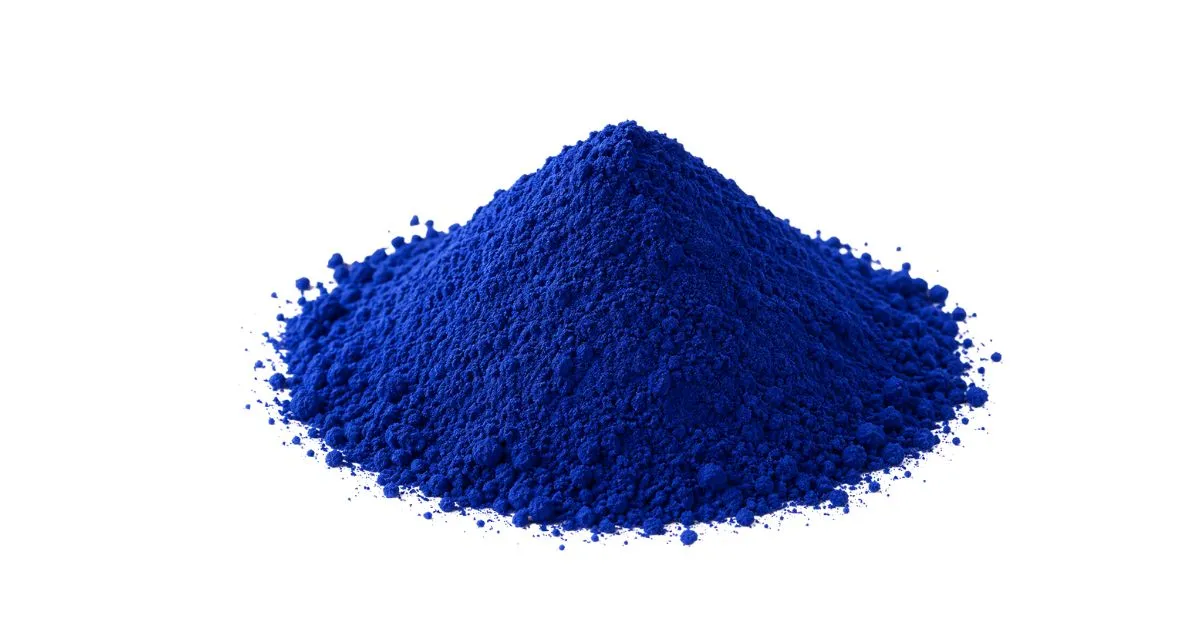
Yangge Biotech Gardenia Blue Powder is a premium natural blue food coloring produced from carefully selected gardenia fruit. With its vibrant blue appearance, good water solubility, and color stability, it is suitable for a wide range of applications, including beverages, confectionery, dairy products, bakery products, desserts, dietary supplements, functional foods, and cosmetic formulations. Available in specifications such as E30, E60, E80, E100, and E200, Gardenia Blue Powder provides manufacturers with a plant-based alternative to synthetic blue colorants. Yangge Biotech supports bulk supply, customized specifications, samples, COA, TDS, MSDS, and OEM/ODM solutions for customers worldwide. Contact us today for product specifications, samples, or a competitive quotation. Email: info@yanggebiotech.com.
Choosing the right natural blue colorant supplier isn't just about price it's about safeguarding your entire production line. When you're replacing synthetic Brilliant Blue with Gardenia Blue pigment, every batch must deliver consistent color value, pH stability, and heat resistance. The wrong supplier can mean faded beverages, color-shifted confections, and failed audits.
This guide walks you through the evaluation criteria that matter most: from technical specifications like E-value consistency to regulatory compliance across FDA, Halal, and Kosher standards. Whether you're a procurement manager at a mid-sized beverage company or an R&D director reformulating for clean label, understanding supplier capabilities will protect both your supply chain and your brand reputation.
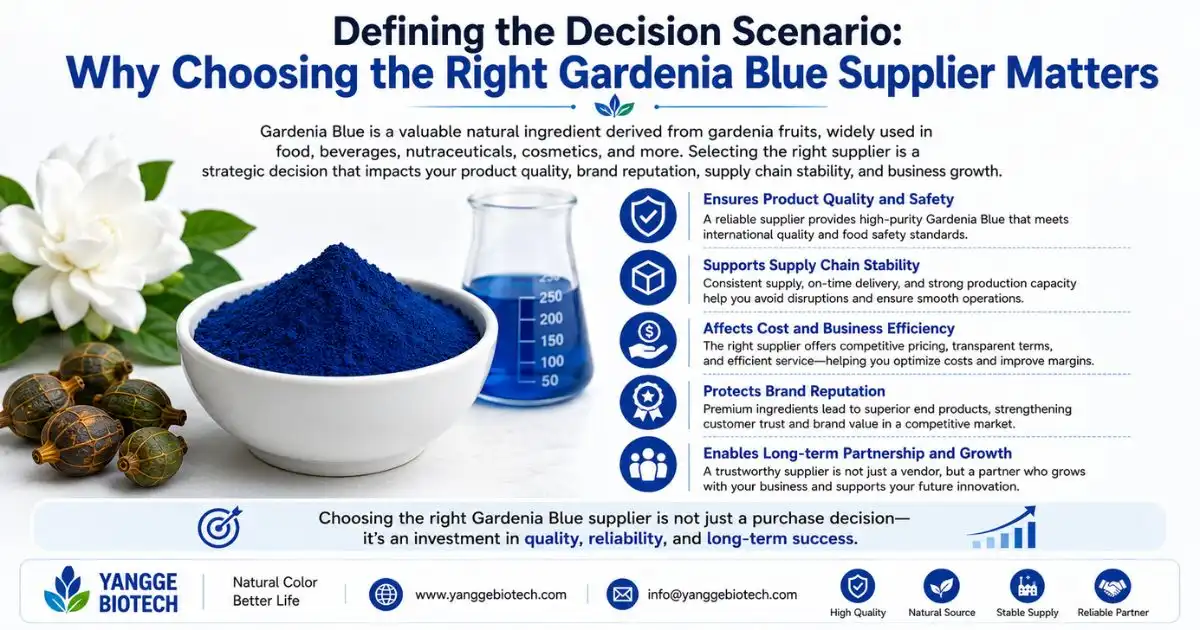
Defining the Decision Scenario: Why Choosing the Right Gardenia Blue Supplier Matters
Because of the "clean label" trend, there is an urgent need for natural blue pigments. However, Gardenia Blue is still a hard-to-find ingredient with few approved sources. Natural colorants aren't as reliable as manufactured ones because the performance can change depending on where the raw materials come from, how they are fermented, and how enzymes are used to change them. This causes procurement risks that go far beyond the choice to buy.
Understanding Market Demand and Application Challenges
Manufacturers of drinks that are moving from FD&C Blue No. 1 have to deal with special technology problems. The Gardenia Blue pigment comes from the flowers of the Gardenia jasminoides Ellis plant and is changed by enzymes. It has great pH stability (4.0–8.0 range) and can withstand heat up to 120°C for 60 minutes. Because of these qualities, it can be used for baked goods, sports drinks, and carbonated drinks. Light sensitivity is still a big problem, though, especially for items that come in clear packaging or are on long displays in stores.
Gardenia Blue is a strong protein color that helps food scientists who work with protein-rich foods like yogurt drinks and protein bars. This trait is good for color strength, but it needs careful dose control to keep colors from getting too dark. The colorant is a fine, dark blue powder that dissolves completely in water and has color values between E30 and E200 when measured at 590nm.
Common Procurement Challenges That Impact Production
When providers don't have vertical integration or clear sources, supply chain disruptions happen more often. Gardenia fruit harvests change with the seasons, which affects the price and availability of raw materials. When wholesalers change their amino acid sources during fermentation, manufacturers report color differences between batches. This is a scientific detail that is rarely given out in the beginning. These differences make it hard to reformulate, especially for brands that have strict color matching rules.
Regulatory paperwork is another point of contention. While Gardenia Blue is well-liked in many Asian markets, like China, Great Britain, Japan, and Korea, its standing needs to be carefully checked in EU and US markets. Suppliers who don't have their own regulatory affairs teams often send certificates that aren't complete, which forces procurement teams to do their own research on compliance. Not having enough microbiological data or heavy metal testing reports (Lead <3.0 mg/kg, Arsenic <2.0 mg/kg per GB 28311-2012) can cause product launches to be pushed back by weeks.
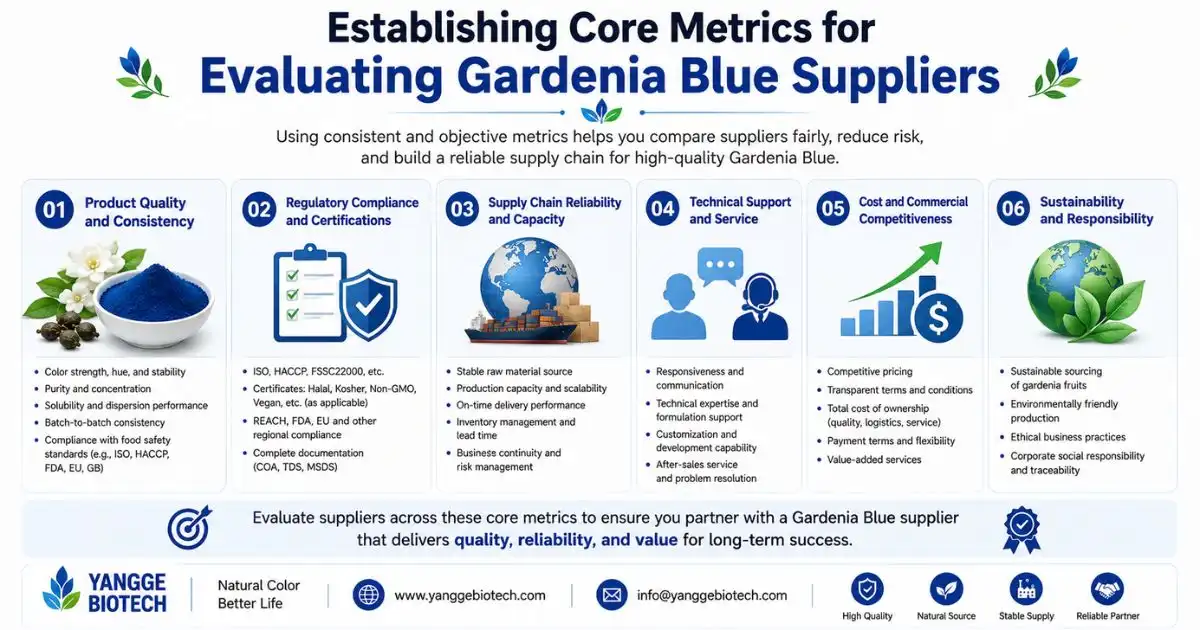
Establishing Core Metrics for Evaluating Gardenia Blue Suppliers
To evaluate a provider effectively, you need to look at more than just prices. You also need to look at specialized skills that directly affect the quality of your product. The following measures give you an organized way to evaluate that takes into account production issues that happen in the real world.
Product Quality Verification and Technical Specifications
Dosage precision and cost-effectiveness depend on how consistent the color values are. Suppliers you can trust give you spectrophotometric data at 590nm and E-value ranges like E100 ±5%. Get Certificates of Analysis (COA) from three groups in a row to look for trends of variation. Keep an eye on the amounts of geniposide residues. High residues (found by HPLC analysis) mean that the enzymes aren't able to finish the conversion, which leads to bitter off-notes that ruin the taste.
Organoleptic testing shows things about the quality of a product that lab tests might miss. At normal application rates (0.01-0.1%), Premium Gardenia Blue should have almost no smell or taste. Pigments from suppliers who don't use the best conditions for fermentation have notes of "fermented protein" that can be picked up. As part of the sample evaluation, mix the powder with water that has a neutral pH and have everyone on your development team do sensory tests.
| Quality Parameter | Acceptable Standard | Testing Method | Impact on Application |
|---|---|---|---|
| Consistency in e-value | +/-5% from the specification | Reading spectra (590nm) | Accurate dosage and cost control |
| Geniposide Left Over | <5% by HPLC | Liquid chromatography with high performance | Taste description, following the rules |
| The load of microbes | TPC <1,000 CFU/g | The standard way to count plates | Safety and shelf stability |
| Metals that are heavy | <3.0 mg/kg | Analysis with ICP-MS | Safety and the ability to export |
| pH Range of Stability | 4.0–8.0 (no change in color) | Changing the pH and looking at it | Variety of applications |
Supply Capacity and Delivery Reliability Assessment
When you plan to buy between $50,000 and $300,000 a year, the size of the production line matters. Suppliers who have their own fermentation facilities (rather than contract manufacturing setups) show better batch accuracy and more flexible schedule. Not just what's available right now, but also how much can be produced each month in kilograms. A supplier that makes 500 kg per month can't reliably meet the needs of customers who only need 200 kg per month without running the risk of allocation shortages.
Inventory problems can be avoided by being clear about lead times. Gardenia Blue usually takes 25 to 35 days to make, from getting the raw materials to the final drying step. When there are pressing orders, suppliers who keep raw materials on hand (like dried gardenia fruits) can shorten this time frame. Ask them for their normal wait time for both stock specs (E100, E200) and custom color values, as well as the lowest amount of items that can be ordered in each case.
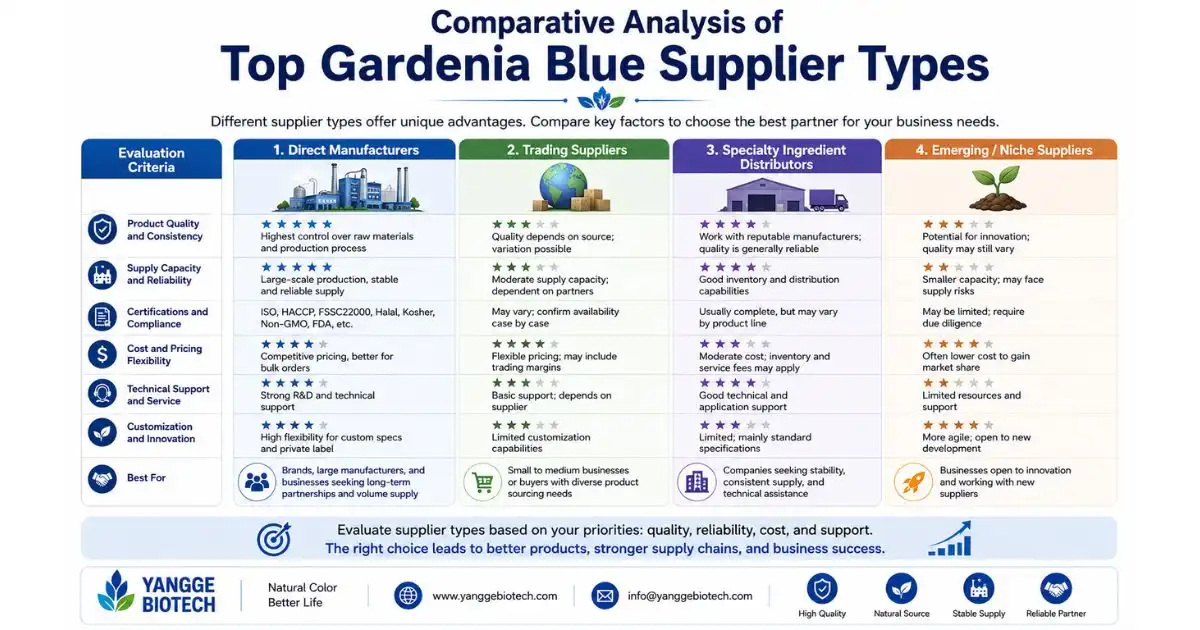
Comparative Analysis of Top Gardenia Blue Supplier Types
There is a wide range of specialization among suppliers, and each type has its own pros and cons when it comes to different types of purchases. Knowing these differences can help you match the skills of the right provider with your operational needs.
Specialized Natural Colorant Manufacturers vs. Botanical Extract Generalists
Natural colorant makers who are serious about what they do spend a lot of money on specialized fermentation technology and enzymatic process control, which makes the batches more consistent. Most of the time, these companies have their own research and development departments that know how to deal with problems that come up in food applications. These departments help with formulating for pH optimization, heat processing parameters, and shelf-life tests. Their regulatory paperwork is pretty thorough, and they have set testing procedures for international markets.
Companies that make botanical extracts and sell Gardenia Blue as one of dozens of different plant extracts often don't have the technical know-how to fix problems with applications. However, if you're looking for more than one natural ingredient, they may offer competitive prices and the chance to buy them all at once. On the other hand, there is more technical risk and maybe less stock for specialty requirements like acid-resistant types.
Direct Manufacturers vs. Trading Companies
When you work directly with a maker, you can talk to expert staff who know how the different factors that affect production affect your results. When batch colors change, manufacturing teams can figure out what went wrong by looking at the fermentation conditions, the raw materials used, or the changes that were made during the process. This openness speeds up the process of solving problems and lets people improve quality on their own.
Trading companies collect goods from many manufacturers, which is helpful for small buyers who want flexible MOQs. But they make the supply chain less clear you might get products from different facilities in different orders without being told, which makes it harder to be consistent. Their markup is usually between 15% and 30% more than what the manufacturers charge, but they may offer value by combining services or offering payment terms that manufacturers don't offer.
Matching Supplier Solutions to Your Procurement Needs
Instead of using generic evaluation checklists, your organization's profile and the needs of your products should guide the selection of a supplier. Different types of buyers face different problems that need different ways of evaluating them.
Aligning Supplier Capabilities with Beverage Manufacturing Requirements
Beverage formulators need sources who know how carbonation affects color stability and can give specific advice on how carbonation and citric acid work together. Gardenia Blue stays a beautiful shade even in acidic settings (pH 2.5–4.0) without turning white, which is a big plus over anthocyanin-based blues. But sellers need to say if their standard grade or acid-resistant version works with your formulation's pH. You should also ask for stable testing results that show the color will stay the same after 90 days of storage at the temperature you usually use (25°C or 40°C accelerated).
For use in carbonated soft drinks, pigments must not react with dissolved CO2 or cause haze during storage. Ask possible suppliers about past customers who bought carbonated drinks and ask for contact information for references. Suppliers with experience in this area know how to integrate filling lines and can handle issues like when pigments dissolve in relation to carbonation and the need for specific inline filter requirements.
Technical Support and Application Development Services
Formulation helpers from suppliers can speed up your clean label transition by giving you base recipes that have been changed to fit Gardenia Blue's specific needs. Quality partners keep application labs where they try your specific matrices, like gummy sweets, protein shakes, or frozen treats, and share the best dosage rates that take into account the amount of sugar, protein, and processing temperature.
When dealing with unexpected color changes during scale-up, this guidance is very helpful. It's not always easy to directly apply lab results from 1 kg batches to 500 kg production runs because of differences in how well ingredients mix, how heat is distributed, and how long it takes for ingredients to interact. Suppliers who have food scientists on staff can fix these problems online or by visiting the site, which will keep your launch dates safe.
The best partnerships do more than just fix problems; they also gather strategic market information. The biggest suppliers keep an eye on changes in the rules that affect natural colorants and let customers know when label requirements or certification standards are about to change. This planning lets compliance be prepared slowly instead of having to be reformulated in a crisis.
Case Studies and Best Practices: Real-World Supplier Selection Examples
By looking at how other procurement workers choose suppliers, you can learn useful techniques that can be used in a variety of business settings and product categories.
Beverage Company's Clean Label Transition Success
Retailers put pressure on a regional sports drink company that made $8 million a year to get rid of artificial colors while keeping their signature blue color. Over the course of six months, their R&D director compared four Gardenia Blue suppliers. The winning source not only gave affordable E200 specification material, but they also did pilot tests showing color stability through their hot-fill method (85°C) and 12-month shelf life testing at different pH levels.
What made this company stand out was how they dealt with possible problems before they happened. They found that the drink's 2.8 pH, while still being in Gardenia Blue's stable range, was getting close to the point where some amino acid types show slight color changes. The seller suggested their acid-resistant grade and gave stable data for both grades next to each other. The R&D team felt confident during the reformulation process because of this technical detail. The result was a successful relaunch of the product with "No Artificial Colors" marking, which led to an 18% increase in sales.
Confectionery Manufacturer's Quality Consistency Challenge
Even though they used the same supplier, an artisan gummy maker saw color differences between batches. An investigation showed that their supplier got the ingredients from several factories without telling them, which meant that the finished blue color was affected by different amino acid profiles, with one batch leaning more toward cyan and the other toward violet. When they switched to a company that was vertically integrated and managed the whole production chain, from getting the gardenia fruit to fermenting it, the color Delta E values across all batches went down from ±12 to ±3.
This lesson focused on specification accuracy that goes beyond simple E-value numbers. The new provider wrote down information about their specific amino acid source (L-lysine-based fermentation) and gave hue angle measures in LAB color space, which made it possible to match colors exactly. They also started doing business reviews every three months, during which batch consistency data was looked over. This made things more clear and stopped mistakes from happening in the future.
Summary of Key Takeaways for Choosing the Right Gardenia Blue Supplier
Gardenia Blue sourcing that works well combines technical performance metrics with seller relationship factors that keep quality high over time. Focus on consistent E-values (within a 5% range), full COAs that show the absence of heavy metals and microbes, and heat stability data that is specific to the way you work the material.
Check that your formulation is stable across a wide range of pH values. This is especially important if you are working below pH 3.5 and need acid-resistant grades. Regulatory thoroughness, which includes Kosher, Halal, and FDA paperwork as needed, keeps expensive delays from happening during scale-up.
Beyond specifications, you can find out about a supplier's technical skills by looking at their application support, customer contacts in your product category, and how open they are about their manufacturing processes. When comparing batch uniformity, vertically integrated producers who control fermentation and enzymatic conversion usually come out on top. This is because they get their ingredients from more than one facility. Set up clear ways for people to talk about changes in quality, and include in your contracts language about batch notification when there are changes in the process that could affect your products.
Conclusion
When choosing a Gardenia Blue supplier, you need to look at more than just price. You need to look at technical specs, production capabilities, and the quality of the partnership. Your formulation investments and brand image are protected by consistent E-values, thorough stability testing, and full regulatory paperwork. Suppliers who offer help with application development, clear production methods, and open communication add value that goes far beyond just comparing prices.
Using the evaluation framework described here, which includes quality metrics and case study lessons, procurement professionals can confidently find natural blue colorant sources that meet both short-term production needs and long-term clean label strategies in a regulatory and consumer environment that is becoming more strict.
FAQ
How does Gardenia Blue's heat stability compare to other natural blue options?
When it comes to heat processing, Gardenia Blue works much better than Spirulina Blue (phycocyanin). Gardenia Blue stays stable at temperatures up to 120°C for 60 minutes, while Spirulina Blue breaks down and loses its color above 60°C. Because of this, it can be used in baked goods, boiled sweets, and hot-fill beverage processes that other natural blues can't. Light stability is still a problem compared to synthetic options, though, so careful packing is needed for long-term store show.
What causes color variation between different Gardenia Blue suppliers?
The different shades come from the amino acids that are used when enzymes cross-link genipin molecules. When amino acid sources are used, some make colors that are reddish-blue (violet), while others make colors that are pure cyan blue. This technical feature doesn't show up very often in product specifications, which can lead to unexpected problems when switching suppliers. Ask for LAB color space measures (hue angle in particular) along with standard E-values to make sure that all sourcing choices match shades in the same way.
Can Gardenia Blue replace synthetic blues in all food applications?
Gardenia Blue is very stable when it comes to pH and heat, but it's not very resistant to light, which means it can't be used in clear packages that will be exposed to store lighting. Over the course of their shelf life, clear bottled waters and candy wrappers may exhibit noticeable fading. Look at the shape of your package, the lighting conditions for distribution, and the amount of color degradation that you are okay with. To get an idea of how well their products will work in real life, suppliers should give information from accelerated light stability tests (500–1000 lux exposure over 30 days).
Partner with Yangge for Reliable Gardenia Blue Supply
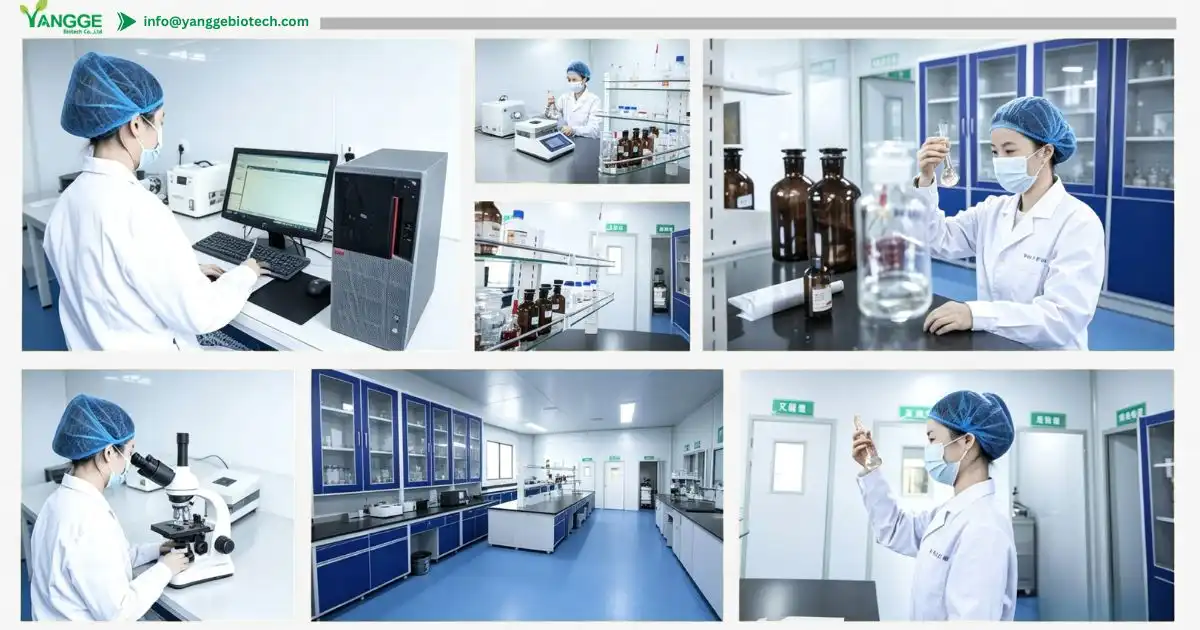
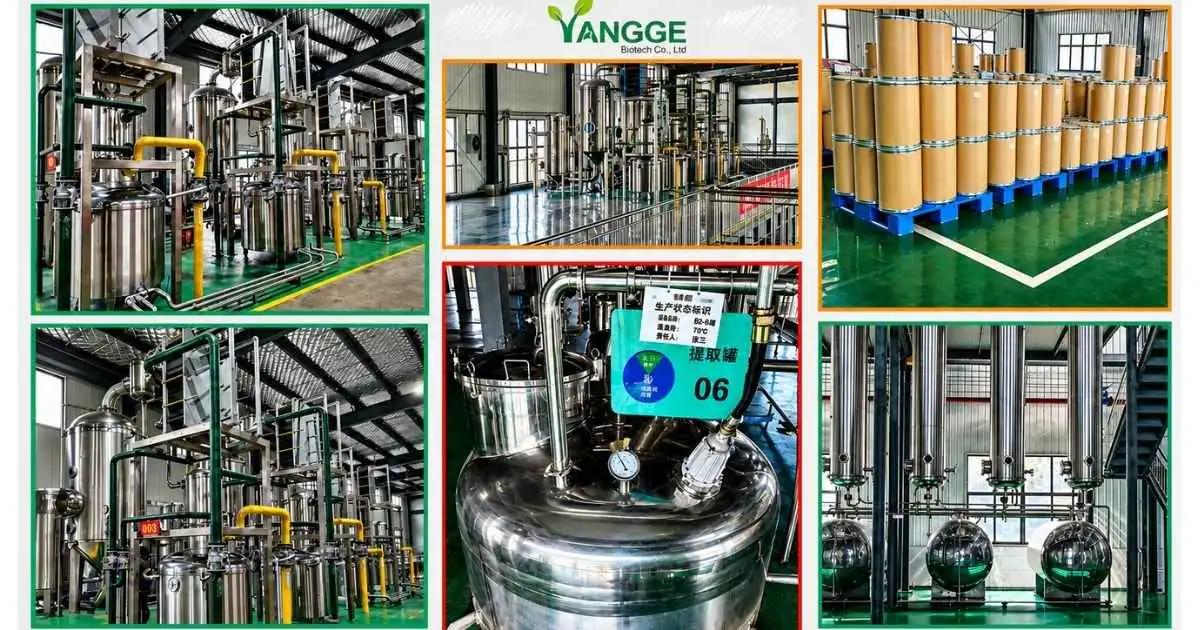
At Yangge Biotech, we know that switching to natural colorants is more than just switching out ingredients. You also need a supplier partner who cares about the success of your product. We can make Gardenia Blue pigments that meet standards from E30 to E200. All of these are backed by full regulatory paperwork, such as Halal, Kosher, ISO, and HACCP certifications. We keep our production vertically linked, from getting the gardenia fruit to making the wine using enzymes. This makes sure that each batch meets the high standards of quality you expect.
Our expert team helps with all kinds of applications by checking for stability in your unique matrices and giving formulation advice for pH optimization, dosage calculations, and processing parameters. With quick service 24 hours a day, 7 days a week, and tracking from farm to table, we get rid of the communication gaps that slow down product launches.Contact us or you can email us at info@yanggebiotech.com to get technical data sheets, sample specifications, and to talk to our food colorant experts about your clean label goals.
References
1. Smith, J.L., & Anderson, M.K. (2022). Natural Food Colorants: Chemistry, Application, and Regulatory Considerations. Academic Press.
2. Chen, W., Zhang, H., & Liu, Y. (2021). Stability Assessment of Plant-Derived Blue Pigments in Beverage Systems. Journal of Food Science and Technology, 58(9), 3421-3430.
3. European Food Safety Authority. (2023). Scientific Opinion on the Re-evaluation of Natural Color Additives from Botanical Sources. EFSA Journal.
4. Roberts, D.D., & Taylor, A.J. (2020). Clean Label Ingredients: Consumer Perception and Technical Challenges in Food Manufacturing. Wiley-Blackwell.
5. International Food Information Council Foundation. (2023). Color Additive Regulations and Global Harmonization Trends. IFIC Review.
6. Park, S.H., Kim, J.W., & Lee, K.T. (2021). Enzymatic Production and Application of Gardenia-Based Blue Pigments in Food Systems. Food Chemistry, 342, 128356.

Based on your location and order quantity, you will have the opportunity to receive a limited time free shipping promotion!
Who we are
Popular Blogs