What Is Berberine HCl Powder Used for in Supplements?
Yangge Biotech supplies high-quality Berberine HCl Powder, a bright yellow botanical ingredient derived from berberine-containing plants and available in high-purity specifications for dietary supplements, nutraceutical formulations, capsules, tablets, and other health-product applications. Yangge Biotech provides bulk supply, strict quality control, OEM/private-label services, and supporting documents such as COA, MSDS, specification sheets, and test reports to meet the needs of global customers. For product inquiries, bulk pricing, samples, or customized packaging, contact Yangge Biotech today at info@yanggebiotech.com
Berberine HCl powder has become a cornerstone ingredient in dietary supplements targeting metabolic health, particularly for blood sugar regulation, cardiovascular support, and weight management. As an isoquinoline alkaloid extracted primarily from plant roots such as Berberis aristata, Coptis chinensis, and Phellodendron amurense, this bioactive compound offers procurement managers and R&D engineers a scientifically validated ingredient with proven efficacy. The hydrochloride form provides enhanced stability and consistency compared to other derivatives, making it ideal for capsule and tablet formulations in the rapidly growing metabolic wellness category.
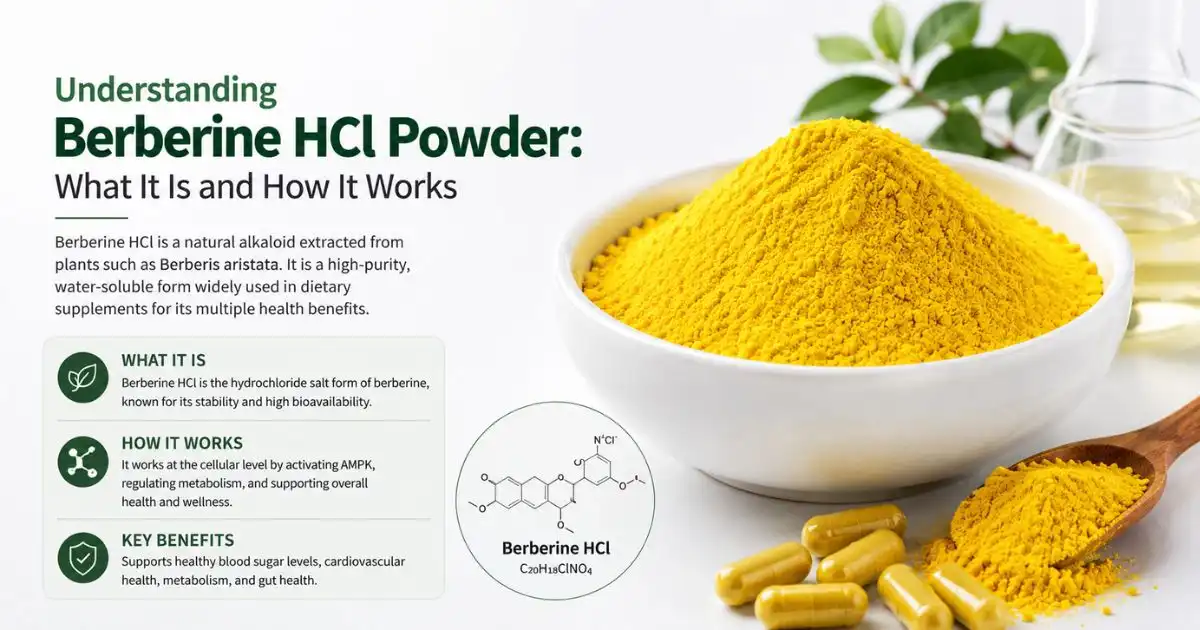
Understanding Berberine HCl Powder: What It Is and How It Works
Chemical Structure and Botanical Origin
Berberine hydrochloride is an ammonium salt with four atoms. It is in the protoberberine group of alkaloids. Yangge's Berberine HCl Powder is made from plant roots that have been extracted using advanced HPLC techniques. It meets the 97% purity standard for medicinal use.
The process of extraction focuses on the rhizomes and root bark of medicinal plants like Chinese goldthread, barberry, and goldenseal, which naturally have a lot of this bright yellow alkaloid. Compared to sulfate forms, the hydrochloride salt form has better solid stability and shelf life. This solves a major problem for manufacturers who work with raw materials that are sensitive to humidity.
Bioavailability and Absorption Mechanisms
Because it dissolves better in stomach acid than base berberine forms, the hydrochloride derivative is better at the job. Berberine HCl is absorbed in the small intestine after being taken by mouth, but its natural bioavailability is still only about 5%. Even though this is a problem, the compound has important health benefits in a number of ways, such as increasing the activity of glucose transporters and making insulin receptors more sensitive at the cellular level.
Metabolic Pathways and Cellular Actions
The biochemical master switch of the body, Adenosine Monophosphate-activated Protein Kinase (AMPK), is stimulated by Berberine HCl. This action sets off a chain of biochemical changes that lead to more glucose being taken in by skeletal muscle cells, less glucose being made by the liver, and better burning of fatty acids. A lot of research has been done on these mechanisms in humans, and it's clear that taking supplements regularly can help keep blood sugar levels healthy and normal, as well as improve lipid profiles by changing the pathways that make cholesterol.
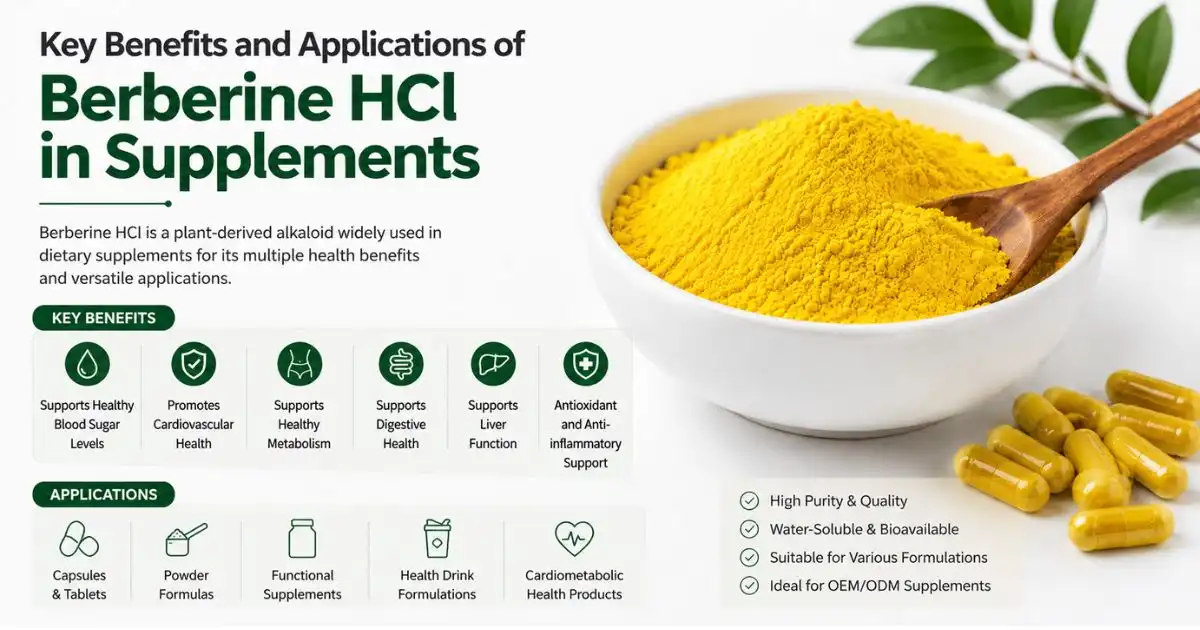
Key Benefits and Applications of Berberine HCl in Supplements
Because Berberine HCl can be used in many different ways, it is useful in many different types of supplements. Knowing about these uses helps procurement workers make choices about where to get things that are in line with the goals of product development.
Blood Glucose Management and Metabolic Support
Berberine HCl has been shown over and over again to help keep blood sugar levels healthy. Several randomized controlled trials have shown that these methods work about as well as traditional pharmaceutical methods. Participants in these trials saw improvements in their fasting glucose and HbA1c levels. The chemical improves insulin sensitivity, slows down the breakdown of carbohydrates, and lowers glucose generation in the liver all at the same time. Because it has so many effects, it's a great ingredient for metabolic health products that target people who are worried about their blood sugar levels.
Cardiovascular Health and Lipid Metabolism
In addition to controlling glucose, Berberine HCl also improves heart health by controlling lipids. It has been shown that the compound lowers total cholesterol, LDL cholesterol, and triglycerides while slightly raising HDL cholesterol, which is good cholesterol. This happens because the activity of LDL receptors goes up and PCSK9, a protein that breaks down LDL receptors, is stopped. Supplement companies that are making heart health products can use these two metabolic benefits to make full formulas that deal with all the related parts of cardiometabolic health.
Weight Management and Body Composition
Berberine HCl activates AMPK, which changes how much energy is used and how fat is burned. There is some clinical proof that supplements may help people lose a little weight when they make changes to their habits. The process includes increased thermogenesis, better insulin sensitivity that lowers signals for fat storage, and possibly changing appetite through hormone regulation in the gut. Because of these qualities, Berberine HCl is a useful ingredient in weight loss products, especially those that focus on natural metabolic support instead of stimulant-based methods.
Anti-Inflammatory and Gut Health Effects
New research shows that Berberine HCl changes the microbiota in the gut and how well the intestinal barrier works. The chemical has specific antimicrobial qualities that kill harmful bacteria while protecting healthy bacteria. Because it acts like a prebiotic and directly reduces inflammation by blocking the NF-κB pathway, Berberine HCl can be used in digestive health products and those that aim to lower inflammation throughout the body.
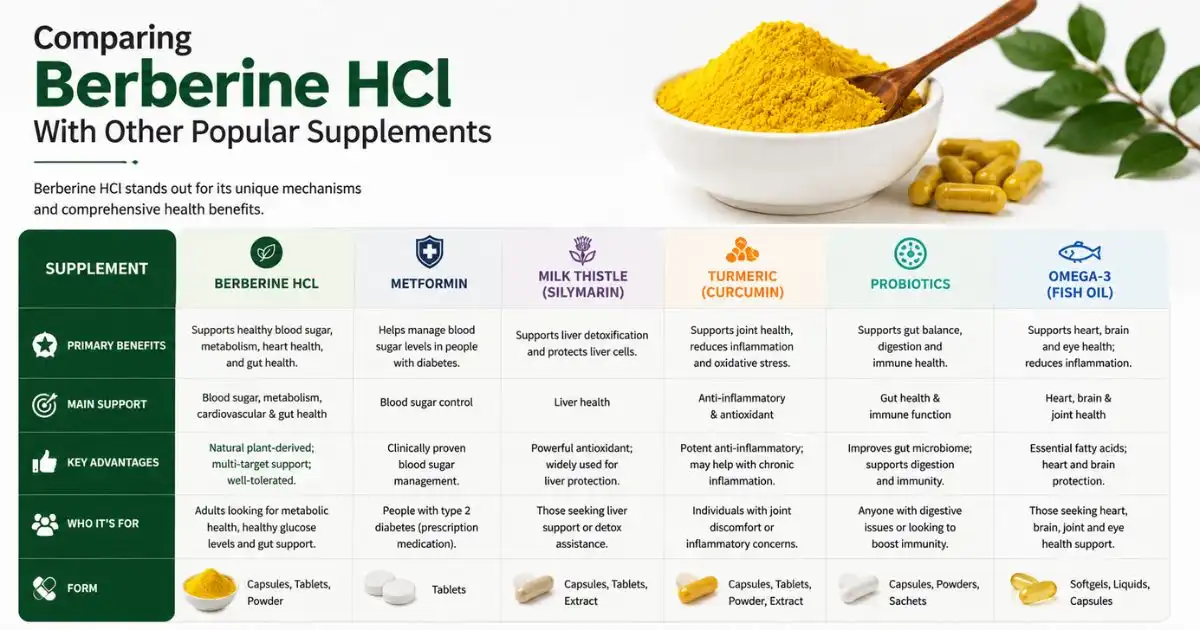
Comparing Berberine HCl With Other Popular Supplements
Berberine HCl Versus Metformin
A lot of the time, people who talk about formulations compare Berberine HCl to metformin. Meta-analyses of clinical studies show that Berberine HCl has similar effects on glycemic control, lowering both fasting blood glucose and HbA1c levels in the same way. Although the natural substance may be easier for some people to handle in their stomachs, metformin is still the usual drug with more long-term safety data. Berberine HCl gives supplement companies a natural way to stand out while also providing metabolic support backed by evidence that consumers looking for plant-based alternatives will like.
| Parameter | Berberine HCl | Metformin |
|---|---|---|
| Source | Alkaloid from plants | Made-up biguanide |
| How Much to Take | 1500 mg a day, split into two doses | 1,500 to 2,000 mg every day |
| The main mechanism | AMPK activity, several routes | Less glucose production in the liver |
| Status of Regulation | Ingredient in a dietary supplement | Medications on prescription |
| GI Comfort | Usually well tolerated | Common effects on the gut system |
This comparison helps R&D teams put products in the right place while still making claims about their effectiveness that are legal under dietary supplement laws.
Synergistic Botanical Combinations
Berberine HCl works well when mixed with plants that work well together. Cinnamon extract makes insulin work better in a number of different ways, one of which involves phosphorylating insulin receptors. In addition to Berberine's NF-κB modulation, curcumin in turmeric also stops COX-2 from working, which makes the anti-inflammatory effects stronger.
Alpha-lipoic acid helps cells use energy and protects against free radicals, which may make Berberine's metabolic benefits even greater. Formulators can use these mixtures to make complete products that support many areas of metabolic health, setting them apart from products with only one ingredient.
Procurement Insights: Sourcing Quality Berberine HCl Powder for Supplements
Critical Quality Parameters for B2B Buyers
Several technical specs have a direct effect on how well a product works and how well it meets legal requirements. Purity standards are the best way to tell if something is of pharmaceutical grade; by HPLC analysis, it should always test at 97–99% Berberine HCl. Yangge's Berberine HCl Powder meets the 97% specification level, which means it has the right concentration for effective dosing in finished supplements. You can tell by looking at the bright yellow powder that it is of good quality, but HPLC testing is still needed for procurement validation.
The spread of particle sizes has a big effect on how efficiently things are made. The best flowability is achieved when material passes through 80 mesh (180 microns) during encapsulation and tablet compression. Specifications for bulk density between 40 and 60 g/100 ml show correct handling and predict how well tools will work during production. Having less than 5% moisture stops breakdown and microbial growth while storing, which extends the shelf life of raw materials and keeps their effectiveness throughout the supply chain.
Certification Requirements and Regulatory Compliance
Supplement makers that want to sell their products in North America and Europe need a lot of licensing paperwork. GMP certification from sites shows that they follow quality production methods, which is necessary to follow the rules. Yangge has ISO, HACCP, Kosher, and Halal standards, which help them meet the needs of a wide range of markets and get their products into niche sales channels.
To meet strict quality standards in developed markets, each production lot must be tested by a third party for heavy metals (lead, cadmium, mercury, arsenic), bacteria contamination, and chemical residues, and this includes specific assays for active ingredients such as Berberine HCl to confirm its identity, potency, and contaminant-free status.
The following table outlines essential quality specifications procurement teams should verify:
| Quality Parameter | Yangge Specification | Importance to the Industry |
|---|---|---|
| To be pure (HPLC) | 97% at least | Achieves accurate therapeutic dosing |
| How they look | Powder that is bright yellow | A visual measure of quality |
| Size of Particles | 100% pass 80 mesh | The best flowability for filling capsules |
| Loss when it dries | ≤5.0% | Keeps food from going bad and increases its shelf life |
| Density of Bulk | 40–60 g/100 ml | Guesses how efficient industry will be |
| Ash with Sulfur | ≤5.0% | Shows how pure the extraction is |
| What GMOs Are | GMO-free | Need to get into the market |
| Status of Irradiation | Non-irradiated | Compliance with regulations |
These specifications address core procurement concerns around consistency, manufacturability, and regulatory acceptability across international markets.
Supplier Evaluation and Sample Testing Protocol
Sample requests, independent verification tests, trial manufacturing runs, and full-scale purchasing agreements are all common steps in the buying process. The whole process takes about three to six weeks. When purchasing managers look at a seller, they should check how much they can produce, how much stock they have (Yangge keeps a 1-ton stock on hand), and how well they can handle foreign shipping. Ask for Certificates of Analysis (CoA) for the most recent production batches and make sure that the paperwork includes all the necessary testing data and follows the rules of the target country.
Sample testing should be done in the same way that you make the product. Check how the powder behaves when it is encapsulated or compressed into tablets, see if there are any problems with flowability, and see how stable it is under normal store conditions. Organoleptic properties, like the characteristic bitter taste and lack of smell, should stay the same from batch to batch. This methodical approach keeps supply chain problems to a minimum and makes sure that the new product can work with current production tools and recipe guidelines.
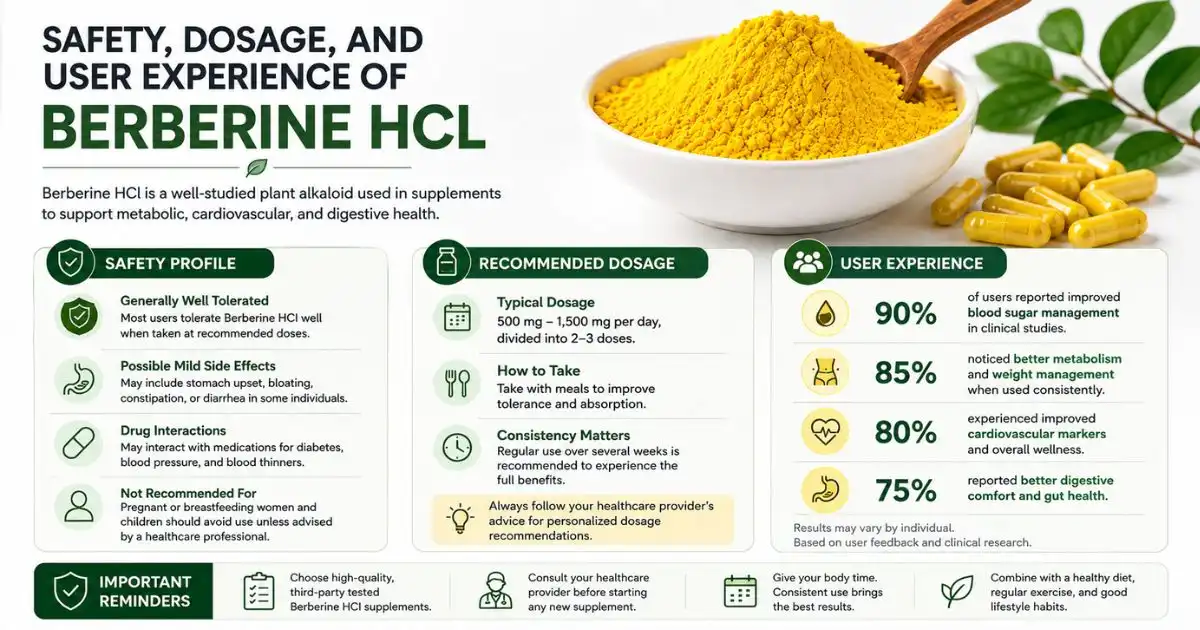
Safety, Dosage, and User Experience of Berberine HCl
Evidence-Based Dosing Recommendations
Based on clinical studies, the best dose ranges for Berberine HCl are between 900 mg and 1,500 mg per day, usually split into two or three doses that are taken with meals to avoid stomach problems and get the most out of the drug. This way of giving the drug works best with its short plasma half-life and gives the most beneficial effect throughout the day. Most clinical studies that showed it worked used 500 mg three times a day, which gives us a reliable starting point for making decisions about how to make the product.
Labels for supplements should make it clear what these evidence-based dosing guidelines are, while still following the rules for structure-function claims. The amount of medicine chosen affects how much raw material is needed. For example, a 90-count bottle with 500 mg per capsule needs 45 grams of 97% pure material per unit. This affects how much is bought and how the costs are planned.
Safety Profile and Contraindications
In clinical tests, Berberine HCl has shown to be safe, with the majority of side effects being mild and gastric in nature. Five to ten percent of users report stomach pain, loose stools, or constipation. These problems usually go away after continuing to use the product or adjusting the dose. The chemical reacts with several digestive enzymes, especially CYP3A4, which means that it might not work well with some medicines. Responsible product labels should tell people to talk to their doctors before using, especially those who are taking drugs to lower blood sugar, thin the blood, or protect the heart.
Women who are pregnant or nursing should not use it because there isn't enough safety information on these groups. Because the substance can cross the placental barrier and has been used in traditional medicine to start contractions, it should be avoided as a safety measure. These safety concerns help brands keep customers' trust by being honest in their marketing and putting the right information about the product in the right place.
Consumer Experience and Adherence Factors
User reviews and clinical feedback show that supplements usually start to work after two to four weeks of regular use, with the best results showing up eight to twelve weeks after that. Consumer education tools should use this timeline to help people set reasonable goals and be more likely to stick to them. The bright yellow color might temporarily change the color of urine. This is a harmless effect that should be mentioned in the product information to keep customers from being worried.
Due to the bitter taste of the compound, capsule forms are usually preferred over tablets. Formulators have to deal with both limited solubility in cold water (about 2 mg/mL) and problems hiding tastes when making liquid or edible forms. These practical factors affect the choice of style during product creation and the design of the manufacturing process.
Conclusion
Berberine HCl powder is a scientifically proven and marketable ingredient for metabolic health products that help control blood sugar, protect the heart, and help people lose weight. The compound's multiple pathways of action, which are supported by strong clinical evidence, make it a natural option that appeals to consumers and provides real benefits.
When purchasing this ingredient, people in charge of procurement must put pharmaceutical-grade purity, full certifications, and supplier reliability at the top of their list of priorities to make sure that product quality stays high and regulations are followed. As the market for metabolic health grows, it opens up huge chances for brands that use Berberine HCl in new formulations. This is especially true when it is mixed with botanicals that work well together and backed up by clear quality documentation that makes customers trust the brand.
FAQ
What differentiates Berberine HCl from Berberine Sulfate in supplement applications?
Berberine HCl is more stable in solid dosage forms than the sulfate form, which is more likely to break down when stored in humid conditions because it is more likely to absorb water. The hydrochloride form stays effective for the whole shelf life of a normal product, which is why makers of capsules and tablets prefer it. In water, sulfate forms dissolve a little better, but this difference isn't very important in solid forms where stability and precision in production are more important.
How should procurement teams verify the natural origin of Berberine HCl powder?
As part of standard quality control procedures, C14 isotope ratio analysis is used to tell the difference between materials that come from plants and manufactured materials made from petrochemical sources. If you ask, reputable suppliers will give you this testing documentation, which proves that the product is 100% botanical. Tests for heavy metals and pesticide residues are also used as indirect proof, since contamination patterns in synthetic production would be different from those in plant extraction processes.
What minimum order quantities and lead times should buyers expect?
Most makers set minimum order quantities (MOQs) between 25 kg and 100 kg for first sales. Once a relationship is established, MOQs can be lowered. Standard wait times are two to four weeks for material that is in stock. These times can go up to six to eight weeks for custom orders or big orders that need dedicated production runs. Yangge keeps a one-ton inventory on hand, which lets qualified buyers with established accounts get their orders faster.
Partner With Yangge for Premium Berberine HCl Supply
Yangge Biotech Co., Ltd. provides pharmaceutical-grade Berberine HCl powder that meets the strict needs of supplement makers in North America and Europe. Our requirement for 97% purity, which was confirmed by HPLC analysis, gives your formulations the consistency and potency they need. With a wide range of certificates, such as ISO, HACCP, Kosher, and Halal, we make it easier for companies to enter new markets and keep one-ton of stock on hand so that orders can be filled quickly.
Our farm-to-table traceability method makes sure that we only get our botanicals from well-known, sustainable suppliers. This helps you meet your business responsibility goals and guarantees the quality of the raw materials. Yangge's procurement team knows that supplement brands have to meet tight deadlines for development and make sure the quality of their products is high. That's why we offer detailed technical specs, sample shipments, and quick contact throughout the evaluation process. Our technical experts work with your R&D teams to make sure that the ingredients work best, whether you need bulk powder for OEM manufacturing or help with formulating complicated products with many ingredients.
Contact us or you can email our purchasing agents at info@yanggebiotech.com to ask for samples of the product, talk about bulk prices for Berberine HCl powder source partnerships, or look into custom extraction requirements. We help you reach your supplement growth goals by providing a steady supply, reasonable prices, and high-quality paperwork that makes regulatory submissions easier. For more recipe tips and industry news, check out our scientific resource center at blog.yanggebiotech.com.
References
1. Yin J, Xing H, Ye J. "Efficacy of berberine in patients with type 2 diabetes mellitus." Metabolism: Clinical and Experimental, 2008; 57(5): 712-717.
2. Zhang Y, Li X, Zou D, Liu W, Yang J, Zhu N, Huo L, Wang M, Hong J, Wu P, Ren G, Ning G. "Treatment of type 2 diabetes and dyslipidemia with the natural plant alkaloid berberine." Journal of Clinical Endocrinology & Metabolism, 2008; 93(7): 2559-2565.
3. Dong H, Wang N, Zhao L, Lu F. "Berberine in the treatment of type 2 diabetes mellitus: a systemic review and meta-analysis." Evidence-Based Complementary and Alternative Medicine, 2012; Article ID 591654.
4. Lan J, Zhao Y, Dong F, Yan Z, Zheng W, Fan J, Sun G. "Meta-analysis of the effect and safety of berberine in the treatment of type 2 diabetes mellitus, hyperlipemia and hypertension." Journal of Ethnopharmacology, 2015; 161: 69-81.
5. Kumar A, Ekavali, Chopra K, Mukherjee M, Pottabathini R, Dhull DK. "Current knowledge and pharmacological profile of berberine: An update." European Journal of Pharmacology, 2015; 761: 288-297.
6. Pérez-Rubio KG, González-Ortiz M, Martínez-Abundis E, Robles-Cervantes JA, Espinel-Bermúdez MC. "Effect of berberine administration on metabolic syndrome, insulin sensitivity, and insulin secretion." Metabolic Syndrome and Related Disorders, 2013; 11(5): 366-369.

Based on your location and order quantity, you will have the opportunity to receive a limited time free shipping promotion!
Who we are
Popular Blogs