Blue Spirulina vs Synthetic Blue Color: A Complete Guide
Yangge Biotech supplies high-quality Blue Spirulina Powder (Phycocyanin), a vibrant natural blue ingredient extracted from Spirulina (Arthrospira platensis). With excellent water solubility and brilliant blue color, Blue Spirulina is ideal for use in beverages, smoothies, gummies, candies, ice cream, dairy products, dietary supplements, functional foods, and natural food coloring applications. Yangge Biotech provides bulk supply, customized specifications, OEM/ODM services, private labeling, and technical documentation including COA and third-party test reports to support global food, beverage, and nutraceutical manufacturers.
Looking for a reliable Blue Spirulina supplier and manufacturer? Contact Yangge Biotech Co., Ltd. today for samples, specifications, bulk pricing, OEM/private label services, or a customized quotation. Email: info@yanggebiotech.com.
When sourcing blue colorants for food and beverage production, distributors face a pivotal decision: choosing between natural phycocyanin from Blue Spirulina or synthetic alternatives like Brilliant Blue FCF. This choice significantly impacts not only regulatory compliance and consumer appeal but also profit margins and supply chain stability.
Blue Spirulina, extracted from Arthrospira platensis algae, delivers a vibrant cyan-blue hue along with antioxidant benefits, positioning it as a clean-label solution for markets increasingly rejecting artificial dyes. This guide explores the technical, regulatory, and commercial distinctions between these two colorant categories, equipping procurement directors and quality managers with actionable insights to make informed sourcing decisions.
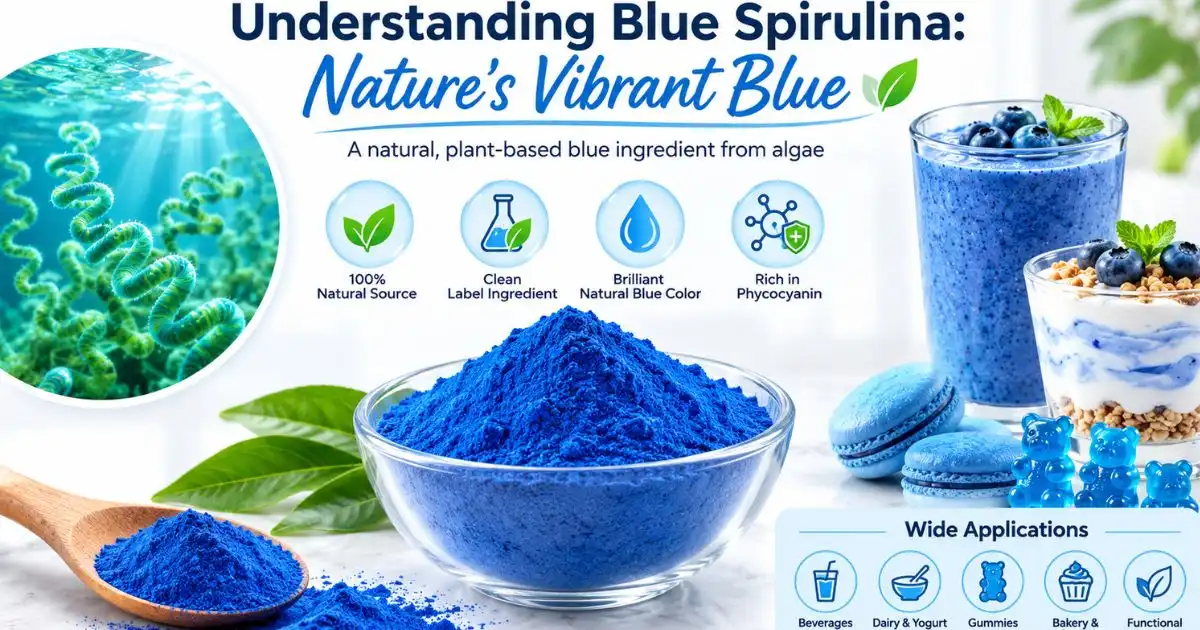
Understanding Blue Spirulina: Nature's Vibrant Blue
Blue Spirulina represents a refined extract obtained through water-based purification of phycocyanin from Arthrospira platensis microalgae. Unlike whole green spirulina powder, which retains chlorophyll and carries an earthy taste, this extraction isolates the blue pigment-protein complex, delivering intense color without off-flavors. The botanical origin ensures traceability from cultivation ponds through spray-drying and microfiltration, meeting stringent food safety standards.
Extraction Technology and Quality Grades
Yangge Biotech makes phycocyanin in a number of different purity grades by using advanced extraction methods that have been checked by HPLC. The E-value method measures how intense a color is: E10 is good for applications that want to save money, E18 is good for applications that need to balance price and performance in drinks and sweets, and E25 is pharmaceutical-grade purity for high-end supplement products. Our plant keeps 1 ton of Kosher and USP-grade stock on hand, so we can quickly fill sample orders ranging from 25 kg to multi-ton contracts without having to worry about supply problems.
Because of the way the proteins are extracted, the powder that is made dissolves fully in water in just a few minutes at room temperature. This water solubility gets rid of the emulsification problems that come with oil-based colorants. However, companies that want to use the powder in white chocolate or fat-based systems must mix it with very little water first.
Nutritional Profile and Functional Benefits
Phycocyanin is made up of 60–70% protein by weight and strong antioxidants that fight free radicals. Clinical studies show that phycocyanin helps the immune system work by reducing inflammation. This makes it useful in functional beverage recipes aimed at health-conscious people. Because it is both a colorant and a bioactive ingredient, it lets brands simplify ingredient labels while making product claims stronger, which is a strategic advantage when fighting for shelf space in natural retail outlets.
Sustainability credentials make this ingredient stand out even more. Growing spirulina needs 90% less water than growing plants on land to get the same amount of protein, and the process of photosynthetic production removes carbon dioxide from the air. Distributors in Germany, the Netherlands, and California who work with environmentally friendly brands can use these benefits in technical sales presentations to set their products apart from synthetic dyes made from petroleum.
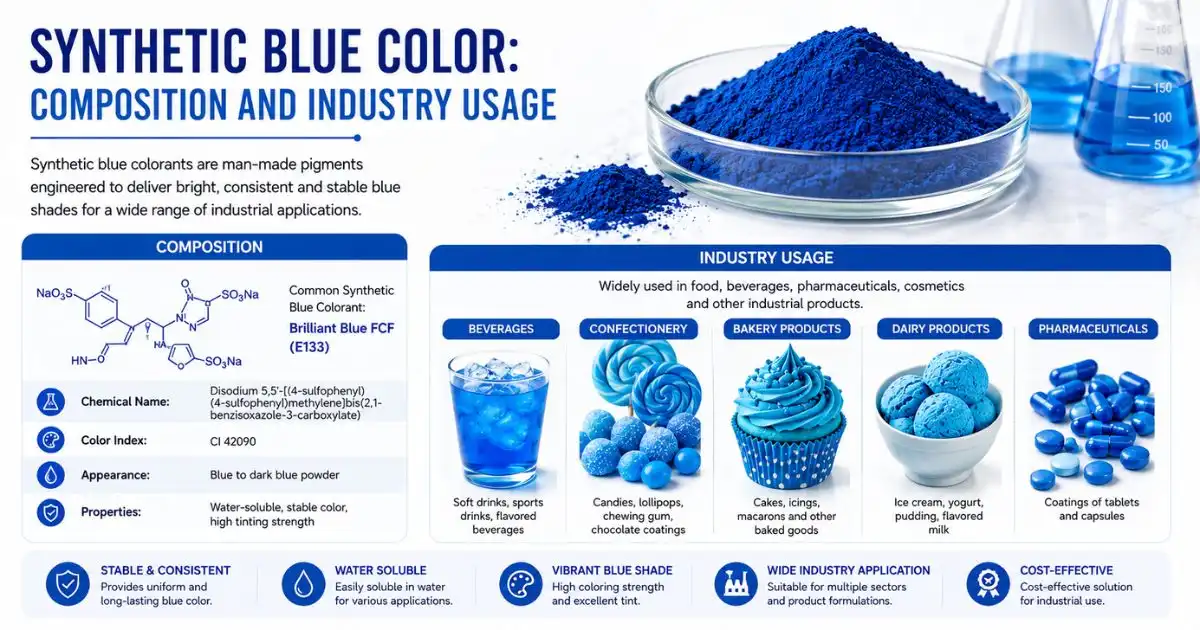
Synthetic Blue Color: Composition and Industry Usage
Synthetic blue dyes have been used in industry for decades and are very cost-effective, so they dominate the global colorant market. Patent Blue V and Brilliant Blue FCF (FD&C Blue No. 1 in the US and E133 in Europe) are used a lot in the making of candy, soft drinks, and makeup. These triphenylmethane derivatives keep their color even when made in large batches, can handle high temperatures, and stay stable in acidic pH ranges, all of which make formulating them easier.
Chemical Manufacturing and Regulatory Landscape
Organic synthesis from petroleum feedstocks is done in several steps, and then the mixture is cleaned to get rid of trace metals and unreacted precursors. Quality control is based on limits on heavy metals and the amount of dye that is present. In North America, these limits are set by FDA rules, and in all EU member states, they are set by EFSA standards. Different types of products have different levels of approved use, so formulators need to look at local rules when they are making recipes.
Regulatory pressure has changed since European officials linked synthetic dyes to hyperactivity in sensitive children. This led major candy brands to voluntarily change their recipes. In 2010, the UK put warning labels on foods that contained certain synthetic colors. This sped up the market's move toward natural alternatives. More and more, Middle Eastern markets want all ingredients to be certified as Halal. This adds more rules for distributors who buy synthetic dyes made using chemicals that aren't certified.
Procurement Considerations for Synthetic Dyes
Synthetic blue colorants have stable prices that are linked to the costs of petrochemical feedstocks, and they are available all year thanks to well-established supply chains. Bulk sales are usually sent in 25 kg fiber drums, which can last longer than three years if they are kept properly. Distributors who use just-in-time stocking models like this steadiness because it means there aren't as many chances of product degradation as there are with heat-sensitive natural pigments.
But buyer decline trends pose risks to businesses. When brands change their recipes to avoid artificial colors, they may suddenly cancel orders, leaving distributors with old stock. As production of phycocyanin grows, the price edge over natural alternatives has shrunk. This makes it harder for wholesalers to make money if they only compete on price. When giving advice to customers further down the line, quality managers have to weigh these changes in the market against the needs for technical performance.
Blue Spirulina vs Synthetic Blue Color: Core Differences and Procurement Implications
There are more factors to consider than just color matching when choosing between natural phycocyanin and synthetic dyes. Procurement teams have to look at information about chemical safety, approvals from regulators, performance under stress in production, and the total cost of ownership, which may include costs for reformulating.
Safety Profiles and Certification Requirements
In the US, phycocyanin from spirulina is generally thought to be safe (GRAS), which means that there are no ADI (Acceptable Daily Intake) limits set by government agencies. This wide range of uses is very different from manufactured colors, which are limited in the amounts that can be found in certain types of food. Toxicology tests on phycocyanin show that it doesn't have any bad effects at amounts that are much higher than what is normally used in food. This gives formulators a lot of freedom when making recipes.
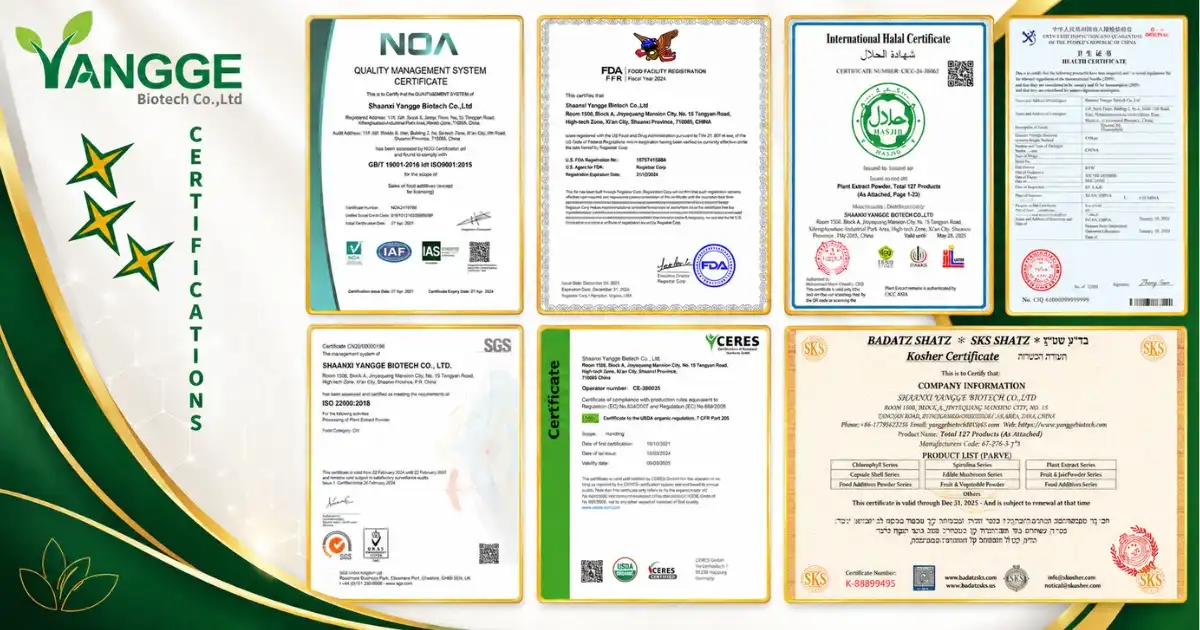
Certifications are very important for B2B buying. Yangge Biotech keeps its Kosher, Halal, ISO 22000, and HACCP certifications up to date, meeting the needs of wholesalers who serve customers in a wide range of regions. Blue Spirulina is one of our flagship ingredients, and it undergoes the same rigorous quality control as all our products. There are detailed Certificates of Analysis (COA) for each production batch that show the amount of phycocyanin, heavy metals, microbial limits, and pesticide residues. Shipments come with MSDS documents, which makes transportation partners and clients further down the line who are auditing ingredients happy.
| Certification Type | Blue Spirulina (Yangge) | Typical Synthetic Dyes |
|---|---|---|
| Kosher/Halal | Ready to go | Not many available |
| Organic Compatibility | Yes (taking out water) | No |
| ADI Restrictions | Not at all | Limits for each category |
| Clean Label Claim | Okay to do | Can't happen |
Performance Attributes and Stability Challenges
Synthetic dyes are very stable at high temperatures; they keep their color strength even when baked at temperatures above 180°C. As a protein-based color, phycocyanin breaks down above 60°C, so it loses its color in baked goods and other uses. Because of this, phycocyanin should only be used in cold-processed foods like drink mixes, yogurt, sweets made below 70°C, and frostings that are added after baking.
During technical talks, distributors must tell customers about these limitations and suggest changes to the recipe or different natural colorants, such as anthocyanins, for systems that are very acidic. Standard phycocyanin settles out in acidic conditions below pH 4.0, which makes it hard to use in sour sweets and lemon drinks. There are specialized acid-stable formulations that cost a lot more.
Both types of colorants break down over time when exposed to light, but synthetic dyes are better at withstanding light. Blue Spirulina-colored items need packaging that is opaque or blocks UV light, especially drinks that are displayed in stores. This packaging requirement adds a small amount to the cost, but it fits with how natural product names usually place themselves as high-end.
Supply Chain Reliability and Cost Analysis
Globalized petrochemical infrastructure helps synthetic dye supply lines because they have access to many providers who can offer reasonable prices and back-ups. Phycocyanin abundance relies on how much spirulina biomass is grown, which can change depending on the weather that affects algae farms. In order to lower this risk, Yangge Biotech keeps 1 ton of finished product in grades E10, E18, and E25 through strategic inventory reserves and contracted cultivation partnerships.
Blue Spirulina costs three to five times more per kilogram than Brilliant Blue FCF, but the dose rates are different. The bright color of phycocyanin makes it possible to use lower inclusion rates in some situations, which helps to balance out the higher price. Distributors should use cost-in-use instead of raw ingredient prices to figure out how much a product costs to make, taking into account the clean-label extra that lets brands charge more at the store.
| Factor | Phycocyanin (Blue Spirulina) | Brilliant Blue FCF |
|---|---|---|
| Typical FOB Price | $120-$280/kg (grade-dependent) | $35 to $50/kg |
| Heat Stability | Not many (<60°C) | Excellent (above 180°C) |
| pH Range | 5.5 to 7.5 is best. | 3.0 to 9.0 stable |
| Shelf Life | 24 months (with good preservation) | 36 months or more |
| Market Growth Trend | +12% per year | Less growth in high-end segments |
How to Choose Between Blue Spirulina and Synthetic Blue Color for Your Business
Procurement directors must make sure that the colorants they choose are in line with the needs of downstream customers, the rules that apply, and the brand positioning strategies. The decision framework includes needs for product categories, tastes of the target market, and factors for evaluating suppliers.
Product Application Suitability
Protein shakes, plant-based milk replacements, and functional wellness shots are all cold-chain drinks that are great places for phycocyanin to be used. The color doesn't change when it's heated up to 72°C for 15 seconds, which is normal for dairy processing. Candy makers that make gummies, hard candies below 70°C, and fondants can get bright blues without using fake colors, which is what kids' goods need to meet clean-label requirements.
More and more, sports nutrition companies are using phycocyanin in recovery and pre-workout powders because it's an antioxidant that fits well with the brand's image. Formulators of cosmetics use the ingredient in face masks, serums, and color cosmetics that are aimed at natural beauty groups. Different uses need different E-value choices. For example, E10 is enough for opaque gummy grids, while E25 gives drink systems more power.
Conversely, synthetic dyes can still be used in high-temperature bakeries, for acidic fruit-flavored hard sweets, and for low-cost mass-market goods where "clean label" claims don't give them much of a competitive edge. Distributors who serve both groups can keep two sets of inventory and offer advice to help customers find the best solutions for their needs.
Supplier Evaluation and Quality Assurance
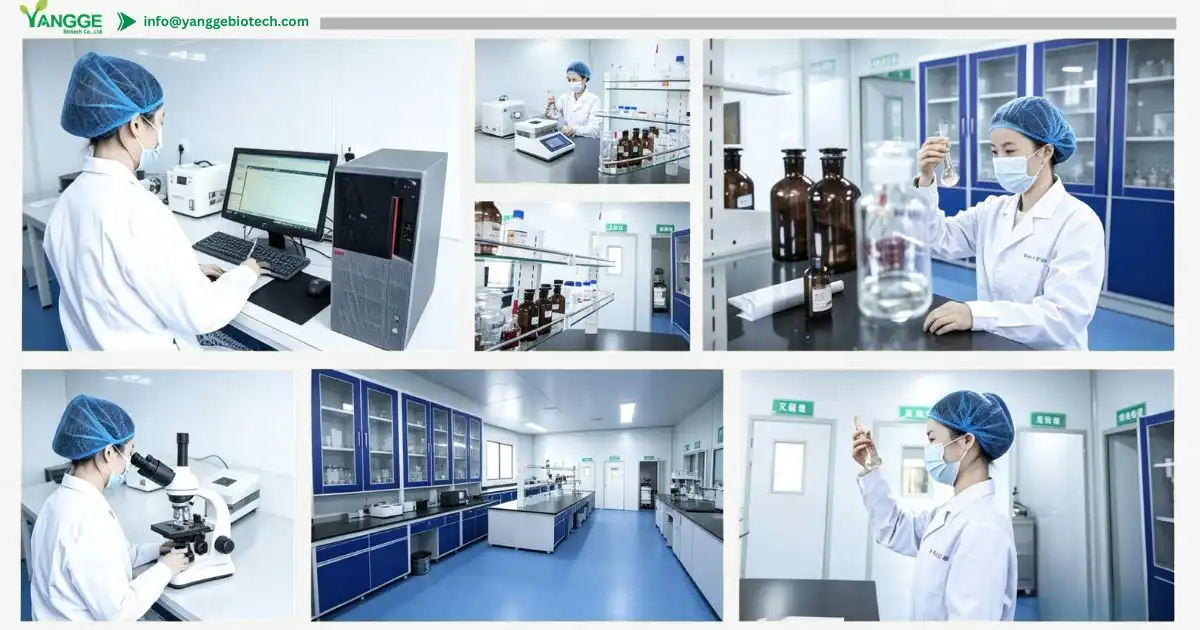
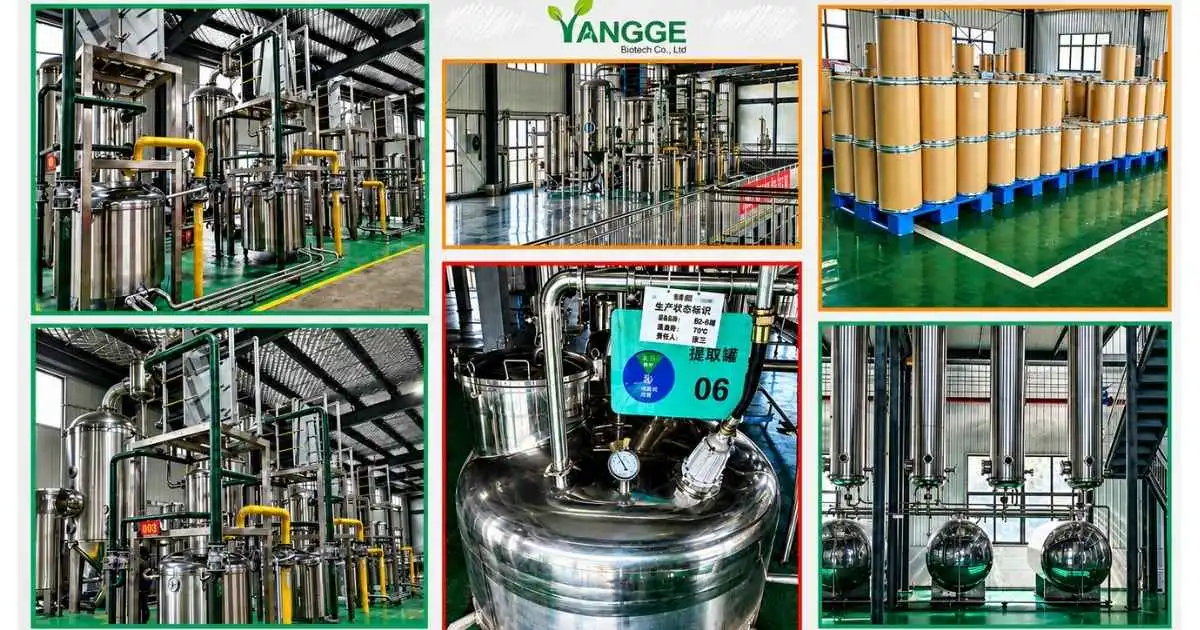
Phycocyanin suppliers you can trust have operations that are fully integrated, from growing algae to packaging the final product. Site audits should check the upkeep of spray-drying equipment, the rules for testing for microbes, and the systems that connect batch codes to records kept in growing ponds. Yangge Biotech lets customers look around their facilities, which is open and honest and helps build long-term relationships.
Third-party testing backs up what the seller says. Purchasing teams should ask for up-to-date test results from reputable labs that confirm the E-values, protein content, and lack of contaminants such as synthetic dyes that are used to boost color readings artificially.
To strengthen traceability and pigment authenticity, many quality-conscious buyers now specifically require Blue Spirulina to be verified by independent labs, as its vibrant phycocyanin profile is particularly vulnerable to adulteration. The 2019 event with mislabeled spirulina goods shows how important it is to have a third party check the information, especially when looking at new suppliers who offer lower prices.
When distributors give formulators strict color requirements, batch-to-batch consistency is important. Spectrophotometric study at 620 nm wavelength shows that Yangge's production methods keep the difference in E-value between lots to within ±5%. This consistency means that downstream customers don't have to re-formulate as much, which improves the value propositions for distributors.
Market Positioning and Consumer Trends
In North America and Europe, the need for ingredient names that people can remember is growing quickly. "Brilliant Blue FCF" or "FD&C Blue No. 1" make people avoid the product, while "spirulina extract" sounds good to people who care about their health and are familiar with the superfood category. Brands of drinks say that changing the recipes to include phycocyanin makes customers like them more and be ready to pay more for them.
Halal certification is important for Middle Eastern markets, but synthetic dye makers often can't give it because of questions about processing aids. Certified natural colorants give distributors who work with Gulf Cooperation Council countries a competitive edge. These colorants meet religious needs and growing health trends among wealthy customers in Dubai, Riyadh, and Abu Dhabi.
The regulatory trajectory favors natural colorants. The European Food Safety Authority is still looking into the safety profiles of synthetic dyes, and restrictions could be coming soon. Distributors who invest in natural colorant knowledge get ahead of changes in regulations and don't have to worry about their stock going out of date like synthetic tartrazine sellers did when limits were tightened.
Practical Uses and Handling of Blue Spirulina in Industrial Applications
For phycocyanin integration to go well, you need to know about the different formats that are available, how to make them more stable, and how to handle logistics. Manufacturers need to change how they handle pigments so that they stay intact during production and storage.
Format Selection: Powder vs Encapsulated Forms
Yangge sells phycocyanin as a fine powder (80–200 mesh particle size) that can be added directly to dry mixes, quick drink mixes, and supplement formulas. Since it dissolves in water, it can be hydrated quickly in mixing vessels. However, high-shear mixing keeps high-protein matrices from sticking together. Manufacturers of drinks mix powder with small amounts of water before diluting to the final concentration. This makes sure that the color is spread out evenly and there are no streaks.
Encapsulated forms keep the phycocyanin safe during tableting or capsule filling, where compression forces and friction heat could break down exposed powder. Yangge provides OEM encapsulation services that make pills, hard capsules, and softgels with custom phycocyanin amounts. This makes production easier for supplement brands that don't have their own encapsulation facilities. Before shaping, powder forms must be mixed into gelatin or pectin bases. Adding happens when the temperature drops below 65°C during cooling stages.
Bulk packaging options include 1 kg aluminum foil bags for sampling and small-batch production, and 25 kg fiber drums for commercial manufacturing runs. Distributors like that the minimum order size is flexible and starts at 25 kg, which lets them test the inventory before committing to full-scale orders. For products like Blue Spirulina, which are sensitive to moisture and light, this flexible MOQ is especially valuable because it allows buyers to evaluate both the pigment stability and the packaging integrity under real storage conditions. Private label needs can be met by custom packaging, which can include nitrogen flushing to extend shelf life in tropical climates.
Stability Optimization and Preservation Strategies
Controlling the temperature is very important all along the supply line. Phycocyanin stays most effective when kept below 25°C in low-humidity areas. Refrigeration can extend the shelf life past the usual 24-month window. Yangge's packaging uses desiccant packets and moisture barrier materials, but wholesalers should make sure that the building conditions don't let the goods get too hot in the summer.
For light protection, you need extra packaging that is opaque. Under fluorescent lighting, clear containers let colors fade noticeably in just a few weeks. This is why amber glass or opaque HDPE bottles are needed for finished products that are ready to sell. Formulators who are making clear drink bottles should add UV filters to the wrapping materials or suggest that the bottles be displayed in refrigerators.
Antioxidant additives make finished products more stable with phycocyanin. Ascorbic acid, vitamin E, and rosemary extract remove free radicals that speed up protein breakdown. This helps colors stay true longer in shelf life tests. This combined method lets formulators make drinks that are stable for 18 months at room temperature, which is on par with synthetic dye performance.
Dosage Guidelines and Cost-in-Use Calculations
Depending on the E-value grade and the color strength you want, the normal inclusion rates are between 0.01% and 0.1% by weight. About 200 mg of E18 phycocyanin is needed per dose of a protein powder that wants to be sky-blue, which costs between $0.024 and $0.056 per unit at the present wholesale price. This means that phycocyanin can be used in products that cost more than $25, since the cost of the ingredients is a good representation of the total cost of the product.
Beverage applications demand lower concentrations due to liquid dispersion. Ready-to-drink functional drinks turn bright blue at 30–50 ppm phycocyanin, equating to 15–25 grams per 500-liter batch. These economics favor natural colorants in premium beverage markets, where savings of $3 to $5 per batch from synthetic dyes aren't enough to cancel out the benefits of brand placement.
Distributors should offer color matching and dosage calculators to their customers. Yangge's technical team helps with creation by sending color chips and usage instructions that are specific to each product matrix. This cuts down on the number of failed attempts that waste expensive ingredients.
| Application Category | Typical Dosage Range | Recommended E-Value | Key Stability Considerations |
|---|---|---|---|
| Protein Powders | 0.05-0.1% | E18 or E25 | Stop water from getting in. |
| RTD Beverages | 30 to 50 ppm | E18 | Stay away from pH levels below 4.5 if you don't have any stabilizers. |
| Gummies | 0.02% to 0.05% | E10 or E18 | Add while the process is cooling. |
| Yogurt/Dairy | 0.01 to 0.03% | E18 | Put in the fridge and use within 21 days. |
| Tablets/Capsules | 50 to 100 mg per unit | E25 | Close up or cover |
Conclusion
The choice between phycocyanin from Blue Spirulina or synthetic blue dyes? That depends on how well technical performance needs to be balanced with market positioning strategies and regulatory foresight. Natural phycocyanin has the appeal of a clean label, works as an antioxidant, and fits in with customer health trends. However, it needs to be carefully formulated because it is sensitive to heat and pH. Synthetic dyes are easier to process and cost less, but they are losing popularity in the market and could face problems from regulators.
Dual-source tactics help distributors and procurement directors who work with mid-sized food and drink companies stand out from the competition by keeping phycocyanin in stock for high-end natural brands and backing synthetic dye uses that need to be cost-effective. When choosing a supplier, it's best to work with vertically integrated companies like Yangge Biotech.
They control everything from farming to packing, so each batch is the same and the supplier is reliable. As clean-label reformulations speed up around the world, early investments in natural colorant knowledge place distributors as strategic partners rather than commodity sellers, allowing them to make more money in the fastest-growing part of the industry.
FAQ
Can phycocyanin be used in baked goods like cookies and cakes?
The regular phycocyanin can't be used for baking at high temperatures. When heated above 60°C, the protein structure breaks down, which makes the color fade a lot in the oven. Phycocyanin should be added to frostings, icings, or glazes by bakers after the cakes have cooled. Some companies are able to successfully add it to no-bake energy balls or sweets that are kept in the fridge and don't go through any heat processing at all.
What distinguishes E18 from E25 specifications?
The E-value shows the amount of phycocyanin and the intensity of the color as measured by spectrophotometry. For food and drink applications, E18 is the standard because it strikes a good balance between price and performance. E25 has a better purity and is often used in pharmaceutical-grade vitamins or makeup that need the most color payoff with the fewest amounts. The price difference between E25 and E18 is usually between 30 and 50 percent. This is okay when there isn't much room for formulation or when marketing focuses on positioning E25 as the ultra-premium option.
How should distributors prevent color variation complaints from customers?
Color uniformity problems are often caused by bad storage or formulas that don't match the right pH. Customers should be taught by distributors how to use light-proof packing, store items at the right temperature, and test the pH of new products during development. Giving technical data sheets with suggested use areas stops them from being misused. Customers can send in their matrix for color trials before placing bulk orders. By offering sample testing services, compatibility problems can be found before full production runs.
Does phycocyanin qualify for organic product certifications?
Phycocyanin can back up claims of being organic if it is obtained through physical processes that use water and no chemical solvents and comes from spirulina that has been grown in an organic way. Yangge Biotech's HPLC extraction method only uses water and mechanical separation, so the purity of the biological material is kept. If a customer wants to get USDA or EU organic certification, they should ask for organic-approved batches that come with paperwork that shows they came from certified farms.
Partner with Yangge for Premium Blue Spirulina Supply
Yangge Biotech is a reliable company that makes Blue Spirulina. They always have E10, E18, and E25 phycocyanin grades in stock, which are certified Kosher, Halal, and up to USP standards. Our 1-ton standing inventory keeps your downstream commitments safe from supply disruptions, and our flexible MOQs starting at 25 kg make it easy to place both trial orders and large-scale commercial orders. We are experts at OEM/ODM services, which means that we can make superfood blends, tablets, capsules, and gummies that are exactly what your brand needs.
Our thorough documentation helps procurement directors and quality managers; every shipment comes with a detailed COA report, MSDS safety data, and batch traceability that connects the finished product to its roots in the cultivation pond. Our expert team can help you with formulation, give you advice on stable tests, and match colors, all of which speed up the process of making new products. We provide the consistent quality that distributors of high-end natural product names in North America, Europe, and the Middle East expect. Our production facilities are ISO 22000-certified and use cutting-edge HPLC extraction technology.
Contact our export team at info@yanggebiotech.com to request samples, discuss volume pricing for annual supply agreements, or schedule a technical consultation. Visit blog.yanggebiotech.com for additional resources on natural colorant applications and industry regulatory updates. We look forward to becoming your strategic partner in natural ingredient sourcing.
References
1. Eriksen, N. T. (2008). Production of phycocyanin a pigment with applications in biology, biotechnology, foods and medicine. Applied Microbiology and Biotechnology, 80(1), 1-14.
2. Sigurdson, G. T., Tang, P., & Giusti, M. M. (2017). Natural colorants: Food colorants from natural sources. Annual Review of Food Science and Technology, 8, 261-280.
3. Downham, A., & Collins, P. (2000). Colouring our foods in the last and next millennium. International Journal of Food Science & Technology, 35(1), 5-22.
4. Martelli, G., Folli, C., Visai, L., Daglia, M., & Ferrari, D. (2014). Thermal stability improvement of blue colorant C-phycocyanin from Spirulina platensis for food industry applications. Process Biochemistry, 49(1), 154-159.
5. Barkallah, M., Dammak, M., Louati, I., Hentati, F., Hadrich, B., Mechichi, T., & Abdelkafi, S. (2017). Effect of Spirulina platensis fortification on physicochemical, textural, antioxidant and sensory properties of yogurt during fermentation and storage. LWT-Food Science and Technology, 84, 323-330.
6. Solymosi, K., Latruffe, N., Morant-Manceau, A., & Schoefs, B. (2015). Food colour additives of natural origin. In Colour Additives for Foods and Beverages (pp. 3-34). Woodhead Publishing.

Based on your location and order quantity, you will have the opportunity to receive a limited time free shipping promotion!
Who we are
Popular Blogs