Ergothioneine vs Glutathione: Which Antioxidant Wins?
Yangge Biotech supplies high-quality Ergothioneine and Glutathione ingredients for global supplement manufacturers, functional food developers, cosmetic brands, distributors, and OEM/private-label projects. Yangge Biotech provides product specifications, COA, MSDS, test reports, samples, bulk supply, and customized solutions to support product development and commercial production. For pricing, samples, specifications, or technical documentation, contact Yangge Biotech at info@yanggebiotech.com.
When formulating premium anti-aging products, choosing between ergothioneine and glutathione isn't just about selecting an antioxidant it's about securing a competitive advantage. Both compounds protect cells from oxidative stress, yet ergothioneine stands out for its targeted cellular uptake through the OCTN-1 transporter, ensuring deeper mitochondrial protection without the degradation issues that plague traditional antioxidants.
This specificity makes ergothioneine particularly valuable for brands seeking long-term stability and bioavailability in dietary supplements and skincare formulations. Understanding their distinct mechanisms helps procurement teams align ingredient selection with product goals, regulatory compliance, and market differentiation strategies.
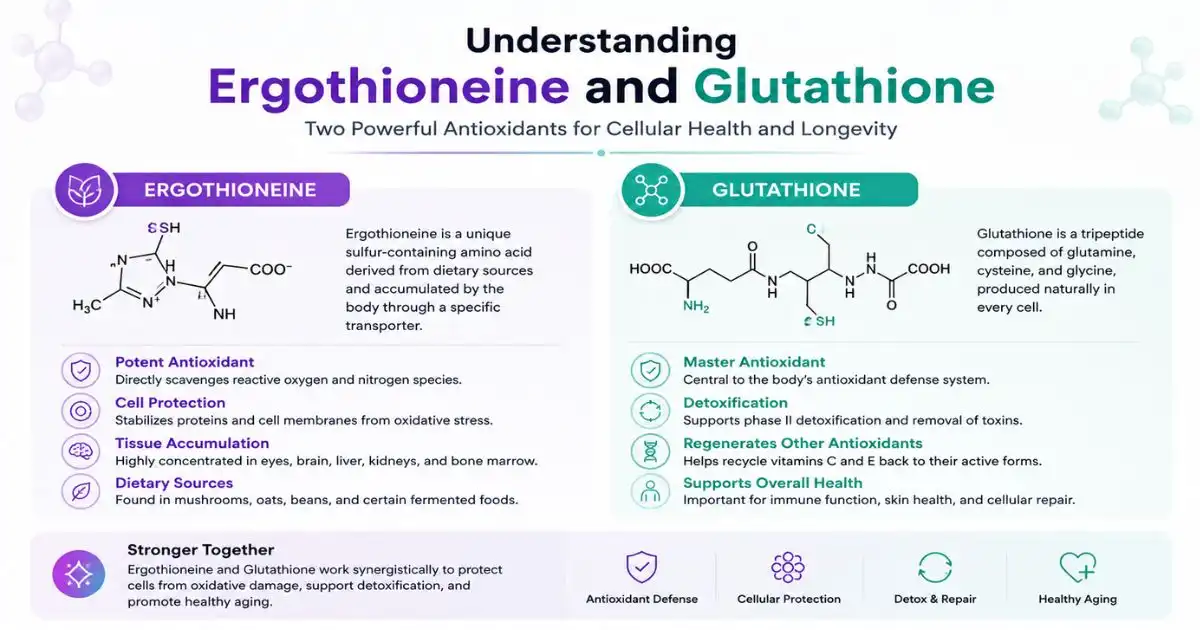
Understanding Ergothioneine and Glutathione
What is Ergothioneine?
Ergothioneine is a unique amino acid made from histidine that has sulfur in it. It is known as a thiol-histidine betaine by chemists, and its formula is C9H15N3O2S. It is OCTN-1 (Organic Cation Transporter Novel-1) that helps this chemical gather in tissues that are under a lot of oxidative stress, like the skin, eyes, and liver. It's not like most antioxidants because of this.
Because they don't dissolve well, vitamin C and coenzyme Q10 can't get into cells where they need to go. A big problem with solubility has been fixed. In 1909, the fungus Claviceps purpurea was discovered to contain Ergothioneine. Most of it is now made with correct biosynthesis through fermentation with fungi. HPLC tests show that it is more than 99.9% pure, which means it can be used in medicine.
What is Glutathione?
It has three parts: glutamine, cysteine, and glycine. Once more, this antioxidant helps the body make others, like vitamins C and E. Reactive oxygen species are things that every cell makes. They help the liver clean out the body by getting rid of them. It works because it has a thiol group (-SH) that helps molecules stay stable when they need to. It won't hurt the cells. But glutathione pills are hard to swallow since the body breaks them down so quickly. Because of this, a lot of companies want to use liposomes or add N-acetylcysteine to precursors. DNA needs to be fixed, proteins need to be made, and the body needs to fight off infections. But the body has to keep making more glutathione because it is used up so quickly.
Key Structural and Functional Differences
How they work in cells and how solid they are make them different. Because it doesn't break down on its own and stays stable across a wide pH range, Ergothioneine can protect things for a long time without the use of buffers or protective packing. The weight of its molecules is 229.3, which makes it easy for its unique transporter system to pass through membranes. Glutathione quickly changes into its oxidized state (GSSG) when it comes in touch with light, heat, or bases.
To put it another way, it stops keeping you safe. It's harder to make new versions because they are less stable, and there are strict rules about how to store them. There are studies in scientific journals that say glutathione is spread out more widely inside cells than Ergothioneine. Ergothioneine is mostly found in mitochondria, which is the part of cells that make energy and also the place where oxidative stress happens the most. Ergothioneine exhibits particular promise in the treatment of photoaging and mitochondrial dysfunction brought on by cellular senescence due to this targeted accumulation pattern.
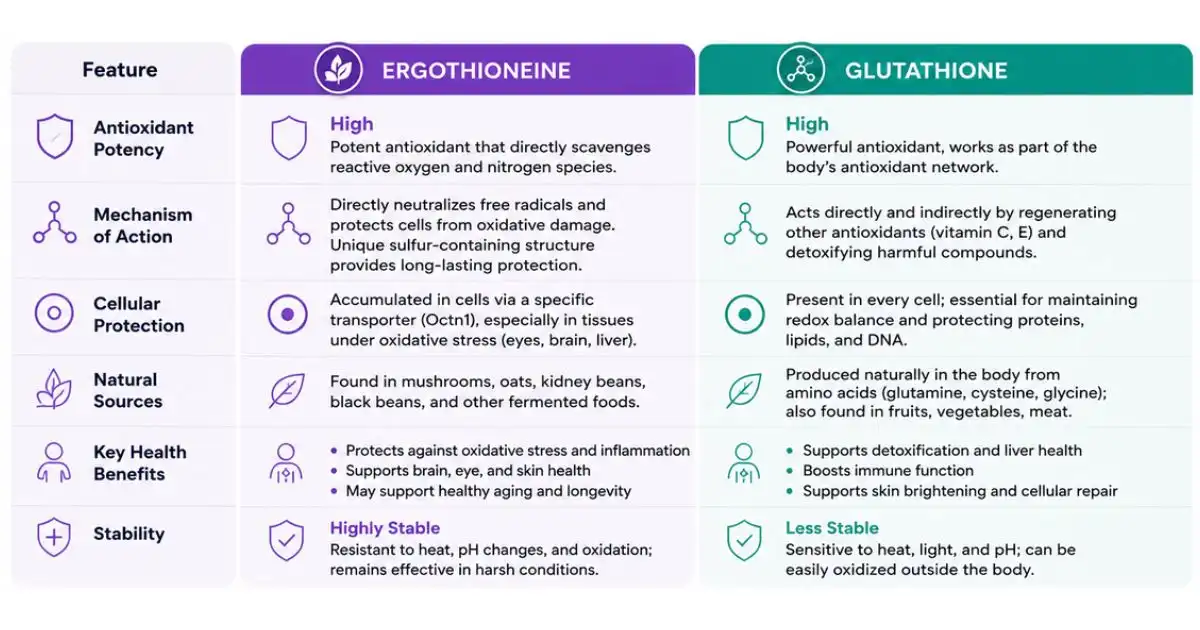
Comparing Antioxidant Properties and Health Benefits
Oxidative Stress Protection Mechanisms
They both fight oxidation damage by giving up electrons, but in real life, they do it in very different ways. Ergothioneine is a "intelligent antioxidant" that doesn't do anything until oxidative stress starts to work in a good way. This way, it doesn't have the side effects that some high-dose normal antioxidants do, which are pro-oxidant effects. Ergothioneine consumption lowers signs by 15–30% in human subjects over 12-week periods, according to clinical studies that tracked oxidative indicators like 8-OHdG (a DNA damage sign).
Hyperoxol and singlet oxygen are two things that it fights immediately. It also helps the body's Phase II enzymes clean up. In this way, it can help you quickly get used to poisons. But because it only stays in circulation for two to three hours, it needs to be made or added all the time to keep the right amount in circulation. Ergothioneine's long cellular residence time (measured in days instead of hours) provides longer protection between doses, which is a key benefit for keeping customers happy and keeping product promises.
Skin Health and Anti-Aging Applications
They help with getting makeup ready in a certain way because they have been used on face before. Ergothioneine is very good at protecting against UVA-induced collagen breakdown and lipid peroxidation. This helps with the "photoaging" process that causes about 80% of visible facial aging. Human skin cells were used in a test tube study that found 10–50 μM Ergothioneine levels lower MMP-1 (collagenase) production by 40–60% after UV exposure. This helps keep the tissue outside of cells steady. Blue light from devices is also kept safe.
This is important in the high-end beauty business since the problem is getting worse. Tyrosinase makes the skin lighter, but glutathione stops it from doing its job. It's often in beauty products and teeth-whitening serums. The Asian market is a great place for this because having even skin tone is very important. Both chemicals help cuts heal and reduce swelling, but Ergothioneine works better with a wider pH range (3.0-7.0), which makes it easier to make products that you leave on your skin, like day creams and serums.
| Property | Ergothioneine | Glutathione |
|---|---|---|
| Cellular Uptake | Active transport via OCTN-1 | Passive diffusion (limited) |
| Stability in Formulation | High (pH 3.0-7.0, heat-resistant) | Low (degrades with light/heat) |
| Half-Life in Cells | Days | 2-3 hours |
| Primary Benefit | Mitochondrial protection, photoaging defense | Detoxification, skin brightening |
Cognitive Function and Longevity Research
There is evidence that people who get enough Ergothioneine are less likely to get brain diseases. The hippocampus and substantia nigra are where it builds up the most. These are two parts of the brain that are easily hurt by oxidative stress. The 2019 cohort study that followed 13,000 people for six years found that those who got the most Ergothioneine had 25% less mild memory loss than those who got the least. This suggests that the substance may be a "longevity vitamin." When the brain doesn't have enough glutathione, Parkinson's disease gets worse. In animal tests, keeping the level of glutathione high in the brain has been shown to help neurons die more slowly.
The blood-brain barrier, on the other hand, makes it hard to add more peripheral glutathione. Ergothioneine, on the other hand, effortlessly skips this obstacle as arterial cells are equipped with unique transporters that make it possible. Nutraceutical companies want to make brain health products for older people in North America and Europe, where it is allowed to say things about how the brain works and its structure. The companies that make these want to make them because they help neurons.
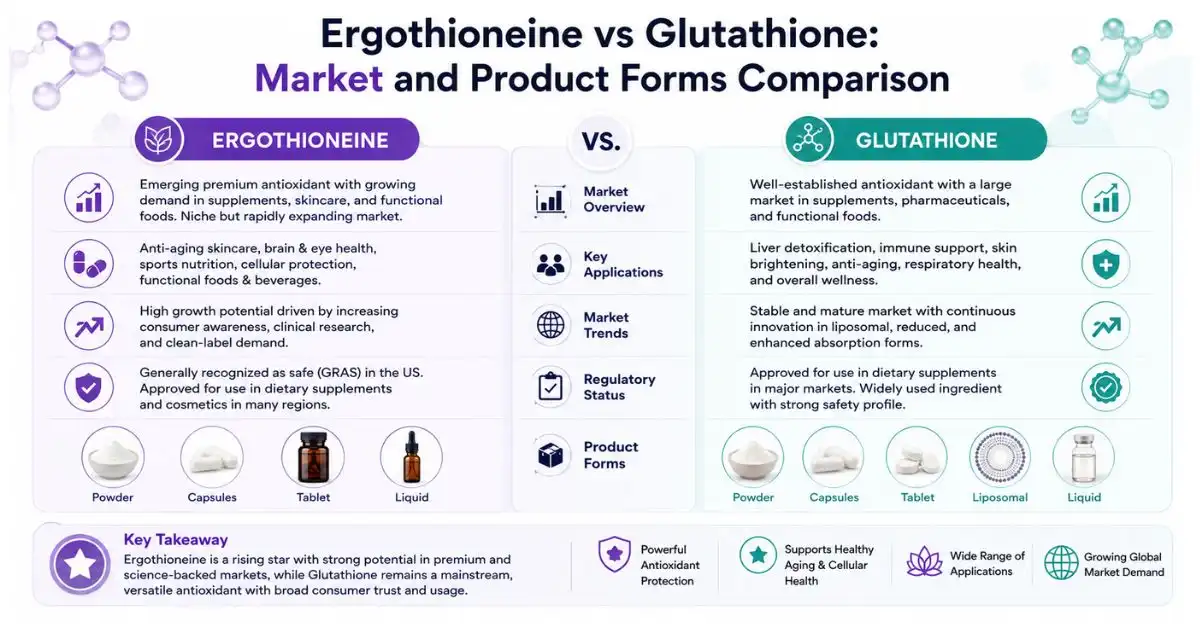
Ergothioneine vs Glutathione: Market and Product Forms Comparison
Available Supplement Formats and Bioavailability
Since these drugs come in different forms, it's not easy to get them or make them this way. Ergothioneine powder that is at least 99.9% pure is a solid that is off-white to white and dissolves in water. It can be used to make vitamins-filled pills, tablets, or drinks. This medicine is stable enough that it doesn't need to be taken in a safe way or with a stomach cover. This way is easier to make and costs less per dose. Most people take between 5 mg and 25 mg every day to help with maintenance. Up to 30 mg/kg of body weight has not been shown to be harmful.
Glutathione pills come in different types that can help with the problem of absorption. Normal pills with reduced glutathione (GSH) might or might not be absorbed. There are also liposomal glutathione pills that claim to be better absorbed through phospholipid encapsulation, and sublingual versions that skip the first step of metabolism. A lot of brands don't use direct vitamins. They use supplements like N-acetylcysteine or glycine/glutamine mixes instead, which help the body make its own.
Certifications and Quality Control Requirements
The people who buy things should check that the people who sell them have a lot of different rights that cover a range of needs. It is always possible to meet important international standards when controlled fermentation is used to make high-purity Ergothioneine. People who follow religious diets need Halal and Kosher food licenses. Being certified with ISO9001 is a big part of quality control systems. More and more people in North America and Europe want to know if something is NON-GMO. A factory that is listed with the FDA must follow GMPs. By law, companies that have been given permission by China to make the product must also do so.
Some labs, like Eurofins, check the levels of pesticides left behind to make sure they follow EU rules. This is very important because mushrooms make Ergothioneine. Before the government can approve new food or makeup claims, they need to know a lot about how safe they are. This makes things take longer to get to stores when they're done. If you have HPLC certificates of analysis with batch-specific purity data (≥99.9%), heavy metal screening results below USP limits, and microbe testing results, it's easier to follow the rules and costs less in the long run to make sure quality.
Pricing Structures and Supply Chain Considerations
The fact that these antioxidants cost different amounts of money shows how tough it is to make them and how old the market for them is. Because it can only be made by a few companies around the world that know how to make it in a certain way, Ergothioneine is very expensive. Pharmaceutical grade costs between $3,000 and $8,000 per kilogram. It's clear that it's in the ultra-premium vitamin and makeup groups because of how much it costs. The ingredients are also very cheap. Brands that say they are the "longevity vitamin" can get people to pay more, even if the ingredients costs more. They make a lot of money because of this. Prices for glutathione change a lot based on its form and how pure it is. Low-grade reduced glutathione costs around $200 to $800 a kilogram.
On the other hand, things that are already prepared to be put into liposomes cost around $2,000 to $4,000 per kilogram. Most of the time, you can only buy 1 kg of Ergothioneine at a time. To keep it steady, it is often packed in metal foil bags. You can buy a very small amount of glutathione in bulk, generally between 5 and 25 kg. Because of how batch fermentation works, getting Ergothioneine can take up to six weeks. When planning inventory, this means that longer supply lines need to be taken into mind than when planning inventory for glutathione, which is easier to get and can be had in two to three weeks.
Choosing the Right Antioxidant for Your Business Needs
Regulatory Status Across Key Markets
Before you pick one of these items for a different market, you should find out how things are done there. In the US, Ergothioneine has been found to be generally accepted as safe (GRAS) for use in foods and dietary supplements. This means that new goods can be made without going through pre-market approval procedures. Ergothioneine is thought of as a Novel Food in the European Union. Chemical tests and years of safe use show that it is safe to use in many ways. Brands that want to sell in the EU must follow this law. This process can take up to 36 months. Because of how people usually eat mushrooms, Ergothioneine is known as a food ingredient in Japan.
This makes it easy to get into the anti-aging business, which is a good one. It's been helpful all over the world for a long time. Still, some health claims haven't been proven and need to be through tests in people. The growing body of research on Ergothioneine may provide stronger evidence for structure-function claims that are permitted by regulatory frameworks. This is especially important when making products that make clear claims about anti-aging or cognitive function.
Formulation Compatibility and Synergies
You need to know how these vitamins work with other active ingredients that are mixed together in tricky ways in order to make a good product. Ergothioneine is very effective with a wide range of fluids, and it doesn't require any pH adjustments or chelating agents to remain stable in water or emulsions. Strong chemicals like resveratrol, hyaluronic acid, and peptides are found in anti-aging serums that work well with it. They all work together to make the antioxidants stronger, not against each other. The molecule doesn't have any charge when the pH is right.
This stops any ionic processes that might have been able to settle down other parts of the mixture. When metal ions like iron or copper are present, galectin can join with thiols and form disulfide bonds with cysteine-containing substances. It's tougher to make because of this. The pH of good glutathione mixes stays below 6.0 with the help of EDTA and buffers. In other words, they don't work as well with some smells and stabilizers. The body functions better when vitamin C and Ergothioneine are combined in antioxidant medications. Vitamin C makes collagen and quickly gets rid of free radicals in places with water, while Ergothioneine helps the mitochondria work properly.
Target Customer Segments and Positioning Strategy
You should pick one of these drugs based on where your brand stands in the market and the type of people you want to reach. Ergothioneine is a very popular supplement among educated people between the ages of 35 and 65 who are looking for scientifically proven ways to extend their lives. A lot of people in North America and Northern Europe are interested in "biohacking" and making their health better before it gets worse. Some vitamin lines are more fun to market than others because the strange way the compounds move and work with mitochondria make for interesting marketing stories. This group of people still doesn't care much about price.
They are ready to pay $60 to $150 a month for drugs that are made just for them and have been shown to work. Many people like glutathione, such as athletes who want to heal faster, people who like to clean, and people who want better skin and look better. Due to its many benefits and well-known brand, it's a good choice for most people. Prices range from $25 to $50 a month. Because it works in a new way and has been studied in writing, Ergothioneine helps professionals come up with ideas for medical spas, functional medicine clinics, or skin clinics. People are more likely to learn about glutathione in a market, though, because it is well known.
| Decision Factor | Choose Ergothioneine If... | Choose Glutathione If... |
|---|---|---|
| Target Market | Premium/ultra-premium positioning | Mass-market to mid-tier positioning |
| Primary Claim Focus | Anti-aging, longevity, photoaging | Detoxification, immune support, brightening |
| Formulation Type | Serums, targeted supplements, functional beverages | Oral beauty, detox programs, IV therapy support |
| Regulatory Timeline | Can accommodate Novel Food approval (EU) | Need immediate market access globally |
| Price Point | $80-150 retail for monthly supply | $25-60 retail for monthly supply |
Emerging Market Trends and Innovation Opportunities
Every day, the world around oxygen changes as scientists learn more about it and discover new living processes. Trends in "mitochondrial health" are becoming more popular among functional medicine doctors and companies that help people live longer. Ergothioneine is the main thing behind these changes. More and more people are interested in NAD+ precursors, senolytic substances, and other things that help cells work better, so it makes sense to put these ingredients here. To put it another way, there are many ways to make things that slow down age. A market study says that from now until 2028, the need for Ergothioneine will grow by 18 to 22% each year.
This is mostly because high-end makeup artists in the West, Asia, and the Pacific use it. Other common uses for glutathione are to put it in nanoparticles, put it on the skin, or mix it with vitamin C or alpha-lipoic acid to help the body make more of it. New ideas focus on better ways to give it. Despite the fact that both meet purity standards, Ergothioneine from fungi fermentation is more in line with what consumers want from "natural" or "clean beauty" brands. Anyone who wants to be eco-friendly and stand out when looking for goods can use bases made from mushrooms. These bases are easy to track and use green energy in the brewing process.
Conclusion
Which Ergothioneine or glutathione you choose will depend on how you want to position your brand, what your target market needs, and what your product development goals are. Ergothioneine is great for high-end anti-aging vitamins and photoprotective skin care products because it is very stable, protects mitochondria, and provides many marketing possibilities. Another new study about living a long time backs this up. Glutathione can improve skin, get rid of toxins, and help the immune system a lot of different ways.
The market is bigger for it. In the long run, Ergothioneine keeps cells safe, and glutathione speeds up the repair of antioxidants. Some items, like these two, work well together, and cutting-edge brands may use them together instead of seeing them as competitors. When you decide what to buy, you should think about more than just the price. Think about when you need to follow the rules, how hard the plan is, and how strong the science is that backs up what you want to say. This will help you pick the best raw materials for your company.
FAQ
How do I verify the purity and quality of bulk ergothioneine shipments?
To begin, get Certificates of Analysis (CoA) from labs that have been cleared and use tried-and-true HPLC methods. This lets you see how good it is. This is how Ergothioneine is typically measured, so that is how it is depicted. People you can trust will show proof that each batch is at least 99.9% pure, along with test results for heavy metals (like mercury, lead, arsenic, and E. coli) and bacterial toxins (like Salmonella, E. coli, and yeasts and molds).
These tests also check for chemical leftovers and make sure they follow EU rules. Labs like Eurofins, SGS, or Intertek test goods on their own to make sure sources are telling the truth and that goods haven't been tampered with. When you first work with a new service, you might want to ask for return samples. After that, your quality control team can look at the samples to make sure they meet your needs before they accept full shipments. The materials used for shipping should also keep the items dry and free of mold and water. These are usually nitrogen-flushed metal foil bags.
Are there safety concerns with long-term use of high-dose ergothioneine or glutathione?
The long-term use of both drugs has been shown to be safe as long as the limits are not pushed. For 12 weeks, people were given up to 30 mg of Ergothioneine every day. The characteristics of their blood, liver, or kidneys did not change in a bad way. When given to animals at a dose of 30 mg/kg body weight, they don't change the organs or their ability to breed. In general, people take in about 50 times this amount.
For a long time, glutathione has been used in medicine without any problems. You might not feel well if you take more than 1,000 mg of it every day, though. When used in larger amounts, neither drug has a big effect on other drugs. That being said, people who are on immunosuppressant drugs or chemo should talk to their doctors first. Every brand should have this written on it.
Can ergothioneine and glutathione be combined in single formulations?
They work well together when the recipe takes into account how they are made chemically. The steady Ergothioneine doesn't mix with anything else. It works with glutathione to protect different parts of the cell. Glutathione stays steady when the pH level stays between 5.5 and 6.5. It's also important that the food stays fresh. This goes for both things. With this kind of mixture, you don't need as many reactive tests to make sure that the mix of antioxidants doesn't speed up the spoilage process. When studies are done quickly (40°C, 75% RH) over 3–6 months, people think that a product will make money before it's made in large quantities.
Partner with Yangge for Premium Ergothioneine Supply
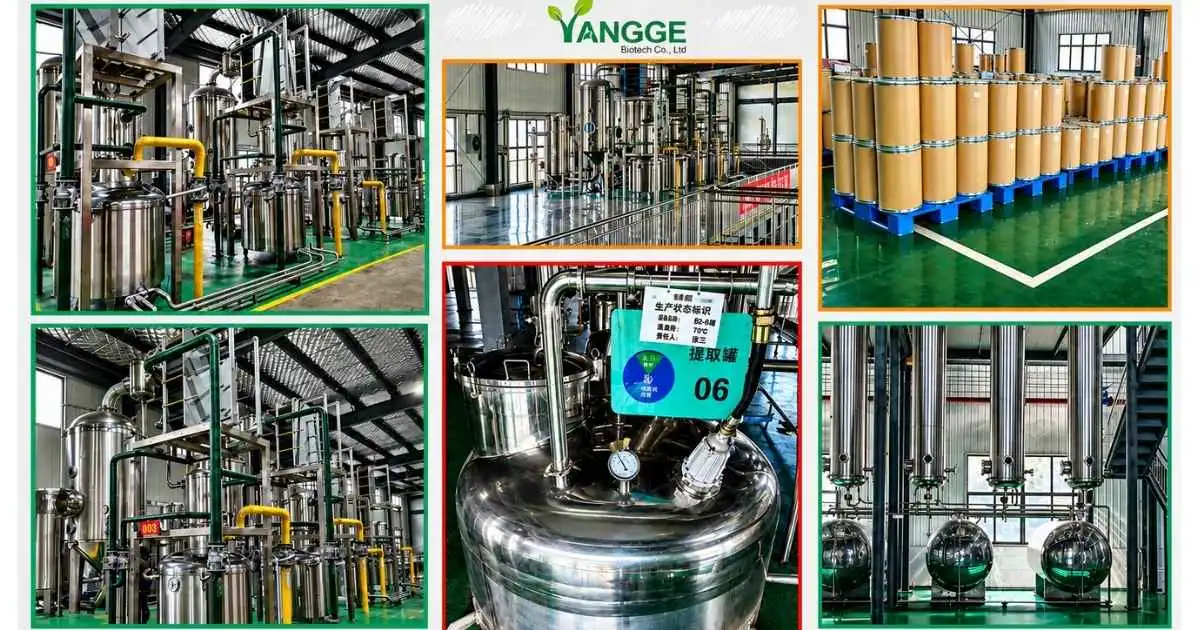
Pharmaceutical-grade Ergothioneine powder from Yangge Biotech meets the exact needs of the world's best nutrition brands and makeup formulators. The Ergothioneine we sell is 99.9% pure and comes from fermentation. Numerous HPLC tests and Eurofins studies show that it has very little pesticide, which is in line with EU rules. We always have to follow brand-new FDA, Halal, Kosher, ISO9001, and NON-GMO rules. In North America, Europe, and Asia, the government will make this easy for you to do. Our expert team can help you with things like making recipes, checking for stability, and filling out paperwork for regulations.
This will make the process of making your item go faster. The minimum order quantity (MOQ) starts at 1 kg, and the items are sent in plastic bags to keep them fresh. Whether you need a few small samples for the first round of work or a lot of things packed in a way that works for you, this is still true. Contact us or you can email our buyers at info@yanggebiotech.com to talk about how our past work as a source of Ergothioneine can help your next high-end anti-aging product. You can learn more about Ergothioneine on blog.yanggebiotech.com, where you can also see recipes that use it well.
References
1. Cheah, I.K., & Halliwell, B. (2021). Ergothioneine, recent developments. Redox Biology, 42, 101868.
2. Ames, B.N. (2018). Prolonging healthy aging: Longevity vitamins and proteins. Proceedings of the National Academy of Sciences, 115(43), 10836-10844.
3. Paul, B.D., & Snyder, S.H. (2010). The unusual amino acid L-ergothioneine is a physiologic cytoprotectant. Cell Death & Differentiation, 17(7), 1134-1140.
4. Forman, H.J., Zhang, H., & Rinna, A. (2009). Glutathione: Overview of its protective roles, measurement, and biosynthesis. Molecular Aspects of Medicine, 30(1-2), 1-12.
5. Halliwell, B., Cheah, I.K., & Tang, R.M.Y. (2018). Ergothioneine – a diet-derived antioxidant with therapeutic potential. FEBS Letters, 592(20), 3357-3366.
6. Repine, J.E., Bast, A., & Lankhorst, I. (1997). Oxidative stress in chronic obstructive pulmonary disease. American Journal of Respiratory and Critical Care Medicine, 156(2), 341-357.

Based on your location and order quantity, you will have the opportunity to receive a limited time free shipping promotion!
Who we are
Popular Blogs