Best Lutein Ingredients for Eye Health Supplements
Yangge Biotech offers premium Marigold Flower Lutein ingredients for eye health supplement formulations, including lutein powder, lutein oil suspension, lutein beadlets, and water-dispersible microcapsule options. Extracted from Tagetes erecta flowers, these lutein ingredients are suitable for capsules, tablets, gummies, softgels, beverages, and premixes, supporting vision and macular health formulations. Yangge Biotech provides multiple lutein specifications to meet different product development needs. For product specifications, COA, samples, pricing, or bulk orders, Contact us or email at info@yanggebiotech.com.
When selecting premium ingredients for eye health supplements, marigold extract stands as the gold standar d source of naturally derived carotenoids, with Lutein emerging as the most critical bioactive component for retinal protection and blue light filtration. As a manufacturer or formulator in the dietary supplement industry, your choice of raw materials directly determines product efficacy, consumer trust, and market success. High-purity marigold flower extract delivers concentrated xanthophyll carotenoids that protect macular health, reduce oxidative stress in retinal tissue, and meet the rigorous compliance standards required in North American and European markets.
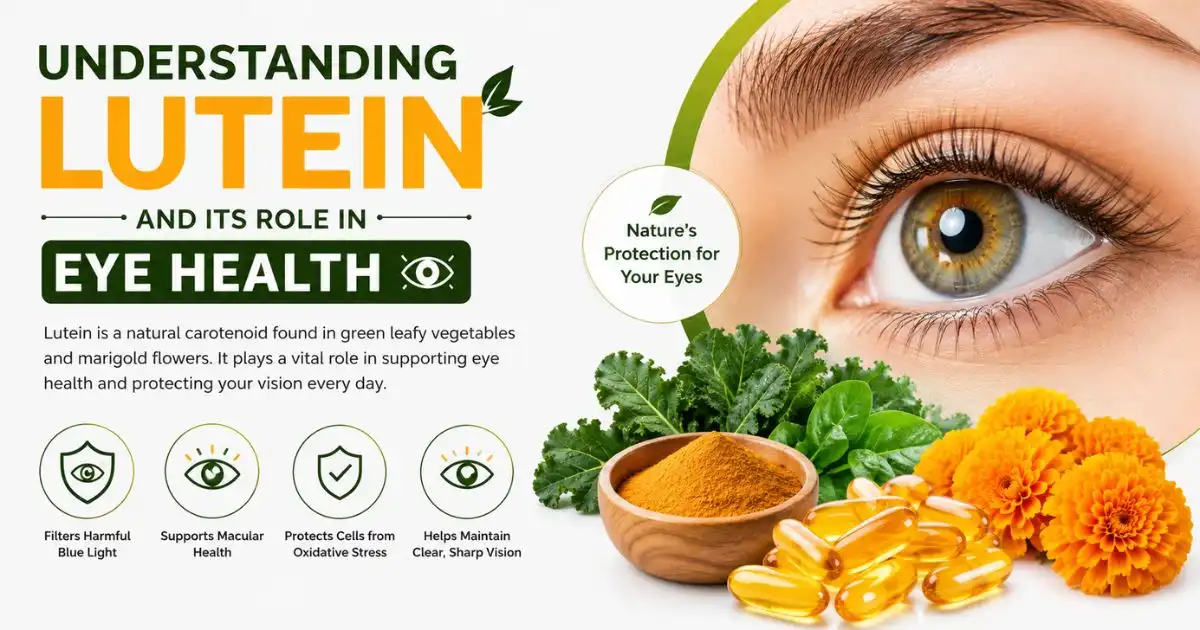
Understanding Lutein and Its Role in Eye Health
As people get older and spend more time in front of screens, visual health has become a major worry. The macula, the center part of the retina that controls clear, detailed vision, naturally gathers the yellow-orange pigment known as Lutein that comes from marigold flowers. A biological screen, this xanthophyll pigment soaks up dangerous high-energy blue light before it hurts photoreceptor cells.
The Biological Function of Macular Carotenoids
The retina has two main types of xanthophylls: Lutein, a yellow pigment found in marigolds, and a different type of it called zeaxanthin. These chemicals get inside cell walls and can survive in both water-repellent and water-attracting settings. They can neutralize reactive oxygen species from both inside and outside cells because of their unique position. This protects against oxidative damage in a wide range of ways. The Age-Related Eye Disease Study 2 (AREDS2) found that giving people with middle stages of the disease 10 mg of free form every day lowered their chance of advanced macular degeneration by 25% over the course of five years.
Clinical Evidence Supporting Vision Protection
Several studies that were reviewed by experts in the field back up the link between what you eat and how well you see. People who got 6–12 mg daily from food and supplements had improvements in how well they could see in low light, how quickly they could recover from glare, and how fast they could process visual information. Antioxidants lower inflammation markers that are linked to diabetic retinopathy and the worsening of glaucoma. During pregnancy and nursing, the amount of this carotenoid that a mother eats helps the retinal growth of her baby. It gets into the baby's eyes through breast milk and builds up there.
Safe Dosage Parameters for Supplement Formulation
Long-term use has been shown to be safe through clinical studies. Doses between 6.9 mg and 20 mg per day are well tolerated, and no serious side effects have been reported. If you get too much, you might get benign carotenemia, which is a brief yellowing of the skin that goes away when you lower your amount. Regulatory rules get stricter when formulating products for infant formula or pediatric uses. These products must go through specific testing protocols to make sure they are bioavailable and stable in powdered milk matrices.
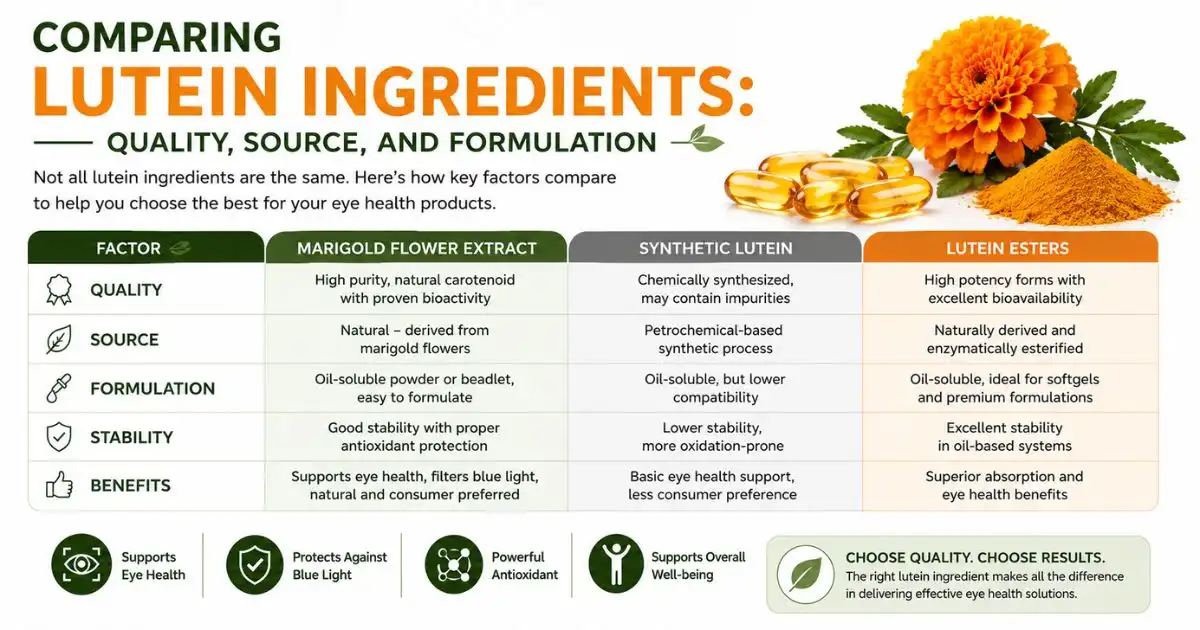
Comparing Lutein Ingredients: Quality, Source, and Formulation
Understanding the differences between ingredients helps you make smart purchasing choices that balance cost, performance, and following the rules. The type of plant used, the way it was extracted, and its final shape all affect how well the active compound works in finished products.
Natural Marigold Extract Versus Synthetic Alternatives
There are a lot of xanthophyll carotenoids spontaneously made in the leaves of marigold flowers (Tagetes erecta). Solvent systems are used in commercial extraction processes to separate and clean these chemicals. Depending on how hard the process is, the potencies range from 5% to 80%. Natural plant-derived Lutein ingredients usually have a full range of related carotenoids that may make the product more bioavailable by working together in a way that makes it more effective.
Synthetic production is used in synthetic production to make molecular structures that are exactly the same. This ensures consistency in purity and could lower costs as production scales up. Many business-to-business clients in the supplement and infant formula industries, on the other hand, prefer botanical sources to stay in line with clean label trends and consumer tastes for plant-based ingredients. Good farming and Collection Practices (GACP) standards should be used throughout the supply chain for farming sources so that they are easier to track.
Free Form Versus Esterified Structures
Commercial ingredients come in two different chemical forms. The xanthophyll molecule that is not bound to anything else and has hydroxyl groups on both ends is called "free form." When they are esterified, fatty acid chains (usually palmitic, myristic, or lauric acid) are linked to one or both of the hydroxyl groups. The petals of marigold plants naturally have mostly esterified structures that are saponified during extraction to make free form when needed.
During absorption, stomach enzymes in the small intestine break down ester bonds, making both forms of carotenoids accessible. Most of the time, esterified ingredients are better at resisting oxidation while being stored, which makes them useful for goods that need to last longer. In some formulation matrices, free form usually mixes better with water. This is especially true for beverage uses that need cold-water solubility (CWS) beadlet technology.
| Characteristic | Free Form | Esterified Form |
|---|---|---|
| Natural Source | Vegetables, fruits | Marigold flowers |
| Oxidative Stability | Moderate | Higher |
| Water Dispersibility | Better with CWS tech | Requires microencapsulation |
| Bioavailability | Direct absorption | Enzymatic cleavage needed |
| Formulation Suitability | Beverages, gummies | Capsules, tablets, infant formula |
Synergistic Pairing with Zeaxanthin
Even though these isomers are chemically similar (they only differ in where the double bonds are placed in one end ring), they are found in different parts of the retina. The yellow pigment is mostly found in the macular's edges, while zeaxanthin is mostly found in the foveal center. Formulations that mix the two carotenoids in a 5:1 ratio are similar to how they are naturally distributed in human retinal tissue. This means that they protect the whole macula as much as possible. Leading companies that make supplements for eye health now always use this ratiometric method.
Evaluating and Selecting the Best Lutein Supplements and Suppliers
To do great procurement, you need to carefully look over technical specs, quality processes, and the openness of the supply chain. Often, the difference between average and great ingredients is in small details that you can't see at first glance.
Critical Quality Specifications for Procurement Managers
Purity and standardization of material are basic needs. Reliable providers give a Certificate of Analysis (CoA) for each batch, which shows that the active ingredient concentration was checked using HPLC methods that have been proven to work. If the marigold extract is good, it should say:
- Potency Range: Potency ranges from 5% to 80%, with 10%, 20%, and 50% being the most common commercial grades.
- Appearance: The powder looks like fine orange powder with evenly sized particles.
- Contaminant Limits: Limits for Contaminants: PAH4 meets European standards; benzopyrene is less than 10 parts per billion; heavy metals are within USP guidelines.
- Processing Certifications: Certifications for processing: non-GMO, non-irradiated, and allergen-free claims.
- Microbial Quality: Quality of Microbes: Total plate count, yeast/mold, and pathogen testing that meets pharmaceutical standards.
Suppliers who offer a range of specifications, from low-potency options that can be used for food coloring to ultra-concentrated grades for softgel encapsulation, show that they can make products that can be used in a wide range of B2B situations.
Regulatory Certifications and Traceability Systems
The global supplement markets need a lot of proof that they are following the rules. Some priority licenses are:
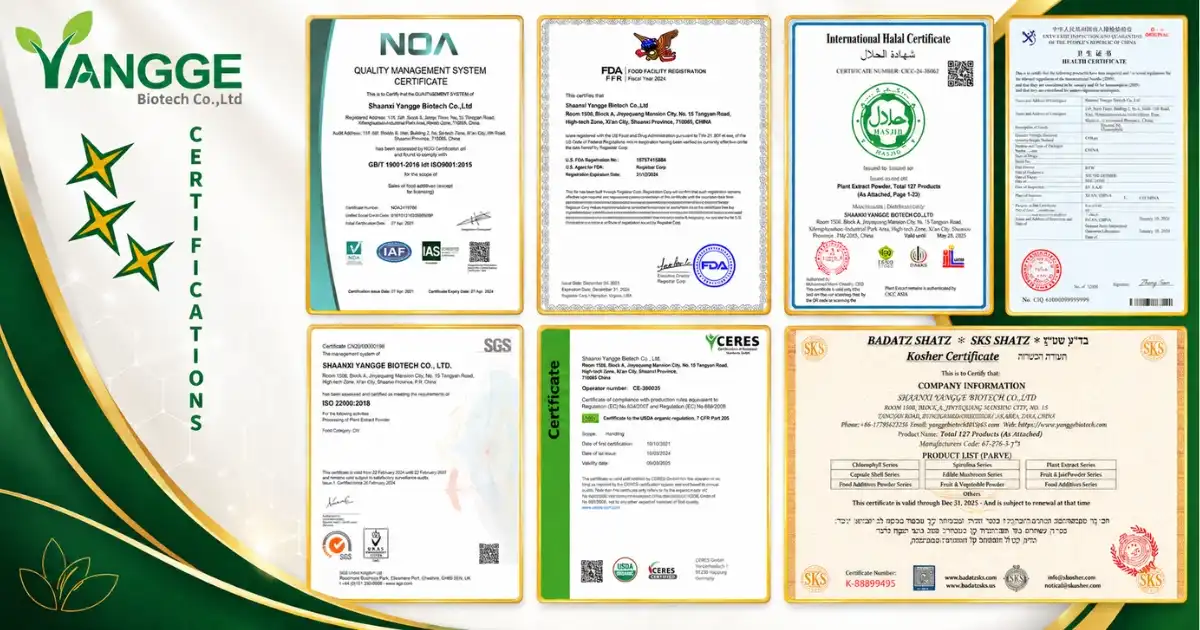
- GMP Certification: This makes sure that factories follow Current Good Manufacturing Practices, which are set by the FDA or other relevant authorities.
- ISO Standards: ISO 9001 is for managing quality, and ISO 22000 is for managing food safety.
- Kosher and Halal: Makes it easier for people of all religious backgrounds to buy food.
- Organic Certification: Labels from the USDA or the EU for special placement.
In addition to certifications, strong tracking links finished items to specific areas where marigolds were grown. Leading suppliers use blockchain or digital tracking systems to keep records of every step of the process, from harvesting to packaging. This openness is very important when customers ask about the ethics of sources, how the company treats the environment, or detailed quality questions about a batch.
Strategic Considerations for Bulk Purchasing
Minimum order amounts (MOQ) are very different from one provider to the next. For the first test, small manufacturers might send 1 kg samples in aluminum foil bags, but buying in bulk usually starts at 25 kg drums. Volume-based pricing levels encourage bigger commitments, but purchasing managers have to weigh the cost savings against the costs of keeping inventory and the limited shelf life (usually 24 months with proper storage).
Options for packaging affect how well things are handled further down the line. Some standard forms are:
- Aluminum foil bags (1-5 kg) for testing and small-scale production.
- Fiber drums with polyethylene liners (10-25 kg) use fiber drums with plastic bottoms that weigh 10 to 25 kg.
- Custom packaging solutions for automated manufacturing lines can get custom packing options.
Value-added services set premium suppliers apart. Technical support teams help with formulation problems by giving information on solubility, stable tests results, and suggestions based on the application. Regulatory affairs specialists make sure that the paperwork needed for new food approvals, infant formula registrations, or dietary supplement notifications is sent to the right authorities in each area.
How Lutein Supplements Improve Eye Health: Scientific Validation and Case Studies
To make an evidence-based offering, you need to know what worked in clinical trials and what works in real life. The scientific literature backs up the idea that taking carotenoids can help your eyes stay healthy.
Clinical Trial Evidence and Health Outcomes
Over 4,000 people who were at risk for advanced macular degeneration took part in the landmark AREDS2 trial. Taking 10 mg of Lutein supplement everyday along with 2 mg of zeaxanthin slowed the disease's development by a lot compared to people who were given a placebo. Subgroup analysis showed that people who already didn't eat a lot got extra benefits. This suggests that supplements are an effective way to fill in the nutritional gaps that are common in Western diets.
Additional study shows that there are benefits beyond preventing sickness. A study in the journal Ophthalmology looked at how well healthy adults' eyesight improved after taking supplements for a year. The participants had better contrast awareness in low light and faster healing from photobleaching, which is when your eyes temporarily lose their sharpness after being exposed to bright light. These functional improvements make driving at night, working on a computer, and doing things outside more useful.
Infant nutrition research shows how important it is to give babies carotenoids when they are young. These chemicals are naturally found in breast milk and help the retina mature and the visual brain grow neurons. Formula companies are adding more and more ingredients to their products to make them more like breast milk. The amounts added usually range from 100 to 250 mcg per 100 kcal of reconstituted formula.
B2B Success Stories in Product Development
In 2023, a medium-sized North American supplement company changed the ingredients in their eye health line from synthetic ones to high-quality marigold extract that was standardized at 20% free form. Six months after the launch, surveys of customers showed 34% higher satisfaction scores when it came to how effective they thought the product was. Compared to the previous version, retail velocity went up by 28%, showing that the market value of clear botanical sources of Lutein is real.
An Asian company that makes baby formula worked with a qualified supplier to make a microencapsulated version that can be used with spray-dried milk powder. The encapsulation technology kept the sensitive carotene from breaking down due to oxygen during high-temperature processing and increased its shelf life to meet the 18-month standard for powdered formula goods. Three Southeast Asian markets got regulatory approval in the normal 4–8 weeks. This was possible because the ingredient source gave a lot of stability data and toxicology paperwork.
For single-dose capsules, European soft-gel makers like esterified forms that are mixed with vegetable oils. When a contract maker switched to a source that offered pharmaceutical-grade material with added tocopherol antioxidants, they saw better fill accuracy and fewer complaints about oxidation. The improved stability made the product last longer, from 18 to 24 months, which cut down on waste from old stock.
Practical Guide: Optimizing Lutein Supplement Formulations for B2B Clients
To make a good product, you need to pay attention to the chemistry of the formulation, the parameters of the processing, and the regulatory position. With practical knowledge, you can turn the promise of ingredients into goods that are ready for the market and give customers consistent experiences.
Dosage Recommendations and Synergistic Combinations
Standard eye health formulas have 10 to 20 mg per dose, which is the same amount that is used in clinical studies. Combination items make bioactivity higher by carefully pairing ingredients:
- Vitamin E (Tocopherols): Tocopherols are a type of vitamin E that protects the fat-soluble carotenoid from oxidation during production and storage. Usually, 15 to 30 IU of vitamin E are added to each serving.
- Omega-3 Fatty Acids: improve absorption because pigments need fat to be absorbed properly; DHA in particular helps protect the health of retinal cell membranes.
- Zeaxanthin: Added at 2-4 mg to keep the 5:1 ratio found in the human macula.
- Zinc and Copper: Zinc and copper are minerals that work with antioxidant enzymes. The AREDS2 mixture had 25 mg of zinc and 2 mg of copper.
Formulation scientists have to think about how chemicals will react with each other. If they aren't properly chelated, some minerals can cause oxidation, and too much vitamin A can block the absorption of Lutein.
Stability Enhancement Through Processing Techniques
The xanthophyll molecule has many double bonds that can break down when it comes in contact with oxygen, heat, or light. Several manufacturing methods keep the purity of the ingredients:
Microencapsulation Technology: Protective matrices (usually modified starches, gelatin, or gum arabic) are wrapped around individual particles to make a barrier against external stresses. This method works really well for beverage powders that need water to be able to mix with them at room temperature.
Oil Suspension Formulations: Mixing solid powder with veggie oils (like olive, sunflower, or MCT) makes an oxygen-free space that is perfect for encapsulating softgels. Adding natural antioxidants like rosemary extract or mixed tocopherols makes it even more stable.
| Dosage Form | Recommended Form | Typical Potency | Key Stability Considerations |
|---|---|---|---|
| Softgel Capsules | Oil suspension or beadlet | 20-50% | Shell elements that block oxygen; nitrogen cleaning |
| Hard Capsules | Micronized powder or beadlet | 10-20% | Bottles that keep out moisture; desiccant packets |
| Tablets | Beadlet or dry blend | 5-10% | Enteric covering; bottles in amber |
| Beverages | CWS beadlet | 5-10% | Packaging that doesn't let light in; nitrogen flushing |
| Gummies | Oil-soluble form | 20-50% | Low-temperature handling; staying away from citric acid |
Packaging and Storage Protocols: Amber glass bottles or opaque plastic cases must be used to protect finished goods from light. Oxygen scavengers or nitrogen flushing during packaging make food last a lot longer. The best places to store things are cool (15–25°C), dry, and out of direct sunlight. Bulk goods come in metal bags that are vacuum-sealed to keep the quality while they are being shipped.
OEM and Private Label Development Pathways
Contract manufacturers that work with businesses to businesses (B2B) offer complete solutions, from the idea stage to products that are ready to sell. These are some common interaction models:
White Label Programs: White label programs offer already-made products that can be branded and sold right away. They are great for getting into new markets with little or no R&D spending. 10 mg softgels and 20 mg vegetarian pills that meet basic regulatory standards are common options.
Custom Formulation Services: Working together to create new products that fit a certain market niche or use special combinations of ingredients. The development process takes between 8 and 16 weeks, which includes testing for stability, analytical proof, and making regulatory paperwork.
Regulatory Compliance Support: Professional teams help people understand the rules that apply to their area. To get into the US market, you have to follow the FDA's rules on dietary supplements, which include making sure the labels are correct and having a way for people to report bad reactions. European markets require that the EU Food Supplements Directive is followed, which includes telling the right body in each member state about the supplement. Infant formula applications have to go through much stricter pre-market approval steps that need a lot of safety data.
Successful OEM partnerships depend on clear communication about target specifications, quality expectations, and documentation needs is key to OEM partnerships that work. When buying things for a wide range of customers, procurement managers should ask for stable data under accelerated aging conditions, a Certificate of Free Sale for export markets, and kosher or halal certificates.
Conclusion
When choosing high-quality carotenoids from marigolds for eye health supplements, you need to look at their clarity, processing technology, and the supplier's skills. There are a lot of different kinds of botanical extracts on the market, ranging from 5% food-grade colorants to 80% pharmaceutical-grade concentrates, with Lutein being the most prominent active ingredient in premium formulations. Each type is good for a different kind of product, like softgels, tablets, drinks, or infant formula.
Prioritizing sources with strong quality systems, such as GMP certification, traceability standards, and thorough testing, makes sure that ingredients work the same way in all global markets and that regulations are followed. The benefits for eye health have been proven by clinical trials at doses of 10 to 20 mg per day. For best bioavailability and shelf stability, use the right formulation techniques that include antioxidant protection and the right delivery systems. As people learn more about how to keep their eyes healthy, manufacturers can take advantage of growing market possibilities with products that are backed by study, quality, and honesty.
FAQ
What is the optimal daily dosage for eye health benefits?
Clinical research supports a daily intake of 10 to 20 mg for adults who want to protect their macula and improve their visual performance. The AREDS2 study used 10 mg of Lutein and 2 mg of zeaxanthin together, and it showed a big drop in the chance of age-related macular degeneration getting worse. Researchers have looked at long-term doses of up to 20 mg per day and found that they are very safe. Usually, 100 to 250 mcg are added to every 100 kcal of made infant formula to make it more like breast milk.
How do free form and esterified versions compare for bioavailability?
After digestion, both types give you bioavailable carotenoids. The esterified versions have fatty acid bonds that are broken down by digestive enzymes during absorption, leaving the fatty acids in their free form before they enter the bloodstream. Researchers have found that the bioavailability is the same when the food is eaten with fat. The choice between forms depends more on the needs of the formulation. Esterified forms are better at resisting oxidation, which means they last longer, while free forms mix better with water for use in beverages that use microencapsulation technology.
What certifications should procurement managers prioritize?
Some important certifications are GMP compliance (which shows that the manufacturing process is being done correctly), ISO 9001 (which is about quality management systems), and allergen-free statements. Kosher and halal certification are good for products that are going to religious groups. Organic certification is appealing to high-end markets. Non-GMO proof and non-irradiation claims meet the needs of consumers who want clear information. When looking for infant formula, you need to get extra governmental approvals that are specific to pediatric nutrition. These approvals depend on the target market region.
Partner with Yangge for Premium Marigold Extract Solutions
Yangge Biotech Co., Ltd. provides pharmaceutical-grade marigold extract that is standardized from 5% to 80% potency. This meets the strict needs of companies around the world that make eye health supplements and infant formula. Our ISO, HACCP, Kosher, and Halal-certified factories make sure that every batch meets international quality standards, such as the European PAH4 limits and full heavy metal testing.
We support your product development with flexible packaging options, from 1 kg aluminum foil bags for testing to bulk quantities for commercial production, as well as full regulatory documentation for FDA, EFSA, and pediatric nutrition approvals. We are a reliable source of Lutein that can be tracked from farm to table. Our focused research and development team helps with formulating softgels, tablets, drinks, and powders, and our 24-hour expert support makes sure that they work perfectly with your manufacturing processes.
Connect with us today at info@yanggebiotech.com or visit blog.yanggebiotech.com to get samples, technical specs, and competitive bulk pricing that elevates your eye health product portfolio with ingredients proven through clinical research and sustained by sustainable agricultural partnerships.
References
1. Bernstein, P.S., et al. "Carotenoids in the Human Macula and Retina: Structure, Distribution, and Clinical Significance." Archives of Ophthalmology, vol. 118, no. 10, 2000, pp. 1412-1420.
2. Age-Related Eye Disease Study 2 Research Group. "Secondary Analyses of the Effects of Lutein/Zeaxanthin on Age-Related Macular Degeneration Progression." JAMA Ophthalmology, vol. 132, no. 2, 2014, pp. 142-149.
3. Stringham, J.M., and Hammond, B.R. "Macular Pigment and Visual Performance Under Glare Conditions." Optometry and Vision Science, vol. 85, no. 2, 2008, pp. 82-88.
4. Rubin, L.P., et al. "Effect of Carotenoid Supplementation on Plasma Carotenoids, Inflammation and Visual Development in Preterm Infants." Journal of Perinatology, vol. 32, no. 6, 2012, pp. 418-424.
5. Abdel-Aal, E.M., et al. "Dietary Sources of Lutein and Zeaxanthin Carotenoids and Their Role in Eye Health." Nutrients, vol. 5, no. 4, 2013, pp. 1169-1185.
6. Tan, J.S.L., et al. "Dietary Antioxidants and the Long-term Incidence of Age-Related Macular Degeneration: The Blue Mountains Eye Study." Ophthalmology, vol. 115, no. 2, 2008, pp. 334-341.

Based on your location and order quantity, you will have the opportunity to receive a limited time free shipping promotion!
Who we are
Popular Blogs