What industries use Gardenia Yellow pigment products?
Yangge Biotech supplies high-quality Gardenia Yellow Pigment, a natural, plant-derived yellow colorant extracted from Gardenia jasminoides fruit. Its primary coloring component is crocin, a carotenoid responsible for its bright yellow shade. Gardenia Yellow Pigment offers excellent water solubility, strong coloring performance, and good stability, making it suitable for a wide range of applications including beverages, confectionery, bakery products, dairy products, ice cream, jelly, snacks, sauces, and other food formulations. Yangge Biotech provides Gardenia Yellow in different specifications, including E60, E300, and E500, with bulk supply and customized packaging options available. For product specifications, COA, samples, bulk pricing, or OEM requirements, please contact Yangge Biotech at info@yanggebiotech.com.
Gardenia Yellow pigment serves multiple industries seeking natural, clean-label colorant solutions that meet regulatory standards and consumer expectations. Extracted from Gardenia jasminoides fruit, this plant-based colorant replaces synthetic dyes in beverages, confectionery, noodles, dairy products, and dietary supplements. Its vibrant hue, superior water solubility, and exceptional thermal stability make it a preferred choice among food manufacturers, particularly those targeting Asian and clean-label markets where natural ingredient declarations directly influence purchasing decisions.
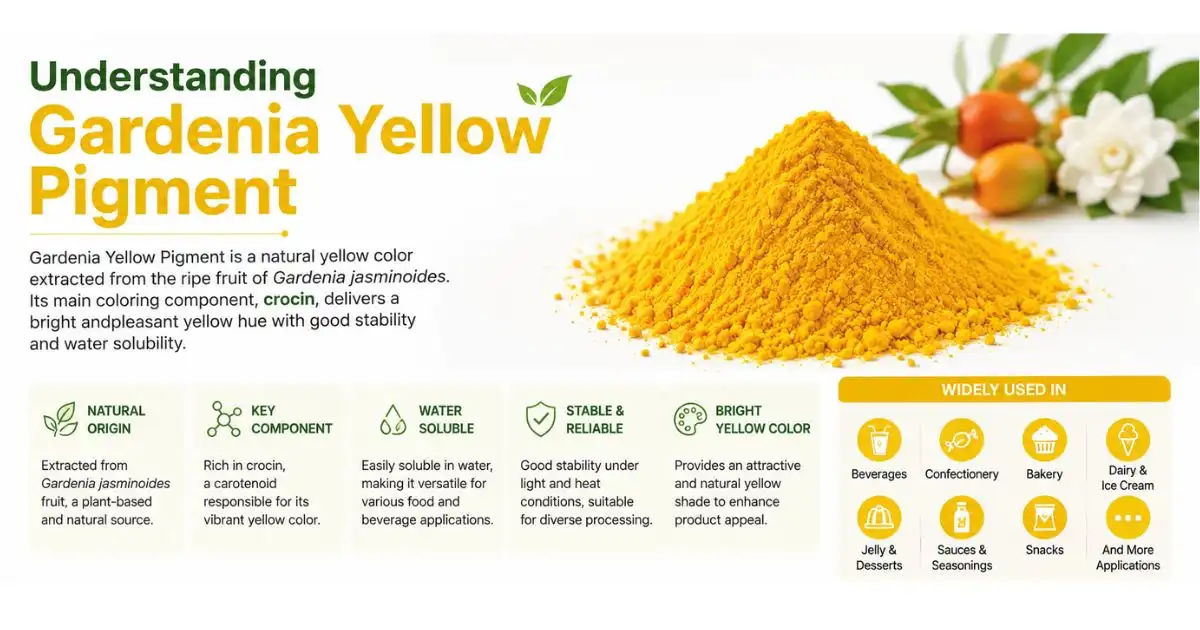
Understanding Gardenia Yellow Pigment
Chemical Composition and Active Ingredients
Crocin is the main active ingredient in Gardenia Yellow powder. It is a water-soluble carotenoid that gives the powder its bright yellow to orange-yellow color. Unlike beta-carotene and other carotenoids that dissolve in oil, crocin is hydrophilic, which means it can be easily mixed with water-based products without the need for emulsifiers.
Yangge Biotech's Gardenia Yellow Powder E60 sets the color value to E60, E300, or E500 standards. This makes sure that all production batches have the same level of tinctorial strength. When HPLC technology is used for extraction, the natural antioxidant properties are kept while geniposide residue is kept to a minimum. This is an important quality parameter that keeps proteins from turning blue, which is not what you want.
Safety Profile and Regulatory Status
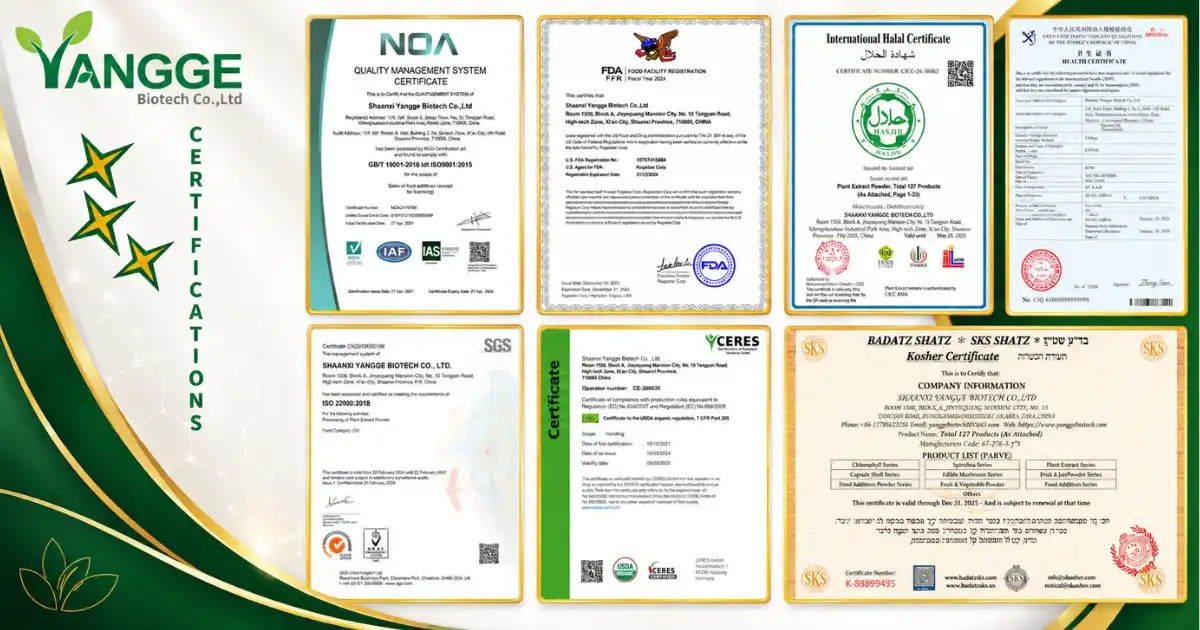
This natural colorant can be used instead of synthetic yellows like Tartrazine (Yellow 5) that are becoming more closely watched by regulators because they are non-toxic and don't cause allergies. Yangge's factories have ISO, HACCP, Kosher, and Halal certifications, which means they meet a wide range of international compliance standards.
Toxicological tests show that the pigment is very safe, with no reports of allergic reactions or other problems at normal usage levels. Heavy metal analysis (Pb, As, Hg, and Cd) via ICP-MS and full microbiological screening are part of our quality control protocols to make sure that our products are pure enough for global markets to use.
Environmental and Sustainability Advantages
Sustainability is still a big part of modern buying plans. Through tracked supply lines, Yangge Biotech works directly with farming communities to make sure that everything is clear from the farm to the table. Gardenia jasminoides can be grown with few synthetic inputs, and our efforts to use renewable energy reduce the carbon footprint of extraction and processing. This method fits with the ideas of the circular economy and gives procurement managers a strong environmental story to support the marketing of their clean-label products.
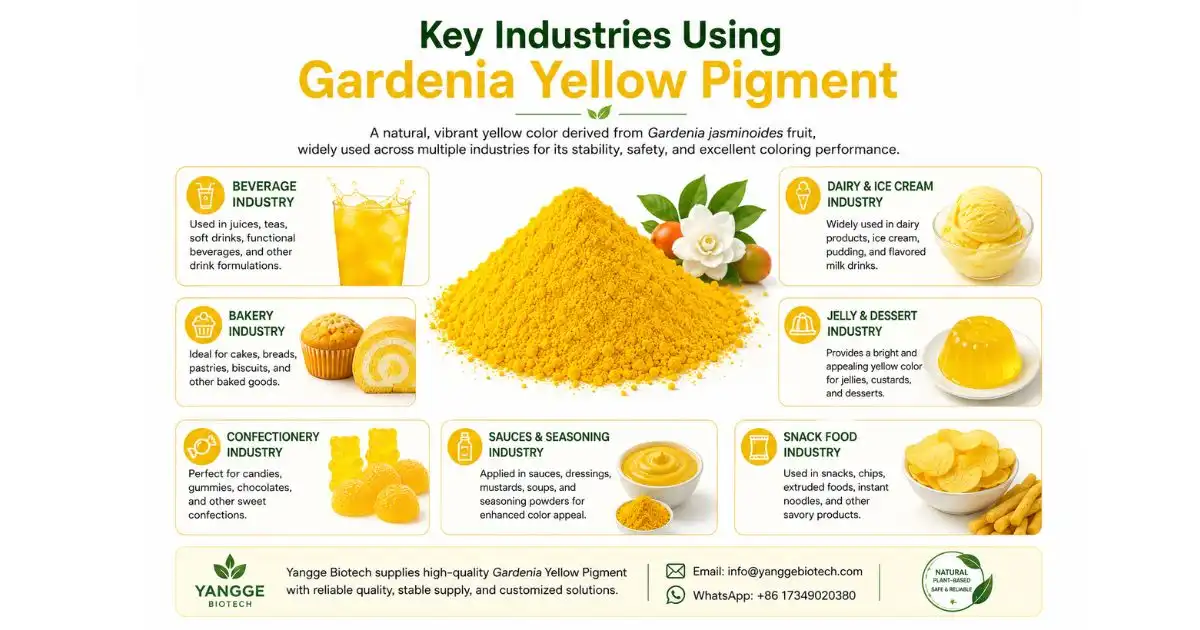
Key Industries Using Gardenia Yellow Pigment
Food and Beverage Manufacturing
The biggest industry that uses natural yellow colors is the food industry. Gardenia Yellow is great for tough processing environments because it dissolves easily in water and doesn't change when heated.
Beverage Uses: Because Gardenia Yellow is clear in solution, it works well in clear functional drinks, alcoholic pre-mixes, and sports drinks. There is no settling in a 1% solution, so it stays clear and looks good for a long time. This color doesn't add any earthy notes like turmeric does, which is important for delicate formulas.
Confectionery and Sweets: Hard candies, gummies, and chocolates covered in sugar have the same color from batch to batch without the color changes that happen with annatto or safflower extracts. When candy is made at high temperatures (up to 80°C for 120 minutes), the color doesn't fade much.
Noodle and Pasta Products: Gardenia Yellow is used in Asian quick noodles and fresh pasta because it is very good at binding to starch and protein matrixes. The color doesn't move when the food is boiled or steamed, so it stays the nice golden color that people associate with good wheat products.
Dairy and Desserts: The pH stability of ice cream, yogurt, and pudding formulations works best in weakly acidic environments (pH 4.5–6.5). However, formulation changes may be needed for highly acidic products (pH < 3) to keep the ingredients from separating.
| Food Category | Typical Dosage Rate | Key Advantage | Processing Consideration |
|---|---|---|---|
| Beverages | 0.01-0.05% | Crystal clarity | UV-protective packaging recommended |
| Hard Candy | 0.05-0.1% | Heat stability | Stable at 150°C for short exposures |
| Instant Noodles | 0.02-0.08% | Starch binding | No migration during cooking |
| Dairy Products | 0.01-0.03% | pH tolerance | Avoid iron-containing equipment |
Dietary Supplements and Nutraceuticals
In the supplement business, natural colorants that fit with a health focus are being used more and more in capsule shells, tablet coatings, and powder mixes. The antioxidant qualities of Gardenia Yellow give it a business benefit beyond just being a color; they help with products that aim to control oxidative stress. The color meets the standards set by the USP and the EP guideline for pharmaceutical excipients.
Cosmetics and Personal Care
The cosmetics industry likes Gardenia Yellow's hypoallergenic properties for color cosmetics, soaps, and skin care products, even though they are used in smaller amounts than in food. The pigment can dissolve in water, which makes it good for lotions and gels. Specialized versions that can dissolve in oil, on the other hand, work well in lipstick and creams by using emulsification technologies.
Traditional Asian Food Products
Gardenia fruit is usually used to get its natural yellow color for pickled vegetables, fermented soy products (like tofu and tempeh), and spice pastes. These are all culturally important uses for this color. Modern processors want uniform extracts like Yangge's E60 standards to replace whole-fruit preparations that vary. This is to make sure they follow the rules and make sure each batch is the same.
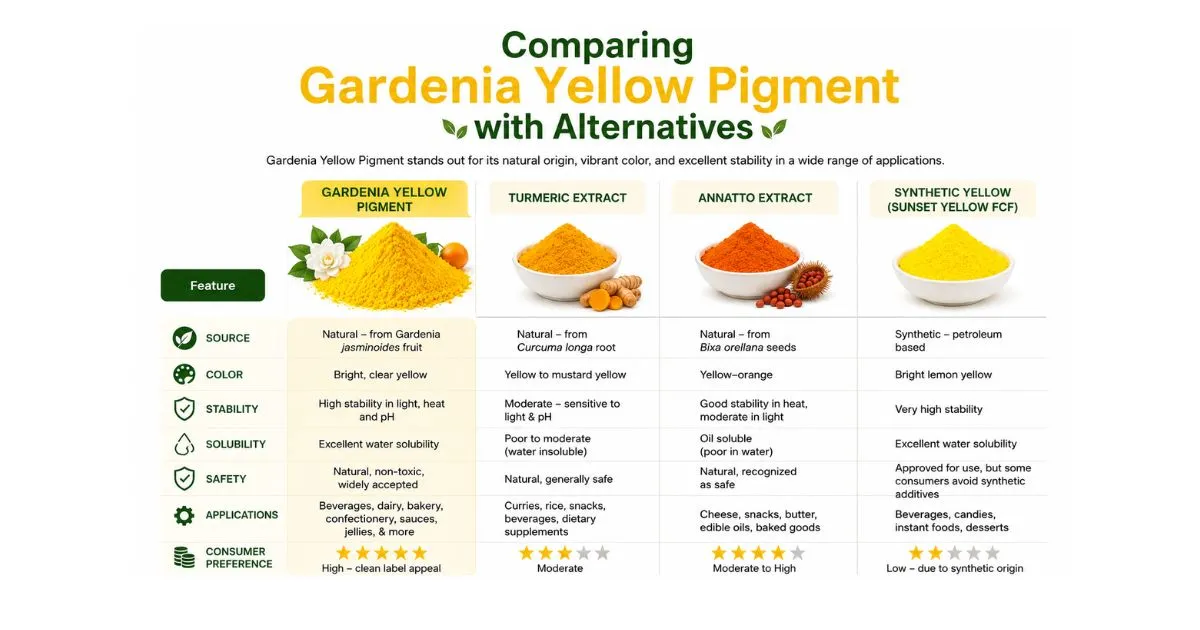
Comparing Gardenia Yellow Pigment with Alternatives
Versus Synthetic Yellow Dyes
Synthetic colorants, such as Tartrazine, are cheaper up front, but they come with legal risks and problems with how people see them. Concerns about hyperactivity have been linked to some synthetic dyes by studies, which led to clean-label reformulations. People usually pay 15–40% more per kilogram for Gardenia Yellow, but the fact that it can be sold with claims of "no artificial colors" supports the higher price. When brand security and market entry benefits are taken into account, the total cost of ownership calculation changes in a good way.
Versus Natural Competitors
Turmeric (Curcumin): Turmeric is easy to find, but it doesn't hold up well in light and has its own unique flavor. Its color fades quickly when exposed to UV light, which limits its use in clear packages. Gardenia Yellow is more resistant to fading in sunlight when mixed with the right vitamins.
Beta-Carotene: This color that dissolves in oil needs to be emulsified in water-based systems, which makes the formulation more complicated. Because Gardenia Yellow is naturally soluble in water, this step is not needed. This cuts down on processing time and the number of ingredients needed, which is a big plus for clean-label products.
Annatto: This color comes from Bixa orellana seeds and is good at withstanding heat, but it only comes in an orange-red range of colors. When you want to make something look like egg or lemon coloring, Gardenia Yellow is the best choice because it has a brighter, more true yellow tone.
Performance Benchmarking Table
| Pigment Type | Water Solubility | Heat Stability (80°C, 2hrs) | Light Stability | Flavor Impact | Relative Cost |
|---|---|---|---|---|---|
| Gardenia Yellow | Excellent | >90% retention | Moderate | Neutral | Medium |
| Turmeric | Poor-Moderate | 70-80% retention | Poor | Strong earthy | Low |
| Beta-Carotene | Poor (requires emulsifier) | >85% retention | Good | Slight | Medium-High |
| Tartrazine (Synthetic) | Excellent | >95% retention | Excellent | Neutral | Low |
Procurement and Supply Considerations for B2B Clients
Supplier Evaluation Criteria
To find a trusted Gardenia Yellow provider, you need to look at more than just price. Yangge Biotech has dedicated R&D team and customer service that are available 24 hours a day, 7 days a week. Managers of procurement should check:
Analytical Capabilities: Suppliers must give Certificates of Analysis (CoA) that show the color value (E1% 1cm at 440nm), the amount of geniposide found using HPLC, and the heavy metal screening. Yangge's own lab does quality checks in real time, which cuts down on the time it takes to confirm specifications.
Regulatory Documentation: It should be easy to get proof of GRAS status, Kosher/Halal certificates, and approvals for food additives that are specific to a region. Our regulatory affairs team keeps dossiers up to date for big markets, which speeds up the customs clearance process.
Batch Consistency: Ask for past data from batch analysis that goes back at least 12 months. In order to avoid problems with reformulation, color value fluctuation should stay within ±5%. Yangge's agricultural relationships and carefully controlled extraction factors make sure that the quality is the same all year, even when fruit harvests change with the seasons.
Pricing Models and Bulk Purchasing
The price of Gardenia Yellow changes depending on the availability of raw materials. For food-grade E60 specifications, bulk orders of 500 kg or more usually cost between $45-85 per kilogram. Tiered pricing is possible with volume commitments:
- 100–500 kg: standard market prices
- 500–2,000 kg: 8–12% off
- 2,000 kg or more: Custom prices with supply deals
Most of the time, payment terms are 30% down and 70% upon receipt of shipping documents (T/T), but long-term clients may be able to negotiate open account terms. Managers of procurement should plan for the prices of air freight ($4–7/kg to North America) or sea freight for bigger loads (minimum 5–ton container loads).
Quality Assurance and Testing Protocols
As soon as you get it, test it to make sure it meets the specs before starting full-scale production. What we suggest:
- UV-Vis spectrophotometry to check the value of the color
- Solubility test (checking the brightness of a 1% solution)
- A small-scale production test to see how well batches work together
Yangge keeps samples for 24 months so that problems with production can be looked into after the fact. Our technical team helps with formulating problems and finding solutions, like suggesting chelating agents to stop discoloration caused by iron.
Future Trends and Innovations in Gardenia Yellow Pigment Applications
Clean-Label Movement Acceleration
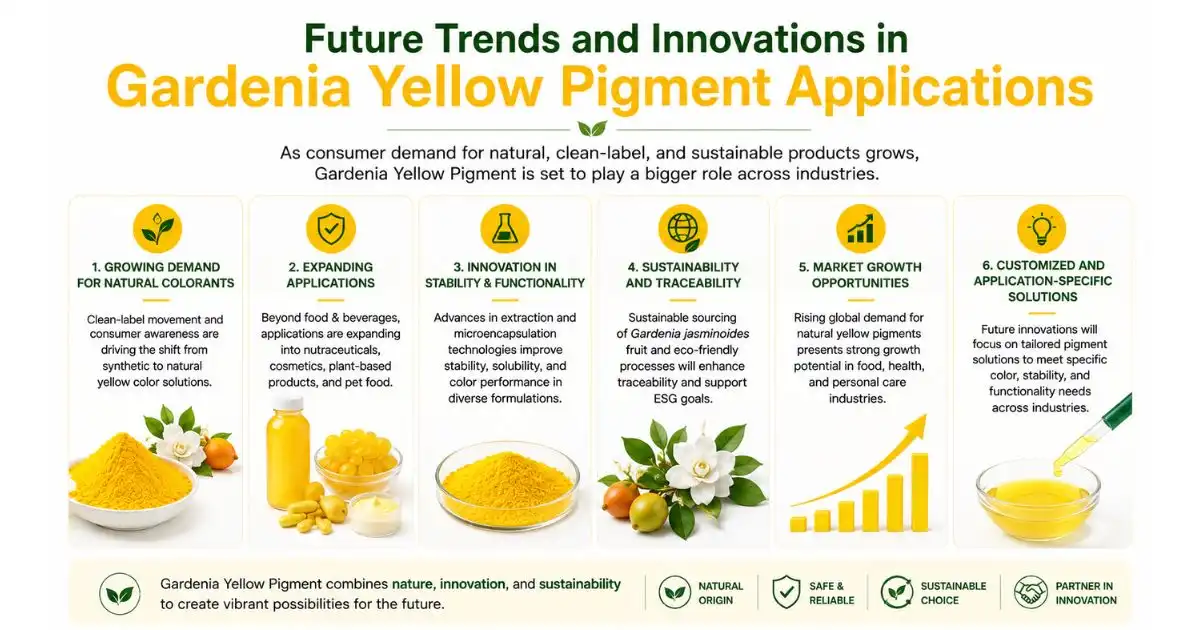
All types of food are being reformulated because people want to recognize the ingredients they are eating. Market research shows that 67% of people in North America actively avoid using artificial colors. This means that there is a steady demand for natural alternatives. The plant-based source of Gardenia Yellow and its easy extraction process make it completely clear, making it a long-term strategic ingredient rather than a short-term replacement.
Advanced Extraction Technologies
New methods for ultrasonic-assisted extraction and membrane screening promise to get more crocin while using less solvent. Yangge's research and development dollars are mostly going toward supercritical CO2 extraction tests, which could get rid of all concerns about residual ethanol and make the process useful for pharmaceutical purposes. These new ideas will slowly lower the price increases, which will speed up the use of natural pigments in areas where price is important.
Stability Enhancement Solutions
Maltodextrin or modified starch matrices used in encapsulation technologies make things more stable in light without affecting their ability to dissolve in water. Yangge has customized encapsulated versions for uses that need a longer shelf life in clear packaging. When you mix Gardenia Yellow with natural antioxidants like ascorbic acid or rosemary extract, the color stays true longer in store lighting.
Regulatory Landscape Evolution
Approved in major Asian countries and North America right now, the ongoing EFSA review could lead to more applications in the European Union. Procurement managers should keep an eye on changes to regulations, since EU approval would make it possible to reach a lot more customers. Yangge stays in touch with regulatory bodies to help the approval process by sending them detailed safety dossiers.
Conclusion
Gardenia Yellow pigment meets important needs in the food, beverage, supplement, and specialty uses for natural, stable, and legal colorants. Because it dissolves better in water, doesn't melt in heat, and has clean label credentials, manufacturers can use it as a strategic procurement choice to meet consumer demand for transparency. Regional differences in regulations and higher prices mean that the pigment needs to be carefully looked at, but its performance benefits and ability to help a product stand out in the market make it worth the investment. The fully integrated supply chain, extensive certifications, and technical support infrastructure at Yangge Biotech make it a trusted partner for procurement managers who want to make formulations that work in the long run.
FAQ
Why choose Gardenia Yellow over synthetic yellow dyes?
Synthetic colorants are facing more and more limits from regulators and public opinion. Labels that say "no artificial colors" can be put on Gardenia Yellow, and it commands higher prices and doesn't cause hyperactivity problems like some azo dyes do. The safety profile makes it possible for products to be sold all over the world without having to be reformulated every time they go into a new regulatory area.
How can I be sure that the Gardenia Yellow I bought is real?
Ask for Certificates of Analysis that show the spectrophotometric color value at 440nm and HPLC chromatograms that prove the presence of crocin. Geniposide amounts below 3 percent show that polishing is going well. Yangge gives detailed records for each batch that include data from heavy metal screening and microbiological tests. Simple solubility tests will show that real material dissolves completely in water, creating a clear yellow solution with no turbidity.
What rules apply to the use of Gardenia Yellow in the US?
The Food and Drug Administration (FDA) says that Gardenia Yellow is generally recognized as safe (GRAS) for use in food at certain levels. It's listed in the Code of Federal Regulations as a color addition that doesn't need to be certified. With Kosher and Halal certificates, more uses are allowed in niche areas. Yangge keeps up-to-date regulatory dossiers that back up claims of compliance.
Can Gardenia Yellow be used instead of turmeric in current recipes?
Different tinctures have different strengths, so the dose needs to be changed when direct swap is used. To get the same color strength, Gardenia Yellow usually needs 40–60% less material by weight. Take turmeric's taste input into account no longer when the product is being reformulated. Do small-scale tests to find the best dose and make sure it works with other ingredients, especially proteins that might interact with the residual geniposide.
Partner with Yangge for Premium Gardenia Yellow Solutions
Gardenia Yellow Powder E60, which is made under strict GMP guidelines, is available from Yangge Biotech to help you get natural colorants. Our ISO, HACCP, Kosher, and Halal standards make sure that we follow the rules in all global markets, and our relationships with sustainable farmers make sure that we always have enough food. As a Gardenia Yellow manufacturer with a lot of experience, we can help you with technical questions, make sure your specifications are met exactly, and make sure your production schedules are met.
Contact us or you can email our procurement specialists at info@yanggebiotech.com to ask for samples, talk about bulk pricing for your specific needs, or set up formulation support. Our quick-to-respond team gives you quotes within 24 hours and offers technical support throughout the whole process of making your product.
References
1. Nishiyama, K. (2018). "Natural Food Colorants from Gardenia jasminoides: Chemistry, Stability, and Applications." Journal of Agricultural and Food Chemistry, 66(8), 1875-1884.
2. Rodriguez-Amaya, D.B. (2019). "Update on Natural Food Pigments: A Mini-Review on Carotenoids, Anthocyanins, and Betalains." Food Research International, 124, 200-205.
3. Scotter, M.J. (2020). "Emerging and Persistent Issues with Artificial Food Colors: Natural Alternatives as Solutions." Annual Review of Food Science and Technology, 11, 487-512.
4. Carle, R. & Schweiggert, R.M. (2016). Handbook on Natural Pigments in Food and Beverages: Industrial Applications for Improving Food Color. Woodhead Publishing, Cambridge, UK.
5. Mortensen, A. (2017). "Re-evaluation of Gardenia Blue and Gardenia Yellow as Food Additives: EFSA Panel Assessment." EFSA Journal, 15(6), e04901.
6. Chen, L. & Huang, G. (2019). "Crocin: Biosynthesis, Extraction, and Applications in Food Industry." Critical Reviews in Food Science and Nutrition, 59(6), 1000-1015.

Based on your location and order quantity, you will have the opportunity to receive a limited time free shipping promotion!
Who we are
Popular Blogs