How to Choose a Professional PDRN Powder Supplier?
Yangge Biotech PDRN Powder (Polydeoxyribonucleotide) is a high-quality cosmetic-grade bioactive ingredient designed for advanced skincare, beauty, and regenerative formulations. With a specification of up to 99% purity, PDRN is a DNA-derived polynucleotide ingredient valued for applications focused on skin rejuvenation, tissue repair, collagen support, improved skin texture, and healthy-aging skincare. Yangge Biotech supplies PDRN Powder under strict quality standards, with HPLC/UV testing, OEM packaging options, and supporting documents such as COA, MSDS, specification sheets, and third-party test reports available upon request. For bulk orders, samples, specifications, pricing, or customized solutions, contact Yangge Biotech at info@yanggebiotech.com
Choosing a professional supplier involves evaluating purity levels, certifications such as GMP and ISO standards, source traceability from salmon DNA, rigorous endotoxin and sterility testing, comprehensive documentation, and proven manufacturing experience. PDRN Powder, derived from polydeoxyribonucleotide, demands suppliers who understand the technical complexities of extraction, purification, and quality assurance. Transparent communication, batch-to-batch consistency, and responsive customer service are equally vital for establishing long-term partnerships that support innovation in medical aesthetics, high-end skincare, and pharmaceutical applications.
Understanding the PDRN Powder Market and Industry Standards
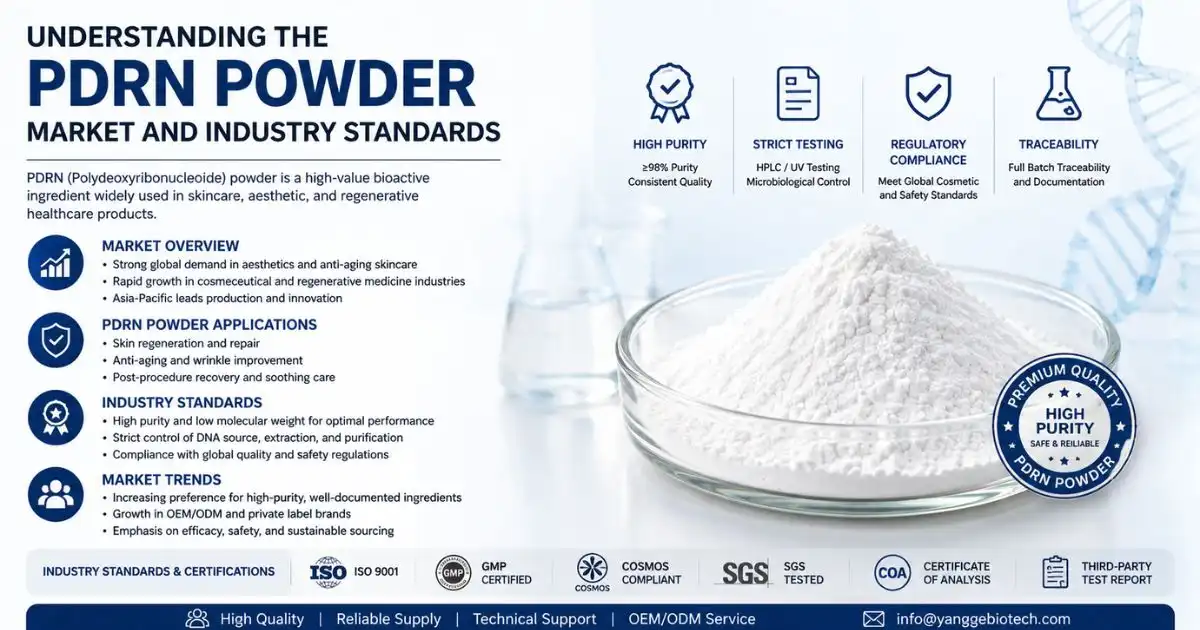
The market for polydeoxyribonucleotides has grown a lot in the medicinal, cosmetic, and aesthetic health fields. This bioactive substance, which is mostly made from salmon sperm DNA, works as an adenosine A2A receptor agonist to help cells grow back, make collagen, and reduce inflammation. As medical beauty grows around the world, especially in North America, Europe, and South Korea, the need for highly pure PDRN Powder has grown. It is very important for procurement managers and R&D directors to know the difference between pharmaceutical-grade and cosmetic-grade materials.
Defining Quality Standards in the Industry
Industry approvals make sure that the quality of a product is high. Good Manufacturing Practice (GMP) and cGMP compliance make sure that work areas are clean, and ISO certifications show that quality control is done in a planned way. Medical-grade polydeoxyribonucleotide that is meant to be injected must meet strict endotoxin limits (usually less than 0.5 EU/mg) and pharmacopoeial standards for purity tests.
Even though cosmetic-grade versions aren't as strict, they still need to be tested for purity using HPLC or UV spectroscopy and have the results recorded. To stay in compliance, buyers must make sure that sellers have up-to-date certifications and go through regular third-party checks.
Emerging Market Trends and Applications
Tissue regeneration technologies are being used more and more in medical aesthetics. A growing market includes injectable skin boosters that contain polydeoxyribonucleotide and hyaluronic acid. These are mostly used for laser recovery and anti-aging treatments. Pharmaceutical companies are looking into ways to help diabetic ulcers and corneal damage heal.
Meanwhile, high-end skin care brands use freeze-dried ampoules to make formulas that don't need preservatives and work as well as possible. For these uses, molecular weights between 50 and 1,500 kDa, accurate DNA fragment distribution, and confirmed stability data are needed. These are the things that set professional sellers apart from generic commodity vendors.
Core Criteria for Selecting a Professional PDRN Powder Supplier
Finding the right partner takes a thorough look at a lot of different factors. Manufacturers must show technical know-how in enzymatic purification, protein removal, and molecular weight control in addition to certifications. When production deadlines are short and regulatory approvals rely on regular raw material standards, PDRN Powder supply chain dependability is very important.
Verified Certifications and Industry Experience
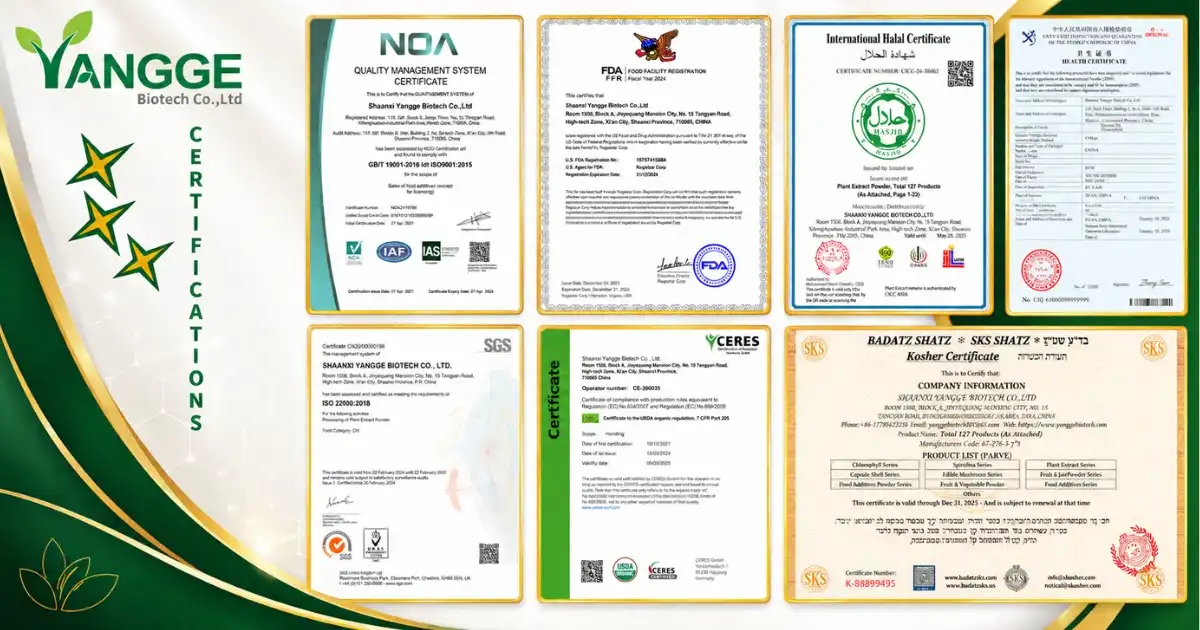
Reliable sellers keep a number of certificates, such as HACCP for food safety, Kosher and Halal for religious reasons, and organic certifications for a "clean label" image. These qualifications show that you follow an organized approach to operations. With at least five years of experience in the field, the provider has likely dealt with legal issues, improved extraction methods, and set up strong quality control systems. During source checks, asking for proof of batch records, deviation reports, and corrective steps shows how mature the operations are.
Source Traceability and Purity Verification
To get salmon DNA, you need to be clear about where the fish came from, how to be environmentally friendly, and how to check for heavy metals. Wild-caught chum salmon (Oncorhynchus keta) from ocean areas that are closely watched reduces the chance of pollution. Verification of purity goes beyond simple number claims. A nitrogen level of 13–20% and an OD260/280 ratio (usually 1.8–2.0) are used as chemical markers to show that proteins and lipids, which can be allergens, have been removed effectively. Third-party lab testing, ideally at facilities that are known all over the world, backs up what suppliers say and meets regulatory requirements during the product registration process.
| Specification Parameter | Cosmetic Grade | Injectable Grade |
|---|---|---|
| Purity | ≥99% | ≥99.5% |
| Endotoxin Level | <5 EU/mg | <0.5 EU/mg |
| Molecular Weight Range | 50-1,500 kDa | 350-500 kDa (typical) |
| Sterility Testing | Optional | Mandatory |
This comparison shows how application-specific needs affect the choice of supplier. Medical gadget makers have to focus on injectable-grade standards, but cosmetic brands may be able to handle wider standards.
Supply Chain Reliability and Logistics
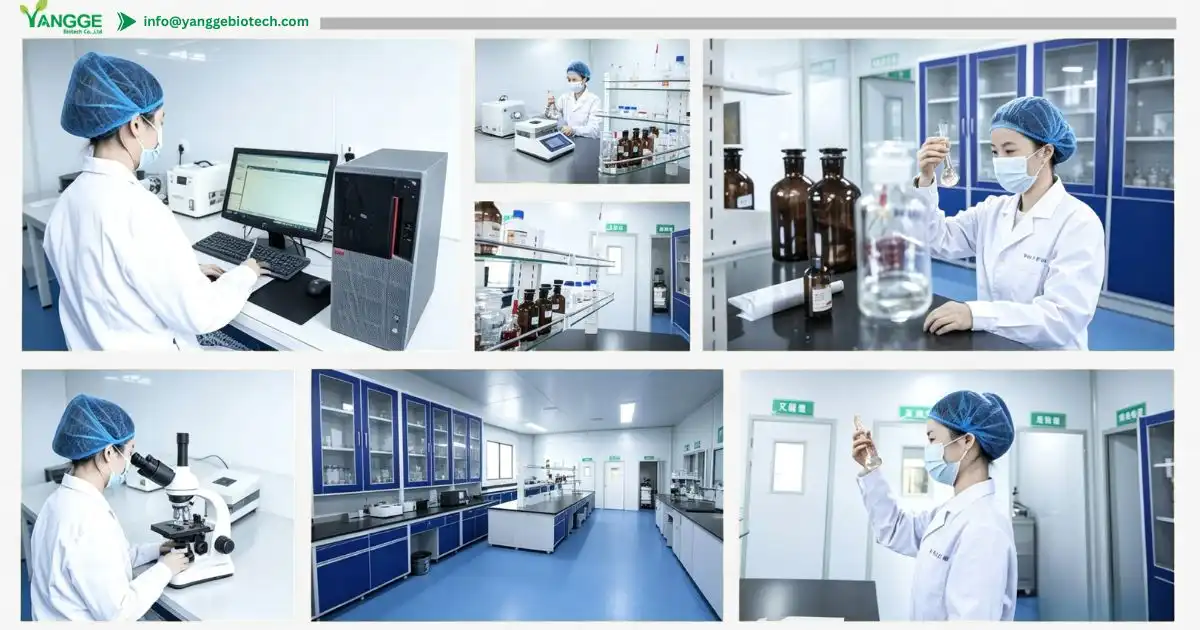
Global procurement adds complications, like customs paperwork, shipping that needs to be kept at a certain temperature, and legal requirements for importing goods. Professional suppliers offer flexible minimum order quantities. For example, Yangge Biotech, which focuses on natural bioactive ingredients, has a 1 kg minimum order and 10 kg of stock on hand, so they can meet the needs of both initial sampling and bulk production.
Depending on the number of orders and where they are going, lead times are usually between two and four weeks. To speed up customs clearance and internal compliance reviews, suppliers should send a Certificate of Analysis (CoA), Material Safety Data Sheets (MSDS), and other regulatory support documents.
Comparing PDRN Powder with Alternative Solutions in the Market
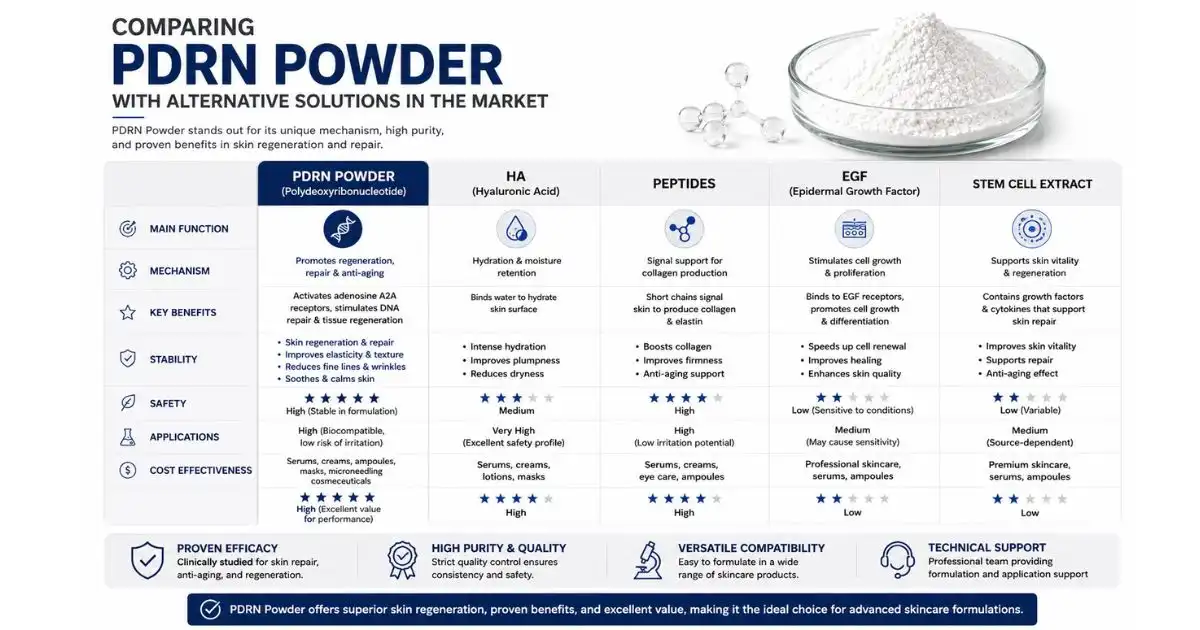
PDRN Powder is one of a kind when it comes to healing chemicals. Unlike hyaluronic acid, which mainly hydrates by holding on to water, or peptides, which tell cells how to do certain things, this DNA-derived compound directly activates adenosine receptors, which sets off a number of processes, including the growth of new blood vessels through VEGF upregulation, the production of collagen type I, and the regulation of inflammatory cytokines such as IL-1β and TNF-α.
Performance Benchmarking Against Established Ingredients
Hyaluronic acid is still the best way to add volume and moisture, especially in facial fillers. By acting like growth factors, peptides like Matrixyl help fight age in specific ways. Retinol speeds up the turnover of cells, but it can irritate the skin. Polydeoxyribonucleotide, on the other hand, regenerates in many ways and is very well tolerated.
Clinical studies show that these ingredients work well in reversing photoaging, rebuilding scars, and speeding up the healing of wounds tasks that single-mechanism ingredients fail at. However, the price per gram is much higher than that of traditional actives, which means it's better suited for high-end products than mass-market ones.
Therapeutic Context: Competing with Advanced Biologics
There is competition between polydeoxyribonucleotide and platelet-rich plasma (PRP), recombinant growth factors, and stem cell derivatives in medical uses. For PRP, blood must be taken from the patient and spun in a centrifuge, which adds a level of uncertainty. Things that cause growth need to be moved in a cold chain and have short half-lives. Stem cell products have to go through a lot of strict rules. As a safe lyophilized powder that can be kept properly for 24 months, polydeoxyribonucleotide is easy to get without affecting its ability to repair cells. Because it is useful, it is being used more and more in orthopedic injections to treat tendonitis and osteoarthritis.
Procurement Strategies for Optimal PDRN Powder Purchasing
A good procurement process strikes a mix between technical needs, price limitations, and lowering risks. Structured evaluation stops mistakes that cost a lot of money and makes sure that the evaluation process for PDRN Powder is in line with the goals of product development.
Cost-Quality Analysis and Sample Validation
Prices per kilogram range from $2,000 to $15,000, depending on how pure it is, what approvals it has, and its molecular weight. Products that are less expensive usually haven't been cleaned well enough and may contain allergic proteins or DNA fragments that aren't spread out as evenly as they could be. Before placing large orders, procurement managers should ask for samples weighing 1-2 grams to be checked by a third-party lab.
Protocols for testing should include checking for purity with HPLC, measuring endotoxins with the LAL test, and looking at how well the substance dissolves in the bases that will be used for formulation. This validation step takes 4 to 6 weeks, but it stops formulation failures and regulatory hurdles further down the line.
| Procurement Phase | Key Actions | Typical Duration |
|---|---|---|
| Supplier Identification | Market research, certification review | 1-2 weeks |
| Sample Testing | Independent lab analysis | 4-6 weeks |
| Regulatory Assessment | Documentation review, compliance check | 2-3 weeks |
| Pilot Production | Small-batch formulation trials | 3-4 weeks |
| Commercial Agreement | Contract negotiation, terms finalization | 1-2 weeks |
This schedule matches the 8–16 week decision times that are common in the medical aesthetics and pharmaceutical industries for buying specialty bioactive ingredients.
Building Strategic Supplier Relationships
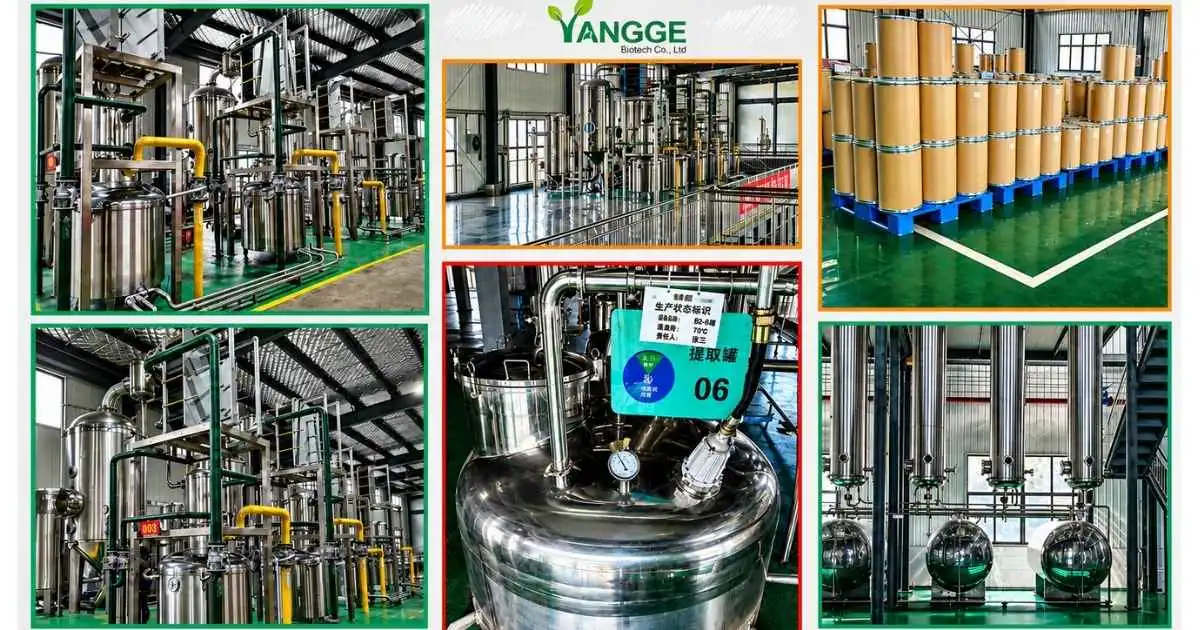
When you use transactional buying models, you get mixed results. Collaborative relationships allow for chances to work together on growth, early entry when supplies are low, and custom requirements. Buyers get more than just a supplier when they choose Yangge Biotech. The company is known for its environmentally friendly sourcing methods and wide range of certifications, such as HACCP, ISO9001, ISO22000, and Kosher. Regularly talking about future changes to regulations, problems with formulas, and market trends helps everyone grow. Long-term contracts with volume agreements can often get you better prices and make sure you have a steady supply during times of high demand.
Case Studies and Real-World Examples of Successful PDRN Powder Procurement
Real-life PDRN Powder procurement experiences show what works best and what can go wrong. These examples, which come from interactions in the industry, give decision-makers useful information for choosing a supplier.
OEM Skincare Brand Achieves Efficacy Breakthrough
A European cosmetics company that was making a high-end anti-aging cream first bought polydeoxyribonucleotide from a cheap seller because it was the cheapest option. Consumer tests showed mixed results, and further research showed that the purity levels between batches varied (from 87% to 97%). The brand started evaluating suppliers again, this time focusing on certification depth and batch consistency documentation.
After working with a GMP-certified source that provided full CoAs and stability studies, reformulation trials showed consistent clinical results: after eight weeks, the skin's flexibility improved by 23% and fine lines were reduced by 18%. This case shows that short-term savings aren't worth the cost of re-creating a product, launching it on the wrong market, or repairing a brand's image.
Pharmaceutical Company Navigates Regulatory Complexity
The FDA had strict rules for a North American drug company that was making an injected wound treatment product. The chosen provider had to have both pharmaceutical-grade materials and full legal support, such as Drug Master Files (DMF), stability data according to ICH standards, and toxicological dossiers. Their purchasing team went to three possible sources and did on-site audits to check out their cleanroom classifications, quality control systems, and ability to handle legal issues.
The chosen partner helped with the pre-submission meeting, which sped up the IND application process. This teamwork cut the time it took to get the product to market by about six months. This shows that choosing a supplier is more than just looking at the product standards; it also needs to look at their knowledge of regulations.
Conclusion
When looking for a skilled polydeoxyribonucleotide supplier, you need to look at a lot of things, such as technical specs, legal compliance, supply chain reliability, and the ability to work together. PDRN Powder quality directly impacts final product performance, so by putting purity verification, source traceability, and certification depth at the top of the list—alongside rigorous evaluation of the supplier’s handling of this active ingredient you can avoid costly formulation fails and regulation losses.
Thoroughly screening suppliers through things like sample testing, facility audits, and checking references pays off in the long run with consistent product quality, support for new ideas, and a way to stand out in the medical aesthetics and pharmaceutical markets, which are growing quickly. Strategic partnerships with experienced manufacturers speed up the time it takes to get a product to market while also ensuring safety for consumers and regulatory trust.
FAQ
Which certifications are most critical for validating a supplier?
For pharmaceutical and injectable uses, GMP and cGMP licenses are required and cannot be skipped. This makes sure that the production surroundings are clean. ISO9001 shows how to manage quality in a planned way, and HACCP talks about food safety rules that apply to supplements that are taken by mouth or put on the skin. Kosher and organic certifications back up clean-label marketing claims for cosmetics. Buyers should make sure that certifications are up-to-date and come from recognized organizations by asking for copies of the certificates directly instead of relying on what websites say.
How can I confirm product authenticity and purity independently?
Ask for samples and have them analyzed by a third-party lab that specializes in measuring HPLC purity, molecular weight distribution via gel permeation chromatography, nitrogen content, and OD260/280 ratio. The Limulus Amebocyte Lysate (LAL) assay for endotoxin testing confirms that the product is safe for injectable uses. Reputable providers, such as Yangge Biotech, work with well-known labs to do retesting, which gives customers trust and openness. Keeping in touch with independent testing facilities lets you do ongoing verifications after the initial purchase.
What are typical lead times and minimum order quantities?
For specialty bioactive ingredients, the minimum order size is usually between 1 and 5 kilos. This lets you try out different formulations without having to worry too much about stock. Yangge Biotech sets a minimum of 1 kg and keeps 10 kg on hand to handle both research and development (R&D) and the first business production.
Standard lead times are two to four weeks for items that are in stock and six to eight weeks for items that are made to order or for bigger orders than 50 kg. When you plan buying rounds around the timelines for product development, you can avoid project delays and make sure there are enough testing windows before the product goes on sale.
Partner with Yangge Biotech for Premium PDRN Powder Supply
Yangge Biotech is an expert in offering pharmaceutical and cosmetic-grade polydeoxyribonucleotide that comes from salmon DNA that is found in a way that doesn't harm the environment. Our standard of 99% purity, which was confirmed by HPLC tests, meets the strict needs of medical aesthetics, wound care, and high-end skin care. We offer full certifications, such as ISO9001, HACCP, and Kosher, as well as a stable 24-month shelf life and flexible 1 kg minimum orders, so we can help with both research and development (R&D) and large-scale production. Contact us or you can email our team at info@yanggebiotech.com to get technical datasheets, sample supplies, and personalized quotes from a reliable PDRN Powder maker that is dedicated to quality and new ideas.
References
1. Kim, S.H., et al. (2019). "Clinical Efficacy of Polydeoxyribonucleotide in Skin Regeneration and Wound Healing: A Systematic Review." Journal of Cosmetic Dermatology, 18(4), 1025-1034.
2. Galeano, M., et al. (2008). "Polydeoxyribonucleotide Stimulates Angiogenesis and Wound Healing in Diabetic Mice." Wound Repair and Regeneration, 16(2), 208-217.
3. Rubegni, P., et al. (2014). "Role of Polydeoxyribonucleotide in Dermatology: Current Applications and Future Perspectives." Clinical and Experimental Dermatology, 39(5), 593-598.
4. Park, K.Y., et al. (2020). "Comparison of Regenerative Efficacy Between PDRN and PRP in Medical Aesthetics." Aesthetic Surgery Journal, 40(7), 782-791.
5. Bitto, A., et al. (2011). "Polydeoxyribonucleotide Reduces Metabolic Syndrome and Inflammatory Response in Diet-Induced Obesity." European Journal of Pharmacology, 654(3), 236-242.
6. Lee, J.H., et al. (2021). "Regulatory Considerations and Quality Standards for Polydeoxyribonucleotide in Injectable Medical Devices." Regulatory Toxicology and Pharmacology, 119, 104826.

Based on your location and order quantity, you will have the opportunity to receive a limited time free shipping promotion!
Who we are
Popular Blogs