What are the benefits of black carrot anthocyanins?
Yangge Biotech supplies high-quality Black Carrot Anthocyanins, a natural purple-red pigment derived from black carrots (Daucus carota L.). Rich in anthocyanins, this plant-based ingredient provides strong antioxidant properties that help protect against oxidative stress while also delivering vibrant natural coloring for clean-label formulations. Black carrot anthocyanins are especially suitable for beverages, confectionery, dairy products, bakery products, functional foods, dietary supplements, sauces, and other food applications. Their good stability in acidic conditions makes them a practical natural alternative to synthetic colorants for manufacturers seeking both attractive color and functional value. Yangge Biotech offers bulk supply, customized specifications, OEM/ODM services, and supporting documentation including COA, TDS, and MSDS. Contact Yangge Biotech for product specifications, bulk pricing, samples, and customized solutions. Email: info@yanggebiotech.com.
Black carrot anthocyanins deliver exceptional dual functionality for modern food and beverage formulations. Derived from the roots of Daucus carota var. atrorubens, Black Carrot Extract contains acylated cyanidin-3-glycosides that provide vibrant, stable natural coloring from ruby red to deep purple while delivering potent antioxidant activity. These anthocyanins combat oxidative stress, support cardiovascular and metabolic health, and offer clean-label advantages over synthetic dyes like FD&C Red 40, making them invaluable for procurement managers seeking ingredients that satisfy both coloring requirements and functional wellness claims.
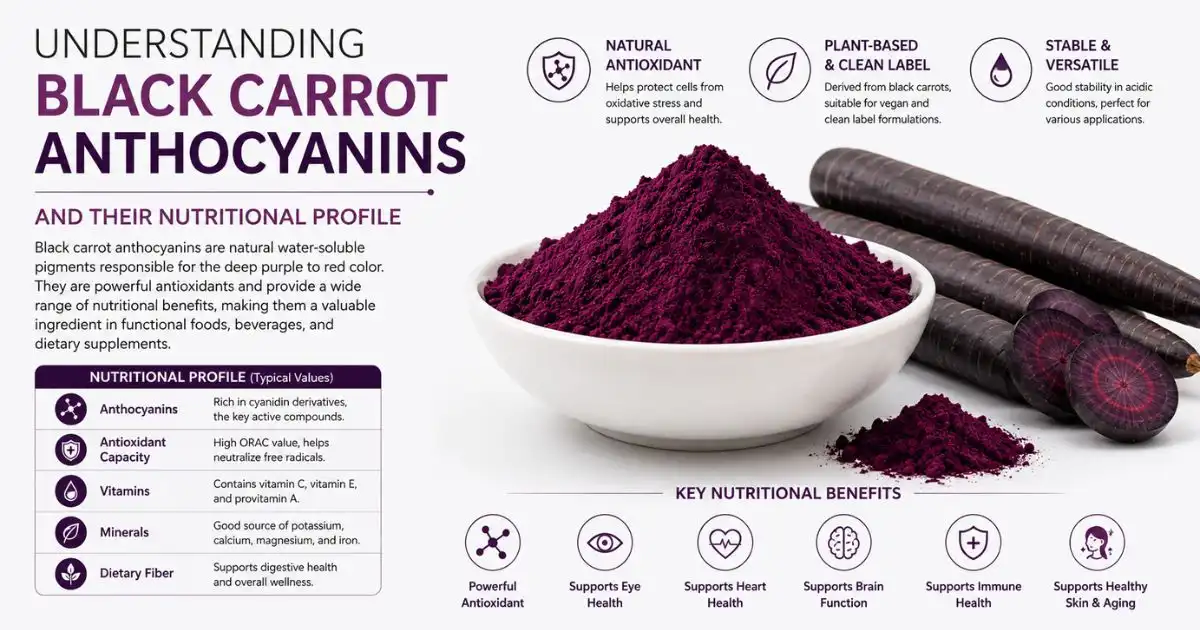
Understanding Black Carrot Anthocyanins and Their Nutritional Profile
The Chemical Nature of Black Carrot Anthocyanins
Anthocyanins from black carrots are a special kind of flavonoid color that have a chemical structure that makes them different from other sources. The bright color of beets comes from betalains, while the black color of carrots comes from anthocyanins. These are acylated cyanidin products that are linked to sinapic, ferulic, and coumaric acids. When this acylation takes place, it makes a defense system inside the molecules.
This is known as the "cage effect," and it makes the molecules much more resistant to changes in light, heat, and pH. A study in the Journal of Agricultural and Food Chemistry found that acylated anthocyanins keep up to 80% of their color after being cooked, but non-acylated grape skin products only keep 40–50%.
Free radicals are also harder for the molecules to damage because of the way they are structured. Studies using ORAC (Oxygen Radical Absorbance Capacity) tests show that the anthocyanins in black carrot are 1.5 to 2 times better at getting rid of free radicals than those in purple carrot or elderberry. For R&D engineers reviewing ingredient performance, this stability and strength directly address recipe challenges in acidic drinks, gummy confections, and functional foods needing longer shelf life.
Key Nutritional Components in Black Carrot Extract
In addition to their color, dark carrots have a full nutritional profile. A 100-gram serving delivers 35 kcal, 8.2g carbohydrates, 2.9g dietary fiber, and an impressive 334% of the Recommended Daily Intake (RDI) for Vitamin A, according to USDA data. Polyphenolic compounds, like chlorogenic acid and caffeic acid derivatives, are found in the powder. Potassium (7% RDI) and vitamin C (6% RDI) are also there.
Yangge's Black Carrot Extract, which comes from non-GMO stems and was checked with HPLC, has the same nutrients as before. The powder is a dark reddish purple color. The extract is very well dissolved in water, which makes it easy to add to liquids like sports drinks and functional drinks. The item has been approved as allergen-free and meets European PAH4 standards (Benzopyrene ≤10 ppb). In addition, it meets strict rules in both North America and Europe.
| Nutrient | Amount per 100g | % RDI |
|---|---|---|
| Vitamin A | 16,706 IU | 334% |
| Vitamin C | 3.6 mg | 6% |
| Potassium | 320 mg | 7% |
| Dietary Fiber | 2.9 g | 12% |
| Anthocyanins | 150-300 mg* | — |
*The concentration and method used to get the anthocyanin determine the amount that is present.
The people in charge of buying things that are used to make vitamin supplements or useful foods that have been improved need to know about this nutritional grid. Black Carrot Extract is a useful substance for both health and beauty because it contains anthocyanins, carotenoids, and fiber.
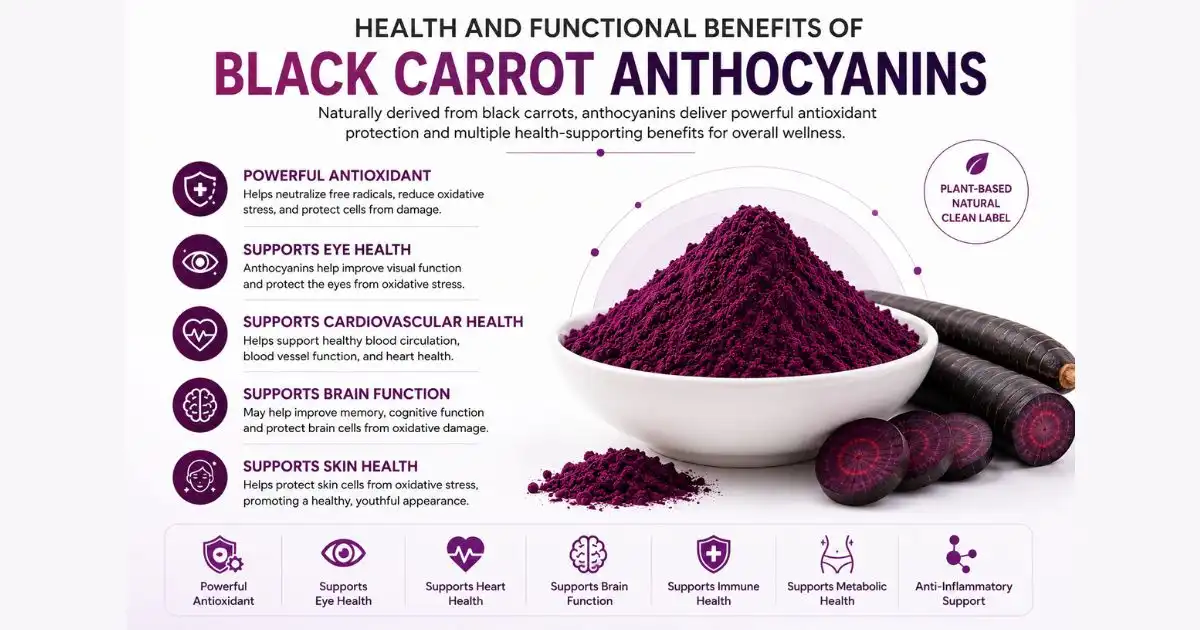
Health and Functional Benefits of Black Carrot Anthocyanins
Antioxidant and Anti-Inflammatory Properties
Anthocyanins, which are found in black carrots, are very good antioxidants that fight oxidative stress and reactive oxygen species (ROS). Oxidative stress is a major cause of chronic inflammation and cellular aging. Clinical studies show that they can increase the activity of natural antioxidant enzymes like superoxide dismutase (SOD) and catalase, which makes the body's defenses stronger. Inflammatory biomarkers (C-reactive protein) were decreased by 22% over eight weeks in people with mild metabolic syndrome who took 300 mg of anthocyanin-rich Black Carrot Extract, according to a 2019 study published in Food & Function.
When buying managers make drinks for busy people who care about their health, these skills come in very handy. It is an important part of sports nutrition and anti-aging supplements because it lowers inflammation. It helps your body heal after working out and keeps your joints healthy.
Cardiovascular and Metabolic Health Support
The anthocyanins in black carrots are now shown to be good for your heart and metabolism. By making more nitric oxide, anthocyanins help endothelial cells work better. It helps keep blood pressure at a safe level and makes blood vessels more flexible. People whose lipid profiles were better took 500 mg of anthocyanin-rich black carrot powder every day. Their LDL cholesterol dropped by 9% and their systolic blood pressure dropped by 6.2%. It was written up in the Nutrition Research magazine.
Anthocyanins also help insulin do its job and keep blood sugar levels in check. Taking Black Carrot Extract pills lowers blood sugar spikes after a meal by stopping alpha-glucosidase activity, which has been shown in animal studies. This enzyme does work on carbs. Black carrot anthocyanins have been shown by science to work. They add natural color to foods or vitamins that are good for people with diabetes and help with digestive health.
Skin Health and Anti-Aging Mechanisms
Anthocyanins from black carrot can be eaten or put on your face. In many ways, both are good for you. MMPs are enzymes that break down collagen and elastin. Anthocyanins stop MMPs from working, which protects skin cells from UV damage. A study in cosmetic dermatology in 2020 found that applied preparations with 2% Black Carrot Extract made skin more plump and 31% less red from UV light after 12 weeks.
Many people like anti-aging and beauty-from-within items that have a lot of anthocyanins because they protect skin from free radical damage and keep it moist. Black Carrot Extract is commonly found in drinks, pills, and sweets, and it can also be used as a natural colorant. Beauty companies that want to make healthy products will love this.
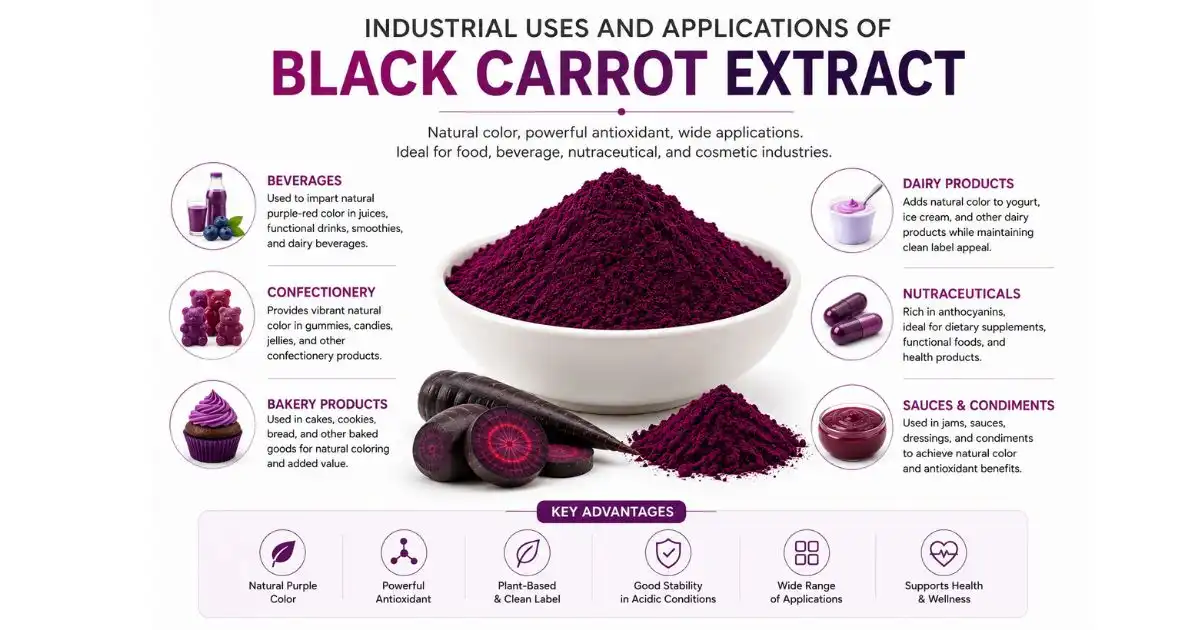
Industrial Uses and Applications of Black Carrot Extract
Natural Food Colorant with Dual Functionality
Instead of dyes made in a lab, Black Carrot Extract is a good choice for people who want to buy something clear and healthy. It can add color, from cherry red (pH 3.0-3.5) to violet-purple (pH 4.0-5.0). In other words, it can be used in a lot of different ways in baked goods, milk, ice cream, and fruity drinks. That's why black carrot anthocyanins can handle being heated up to boiling points without changing their taste. This is useful for making gummies and baked goods. Beet red, on the other hand, tastes boring above 70°C and starts to smell earthy.
It's even more appealing because of the tax breaks. In the US, Black Carrot Extract is known as "vegetable juice for color," which means the FDA doesn't have to approve it. The name for it in the EU is E163 (anthocyanins). This dual compliance makes it easier for products to be sold around the world and for food companies that make food for many countries to follow the rules.
A third-party lab and HPLC tests are used to make sure that Yangge's Black Carrot Extract is of good grade. These steps make sure that the color value stays the same and meets international standards even though the quantity ranges from 4 to 120 units per cm³. The goods stay stable when they are stored in cases that close tightly and keep light out. It can be sent in blank forms or metal foil bags that hold 1 kg.
Applications in Supplements and Nutraceuticals
Because it is high in vitamins and is thought to be good for your health, Black Carrot Extract is used by nutraceutical businesses. It comes in two different forms: powder and liquid concentrate. It works well in useful drink mixes, sodas, pills, and tablets. Anthocyanin supplements should be taken in amounts of 100 mg to 500 mg per day. This is supported by tests that show they work and follow safety guidelines.
People are moving to this area for the following main reasons:
- Standardized Potency: HPLC is used to make sure that the supplement is always the same and to check the level of anthocyanin. For correct marking and buyer trust, this is important.
- Clean-Label Appeal: Labels that say something isn't GMO, nuclear, or allergen-free are in line with rules and what people in North America and Europe want.
- Multifunctional Benefits: One of the many good things about the extract is that it does more than just color. It also supports claims of better eye, heart, and metabolic health, which helps supplement brands stand out in a market that is already very crowded.
These pros make it easier for procurement managers to find items while still following the law and working with tricky formulas. One ingredient, Black Carrot Extract, can give brands bright colors, good health benefits, and a clean label. There will be fewer SKUs to keep track of, which will make the supply chain run more smoothly.
Cosmetic and Pharmaceutical Industry Integration
Because it aids in the fight against free radicals and inflammation, Black Carrot Extract is found in serums, creams, and masks. The extract keeps emulsions stable and extends the shelf life of goods. People who like "green beauty" also like the natural color it adds. Synthetic colors are looked at more closely when they are used in medicines, like when they are added as a colorant to nutraceutical pills and oral solutions.
The market for natural food colorants will grow at a rate of 8.4% per year and hit $3.2 billion by 2027, according to reports. At the moment, people want ingredients that are natural and sustainable. It is getting harder to use synthetic colorants since there are more rules. This is very true for healthy foods and foods that are good for kids. Because of this, more people are looking for safe natural choices like Black Carrot Extract.
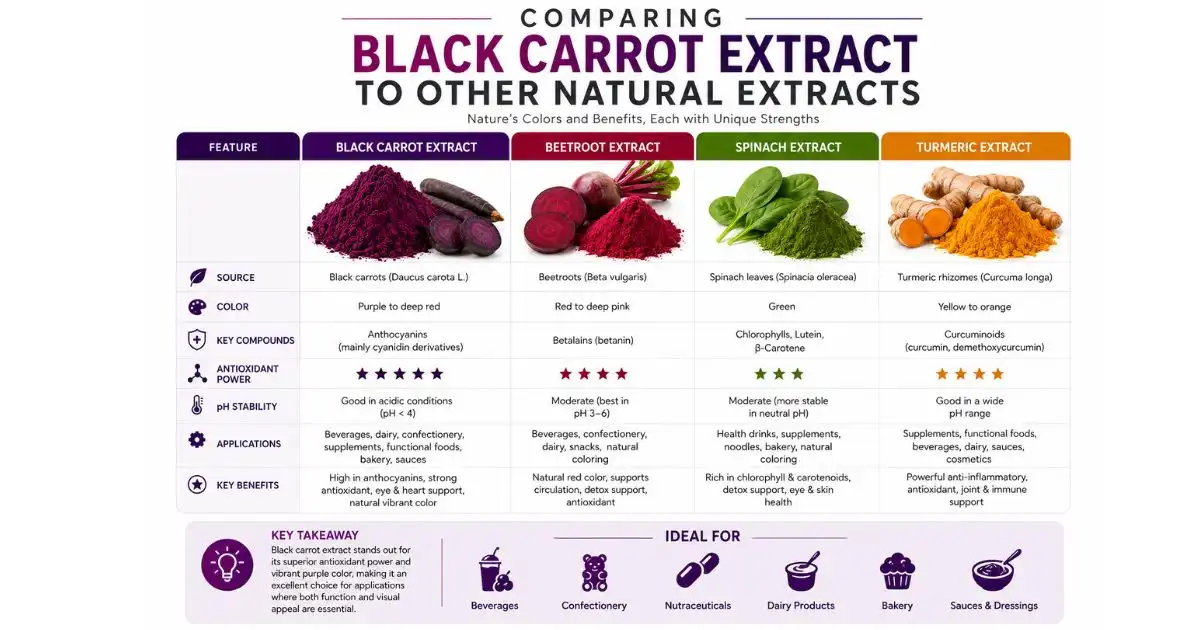
Comparing Black Carrot Extract to Other Natural Extracts
Black Carrot vs. Beetroot and Purple Carrot Extracts
It is clear that Black Carrot Extract is better than other options. It's cheap, but beetroot extract doesn't do well in hot temperatures (above 70°C) and tastes earthy, which makes it hard to use in different ways. Even when there are more of the anthocyanins needed for strong purple colors, pasteurization and UHT processing don't change the taste of black carrot.
Purple carrot extracts usually have less anthocyanin than Black Carrot Extracts, even though they both come from the same source. Black Carrot Extracts are also more stable because they have acylation. When antioxidants are compared, purple carrot extracts have ORAC values that are 30–40% lower than Black Carrot Extracts. This means they can say more important things and not use as many of those things in the full goods.
| Extract Type | Heat Stability | Flavor Profile | Anthocyanin Content | Typical Application |
|---|---|---|---|---|
| Black Carrot | Excellent (>90°C) | Neutral | High (5-25% w/w) | Gummies, beverages, dairy |
| Beetroot | Poor (<70°C) | Earthy | Moderate (1-5% w/w) | Ice cream, sauces |
| Purple Carrot | Moderate | Neutral | Moderate (3-8% w/w) | Snacks, confections |
| Grape Skin | Moderate | Slightly astringent | Variable | Wine, beverages |
Organic vs. Non-Organic and Synthetic Alternatives
The price of Organic Black Carrot Extract is higher than other items because it has to meet strict organic approval requirements. While not organic versions, like Yangge's, meet normal food safety standards and cost less, they don't lose any of their quality or usefulness. The color stays the same with synthetic colorants like Allura Red, but they are limited by rules and bad reviews from customers. This is making natural alternatives more popular.
When people decide what to buy, sustainability issues also come into play. Growing black carrots helps with regenerative farming, and sellers like Yangge put a lot of value on being able to track things from the farm to the customer. When brands use standards like ISO, HACCP, Kosher, and Halal, they can feel better. These help them make sure that their plans for sourcing are in line with their CSR goals and what their customers want.
Procurement Guide: Sourcing Black Carrot Anthocyanins for Business Needs
Evaluating Suppliers and Quality Certifications
Procurement managers have to really look into the skills of buyers to make sure that the goods are good and that the rules are followed. Some of the most important certifications are ISO 22000 (Food Safety Management), Good Manufacturing Practices (GMP), and organic certifications for the right product lines. Certifications of Analysis (CoA) that have been checked by outside labs show that the product is safe for microbes, has the right amount of anthocyanin, and isn't high in heavy metals.
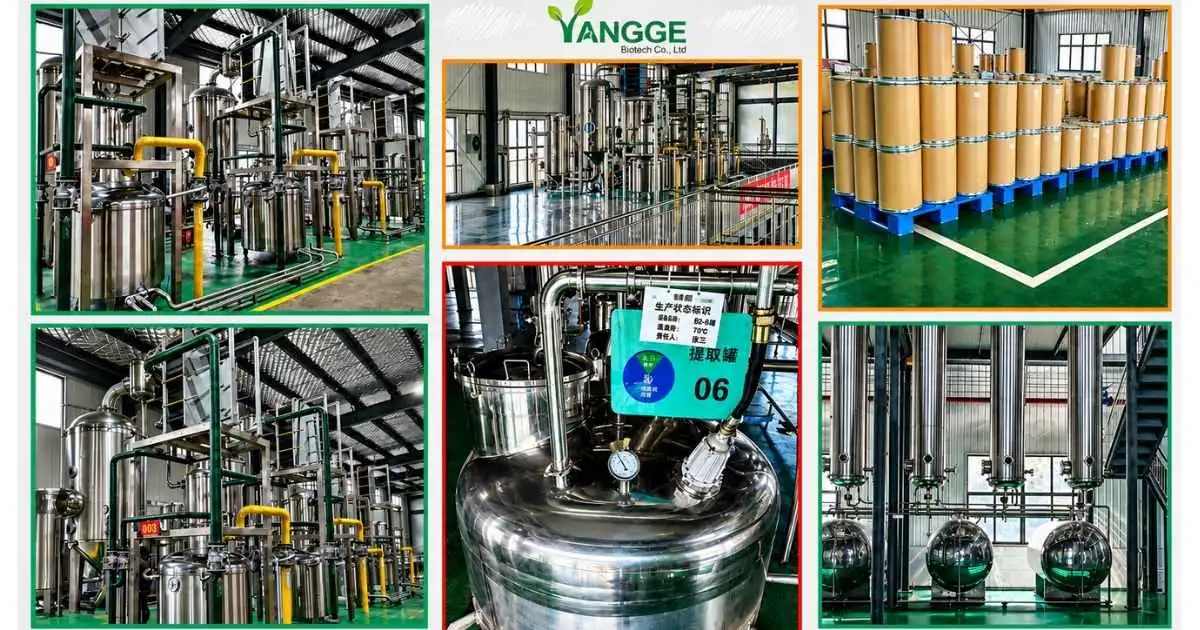
One seller that you can trust is Yangge Biotech. It has ISO, HACCP, Kosher, and Halal certifications and works with other approved labs to do more tests. Green energy is used by the company, and they keep track of food from the farm to the table to show their commitment to ecology. These changes help people who want to buy eco-friendly products find brands that meet their needs.
Pricing Trends and Negotiation Strategies
How much Black Carrot Extract is needed, how easy it is to get the raw materials, and how strong the extract needs to be all affect the price. A kilogram of standard 5% anthocyanin powder costs around $40 to $80 right now. When there are more of something, the price goes up. More often than not, the MOQ is between 25 and 100 kg. Long-term contracts keep supply stable, and large orders save money.
To keep things smooth during negotiations, it's important to be clear from the start about things like how many anthocyanins you want, how much the color is worth, and what kind of package you want. Before making a big order, it is safer to ask for samples to test in real life. This also makes sure that the old and new formulas will still work together. Working with companies that offer OEM customization can help you make solutions that are just right for you. For example, you can change the acylation ratios or mix extracts that work best in certain pH ranges.
You should make sure that the company you buy Black Carrot Extract from offers technical help and responds quickly to calls for it. Yangge's research and development team works full-time, and their online service is accessible 24 hours a day. This makes it simple to fix problems and get quick help with formulas. This is very important when new goods are being made and when production goes up.
Conclusion
Black Carrot Extract anthocyanins are a game-changing ingredient for businesses that want to add natural color to food, drinks, and supplements while also making them healthier. These flavonoid structures are the most stable of their kind. It backs up health claims about antioxidants, heart health, and metabolic health and lets bright colors be used in a lot of different ways. Black Carrot Extract works better than beets and man-made versions. People also like that the label is clean and that the ingredients are clear and good for the environment.
When procurement professionals look at sources, they should pay close attention to things like certifications, traceability, and getting help from experts to make sure rules are always followed and quality standards are always met. As the market moves quickly toward natural products that can do more than one thing, Black Carrot Extract is ready to meet the needs of the changing business because it has been shown to work well and be flexible.
FAQ
How stable is Black Carrot Extract in different pH environments?
The orange to purple color of black carrot anthocyanins stays the best when the pH level is between 3.0 and 4.5. When pH goes above 5.0, colors turn bluer and things become less stable. The final pH of the mixture should be less than 4.0 so that the color stays true and the antioxidants work well over the course of the product's shelf life.
What is the typical shelf life of Black Carrot Extract?
Black Carrot Extract powder will last for 24 months if you store it in containers with tight lids and keep them out of the light and water. There is a shelf life of 12 to 18 months for most clear liquid concentrates. Putting things in the fridge keeps them more solid and stops the anthocyanins from breaking down.
Can Black Carrot Extract replace synthetic dyes entirely?
Yes, most of the time. You can use Black Carrot Extract instead of FD&C Red 40 and other man-made reds in drinks and foods that are tangy, sweet, or made with fruit. If the product is neutral or alkaline, the formula may need to be changed or it may need different natural colorants.
What certifications should I prioritize when sourcing?
At the top of your list should be ISO 22000, GMP, and any other important standards from your area, like Kosher, Halal, or organic. If you want to make sure that quality and compliance standards are met, have a third party test the CoA for heavy metals, microbiological safety, and anthocyanin content.
Partner with Yangge for Premium Black Carrot Extract Solutions
If you want to make a formula, Yangge Biotech Co., Ltd. can help you with high-quality Black Carrot Extract that comes with full certifications, rigorous testing, and dedicated technical support. Our Black Carrot Extract is very stable and always has the same amount of anthocyanin because we have made it many times before. It also follows all the rules in North America, Europe, and the Middle East.
Our dedication to green energy and sustainable sourcing, along with our ISO, HACCP, Kosher, and Halal standards, mean that you can be sure that your supply chains will help you reach your corporate responsibility goals. You can get samples, talk about your needs, or get a quote made just for you by emailing info@yanggebiotech.com. To find out more and see what's new, go to blog.yanggebiotech.com.
References
1. Kamiloglu, S., Capanoglu, E., Grootaert, C., & Van Camp, J. (2015). Anthocyanin absorption and metabolism by human intestinal Caco-2 cells—A review. International Journal of Molecular Sciences, 16(9), 21555-21574.
2. Montilla, E. C., Hillebrand, S., Winterhalter, P., & Moritz, P. (2011). Anthocyanins in purple carrots: Acylation and HPLC-DAD-MS characterization. Journal of Agricultural and Food Chemistry, 59(7), 3385-3390.
3. Wallace, T. C., Slavin, M., & Frankenfeld, C. L. (2016). Systematic review of anthocyanins and markers of cardiovascular disease. Nutrients, 8(1), 32.
4. Algarra, M., Fernandes, A., Mateus, N., de Freitas, V., & Esteves da Silva, J. C. (2014). Anthocyanin profile and antioxidant capacity of black carrots (Daucus carota L. ssp. sativus var. atrorubens Alef.) from Cuevas Bajas, Spain. Journal of Food Composition and Analysis, 33(1), 71-76.
5. Netzel, M., Netzel, G., Kammerer, D. R., Schieber, A., Carle, R., Simons, L., & Konczak, I. (2007). Cancer cell antiproliferation activity and metabolism of black carrot anthocyanins. Innovative Food Science & Emerging Technologies, 8(3), 365-372.
6. Ersus Bilek, S., & Turantaş, F. (2013). Decolorization of anthocyanin pigments in black carrot juice by using ozone. Food Chemistry, 138(1), 608-612.

Based on your location and order quantity, you will have the opportunity to receive a limited time free shipping promotion!
Who we are
Popular Blogs