What Extraction Ratio Is Best for Lion’s Mane Powder?
Yangge Biotech supplies high-quality Lion's Mane Mushroom Extract (Hericium erinaceus), a premium functional mushroom ingredient manufactured from carefully selected fruiting bodies using advanced extraction technology. Rich in naturally occurring polysaccharides, beta-glucans, and other bioactive compounds, our Lion's Mane Mushroom Extract is widely used in dietary supplements, functional foods, beverages, sports nutrition, and wellness formulations.
For more information about our Lion's Mane Mushroom Extract, product specifications, pricing, samples, OEM services, or customized formulations, please contact Yangge Biotech at info@yanggebiotech.com or send us your inquiry. Our professional team is ready to provide reliable ingredient solutions and long-term supply support for your business.
When selecting Lion's Mane mushroom extract for your formulation, the extraction ratio directly determines the concentration of bioactive compounds your customers will receive. Based on our extensive experience supplying superfood brands across North America, Europe, and Australia, we recommend that most functional beverage and nootropic supplement manufacturers opt for extracts standardized to 30-50% polysaccharides with verified beta-glucan content rather than relying solely on extraction ratios.
The ideal specification balances hericenones and erinacines—the compounds responsible for cognitive benefits—with sensory qualities like solubility and flavor profile that determine product acceptance in mushroom coffee blends and protein powder formulations.
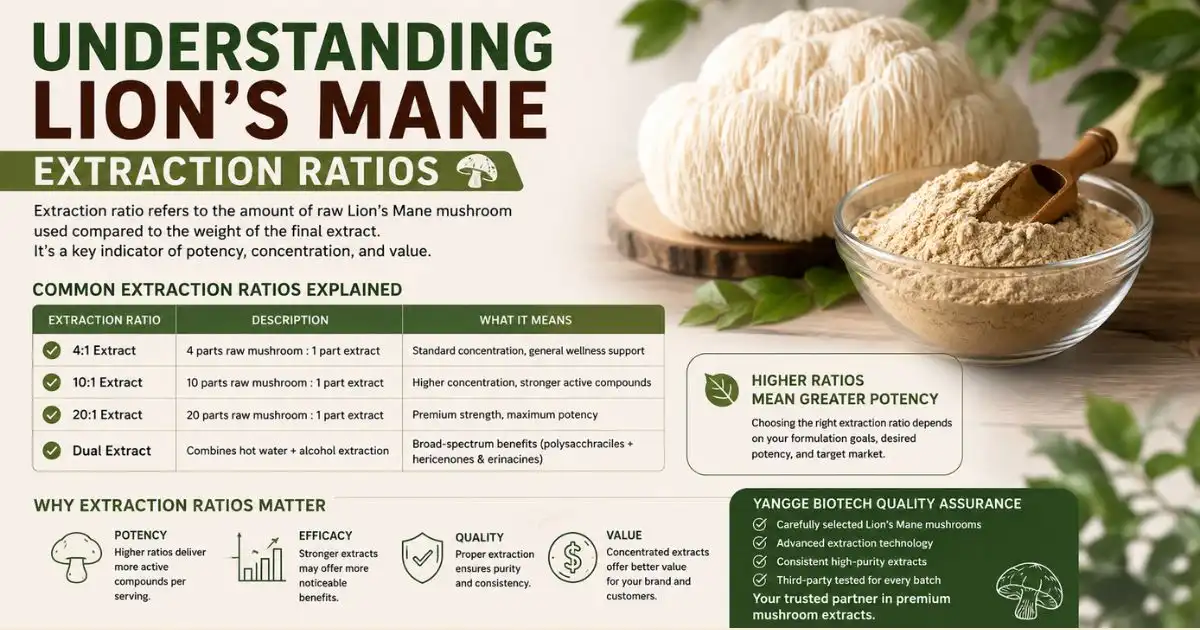
Understanding Lion's Mane Extraction Ratios
The extraction ratio shows how much of the raw mushroom material is turned into the powder. If the ratio is 10:1, it means that 10 kg of fresh or dried mushrooms make 1 kg of extract. This number statement gives buying managers a place to start, but it only shows a small part of the quality picture.
What Extraction Ratios Actually Measure
The ratio tells you the concentration level, but it doesn't say which chemicals made it through the extraction process. Polysaccharides and beta-glucans, which are immune-supporting chemicals found in cell walls, are kept when hot water is used for extraction. When you remove cannabis using alcohol, you get triterpenes and the smaller molecules hericenones and erinacines, which study links to nerve growth factor stimulation. To get the full range of bioactives, dual extraction methods use both fluids one after the other.
We get our Lion's Mane Mushroom Extract Powder (Hericium Erinaceus) from fruiting bodies by using controlled hot water extraction. We then make sure that the final product has a certain percentage of polysaccharides, which can be anywhere from 10% to 50%. This method gives more consistent results from batch to batch than just using ratios.
Why Ratios Can Mislead Quality Assessment
Two companies that sell "20:1 extracts" might send you very different goods. Different types of raw materials, extraction temperatures, processing times, and drying ways can change the end bioactive profile. Some companies use mycelium grown on grain substrates instead of fruiting bodies. This adds starch, which makes the product heavier without adding any therapeutic compounds. Others may list impressive ratios that were reached by drying the molecules for a long time instead of actually concentrating them.
The mushroom supplement business learned this lesson when third-party tests showed that some products, despite big claims on the labels, only had small amounts of real mushrooms in them. Instead of taking extraction ratios at face value, smart brand owners now ask for reports of analysis that show the polysaccharide content was checked by UV-spectrophotometry and the beta-glucan levels were checked by molecular methods.
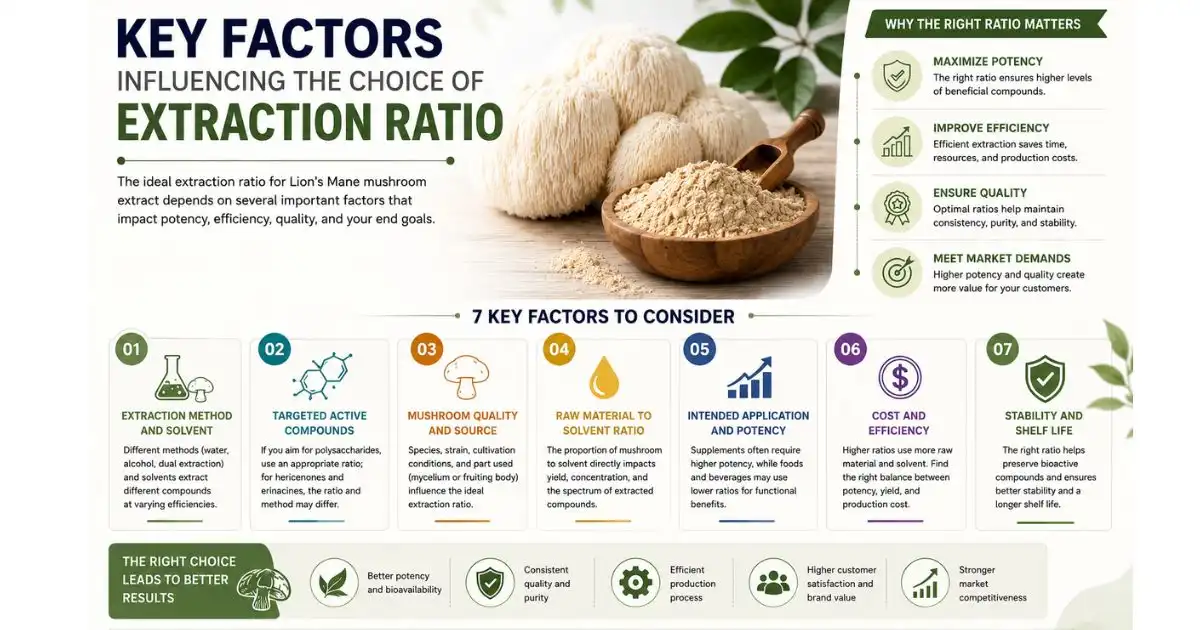
Key Factors Influencing the Choice of Extraction Ratio
To choose the right extraction standard, you need to make sure that your product goals are in line with quality marks that can be measured. This choice is based on what your target market wants, how the product needs to be made, and the rules that apply.
Active Compound Concentration Requirements
Extracts that are high in hericenones and erinacines work best in cognitive health products that aim to improve focus and mental clarity. These smaller molecules are mostly found in the fruiting body, and they need certain extraction conditions to keep their shape. Products that focus on immune support put a lot of emphasis on beta-glucan content, which can be easily extracted from mushroom cell walls using hot water.
Our Lion's Mane Mushroom Extract Powder contains more than 15% beta-glucan and up to 50% polysaccharides. This was confirmed by checking it with the Megazyme method instead of the less accurate UV method. This standard supports the strong "brain health" stance while keeping the immune benefits that people are coming to expect from functional mushrooms.
Application-Specific Performance Needs
To keep from competing with the coffee base, mushroom coffee mixes need to be easily dissolved and have bland flavors. Capsule formulas give you more control over the taste, but the particles need to be the same size so that the filling is even. For protein powder ingredients not to clump while being stored, they need to have low moisture levels and fine mesh sizes (95% to 80 mesh).
There is no direct link between extraction ratio and the sensory properties that determine how well a formulation works. A 20:1 extract might give you concentrated bioactives, but it might also add bitter notes or make it hard to mix with other ingredients, which will hurt the end product. Your R&D team can test how different standards work in your specific matrix by working with samples before committing to bulk sales.
Balancing Potency with Cost Efficiency
Higher concentration extracts demand higher prices, which your product placement needs to be able to support. It's possible that a 30:1 extract will cost three times as much per kilogram as a 10:1 specification, but each serving of your finished product may only have 500 mg of it. For example, if that extract is Lion's Mane, this adds an extra $0.15–0.30 per unit, which is fine for high-end nootropic pills that sell for $45–$60, but hard for value-level goods that sell for $20–$25.
When new brands are starting out, they often start by buying extracts with a moderate concentration that meet minimum standards of effectiveness while keeping production costs low. Upgrading to higher potency specifications can help your reformulated product line stand out as your brand becomes more well-known and economies of scale are reached.
Comparing Popular Extraction Ratios for Lion's Mane Powder
There are different extraction rates on the market, and each one works for a different type of goods and a different price range. When procurement managers understand the real trade-offs, they can choose specifications that are in line with how they want to place their brand.
Standard Extraction Ratios and Their Applications
10:1 Extraction Ratio
This low quantity is good for useful food uses where the mushrooms work with other ingredients instead of being the main active ingredient. The reasonable price lets you get large serving amounts (1000 to 1500 mg per dose), which give your label a lot of exposure. When companies make mushroom-infused energy bars, broths, or food supplements, they often find that 10:1 extracts give them enough power without making the product too expensive. Depending on how the raw materials were extracted and how good they are, the polysaccharide content is usually between 10 and 20 percent.
15:1 to 20:1 Extraction Ratio
This mid-level specification strikes a good balance between higher bioactive concentration and cost structures that are easy to handle. Extracts in this concentration range are used in most dedicated Lion's Mane supplements that cost between $25 and $40. With a higher polysaccharide content (20–30%), 500–750 mg servings are clinically useful, and brands can still make enough money with standard store markups. These amounts work well for mushroom coffee blends that need to be careful about how the flavors affect the coffee.
30:1+ Extraction Ratio
These very concentrated ingredients are used in high-end brain health formulas and clinical-grade vitamins. The amount of polysaccharides reaches 40–50%, and the amount of beta-glucans is also high. The concentrated form lets you take smaller amounts, which lowers the number of capsules needed in nootropic stacks with more than one ingredient. These specs are good for products that cost more than $50 and where customers want the most potency per dose.
| Extraction Ratio | Typical Polysaccharide Content | Ideal Applications | Cost Consideration |
|---|---|---|---|
| 10:1 | 10–20% | Functional foods, cooking supplements, and low-cost mixes | The best value per kg |
| 15:1 to 20:1 | 20–30% | Standard vitamins, mushroom coffee, and health goods for every day | Prices in the middle |
| 30:1+ | 40–50% | Premium brain products and vitamins made for professionals | Costs the most per kg |
Knowing these groups helps you set the tone for your first talks with suppliers. Instead of asking for "the highest ratio available," be clear about your goal polysaccharide percentage, beta-glucan minimum, and sensory needs so that you can get quotes that are relevant.
How to Verify and Evaluate Lion's Mane Extraction Quality
Quality verification keeps your brand's image safe and makes sure your goods do what they're supposed to do. Full testing protocols find problems with adulteration before they reach your customers.
Essential Analytical Testing Methods
High-Performance Liquid Chromatography (HPLC) research finds and measures certain bioactive chemicals, such as erinacines and hericenones. This method makes sure that your extract has real Lion's Mane components and not just cheap generic carbohydrates. UV-spectrophotometry is faster for screening polysaccharides, but it isn't sensitive enough to find complex adulteration.
Researchers in mycology know that using enzymes to test for beta-glucan is more accurate than using calculations. The Megazyme assay is one example of this. Some sellers list the total amount of polysaccharides, but they don't check the beta-glucan fraction, which is the immune-active part that has been studied the most. This testing gap is especially problematic for Lion’s Mane, because its beta-glucan content can vary widely depending on extraction methods, and without proper enzymatic testing, the label claim may not reflect the actual bioactive levels.
Microbiological testing makes sure that your extract meets standards for total plate count, yeast, mold, and disease lack in food safety. Heavy metal testing for lead, arsenic, cadmium, and mercury shows that the mushrooms were not grown on contaminated soil. Concerns about agricultural chemicals are dealt with by pesticide residue research. This is especially important for conventional farming rather than approved organic farming.
Certifications That Build Supplier Credibility
Yangge Biotech has ISO 22000, HACCP, Kosher, and Halal certificates, which show that we are dedicated to managing quality in a structured way. These third-party validations show that we follow written processes for keeping track of ingredients, avoiding contamination, and handling everything the same way every time. GMP (Good Manufacturing Practice) certification means that the factories that make pharmaceuticals meet strict standards for quality control and cleanliness.
Organic approval from the USDA, the EU, or a similar organization proves that the mushrooms were grown without using manmade fertilizers or pesticides. Consumers are worried about genetic modification, but mushrooms themselves can't be changed genetically right now. Non-GMO certification helps ease those worries. These certifications cost more, but they bring higher prices in markets that care about health.
Transparency in Extraction Processes
Suppliers you can trust give you thorough sheets with information about the mushroom part used (fruiting body vs. mycelium), the liquid used for extraction, the concentration method, and the way the mushrooms are standardized. Each package comes with a Certificate of Analysis that is special to that batch and shows the real test results instead of the usual ranges.
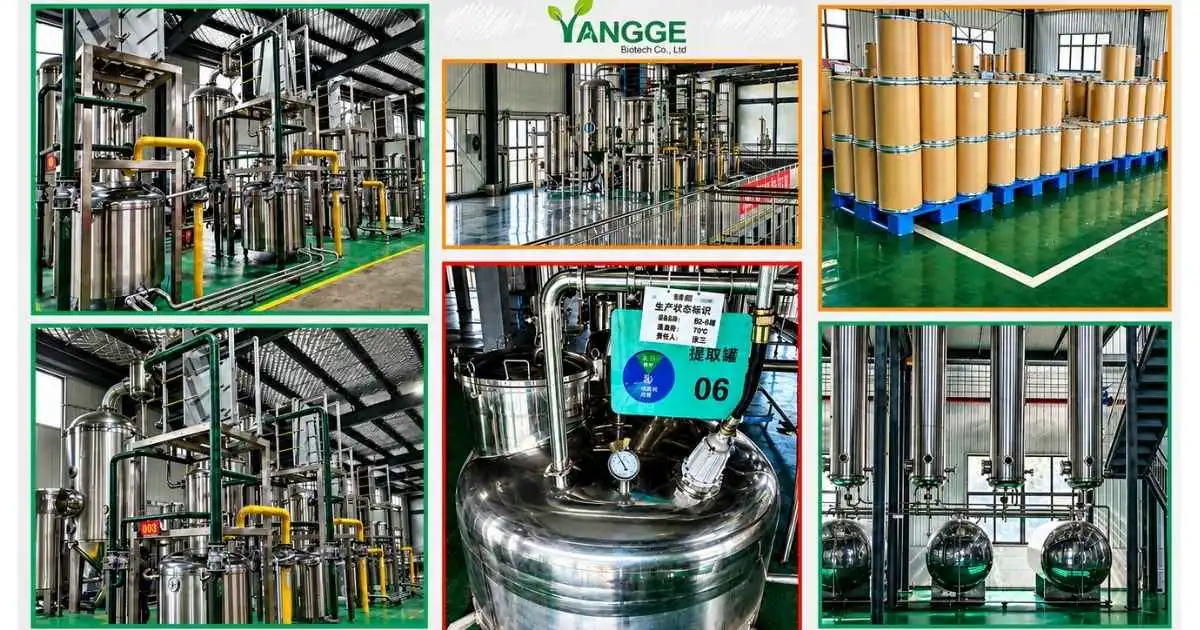
Our Lion's Mane Mushroom Extract Powder is made from hot water extraction of 100% dried fruiting bodies. This makes a fine yellow-brown powder that goes through 80 mesh screens. Depending on the size of your order, we package in either 1 kg aluminum foil bags or 25 kg fiber drums. The product has a 24-month shelf life if it is kept cool and dry. Before making a production order, you can get samples of our slightly sweet, tan-colored powder to see how it works in your particular recipe.
Procurement Considerations: Choosing the Best Lion's Mane Extraction Ratio
A successful buying process involves balancing more than just the harvest ratio. When strategic buyers make decisions, they look at quality, cost, and how well the product fits their needs.
Cost-Quality Trade-offs in Bulk Purchasing
The price per kilogram goes up as the concentration of the extraction goes up, but the relationship isn't a straight line. It's possible that a 20:1 extract will cost 2.5 times as much as a 10:1 extract, but not exactly twice as much. A 30:1 extract could cost 4-5 times the base cost. When a company commits to buying more than $50,000 a year, it gets big discounts on purchases. This makes consolidating suppliers appealing for companies that work with more than one type of mushroom.
To get better terms, you need to show that you really want to buy by giving clear details about what you want, how much you want to buy, and your willingness to give demand predictions. Suppliers give better prices to customers who buy the same amount of goods every three months instead of buying things at random, which makes it harder to plan production. Lion’s Mane suppliers, for instance, often reward stable quarterly ordering with tiered discounts, because predictable demand helps them secure raw material and schedule processing runs efficiently. Long-term contracts with yearly volume promises and set supply dates help both parties get the most out of their inventory and services.
Aligning Specifications with Product Requirements
Instead of trying to get the highest ratio, your formulation goals should guide the choice of specifications. A mushroom coffee mix might work better with a moderate 15:1 extract that dissolves well and has a neutral taste than with a 30:1 specification that makes the coffee bitter or makes it hard to spread. Consistent particle size and good flow qualities for automatic filling tools are good for capsule products.
When looking at extraction rates, think about the serving size and daily amount you want to use. A 500mg capsule of 30:1 extract (possibly 150mg+ polysaccharides) might have the same amount of bioactive ingredients as a 1000mg capsule of 15:1 extract, but it would be smaller and allow for more ingredients in combination formulas. The marketing story is different. Some customers like label claims that say "1500 mg mushroom extract," while others like claims that say "500 mg concentrated extract, 40% polysaccharides."
| Parameter | Mushroom Coffee Blend | Nootropic Capsule | Functional Food Powder |
|---|---|---|---|
| Recommended Ratio | 10:1 to 15:1 | 20:1 to 30:1 | 10:1 to 15:1 |
| Polysaccharide Target | 15–25% | 30–50% | 15–25% |
| Critical Properties | Solubility and a neutral taste | A lot of useful substances | Taste and color stability |
| Typical Serving Size | 500 to 1000 mg | 500 to 750 mg | 1000 to 2000 mg |
Logistics Factors Affecting Product Integrity
Hygroscopic means that mushroom products can take in water from the air, which can lower their quality and shorten their shelf life. Putting products in aluminum foil bags with desiccant packets or other materials that keep moisture out saves their quality while they are being stored or shipped. Manufacturers with climate-controlled stores and quick inventory turnover can use 25 kg drums for bulk packing. Smaller brands, on the other hand, do better with 1 kg units that keep products from being exposed for too long after they've been opened.
Shipping conditions are important, especially when bringing goods from one climate zone to another. During the summer, packages going through hot areas may need temperature-controlled operations to keep the goods from getting damaged by the heat. This will cost more but keep the quality of the goods. When you work with suppliers who know how to handle international shipping and provide the right packaging, you can avoid expensive quality problems that are only found after customs clearance.
Conclusion
The best extraction ratio for your Lion's Mane powder isn't necessarily the one with the biggest number. It's the one whose proven bioactive content fits best with your product's goals, formulation needs, and market positioning. Real-world performance is more accurately predicted by sensory properties like solubility and flavor profile, as well as standardizing polysaccharides and beta-glucans. Instead of chasing ratios that sound good but don't make sense, good buying strategies focus on thorough quality testing, open relationships with suppliers, and specs that are in line with the application you want to use.
FAQ
What extraction ratio provides optimal cognitive benefits?
When studying the cognitive effects of Lion's Mane, researchers usually use extracts that are standardized to contain 20–30% polysaccharides with hericenones and erinacines instead of exact extraction ratios. Studies that used products that gave people 500 to 1000 mg of these extracts every day showed measurable benefits. It's more important to look at the compound profile than the concentration ratio. Make sure that your provider checks for these unique bioactives instead of general polysaccharides.
Do higher extraction ratios always mean better quality?
Higher ratios mean there is more concentration, but that doesn't mean the quality is better. A 30:1 extract from mycelium grown on grain substrates might not have as many beneficial compounds that are unique to mushrooms as a 15:1 extract from pure fruiting bodies. Ask for research papers that show the percentages of polysaccharides and beta-glucans along with the extraction ratios. Concentration numbers alone are not enough to guarantee quality; testing for real bioactive material is more useful.
How should dosage change with different extraction ratios?
Instead of focusing on extraction ratio, change portion amounts based on polysaccharide content. A product with a 10:1 extract at 15% polysaccharides might say to take 1500 mg daily, which is 225 mg of polysaccharides. A product with a 30:1 extract at 45% polysaccharides might say to take 500 mg daily, which is the same amount of bioactive content. When making formulation decisions, you should always figure out the actual bioactive dose that people receive instead of just looking at the total extract weight.
Partner with Yangge for Premium Lion's Mane Extract Supply
Yangge Biotech specializes in providing superfood brands and functional supplement manufacturers with rigorously tested Lion's Mane Mushroom Extract Powder standardized to your exact specifications. Our fruiting body extracts range from 10% to 50% polysaccharides with verified beta-glucan content, ISO, HACCP, Kosher, and Halal certification, plus comprehensive testing for heavy metals, pesticides, and microbial contaminants. We offer flexible packaging from 1kg samples to 25kg production quantities, supporting your product development from initial formulation through commercial scale-up.
Our dedicated team provides technical consultation on extraction specifications, formulation compatibility, and regulatory compliance specific to North American and European markets. Contact us at info@yanggebiotech.com to discuss your procurement needs with experienced Lion's Mane suppliers committed to quality, transparency, and reliable delivery schedules that support your production timelines.
References
1. Friedman, M. (2015). Chemistry, Nutrition, and Health-Promoting Properties of Hericium erinaceus (Lion's Mane) Mushroom Fruiting Bodies and Mycelia and Their Bioactive Compounds. Journal of Agricultural and Food Chemistry, 63(32), 7108-7123.
2. Mori, K., Inatomi, S., Ouchi, K., Azumi, Y., & Tuchida, T. (2009). Improving effects of the mushroom Yamabushitake (Hericium erinaceus) on mild cognitive impairment: a double-blind placebo-controlled clinical trial. Phytotherapy Research, 23(3), 367-372.
3. Li, I. C., Lee, L. Y., Tzeng, T. T., Chen, W. P., Chen, Y. P., Shiao, Y. J., & Chen, C. C. (2018). Neurohealth Properties of Hericium erinaceus Mycelia Enriched with Erinacines. Behavioural Neurology, 2018, 5802634.
4. Ratto, D., Corana, F., Mannucci, B., Priori, E. C., Cobelli, F., Roda, E., Ferrari, B., Lupo, G., Richelmi, P., Venco, L., & Rossi, P. (2019). Hericium erinaceus Improves Recognition Memory and Induces Hippocampal and Cerebellar Neurogenesis in Frail Mice during Aging. Nutrients, 11(4), 715.
5. Khan, M. A., Tania, M., Liu, R., & Rahman, M. M. (2013). Hericium erinaceus: an edible mushroom with medicinal values. Journal of Complementary and Integrative Medicine, 10(1), 253-258.
6. Venturella, G., Ferraro, V., Cirlincione, F., & Gargano, M. L. (2021). Medicinal Mushrooms: Bioactive Compounds, Use, and Clinical Trials. International Journal of Molecular Sciences, 22(2), 634.

Based on your location and order quantity, you will have the opportunity to receive a limited time free shipping promotion!
Who we are
Popular Blogs