What does chaga extract do?
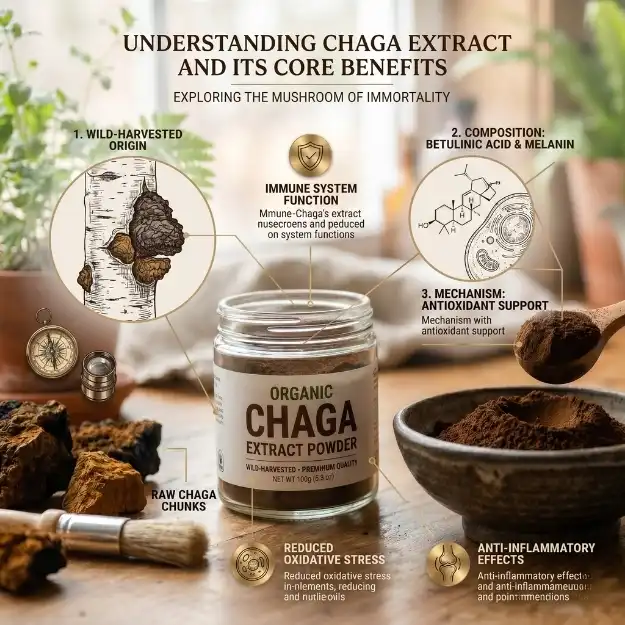
Bioactive compounds from the Inonotus obliquus fungus are concentrated in chaga extract. New hot water and dual-solvent extraction methods are used to break down the chitin cell walls that the body can't digest. An important bioavailability problem with raw mushroom material is fixed by this change. Beta-D-glucans, triterpenes, melanin, and betulinic acid are all found in normal amounts in the extract. These chemicals help the immune system, protect cells from damage, and keep free radicals in check. Procurement professionals like this ingredient because it consistently delivers the same amount of potency, better solubility, and predictable formulation behavior in cosmetics, functional beverages, and dietary supplements. Making health claims can now be backed up by real clinical markers.
Understanding Chaga Extract and Its Core Benefits
The Extraction Process Behind Premium Chaga
As the fungal biomass goes from being raw to being refined, a key value proposition is made. If you pick chaga extract from birch trees in the wild, the structures are very dense and can't be broken down by human digestive enzymes. We separate lipophilic triterpenes and phenolic compounds with ethanol extraction, and break down polysaccharide complexes with hot water extraction. Using two different extraction methods, you can get all kinds of bioactives. Wild-grown plants are extracted in cycles that are controlled by temperature to keep the compounds' integrity and get polysaccharide concentrations of 10% to 40%. This methodical approach makes sure that each batch is the same, which is important for businesses that need regulatory approval and clinical support.
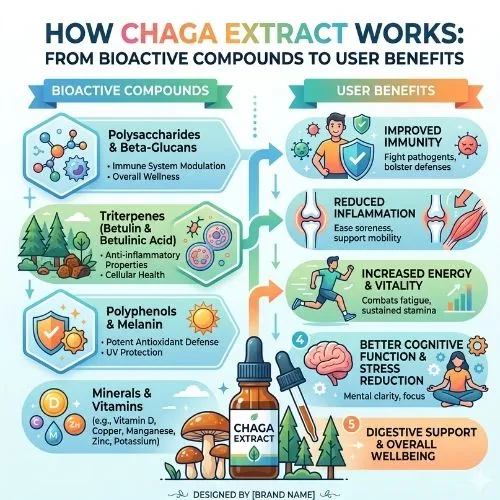
Immune System Support Through Beta-Glucans
Chaga mushroom extract has beta-D-glucans that work with natural killer cells and macrophages to boost the body's natural defenses without making it too active. Pattern recognition receptors bind to these polysaccharides, and they set off immune responses that are balanced. Enzymatic assay methods are often used to check the standardized beta-glucan content. This information is useful for people who are making supplements to boost the immune system. Because of this, exact dosage instructions can be given, and marketing claims can be backed up by mechanistic research. More and more people are looking for natural alternatives that have been shown to work biologically. This ingredient is very helpful for companies that make flu or cold medicines or immune support products.
Antioxidant Capacity and Cellular Protection
It is thought that the melanin and polyphenolic compounds in chaga have oxygen radical absorbance capacities (ORACs) that are many times higher than those found in other antioxidants. These molecules get rid of free radicals that cause oxidative stress, which is linked to getting old too quickly and having inflammation that doesn't go away. These qualities are used by cosmetic companies to make skin care products that protect against damage from the sun and the environment. People who make drinks add the extract to functional coffee and adaptogenic drink blends. It tastes earthy and a little bitter, and it goes well with coffee and cocoa bases. It is possible for these antioxidants to stay stable at high temperatures during pasteurization and brewing. This makes the ingredient good for ready-to-drink drinks that need to stick around longer.
How Chaga Extract Works: From Bioactive Compounds to User Benefits
Molecular Mechanisms of Triterpenes and Betulinic Acid
Some triterpenes found in chaga extract, like betulinic acid that comes from birch trees, change the NF-κB pathway to lower inflammation. The expression of pro-inflammatory cytokines is lowered by this molecular mechanism. This could be useful for formulas that want to lower inflammatory responses. When scientists are testing out different plant combinations, they often mix chaga with adaptogens that work well with it, such as rhodiola or ashwagandha. Mixtures like these work on more than one physiological pathway because they work together. Triterpenes need to be thought about when the product is being made because they like fat. Using micelle delivery systems or phospholipid complexation can make oral bioavailability a lot better than just putting powder in capsules.
Polysaccharide Structure and Immune Modulation
These sugars in chaga have a branching structure made up of β-(1→3) glycosidic bonds and β-(1→6) side chains. This structure is what gives them their biological activity. After extraction, HPLC and UV spectrophotometry are used in the lab to check the molecular weight distribution and structural integrity. If the polysaccharides are broken down or extracted wrong, they lose their immune-boosting properties. This is why these quality control steps are so important for how well the product works. It is important for companies that make capsules and tablets to use the right fillers and moisture-barrier packaging so that the polysaccharides don't stick together and keep their ability to flow during high-speed encapsulation processes.
Formulation Strategies for Enhanced Bioavailability
Extracts that are high in polysaccharides and dissolve in water make it easier to mix them into water-based mixtures, such as liquid tinctures and instant drink powders. Alcohol-based triterpene fractions need emulsification technologies in order to be used in drinks. Spray drying makes fine, uniform particles that are easier to mix. This gets rid of the "gritty texture" issue that many people have with mushroom powders that are too rough. When formulators want to make high-end supplement lines, they often ask for particle size distributions that are less than 80 mesh. This makes sure that formats for direct consumption feel good in the mouth. In the end, the brown color comes from melanin compounds. For skin care uses where color is not wanted, decolorized extracts are available. They cost more because they have to go through an extra step in the processing process.
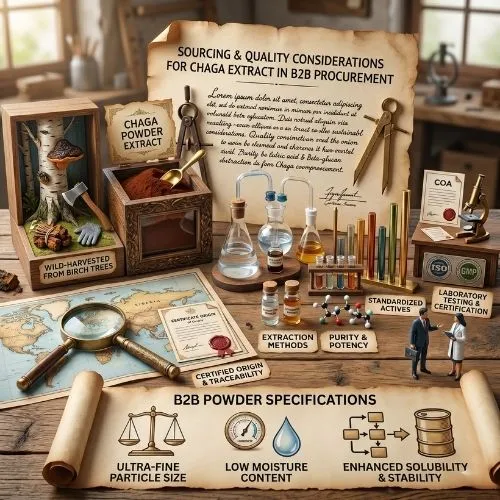
Sourcing and Quality Considerations for Chaga Extract in B2B Procurement
Wild-Harvested Versus Cultivated Material
In Siberia, Canada, and Alaska, wild chaga extract grows on living birch trees for 15 to 20 years, during which time it builds up bioactives. Longer maturation time increases the amount of betulinic acid and melanin that are present, which aren't present in substrates that were grown in a lab. Trees stay alive and grow back when harvesting methods are sustainable. This addresses ethical sourcing concerns that consumers are paying more attention to. Growing chaga has some benefits, like removing contaminants and making sure there is a steady supply, but it usually has less triterpene content. Buying teams have to find a balance between claims that the goods are real and the supply chain's dependability. Wild-harvested materials, for instance, cost more, but they support marketing stories that talk about how they've been used traditionally and how well they work.
Contaminant Testing and EU Compliance
A lot of tests are done on our chaga mushroom extract to make sure it meets EU standards for polycyclic aromatic hydrocarbons (PAH4). Below 10 parts per billion, the amount of benzopyrene is kept. Outside of Eurofins, a third party checks the lab for heavy metals, pesticide residues, and microbe contamination. Many countries' rules are met by this strict testing protocol. It especially meets the strict rules set by the EU and FDA. We give out Certificates of Analysis that show that a product meets the standards for GMP, ISO, HACCP, Kosher, and Halal. This is important proof for manufacturers who have to deal with a lot of rules and regulations. The fact that organic products don't use irradiation or GMOs makes the certification process even stronger. This makes it easier for high-end brands to enter new markets.
Extraction Method Impact on Purity and Efficacy
The polysaccharides are extracted with hot water, but the chitinous residue is left behind. So, products are made that are standardized to have 10%, 20%, 30%, or 40% polysaccharides. Triterpenes are broken down by ethanol in two different extraction methods. This makes full-spectrum extracts with broader compound profiles. TLC and UV tests confirm the amounts of active ingredients, which gives us quality indicators that we can measure. There are concentration factors for 5:1 and 10:1 ratio extracts, but they aren't standardized to specific bioactive markers. So, they aren't as good for clinical uses that need exact dosing. Companies that make health claims about their products should use standard extracts instead of ratio formats to show the proof that regulators need.
Comparing Chaga Extract with Other Medicinal Mushroom Extracts
Bioactive Profile Differentiation
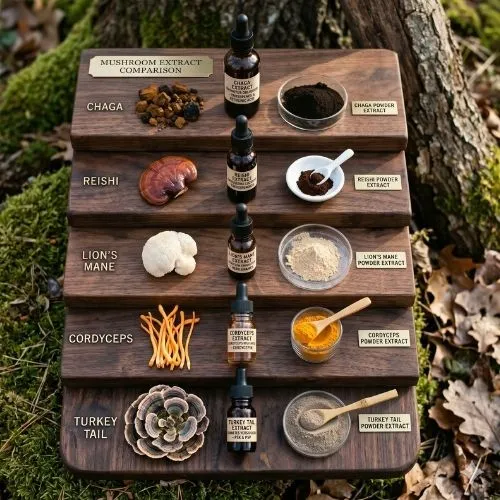
Because it has melanin, chaga extract is not the same as reishi's ganoderic acids, cordyceps' cordycepin, or turkey tail's protein-bound polysaccharides. You can find a place in the crowded market for functional mushrooms with this one-of-a-kind mix. The triterpene profile of reishi helps with sleep and the stress response. Cordyceps is good for people who are into sports performance because it helps the energy metabolism. Antioxidants are a big part of chaga's anti-aging and cellular health messages. This makes it appealing to people who are worried about oxidative damage from environmental stressors. Knowing these differences can help you make your products stand out in a smart way. For instance, formulas that mix different mushroom extracts can help with more than one health issue in a single SKU. This could make it more appealing to customers and give them a reason to buy it.
Market Demand and Pricing Dynamics
How much mushroom extract costs depends on how simple it is to make, how hard it is to get the raw materials, and how standardized it is. When it comes to price, chaga is somewhere between cordyceps (which costs more) and turkey tail (which costs less). Material that was collected in the wild costs the most. When there are problems in the supply chain that affect sources in Siberia, it can be harder to get supplies. This leads to changes in prices, which procurement teams have to plan for by planning their long-term relationships with suppliers and their stock. Extra tasty mushroom extracts are what more people want in their coffee. This is because different kinds of mushroom coffee are getting more popular. For manufacturers who want to get into this market, flexible minimum order quantities and volume purchasing agreements can be helpful. For instance, our 1 kg minimum makes it easier to do initial formulation tests, and you can still access 50–100 kg of stock for larger production runs.
Combination Formulations and Synergy
Putting chaga together with plants that work well with it can help sell the product and may also make it work better by making the effects stronger or adding to them. To lower inflammation, chaga is often mixed with turmeric, green tea, or ashwagandha. Ashwagandha can help the body deal with stress. Formulation chemists have to think about how different chemicals might react with each other. Because polyphenolic compounds may bind to minerals, the nutrients that are mixed together might not be as bioavailable as they should be. Testing for stability under accelerated conditions shows that the ingredients work well together for a long time. These technical factors have an impact on the final structure of the product. They also show if different packaging is needed for ingredients that don't mix well or if special delivery systems are needed to keep the quality.
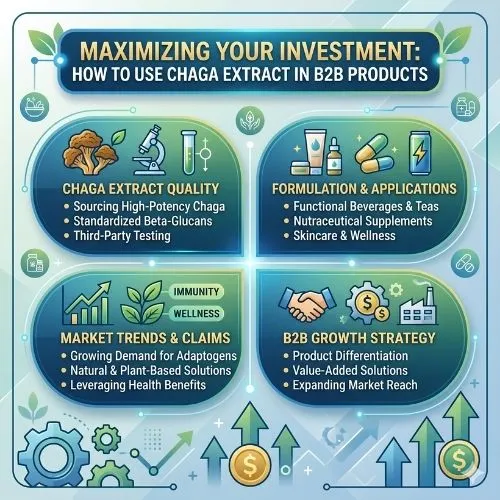
Maximizing Your Investment: How to Use Chaga Extract in B2B Products
Optimal Formulation Formats
You can choose the right application if you know the pros and cons of the different delivery formats. Because each format is for a different group of people with different tastes, it needs to be made in a different way.
Capsule and Tablet Formats: Standardized chaga extract works well in two-piece vegetarian or gelatin capsules, which make dosing accurate and keep the food fresh for a long time. There are between 500 mg and 1000 mg of polysaccharides in each capsule, and the amount of standardization affects how much each capsule gives you. They need to use the right flow agents because of hygroscopicity. If you use 1% to 2% silicon dioxide or organic rice hull powder, the powder won't stick together when it's being filled automatically.
Tincture and Liquid Extracts: Alcohol-based tinctures keep both polysaccharides that dissolve in water and triterpenes that dissolve in alcohol, so they give full profiles of the compounds they contain. There are alcohol-free options that are good for sensitive people that are based on glycerin. People who use dark glass bottles with dropper assemblies can control the dose and keep photosensitive chemicals from breaking down.
Instant Beverage Powders: Because they are small and dissolve completely in water, polysaccharide-rich extracts work well in mushroom coffee blends and functional hot chocolate. The ingredient doesn't clump and mixes easily in hot liquids, giving high-end drinks the smooth texture that customers expect. When flavors go well with coffee and cocoa, earthy mushroom notes are hidden, and the end result tastes good.
Cosmetic Integration: Extracts that have been lightened so they can be used on the skin are mixed into the water-based parts of emulsion systems to back up claims that they are antioxidants and protect the skin. There are limits set by the government on how much concentration can be in finished goods, but it can be anywhere from 0.5% to 3%.
These different uses show that the ingredient can be used in many different kinds of goods. This means that companies can use the same raw materials for many different lines of goods.
Dosage Recommendations and Safety Considerations
In human clinical trials, mushroom polysaccharides are usually tested at doses of 1-3 grams per day, which are based on a known amount of beta-glucan. When you use these findings on commercial items, you should think about standardization levels and extraction ratios. It takes around 500 mg of a 30% polysaccharide extract to give you 150 mg of active polysaccharides, as an example. The drug is well tolerated, as shown by its safety profiles, and few side effects have been reported in research that has been made public. But manufacturers should put standard warnings on their products that say people should talk to a doctor, especially if they are taking immunosuppressants, blood thinners, or are managing an autoimmune condition. Labels that make it clear how much of the active ingredient is in the product and how it was standardized help customers trust it and help companies follow the rules in places where supplement rules are different.
Marketing Strategies for Competitive Differentiation
It's important to be clear about your values in the wellness market because it's very competitive. Focusing on differences that can be measured can give you an edge over your competitors and allow you to charge more. Organic certifications, proof of testing by a third party, and standardization to certain bioactive markers are all real proof points that smart shoppers can understand. When people buy things based on their values, they are more likely to buy things that are long-lasting, can be traced back to where they came from, and were made with the help of indigenous communities. People believe that high-end products that include information about how they are made and why they are better for you than raw powders should cost more. A product is more likely to sell in stores and online if it has certifications like GMP, ISO, and quality standards specific to the region (EU PAH4 compliance).
Conclusion
The chaga extract of mushrooms is useful because it has been shown to work in clinical trials in the past and in the present. When people who work in procurement buy this ingredient, they get a versatile raw material that can be used in many different products, from cosmetics and functional drinks to healthy supplements. Strategic partners who can help a product succeed in the long term are different from commodity suppliers because they test, standardize, and keep records of compliance to set different quality standards. Manufacturers who want to do well in the competitive wellness market can count on us. We only use ingredients that have been collected in the wild, put our products through rigorous testing by a third party, and offer flexible formulation support. Functional mushroom brands that put quality, honesty, and scientific proof first will have more chances to make money as more people learn about them. These traits are built into our whole supply chain, from the time of harvesting to the time of delivery.
Partner with Yangge for Premium Chaga Extract Supply
Yangge Biotech sends pharmaceutical-grade plant extracts that meet the strict needs of wellness and health companies all over the world. The wild chaga mushrooms that we use for our chaga extract have not been harmed in any way. It is checked in the Eurofins lab to make sure it meets EU PAH4 standards and doesn't have any other parts in it. You can get certified chaga extract from us, and the level of standardization can be changed from 10% to 40% polysaccharides. These choices are backed by TLC and UV checks. The fact that we have GMP, ISO, HACCP, Kosher, and Halal certifications shows that we are dedicated to quality in all areas of international law.
Formulation engineers, R&D managers, and people who work in procurement should all ask for samples to test. Hands-on experience with strict quality control and eco-friendly sourcing will show you the difference in how well the finished product works. Contact us and email info@yanggebiotech.com to talk about your specific needs, get Certificates of Analysis, and find out about reasonable prices for manufacturing partnerships that make chaga extract in bulk.
FAQ
Q: Can we get some samples to test before purchasing?
A: Of course, we can provide free samples of 20 to 100 grams, but the shipping cost is at the customer's expense. The shipping cost can be deducted from the next order, or the samples can be sent through your courier account.
Q: Do your products have relevant certifications?
A: Yes, our products are certified for HALAL, ISO, HACCP, Kosher, and other certifications.
Q: What is the minimum order quantity (MOQ)?
A: Small batches of samples can be customized according to your requirements.
Q: Do you offer OEM and ODM services? Can the formula be customized based on our own?
A: Of course, we provide ODM and OEM services to many customers. Our product range includes softgels, capsules, tablets, sachets, granules, and private label services. Simply contact us and let us know your requirements. Our experienced R&D team can also develop new products with specific formulas.
Please contact us to design your own branded products.
Q: How do you handle quality complaints?
A: First, we have a comprehensive quality control SOP. We provide authoritative third-party inspection reports for almost all products before shipment to minimize the possibility of quality issues. Second, we have a comprehensive return and exchange procedure. If there is a genuine quality dispute, we will strictly follow the SOP.
Q: How do you ship? How long does delivery take?
A: For small orders, we typically use DHL, UPS, EMS, FedEx, or TNT. Delivery typically takes 3-7 days. We also offer air and sea freight services. We have a strong freight forwarding team and can provide you with a one-stop service, including DDP and DDU.
Q: What are your payment terms?
A: 100% prepayment, payable by T/T, Western Union, MoneyGram, or PayPal.
Q: What is the shelf life of your products?
A: 2 years with proper storage.
Q: Is the packaging environmentally friendly?
A: We attach great importance to environmental protection and are constantly improving our product packaging. Some products are packaged in recyclable paper. Packaging materials are carefully selected to ensure product safety during transportation and storage, and to minimize environmental impact. We are committed to achieving a balance between environmental friendliness and practicality in our product packaging, and to contributing to sustainable development.
References
1. Glamočlija, J., Soković, M., et al. "Chemical Composition and Biological Activities of Chaga (Inonotus obliquus)." Journal of Ethnopharmacology, vol. 162, 2015, pp. 323-332.
2. Park, Y.K., Lee, H.B., et al. "Chaga Mushroom Extract Inhibits Oxidative DNA Damage in Human Lymphocytes." BioFactors, vol. 21, 2004, pp. 109-112.
3. Balandaykin, M.E., Zmitrovich, I.V. "Review on Chaga Medicinal Mushroom (Inonotus obliquus): Combination of Traditional Knowledge and Modern Research." International Journal of Medicinal Mushrooms, vol. 17, 2015, pp. 1-8.
4. Cui, Y., Kim, D.S., Park, K.C. "Antioxidant Effect of Inonotus obliquus." Journal of Ethnopharmacology, vol. 96, 2005, pp. 79-85.
5. Zheng, W., Miao, K., et al. "Chemical Diversity of Biologically Active Metabolites in the Sclerotia of Inonotus obliquus and Submerged Culture Strategies for Their Production." Applied Microbiology and Biotechnology, vol. 87, 2010, pp. 1237-1254.
6. Shashkina, M.Y., Shashkin, P.N., Sergeev, A.V. "Chemical and Medicobiological Properties of Chaga." Pharmaceutical Chemistry Journal, vol. 40, 2006, pp. 560-568.

Based on your location and order quantity, you will have the opportunity to receive a limited time free shipping promotion!
Who we are
Popular Blogs