Vegetable Carbon vs Activated Carbon: Which Fits Your Product?
If you're choosing between vegetable carbon and activated carbon for your formulation, the short answer is this: vegetable carbon (E153) is your go-to for food coloring, clean-label products, and cosmetics, while activated carbon is designed for adsorption-based applications like filtration and purification.
Vegetable carbon black, derived from coconut shells or bamboo through carbonization, delivers a deep, stable black hue with food-grade certification. Activated carbon, though similar in origin, goes through an activation step that changes its function entirely. Your choice depends on your product category, regulatory requirements, and performance goals. Contact us or you can email the team at info@yanggebiotech.com or go to blog.yanggebiotech.com to see the full list of product specs and to ask for your COA right away.
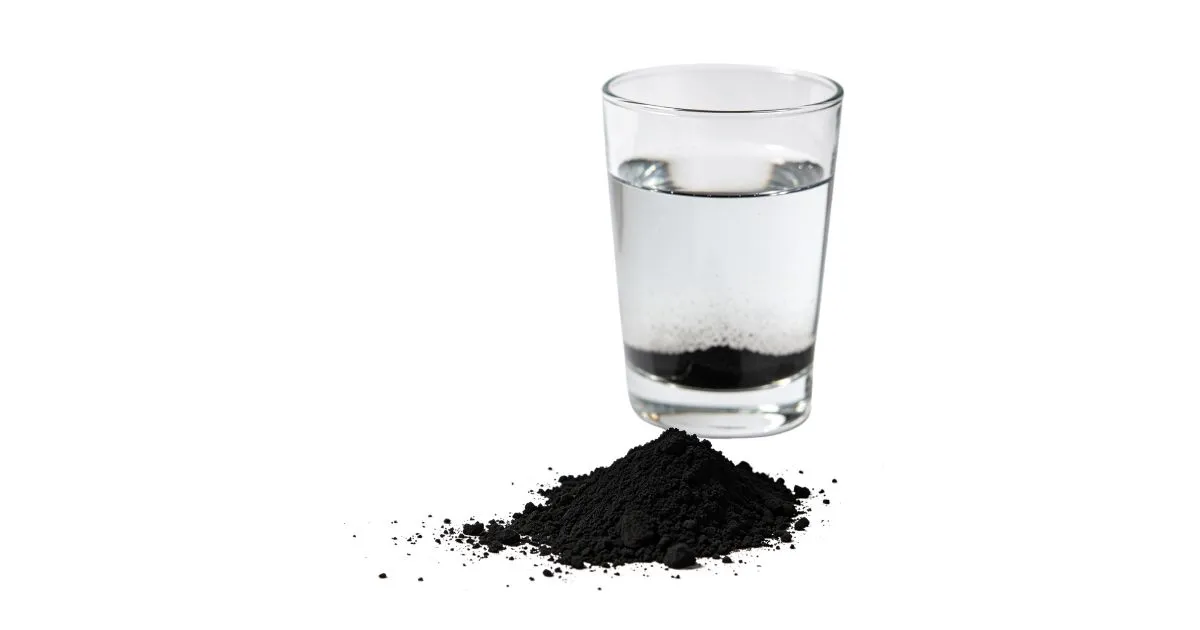
Understanding Vegetable Carbon and Activated Carbon
What Is Vegetable Carbon?
Carbonizing bamboo, coconut shells, or wood under regulated heat produces vegetable carbon, a natural black hue. This produces a fine black powder without scent or flavor. E153 is its INS number. It doesn't dissolve in water or organic solvents, thus most food and cosmetic items include it. Yangge's Vegetable carbon Black E153, made from bamboo and coconut shells, is HPLC-tested and offered in bulk with all the appropriate certifications.
What Is Activated Carbon?
Active carbon originates from the same plant or mineral as conventional carbon, but it undergoes a chemical or steam-based activation process to make it more porous and increase its interior surface area. This architectural alteration allows it to absorb a lot. It may capture gasses, poisons, and other pollutants with molecules. Activated carbon is used in business to filter water, clean the air, and decontaminate medicines, not color food.
Why the Confusion?
Both materials are made of carbon and look a bit alike. Their practical traits, on the other hand, are very different. Delivering color and making labels clear are the main goals of vegetable carbon black. Activated carbon is all about the chemistry of the surface and its ability to absorb things. If you mix them up in a food recipe, the end result could be a product that either doesn't pass regulatory review or doesn't work with colors consistently.
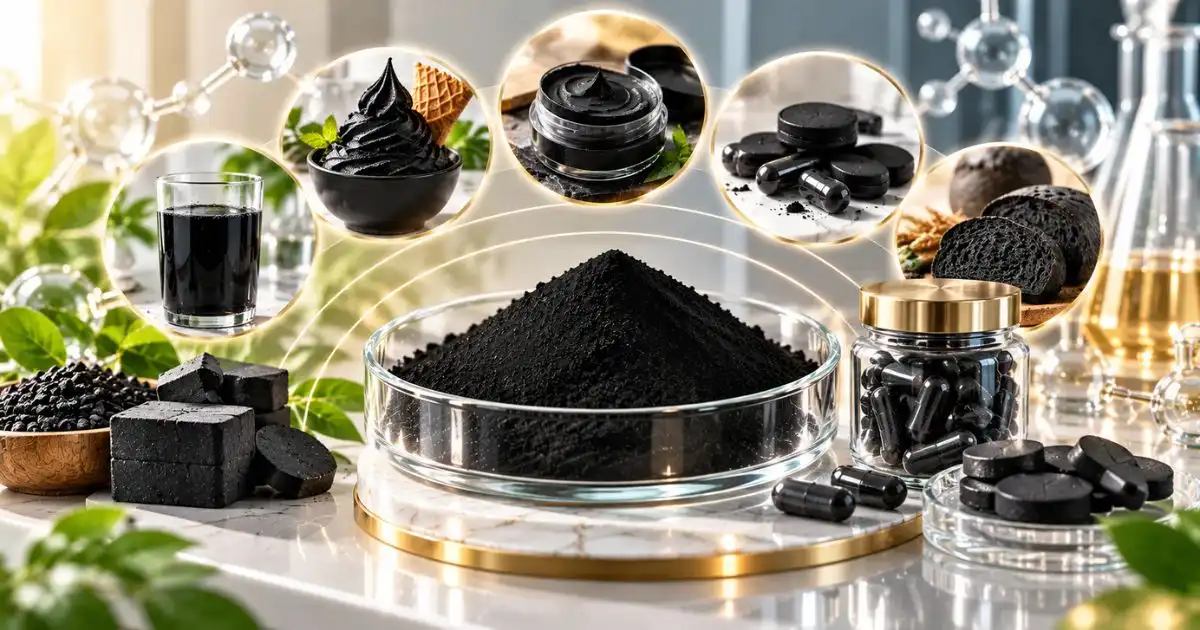
Key Differences Between Vegetable Carbon and Activated Carbon
The table below shows the main differences between vegetable carbon (E153) and activated carbon. Primary function: Natural black colorant; Adsorption and purification; processing: carbonization (pyrolysis); carbonization + activation; food-grade status: yes (E153 / INS 153); typically not food-grade; certification: Halal, Kosher, FDA-compliant;
It looks like jet black powder and is gray to black and porous. It is usually used for food coloring, makeup, filtration, and drugs.
| Property | Vegetable Carbon (E153) | Activated Carbon |
|---|---|---|
| Primary function | Natural black colorant | Adsorption / purification |
| Source material | Coconut shell, bamboo, wood | Coal, coconut shell, wood |
| Processing | Carbonization (pyrolysis) | Carbonization + activation |
| Food-grade status | Yes (E153 / INS 153) | Generally not food-grade |
| Certification | Halal, Kosher, FDA-compliant | Varies; often industrial-grade |
| Appearance | Jet black powder | Gray to black, porous |
| Typical use | Food coloring, cosmetics | Filtration, pharmaceuticals |
Raw Material and Processing Differences
The carbonization stage marks the end of vegetable carbon creation. This keeps the color density while reducing the amount of chemical residue left behind. Activated carbon needs an extra step of activation, which is usually done with chemicals or steam at temperatures above 800°C. This makes the carbon porous and lattice-like. It's not meant for this process to give you uniform color output.
Regulatory and Certification Gap
Vegetable carbon E153 has an official INS number and is on a list of food additives that are allowed in the EU. As of now, activated carbon does not have E153 status and is not allowed as a food colorant in the EU or the FDA. This difference must be made by any company that makes food or cosmetics in the US or EU.
Safety and Contaminant Profiles
Heavy metals (like arsenic and lead) and polycyclic aromatic hydrocarbons (PAHs) must be checked for in both products. The EU has strict rules about how much PAH can be in food-grade carbon. Before a batch is shipped, Yangge sends it to international labs for testing, and they provide COA paperwork that covers these parameters.
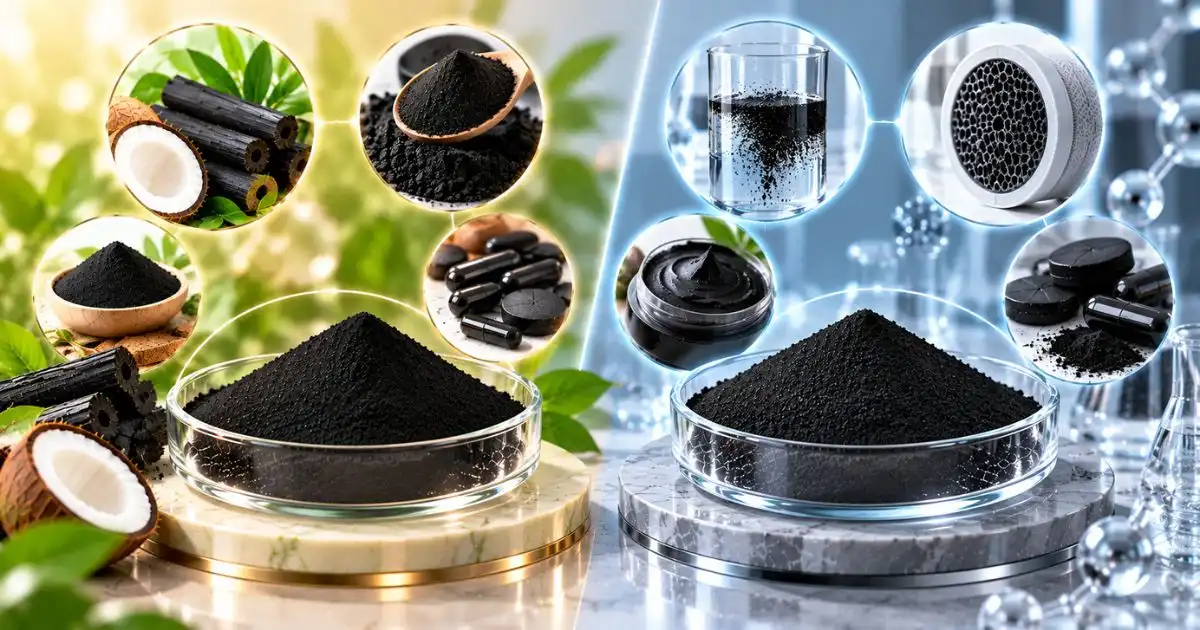
Application Suitability: Which Carbon Matches Your Product Needs?
Food and Beverage Coloring
The only other choice is Vegetable carbon Black. It gives consistent deep black tones that can be used for everything from black burger buns and squid ink pasta to dark chocolate glazes and black ice cream. When used in the right amount, it gives a true black color without the gray shift that can happen with materials that aren't as good or are processed inconsistently. Yangge's E153 grade is handled in a way that keeps the color stable at different pH levels.
Cosmetics and Personal Care
Plant-based carbon black is being used more and more in makeup, especially in face masks that look like activated charcoal, black toothpaste, and eyeliner. In this case, vegetable carbon gives the needed dark color without absorbing things that would mess up the other ingredients in the formula. When beauty, not function, is what you want, this is the best element.
Industrial and Pharmaceutical Uses
This is where activated carbon steps in. Because it has a lot of surface area usually between 500 and 1500 m² per gram—it is very good at getting rid of contaminants in gasses and liquids. It is commonly used to clean city water, recycle solvents, and clean pharmaceutical APIs. Technically, food-grade veggie carbon black wouldn't work in these situations, and it would also be too expensive.
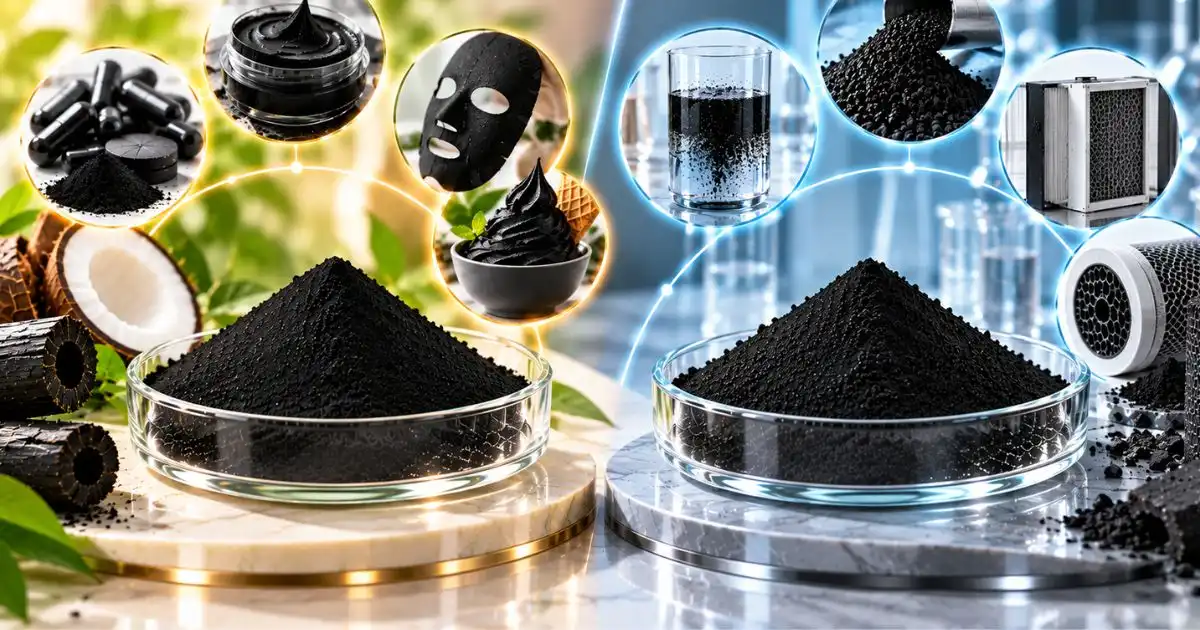
Procurement Considerations for B2B Buyers
It's not just about price per kilogram when choosing a supplier. When buying food-grade carbon, these are the most important things to keep in mind:
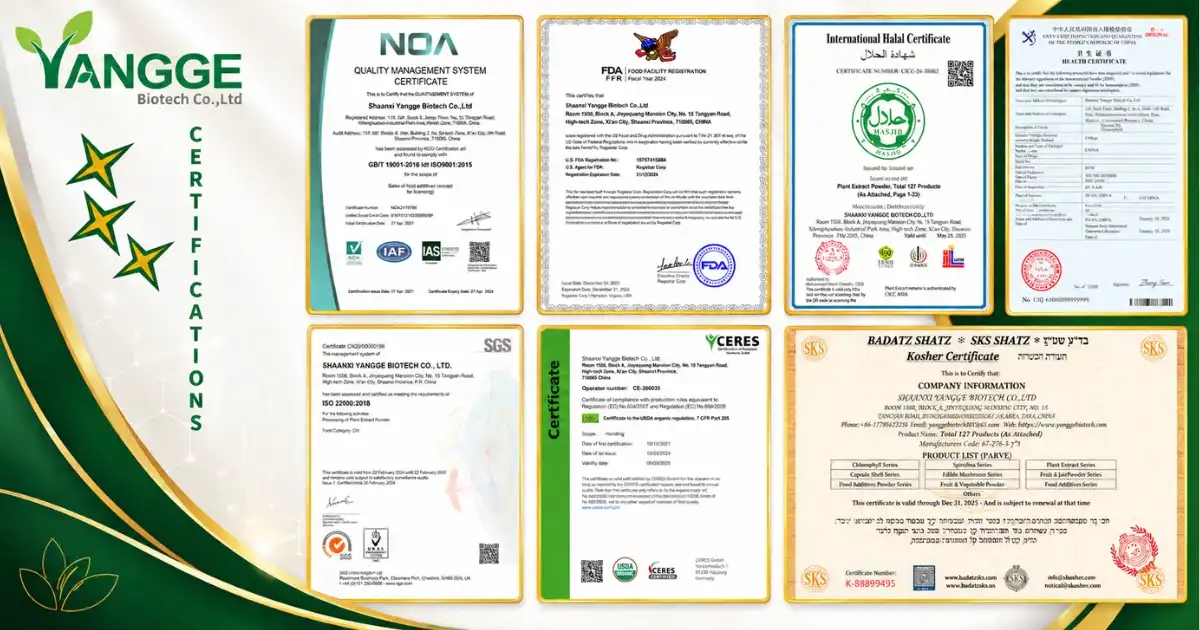
- Certification documentation: Look for Halal, Kosher, and FDA-compliance letters alongside each COA. Yangge provides all three for its Vegetable Carbon Black E153, reducing your internal compliance workload.
- Batch consistency: Color strength (tinting power) and particle size must remain stable between production lots. Request data from at least three consecutive batches before committing to a supplier.
- PAH and heavy metal testing: Every shipment should come with independent laboratory results confirming compliance with EU Regulation (EC) No 1333/2008 limits and any applicable FDA guidelines.
- MOQ and sampling policy: Yangge offers 10–30g free samples for R&D trials and sets a minimum order of 1 metric ton with FOB/CIF delivery options. This structure suits both pilot testing and full production scaling.
These things have a direct effect on how long it takes for regulators to approve your product and how consistently it is made. If your seller can't give you consistent batch data or delays licensing papers, it will take longer for your product to come out on the market.
For quick reference, the table below matches common product categories to the appropriate carbon type.
| Product Category | Recommended Carbon Type | Key Requirement |
|---|---|---|
| Black buns / bread | Vegetable Carbon E153 | Clean label, color stability |
| Black ice cream | Vegetable Carbon E153 | Odorless, tasteless, stable at low pH |
| Confectionery glazes | Vegetable Carbon E153 | Dispersibility, batch consistency |
| Face masks / toothpaste | Vegetable Carbon Black | Pigmentation, non-reactive |
| Water filtration systems | Activated Carbon | High surface area, adsorption capacity |
| Pharmaceutical purification | Activated Carbon | Chemical activation, USP grade |
Future Trends in Carbon-Based Ingredients
Clean Label Demand Is Rising
Because people want to know what's in their food, food companies are switching from manufactured colorants like Brilliant Black BN (E151) to plant-based options. Vegetable carbon black directly addresses this change; on the package, it can be clearly labeled as "vegetable carbon," making it easy for people looking for natural ingredients to identify.
Regulatory Tightening on Synthetic Dyes
Artificial food dye rules are being updated in the EU and a number of US states. Manufacturers who have already switched to E153-certified vegetable carbon are better able to meet new label requirements without having to rush to change their recipes.
Sustainability in Sourcing
More and more buyers are asking about traceability and impact on the environment. Using a sustainable buying plan, Yangge works closely with farming communities to make sure that its supply chain can be tracked from the farm to the table. Its E153 product is made from coconut shell and bamboo, which are both waste products that can be used again and again.
Conclusion
It is not possible to confuse vegetable carbon with activated carbon. Food safety and clean label rules say that veggie carbon black E153 is the right material for your product if it needs a stable black colorant that comes from plants. If you need to clean something up or absorb something, activated carbon is the right choice. Yangge's E153 product gives companies that make food, drinks, and cosmetics that work in the US and other markets the level of licensing, batch stability, and supply reliability they need to confidently move from trials to production.
FAQ
Is vegetable carbon E153 approved for use in food in the United States?
In the US, vegetable carbon black does not currently hold a direct FDA-approved food colorant status equivalent to its EU E153 classification. However, it may be used under specific regulatory frameworks depending on application and labeling context. Always consult your regulatory team before launch. Yangge can provide product documentation to support your compliance review.
How is vegetable carbon different from activated charcoal sold as a supplement?
They share the same base material but serve different purposes. Supplement-grade activated charcoal is processed for adsorption — it binds to substances in the gut. Vegetable carbon black E153 is processed purely for consistent pigment delivery. Using activated charcoal as a food colorant may produce inconsistent gray tones and could present regulatory issues.
What causes black food coloring to turn gray in finished products?
Gray shift usually comes from insufficient dosage, poor particle dispersion, or a low-quality carbon source with inconsistent tinting strength. Yangge's E153 is tested for color value per batch to prevent this problem.
What is the minimum order for Yangge's Vegetable Carbon Black E153?
The minimum order quantity is 1 metric ton. Free samples of 10–30g are available for R&D trials before committing to a full order.
Does Yangge's E153 carry Halal and Kosher certification?
Yes. Yangge's Vegetable Carbon Black E153 is Halal certified, Kosher certified, and produced in compliance with FDA requirements. Certificates are available upon request.
Request Your Free Sample from Yangge Trusted Vegetable Carbon Supplier
Yangge Biotech sells grade A food Vegetable carbon Black E153 that is Halal, Kosher, and FDA-compliant, and each batch is tested by a separate lab. There are 5 tons in stock right now, a minimum order quantity of 1 ton, and free 10–30g R&D samples available. It has never been easier to start your trial.Contact us you can email the team at info@yanggebiotech.com or go to blog.yanggebiotech.com to see the full list of product specs and to ask for your COA right away.
References
1. European Parliament and Council. Regulation (EC) No 1333/2008 on Food Additives. Official Journal of the European Union, 2008.
2. FAO/WHO Joint Expert Committee on Food Additives (JECFA). Vegetable Carbon: Safety Evaluation. WHO Food Additives Series, 2011.
3. Codex Alimentarius Commission. General Standard for Food Additives (GSFA), INS 153 — Vegetable Carbon. Codex Alimentarius, 2019.
4. Bansal, R. C., & Goyal, M. Activated Carbon Adsorption. CRC Press, 2005.
5. Downham, A., & Collins, P. Colouring our foods in the last and next millennium. International Journal of Food Science & Technology, 2000.
6. Martins, N., et al. Food colorants: Challenges, opportunities and current desires of agro-industries to ensure consumer expectations and regulatory practices. Trends in Food Science & Technology, 2016.

Based on your location and order quantity, you will have the opportunity to receive a limited time free shipping promotion!
Who we are
Popular Blogs