Top Yeast Beta Glucan Powder Suppliers in China - Yangge
Yeast Beta-Glucan is a functional polysaccharide derived from the cell walls of yeast, widely used as an ingredient in dietary supplements, functional foods, beverages, and animal nutrition products. Known for its distinctive beta-glucan structure, it is valued by manufacturers developing formulations focused on immune and gut-health support. Yangge Biotech supplies high-quality Yeast Beta-Glucan Powder for B2B applications, with options suitable for bulk purchasing, formulation development, and private-label production.Contact us for product specifications, customization, MOQ, pricing, and bulk orders, contact Yangge Biotech at info@yanggebiotech.com.
When searching for reliable yeast beta-glucan suppliers, procurement managers face a critical challenge: distinguishing genuinely high-quality sources from generic manufacturers. Yangge Biotech stands out as a premier Chinese supplier specializing in pharmaceutical-grade β-1,3/1,6-glucan extracted from Saccharomyces cerevisiae. With purity levels exceeding 70%, comprehensive international certifications, and a transparent supply chain from farm to formulation, Yangge addresses the core concerns of nutritional supplement brands and pet food manufacturers seeking consistent immunomodulatory ingredients for their product lines.
Understanding Yeast Beta Glucan: Properties, Benefits, and Applications
The Biochemical Foundation of Immunomodulation
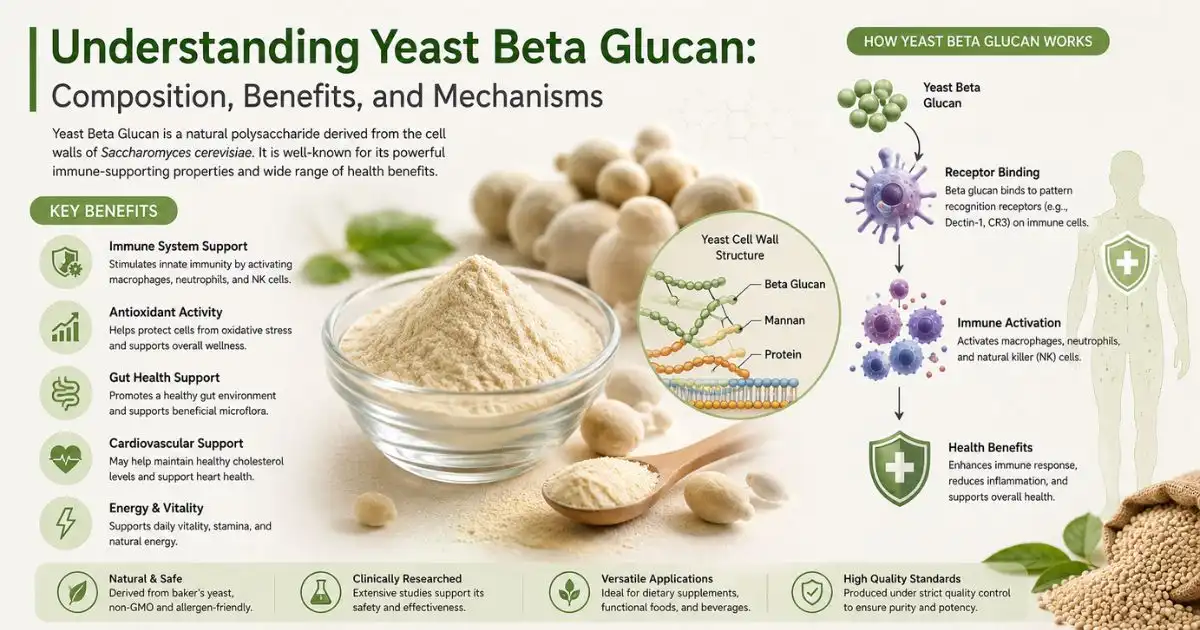
The triple-helix molecular structure of Yeast Beta-glucan distinguishes it from other polysaccharides. This bioactive compound comes from the cell walls of baker's yeast (Saccharomyces cerevisiae), which is very different from glucans that come from plants. The β-1,3 backbone and β-1,6 side branches make a shape that immune cells recognise as molecular patterns linked to pathogens. This "trains" the natural immune system without making it overactive.
The extraction and cleaning process determines product quality. Yangge uses chemical methods to maintain the β-1,3/1,6 structure while removing unnecessary proteins and alpha-glucans. This enhancement ensures that the powder retains its biological activity even when cooked to high temperatures for beverages or when the pH changes in fermented dairy products. Water-soluble fibres mix well into formulations, solving a difficulty R&D engineers experience when dealing with non-water-soluble fibre sources.
Documented Health Benefits and Mechanisms
Multiple ways have been found in clinical study to show that Yeast Beta-glucans help health. The main process involves turning on macrophages and increasing their phagocytic activity, which makes the body's first line of defence against germs stronger. In addition to helping the immune system, studies have shown that this ingredient may also be good for metabolic health, helping to control blood sugar and improve lipid profiles. This makes it useful for functional food developers who want to make more than one health claim.
Yeast Beta-glucan can be used as an option to antibiotic growth promoters in animal feeding uses, especially aquaculture and cattle farming. By making non-specific immunity stronger, the chemical raises feed conversion rates and lowers death rates in high-stress farming situations. Pet food companies that use this ingredient say that it improves the health of companion animals in a way that can be measured. This meets the demand from customers for natural nutrition solutions that are backed by science.
Application Diversity Across Industries
Yeast Beta-glucan can be used in a lot of different situations.
• Dietary supplements: For immunity support, capsules, pills, and sachets usually have 250 to 500 mg per dose. Yangge's powder has a high bulk density, which makes it possible to dose it effectively in small packages, which is very important for consumer convenience.
• Functional foods and drinks: To be added to protein shakes, yoghurt drinks, chewy vitamins, and other sports nutrition items, ingredients need to be able to handle being heated and squished. The thermostability of properly purified yeast glucan keeps its effectiveness even when it's under a lot of stress during production.
• Pet Nutrition: Adding 0.02-0.1% to dry kibble and wet food formulations helps dogs and cats' immune systems, especially during times of high stress in their lives, like when they are weaning or moving to a new place.
• Cosmetic Uses: The compound's wound-healing qualities and ability to trigger Langerhans cells are used in anti-aging and sensitive skin products that are put on the skin.
Why Choose Chinese Yeast Beta Glucan Suppliers? The Edge of Yangge
China's Manufacturing Excellence in Natural Ingredients
China has become the world's biggest producer of natural ingredients by putting a lot of money into biotechnology facilities and fermentation knowledge. When working with reputable providers, the country's manufacturing environment can save you money without lowering quality. Scale advantages mean that prices are affordable for large orders, and improved extraction technologies make it possible to repeat the same process from batch to batch.
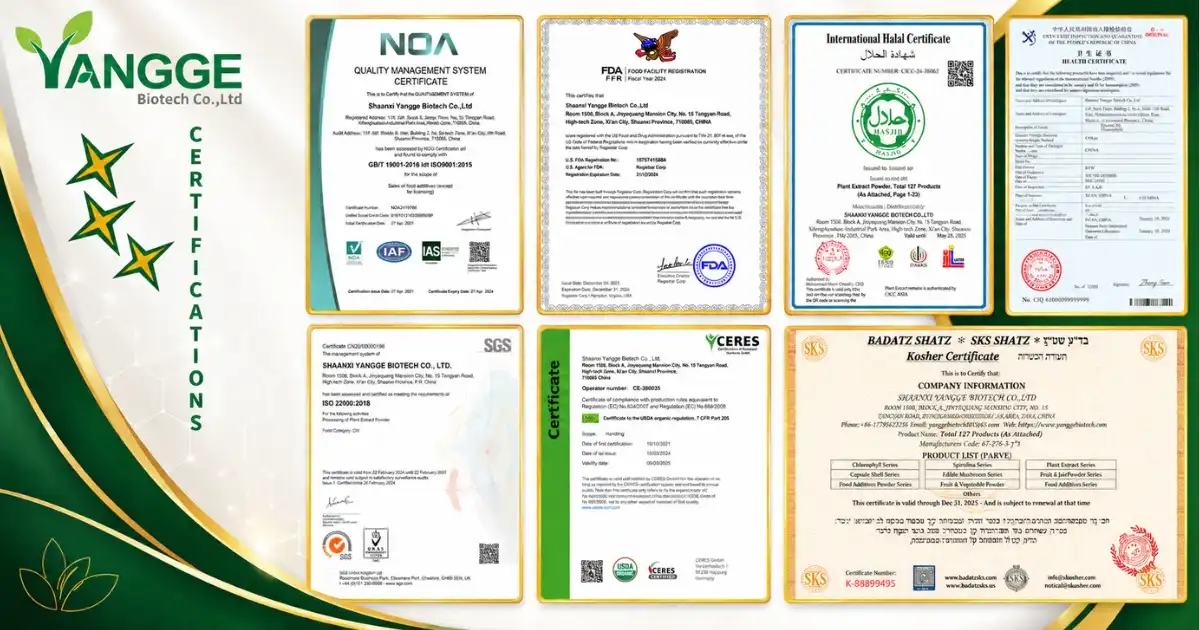
This high-quality manufacturing is shown by Yangge Biotech's ISO, HACCP, Kosher, and Halal certifications, which show that they follow international standards. Because the company follows GMP guidelines for production, every batch meets the strict standards for pharmaceuticals. Sustainability goes beyond just caring for the environment. Yangge keeps close bonds with farming communities through traceable supply lines, which make sure the purity of raw materials from when they are grown to when they are packaged.
Yangge's Unique Quality Differentiators
Yangge is different from other generic suppliers in the market for a number of reasons:
The company's Yeast Beta-glucan stays pure at least 70%, as shown by the Megazyme enzymatic method (GOPOD) instead of standard total carbohydrate tests that mix up bioactive beta-glucans and alpha-glucans. This testing method solves a major problem in the industry: a lot of sellers lie about the amount of glucan they offer by stating total polysaccharides instead of counting the β-1,3/1,6 structure that is important for biological activity.
Yangge's products meet European standards for polycyclic aromatic hydrocarbons (PAH4) and have benzopyrene levels of less than 10 parts per billion, which is higher than the safety levels needed for materials that come into contact with food. The strict rules of the North American and European markets are met by the non-GMO, non-irradiated, and allergen-free requirements. Working with reputable third-party labs for retesting gives procurement managers peace of mind about the accuracy of certificates by providing independent proof.
There are many flexible choices for packing, from 1 kg aluminium foil bags for first samples to custom bulk formats. Keeping current supplies at 50–100 kg makes it possible to quickly fill trial orders, cutting down on the time it takes from sample to purchase, which is usually 3–6 weeks for medium-sized supplement names.
Comparing Yeast Beta Glucan Suppliers: Yangge vs. Competitors
Critical Evaluation Criteria for Procurement Managers
There are a few things that need to be carefully thought through when evaluating possible suppliers:
| Evaluation Criterion | Yangge Biotech | Typical Market Competitors |
|---|---|---|
| Method for Checking Purity | Assay for Megazyme GOPOD enzymes (β-1,3/1,6 specific) | Simple HPLC (total carbs) |
| Minimum Quantity to Order | 1 kg (sampling can be changed) | 25 to 100 kg |
| Confirmation of Structure | NMR and FTIR can be provided upon request | COA only, not much checking |
| Heavy Metal Bounds | Lead less than 1ppm, meets EU standards | Variable methods that aren't always public |
| Content of Alpha-Glucan | <3% (confirms quality of cleaning) | Often not reported |
| Help with Technology | 24-hour response, help with formulation | Not much activity after the sale |
The table shows how Yangge's method solves common problems in buying. The ability to buy 1 kg samples gives research and development teams the freedom to do thorough tests without having to spend a lot of money. When competitors require minimum orders of 25 kg, it puts companies' finances at risk while they still test how well ingredients work in their own formulations.
Supply Chain Reliability and Post-Sale Support
Aside from product specs, the success of procurement also relies on how reliable the suppliers are. Yangge's well-established transportation network makes sure that packages get to North America and Europe on time, with paperwork packages that make customs clearance easier. The company keeps in touch with you throughout the whole procurement process, from your first question to expert help after the sale.
Yangge's collaborative approach is shown by real-world examples. A medium-sized supplement company making immune-boosting capsules for the U.S. market worked with Yangge's technical team to improve how well the tablets bound the Yeast Beta-glucan while keeping its bioavailability. The supplier helped with formulation and set up third-party dissolution testing, which cut the time it took to make the product by about five weeks compared to when they used other ingredient sources.
Product Format Considerations
Knowing the different format choices helps buyers match ingredients to the needs of the production process:
Powder vs. Encapsulated Forms: Powder gives you the most formulation options because it can be mixed into a wide range of materials, from drinks to tablet cores. Encapsulated versions make things easier for companies that make finished goods, but they make it harder to make changes. Yangge's fine, off-white to yellowish powder mixes easily in both water-based and lipid-based systems, which solves a problem that R&D engineers often have with formulation.
Natural vs. Synthetic: All Yeast Beta-glucans come from biological sources, but the ways they are extracted are different. Harsh chemical processes can damage branch points that are needed for receptor binding, but enzyme extraction keeps the native structure better. Spectroscopic research shows that Yangge's enzymatic polishing keeps the structure's integrity.
How to Procure Yeast Beta Glucan Powder from Yangge: Step-by-Step Guide
Initial Assessment and Inquiry
The first step in the procurement process is to list your exact needs. Before you call vendors, think about these factors:
• Aim for a Yeast Beta-glucan content of 0.02-2% in your formulation. This is the normal range for finished goods.
• Regulatory environment of your target market (for example, FDA rules in the US and EFSA rules in Europe)
• Annual number needs (Yangge can handle buying ranges of 3,000 to 250,000 USD)
• Needs that are specific to the application (like how stable the beverage is, how well the tablet compresses, etc.)
By emailing info@yanggebiotech.com to Yangge's team, you can start a consultation process. The company's experts help match product specs to application needs by drawing on their many years of experience in the functional food, pet food, and dietary supplement industries. During this first meeting, questions are usually asked about the powder's organoleptic qualities (it should have no smell or taste—any fermentation smell means it wasn't cleaned well), how long it will last, and how it will fit into the current production processes.
Sampling and Validation Phase
After some preliminary talks, Yangge sets up shipments of samples starting at their 1 kg minimum. For technical approval, this step is very important:
Physical Testing: Check how the powder flows, how the particles are distributed in size, and how well they mix in your unique recipe matrix. Yangge's fine powder usually has good flow qualities that make it work well with automatic dosing systems.
Analytical Verification: Have your chosen laboratory do separate tests. To make sure the ≥70% standard is met, ask for Yeast Beta-glucan measurement using the enzymatic method. Testing for microbes should confirm that Salmonella and E. coli are not present, and the total number of plates met standards for supplement grade.
Functional Assessment: Make trial batches that contain the element at the amounts you want. Check for stability under the conditions you'll be using it in, such as thermal stress testing for drinks, compression testing for tablets or extrusion trials for pet food.
Pricing, Contracts, and Logistics
Once approval is complete, procurement moves on to business terms. Yangge has reasonable prices that reflect the true pharmaceutical-grade quality of their products, not just cheap products that can't be checked for purity. Volume-based pricing structures can adapt to growth paths, and partnerships can discuss terms that assume yearly sales of more than 100 kg.
When the contract is finalised, there are clear instructions for:
• Yeast Beta-glucan content (at least 70% by enzyme method)
• Limits on microbes and heavy metal requirements
• Format for packaging and labelling rules
• Timelines for delivery and Incoterms
• Good ways to settle disagreements
Logistics plans include foreign shipping paperwork like Certificates of Analysis, non-GMO declarations, and food statements that are needed to follow the rules in the final markets. Yangge's knowledge with exporting to North America and Europe makes sure that customs handling goes smoothly.
Building Long-Term Partnerships
Yangge supports ongoing partnership in a number of ways, in addition to the original transactions:
Technical Assistance: Help with formulating problems, stability studies, and proving claims helps clients get the most out of their ingredients. The 24-hour response guarantee makes sure that production problems are dealt with quickly, no matter what time zone they are in.
Custom Formulation Services: OEMs can make their own mixes of Yeast Beta-glucan with other ingredients that work well together, like vitamin C, zinc, or bacterial strains, to make complete supplement solutions. Growing businesses can use private labelling choices to help them build their brands.
Market Intelligence: Yangge shares information about new rules, studies, and market trends at industry events like SupplySide West. This information helps companies plan how to make new products.
Table: Yangge Yeast Beta-Glucan Product Specifications
| Parameter | Specification | Testing Method |
|---|---|---|
| Beta-Glucan Content | ≥70% | Megazyme Enzymatic (GOPOD) |
| Appearance | Fine, off-white to yellowish powder | Visual inspection |
| Alpha-Glucan (Impurity) | <3% | Enzymatic differentiation |
| Lead | <1 ppm | ICP-MS |
| Arsenic | <1 ppm | ICP-MS |
| Benzopyrene | ≤10 ppb | GC-MS (EU PAH4 standard) |
| Total Plate Count | <1,000 CFU/g | USP microbiological methods |
| Salmonella/E. coli | Absent/10g | Culture methods |
| GMO Status | Non-GMO | PCR verification |
| Allergen Status | Non-Allergen | Process validation |
| Particle Size | 80 mesh pass rate >95% | Sieve analysis |
Conclusion
Choosing the right Yeast Beta-glucan supplier has a big effect on how well the product works, how well it meets regulatory requirements, and how well it does in the market overall. Yangge Biotech stands out by having quality standards that can be checked, testing methods that are clear, and customer-focused service that goes beyond business connections. The company's pharmaceutical-grade β-1,3/1,6-glucan solves the structure verification problems that keep purchasing managers up at nite.
Additionally, the company's variable minimum orders and full technical support lower the risks that come with switching suppliers. Yangge is a relationship built on scientific rigour, excellent manufacturing, and a real dedication to client success for nutritional supplement brands and pet food makers in North America and Europe that are trying to reach immune health markets.
FAQ
How does yeast beta-glucan differ from oat beta-glucan in terms of functionality?
The difference is in the makeup of the molecules and how they work biologically. By stimulating Dectin-1 receptors on macrophages and dendritic cells, Yeast Beta-glucan, which has a β-1,3/1,6 linkage, primarily acts as an immunomodulator. β-1,3/1,4 is the structure of oat beta-glucan. It is mostly used to improve heart health by lowering cholesterol.
Because of these molecular differences, the right ones are used for different purposes. For example, immune support formulas need glucans that come from yeast, while heart health formulas usually need ones that come from oats. Products that don't work as expected are made when these sources are mixed up or when generic specifications are accepted without structural verification.
What testing methods confirm authentic β-1,3/1,6 structure rather than generic polysaccharides?
The Megazyme enzymatic assay (GOPOD method), which was created just for measuring Yeast Beta-glucan, is the gold standard method. This method uses enzymes that selectively break down beta-linkages, separating them from alpha-glucans (starch impurities) that taint products that haven't been cleaned well enough.
When measuring total carbohydrates with generic HPLC methods, inactive polysaccharides are often added to make the visible glucan level look higher. Yangge gives out certificates of analysis that use biochemical methods and, if needed, NMR or FTIR spectroscopy to prove the structure. Instead of taking total polysaccharide data, procurement managers should specifically ask for enzymatic tests. This is what sets premium sellers apart from commodity sources.
Can yeast beta-glucan cause allergic reactions or yeast infections in sensitive consumers?
High-purity Yeast Beta-glucan is made up of clean cell wall carbohydrates, not living yeast cells. When powder is properly prepared, it doesn't cause yeast diseases because it doesn't have any living Saccharomyces cells in it. Allergic responses are still very rare, but they could happen in theory if there are still proteins left over from not purifying them well enough.
Through testing, Yangge's refinement process removes extra cellular proteins, proving that the product is non-allergenic. The specification proves that there was no irradiation treatment, which eases customers' worries about the methods used for processing. Products should still have standard allergen labels when regulations say they need to list yeast-derived ingredients, but the number of bad reactions to purified glucans is still very low compared to exposures to live yeast.
Partner with Yangge Your Trusted Yeast Beta-Glucan Supplier for Immune Health Innovation
Yangge Biotech wants companies that make health supplements, pet food, and functional foods to try pharmaceutical-grade products and see the difference they make. Our Yeast Beta-glucan powder meets the high standards of the North American and European markets by going through strict quality control, being checked by a third party, and having a fully open supply chain.
Our team is here to help you every step of the way, whether you need 1 kg samples for R&D validation or tonnes of supplies for commercial production, we'll be there for you.Contact us or get in touch with us at info@yanggebiotech.com to talk about your specific needs, get technical specs, or set up samples that show why top brands choose Yangge as their preferred Yeast Beta-glucan supplier. You can find more detailed information and composition tips at blog.yanggebiotech.com.
References
1. Murphy, E. A., Davis, J. M., & Carmichael, M. D. (2010). Immune modulating effects of β-glucan. Current Opinion in Clinical Nutrition and Metabolic Care, 13(6), 656-661.
2. Vetvicka, V., & Vetvickova, J. (2014). Immune-enhancing effects of Maitake (Grifola frondosa) and Shiitake (Lentinula edodes) extracts. Annals of Translational Medicine, 2(2), 14.
3. Chan, G. C., Chan, W. K., & Sze, D. M. (2009). The effects of β-glucan on human immune and cancer cells. Journal of Hematology & Oncology, 2, 25.
4. Volman, J. J., Ramakers, J. D., & Plat, J. (2008). Dietary modulation of immune function by β-glucans. Physiology & Behavior, 94(2), 276-284.
5. Oliveira Junior, A. G., Ferreira, L. L. G., & Baviera, A. M. (2017). Clinical application of β-glucans in obesity and diabetes: systematic review. International Journal of Molecular Sciences, 18(11), 2374.
6. U.S. Food and Drug Administration. (2019). Generally Recognized as Safe (GRAS) Notice for Baker's Yeast Beta-Glucan. FDA GRAS Notice Inventory, GRN 239.

Based on your location and order quantity, you will have the opportunity to receive a limited time free shipping promotion!
Who we are
Popular Blogs