Top Red Beet Betanin Benefits for Clean-Label Food Formulation
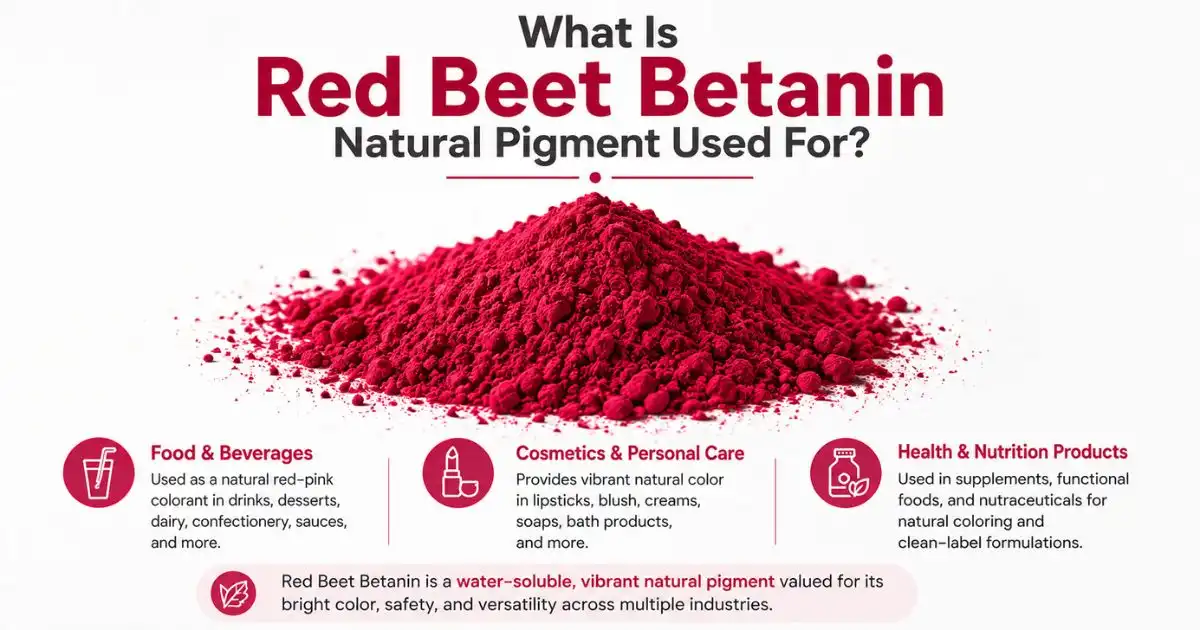
Red Beet Betanin (E162) from Yangge Biotech is a natural red food colorant derived from red beet, offering vibrant red to reddish-purple shades for clean-label food and beverage formulations. It is suitable for applications such as beverages, confectionery, dairy, bakery products, sauces, and nutritional products. Contact Yangge Biotech for bulk orders, samples, specifications, and pricing at info@yanggebiotech.com.
Red beet betanin (E162) is rapidly becoming the go-to natural colorant for food and beverage manufacturers committed to clean-label reformulation. Derived from Beta vulgaris, this betalain pigment delivers a vivid red-to-purple spectrum while replacing synthetic dyes like erythrosine. Beyond aesthetics, betanin carries measurable antioxidant activity, broad regulatory acceptance across EU, Halal, and Kosher frameworks, and a Non-GMO, non-allergen profile that resonates with today's ingredient-conscious consumers. For procurement managers, R&D engineers, and quality teams, understanding betanin's technical parameters and sourcing landscape is essential to making confident buying decisions.
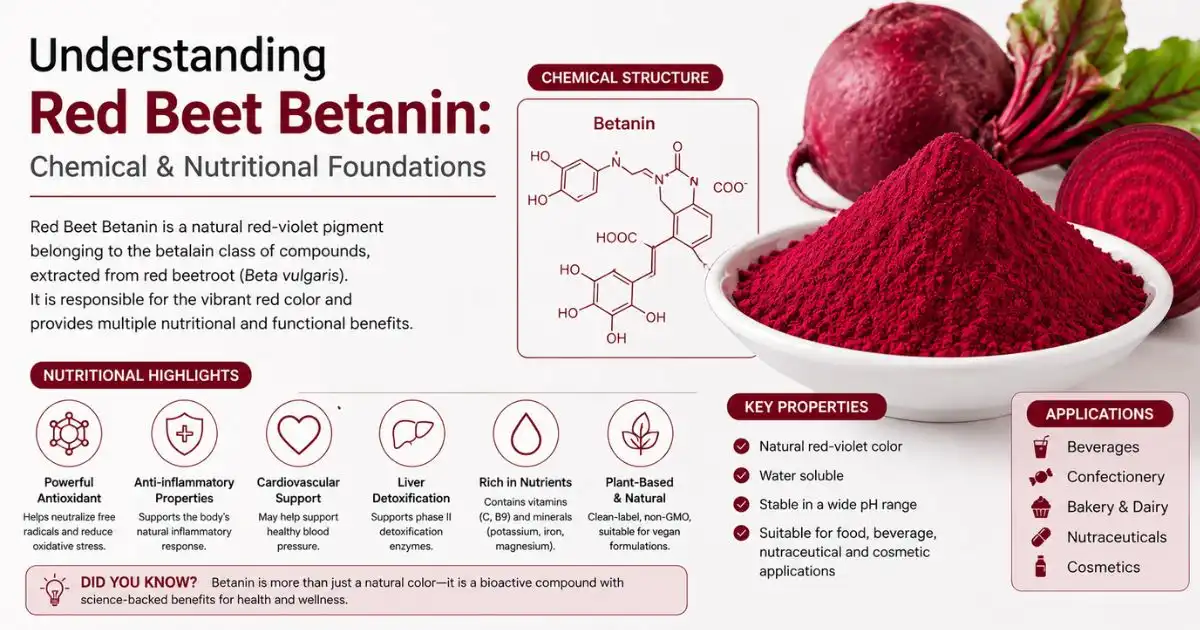
Understanding Red Beet Betanin: Nature's Colorant and Antioxidant
You can write betanin as C₄H₂₇N₂O₁₃. It is a glycosidic color that is in the betacyanin group of betalains. It's what gives red beet root its color, 75% to 95% of the time. Between pH 4 and 5, the molecule's chromophore system gives it its unique bluish-red color. The color changes to blue-violet as the pH goes up. When the pH is very high, the color changes to yellow-brown.
Molecular Stability and pH Behavior
Beteinin keeps its color best between pH 4.0 and 6.0, which is great for yogurt, salted foods, and drinks that are acidic. The molecule is broken down by water into clear or pale yellow betalamic acid and cyclodopa-5-O-glucoside if you go outside of that range. Formulators who keep the pH of their product in this range make sure that it looks good and works well for as long as it's supposed to.
Extraction and Analytical Method
Yangge's Beet Red E162 is made by carefully extracting high-quality Beta vulgaris root in a way that has been checked by HPLC. The HPLC test checks to see if the colors are correct and the betanin level is correct. This gets rid of the differences between batches that happen with spray-dried or low-quality beet juice extracts or powders. A dark red powder is made, and it can be kept for two years in a container that is tightly closed and out of the light.
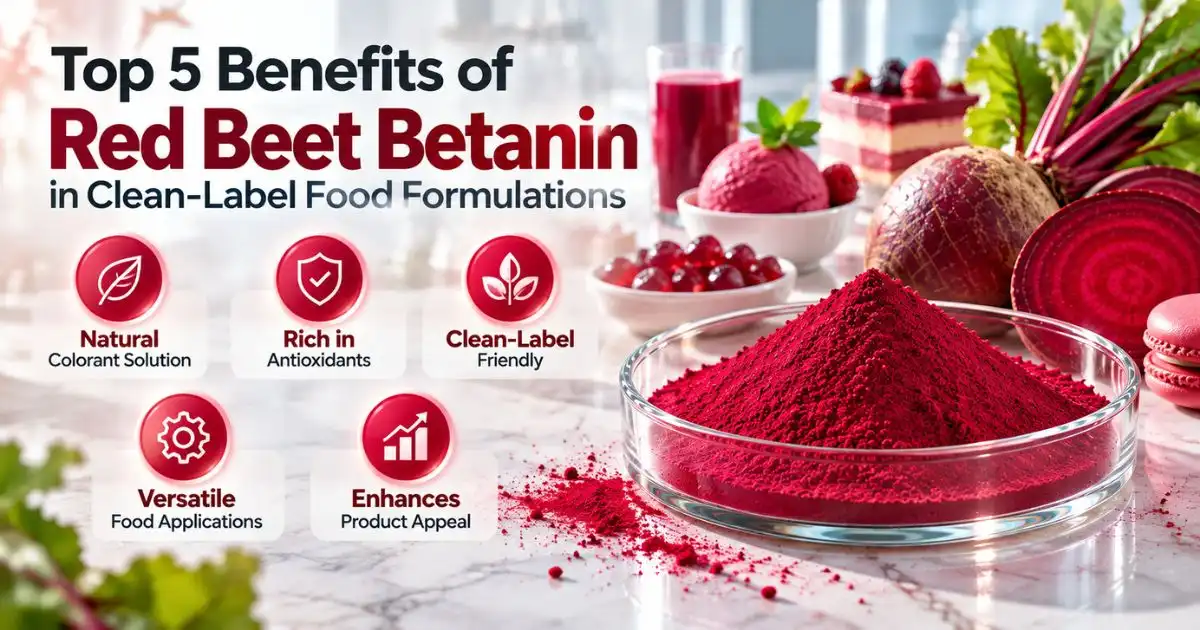
Top 5 Benefits of Red Beet Betanin in Clean-Label Food Formulations
Reformulating foods with clean labels is no longer just a niche trend. A study from 2023 by Innova Market Insights found that before they buy something, 68% of people around the world look at the list of ingredients. Red beet betanin handles this change in more than one way. You can use it as an ingredient because it works well because of these reasons:
- Authentic natural origin with regulatory recognition: Betanin carries the EU E162 designation, confirming safety and approved use across EU member states. It is simultaneously compatible with Halal and Kosher certification requirements, opening access to Middle Eastern and Jewish market segments without additional reformulation.
- Potent antioxidant activity: Research published in the Journal of Agricultural and Food Chemistry confirms that betacyanins scavenge reactive oxygen species effectively. This functional benefit extends beyond color — it contributes to oxidative stability in fat-containing matrices like dairy and processed meat.
- Broad application versatility: The pigment integrates cleanly into cold-process beverages, yogurt, gelatin desserts, summer sausage, and confectionery. Because it is water-soluble, dispersion in aqueous systems is straightforward, reducing processing complexity for production teams.
- Non-GMO, non-allergen, non-irradiated profile: Yangge's E162 complies with European PAH4 standards, with benzopyrene held at ≤10 ppb — a specification that satisfies stringent EU food safety audits and supports clean declaration on ingredient panels.
- Minimal flavor interference: Unlike some botanical colorants, well-purified betanin extract at functional dosage levels introduces negligible earthy or beety notes, making it suitable for neutral-flavor applications such as white dairy and transparent beverages.
Betanin has the EU E162 label, which means it is safe and can be used in all EU countries. It comes from a natural source that is accepted by officials. Two different sets of rules have been met at the same time, so it can be sold to customers in the Middle East and Jews without needing to be changed.
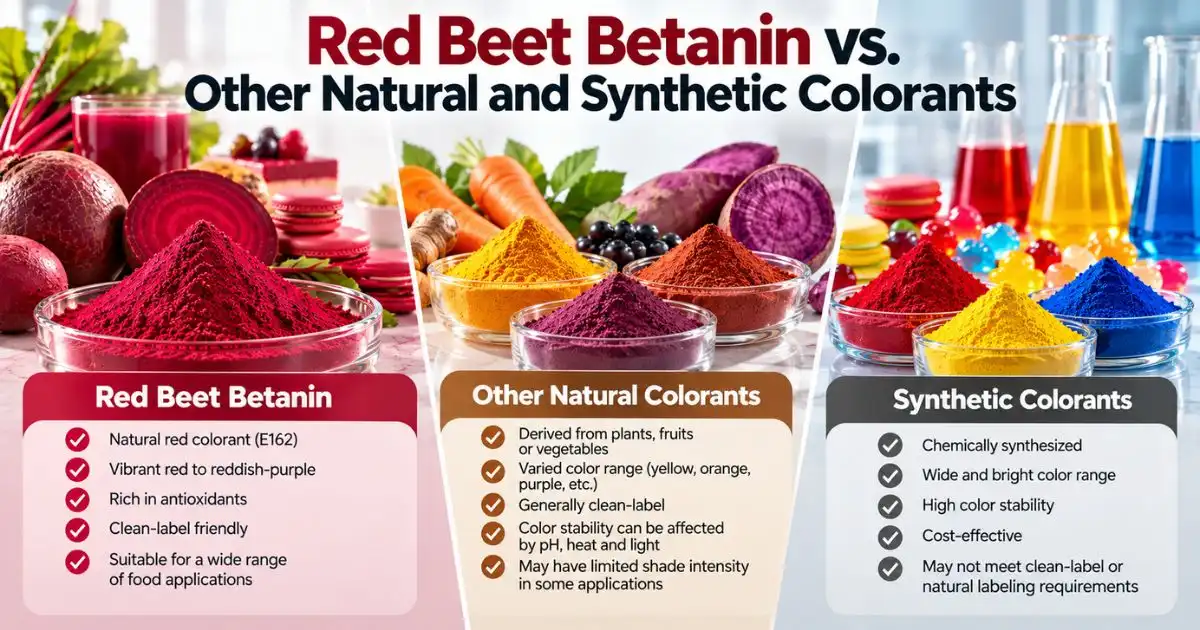
Red Beet Betanin vs. Other Natural and Synthetic Colorants
Red beet betanin is often compared to other colorant options by purchasing teams. Betanin (E162) is a red-purple colorant that is stable at pH 4–6 and ≤80°C. It is used in beverages, dairy, and meat. Carmine (E120) is a red colorant that is broad and good, but not from animals. It is used in confectionery and yogurt. Annatto (E160b) is a yellow-orange colorant that is moderate and good, but not from animals. It is used in cheese and snacks. Lycopene (E160d) is a red colorant that is broad and good, but not in sauces and soups. Erythrosine (E127) is a bright pink colorant that is broad and excellent and not made in a lab.
| Colorant | Color Range | pH Stability | Heat Stability | Clean-Label Status | Typical Application |
|---|---|---|---|---|---|
| Betanin (E162) | Red–Purple | pH 4–6 | ≤80°C | Yes | Beverages, dairy, meat |
| Carmine (E120) | Red | Broad | Good | No (animal-derived) | Confectionery, yogurt |
| Annatto (E160b) | Yellow–Orange | Moderate | Moderate | Yes | Cheese, snacks |
| Lycopene (E160d) | Red | Good | Good | Yes | Sauces, soups |
| Erythrosine (E127) | Bright Pink | Broad | Excellent | No (synthetic) | Confectionery |
Above 80°C, betanin is not stable in heat, which is its main competitive disadvantage. This isn't a restriction that stops you; it's just a construction rule that you can use. If you add betanin at the very end of the process, after any kind of heat treatment, it really does keep the color. The need for this can be met by many companies that make drinks and cheese that already have cold-fill or post-pasteurization dosing systems. They don't need to buy new equipment. Betanin really does do better than other options when it comes to EU approval, dual Halal/Kosher certification, and a claim that it is 100% plant-derived and doesn't cause allergies. And lycopene can only do these things in certain color ranges. Carmine can't do all of these things at the same time.
How to Procure Red Beet Betanin: A Buyer's Guide?
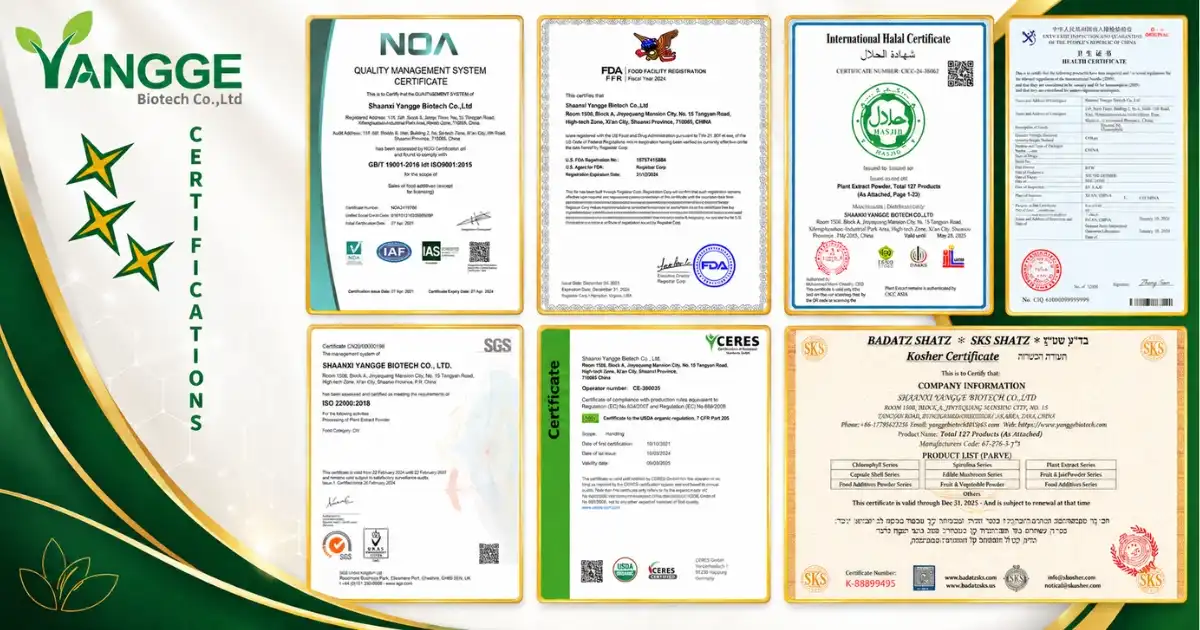
When picking a red beet betanin provider, you need to do more than just talk about price. How stable a provider is when it comes to quality control, certification, and shipping will determine whether they become a long-term partner or a one-time deal. The table below shows Yangge's product specs to help you with your qualification process. Betanin is what makes the product work. Its name is Beet Red E162, Betanin. That powder is very dark red, and it is made with HPLC. The powder can be kept for two years, and there are less than 10 parts per billion of PAH4 and benzopyrene in it. You can buy as little as 1 kg, and it will come in either a 1 kg metal foil bag or a custom bag. You can get free samples from this company, which is ISO, HACCP, Kosher, and Halal approved.
| Parameter | Specification |
|---|---|
| Product Name | Beetroot Red E162, Betanin |
| Active Ingredient | Betanin |
| Appearance | Deep red powder |
| Extraction Method | HPLC |
| Shelf Life | 2 Years |
| PAH4 / Benzopyrene | ≤10 ppb |
| Min Order Quantity | 1 kg |
| Packaging | 1 kg aluminum foil bag / custom |
| Inventory | 50–100 kg in stock |
| Certifications | ISO, HACCP, Kosher, Halal |
| Free Sample | Available |
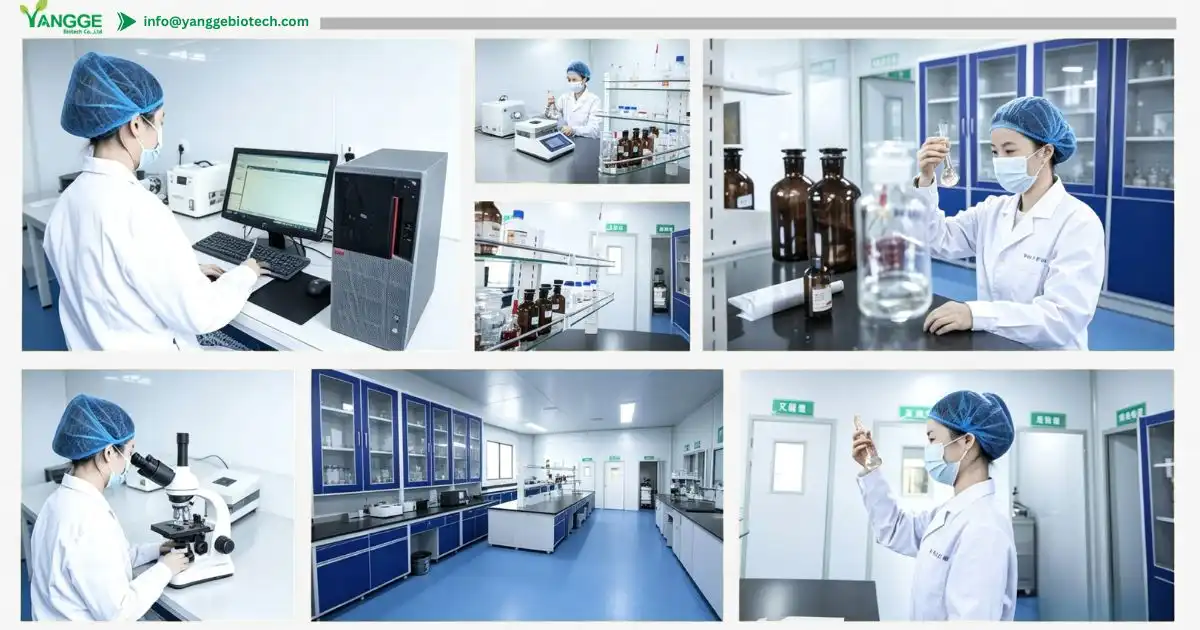
For each batch, Yangge works with approved third-party labs to do tests on their own. The problem of batch color stability is now solved, which is good news for many quality managers. Private-label makers can get OEM packaging, and the 1 kg minimum order size lets R&D teams test for stability at different pH, temperature, and application levels before committing to large production runs. Following the standard procurement cycle (sample request → stability testing → trial production → purchase order) should help buyers get approval in two to four weeks. This is as long as the seller sends samples quickly and gives all the technical documents.
Case Studies: Betanin's Impact Across Product Categories
A medium-sized beverage company in Europe changed the recipe for a red berry drink so that it didn't have any added dyes. They kept the pH at 4.2 and added betanin in a cold-fill dose of 0.05 to 0.10%. The end product met the labeling standards set by EU law EC No 1333/2008. It passed a taste test with no off-flavors being detected, and retailers liked how clean the ingredient list was.
In the dairy business, a Middle Eastern company added betanin to strawberry yogurt that they sold in shops that were approved as Halal. Since the supplier was certified as both Halal and Kosher, the ingredients did not need to be checked for both at the same time. About three weeks were cut off the time it took to receive approval. To get a stable natural meat color in processed meat, like summer sausage, a 10% betanin concentrate with a pH range of 6.3 to 6.6 was used. This was in line with what the literature on food science said about how to make meat products. As you can see, betanin's flaws can be fixed by carefully planning the mixture instead of switching out ingredients.
Conclusion
Red beet betanin (E162) is a natural colorant that is safe, has a bright color, and follows the rules in many places. There aren't many other colors that can do all of these things at the same time. The way it reacts to pH and how easily it gets damaged by heat are known and can be measured. Expert formulators deal with these issues all the time. As a natural red colorant, betonin is a good choice for procurement workers who want to find one. It has a clean label, a good technical profile, and is approved by both Halal and Kosher, which means it can be used in drinks, dairy, meat, and sweets. Working with a certified, honest supplier is the last thing that determines how well something works on a large scale.
FAQ
Q1: Is betanin E162 safe for food use?
A: Betanin is safe to use in some types of food because it has full EU E162 approval under EC No 1333/2008. It hasn't been sterilized, doesn't contain GMOs, and isn't allergenic. Yangge's product has a benzopyrene amount of less than 10 parts per billion and meets European safety guidelines for PAH4.
Q2: What pH range keeps betanin color stable?
A: Between 4.0 and 6.0 is the best pH range for bethanin to work. In this range, the pigment stays the same bluish-red color it always is. It's too alkaline when the pH level is above 7. This breaks down things hydrolytically, which turns them yellow-brown. The stable area is a good fit for most dairy products and acidic drinks.
Q3: How should betanin be handled in heat-processed products?
A: Because betanin breaks down above 80°C, it should only be added at the very end of the process, after the food has been cooked or heated up. This can be done with both post-heat dosing systems and cold-fill beverage lines.
Q4: Can betanin meet both Halal and Kosher requirements?
A: Yes, betain is a color that comes from plants and doesn't have any alcohol in it. Yangge has been approved as both Halal and Kosher, which means that it can be used in goods that are approved for Muslim and Jewish users.
Q5: What is the minimum order quantity?
A: It takes at least 1 kg to place an order at Yangge. The food is kept fresh in metal foil bags. You can have items packed in any way you want, and we have 50–100 kg of items in stock and ready to ship right now.
Partner with Yangge Your Trusted Betanin E162 Supplier
It is a company that makes red beet betanin that is ISO, HACCP, Kosher, and Halal. It has specialized research and development teams, gets retested by a third party, and has customer service that's open 24 hours a day. You can get free samples of our deep red powder thats with EU PAH4 rules for licensing tests. It also has all the basic knowledge you need.Contact us or email us at info@yanggebiotech.com to get a sample and start making things right away.
References
1. Stintzing, F. C., & Carle, R. (2004). Functional properties of anthocyanins and betalains in plants, food, and in human nutrition. Trends in Food Science & Technology, 15(1), 19–38.
2. Martínez-Pasto, M. E., et al. (2020). Betalains: Challenges in the use of a natural colorant in food processing. Food Research International, 130, 108885.
3. Kujala, T. S., et al. (2002). Betalain content and antioxidant activity of red beet (Beta vulgaris) preparations. European Food Research and Technology, 214(6), 505–510.
4. European Food Safety Authority (EFSA). (2015). Re-evaluation of beetroot red (E 162) as a food additive. EFSA Journal, 13(6), 4146.
5. Herbach, K. M., Stintzing, F. C., & Carle, R. (2006). Betalain stability and degradation — structural and chromatic aspects. Journal of Food Science, 71(4), R41–R50.
6. Cai, Y., & Corke, H. (2001). Production and properties of spray-dried amaranthus betacyanin pigments. Journal of Food Science, 66(7), 1113–1118.

Based on your location and order quantity, you will have the opportunity to receive a limited time free shipping promotion!
Who we are
Popular Blogs