Top Blue Spirulina Benefits and Uses for Functional Food Brands
Blue Spirulina Powder is a natural blue pigment ingredient derived from spirulina, valued for its vibrant blue color and clean-label appeal. Yangge Biotech supplies high-quality Blue Spirulina Powder for food, beverage, confectionery, and nutraceutical applications. It is an excellent natural coloring ingredient for manufacturers seeking attractive blue shades in their products.
Blue Spirulina Powder can be used in smoothies, beverages, ice cream, yogurt, gummies, candies, desserts, and other food products. Yangge Biotech provides reliable quality, consistent color performance, bulk supply, and OEM solutions for B2B customers.
Contact us today for product specifications, samples, certifications, bulk prices, and OEM solutions.
Email: info@yanggebiotech.com
Blue spirulina has rapidly become one of the most strategic ingredients for functional food brands seeking clean-label, visually striking, and nutritionally robust formulations. Unlike conventional synthetic colorants that face regulatory scrutiny and consumer skepticism, this naturally derived phycocyanin extract delivers a vivid cyan-blue hue alongside genuine health benefits.
The growing demand for plant-based, allergen-free, and halal-certified ingredients positions phycocyanin as a critical procurement target for distributors and manufacturers operating in North America, Europe, and the Middle East. This guide explores the nutritional science, commercial applications, and procurement best practices that make blue spirulina an essential asset for brands committed to innovation and market differentiation.
Understanding Blue Spirulina: Nutritional Value and Health Benefits
The protein-pigment complex known as Blue Spirulina was extracted from Arthrospira platensis, a type of spirulina algae. There are still chemicals in traditional green spirulina that give it an earthy, ocean-like taste. This extract, on the other hand, is cleaned in a special way that gets rid of these chemicals. What's left is a fine powder that tastes less harsh and dissolves easily in water.
What Makes Phycocyanin Unique
Not only is phycocyanin a colour, it is also a useful substance. This protein dissolves in water and makes up about 20–25% of the concentrated extract that meets E18 standards. As Romay et al say, it is a strong antioxidant because it can get rid of free radicals and lower oxidative stress. Phycocyanin is not the same as fat-soluble antioxidants because it can be added to water-based drinks, protein shakes, and gel-based sweets without any extra tools or emulsifiers.
Nutritional Profile and Health Mechanisms
It does more than just change the colour of things. It has been shown to lower inflammation by blocking the COX-2 enzyme, a key player in the processes that lead to long-lasting inflammation. Most standardised extracts have between 60% and 70% protein. This gives people who make supplements an ingredient that can help with both functional health placement and nutritional ratios. Pentón-Rol et al say that studies show that mechanisms that protect collagen may help the immune system, the liver clean out, and skin health.
As an added bonus, phycocyanin is naturally vegan and kosher, so it's a great ingredient for brands that want to appeal to a wide range of religious, food, and lifestyle tastes. Yangge Biotech makes goods that meet Kosher and USP standards. This means that they can be sold in places with strict rules about marking.
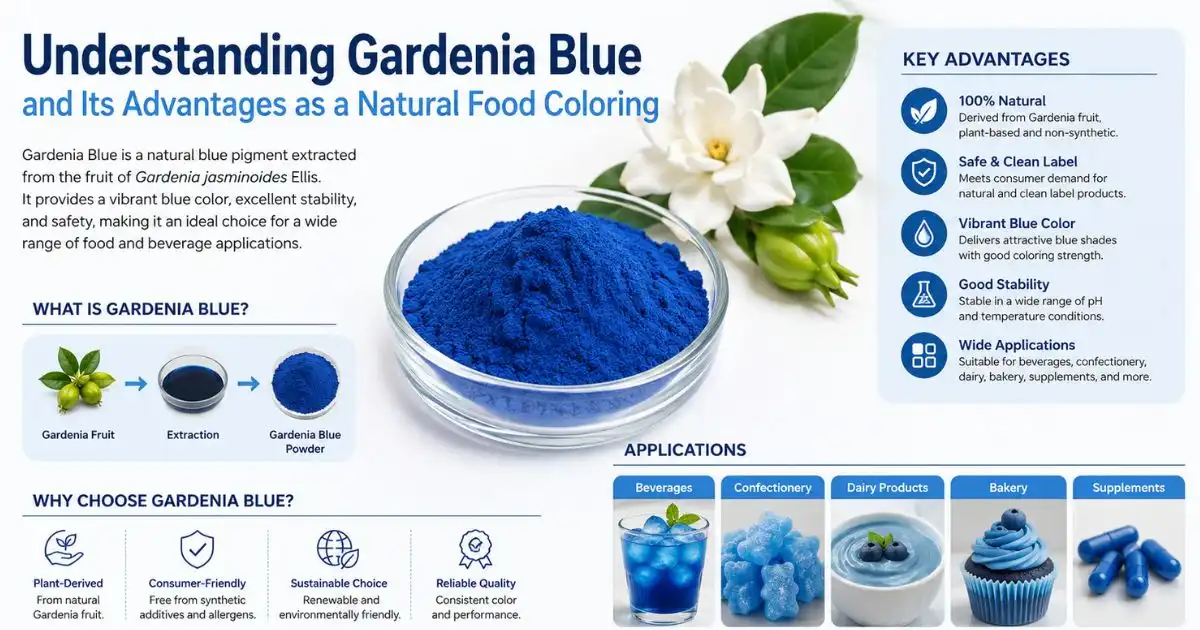
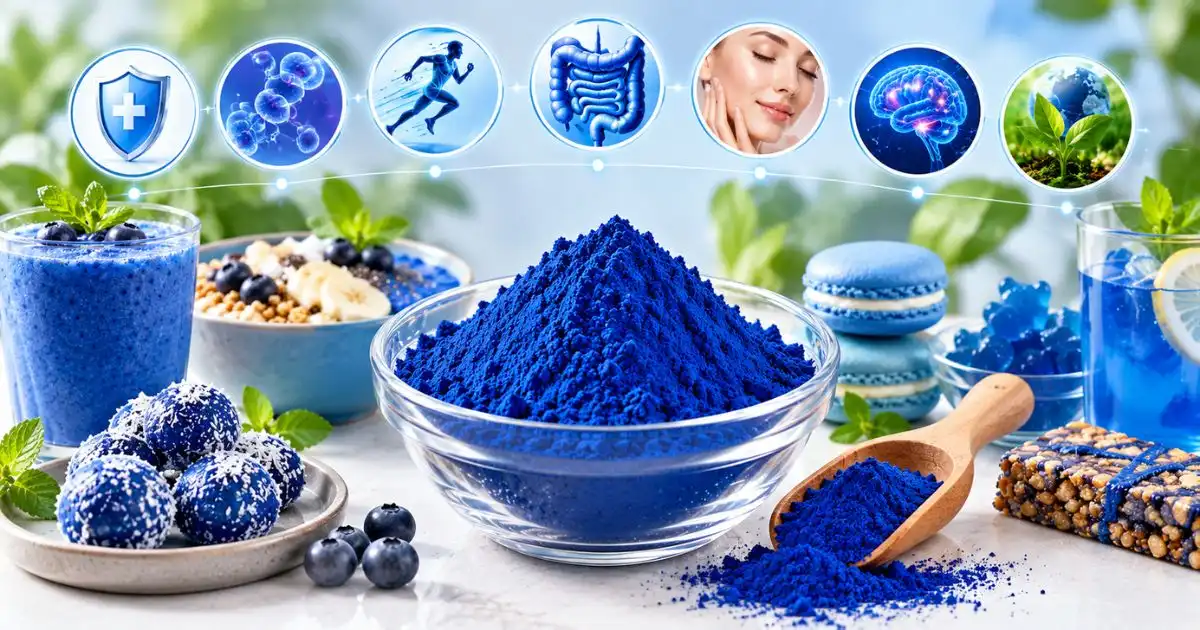
Top 7 Benefits of Blue Spirulina for Functional Food Applications
Functional food designers have to find a balance every day between how the food looks, how clean the labels are, and making health claims that they can back up. These issues are fixed by Blue Spirulina in several ways that directly connect to how well the product works and how much people enjoy it.
Natural Blue Colorant with Regulatory Advantages
The way people see Synthetic Blue 1 (Brilliant Blue FCF) and the rules that limit it in some European markets keep giving it trouble. Phycocyanin is a naturally occurring choice that meets the requirements for a clean label and gives systems with neutral to slightly alkaline pH bright blue tones. Colour value specifications (E10, E18, and E25) let formulators pick concentration grades that give them the colour they want while also being cost-effective.
Superior Water Solubility for Versatile Applications
Phycocyanin is easy to make into drinking concentrates, quick drink mixes, gummy candies, dairy-free options, and frozen treats because it dissolves completely in water. Phycocyanin mixes quickly in cold water, while oil-based colorants need to be mixed together first. This makes the process faster and less complicated when production goes up.
Antioxidant Activity with Marketable Claims
Once it is proven that a product can scavenge radicals, it can make antioxidant claims. This is very helpful for sports nutrition, recovery drinks, and vitamins that slow down the ageing process. Oxygen Radical Absorbance Capacity (ORAC) numbers can be used to back up marketing claims and make sure that rules are followed in places that care about health.
Immune Support Potential
Researchers have found that phycocyanin can change the immune system. This gives companies that make health goods another way to market them. The substance can help maintain the balance of cytokines and natural killer cells. This means that functional foods can be made that aim to boost immune system health during seasonal challenges.
Vegan and Plant-Based Compatibility
People don't have to worry about phycocyanin coming from animals because it only comes from plants. This means it can be used for vegan certifications and plant-based product lines that get top spots in stores.
Stability in Specific Formulation Environments
Even though phycocyanin is sensitive to light and only slightly stable in heat, it can be added to shelf-stable products and the colour will stay true if the right formulation strategies are used. These include pH buffering, antioxidant co-ingredients, and packaging that blocks light.
Market Differentiation Through Visual Impact
People remember the way blue-hued functional foods are presented, which makes them interact with brands on social media and buy from them again. Colour psychology is used to show new ideas and high quality in Instagram-friendly smoothie bowls, gradient drinks, and bright protein bars.
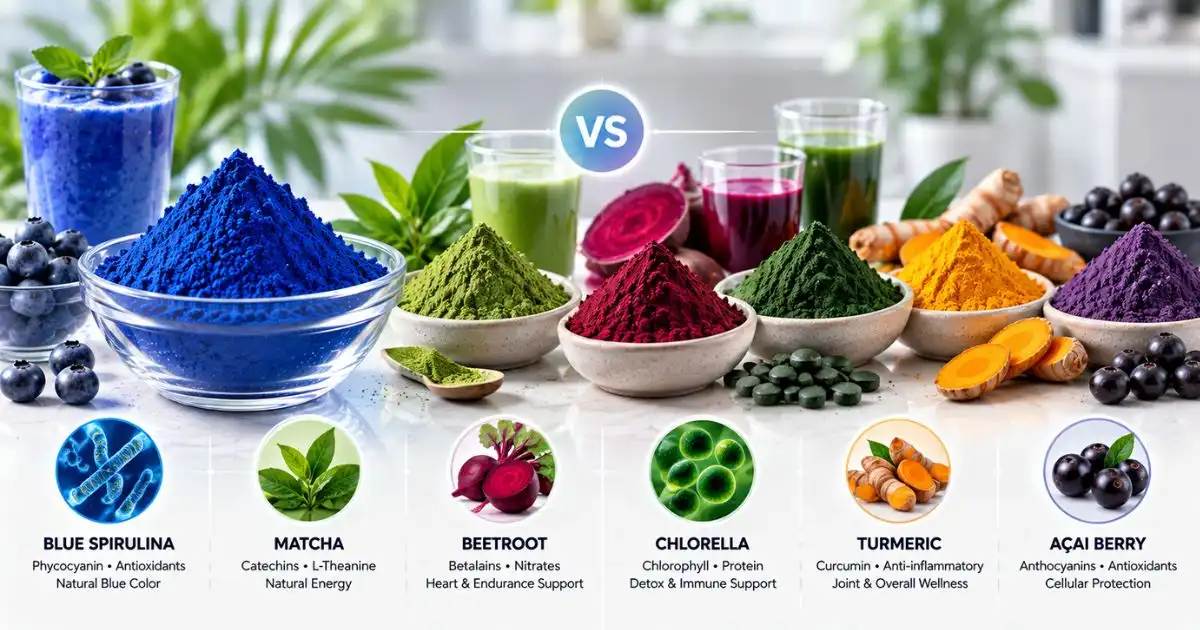
Blue Spirulina vs. Other Superfood Powders: A Comparative Overview
Buyers should know how Blue Spirulina compares to other plant-based powders in terms of how well it works, how much it costs, and where it fits in the market before they buy it for their products.
Phycocyanin vs. Green Spirulina
Traditional spirulina powder contains all of the algae biomass, which means it has a high micronutrient density and contains nutrients like vitamin B12, iron, and gamma-linolenic acid. However, because the chlorophyll is still present, it gives the product a grassy, salty flavour that limits its use in sweet and neutral-pH systems.
Comparison with Chlorella
Chlorella may be able to bind heavy metals and have more chlorophyll than phycocyanin, which makes it a good choice for detoxifying products. However, the process of breaking down the cell wall for bioavailability makes it more expensive to make, and the dark green colour limits the colour choices. Phycocyanin has more colour choices and doesn't cause stomach problems like high-fiber algae matrices do.
Positioning Against Matcha and Wheatgrass
You can find phycocyanin extracts in both matcha and wheatgrass. Phycocyanin extracts are blue and have a high protein concentration. These ingredients work well together instead of against each other, and you can often find them mixed together in multi-superfood mixes where the different colours make the food look better.
The table below summarizes key differentiators for procurement decision-making:
| ngredient | Primary Pigment | Protein Content | Flavor Profile | Application Versatility | Typical Cost Premium |
|---|---|---|---|---|---|
| Blue Spirulina (Phycocyanin) | Blue (phycocyanin) | 60-70% | Neutral | High (beverages, dairy, confections) | Moderate to High |
| Green Spirulina | Green (chlorophyll + phycocyanin) | 55-65% | Grassy, marine | Moderate (smoothies, savory) | Low |
| Chlorella | Dark green (chlorophyll) | 50-60% | Earthy, strong | Low to Moderate | Moderate |
| Matcha | Vibrant green (chlorophyll) | ~30% | Grassy, umami | Moderate (beverages, baked goods) | Moderate |
| Wheatgrass | Yellow-green (chlorophyll) | ~20% | Grassy, bitter | Low (shots, capsules) | Low to Moderate |
It depends on where the supplier comes from and how they farm to know what effect organic certification has. However, buyers usually need USDA Organic or EU Organic equivalents for high-end retail placement in North America and Europe.\
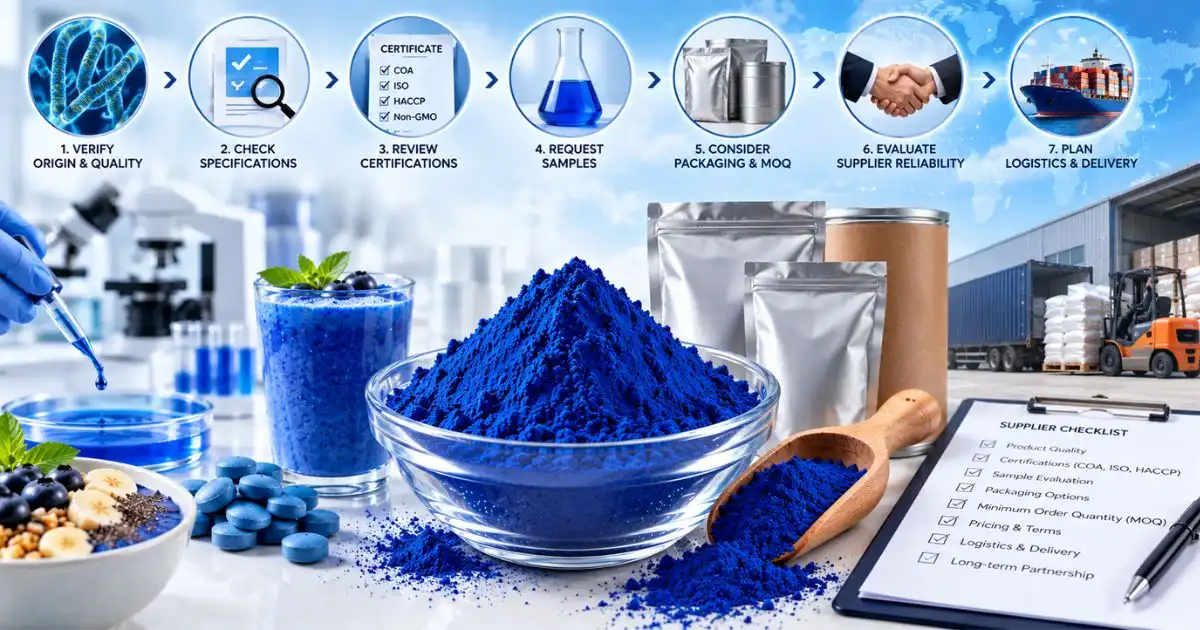
How to Procure Blue Spirulina for Functional Food Manufacturing: A Buying Guide
Effective procurement strategies balance quality assurance, supply chain reliability, and cost management while maintaining flexibility for product innovation and market responsiveness. Blue Spirulina production depends on carefully controlling the growth of algae, which needs specific amounts of light, water, and food.
Evaluating Color Value Specifications
Three main kinds of phycocyanin are made by Yangge Biotech. These are E10, E18, and E25. By measuring absorption at a frequency of 618nm, you can find out what the different concentration levels are. People in the business use E18 because it is cheap and has enough colour power for most drinks and candies. E25 grades are best for high-end items that need a strong colour with low inclusion rates. The E10 grades, on the other hand, are more cost-effective for uses that need to be done in large quantities.
Certification and Compliance Requirements
Approvals for Kosher and Halal make it easier for brands in the Middle East and North America to reach people who follow religious rules. The USP grade label makes sure that the standards of production are high enough to meet pharmacy standards. It's very important to do this for uses of food supplements that are controlled by the FDA or the European Food Safety Authority. Customers can check Yangge Biotech's current certifications during the supplier qualification process.
Minimum Order Quantities and Packaging Flexibility
For trial sales, standard MOQ structures usually start at 25 kg. Promises of 100 kg, 500 kg, or a full tonne save money. People who sell a lot of different products can benefit from flexible packing choices. For example, 1 kg foil pouches are good for pilot production runs, 25 kg drums are good for known formulas, and bulk totes are good for contract manufacturing operations. It is possible for Yangge to make private label packaging for brands in 60g, 100g, and 8oz sizes that is ready to sell.
Supply Chain Reliability and Inventory Management
Changes in the seasons and batch cycle times mean that brands whose demand changes with the seasons need to plan their stock ahead of time. Yangge always has a one-ton amount on hand in case there are problems with the supply. They promise wait times of two to four weeks for regular orders, but for bigger orders, you can cut those times down by using DHL, FedEx, or combined sea freight. Experienced procurement teams usually compare themselves to three qualified buyers to make sure they are cheap without lowering the standards of quality.
Laboratory Testing and Storage Best Practices
When testing new materials, it's important to make sure they meet the E-value standards, have the right amount of protein, are dry (less than 8%), and have microbial counts that are okay. Things need to be kept cool (below 25°C), dark, and dry, and they need to be kept in sealed containers that don't let light through or leak. If you move your things around a lot, the colours will stay bright for a long time. The shelf life should be 24 months if everything is right.
Practical Uses and Recipe Ideas for Blue Spirulina in Functional Foods
For Blue Spirulina to be useful in consumer goods, you need to know how to add it, how to hide tastes, and how to make the ingredients work together in a way that makes the product more appealing to people.
Beverage Applications and Dosage Guidelines
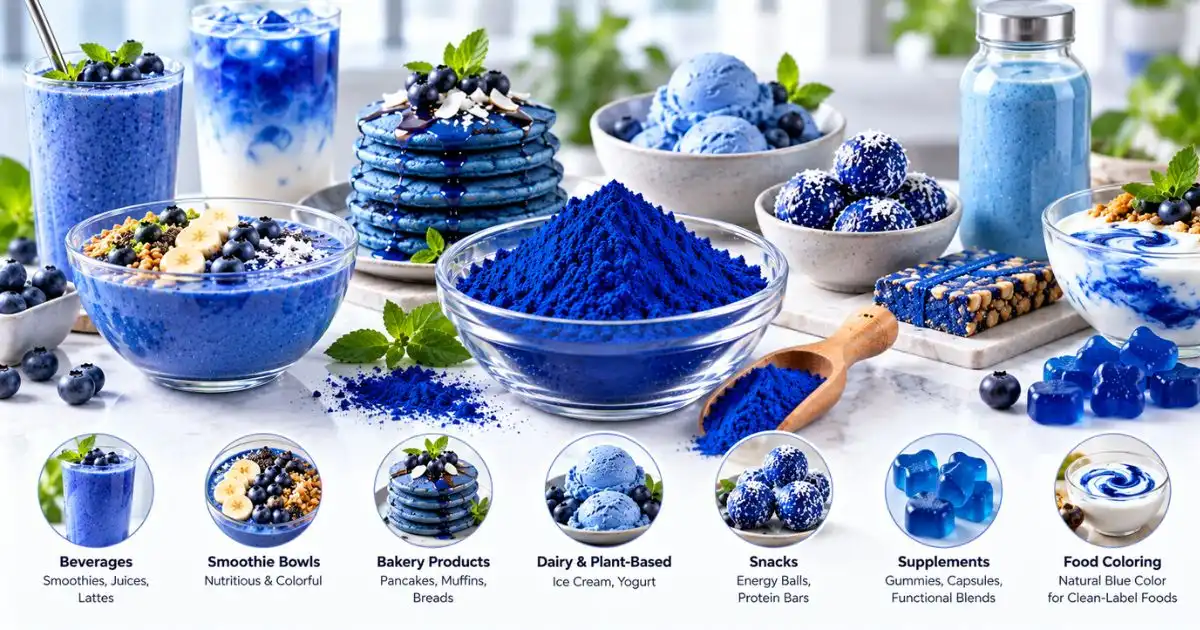
Phycocyanin is mostly found in functional drinks like protein shakes, wellness shots, energy drinks, and plant-based milk alternatives that are ready to drink. Some foods have inclusion rates of between 0.1% and 0.5%, depending on the label claim goals and the level of colour intensity. A tasty blue lemonade and tropical punch are made by mixing phycocyanin with citric acid, natural flavours, and stevia-based sweeteners.
Confectionery and Dairy Innovations
Phycocyanin can be used to make chewy supplements, which are a fun way for kids to get multivitamins, sleep aids, and beauty-from-within nutrients. It makes gelling processes easier when pectin or gelatin matrices are used because it dissolves easily in water. Setting the system to cold processing makes it less likely that heat damage will happen, and in dairy systems, changing the pH with citric acid or phosphate buffers is the best way to keep the colour stable.
Snack Bars and Baked Goods Considerations
When you leaven and heat process, the pH changes, which makes it hard to add phycocyanin to cooked materials. Fruit snacks, cookies, and cakes that use encapsulation technologies or glazing after baking keep their colours. While no-bake energy balls and raw sweets don't come in contact with heat, their bright colours stay the same while they're being passed out.
Beauty-Focused Consumables
Biotin, vitamin C, hyaluronic acid, and other antioxidants are used in collagen drinks, skin hydration supplements, and hair-nail-skin mixes to make you look beautiful from the inside out. To stay hydrated and healthy, the colour blue makes people think of clean water, which is a good fit.
The table below outlines typical formulation parameters across major application categories:
| Application Type | Typical Inclusion Rate | Key Formulation Considerations | Shelf Life Expectations |
|---|---|---|---|
| Ready-to-Drink Beverages | 0.1% to 3% | pH 5.5-7.0, light-protective packaging | 6-12 months refrigerated |
| Protein Powders | 0.5 to 1% | Moisture control, flavor masking | 18-24 months ambient |
| Gummy Supplements | 0.3% to 0.8% | Gelatin or pectin compatibility | 12-18 months ambient |
| Ice Cream/Frozen Desserts | 0.2% to 5% | pH buffering, freeze-thaw stability | 12 months frozen |
| Nutrition Bars | 0.3% to 0.6% (glaze) | Heat avoidance, encapsulation | 9-12 months ambient |
| Instant Drink Mixes | 1% to 2% | Complete water solubility | 18-24 months ambient |
Conclusion
Blue Spirulina is a game-changing ingredient for functional food brands that have to meet clean label standards, stand out visually, and have a strong wellness image. You can get phycocyanin from spirulina algae. It gives foods a natural blue colour, extra protein, and antioxidants that are in high demand in the markets for drinks, vitamins, sweets, and cheese.
By building strategic relationships with well-known manufacturers that offer flexible minimum order amounts, thorough documentation, and technical formulation support, brands can speed up the process of coming up with new ideas and better control supply chain risks effectively.
FAQ
What is the difference between blue spirulina and regular green spirulina?
Blue Spirulina only has the protein-pigment complex that was extracted, while green spirulina has the whole algae biomass, which includes chlorophyll and other compounds. When it is extracted, the strong grassy taste and green colour are taken away. What is left is a blue powder with a neutral taste that can be used in more situations. Green spirulina has more micronutrients than the blue extract, which is superior in colour performance and formulation flexibility.
Is blue spirulina safe for all consumer groups?
If you buy phycocyanin from a reputable company that follows GMP guidelines, it is safe and won't cause any allergies. Before they eat, people who are allergic to seafood or have autoimmune diseases should talk to their doctors. Food with a veggie certification is good for people who only eat plants, and food with a kosher or halal certification is good for people who follow certain religions.
How should blue spirulina be stored to maintain quality?
Things should be kept in sealed containers that are cool (below 25°C), dark, and dry. This will keep the things from getting wet and losing their colour from light. If the right steps are taken to store phycocyanin, it will keep its colour and biological function for about 24 months after it was made.
Partner with Yangge Biotech for Premium Phycocyanin Supply
Yangge Biotech is a trustworthy Blue Spirulina company that makes phycocyanin products that are very pure and meet E10, E18, and E25 standards. We have a one-ton stock on hand, so we can quickly meet immediate output needs. Our full certification package, which includes Kosher, Halal, and USP-grade labels, makes it easy to get into markets in North America, Europe, and the Middle East.
We help a lot of different types of businesses with our large wholesale, OEM superfood mix creation, and private label services for pills, tablets, gummies, and powdered forms. Technical help with formulation and a variety of flexible packaging options enable brands to confidently speed up the launch of their products. Contact our procurement specialists at info@yanggebiotech.com to discuss your specific requirements.
References
1. Romay, C., Armesto, J., Remirez, D., González, R., Ledon, N., & García, I. (2003). Antioxidant and anti-inflammatory properties of C-phycocyanin from blue-green algae. Inflammation Research, 52(10), 203-206.
2. Pentón-Rol, G., Marín-Prida, J., & McCarty, M. F. (2011). C-Phycocyanin-derived phycocyanobilin as a potential nutraceutical approach for major neurodegenerative disorders and COVID-19-induced damage to the nervous system. Current Neuropharmacology, 19(12), 2250-2275.
3. Patel, A., Mishra, S., Pawar, R., & Ghosh, P. K. (2005). Purification and characterization of C-Phycocyanin from cyanobacterial species of marine and freshwater habitat. Protein Expression and Purification, 40(2), 248-255.
4. Jensen, G. S., Attridge, V. L., Beaman, J. L., Guthrie, J., Ehmann, A., & Benson, K. F. (2015). Antioxidant and anti-inflammatory properties of an aqueous cyanophyta extract derived from Arthrospira platensis: contribution to bioactivities by the non-phycocyanin aqueous fraction. Journal of Medicinal Food, 18(5), 535-541.
5. Eriksen, N. T. (2008). Production of phycocyanin—a pigment with applications in biology, biotechnology, foods and medicine. Applied Microbiology and Biotechnology, 80(1), 1-14.
6. Special Issue on Natural Colorants. (2020). Foods Journal, 9(11).

Based on your location and order quantity, you will have the opportunity to receive a limited time free shipping promotion!
Who we are
Popular Blogs