Top Black Carrot Concentrate Benefits for Beverage Manufacturers
Black carrot concentrate is reshaping how beverage manufacturers approach natural coloring. Derived from the roots of Daucus carota L., this dark red-purple powder delivers anthocyanin-rich pigmentation with strong water solubility and measurable color value. For procurement teams and formulation developers targeting clean-label products, it offers a technically sound replacement for synthetic dyes like Allura Red while meeting the EU's stringent PAH4 and benzopyrene ≤10 ppb standards. This guide covers everything from composition and application to supplier selection.
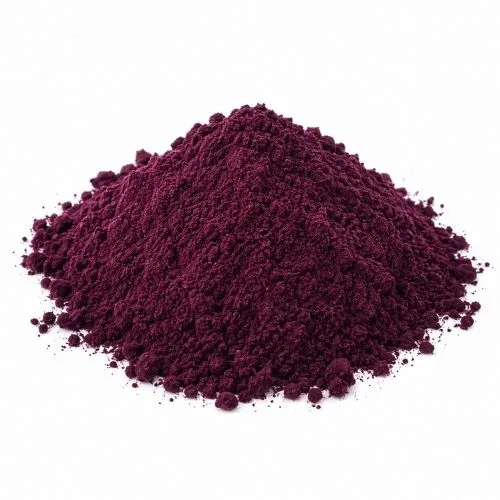
Understanding Black Carrot Concentrate: Composition and Nutritional Value
What Makes Black Carrot Different from Other Extracts?
Anthocyanins like acidic cyanidin-3-glycosides can be found in black carrot roots. For sixty to ninety percent of them, sinapic, ferulic, and coumaric acids change their shape. This makes them different from orange carrot roots. It makes a chemical "cage" around the color that keeps it more stable than anthocyanin sources that aren't acylated, like red cabbage juice or grape skin. This black carrot concentrate provides a more stable pigmentation.
Nutritional Profile Worth Noting
100 grams of black carrots have 35 calories, 8.2 grams of carbs, 2.9 grams of fiber, 1 gram of protein, and 334% of the RDI for vitamin A. They also have 7% RDI of potassium and 6% RDI of vitamin C. Both the USDA and the FDA have said that this ingredient is high in nutrients. This makes it more than just a flavor.
Comparison with Common Vegetable Colorants
| Property | Black Carrot Extract | Beetroot Red | Grape Skin Extract |
|---|---|---|---|
| Anthocyanin Type | Acylated cyanidin | Betanin (betalain) | Non-acylated anthocyanin |
| Heat Stability | High (up to pasteurized heat) | Low (breaks down above 75°C) | Moderate |
| pH Color Range | Red-purple (pH 3–4) / Purple (pH 4–5) | Stable red-purple | Blue-red shift |
| Off-flavor Risk | Minimal | Earthy note possible | Low |
| EU PAH Compliance | Yes (Yangge certified) | Varies | Varies |
What you can see is how beet red breaks down when you heat it above 75°C. This isn't true for black carrot anthocyanins; they can only handle pasteurized heat. This means they can be used to make more drinks at once.
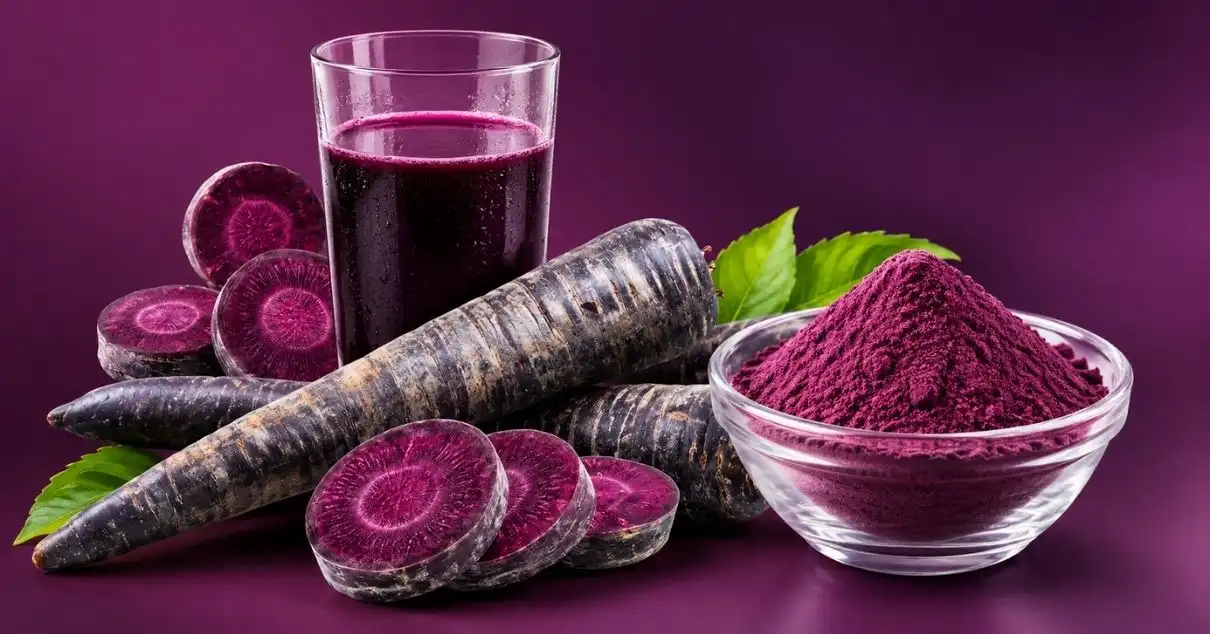
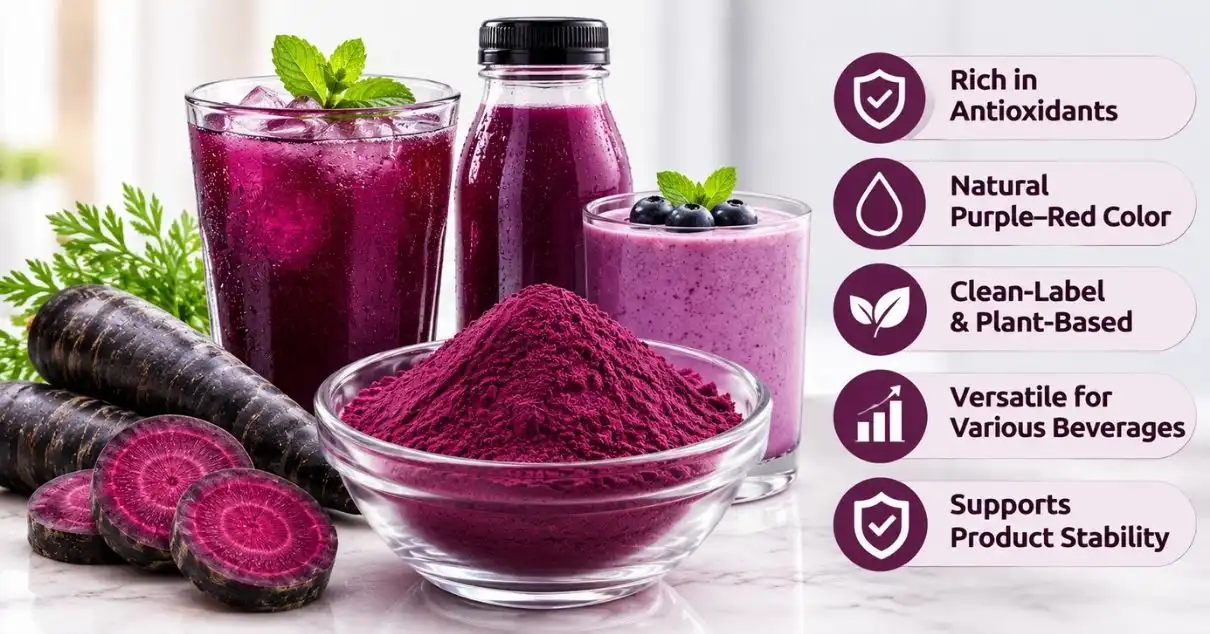
Top 5 Benefits of Black Carrot Concentrate for Beverage Manufacturers
Customers always want clean labels, the government always wants everyone to follow the rules, and production teams always just want things to stay the same. All three are taken care of by black carrot concentrate. It's a great choice for product development teams because of these main pros:
- Superior color stability under processing conditions. It doesn't break down when it gets hot, not even when it's steamed or heated under high pressure. It stays a clear ruby red color when the pH level is between 2.5 and 3.5. It doesn't settle or "neck ring," which is what happens a lot with lake pigments in soda.
- Clean-label positioning with functional appeal. Carrots' black color is good for liver cells and eye health, according to one study. At the same time, they can sell drinks as naturally colored and useful, which meets two customer wants at once.
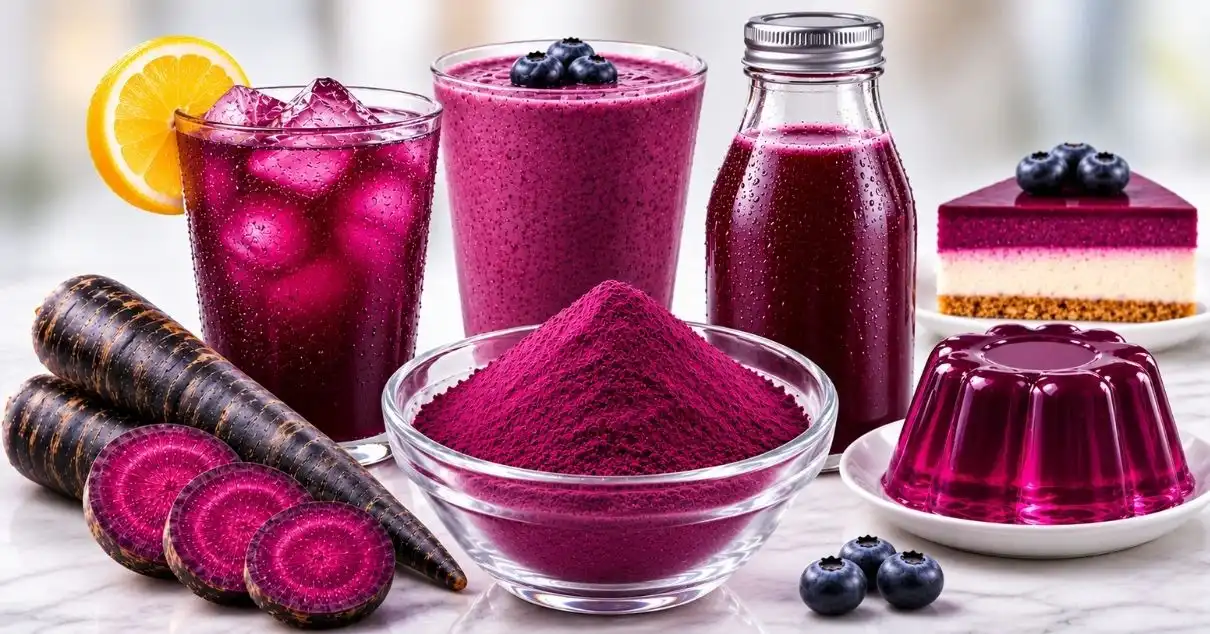
- Versatile application across beverage categories. It can be used to make many different drinks. It always works well in vitamin waters, fruit juices, kombuchas, carbonated soft drinks, and plant-based dairy replacements. When used with water, it doesn't need emulsifiers because it dissolves in water.
- Regulatory compliance for export markets. Just below 10 parts per billion of benzopyrene are found in Yangge's Black Carrot Extract. This is in line with EU PAH4 rules. We used HPLC tests and approved labs outside the company to show this was true. These changes make it easier for US companies to sell their goods in Europe.
- Non-GMO, non-allergen, no irradiation. It's clear from the signs that the item is not GMO, doesn't cause allergies, and has not been cleaned. When the EU, FDA, or store inspectors check something, these guidelines help them do their jobs better.
These advantages directly address the formulation and compliance pressures that procurement and R&D teams encounter most often. They also reduce the total validation time needed before scaling to full production.
How Beverage Manufacturers Can Effectively Use Black Carrot Concentrate
pH Management Is the First Priority
How colors look changes based on the pH level. When the pH is between 3.0 and 4.0, it turns a bright ruby red color. It turns purple-violet when the pH is between 4.0 and 5.0. The color changes to blue-gray when the pH goes above 6.0, which means it's not safe to drink. Acidic bases are best for making drinks, and the pH level of the black carrot concentrate should be checked at each step of the way.
Dosing and Stability Testing Guidelines
| Beverage Type | Recommended pH Range | Typical Color Value (E1%) | Processing Tolerance |
|---|---|---|---|
| Carbonated Soft Drinks | 2.5–4.0 | 40–80 | Excellent |
| Functional/Vitamin Water | 3.0–4.0 | 20–60 | Good |
| Kombucha | 2.8–3.5 | 30–70 | Excellent |
| Fruit Prep (Yogurt) | 3.5–4.5 | 40–80 | Good |
| Plant-Based Smoothies | 3.5–4.5 | 20–50 | Average |
Once you add the neutral base, mix it in with the acidic fruit mix. This way, you can work with dairy or protein-rich systems. This way makes sure that the color stays the same in the end.
Storage and Handling Protocols
Yangge Black Carrot Extract shouldn't be exposed to light or water. It should be kept in the foil bag it came in. As you mix the powder, you can exactly control the amount. It comes in 1 kg bags or in packaging that you can make yourself. When it stays below 25°C and the humidity is low, things on the shelf stay stable for a long time.
Selecting the Right Black Carrot Concentrate Supplier: Key Considerations
Certifications That Matter in Regulated Markets
When teams buy things for the EU or North America, they should check to see if they are ISO, HACCP, Kosher, or Halal approved. All four of them are owned by Yangge Biotech. When third-party labs test the batch again for PAH4 and benzopyrene, it shows that it meets all the standards, not just the ones on the specification sheet for the black carrot concentrate.
Traceability and Supply Chain Transparency
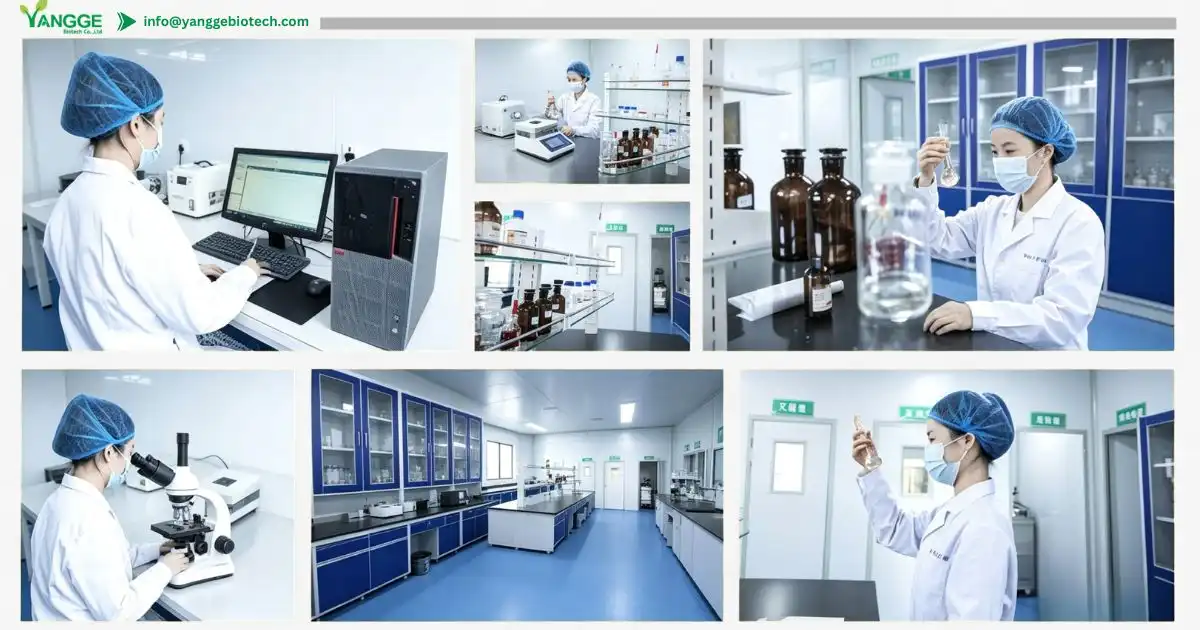
Yangge works closely with farming groups so that food can be tracked from the field to the table. This means that each batch comes from farms that have been checked out. Managers of R&D need to make sure that each order has the same amount of anthocyanin and color value. They can't get technical peace of mind from generic catalog sellers, but they can get it from paperwork that shows consistency from batch to batch.
Evaluating Supplier Technical Support
A good black carrot concentrate provider should not only give you base materials, but they should also help you use the products. The R&D team at Yangge is available 24 hours a day to help with questions, methods, and solid tests. This makes the process go faster and helps your team proofread better. It usually takes 6–12 weeks to make something like this.
Conclusion
The use of black carrot extract as a coloring in drinks is safe because it is nutritionally sound, has been tested in line with EU rules, and has been shown to work in a wide range of products. It is not like natural colorants that lose their stability over time because it is made up of acylated anthocyanin. Teams that are going to put out new products or switch out fake dyes should give it a lot of thought as they get ready to use black carrot concentrate.
FAQ
Is black carrot extract more stable than beetroot red for hot-filled beverages?
Yes. The betanin in beet red quickly breaks down above 75°C, leaving a brown mark. Anthocyanins in black carrots lose a lot less of their color when they are heated or treated with UHT. This is especially true for forms that have been acylated. This makes them better for lines that use hot fill to make things.
Does the extract cause color shift in neutral or alkaline beverages?
It can only be used on acidic things because the color turns blue-gray when the pH goes above 6.0. In the event that the plant-based milk or drink has a pH of 7, the fruit mixture may need to be buffered on its own before it is added.
What certifications does Yangge's Black Carrot Extract carry?
It has not been irradiated, is not GMO, and is not an allergen. The company Yangge Biotech is certified by ISO, HACCP, Kosher, and Halal. A different lab and HPLC are used to make sure that the EU limits for benzopyrene and PAH4 are met (≤10 ppb).
How does black carrot extract compare to synthetic Allura Red on cost?
Anthocyanin-based natural colorants usually cost more per kilogram than lab-made ones. But the difference in price between high-end and low-end beverage lines is becoming more and more acceptable thanks to clear labels, lower legal risk in the EU, and records of what buyers want.
Source Samples from Yangge Your Trusted Black Carrot Concentrate Supplier
Yangge Biotech sells tried-and-true Black Carrot Extract in sealed 1 kg metal cases or custom forms, along with all the paperwork you need to sell it in the EU and US.Contact us or you can email us at info@yanggebiotech.com or read our blog at blog.yanggebiotech.com to get a free taste and talk about your recipe needs. We'll get back to you in 24 hours and help you with anything, from making sure the specs are right to running a test with black carrot concentrate.
References
1. Khoo, H. E., Azlan, A., Tang, S. T., & Lim, S. M. — Food & Nutrition Research, 2017.
2. Stintzing, F. C., & Carle, R. — Trends in Food Science & Technology, 2004.
3. Vegara, S., Funes, L., Martí, N., Saura, D., & Valero, M. — Food Chemistry, 2013.
4. Clifford, M. N. — Journal of the Science of Food and Agriculture, 2000.
5. U.S. Department of Agriculture, Agricultural Research Service — FoodData Central, 2023.
6. European Food Safety Authority (EFSA) — EFSA Journal on Polycyclic Aromatic Hydrocarbons in Food, 2008.

Based on your location and order quantity, you will have the opportunity to receive a limited time free shipping promotion!
Who we are
Popular Blogs