Lion's Mane Extract Powder vs. Whole Mushroom: Which Is Best?
When sourcing functional mushroom ingredients, the form you choose matters more than most buyers expect. Lion's mane extract powder derived from Hericium erinaceus through hot water or dual-solvent extraction—delivers standardized polysaccharide content (10%–50%) with consistent particle size and water dispersibility, making it the preferred input for capsule filling, mushroom coffee blends, and meal replacement powders. Whole mushroom powder retains a broader nutritional profile but lacks potency standardization. For B2B manufacturers prioritizing batch-to-batch consistency and scale-up production, the extract form offers a clear process advantage.
Understanding Lion's Mane: Whole Mushroom vs. Extract Powder
Before comparing the two forms side by side, it helps to understand what each actually is and how each is produced—because those differences carry real consequences for your formulation workflow.
What Is Whole Mushroom Powder?
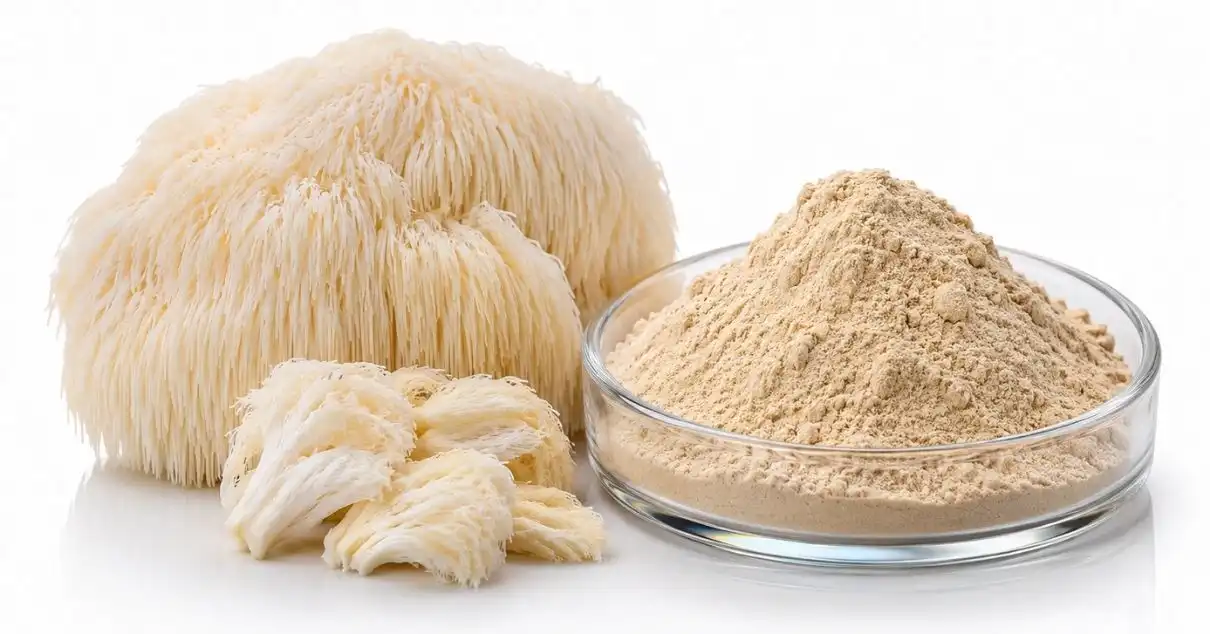
Whole mushroom powder is simply dried and milled Hericium erinaceus fruiting body or mycelium. The full mushroom matrix is preserved, including fiber, chitin, and a range of minor compounds. However, chitin cell walls restrict bioavailability, meaning the body cannot fully access the active beta-glucans. Particle uniformity also varies by batch, which creates challenges for weight-fill capsule lines.
What Is Lion's Mane Extract Powder?
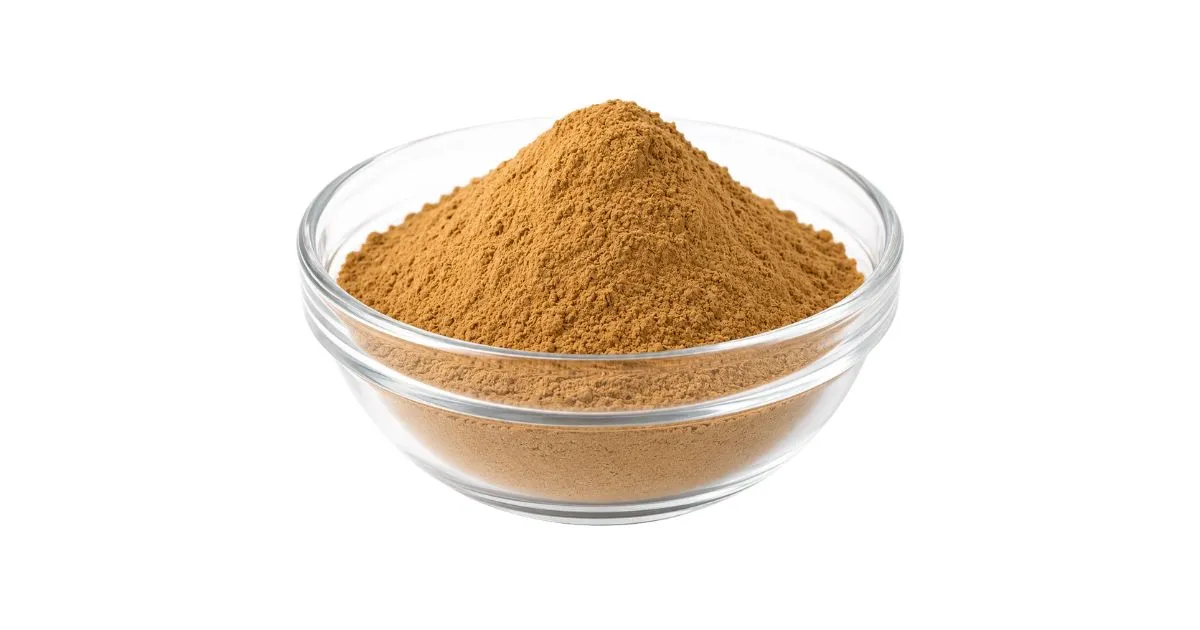
Lion's mane extract powder is produced by breaking down the mushroom matrix through hot water or dual-extraction (aqueous + ethanolic) processes. This removes chitin and concentrates bioactive compounds—primarily beta-glucan polysaccharides, hericenones, and erinacines—into a fine, yellow-brown powder. Yangge's product is derived from 100% dried Hericium erinaceus fruiting body or mycelium and is standardized to 10%–50% polysaccharides.
How They Differ at the Ingredient Level
| Parameter | Whole Mushroom Powder | Lion's Mane Extract Powder |
|---|---|---|
| Polysaccharide content | ~3%–8% (unstandardized) | 10%–50% (standardized) |
| Bioavailability | Limited by chitin | Higher—cell wall removed |
| Particle consistency | Variable | Fine, uniform (yellow-brown) |
| Water dispersibility | Moderate | Good (hot-water extract) |
| Shelf life | 12–18 months | 24 months |
Evaluating Effectiveness: Potency, Dosage, and Usage
The two types are very different when it comes to how strong they are, and people usually choose to buy something based on hard facts like specifications instead of marketing speak.
Active Compound Concentration
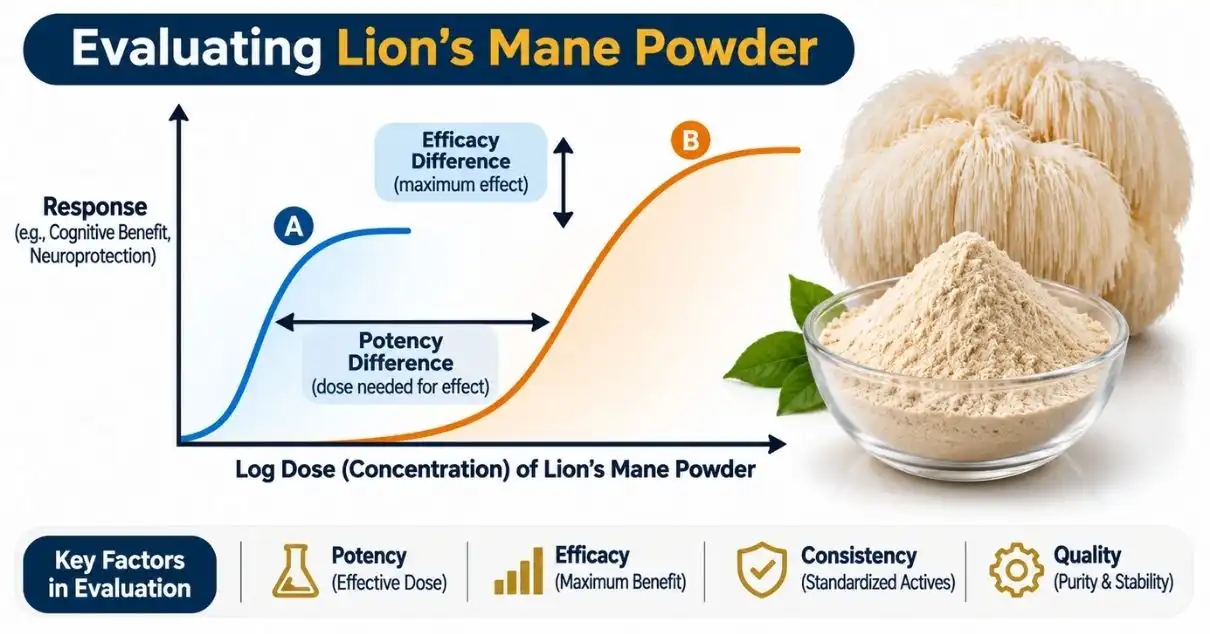
Standardized Lion's mane extract powder contains high levels of beta-glucans and hericenones, which influence the production of Nerve Growth Factor (NGF). Antioxidants published a study in 2020 that proved polysaccharides from Hericium erinaceus help protect neurons in ways that can be measured and depend on the dose. If you want the same effect from whole mushroom powder, which has between 3 and 8 percent natural polysaccharides, you need to use a lot more of it. This changes the size and cost of the capsules.
Recommended Dosage by Format
How your product is packed affects the right amount. In business, these measurement levels are useful:
- Capsules/tablets: 500 mg–1,000 mg of standardized extract (≥30% polysaccharides) per serving. This fits within standard size-00 capsule specifications without excessive flow agents.
- Mushroom coffee and functional beverages: 250 mg–500 mg per serving. The extract's water-soluble fraction allows adequate suspension in liquid matrices at 85°C–100°C without visible sediment.
- Meal replacement powders: 300 mg–600 mg blended with protein bases. Fine particle size (Yangge's yellow-brown fine powder) ensures homogenous mixing without separation.
A normal extract was used to come up with these dose values. It wouldn't give you the same active load if you used whole mushroom powder with the same gram weight.
Stability and Shelf Life
Yangge's Lion's mane extract powder can be kept for 24 months if it is kept in a cool, dry place. Because high-polysaccharide extracts naturally soak up water, they are sent out in either 1 kg aluminum foil bags or 25 kg fiber drums. Both of them are made to keep water out. The wetness level is kept below 5% so that the work floor doesn't get too sticky.
Procurement Insights: Quality, Pricing, and Trusted Suppliers
Poor quality control is not an option when you need a lot of something for a business. These things should be looked at by buying teams before they decide to work with a seller.
Certifications That Matter for Market Access
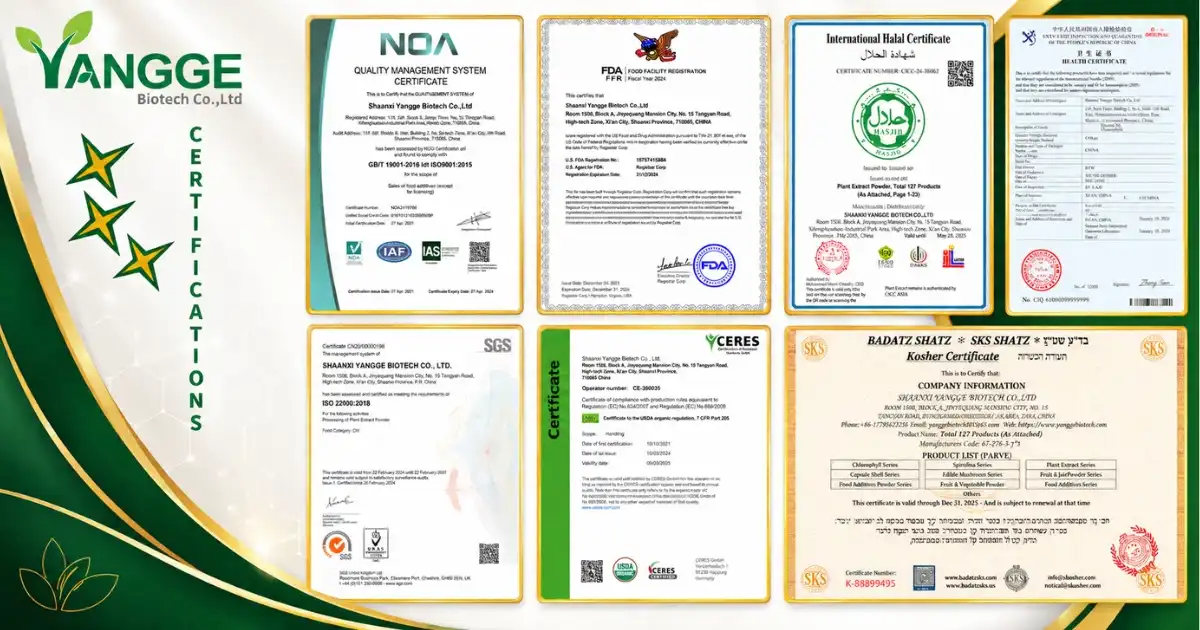
Yangge's Lion's Mane Extract Powder is ISO, HACCP, Kosher, and Halal approved. Two important things for brands that want to market themselves as "clean labels" in North American and European stores are that the food hasn't been sterilized and doesn't contain any allergens. A third party should always look over a trial order before it is sent in. This is done to make sure the process of making things is always the same. HACCP manages the risks to food safety. Things can be either Kosher or Halal, which means they can be sold in markets for Jews and Muslims. They don't need to be sterilized, but they do need to have clean labels. They can also be free of allergens and work with many different formulas.
| Certification | Relevance to B2B Buyers |
|---|---|
| ISO | Manufacturing process consistency |
| HACCP | Food safety hazard control |
| Kosher | Access to Jewish market channels |
| Halal | Access to Muslim market channels |
| Non-irradiation | Clean-label compliance |
| Allergen-free | Broad formulation compatibility |
Evaluating Polysaccharide Specifications
Different "Lion's Mane" extracts don't all have the same amount of strong ingredients. Ratios like "10:1" are used in ads, but they haven't been proven by research. Standards, such as 30% or 50% polysaccharides that can be proven by UV/HPLC tests, give buying teams a standard that they can use to create new recipes. One of Yangge's range of specs is the amount of polysaccharides. It goes from 10% to 50%, and buyers can pick the number that fits their label claims and budgets.
Pricing, MOQ, and Sampling
The amount of polysaccharides and the size of the order affect the price of standardized mushroom extracts in bulk. Samples are available and the minimum order quantity is low at Yangge. This is helpful for R&D teams that want to do initial dispersion or flavor-masking tests before committing to a full production run.
Addressing Risks and Side Effects
Look at the risks for both the people who will use the item and the way it was made before you decide where to get it.
Known Safety Profile
There is a lot of proof that lion's mane mushrooms are good for you. Research published in 2019 in the journal Phytotherapy Research found that taking up to 3 g/day for 16 weeks did not have any major side effects. Some sensitive people have had minor stomach problems when they took bigger doses, but this doesn't happen very often when the drug is mixed in the normal way.
Heavy Metal and Microbiological Controls
Munch plants take in heavy metals from the ground and substrate. For each provider you work with, you should get a Certificate of Analysis (CoA) for lead, arsenic, cadmium, and mercury. This should be done batch by batch. As normal production practice, Yangge tests for heavy metals and microbes in a way that is in line with good manufacturing practice (GMP). They're not extras that can be added whenever you want.
Managing Hygroscopicity in Production
Polysaccharide-rich extracts attract water. Caking, flow problems, and weight-fill gaps can happen if you don't keep an eye on things on the production floor. Yangge suggests putting the mixture away in a climate-controlled area with a relative humidity below 60% and closing the containers in between steps of blending. The 1 kg metal foil bags are good for small-scale research and development. When something is being made all the time, the 25 kg fiber drums work best.
Making the Right Choice: Strategic Product Selection for Your Business
It depends on the product you're making, what the label says, and the tools you use to make the product whether you should use whole mushroom powder or extract powder. The straight comparison in the table below backs up that choice:
| Factor | Whole Mushroom Powder | Lion's Mane Extract Powder |
|---|---|---|
| Standardized potency | No | Yes (10%–50% polysaccharides) |
| Suitable for capsules | With high fill weights | Yes, efficient dosing |
| Functional beverage use | Limited dispersibility | Good (hot-water extract) |
| Clean-label positioning | Strong | Strong (non-irradiated) |
| Shelf life | 12–18 months | 24 months |
| Best for | Superfood blends, raw products | Nootropics, mushroom coffee, meal replacements |
Manufacturers who are making mushroom coffee SKUs, nootropic capsule lines, or meal replacement powders should use lion's mane extract powder. Whole mushroom powder can still be used in raw superfood blends that want to look natural and minimally processed.
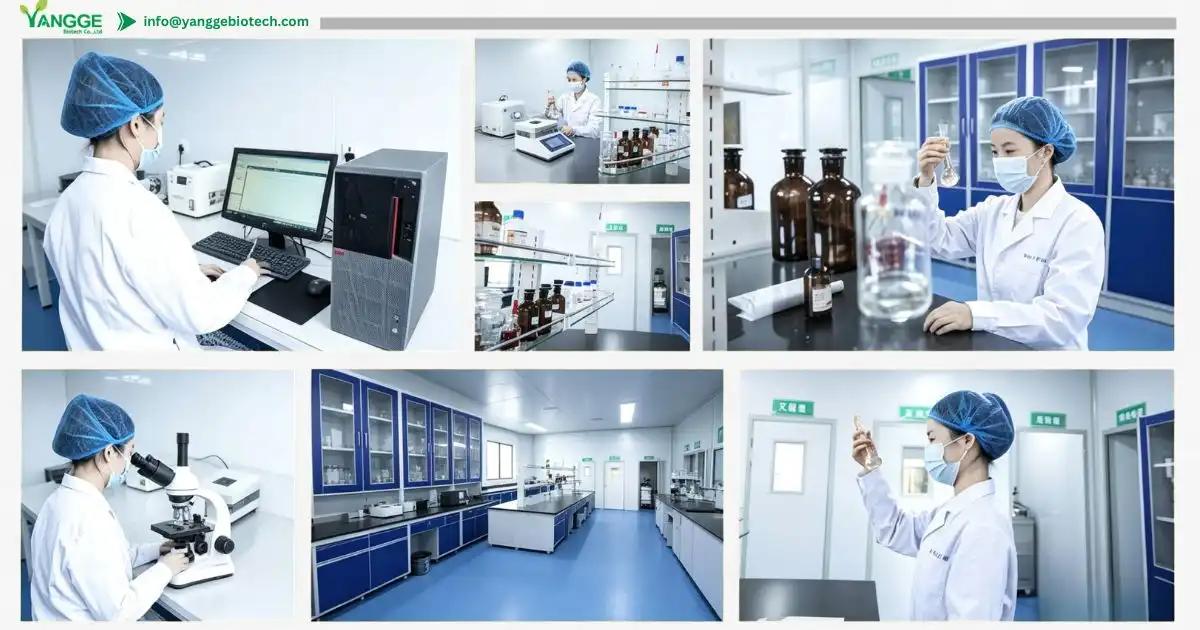
Over a long period of time, getting all of your goods from one approved source lowers the risk of batch difference, makes it easier to file with the government, and makes it safer to grow.

Conclusion
The comparison between lion's mane extract powder and whole mushroom powder is ultimately a formulation decision. Extract powder wins on potency standardization, dispersibility, and shelf life—three factors that directly affect manufacturing efficiency and product consistency. Whole mushroom powder holds value in minimally processed product lines. For most supplement, beverage, and functional food manufacturers operating at commercial scale, a standardized extract with verified polysaccharide content is the more defensible ingredient choice. Yangge's Hericium erinaceus extract, available in specifications from 10% to 50% polysaccharides with full certification documentation, is ready to support your next development cycle.
FAQ
What is the difference between fruiting body and mycelium-based extract?
Fruiting body extracts contain the full beta-glucan spectrum without substrate starch contamination. Mycelium-on-grain products often test high in alpha-glucans from the rice or oat growth medium, which inflates polysaccharide readings without adding functional value. Fruiting body extracts are preferred for label-claim accuracy.
How do I determine the right polysaccharide specification for my formula?
Start with your target dose and label claim. A 30% polysaccharide extract at 500 mg delivers approximately 150 mg of active polysaccharides per serving. If your market research targets 200 mg per serving, adjust either the specification tier or the serving weight accordingly.
Is lion's mane extract powder safe for continuous production use?
Yes. The ingredient has a documented safety record in peer-reviewed research. Batch CoA review—covering heavy metals, moisture, and microbial counts—should be standard practice for each incoming shipment. Request CoA documentation from any supplier before finalizing purchasing terms.
Can the extract withstand heat during gummy or beverage processing?
Lion's mane extract powder is heat-stable up to approximately 100°C–120°C for short processing durations, making it compatible with standard beverage and confectionery manufacturing temperatures. Prolonged high-heat exposure should be avoided to preserve hericenone integrity.
Partner with Yangge for Certified Lion's Mane Extract Powder Supply
Fruit-based body goods have all three kinds of beta-glucans without any sugar as a source. A lot of alpha-glucans are found in mycelium-on-grain foods because they were grown in rice or oats. This increases the amount of polysaccharides without adding any value. Label claims that are true should be based on fruiting body samples. Send an email to info@yanggebiotech.com to get samples.
References
1. Mori, K., Inatomi, S., Ouchi, K., Azumi, Y., & Tuchida, T. — Phytotherapy Research, 2009.
2. Nagano, M., Shimizu, K., Kondo, R., Hayashi, C., Sato, D., Kitagawa, K., & Ohnuki, K. — Phytotherapy Research, 2010.
3. Li, I. C., Lee, L. Y., Tzeng, T. T., Chen, W. P., Chen, Y. P., Shiao, Y. J., & Chen, C. C. — Behavioral Neurology, 2018.
4. Lai, P. L., Naidu, M., Sabaratnam, V., Wong, K. H., David, R. P., Kuppusamy, U. R., … & Malek, S. N. A. — International Journal of Medicinal Mushrooms, 2013.
5. Zhang, J., An, S., Hu, W., Teng, M., Wang, X., Qu, Y., … & Wang, D. — Antioxidants, 2016.
6. Ryu, S., Kim, H. G., Kim, J. Y., Kim, S. Y., & Cho, K. O. — Journal of Agricultural and Food Chemistry, 2018.

Based on your location and order quantity, you will have the opportunity to receive a limited time free shipping promotion!
Who we are
Popular Blogs