Top 5 Marigold Extract Benefits for Skincare and Nutraceutical Brands
Marigold extract derived from the sun-dried petals of Tagetes erecta L. has become one of the most in-demand botanical ingredients across both the skincare and nutraceutical sectors. Standardized to deliver lutein and zeaxanthin, two clinically studied xanthophyll carotenoids, it supports eye health, antioxidant defense, and skin resilience. As consumer demand for clean-label, traceable ingredients grows, procurement teams in North America and Europe are actively re-evaluating their sourcing. This guide breaks down five reasons why this extract deserves a prominent place in your next formulation cycle.
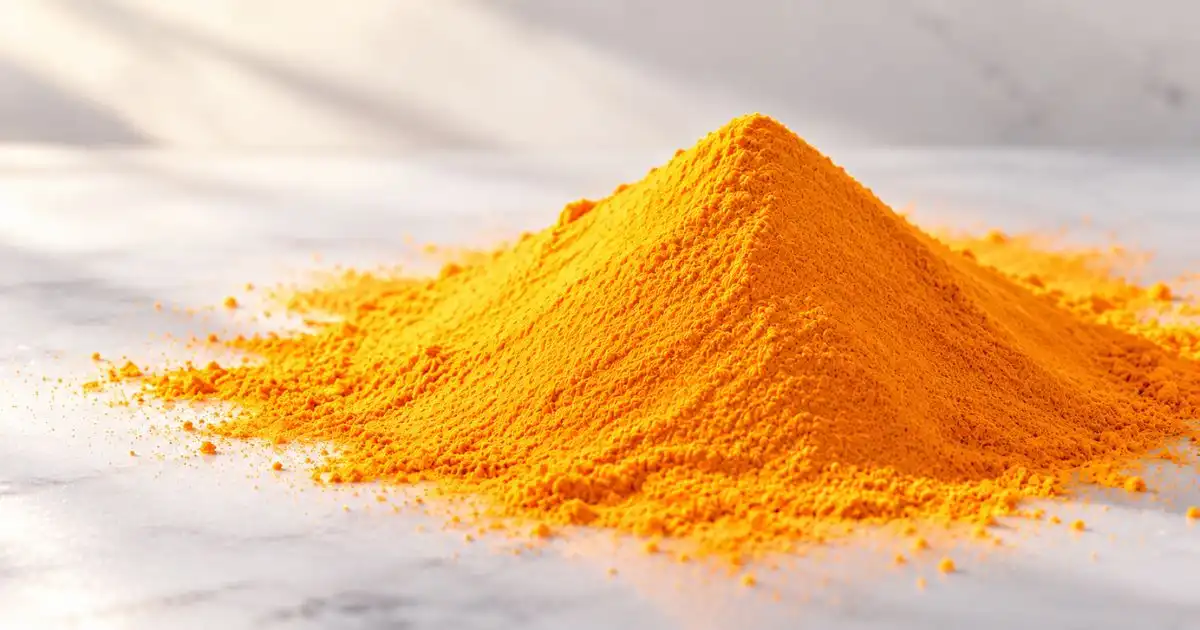
Natural Anti-Inflammatory and Skin-Soothing Properties
Formulators working on sensitive skin lines know how difficult it is to find an ingredient that soothes irritation without triggering secondary reactions. Marigold extract offers a well-documented answer. Its key bioactive classes flavonoids, triterpenoids, and saponins work through complementary pathways to reduce localized redness and transepidermal water loss.
Flavonoids and Cellular Protection
Flavonoids found in Tagetes erecta petals inhibit pro-inflammatory cytokine activity at the cellular level. In a 2020 review published in Molecules, flavonoid-rich botanical extracts demonstrated measurable reductions in IL-6 and TNF-α markers, both linked to skin sensitization. This makes the ingredient practical for eczema-adjacent, post-procedure, and barrier-repair product lines.
Triterpenoids and Skin Barrier Support
Triterpenoids in marigold extract preparations have been associated with collagen scaffold protection and improved keratinocyte regeneration. For B2B buyers developing moisturizers or post-treatment serums, this translates directly into a stronger product claim and a more defensible ingredient story on the label.
Marigold vs. Calendula: What Procurement Teams Should Know
Calendula officinalis (pot marigold) and Tagetes erecta (African marigold) are often confused but serve different market purposes. The table below clarifies the key differences:
| Feature | *Tagetes erecta* (Marigold) | *Calendula officinalis* (Calendula) |
|---|---|---|
| Primary Carotenoid | Lutein + Zeaxanthin | Beta-carotene |
| Primary Application | Eye health, skin antioxidant | Skin soothing, wound care |
| Lutein Concentration | Up to 90% (standardized) | Trace amounts |
| Market Positioning | Nutraceutical + functional cosmetic | Traditional herbal skincare |
Understanding this distinction helps procurement directors choose the right botanical for their specific end-use claims.
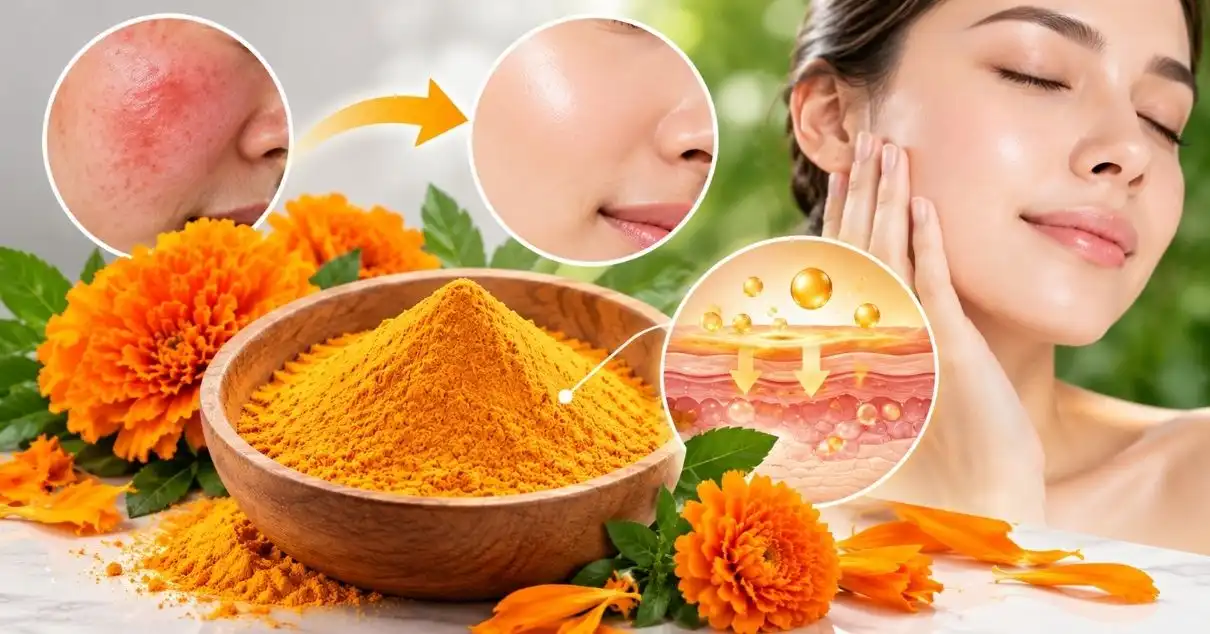
Potent Antioxidant Effects That Protect Skin Cells
UV radiation, blue light and wind are all free radicals that harm the skin and speed up the aging process. Lutein powder protects the O2 radicals (ROS) from damaging the collagen and the lipid membranes. A 2019 research published in the journal Nutrients discovered that participants who spent a lot of time in front of a screen saw less indicators of oxidative stress when they ate more lutein. This outcome is directly connected to the development of goods that may be placed on the skin or ingested.
Lutein as a Photoprotective Agent
Lutein takes in blue light with a wavelength of 400 to 450 nm. In the epidermis and macula of the skin, it works to protect it with a grid of cells. In order to stand out on store shelves, skincare brands that want to attract people who are tired of screens now use lutein from marigold extract.
Zeaxanthin's Complementary Role
It is mostly located in the central area of the macula and it removes singlet oxygen by using lutein. Nutritional companies should consider the lutein to zeaxanthin ratio . Scientific experiments that indicate eye safety normally employ a 5:1 ratio. 3. Yangge's lutein powder (5%~90% specification) helps formulators get the ideal combination.
Formulation Stability Considerations
Air, light, and heat can all be bad for lutein. Micro-encapsulation technology makes the product last longer and keeps the active ingredient's strength. When procurement QA teams look at a supplier, they should ask for stability data along with the COA. Yangge ships each batch with a third-party COA, such as COA-Lutein powder-YG20200912. This COA verifies the amounts of lutein and zeaxanthin, which were found using HPLC.
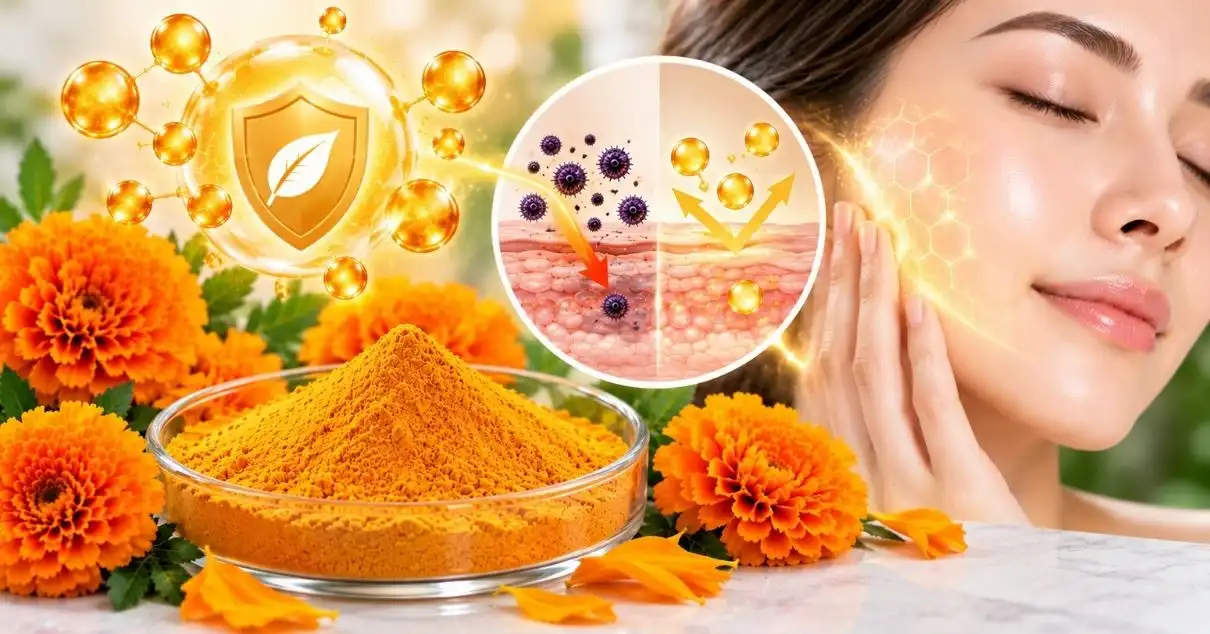
Eye Health Support Lutein and Zeaxanthin Concentration
The American Academy of Ophthalmology says that age-related macular degeneration (AMD) is the main reason why people over 50 lose their sight permanently. More than 11 million Americans have AMD. For good reason, lutein from marigolds is the best thing to put in supplements for eye health.
Clinical Evidence for AMD Prevention
People with a high risk of getting advanced AMD had a 25% lower chance of getting it if they took lutein and zeaxanthin pills. In the US market, this information is now used to back up claims about supplements for eye health. Lutein comes in two main forms: eye health pills contain 20% to 90% free-form (saponified) lutein, and functional candies contain 5% to 20% water-dispersible micro-encapsulated lutein. Marigold extract is the commercial source for both forms.
| Application | Recommended Lutein Form | Typical Specification |
|---|---|---|
| Eye health capsules | Free-form (saponified) | 20%–90% |
| Functional gummies | Water-dispersible micro-encapsulated | 5%–20% |
| Infant formula | Ester form (standardized) | 5%–10% |
| Functional beverages | Water-dispersible powder | 5%–20% |
Supply from a Dedicated Growing Base
Parts of Yangge's lutein powder come from a secret base in Yunnan, China, where marigolds are grown. The altitude, UV index, and mineral makeup of the earth in Yunnan make marigold flowers naturally have a lot of xanthophyll and bloom for a long time. This makes sure that the raw materials' quality stays the same from when they are harvested to when they are extracted.
Regulatory Readiness for Eye-Health Claims
Lutein from Tagetes erecta has a GRAS marking from the FDA, which means it can be used in a lot of different kinds of food. Full-chain tracking documents and making sure the product is non-GMO make the label review and regulatory filing process go more smoothly in the EU and US markets.
Versatility Across Product Formats and Formulations
One of the best business reasons to get lutein powder from marigold extract is that it can be used in a lot of different ways. Four different kinds of goods can be made from the same raw material with little work.
This part works in the following main ways:
- Encapsulated delivery methods as eye health capsules and softgels provide the maximum bioavailability of free-form lutein at a concentration of 20–90%. The orange-yellow powder works in gelatin or plant-based capsule shells.
- Functional gummies and chewables: Water-dispersible micro-encapsulated grades minimize the color bleeding and oxidation that normal lutein powder creates in high moisture matrixes. This is vital to the manufacture of gummy at scale.
Infant formula and pediatric nutrition. Ester-form lutein at 5-10% is utilized in infant formula worldwide. Yangge supports audit documents and passes the higher traceability standards of this category. - Functional beverages: Water-dispersible grades dissolve cleanly without sediment, enabling use in ready-to-drink eye health drinks and sports nutrition products targeting blue-light protection claims.
Supply Chain Reliability and Quality Assurance
Consistent potency across batches is not a given in the botanical extract industry. Lot-to-lot variation, agricultural residue risk, and undisclosed solvent use are real procurement concerns. A reliable marigold extract supplier must offer more than a competitive price sheet.
Full-Chain Traceability from Farm to Finished Powder
Yangge’s vertically integrated process from growing base in Yunnan to extraction, purification, and testing, ensures that each batch is accompanied by field records, extraction parameters, and potency data validated by HPLC. This comprehensive traceability record is very significant for baby formula customers who have to undergo mandated supplier audits.
Certifications That Matter in the US Market
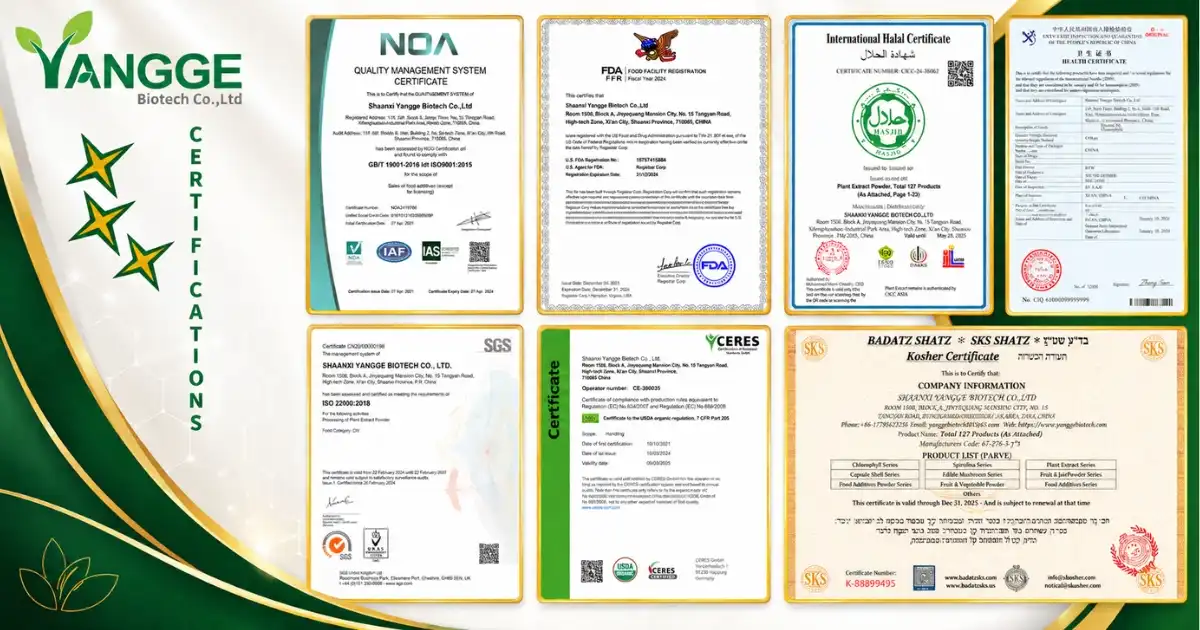
Yangge holds ISO, HACCP, Kosher, and Halal certifications, and the lutein powder meets FDA GRAS and Non-GMO standards. These credentials reduce the compliance burden for brands selling in regulated channels such as Amazon, Whole Foods, or hospital-grade supplement lines.
Flexible MOQ and Custom Specifications
Specifications 5% to 90% lutein by HPLC, available in free and ester forms with water-dispersible and micro-encapsulated alternatives. The range supports yearly purchase quantities of $50,000 to $800,000+ – catering to both fledgling firms and CDMO giants.
Conclusion
Marigold extract, when properly standardized and sourced, delivers measurable value across eye health supplements, functional foods, and topical skincare formulations. The combination of clinically supported lutein and zeaxanthin content, format flexibility, and regulatory-ready documentation makes it one of the most commercially practical botanical ingredients available today. For procurement teams building or reformulating eye-health or skin-protective product lines, the sourcing decision comes down to transparency, traceability, and specification depth — all areas where a vertically integrated supplier makes a material difference.
FAQ
What is the difference between lutein esters and free-form lutein?
Lutein esters are the natural form found in marigold petals lutein molecules bound to fatty acids. Free-form (saponified) lutein is produced by hydrolyzing those esters during processing. Free-form lutein is more commonly used in supplements where precise dosing is needed, while ester forms are used in infant formula and certain food applications. Bioavailability studies suggest both forms are absorbed effectively when consumed with dietary fat.
What lutein concentration is appropriate for eye health supplements?
Most clinically studied eye health formulas use 10–20 mg of free-form lutein per daily serving, corresponding to ingredient concentrations in the 20%–40% range. Yangge offers specifications from 5% to 90%, which allows formulators to build around their target dose without excessive filler.
Is Yangge's lutein powder suitable for infant formula?
Yes. Yangge supplies ester-form lutein at lower concentrations suitable for infant formula. Full audit support, traceability documentation, and third-party COAs are available to meet the compliance requirements of infant nutrition customers.
How is stability maintained during shipping and storage?
Lutein powder should be stored away from direct light, moisture, and high temperatures. Micro-encapsulated and water-dispersible grades offer additional protection in moisture-sensitive formats. Yangge provides stability data on request for each specification.
Partner With Yangge for Traceable, High-Purity Lutein Powder
You can be sure that Yangge Biotech is a real business that makes marigold extract. They grow their crops in Yunnan and have full-chain traceability. Their specifications range from 5% to 90% lutein by HPLC. Our team can help you with formulation, compliance, and monitoring needs from the first sample to the full production run. It doesn't matter if you are making eye health pills, useful sweets, or baby food. You can email us at info@yanggebiotech.com to get a sample or more information.
References
1. Bernstein, P.S., et al. "Lutein, Zeaxanthin, and meso-Zeaxanthin: The Basic and Clinical Science Underlying Carotenoid-Based Nutritional Interventions against Ocular Disease." Progress in Retinal and Eye Research, 2016.
2. Age-Related Eye Disease Study 2 (AREDS2) Research Group. "Lutein + Zeaxanthin and Omega-3 Fatty Acids for Age-Related Macular Degeneration." JAMA, 2013.
3. Abdel-Aal, E.S.M., et al. "Dietary Sources of Lutein and Zeaxanthin Carotenoids and Their Role in Eye Health." Nutrients, 2013.
4. Kaulmann, A., and Bohn, T. "Carotenoids, Inflammation, and Oxidative Stress — Implications of Cellular Signaling Pathways and Relation to Chronic Disease Prevention." Nutrition Research, 2014.
5. Couteau, C., and Coiffard, L. "Overview of Skin Whitening Agents and Antioxidant Botanicals Used in Cosmetic Formulations." Molecules, 2020.
6. Palombo, P., et al. "Beneficial Long-Term Effects of Combined Oral/Topical Antioxidant Treatment with the Carotenoids Lutein and Zeaxanthin on Human Skin." Skin Pharmacology and Physiology, 2007.

Based on your location and order quantity, you will have the opportunity to receive a limited time free shipping promotion!
Who we are
Popular Blogs