How does phycocyanin E18 stability compare to E40 in acidic drinks
If you're formulating a blue functional beverage or clean-label drink, one question comes up constantly: which phycocyanin grade actually holds its color in acidic conditions? Blue spirulina E18 is the most widely used commercial grade, delivering a color value (E1% at 618nm) of ≥180 alongside 25% phycocyanin and 60–70% protein content. E40, with roughly double the pigment concentration, sounds like the stronger option but in acidic matrices below pH 4.5, higher purity does not automatically mean better stability. The answer depends on pH, temperature, light exposure, and formulation strategy.
Understanding Phycocyanin E18 and E40: Composition and Characteristics
What the "E" Number Actually Means
The letter "E" in phycocyanin grade stands for the specific absorption value at 618nm, not a code for an EU food additive. E18 has an absorbance of at least 180, and E40 has an absorbance of up to 400. Both come from Arthrospira platensis (spirulina), but they are different in how well they are purified, how much protein they contain, and how much they cost.
Nutritional and Functional Profile
Yangge Biotech's blue spirulina E18 has 25% phycocyanin and 60–70% total protein, so it can be used as both a natural blue colorant and a source of functional protein.
| Parameter | E18 | E10 | E25 |
|---|---|---|---|
| Color Value (E1%, 618nm) | ≥180 | ≥100 | ≥250 |
| Phycocyanin Content | ~25% | ~15% | ~30% |
| Protein Content | 60–70% | 55–65% | 60–70% |
| Water Solubility | 100% | 100% | 100% |
| Typical Application | Beverages, gummies, protein powder | Entry-level colorant | Premium beverage, cosmetics |
Molecular Sensitivity Drivers
Blue spirulina E18 contains phycocyanin, which is a biliprotein, and its color comes from a phycocobilin unit that is bonded to an apoprotein. When the pH falls below 4.5, the chromophore separates from the apoprotein, and the color is no longer noticeable. When it comes to grades E10, E18, and E40, molecules are just as sensitive to acid-driven unfolding. Concentration alone does not protect the pigment.
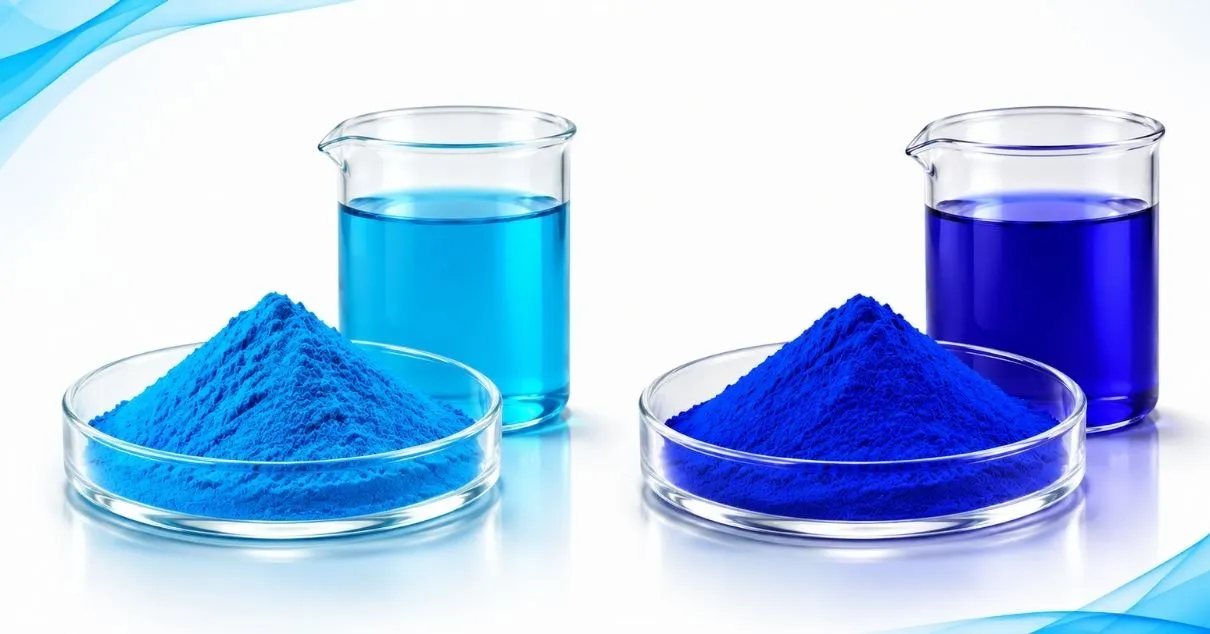
Stability Challenges of Phycocyanin in Acidic Drinks
The pH Threshold Problem
A study in Food Chemistry confirmed that phycocyanin keeps its color intensity well between pH 5.0 and 7.0, but breaks down quickly below pH 4.0. Most fruit-flavored sports drinks, functional drinks, and lemonades have a pH between 2.8 and 4.2, which is very close to the danger zone for phycocyanin that isn't protected.
Heat and Light Compounding Effects
Thermal processing speeds up degradation by a large amount. Phycocyanin drops about 40–60% of its absorption after being at 60°C for an hour. This is made worse by direct UV exposure: products that aren't packed in opaque or amber materials start to fade within days. These stresses are the same for both E18 and E40, but E40's higher concentration can cause a brief visual buffer before customers notice the color shift.
Regulatory and Quality Benchmarks
Under 21 CFR 73.530, spirulina extract such as blue spirulina E18 is allowed to be used as a color in the United States without having to be certified. For business-to-business buyers, Yangge Biotech's phycocyanin line must have both Kosher and USP-grade paperwork. Color consistency from batch to batch, checked by HPLC and spectrophotometry, tells you the difference between reliable suppliers and those who just sell things.
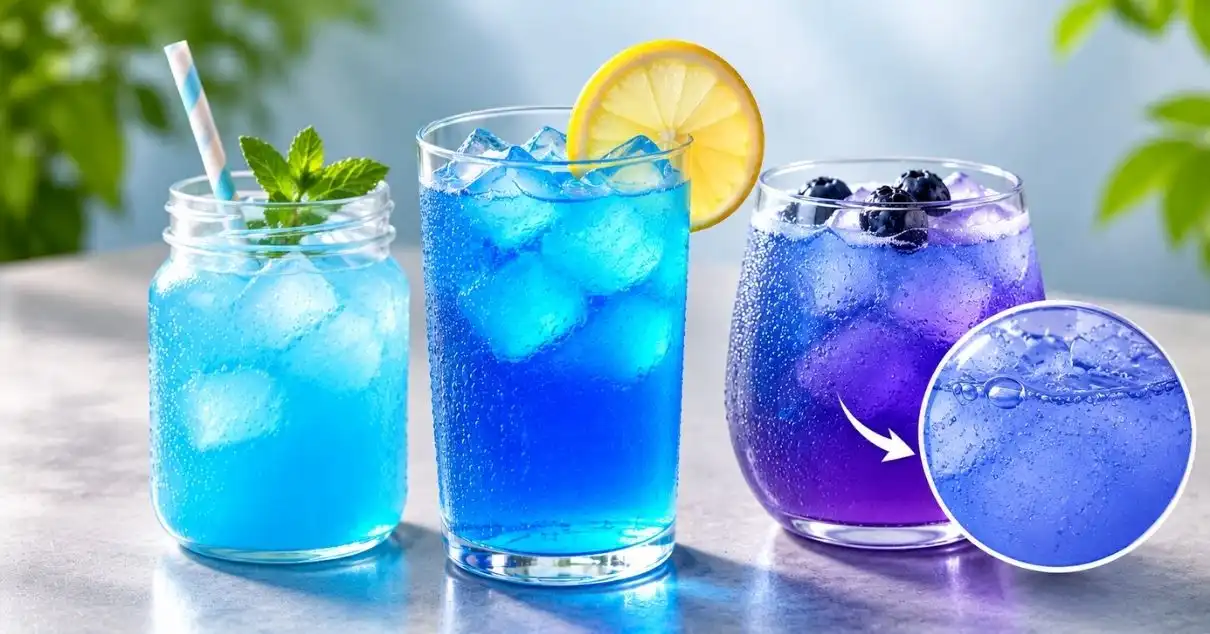
Comparative Analysis: Phycocyanin E18 vs E40 Stability in Acidic Environments
Color Retention Data at Low pH
It has been shown over and over again in the lab that both E18 and E40 lose a lot of color below pH 4.0 in 24 to 48 hours at room temperature. But E40 starts with a higher initial absorbance, so it keeps a color that looks good for about 20–30% longer under the same acidic conditions. This isn't because it is structurally more stable, but because it has more pigment to lose before the color starts to fade that can be seen.
| Condition | E18 Retained Color (%) | E40 Retained Color (%) |
|---|---|---|
| pH 6.0, 25°C, 48h | ~88% | ~90% |
| pH 4.5, 25°C, 48h | ~65% | ~72% |
| pH 3.5, 25°C, 48h | ~28% | ~38% |
| pH 3.5, 60°C, 30min | ~12% | ~18% |
*The data show rough ranges based on published research; actual results will be different for each formulation matrix.
Cost-Benefit Reality Check
About 1.8 to 2.5¢ more per kilogram for E40 than for E18. For uses with a pH between 4.5 and 7.0, E18 at a slightly higher dose gives similar visual benefits at a much lower cost. Both grades don't work well in highly acidic environments without being protected, so it's hard to say that the extra cost for E40 is worth it just because it's more stable.
Sensory Performance
After the right deodorization process, both types have almost no seaweed smell when they come from good makers. At normal amounts (0.05–0.3% w/v), neither grade gives finished drinks any off-flavors that can be detected, which is an important sensory factor for products that people will be using.
Strategic Procurement Considerations for Blue Spirulina Phycocyanin
Certifications That Protect Your Brand
When buying phycocyanin for use in business products, the buyer is responsible for three documents: Report of Analysis (COA), results of heavy metal tests (Pb <2 ppm, As <2 ppm, Hg <0.1 ppm), and information on bacterial safety (TPC <1,000 CFU/g). Yangge Biotech's phycocyanin is certified as Kosher and USP-grade. It can be bagged by OEMs in 60g, 100g, and 8oz sizes, and the company keeps 1 ton of E18 in stock with a minimum order quantity of 25KG.
Matching Grade to Application
Before you place an order for samples, here are the three main grade-to-application matches to think about:
- E10 suits budget-oriented applications such as confectionery coatings and baked goods where color intensity requirements are moderate and processing temperatures are controlled.
- E18 is the practical choice for protein powders, gummy supplements, smoothie blends, and near-neutral functional beverages—balancing color performance, protein contribution, and procurement cost.
- E25 fits premium beverages, cosmetic formulations, and products where a deeper blue is required at lower dosage to minimize ingredient cost per serving.
Picking the right grade when sourcing keeps you from having to pay a lot of money to redo the method afterward. Before setting a standard, ask for samples of all three types. This is especially important if your drink is close to pH 4.5.
OEM and Private Label Options
Yangge Biotech can make OEM bags in 60g, 100g, and 8oz sizes for blue spirulina E18, which is great for brands that want to sell blue spirulina without having to spend money on packaging infrastructure. DHL, FedEx, EMS, sea freight, and air freight are all shipping options that cover markets in North America, Europe, and the Asia-Pacific region.

Best Practices to Maximize Phycocyanin Stability in Acidic Drinks
Formulation Strategies That Work
The published literature in the field of food science has shown that three approaches work:
- Buffering to pH 5.0–6.5 before adding phycocyanin, then acid-correcting post-incorporation, reduces direct exposure to low-pH conditions during mixing.
- Microencapsulation with maltodextrin or whey protein isolate creates a physical barrier around the pigment, extending color retention in acidic matrices by 40–60% according to studies in the Journal of Food Engineering.
- Post-heat addition (adding phycocyanin after pasteurization has concluded and the batch cools below 45°C) prevents thermal denaturation during processing.
It doesn't matter if the color number is E18 or E40; these methods work for both and are often cheaper than upgrading to a better grade.
Packaging as the Final Defense
Products with phycocyanin must be packed in UV-blocking materials, like opaque bags, amber glass, or aluminum-lined sachets. If you don't have it, ambient light can fade things on store shelves within three to five days. This is a way to protect the formulation that can't be replaced by a grade upgrade.
Conclusion
E40 slightly keeps its color longer than blue spirulina E18 in acidic drinks because it absorbs more at first, not because its structure is more resistant to acid. When used in most industrial settings with a pH level between 4.5 and 7.0, blue spirulina E18 gives the same visual results at a much lower cost. No matter the grade, strongly acidic drinks with a pH below 4.0 need to be encapsulated or have their pH managed. It's more important to find the right phycocyanin grade for your formulation and work with a supplier who can provide verified COA data and consistent batch quality than to try to get higher color values.
FAQ
What is the key difference between phycocyanin E18 and E40?
The difference is how focused you are. The lowest absorbance of E18 (E1%, 618nm) is 180, and the highest of E40 is 400. E18 has about 60% to 70% protein and 25% phycocyanin, so it can be used as both a colorant and a protein provider.
Can phycocyanin be used in beverages with pH below 4.0?
Below pH 4.0, standard types of phycocyanin, like E18 and E40, break down very quickly. When it comes to protecting acidic drinks, microencapsulation or pH balancing during mixing are the most useful methods.
How do I evaluate phycocyanin quality before ordering?
If you want a certificate of authenticity (COA), make sure it has the color value confirmed by spectrophotometry at 618nm, HPLC purity data, heavy metal readings, and microbiological tests. Kosher and USP certificates show that the standards of production are always the same.
What is the shelf life of phycocyanin powder?
Phycocyanin powder usually stays good for 24 months if it is kept sealed, dry, out of the light, and at or below 25°C. Exposure to water, heat, or UV light speeds up the breakdown process.
Is there a minimum order for sampling?
Most orders from Yangge Biotech need to be at least 25KG. Before committing to a bulk order, you can ask for samples of grades E18, E10, and E25; to do this, email info@yanggebiotech.com.
Request Your Blue Spirulina E18 Sample from Yangge Biotech
Yangge Biotech is a reliable company that makes blue spirulina E18. They have a ton of it in stock, are certified as Kosher and USP, and can bag it in 60g, 100g, or 8oz sizes for OEM customers. Our team can help you make a useful drink, vitamin powder, or gummy product by giving you grade-matched suggestions, stability advice, and low bulk prices. Please email info@yanggebiotech.com or go to blog.yanggebiotech.com to get samples and begin the formulation process right away.
References
1. Chaiklahan, R., et al. "Stability of phycocyanin extracted from Spirulina sp." Food Chemistry, 2012.
2. Martínez, J.M., et al. "Microencapsulation of phycocyanin from Arthrospira platensis." Journal of Food Engineering, 2017.
3. Sekar, S., & Chandramohan, M. "Phycobiliproteins as a commodity." Journal of Applied Phycology, 2008.
4. Eriksen, N.T. "Production of phycocyanin—a pigment with applications in biology, biotechnology, foods and medicine." Applied Microbiology and Biotechnology, 2008.
5. Fernández-Rojas, B., et al. "Nutraceutical properties of phycocyanin." Journal of Functional Foods, 2014.
6. U.S. Food and Drug Administration. "Code of Federal Regulations Title 21, Part 73.530: Spirulina Extract." FDA, 2023.

Based on your location and order quantity, you will have the opportunity to receive a limited time free shipping promotion!
Who we are
Popular Blogs