TOP 5 Carbon Black E153 Uses for Food Packaging Manufacturers
Carbon Black E153 Powder is a high-purity black food colorant widely used to provide an intense, uniform black appearance in food, beverage, confectionery, and other suitable applications. Its fine powder form allows convenient handling and dispersion during formulation, making it suitable for manufacturers looking for consistent coloring performance. Yangge Biotech supplies Carbon Black E153 Powder for B2B applications with quality-focused production and reliable bulk supply. Contact us for product specifications, COA, packaging options, pricing, and bulk orders at info@yanggebiotech.com.
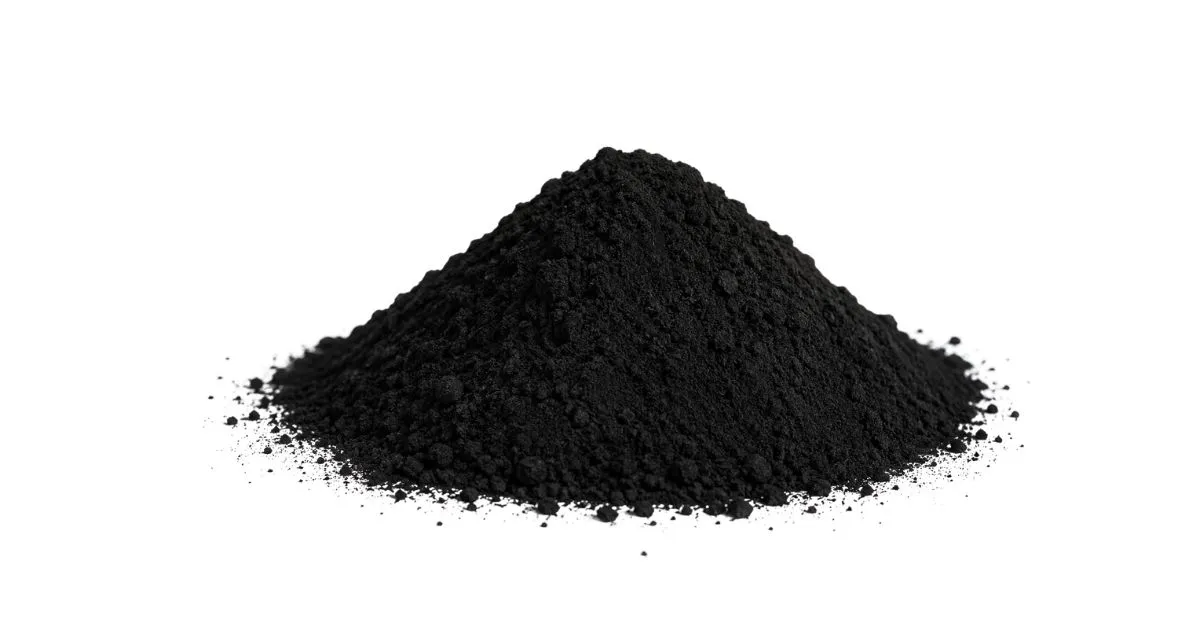
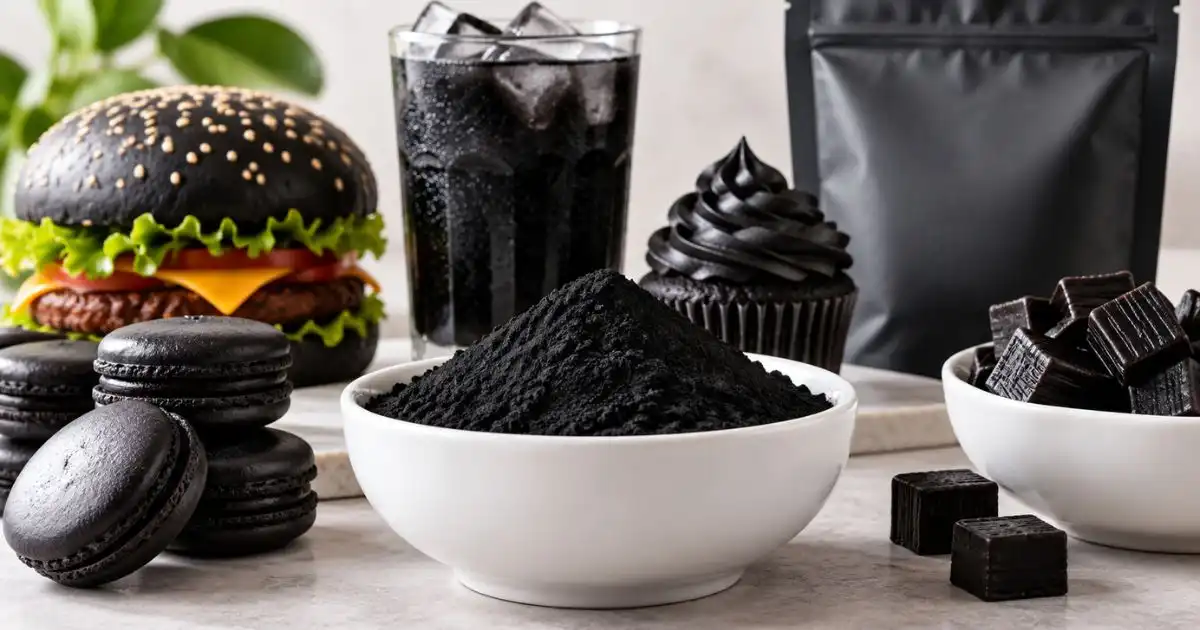
Carbon black E153, also known as vegetable carbon or vegetable black, is one of the most versatile black colorants available to food packaging manufacturers today. Derived from the carbonization of natural materials like coconut shells, this inert black powder delivers intense, stable color without altering taste or aroma. Yangge's Vegetable Carbon Black E153 meets EU E-number standards, carries Kosher and Halal certification, and passes rigorous PAH and heavy metal testing making it a reliable choice for manufacturers across North America, Europe, and Southeast Asia who demand both performance and compliance.
Enhancing Food Packaging Aesthetics with Vegetable Carbon Black
What people buy at the store shelf is based on how it looks. A 2022 Mintel study on global food trends found that people aged 18 to 45 strongly associate high-end products with bright, dramatic package colors, especially black. You can get a deep, even jet-black tone from the Carbon Black E153 color. It doesn't fade in heat, UV light, or long-term storage.
Color Stability That Outlasts the Competition
If you mix synthetic black dyes with acidic substances or heat them up, they change color. Since Carbon Black E153 is a spread pigment and not a liquid dye, it stays solid. It's made up of more than 95% carbon by weight when it's dry, which means it has a lot of covering power at low doses—usually 0.1% to 0.5% is enough for deep black tones in EU-approved categories. Companies in North America and Europe often use vegetable carbon for high-end candy lines, Halloween candy boxes, and specialty baked goods because it makes sure that the colors stay the same from batch to batch.
| Property | Vegetable Carbon Black E153 | Synthetic Black Dye |
|---|---|---|
| Heat stability (>180°C) | Excellent | Moderate |
| UV fade resistance | Excellent | Poor–Moderate |
| Clean label compatible | Yes | No |
| Halal/Kosher certified | Yes | Varies |
Improving Barrier Properties and Packaging Durability
Carbon black is useful for many reasons besides its appearance. The Carbon Black E153 particles work with the polymer matrix to make the films stronger when they are mixed in with polymer-based packaging films. Material science studies done by outside groups have shown that adding small amounts of carbon black to polyethylene and polypropylene films makes them stronger and less likely to tear.
UV Absorption and Shelf Life Extension
Because it absorbs UV light, Carbon Black E153 is useful for foods that get damaged easily by light, like oils, dairy-based snacks, and pet food. Because of the color, UV light can't get through the package wall. This means that fats and vitamins inside the package break down more slowly. Foods can stay fresh longer without having to be modified thanks to this feature. This saves mid-sized businesses a lot of money that they can put toward research and development.
People in the business world who care about both how something looks and how well it works can save a lot of money by picking an addition that deals with several packing issues at once.
Carbon Black E153 as a Food-Safe Additive: Safety and Compliance
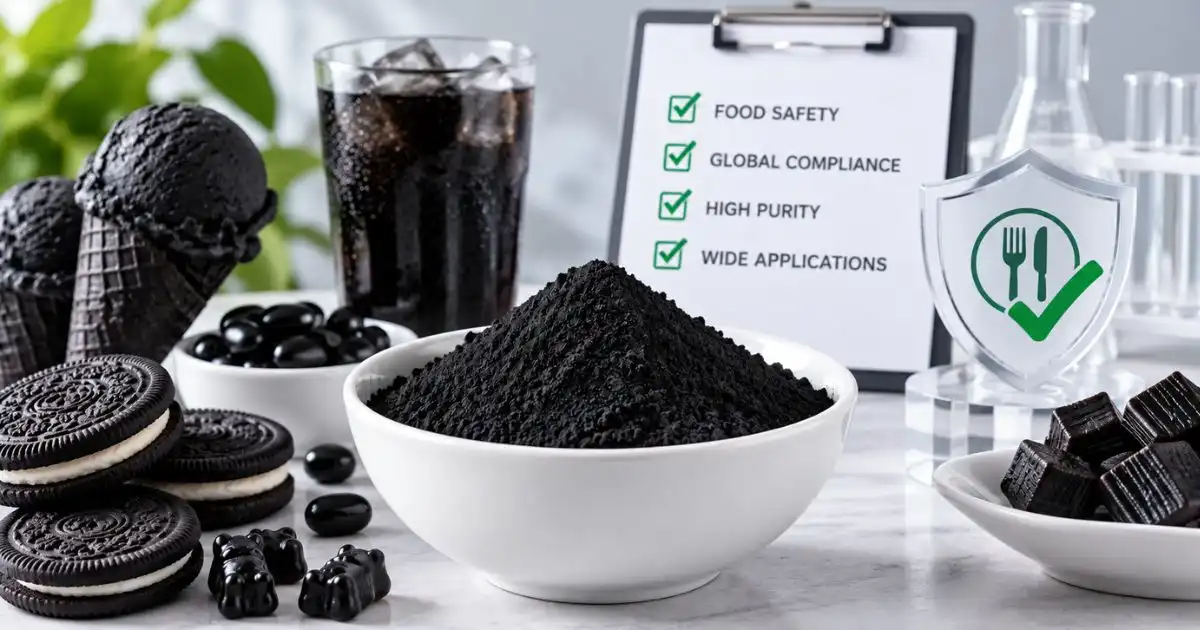
To get food items, regulators need to trust businesses that can't be hacked. The EU Commission Regulation (EU) No 231/2012 makes it clear what the quality standards are for Carbon Black E153. These standards include important limits for Polycyclic Aromatic Hydrocarbons (PAHs). To get rid of the risk of cancer that comes with not carbonizing properly, the amount of benzo(a)pyrene must not be more than 50 µg/kg. Also, the rules for heavy metals are very strict.
The most important things that buying teams should look for in an E153 provider before they approve them are the following:
- PAH (Benzo(a)pyrene): Must be less than 50 µg/kg, which must be shown by testing in a reputable lab before every shipment.
- Arsenic: less than 3 mg/kg, as shown by an ICP-MS test. This shows that the raw materials do not contain any dangerous metals.
- Lead: levels must be less than 2 mg/kg in order to enter the EU market, and private-label stores in North America are asking for this level of safety more and more.
- Loss on drying: Less than 12% is lost when it dries, which affects how well the color loads and how it works in machine lines.
- Sulfated ash: less than 4%, which means it is mostly carbon and doesn't have many chemical impurities that could get in the way of spreading.
If you don't follow these rules, you could get fined. But they also protect customers and keep businesses from having to pay lots of money for refunds. International labs check and test Yangge's Vegetable Carbon Black E153 before every shipment. You can ask for a full Certificate of Analysis (COA) if you need one. When you think about it, Carbon Black E153 is totally okay in the EU and Canada, but not yet in the US. It can't be used as a food color additive in situations where it comes into direct contact with food, according to the US Food and Drug Administration (FDA). Companies that want to sell goods in the US should talk to their legal team about what other products they could use instead of SKUs that are only sold in the US.
Carbon Black E153 in Printing Inks and Decorative Coatings
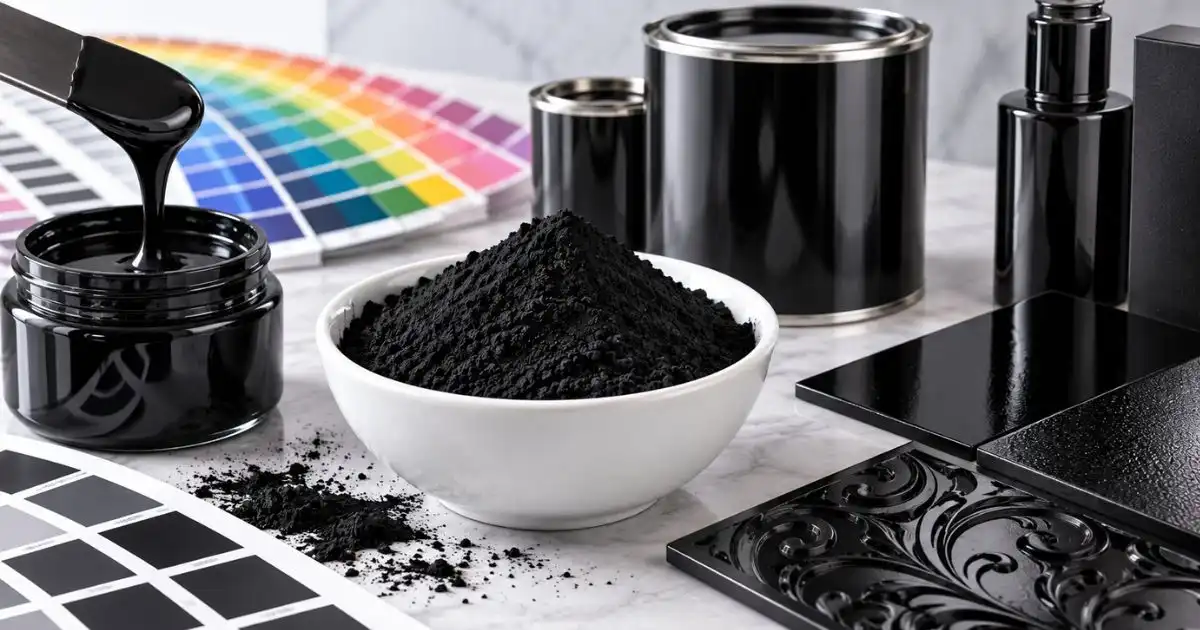
To put high-resolution pictures on food packages, you need pigments that stay sharp while they are being printed, moved around in the supply chain, and put on show in shops. Animal-based and plant-based printing inks both work really well with Carbon Black E153 vegetable carbon. This is because its very small particles (less than 5 µm) cover a lot of surface area and keep the ink from sticking together.
It is better for printing on packaging films with flexography and gravure to use inks that are based on Carbon Black E153 than organic black pigments because they don't smudge as easily and last longer. Pet food bags are full and stacked automatically, so there is a lot of pressure when writing on them. This makes the ink last longer.
| Application | Recommended Form | Key Benefit |
|---|---|---|
| Flexographic ink | Dispersion (water/glycerin base) | No dusting, even flow |
| Gravure printing | Micronized powder or paste | High opacity, sharp detail |
| Matte decorative coating | Pre-dispersed compound | No binder reactivity, clean finish |
| Pet food bag printing | Paste dispersion | Abrasion resistance during filling |
Asian and North American businesses can buy Yangge's vegetable carbon in two different forms: bulk powder and customized dispersion. With MOQ and FOB/CIF delivery options that are easy to change, the company can meet the needs of mid-scale manufacturing schedules.
Sustainable and Cost-Effective Procurement of E153
The buying managers of medium-sized food companies are always balancing the cost of their raw materials with the quality of those materials. Carbon Black E153 eases a lot of this stress because it works well for a low price compared to other black colorants. The cost per unit of color is still fair even if you buy approved food-grade material. This is because the effective dose rates are low, often less than 0.5% by weight.
It's not just about price when it comes to sustainable shopping. Yangge always has 5 tons of Kosher/USP Grade vegetable carbon black on hand and ready to be sent out right away. The company gets its raw materials from a plan of sustainable, traceable production that gives them direct access to farming communities. This helps with tracking food from the farm to the table and meets the needs of clean-label checks and ESG supplier ratings that big retail buyers are starting to ask for more and more. Just as important is how reliable logistics are. Yangge delivers goods on time and gives you the choice of FOB or CIF delivery. They also offer different types of packing and customer service that can handle customs and compliance paperwork in a number of different markets.
Conclusion
One thing that Carbon Black E153 can be used for is more than one thing. It gives a material a deep black look, makes it strong, protects it from UV light, keeps prints clear for a long time, and meets all the rules. The best way to make sure the quality of the final product meets market standards is to work with a certified and tested supplier. This is true whether you're making Halloween candy bags, high-end pet food bags, or decorative coatings for candy boxes.
FAQ
Q1: Is vegetable carbon E153 the same as activated charcoal?
A: They don't, though. They both start with the same tools, but their end goals are different. Micronized Carbon Black E153 makes pigments work better and spread color more evenly. The most surface area for binding is found on activated charcoal. If you don't mean to, this can take away nutrition or tastes from food. What you end up with might not work the way you want it to if you use activated charcoal instead of a colorant.
Q2: How do I prevent dusting when handling E153 powder in production?
A: Carbon Black E153 doesn't have a high bulk density, so the powder is easy to spread in the air. There is no chance of dust or cross-contamination on the production floor when you use paste or liquid dispersion forms that have already been spread out. These can be based on water, glycerin, or syrup.
Q3: What dosage rate achieves deep black color?
A: When EU rules allow it, Carbon Black E153 is fine quantum satis (as needed). Most of the time, 0.1% to 0.5% by weight is enough to get deep black tones for food and packaging coating.
Q4: Will E153 stain processing equipment?
A: This is because Carbon Black E153 is not a color but an opaque pigment, which means it does not stick to items directly. When you use an alkaline detergent to clean normally, the residue comes off well and there are no stains that last a long time.
Partner with Yangge for Verified Carbon Black E153 Supply
Yangge Biotech is a trustworthy company that sells Carbon Black E153. They keep Vegetable Carbon Black E153 in stock, which is gluten-free, kosher, halal, and allowed by ISO. We make it easy for you to find a high-performance black colorant that meets all of your needs for your next production run by giving you free 10–30g samples for testing, COAs that have been tested in foreign labs, and flexible FOB/CIF delivery.Contact us or feel free to email us at info@yanggebiotech.com to get your sample right away.
References
1. European Commission. Commission Regulation (EU) No 231/2012 Laying Down Specifications for Food Additives. Official Journal of the European Union, 2012.
2. JECFA (Joint FAO/WHO Expert Committee on Food Additives). Compendium of Food Additive Specifications: Vegetable Carbon (E153). FAO/WHO, 2019.
3. Mintel Group Ltd. Global Packaging Trends: Color and Consumer Perception in Food Retail. Mintel, 2022.
4. European Food Safety Authority (EFSA). Re-evaluation of Vegetable Carbon (E 153) as a Food Additive. EFSA Journal, 2012.
5. Kirwan, M.J., & Strawbridge, J.W. Plastics in Food Packaging. Blackwell Publishing / Food and Beverage Packaging Technology, 2003.
6. Brydson, J.A. Plastics Materials. 7th ed. Butterworth-Heinemann, 1999.

Based on your location and order quantity, you will have the opportunity to receive a limited time free shipping promotion!
Who we are
Popular Blogs