Natural vs Synthetic Astaxanthin: Key Differences
Astaxanthin Powder from Yangge Biotech is a premium natural carotenoid ingredient derived from Haematococcus pluvialis. With its fine powder form and rich red color, it is suitable for dietary supplements, functional foods, beverages, sports nutrition, cosmetics, and animal nutrition. Available for bulk supply and OEM/ODM solutions.
Contact us: info@yanggebiotech.com for samples, specifications, pricing, and customized solutions.
When sourcing premium carotenoid ingredients for anti-aging supplements or high-end skincare lines, understanding the divide between natural and synthetic Astaxanthin becomes paramount. Natural astaxanthin, predominantly extracted from Haematococcus pluvialis microalgae, demonstrates a distinct 3S,3'S stereoisomer configuration that delivers significantly higher bioavailability and antioxidant potency compared to its chemically synthesized counterparts.
This structural difference translates directly into measurable clinical outcomes, regulatory positioning, and ultimately, the market perception of your finished products. Throughout this guide, we'll examine the technical, commercial, and regulatory factors that should inform your procurement strategy when choosing between these two forms.
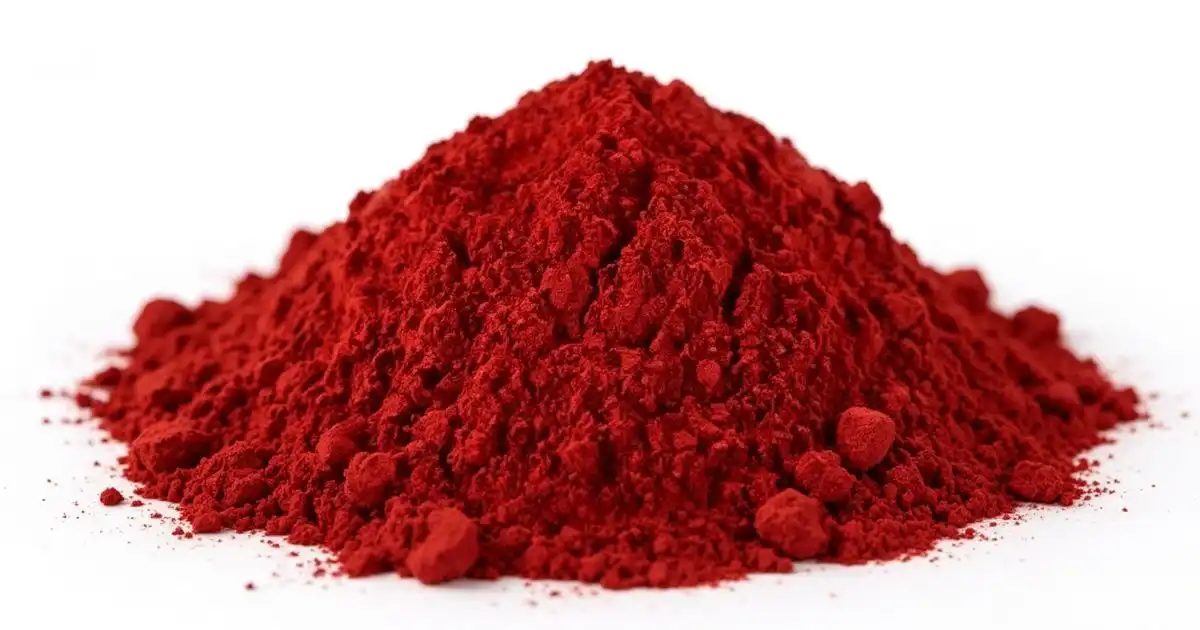
Understanding Astaxanthin: Definition and Core Properties
Astaxanthin is a xanthophyll carotenoid that is unique in its power to reduce reactive oxygen species across cellular membranes. The chemical formula for C40H52O4 is made up of a conjugated polyene chain and two end ring structures with hydroxyl and keto groups on either side. This allows the molecule to cross all cell membranes. This special placement protects against oxidative damage from both inside and outside sources at the same time.
Natural Sources and Extraction
Haematococcus pluvialis is a watery microalgae that builds up Astaxanthin levels that reach 3–5% of its dry biomass when it is stressed. Controlled photobioreactors are used for cultivation. Lack of nutrients and intense light cause Astaxanthin biosynthesis as a defense mechanism. The lipophilic substance is then separated using supercritical CO2 extraction, while its natural esterified form is kept. This makes oleoresins that are usually standardized between 5 and 10 percent concentration.
Marine sources, like krill, salmon, and shrimp, have smaller amounts but show how bioaccumulation trends change over time. When it comes to large-scale uses, industrial mining from these sources is still not as cost-effective as growing algae.
Synthetic Production Methods
Chemical synthesis routes use petrochemical starting materials in a series of reactions that include Wittig coupling and oxidation steps. This process creates a racemic mixture with several stereoisomers, mostly 3R,3'R and 3R,3'S forms, along with the naturally preferred 3S,3'S form. The solid powder that is made doesn't have the esterification pattern that you'd find in natural sources. This changes both the powder's structure and the way cells take it in.
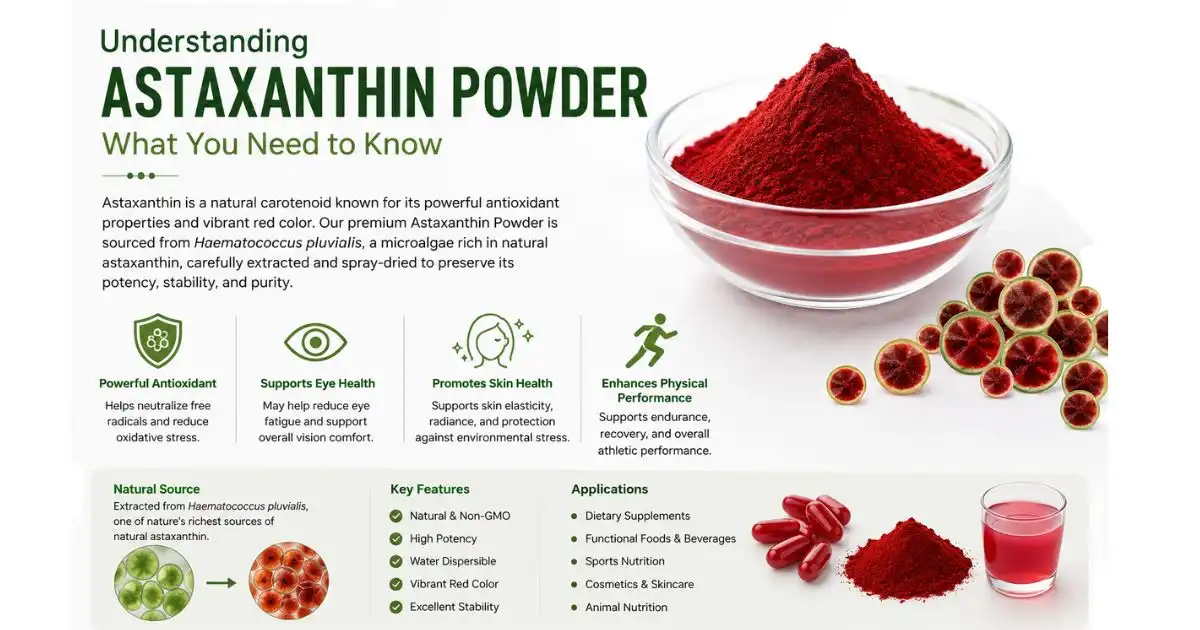
Key Differences Between Natural and Synthetic Astaxanthin
These two groups are fundamentally different because of their molecular architecture, which leads to different performance characteristics in terms of formulation stability, biological activity, and regulatory classification.
Stereochemistry and Bioavailability
Comparative bioavailability studies have shown that the 3S,3'S stereoisomer structure found only in natural sources leads to 20–40% higher plasma amounts after oral treatment. This better absorption happens because intestine carotenoid transporters recognize them more strongly, and they have a strong preference for stereospecific binding. Astaxanthin in nature mostly exists in diesterified and monoesterified forms that are linked to fatty acids. These chemical arrangements make it easier for micelles to form during absorption.
Synthetic variants with mixed stereoisomers have lower transporter affinity, which means they are less bioavailable in the body even when the dose is the same. The fact that manufactured Astaxanthin is free (not esterified) makes it even harder for it to join with lipid carriers during absorption in the gut.
Antioxidant Capacity and Biological Activity
The ORAC (Oxygen Radical Absorbance Capacity) assay used in the lab shows that natural Astaxanthin is about 6,000 times more powerful as vitamin C and 550 times more powerful than vitamin E as an antioxidant. This amazing ability comes from the molecule's long chain of conjugated double bonds and its perfect placement within membrane structures.
In clinical studies that looked at skin photoprotection, muscle recovery, and cardiovascular signs, taking natural Astaxanthin supplements always showed better results. It builds up more easily in target tissues, like retinal tissue and skin layers, which is directly linked to the 3S,3'S configuration's higher accessibility and cell retention.
Synthetic forms still have antioxidant properties, but they are not as effective when compared to natural forms. This is because the synthetic forms don't have the same stereoisomer variability or the naturally occurring esterification patterns that keep the molecule stable during storage and metabolism.
Regulatory Status and Market Positioning
Astaxanthin that comes from Haematococcus pluvialis is generally thot to be safe (GRAS) in the US and has been approved as a novel food in all of Europe. These approvals from the government cover uses in food, drinks, and health supplements, with daily limits set at 12 mg for people. Algal sources are easy to get certified as Kosher or Halal, which meets the needs of certain markets.
Synthetic Astaxanthin has to deal with stricter rules in high-end markets. The European Food Safety Authority only allows it to be used for aquaculture feed, which makes it very hard to use for food that people eat. Label claims like "naturally sourced" are strongly preferred by consumers, which helps brands stand out in the anti-aging and health areas that are very competitive.
| Parameter | Natural Astaxanthin | Synthetic Astaxanthin |
|---|---|---|
| Primary Stereoisomer | 3S,3'S (more than 95%) | Mixed (3R,3'R / 3R,3'S / 3S,3'S) |
| Esterification | Both di- and mono-esters | Formless |
| ORAC Value | 2,822,200 µmol TE/g | 1.5 million to 2 million µmol TE/g |
| Bioavailability | High (absorption in a specific way) | Moderate (less affinity for transporters) |
| Regulatory Status (US) | OK with GRAS | Not many applications |
| Regulatory Status (EU) | Novel food okayed | Mostly feed-grade |
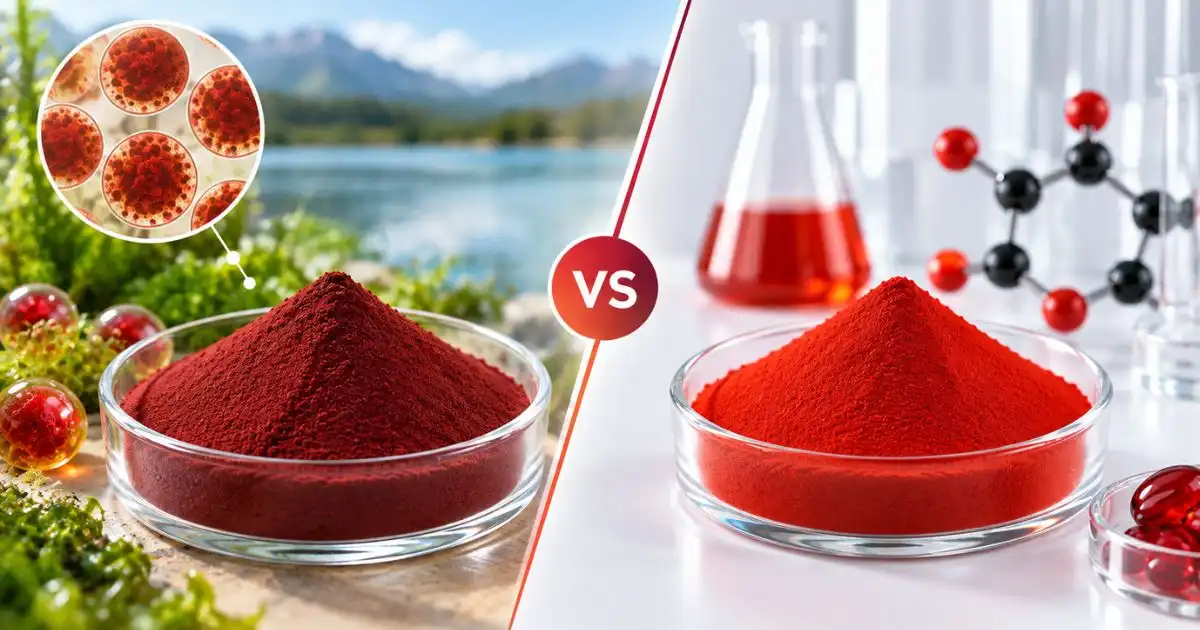
Procurement Considerations for B2B Buyers
To find trustworthy Astaxanthin suppliers, you need to carefully look at a lot of different technical and business factors. The first step in quality control is to make sure that the source material is real. This is done using HPLC analysis, which measures both concentration and stereoisomer composition. For natural goods, certificates of analysis should list the 3S:3'S ratio; if the number is higher than 95%, it means the material is of a high quality.
Certification and Compliance Framework
Premium providers keep their ISO 22000, HACCP, and GMP licenses, which show that they handle quality in a planned way during the growing, extraction, and packaging processes. Organic certification from the USDA or the EU adds value for brands that want to position themselves as having clean labels. Testing by third-party, independent labs makes sure that the levels of heavy metals, microbes, and pesticides are accurate. This is especially important when getting algal biomass from places where environmental monitoring isn't always consistent.
Traceability paperwork that connects batches of finished powder to specific cultivation batches helps with regulatory checks and quick responses to quality questions. Digital tracking systems let us keep full openness from the farm to the plant, making sure that every shipment of our Haematococcus pluvialis extract powder comes with records that can be checked to see where it came from.
Pricing Dynamics and Supply Chain Stability
Natural Astaxanthin usually costs between $800 and $2,500 per kilogram, depending on the concentration (1–10%) and certification level. This is because growing and extracting it takes a lot of time and resources. We keep a supply of Kosher and USP-grade Astaxanthin powder at a 10% level in stock, so formulators can start working on new products right away without having to wait the usual 8–12 weeks.
Synthetic options cost between $200 and $600 per kilogram and are cheaper in situations where there are no rules or where changes in bioavailability don't have a big effect on how well the final product works. Much lower production costs are due to simpler chemical synthesis requirements compared to biological growth needs.
Concerns about supply reliability are centered on how easily algae farming can be contaminated and how production changes with the seasons. These risks can be reduced by working with sellers who have extra production sites in different parts of the world. We can make more than one ton of 10% Astaxanthin powder every month, thanks to steady biomass supply deals with approved farms.
OEM and Private Label Capabilities
More and more, the nutraceutical and cosmetics industries want turnkey solutions that go beyond just providing raw materials. Thru integrated production relationships, suppliers that offer full OEM services can turn raw Astaxanthin powder into softgels, tablets, capsules, and gummies that are ready for the market. This vertical integration cuts down on time to market and makes sure that the formulation is always the same.
As an OEM company, we can make unique superfood blends that include Astaxanthin and antioxidants that work well together, such as vitamin C, vitamin E, and coenzyme Q10. These formulations work together to fight aging in a way that is specific to each procedure. Private label production starts with minimum orders of 5,000 units. This means that mid-sized brands can get access to high-quality Astaxanthin goods when they want to get into the competitive health market.
Application Suitability: Which Astaxanthin Fits Your Industry Needs?
Based on legal limits, bioavailability needs, and customer standards, the best Astaxanthin to use is chosen based on industry-specific needs. Understanding these application-specific factors makes formulating and positioning strategies in the market easier.
Nutraceuticals and Dietary Supplements
Natural Astaxanthin is preferred by high-end supplement brands because it is known to improve bioavailability and has a clean label appeal. The usual daily dose is between 4 and 12 mg, which is given in softgel capsules that keep the photosensitive carotenoid from breaking down. When you mix Astaxanthin with omega-3 fatty acids, the two work together to help your body absorb them better, because the lipophilic carotene easily mixes into fish oil.
Our fine, dark red powder with a 10% concentration lets you do exact dosing estimates during the encapsulation process. It is important for GMP-compliant supplement manufacturing that the specification is checked by HPLC to make sure that there is consistency from batch to batch. Testing for stability shows that it loses less than 5% of its strength over 24 months when kept in closed cases with controlled humidity.
Tablet and capsule formats require careful excipient selection to prevent oxidative degradation during compression and storage. Formulators who are having trouble with stability can get technical help from us thru microencapsulation suggestions and antioxidant stabilizer protocols.
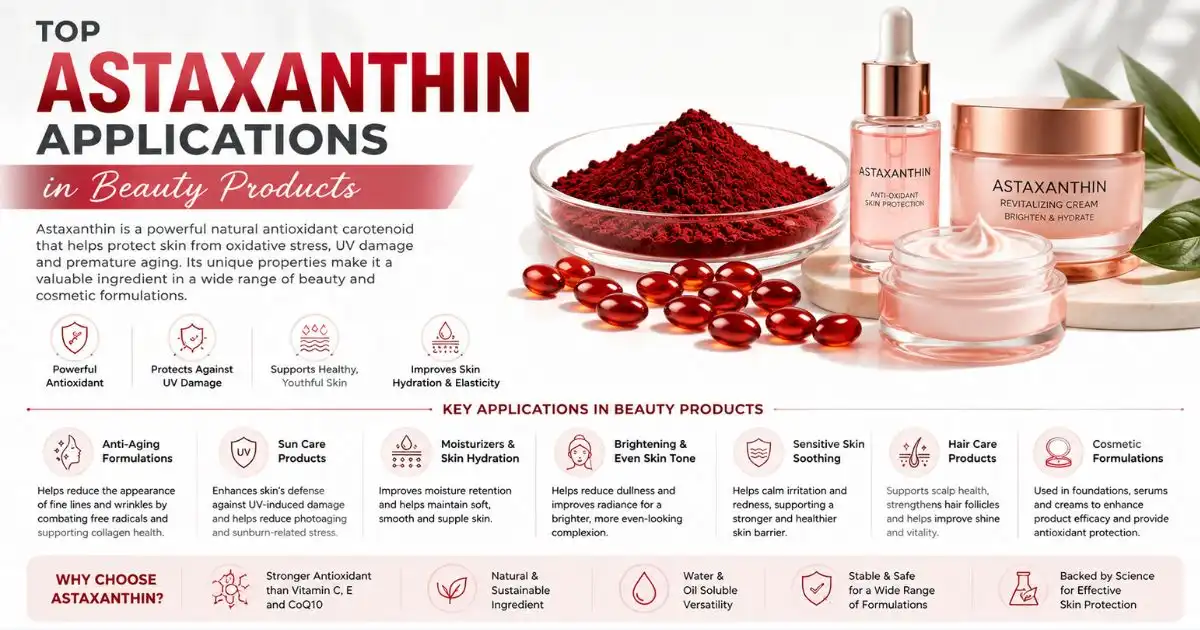
Cosmetic and Skincare Applications
Anti-aging skin care products use Astaxanthin's ability to get thru the dermal barrier and build up in the skin layers, where it neutralizes reactive oxygen species caused by UV light. Because natural Astaxanthin is more bioavailable than manufactured versions, it can penetrate the skin better. This is why high-end anti-wrinkle serums and protective creams choose it.
Astaxanthin powder has strong colors that make it hard to mix with other ingredients. To keep the ingredients working well, dispersion technologies are needed to keep the product from changing color. These technical problems can be solved with advanced delivery systems like liposome encapsulation and cyclodextrin complexation. Concentrations in finished cosmetics are usually between 0.001% and 0.1%, which is a good balance between how the product looks and how well it works.
| Application Category | Recommended Form | Typical Concentration | Key Benefit |
|---|---|---|---|
| Supplements that fight aging | Pure and esterified | 4 to 12 mg per day | Better bioavailability |
| Food for sports | Pure and esterified | 8 to 16 mg per day | Help with muscle recovery |
| Serums for skin care | Natural and spread out | 0.01% to 0.10% | Antioxidant action in the skin |
| Functional drinks | natural, can dissolve in water | 2–4 mg per dose | Positioning with no labels |
| Eye health recipes | Oil-based and natural | 6 to 10 mg per day | Stacking of retinal cells |
Functional Foods and Beverages
To add Astaxanthin to functional food mixtures, we need powder forms that are easily mixed with water and stay stable in a range of pH levels and heat processing conditions. Natural Astaxanthin meets the high standards for food safety needed for beverage uses. Its GRAS status and large body of toxicological research back this.
Fortification amounts in functional drinks usually give you 2 to 4 mg per dose, and they are part of larger antioxidant blends aimed at people with busy lifestyles. For stability during pasteurization and the whole shelf life, it's important to choose encapsulation matrices and packaging materials that keep oxygen and light out as much as possible.
Future Trends and Innovations in Astaxanthin
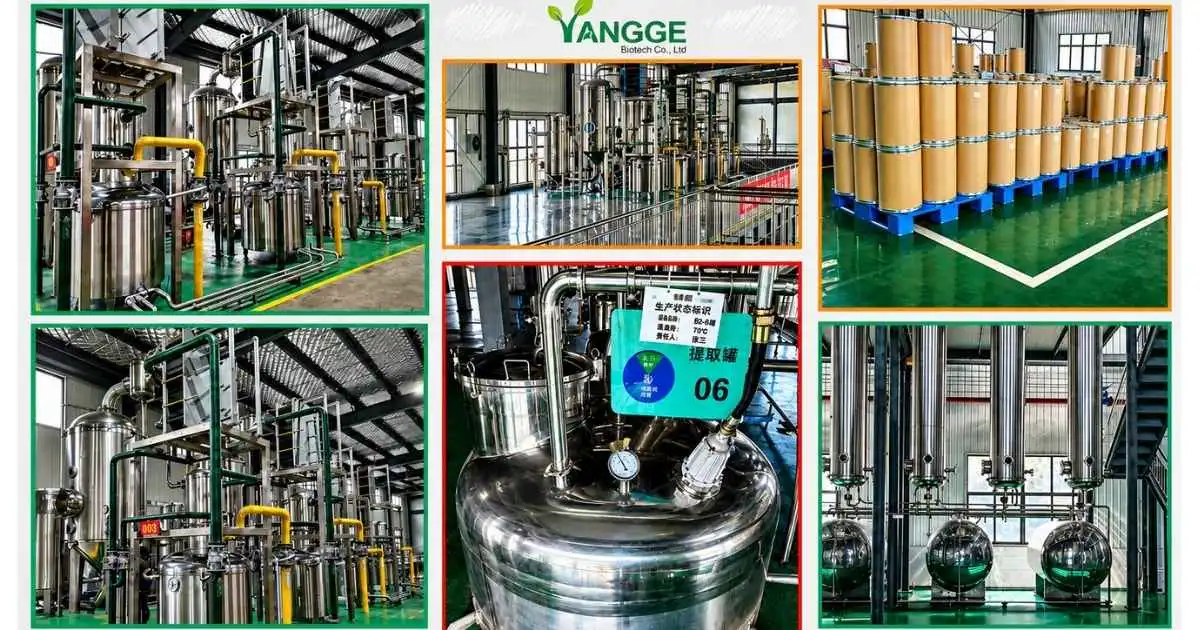
Biotechnological progress is changing how much Astaxanthin costs to make and how it affects the environment. Closed photobioreactor systems with LED lighting panels tuned to the best colors for Haematococcus growth increase biomass outputs while lowering the risk of contamination. These methods make it possible to produce all year, no matter what the weather is like. This solves supply stability problems that have plagued the natural Astaxanthin sector in the past.
Genetic improvement of algal strains using non-GMO selection methods has led to variants with Astaxanthin levels higher than 5% dry weight, which almost doubles the efficiency of extraction. These changes help to make the price difference between natural and synthetic forms smaller. This could help natural Astaxanthin reach more markets in price-sensitive areas where synthetic options are currently the norm.
New study looks into hybrid formulas that combine natural Astaxanthin with new ways of delivering it, such as nanoparticle encapsulation and specific lipid carriers. The goal of these technologies is to improve bioavailability and tissue-specific accumulation even more, making markets that are already very different even more so. More and more clinical studies are showing benefits in areas like brain function, metabolic health, and immune control. This means that both companies that supply raw materials and companies that make finished products can reach a bigger market.
As consumers become more aware of the environment, brands are making purchasing decisions that take sustainability into account more and more. Our relationship model with farming communities makes sure that farming is done in a way that is good for society, and all of the steps in the process can be tracked, from the algae ponds to the end powder packaging. Using renewable energy in our processing plants is in line with our carbon-neutral promises, which are appealing to brands that care about the environment.
Conclusion
There are more factors to consider than just cost when deciding between natural and synthetic Astaxanthin. These include bioavailability profiles, regulatory positioning, and brand differentiation strategies. Natural Astaxanthin from Haematococcus pluvialis has better stereoisomer composition, better biological activity, and regulatory approval across elite markets. This means that brands that want to appeal to picky customers can explain the higher price. Synthetic options are still useful in low-cost situations where regulatory routes allow them to be used.
When making B2B purchasing decisions, these things should be weighed against specific product positioning goals, the needs of the target market, and the amount of risk that can be tolerated in the supply chain. Working with providers who offer full scientific support, clear quality paperwork, and flexible OEM possibilities speeds up formulation development and makes sure that you always have access to this useful carotene.
FAQ
Can synthetic astaxanthin match natural forms in supplement applications?
Even tho manufactured Astaxanthin still has antioxidant qualities, clinical studies show that it is less bioavailable because it is made up of a mix of stereoisomers that don't have the 3S,3'S configuration that is common in natural sources. Because of rules in European and North American markets, synthetic forms can only be used for animal feed. Natural Astaxanthin is the best option for use in cosmetics and food products for people.
How do I verify astaxanthin quality from potential suppliers?
Ask for certificates of analysis that show the concentration and stereoisomer ratios were checked using HPLC. Natural products should have 3S,3'S content above 95%. Check to see if ISO, HACCP, Kosher, and Halal licenses are valid for the people you want to sell to. Third-party studies on heavy metals, microbial contamination, and herbicide residues give you even more peace of mind about the quality. Documentation that links specific batches of powder to source cultivation sites shows that strict quality management systems are in place.
What concentration levels optimize formulation cost-effectiveness?
Astaxanthin powder with a concentration of 10% is often used in nutraceutical applications because it is easy to handle during encapsulation. Lower concentrations (1–3%) work well for functional food uses that care most about having a uniform dispersion. Higher amounts lower the cost of shipping and the space needed for keeping, but they may need special tools for accurate microdosing during production.
Partner with Yangge for Premium Astaxanthin Solutions
We want people who are making nutraceutical brands, cosmetics, and functional foods to check out our ISO-certified Haematococcus pluvialis Astaxanthin powder, which is now available in KOSHER/USP-grade specifications. Our committed research and development (R&D) team works with clients to create unique formulations in softgels, tablets, capsules, and gummies. We also offer full OEM services that help you get your product to market faster. We get rid of supply uncertainty that throws off production schedules by keeping a one-ton inventory on hand for quick shipment and offering technical advice services 24 hours a day.
You can email our team at info@yanggebiotech.com to ask for COA paperwork, set up sample shipping, or talk about how our Astaxanthin raw material options can help your anti-aging product line. As a supplier of Astaxanthin with a history of ethical and environmentally friendly business practices, we offer the technical support and material dependability that your brand's growth needs.
References
1. Ambati, R.R., Phang, S.M., Ravi, S., and Aswathanarayana, R.G. (2014). Astaxanthin: Sources, Extraction, Stability, Biological Activities and Commercial Applications. Marine Drugs, 12(1), 128-152.
2. Capelli, B., Bagchi, D., and Cysewski, G.R. (2013). Synthetic Astaxanthin is Significantly Inferior to Algal-Based Astaxanthin as an Antioxidant and May Not be Suitable as a Human Nutraceutical Supplement. Nutrafoods, 12(4), 145-152.
3. Østerlie, M., Bjerkeng, B., and Liaaen-Jensen, S. (2000). Plasma Appearance and Distribution of Astaxanthin E/Z and R/S Isomers in Plasma Lipoproteins of Men After Single Dose Administration of Astaxanthin. Journal of Nutritional Biochemistry, 11(10), 482-490.
4. Yuan, J.P., Peng, J., Yin, K., and Wang, J.H. (2011). Potential Health-Promoting Effects of Astaxanthin: A High-Value Carotenoid Mostly from Microalgae. Molecular Nutrition & Food Research, 55(1), 150-165.
5. Higuera-Ciapara, I., Félix-Valenzuela, L., and Goycoolea, F.M. (2006). Astaxanthin: A Review of its Chemistry and Applications. Critical Reviews in Food Science and Nutrition, 46(2), 185-196.
6. Guerin, M., Huntley, M.E., and Olaizola, M. (2003). Haematococcus Astaxanthin: Applications for Human Health and Nutrition. Trends in Biotechnology, 21(5), 210-216.
Based on your location and order quantity, you will have the opportunity to receive a limited time free shipping promotion!
Who we are
Popular Blogs