Top 5 Betanin Powder Benefits for Clean Label Product Development
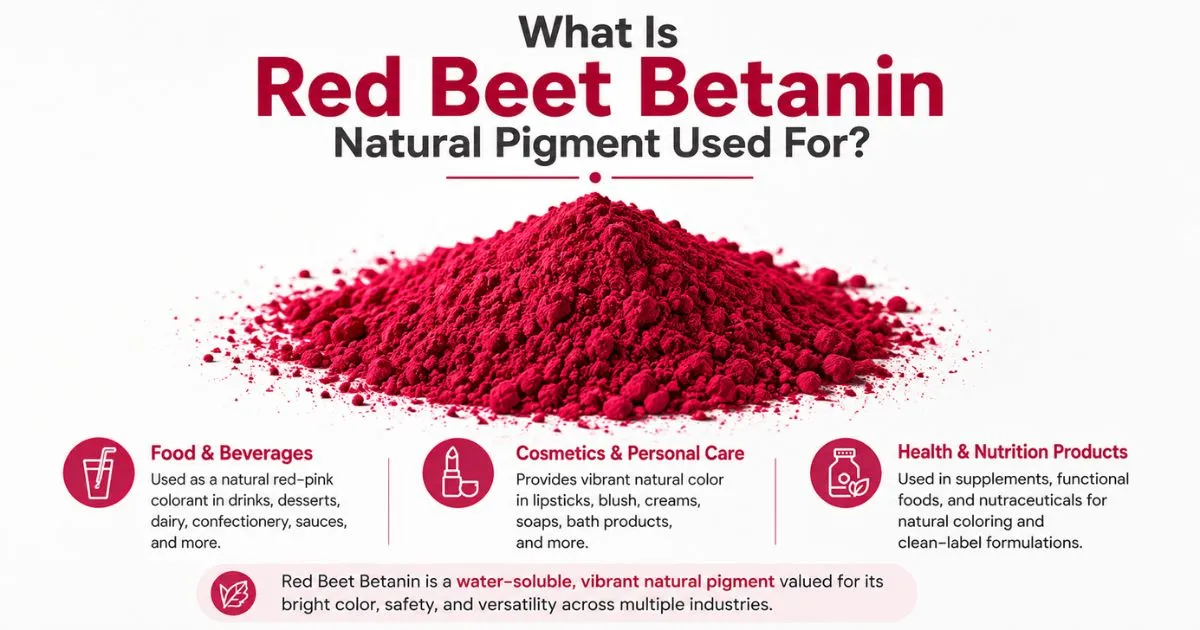
The top five benefits of betanin powder for clean label product development are its natural red color, its ability to be mixed with water in a variety of ways, its ability to make plant-based products stand out, its ability to provide consistent quality for B2B production, and its low cost-in-use. Betanin powder, also known as Beetroot Red E162, is derived from the red beet plant (Beta vulgaris) and adds red to purple hues to drinks, dairy, sweets, and plant-based foods. Because it changes with light and heat, formulators add it late in the process and test it in the finished product. I'll list each benefit and its technical limits below so you can decide if it fits before you order a sample.
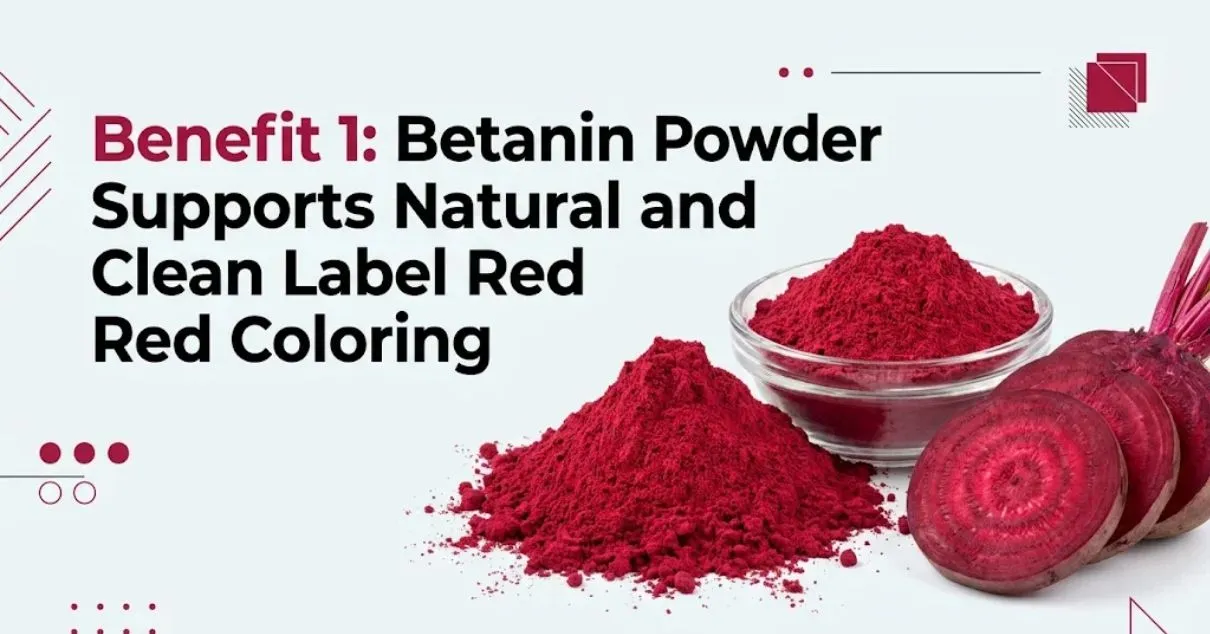
Benefit 1: Betanin Powder Supports Natural and Clean Label Red Coloring
Replacing Synthetic Reds Such as Allura Red
A lot of brands want to get rid of FD&C Red No. 40, which is also known as Allura Red AC. Betanin powder provides them with a red from plants to test instead. Beet red E162 is a betalain pigment, and betacyanins are what give it its color. Because it tints well, small amounts are usually enough to get a deep shade. But I always tell people to expect a different color. The color betanin is more pink, ruby, and purple-red, while the color allura red is more orange-red. The 2017 Annual Review of Food Science and Technology says that natural colorants need more care to stay stable than synthetic ones. To match an existing color, a short dosing test needs to be done in the base.
How pH Shapes the Final Shade
When betanin solutions are neutral or acidic, they look red or purple-red. The pigment stays mostly stable in both acidic and alkaline systems. The best retention is found between pH 4 and 5, with faster loss outside of that range. That range works for a lot of fruit-flavored and yogurt drinks. For products with a higher pH, like some plant-based milks, I recommend checking the color again after storage and after pasteurization. This is because alkaline conditions can change the color and make it fade faster. So that results can be compared, write down the pH at each stage of the trial.
Matching Color Strength and Compliance
Instead of powder weight, compare the amount of pigment or color value to find out how strong the color is. Our Beet Red E162 is 100% pure and comes as a deep red powder. You can ask for the COA to check each lot against your target. The European name for beet red is E162. In the US, 21 CFR 73.40 says that dehydrated beets don't need to be certified as a color additive. If a certain betanin extract fits that listing depends on what it is, how it is packaged, and what it says on the label, so I tell QA teams to check with their regulatory advisors before launch.
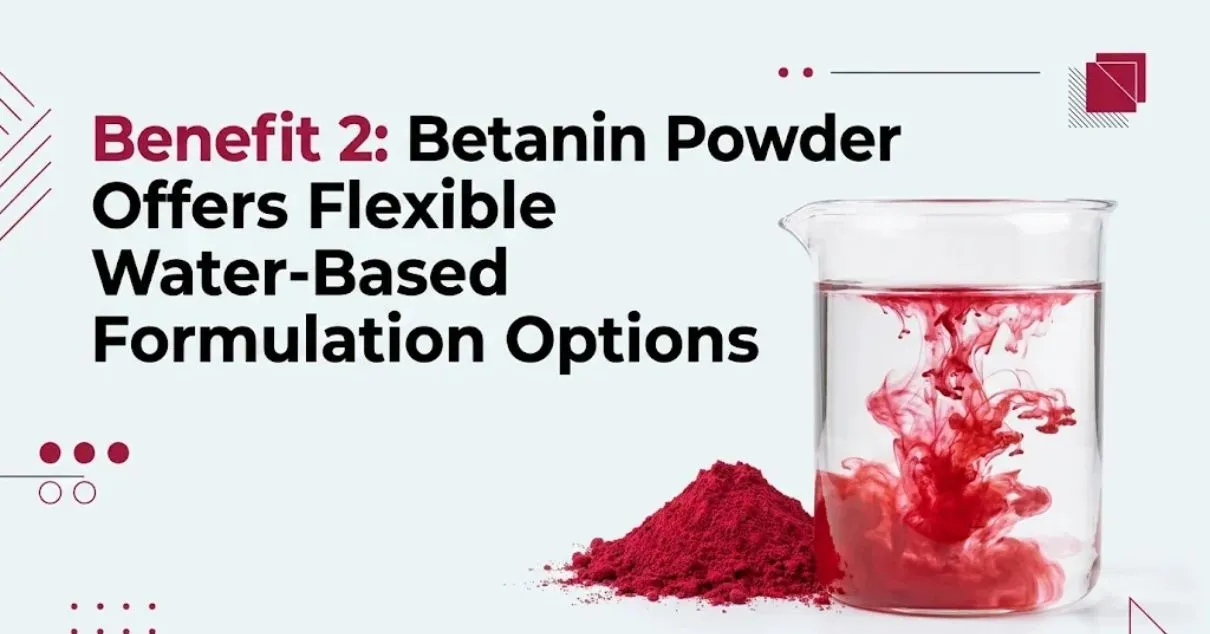
Benefit 2: Betanin Powder Offers Flexible Water-Based Formulation Options
Where Water-Soluble Betanin Fits Best
Since bethanin dissolves in water, it works well in products that have a water phase. Each use is shown in the table, along with the first thing I would check in each one.
| Application | Why it fits | First check |
|---|---|---|
| Beverages and syrups | Dissolves in the water phase | Light exposure in clear bottles |
| Yogurt and frozen desserts | Acidic or cold-processed bases | Hold time at heat steps |
| Gummies and confectionery | Strong tinting at small doses | Add late, below 80℃ |
| Plant-based meat | Raw-meat red tone | Color change after cooking |
Because the powder can soak up water, instant drink mixes also work if you store them in a dry place. These pairs give you a place to begin with your first trial matrix.
Adding Betanin Late in Heated Processes
Our Beet Red E162 stays stable below 80℃, but it doesn't hold up well to light or heat, so the color fades more quickly when it gets hot. We suggest adding the heating step at the end of any process that has one. In real life, I mix betanin powder with a little cool water to make a premix. Then I add it to the product after it has cooled below 80℃ and mix it until it's all mixed in. Long hold times hurt color more than short ones. The fact that betanin works well in cold-processed foods like ice cream and no-bake fillings is also due to this habit of adding it late.
Protecting Color from Light, Oxygen, and Moisture
In their 2000 paper in Critical Reviews in Food Science and Nutrition, Delgado-Vargas and others talk about how betalains break down in response to light, oxygen, heat, and water. That becomes three habits on the plant floor. First, use opaque or UV-blocking packaging to keep finished goods safe from light. This is especially important for clear drink bottles. Second, keep oxygen from getting in while mixing and filling. Third, check out an antioxidant like ascorbic acid, which is used by many formulators to keep things from turning brown. To get the right answer, you need to check each step as a separate variable. The same way to store the raw powder: in the original container with the lid tightly closed and away from light.
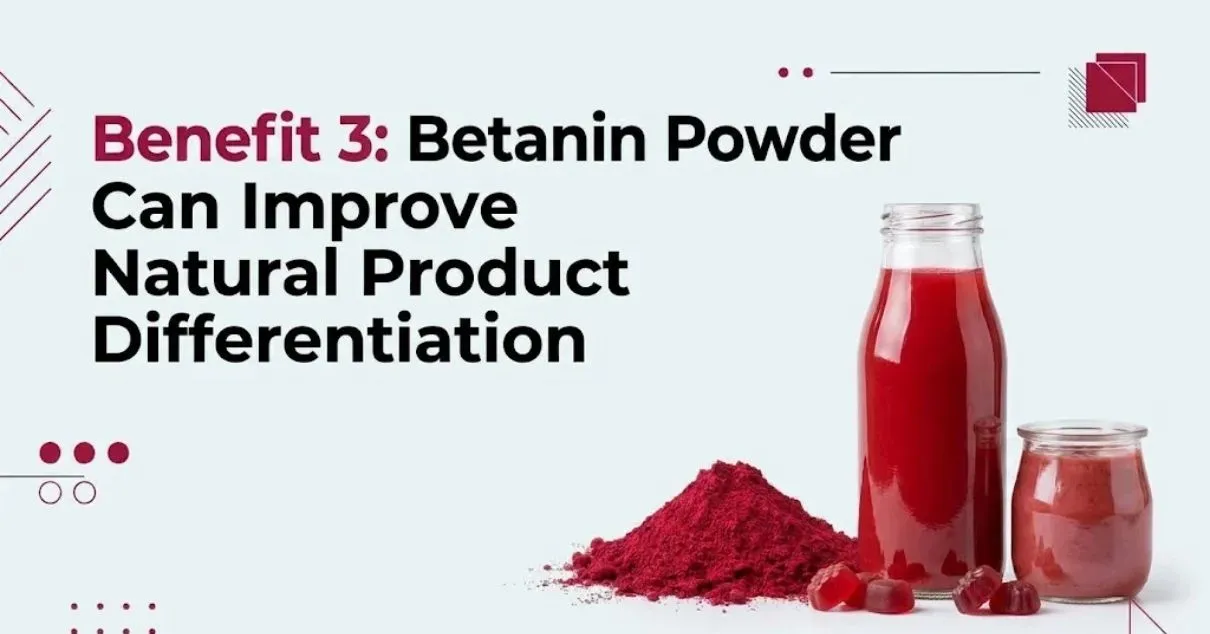
Benefit 3: Betanin Powder Can Improve Natural Product Differentiation
Plant-Based Meat and the Raw Look
Foods made from plants need to be red like raw meat and turn brown when they're cooked. Because of its heat sensitivity, betanin powder fulfills that requirement. I think you should test three things: the color when it's still raw after being shaped, the color when it's been stored in the fridge, and the color when it's been cooked on a pan or grill. Before changing any other ingredients, change the dose if the cooked food looks too light or too dark. Your supplier should know about your protein base and binder because minerals and proteins can change the color.
Betanin Powder vs. Beet Powder, Juice Powder, and Extract
The spec sheets for these four beet-based ingredients look alike, but they are used for different things.
| Ingredient | Main purpose | Color predictability |
|---|---|---|
| Betanin powder (E162) | Color | Higher when standardized by pigment |
| Beetroot powder | Whole-ingredient appeal, flavor | Lower |
| Beet juice powder | Color plus some flavor | Varies by carrier and grade |
| Red beet extract | Color | Compare extraction ratio and pigment |
When accurate dosing is more important than whole-beet nutrition or flavor, I choose betanin powder. Some synthetic reds may be more stable, but betanin and blended natural systems are better for meeting clean label goals.
Managing Earthy Notes in Finished Products
Beets can have an earthy smell, which buyers often bring up as a concern. Because betanin powder is used for color, the flavor doesn't carry over as well as it would with whole beet ingredients because the doses are typically small. Still, I think you should do a sensory test in the real base at the dose you plan to use. Flavors of fruits, acids, and sweeteners can hide light earthy notes. Plain dairy alternatives, on the other hand, make them stand out more. Because how we smell changes with temperature, do the test both at room temperature and when it's cold. Write down panel feedback next to color readings to make sure they are both equal.
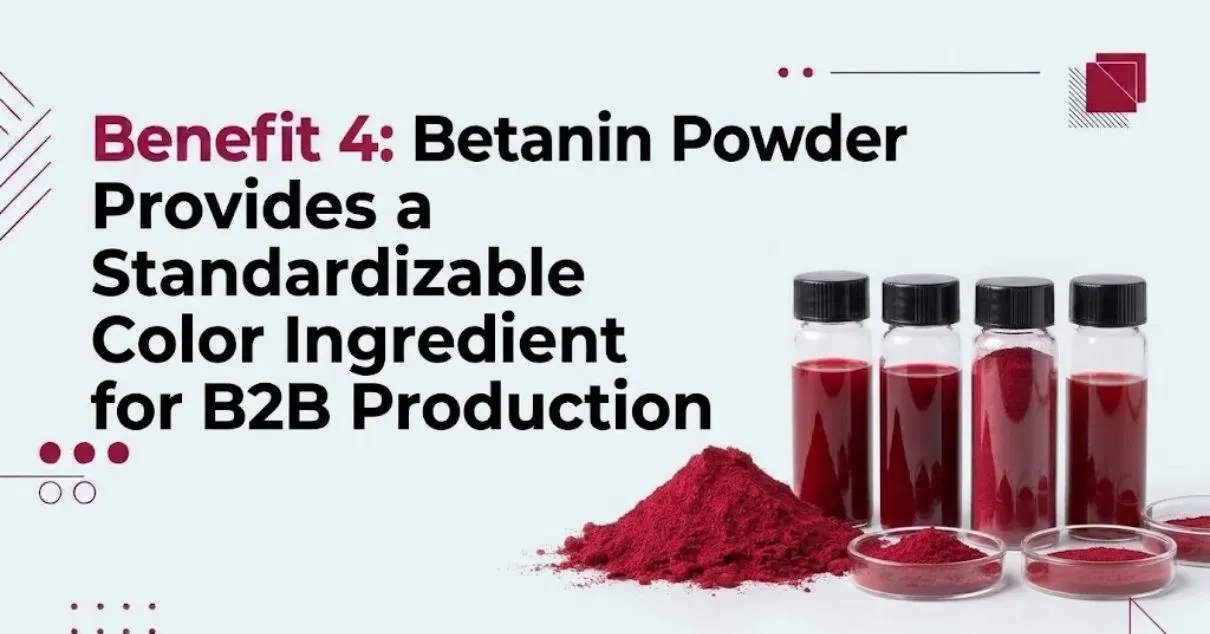
Benefit 4: Betanin Powder Provides a Standardizable Color Ingredient for B2B Production
Specifications That Matter on a COA
It's more important that the color stays the same than how many grams you add. When I compare lots, I look at the amount of pigment (or color value), the amount of water, the particle size, how well they mix, and how they look. The numbers are written down on a Certificate of Analysis, and written acceptance limits stop any later talk about the batch color objective. As for the test method behind the given value, our listing says HPLC. For retesting, Yangge also works with a well-known lab, which is an extra check. Standardized materials cut down on batch changes and extra work that needs to be done during production, especially when the same recipe is used by more than one plant or co-packer.
Yangge Beetroot Red E162 at a Glance
This is a list of the most important facts about the product.
| Item | Detail |
|---|---|
| Product | Beetroot Red E162, Betanin |
| Specification | 100% |
| Method | HPLC |
| Appearance | Deep red powder |
| Shelf life | 2 years |
| Quality | No irradiation, non-GMO, non-allergen |
| Contaminants | Meets European PAH4 standard; benzopyrene ≤10 ppb |
| Package | 1 Kg aluminum foil bag or custom |
| Minimum order | 1 Kg |
| Inventory | 50–100 Kg in stock |
| Sample | Free sample available |
| Storage | Tightly closed original container, away from light |
These details help your QA team make sure the fit is right before they ask for a sample.
Safety Documentation and Certifications
When the EFSA re-evaluated beet red (E 162) in 2015, they looked at the available safety data but did not come up with a number for an acceptable daily intake. Still, regulatory limits are different for each market and product, so make sure they work for your needs. Yangge Biotech has ISO, HACCP, Kosher, and Halal certifications, and we follow GMP guidelines when we make our products, including betanin powder. We also offer OEM packaging, which helps private label brands and distributors make sure that all of their channels follow the same rules. Along with each quote, ask for up-to-date certificates so that your QA team can file them with the technical data.
Benefit 5: Betanin Powder Can Support Commercially Practical Clean Label Product Development
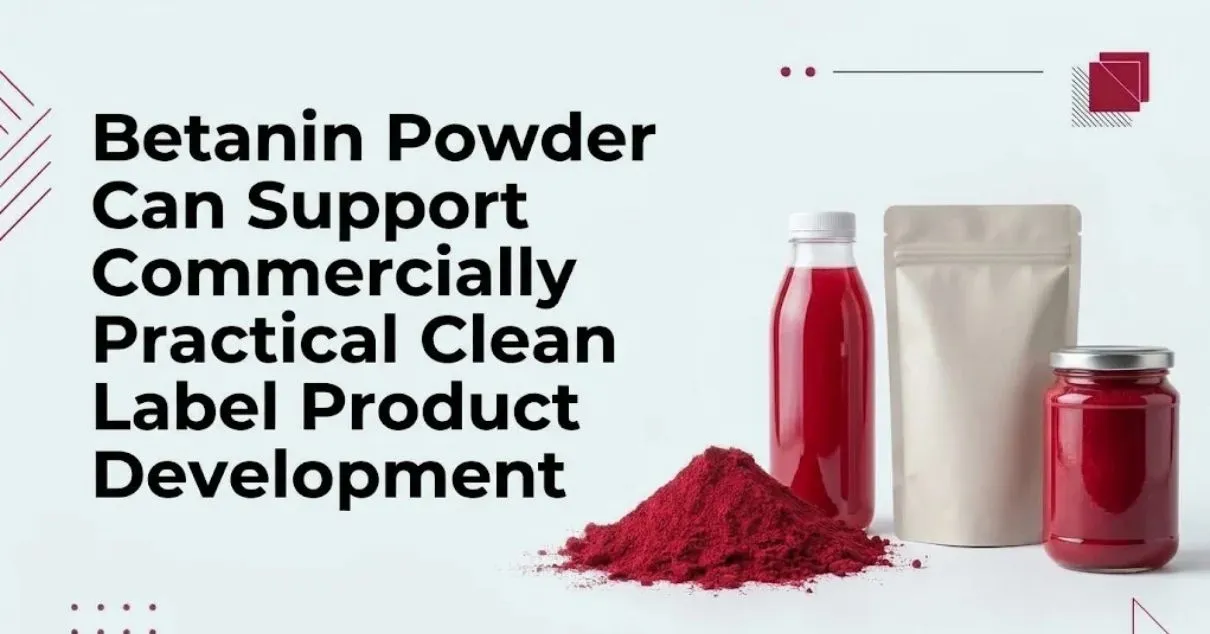
Cost-in-Use Beats Price per Kilogram
It is possible for a low price per kilogram to hide a higher real cost. What changes the final number are the dose, the strength of the pigment, processing losses, yield, shelf life, and rework. A small amount of betanin is all you need to get the shade you want, which is often more important than the price tag. I think you should figure out the cost per 1,000 liters of beverage or per 1,000 kilograms of product based on the dose that passes the shelf-life test, not the dose that looks best on the first day. Add in any extra packaging that protects or acts as an antioxidant.
Low MOQ and Free Samples Reduce Trial Risk
It takes more than one test run for new color systems, and when the minimum is high, each mistake costs more. For your convenience, we offer a free sample and keep 50 to 100 kg in stock in case you need to place another order. The powder will stay fresh for two years if you keep it in its original, tightly sealed container and away from light. The 1 kg aluminum foil bag blocks light. You can get packaging made just for your plant if it needs a different format. With this set-up, you can use the same source for bench tests, pilot batches, and first production runs.
A Simple Workflow From Sample to Production
Let's do it in five steps. Set the process temperature, base, pH, and shade you want to achieve. Ask for a sample and test it on a bench at different doses. Make sure it stays stable in the light, heat, and storage conditions that are the same as the packaging. Put a test batch through the real steps of heating and filling. Approve a written specification that sets limits for color value, moisture, and appearance. If your product will be exposed to high heat for a long time, strong light, or oil-based systems, betanin might not work as well. If this sounds like your product, you should look at other natural reds or blends.
Conclusion
For beverages, dairy, sweets, and plant-based meat, betanin powder, also known as beetroot red E162, provides clean label teams with a plant-based red. Its color stays strong below 80℃ and works in both acidic and neutral water-based systems. However, light, heat, and oxygen make it fade faster, so testing the finished product, adding it late, and protecting it are all important. The color isn't the same as Allura Red, and the earthy notes need to be tested on the nose. A certificate of analysis (COA) and clear written specifications help make sure that each batch is the same. The real value is shown by cost-in-use, not price per kilogram. Betanin works well for many projects as long as the process doesn't go too far.
FAQ
Q1: Can betanin powder replace Allura Red one-to-one?
A: Not really. Betanin changes more when it comes to heat and light, which makes the color pinker. You should do bench trials in your own base to find the right dose and color. Take color readings on the first day and after storing the items.
Q2: Why does my product fade or turn brown?
A: Most of the time, heat, oxygen, light, and high pH are to blame. Put the color in at the very end, keep the temperature below 80℃, package it in a way that keeps light out, and test the ascorbic acid. To compare, keep a control sample in the dark.
Q3: Can I use it in baked goods or oil-based products?
A: Betanin breaks down in long-term baking heat, and the powder dissolves in water. Before you buy it, try it in late-added fillings or icings or look at other natural reds. I also ask people what temperature and length of time they want to bake at.
Q4: How do I request a sample?
A: Send an email to info@yanggebiotech.com with the process temperature, pH, and use. You can get a free sample, and the smallest order is 1 kg. We'll get back to you with technical advice.
Request a Betanin Powder Sample and Technical Data from Yangge
Looking for a betanin powder supplier that will do small tests? You can buy Beet Red E162 from Yangge for as little as 1 kg. We offer free samples, OEM packaging, and have 50–100 kg in stock. We are certified in ISO, HACCP, Kosher, and Halal, and our team is available online 24 hours a day, 7 days a week. Send an email to info@yanggebiotech.com with your base, pH, and process temperature, and we'll help you come up with a plan for a trial.
References
1. Journal of Food Science, 2006: Betalain Stability and Degradation—Structural and Chromatic Aspects
2. Critical Reviews in Food Science and Nutrition, 2000: Natural Pigments: Carotenoids, Anthocyanins, and Betalains—Characteristics, Biosynthesis, Processing, and Stability
3. Trends in Food Science & Technology, 2004: Functional Properties of Anthocyanins and Betalains in Plants, Food, and in Human Nutrition
4. Annual Review of Food Science and Technology, 2017: Natural Colorants: Food Colorants from Natural Sources
5. EFSA Journal, 2015: Scientific Opinion on the Re-evaluation of Beetroot Red (E 162) as a Food Additive
6. Code of Federal Regulations, Title 21, 2024: Section 73.40, Dehydrated Beets (Beet Powder)

Based on your location and order quantity, you will have the opportunity to receive a limited time free shipping promotion!
Who we are
Popular Blogs