How to Choose a Beta Glucan Powder Supplier for Import Success
To find a good beta glucan powder supplier, you should first think about where the powder comes from and what it's used for. After that, check the documents, assay, solubility, and landed cost before placing a bulk order. I think you should compare at least three suppliers against a written specification, test samples using your own formula, and make sure that each batch certificate of analysis backs up what you say. A supplier who clearly answers technical questions, gives you documents that can be tracked, and knows the rules of the market you're going to protects your launch schedule more than one who just gives you a low quote. The steps that follow build on the ones that came before them.
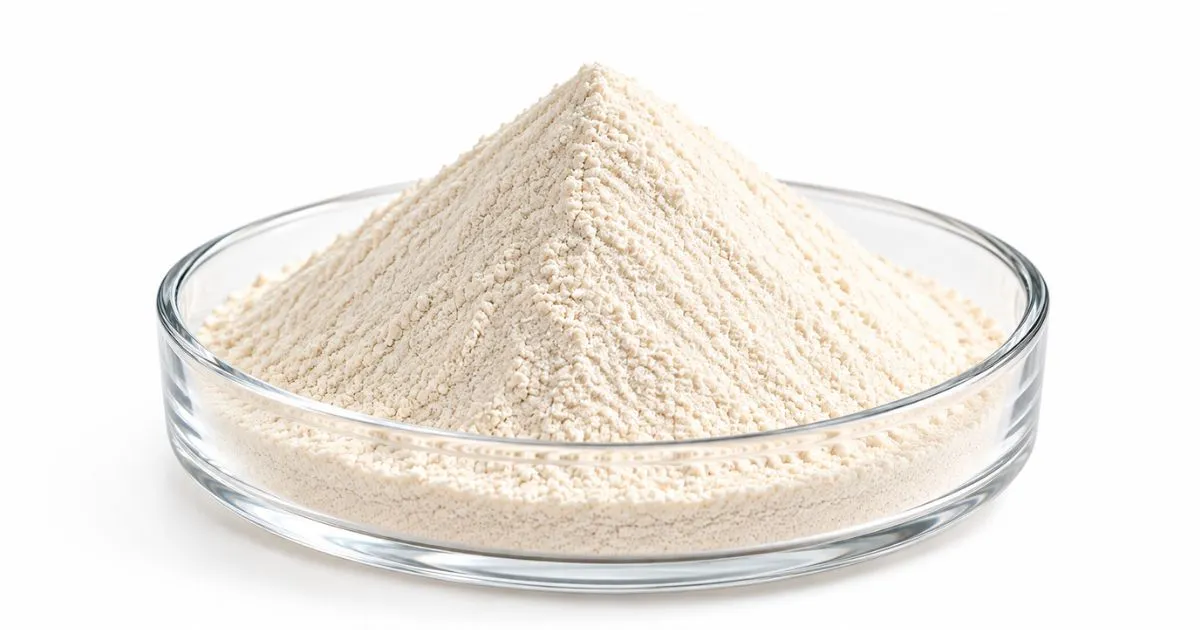
Define Requirements and Compare Beta Glucan Powder Sources
Write a Clear Specification First
I write a one-page specification before I ask for quotes. Along with the intended use, source, beta glucan assay, assay method, solubility, particle size, moisture, packaging, minimum order quantity, shelf life, and expected annual volume, it also has information on how the product will be used. It also has a list of things that documents need, like non-GMO, allergen, irradiation, microbiological, and contaminant statements. In spite of the fact that different methods can give different values for the same material, buyers often skip the assay method. With a written specification, all suppliers start from the same place, making it easier to compare quotes. It also helps your QA team set standards for acceptance before the first shipment comes in, and it makes sure that R&D and purchasing are working toward the same goal.
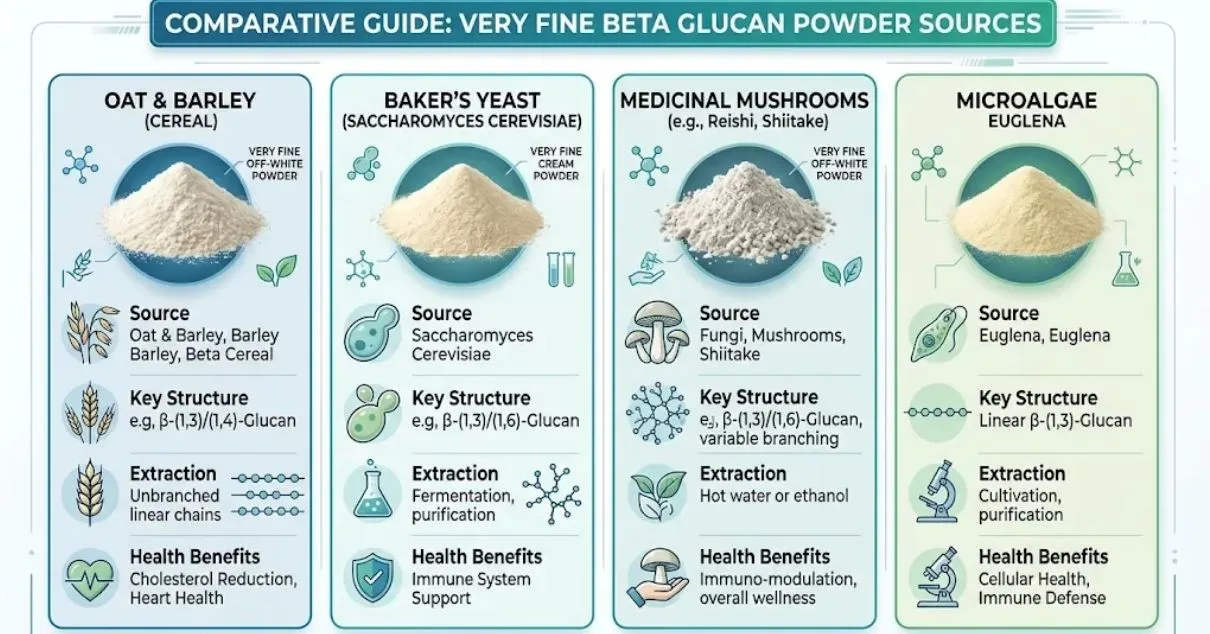
Oat, Yeast, and Mushroom Sources Are Not Interchangeable
Source decides structure, and structure tells you how to use something. The beta glucan in oats is a straight chain with β-(1,3) and β-(1,4) links. A 2014 review in the American Journal of Clinical Nutrition found that eating at least 3 grams of oat beta-glucan every day lowered LDL cholesterol. In 21 CFR 101.81, the FDA allows a health claim that is similar to this one. A yeast beta glucan has a β-(1,3) backbone and β-(1,6) branches. This type of fungal glucan is linked to being recognized by immune cells through the Dectin-1 receptor, according to research. Things made from mushrooms need more research into the species and method of extraction. The first checks I do are shown in the table below.
| Feature | Oat | Yeast | Mushroom |
|---|---|---|---|
| Typical linkage | β-(1,3)/(1,4), linear | β-(1,3) backbone, β-(1,6) branches | Varies by species |
| Common focus | Cholesterol-related and fiber-rich foods | Immune-support supplements | Immune-focused supplements |
| Key buyer check | Soluble fiber content, viscosity | Assay method, particle size | Species, extraction method |
Solubility, Viscosity, and Taste Change the Finished Product
In a formula, two powders that are about the same purity can act in very different ways. Because oat beta glucan dissolves in water and can make things thicker, a large dose may make a drink or shot thicker. There are some types of yeast beta glucan particles that dissolve in water, but most of the time, the ones that don't work well in capsules and tablets. The mixing, hydration time, heat stability, and mouthfeel are all affected by these differences. I get data from suppliers on how well their products spread, and then I test them in a real matrix, whether it's a smoothie, a stick pack, or a baked good. A powder that clumps or has an off taste requires extra work that isn't shown by the price per kilogram.
Build a Supplier Evaluation System for Import Procurement
Confirm Who Actually Makes the Product
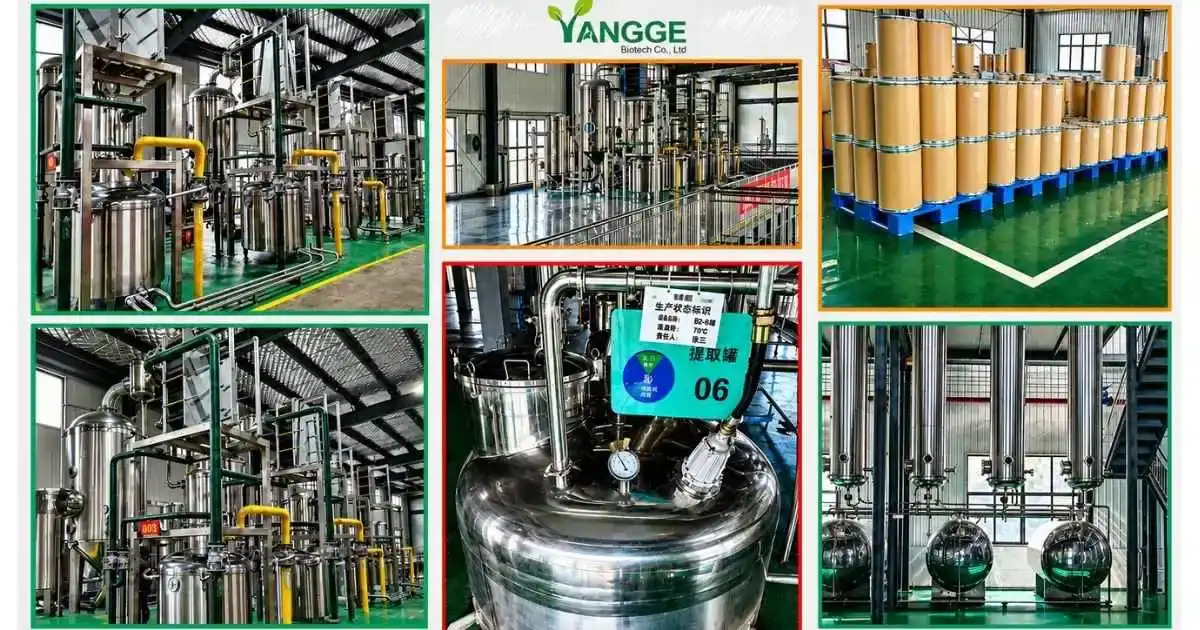
When you search for beta glucan powder, you'll see manufacturers, exporters, and trading middlemen. Each can meet a different need. I question things straight up. Who is the owner of the set? Who picks the raw materials? Who puts out each batch? A manufacturer can usually go into great detail about the steps used for extraction, how to track batches, and how to control changes. There are still traders who will do small lots, but you should know where the goods come from. Check the address on the quality certificates against the address on the certificate of analysis. A simple test that finds gaps quickly is matching names and addresses between documents. Yangge works with its own research and development (R&D) and production teams to make all of its products.
Check Certificates, Testing, and Traceability
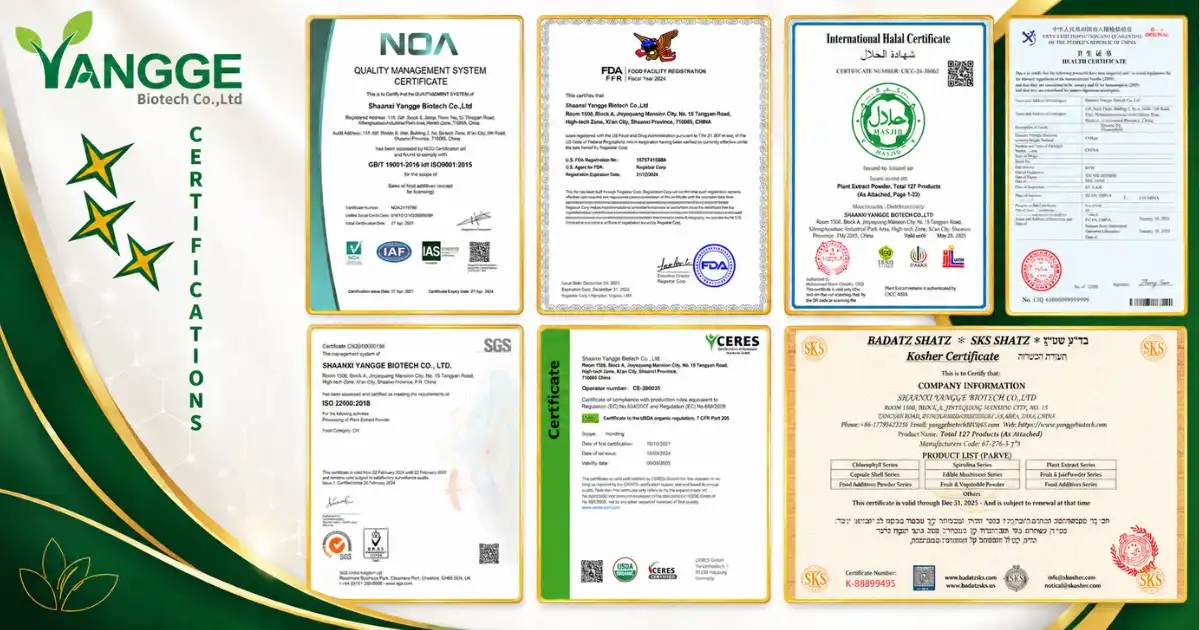
You can only use certificates to help if they cover the site that makes your food. For GMP, HACCP, ISO, Kosher, or Halal status, depending on your market, check the certificate holder, the scope of the certificate, and the dates it is valid. Then look at the certificate of analysis for each batch to see the assay, moisture, microbiology, heavy metals, and contaminants. For each number, ask what method was used. Retesting in a different lab gives a second opinion on important results. Traceability is also important. A supplier should connect each lot to the source of the raw materials and the date of production so that a complaint can be tracked. Yangge is certified by ISO, HACCP, Kosher, and Halal, and they follow GMP guidelines when they make their products. They also support farm-to-table traceability.
Score Suppliers With a Weighted Decision Matrix
The decision is kept objective by a weighted matrix. I give each criterion a weight that makes sense for the project and then use the same evidence to give each supplier a score from 1 to 5. For example, a formulator might put more weight on solubility, while a distributor might put more weight on shelf life and paperwork. I use the same order for oat and yeast projects, which you can see in the table below. You can change the weights to suit your needs, and only give a supplier a score if they can prove it with proof like documents or test results. By doing this with three qualified suppliers, you can see if the one with the lowest quote also has the weakest paperwork.
| Criterion | Sample weight | Evidence to request |
|---|---|---|
| Source and function fit | 25% | Source statement, linkage type |
| Assay and purity | 20% | Batch COA, assay method |
| Solubility and sensory | 15% | Sample trial results |
| Claim and regulatory documents | 15% | Specification, allergen and GMO statements |
| Certifications | 10% | Valid certificates for the site |
| Price and landed cost | 10% | Itemized quotation |
| Supply continuity | 5% | Capacity, lead time, inventory |
Verify Samples, Documents, and US Import Readiness
Test Samples in Your Own Formula
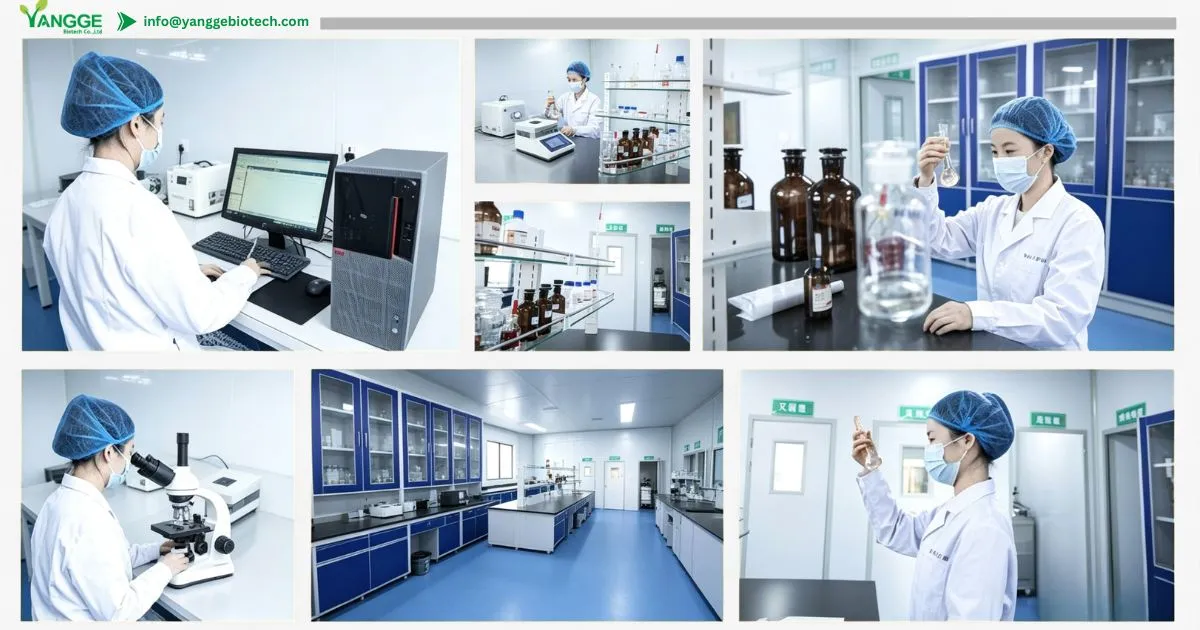
You should ask for samples from the factory that will fill your order, not from a stockroom. Write down the powder's color, odor, appearance, moisture, ability to dissolve, spread, and thicken, and then test it in your real product. Keep a reference piece that is labeled and linked to the batch number so that you can use it to compare later lots. Ask for a second lot if your order is big, because consistency from batch to batch is more important than having one good sample. Just because the assay is high doesn't mean the blend will be smooth, the shelf life will be stable, or the taste will be clean. Let the formula trial make the final decision.
Request the Core Import Documents
Ask for the technical data sheet, the certificate of analysis for each batch, the certificate of origin, the commercial invoice, and the packing list. When your label or customer asks for them, add allergen, GMO, and irradiation statements. After that, look at the pollutants. Our oat beta glucan powder meets the European PAH4 standard, with benzopyrene levels at 10 ppb or less. If needed, a well-known laboratory can do more tests. Check the claim against the actual report, which should include the method and the name of the lab. When documents show up quickly, match the batch, and answer your questions, they show how a supplier will handle shipments in the future.
Confirm US Claims and Import Rules
How you plan to sell the finished product affects how well the product fits the regulations. Under 21 CFR 101.81, the FDA allows a health claim for beta-glucan soluble fiber from oats in the United States, as long as the person eats 3 grams of it every day. Labels on dietary supplements that use structure-function statements need to let the FDA know within 30 days of going on sale. Food importers may also have to deal with the Foreign Supplier Verification Program, and each shipment of imported food needs to be approved ahead of time. A supplier can give you documents and technical data, but the final decisions about compliance should be made by your legal counsel.
Calculate Landed Cost, Plan Customization, and Approve the Supplier
Look Beyond Price per Kilogram
A quotation only talks about the information. Packaging, samples, lab testing, freight, insurance, customs duties, brokerage, warehousing, and local delivery are all added to the landed cost. I make a spreadsheet that shows all the costs for the same amount of goods because rejected lots, relabeling, and emergency freight can wipe out a small price advantage. Here, the incoterms matter. FOB means that the seller loads the goods at the port of origin, and the buyer sets up the ocean freight. When you buy something CIF, the seller also pays for the shipping and insurance to the final port. The seller delivers to a named place under DAP, but the buyer is responsible for clearing the goods for import. To keep things fair, ask each supplier to quote the same term.
Plan OEM, Private Label, and First Orders
Customization needs to be talked about early on. Discover the format of the packaging, the artwork for the labels, the minimum order quantity, the lead time, the development fees, the testing costs, and the formula's privacy. Smaller first orders help while you're still having tests. Yangge says that the smallest amount of oat beta glucan powder you can order is 1 kg, and they offer OEM packaging, which is good for testing formulas and small batches before making a bigger commitment. Our stock ranges from 50 kg to 100 kg, so I tell buyers to let me know early on how much they want to order and to confirm lead times for bigger orders. Having a clear way to approve artwork and specifications cuts down on delays and keeps your intellectual property safe.
Match the Supplier to Your Business Model
As the business model changes, so do the priorities. Brands of supplements often look at dosage form, stability, and claim support. Functional food and drink makers need powders that are easy to spread out and don't change the taste while they're being processed. The shelf life, packaging, and export paperwork are all things that distributors and importers look at. OEM clients want privacy, help with development, and regular repeat lots. Before testing, people who make cosmetics and skin care products should check the documentation for their own category. No matter what group you're in, match the source to the function first, then rank the other factors: purity and content, solubility, claim compliance, certification, price, and supply continuity. That order keeps the choice connected to how well the product works.
Review the Yangge Oat Beta Glucan Powder Specification and Final Checklist
When people buy oat beta glucan powder from more than one source, I give them this information about the products.
| Item | Detail |
|---|---|
| Product name | Oat beta glucan powder |
| Source | Oats |
| Appearance | Off-white fine powder |
| Quality notes | No irradiation, non-GMO, non-allergen |
| Contaminants | European PAH4 standard; benzopyrene ≤10 ppb |
| Retesting | Available with a well-known laboratory |
| Minimum order | 1 kg |
| Package | 1 kg aluminum foil bag or custom |
| Storage | Tightly closed original container, protected from light |
| Inventory | 50 kg to 100 kg |
Make sure that the source, assay, solubility, and particle size are all clear before you place a bulk order. Make sure that the samples passed your formula test, that the batch matches the COA, certificates, and traceability records, and that the agreed upon landed cost, Incoterms, and lead time are met. Also, look at how the supplier handles complaints and steps to fix problems.
Conclusion
When picking a beta glucan powder supplier, it's better to do a structured comparison than a price war. Because yeast or mushroom glucans with 1,6 branches and oat 1,3/1,4 glucans with 1,3 branches do different things, source and function come first. The quality and consistency are then confirmed by a written specification, certificates that have been checked, batch-specific COAs, and sample trials using the real formula. For US imports, the duties on claim rules, prior notice, and supplier verification need to be looked over again before they go live. With a weighted matrix and a landed cost sheet, you can compare suppliers based on facts, not quotes. If buyers follow this order, they are less likely to get wrong specifications, claims of purity that can't be proven, and shipping delays.
FAQ
Q1: Is oat beta glucan powder the same as yeast beta glucan powder?
A: No, oat beta glucan has β-(1,3)/(1,4) linkages and is studied for its ability to help lower cholesterol. On the other hand, yeast beta glucan has β-(1,3)/(1,6) linkages and is studied for its ability to help the immune system. Pick a product based on what it needs to do.
Q2: Which documents should I request before a bulk order?
A: Ask for the technical data sheet, the allergen, GMO, and irradiation statements, as well as the certificate of origin and the certificate of analysis for each batch. Find out how the test was done and get a copy of the contaminant report.
Q3: Is the lowest price per kilogram the best choice?
A: Not all the time. Freight, duties, testing, lots that are turned down, and delays all change the final price. Check out the landed cost, documents, and batch consistency of each supplier.
Q4: What is the minimum order for Yangge oat beta glucan powder?
A: The least you can order is 1 kg, which is packed in a 1 kg aluminum foil bag. You can get custom packaging.
Request Beta Glucan Powder Samples and a Sourcing Consultation from Yangge
Yangge is happy to hear from people who are looking for a beta glucan powder supplier that is certified by ISO, HACCP, Kosher, and Halal, makes products according to GMP standards, and offers 24/7 online service. Send an email to info@yanggebiotech.com with your oat beta glucan powder application, target assay, volume, and destination. Our team will get back to you with sample options, documents, and a price quote.
References
1. American Journal of Clinical Nutrition, 2014. Whitehead A, et al. "Cholesterol-lowering effects of oat β-glucan: a meta-analysis of randomized controlled trials."
2. EFSA Journal, 2011. "Scientific Opinion on the substantiation of health claims related to beta-glucans and maintenance of normal blood cholesterol concentrations."
3. Code of Federal Regulations, Title 21, 2023. Section 101.81, "Health claims: Soluble fiber from certain foods and risk of coronary heart disease."
4. Cellular Microbiology, 2005. Brown GD, Gordon S. "Immune recognition of fungal β-glucans."
5. Official Journal of the European Union, 2023. Commission Regulation (EU) 2023/915 on maximum levels for certain contaminants in food.
6. Federal Register, 2015. "Foreign Supplier Verification Programs for Importers of Food for Humans and Animals."

Based on your location and order quantity, you will have the opportunity to receive a limited time free shipping promotion!
Who we are
Popular Blogs