Marigold Extract vs. Calendula: Which Product Should You Buy?
Get marigold extract from Tagetes erecta if you want to take care of your eyes. This plant is the best place to get lutein and zeaxanthin for sale. Buy Calendula officinalis extract instead if you want a plant that calms for creams, balms, or herbal products. Even though they both have the name "marigold," they are from different genera and are used for different things. People who make supplements, people who buy supplements in the US should read this guide. It tells you how the two ingredients are different, how to match them to your product, and what you should check before you order.

What Is the Difference Between Marigold Extract and Calendula Extract?
Why the Name "Marigold" Causes Confusion?
People who want to buy something often ask for "marigold extract" because they think the term only means one thing. It doesn't. This word can mean Tagetes erecta, Tagetes patula, or Calendula officinalis, which is also known as "pot marigold." Tagestes erecta is also known as Aztec marigold or African marigold, and Tagetes patula is also known as French marigold. They are all in the same family, Asteraceae, which is made up of daisies. One word like "marigold extract" in a quote leaves too much room for error. Before agreeing to a price, I tell every buyer to write down the Latin name, plant part, country of origin, extraction method, marker compounds, and product form.
Active Compounds and Plant Parts
Lutein is a xanthophyll carotenoid that is mostly found in the petals of Tagetes erecta plants. In 1998, Industrial Crops and Products published a study that looked at the amount of lutein and lutein ester in different types of T. erecta and T. patula. The profile of calendula is different. Flavonoids, triterpenoids, and carotenoids are some of the things that make up a pharmacological review in the Tropical Journal of Pharmaceutical Research. Part of the plant is also important. The extract profiles of petals, whole flowers, leaves, and seeds are all different, and the solvent used for the extraction also changes the outcome. The supplier should always be able to back up their botanical identification with a certificate of analysis (COA) and a technical specification. The COA should also list the assay method.
How the Uses of Each Extract Compare?
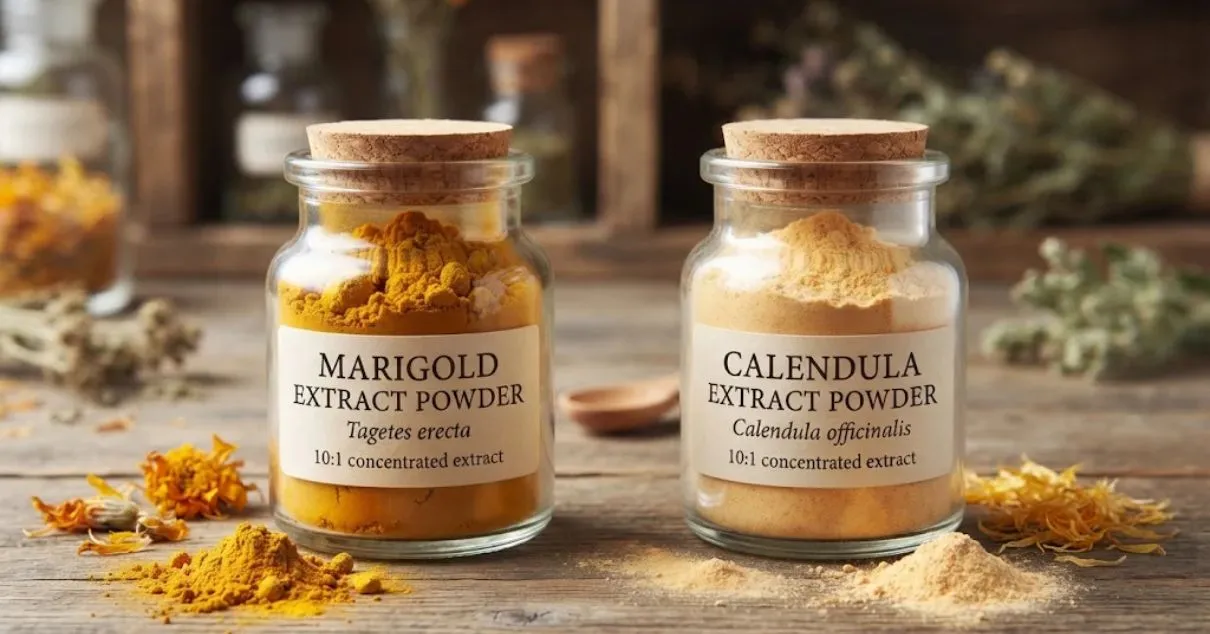
Tagetes marigold extract is good for projects that need lutein, zeaxanthin, a lot of carotenoids, or a natural orange-yellow color. It's used by brands in cosmetics, functional foods, drinks, and eye care supplements. A lot of skin care products, creams, balms, and herbal preparations use calendula extract. The two materials don't automatically work together. Product shape is also important. Powders work well in capsules, tablets, and premixes, while liquid, water-soluble, or oil-soluble extracts work well in certain beverage or cosmetic processes. What are the main differences? The table below shows them.
| Feature | Marigold extract (*Tagetes erecta*) | Calendula extract (*Calendula officinalis*) |
|---|---|---|
| Common name | Aztec or African marigold | Pot marigold |
| Typical marker compounds | Lutein, zeaxanthin | Flavonoids, triterpenoids (varies by extract) |
| Common uses | Eye-health supplements, functional foods, beverages, color | Skin care, creams, balms, herbal products |
| Fit for a lutein claim | Yes, when standardized | Only if a lutein assay supports it |
First look at this table, and then check the COA for every detail.
Which Extract Should You Buy for Your Application?
When Tagetes Marigold Extract Is the Right Choice
If your recipe needs standardized lutein or zeaxanthin, use marigold extract from Tagetes erecta. A color made up of lutein, zeaxanthin, and meso-zeaxanthin is stored in the macula, which is in the middle of the retina. Lutein is not made by the body, so people need to get it from food or supplements. That's why lutein from Tagetes is used in eye-care capsules, gummies, and functional drinks. In the AREDS2 trial, which was published in 2013 in JAMA, 10 mg of lutein and 2 mg of zeaxanthin were given every day. Adding them to the original formula didn't improve it in any way. According to secondary studies, they might be able to replace beta-carotene. I think brands should be honest about this research.
When Calendula Extract Is the Right Choice
If your product needs a botanical profile that is specific to calendula, choose Calendula officinalis extract. Face creams, balms, cleansing products, and herbal preparations are all common examples. In these cases, the buyer wants the plant itself, not a test for lutein. Just because Calendula is yellow-orange doesn't mean it can be used instead of Tagetes. If the label on a supplement says how much lutein it has, an analysis must back that up. If an ingredient in skin care is called Calendula, it needs to have the correct Latin name. These are all Tagetes plants, but I wouldn't treat them the same way. They are French, African, and signet marigolds. Before you make a choice, look at batch-specific assay data, solubility, carrier systems, and stability.
Yangge Lutein Powder: Product Details for Eye-Health Formulas
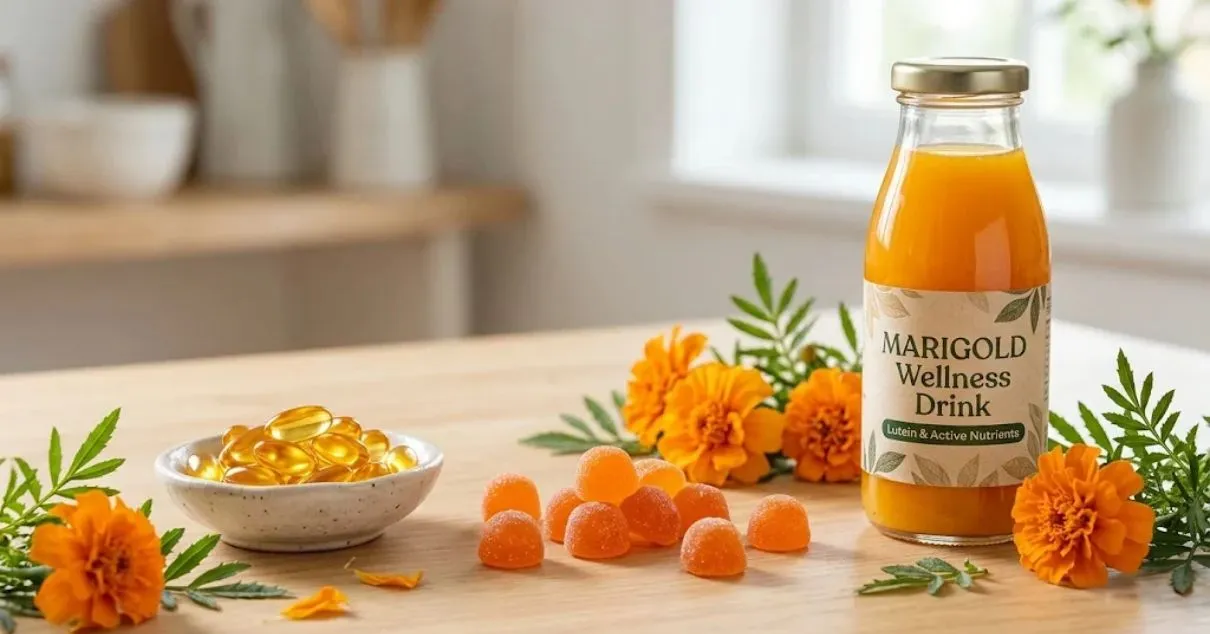
Yangge makes lutein powder from marigold flowers that are grown at our Yunnan planting base. The light and soil in the area help plants grow quickly, flower for a long time, and produce a lot of food, which helps us keep our supply of raw materials steady. Before it turns into a powder, our process starts with the raw material being submerged in water, filtered, cleaned, vacuum-concentrated, killed bacteria, and then dried. It can be anywhere from 5% to 90%. People ask us about bioavailability, purity from marigold, and stability through microencapsulation. The powder is used in projects for infant formula, eye care capsules, gummies, and ophthalmic functional drinks. There is full chain traceability, high bioavailability, and FDA GRAS status that are our main strengths. The important facts are shown in the table below.
| Item | Detail |
|---|---|
| Product | Lutein powder |
| Part | Flower |
| Active ingredient (as listed) | Zeaxanthin |
| Specification | 5%–90% |
| Method on COA | HPLC |
| Appearance | Orange yellow powder |
| Raw material origin | Yunnan marigold planting base |
| Company certifications | ISO, HACCP, Kosher, Halal |
How to Evaluate Marigold Extract Suppliers?
Traceability and Documentation
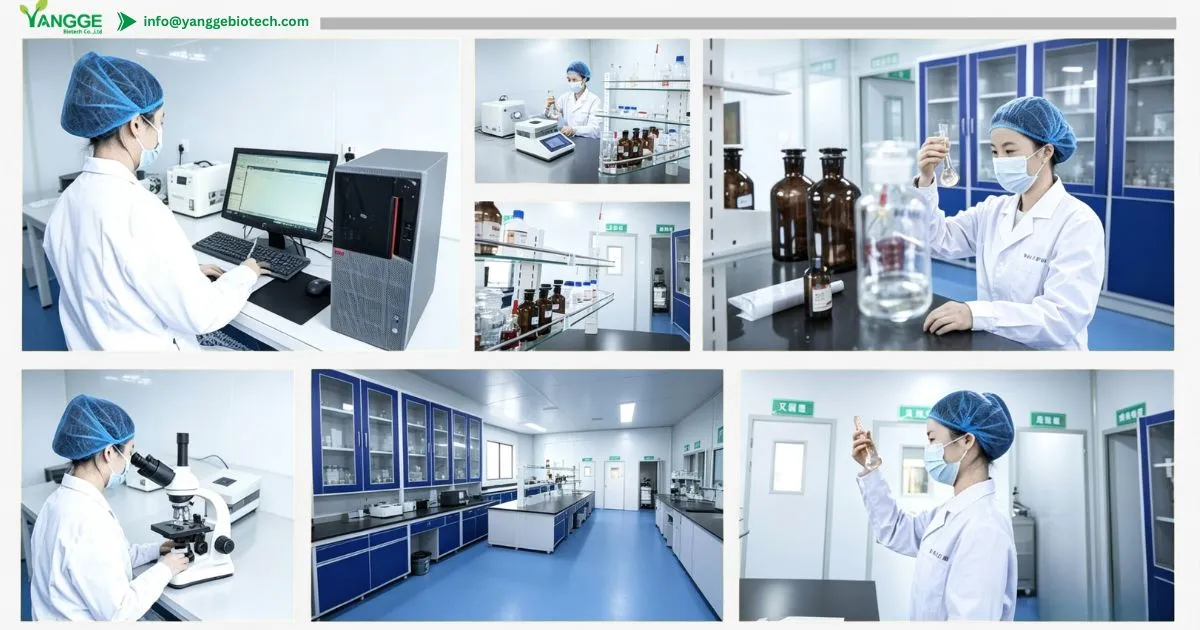
Start with identifying and tracking plants. Find out the Latin name, part of the plant, growing area, harvest details, and batch number. Depending on the market and the product, you might also need a COA, an SDS, a technical data sheet, allergen and GMO statements, and documents that say the product is Halal or Kosher. Yangge is certified by ISO, HACCP, Kosher, and Halal, and we follow GMP guidelines when we make our products, including marigold extract. We also work with local farming groups, which helps us track food from the farm to the table. Buyers of infant formula and big brands often do audits, and we can help with requests for audits and tests. When a buyer asks for a document and gets it quickly and completely, the supplier usually follows the same rules in production.
Technical Checks: Stability, Purity, and Bioavailability
Because lutein changes with light, oxygen, and heat, it can break down while being processed or stored. The formula and the packaging need to be kept safe. In some formats, microencapsulated or water-dispersible forms can help with stability and absorption. Talk to your supplier about which options will work best for your capsule, gummy, or drink. Labeled and measured content can be different, so compare the stated assay with results from a separate test. Ask for information about the amount of heavy metals, solvents, pesticides, moisture, particle size, microbial limits, and shelf life that are still present. Then, test the final product matrix for stability on your own before you start making more of it.
What Affects Price and Supply?
More than just the cost of the raw materials goes into the price of marigold extract. Every year's availability is different because of things like weather, seed quality, flower yield, harvest timing, and pest pressure. The quote changes depending on the extraction method, purification level, carrier system, and whether the product is powder or liquid. A better grade may be more valuable if it lowers the dose or makes the formula better. Teams in charge of buying things should also look at the MOQ, lead time, packaging, Incoterms, and shipping method of each item. If you are going to place multiple orders, ask the supplier if they can hold on to raw materials and make sure that each batch meets the same standards. For repeat buyers, our Yunnan planting base ensures a steady supply of raw materials.
Common Buying Mistakes and a Practical Checklist
Mistakes That Delay Projects
It is very wrong to think that Calendula and Tagetes are the same plant. It could cause the wrong active profile in marigold extract, a failed formula, problems with the label, or delays from the government. Don't accept a substitute just because it has a name or is yellow-orange. An extract made for cosmetics might not be good for use in food, drinks, or supplements. The terms "natural," "naturally derived," and "organic" all mean different things and need different kinds of proof. Claims need extra attention. A supplement in the US can say that it improves structure or function, but it can't say that it treats or stops a disease like AMD. That line is drawn by the FDA's rule on these statements from 2000, so your regulatory team should look over all eye-health statements.
A Step-by-Step Buying Checklist
If you want to make a new ingredient project, follow these three steps.
- Define the specification. Write down the botanical name, plant part, assay level, marker compound, product form, intended application, certifications, and expected annual volume. A clear brief lets the supplier recommend the right grade the first time and prevents quotations that do not match your needs.
- Test samples the same way. Check appearance, odor, solubility, color stability, assay, microbial quality, heavy metals, pesticide residues, and compatibility with your capsule, gummy, or beverage base. Identical methods let you compare suppliers fairly and spot gaps between labeled and measured lutein content.
- Approve in stages. Move from document review to sample testing, pilot production, specification approval, a small commercial order, and batch review before recurring supply. Plan for roughly 6 to 12 weeks, and expect infant formula projects to run longer because of audit demands.
Before you commit to volume, these steps lower the technical and supply risk.
Comparing Total Cost, Not Only Price per Kilogram
Extra costs may be hidden by a low price per kilogram. You should compare things like testing, packaging, freight, duties, inventory, risk of rejection, lead time, and the quality of communication. It's better to look at the price per milligram of lutein instead of the price per kilogram of powder because a 90% grade and a 5% grade are used for different amounts and types of products. You should get the same documents from all of your suppliers so that you can compare them fairly. When two quotes are close, pick the supplier whose identity has been confirmed, whose batch data is consistent, and whose export support you can rely on. That choice keeps your plans for the launch date and the reorder date safe.
Conclusion
The marigold extract from Tagetes erecta and the calendula officinalis extract are from different plants and have different strengths and uses. Tagetes provides standardized lutein and zeaxanthin for eye health supplements, functional foods, and drinks. Calendula, on the other hand, is used in herbal and skin care products. The Latin name, plant part, test, and paperwork are what matter for the right purchase, not the common name. Suppliers should give you a COA, records of traceability, and data on contaminants. Lutein changes when it comes in contact with light, oxygen, and heat, so buyers should make sure the final formula is stable. Price is important, but total cost, supply consistency, and eye health claims that are true are even more so. The AREDS2 results also show that researchers are careful when they talk about the benefits of lutein. Claims about products should do the same.
FAQ
Q1: Is Calendula the same as the marigold extract used for lutein?
A: Cannabis officinalis is the pot marigold and is not the same genus as Tagetes. Because commercial lutein comes from Tagetes erecta, calendula shouldn't be used instead of it in a lutein formula.
Q2: What lutein powder specifications does Yangge offer?
A: We offer lutein powder that ranges from 5% to 90% and is made from marigold flowers. The COA says that HPLC was used to make the powder, which is orange-yellow in color.
Q3: Which documents should I request before ordering?
A: Ask for the COA, the technical data sheet, the SDS, the botanical identification, the allergen and GMO statements, and the results of the contaminants. If your market needs them, ask for Halal or Kosher certificates.
Q4: Can Yangge discuss microencapsulated or water-dispersible forms?
A: Yes. Our approach to stability is supported by microencapsulation, and we can talk about custom requirements for your dosage format. Send us your formula so we can look it over.
Request Marigold Extract Samples and Specifications from Yangge
Yangge Biotech is happy to hear from supplement companies, formulators, and purchasing teams that are looking for a marigold extract supplier. To get certified, send your application, target assay, annual volume, and what kind of certification you need to info@yanggebiotech.com. Our team will help you choose the right grade of lutein powder and give you samples, a COA, and technical documents. Our customer service team is online all the time.
References
1. Journal of the American Medical Association (JAMA), 2013: Age-Related Eye Disease Study 2 Research Group, "Lutein + Zeaxanthin and Omega-3 Fatty Acids for Age-Related Macular Degeneration: The AREDS2 Randomized Clinical Trial."
2. Nutrients, 2013: Abdel-Aal, E.-S. M., et al., "Dietary Sources of Lutein and Zeaxanthin Carotenoids and Their Role in Eye Health."
3. Annual Review of Nutrition, 2016: Mares, J., "Lutein and Zeaxanthin Isomers in Eye Health and Disease."
4. Industrial Crops and Products, 1998: Piccaglia, R., Marotti, M., and Grandi, S., "Lutein and Lutein Ester Content in Different Types of Tagetes patula and T. erecta."
5. Tropical Journal of Pharmaceutical Research, 2009: Muley, B. P., Khadabadi, S. S., and Banarase, N. B., "Phytochemical Constituents and Pharmacological Activities of Calendula officinalis Linn (Asteraceae): A Review."
6. Federal Register, 2000: U.S. Food and Drug Administration, "Regulations on Statements Made for Dietary Supplements Concerning the Effect of the Product on the Structure or Function of the Body."

Based on your location and order quantity, you will have the opportunity to receive a limited time free shipping promotion!
Who we are
Popular Blogs