Phycocyanin Stability: How to Keep Natural Blue Color Bright
From the first step of mixing to the last shelf, you can control heat, light, pH, oxygen, and moisture to keep the blue color of the phycocyanin. This blue spirulina protein-based pigment is fragile, so to get stable results, you'll need to handle it carefully, store it in a cool place, and test it in your own formula. I wrote this guide for buyers, brand founders, and R&D leads who want a strong phycocyanin activity and a bright blue color. I'll talk about what causes fading, how to stop it, and how to check the quality of an order before placing a larger one below.for more details and informations you may contact us at info@yanggebiotech.com.
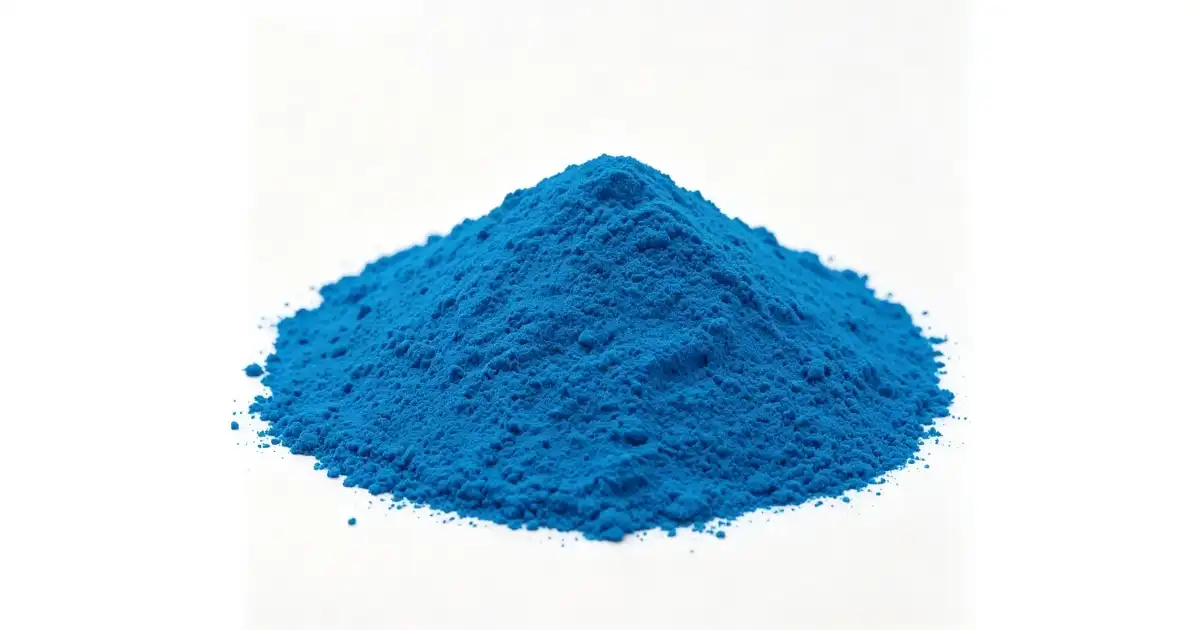
What Is Phycocyanin and Why Does Its Blue Color Fade?
What Phycocyanin Is and Why Buyers Value It?
That blue color comes from phycocyanin, a natural protein and pigment complex found in spirulina, a blue-green algae. "Blue spirulina" usually refers to an extract that is high in phycocyanin. Whole spirulina powder, on the other hand, has all of the biomass and is green. In the US, spirulina extract is not required to be certified by the FDA for certain food uses (21 CFR 73.530). This means that it can be used instead of synthetic blue dyes without any problems. Function is another reason for interest. In 2003, a review article in Current Protein and Peptide Science talked about the effects of antioxidants and anti-inflammatorys, mostly from lab studies. People pay for both color and activity, so fading is a sign of a problem with the quality.
Heat, Light, and pH: The Main Fading Triggers
The blue color comes from a protein that is folded and holds molecules of color. The color changes or fades when that structure opens. The first danger is heat. A study published in 2012 in the journal Process Biochemistry found that phycocyanin was most stable at pH levels between 5.5 and 6.0 and temperatures up to about 45°C. That pH range isn't filled with many acidic drinks, and strong acid can make the protein stick together. The second danger is light, which makes fading faster in clear bottles and on bright store shelves. In 2005, Jespersen and his colleagues looked at how stable three natural blue colorants were in light and heat in sweets and drinks. The results showed that each natural blue behaves in a different way. It's important to have both short heat spikes and long warm storage.
Oxygen and Moisture: The Quiet Causes
Even though oxygen and water work more slowly, they still take away color. Oxygen can change the color, and powder that is too wet can cause it to clump, not dissolve well, and change chemicals more quickly. Here is a quick look at each trigger and the first thing you can do.
| Factor | Effect on phycocyanin | First control |
|---|---|---|
| Heat | Opens protein structure, fades blue | Short, low-temperature steps |
| Light | Speeds color loss | Opaque packaging |
| Low pH | Causes clumping, dull color | Test pH early |
| Oxygen | Oxidizes pigment | Low headspace, sealed pack |
| Moisture | Causes caking, weaker solubility | Foil bags, dry storage |
Before formal testing, these controls give your team a place to start.

How to Improve Phycocyanin Stability During Manufacturing and Packaging?
Set Clear Targets and Control Processing Heat
Setting written goals for things like color, solubility, moisture, microbiological limits, and shelf life is the first step to making something stable. You should set different goals for a capsule blend, a gummy, and a bottled drink based on their format, market, and way of being distributed. When making something, don't let the heat last too long, and add phycocyanin near the end if food safety rules allow it. Pilot-scale checks should be done on drying settings, such as the temperature at the inlet and outlet and the final moisture level.
Helpers have also been studied. For example, Martelli and colleagues wrote about ways to make spirulina phycocyanin more stable at high temperatures so that it can be used in food. Any kind of carrier, encapsulation, pH adjustment, or antioxidant still needs to be tested in your final formula. This is because what works in water might not work in a gummy or a drink.
Packaging Choices for Powder and Liquid
Light, oxygen, moisture, and changes in temperature can't get through the packaging. Powder needs containers that don't let water in, like aluminum foil bags, and rooms with low humidity to keep its color, flow, and ability to dissolve. Liquids do better in bottles that block UV light, have little headspace, and are kept cool. Choose packaging based on how long it will last, how often people will open it, and how far the product will travel. A clear sachet looks nice, but it lets light get right to the color inside. A 1 kg bag of our phycocyanin powder is shipped with it, and we also offer OEM packaging so that buyers can choose a pack that works with their production line.
Storage and Transport Habits That Protect Blue
When it gets hot in a warehouse, even a stable formula can go bad. Temperature changes can happen to cartons during ocean freight, air transport, customs holds, and regional warehouses. Make sure you ask your logistics partner about the conditions and write them down. Keep the item in its original container that is tightly closed and out of the light. With a first-expired, first-out system, you can keep track of lot numbers, print storage notes on cartons, and move stock around. As soon as you open a bulk bag, quickly close it again because each hole lets humid air in. These habits don't cost much and keep the color and activity of finished goods for months after they're made.
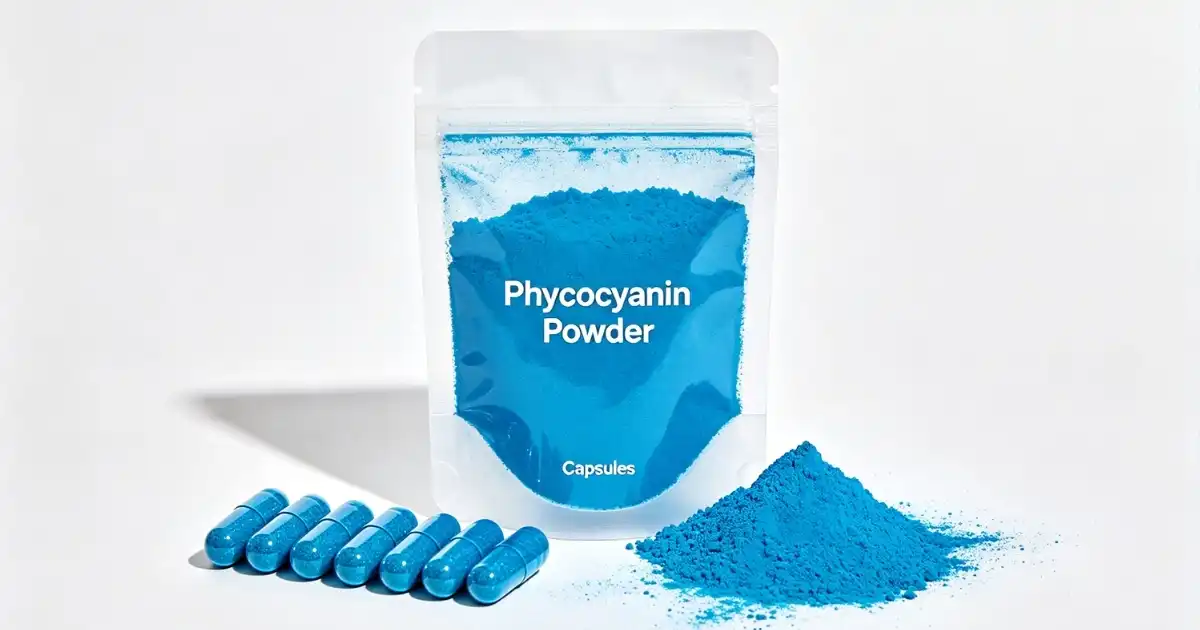
Testing Phycocyanin Quality and Choosing the Right Format
Testing Methods That Prove Color and Quality
Photos and room lighting can give different results for the same sample, so eyes alone are not a good way to test. If you use absorbance or an instrument to measure color, keep track of the color value, purity, protein content, moisture, solubility, microbiological quality, and heavy metals if they apply. Fast studies should be done first to test formulas, and then real-time studies should be used to confirm shelf life. To make sure it works, put the capsule, gummy, drink, or cosmetic base in its final packaging and test it in the heat, humidity, light, and transport conditions you expect. A lot of people who buy also get third-party lab checks. For retesting, we work with a well-known lab, so you can compare our data to results from other sources.
Powder, Liquid, and Blue Spirulina Compared
Powder is strong, easy to store, and works well in capsules, dry blends, sachets, and bulk orders from other countries. Liquid phycocyanin can help water-based drinks mix better, but the pH, temperature, oxygen levels, and shelf life need to be better managed. When you see "blue spirulina," it usually means an extract that is high in phycocyanin. A purified grade gives you more control over the color, flavor, and solubility. It depends on the water activity, concentration, packaging, and formula of the product to decide whether it is powder or liquid. Also, natural blue is more sensitive than man-made colors like Brilliant Blue FCF, so it's important to do test runs before using it. Eriksen looked at how this color is used in medicine, biotechnology, and food in 2008.
Yangge Phycocyanin Specifications at a Glance
Here are the main features of our product, so you can see how the grades match up with your formula needs.
| Item | Detail |
|---|---|
| Product | Phycocyanin, source: blue spirulina |
| Grades | E3, E6, E18, E25, E30, E40 |
| Appearance | Blue fine powder |
| Extraction method | HPLC |
| Odor | Natural fresh spirulina flavor |
| Application | Natural food and beverage colors |
| Status | No irradiation, non-GMO, non-allergen |
| Minimum order | 1 kg |
| Package | 1 kg aluminum foil bag or custom |
| Inventory | 50 kg to 100 kg, in stock |
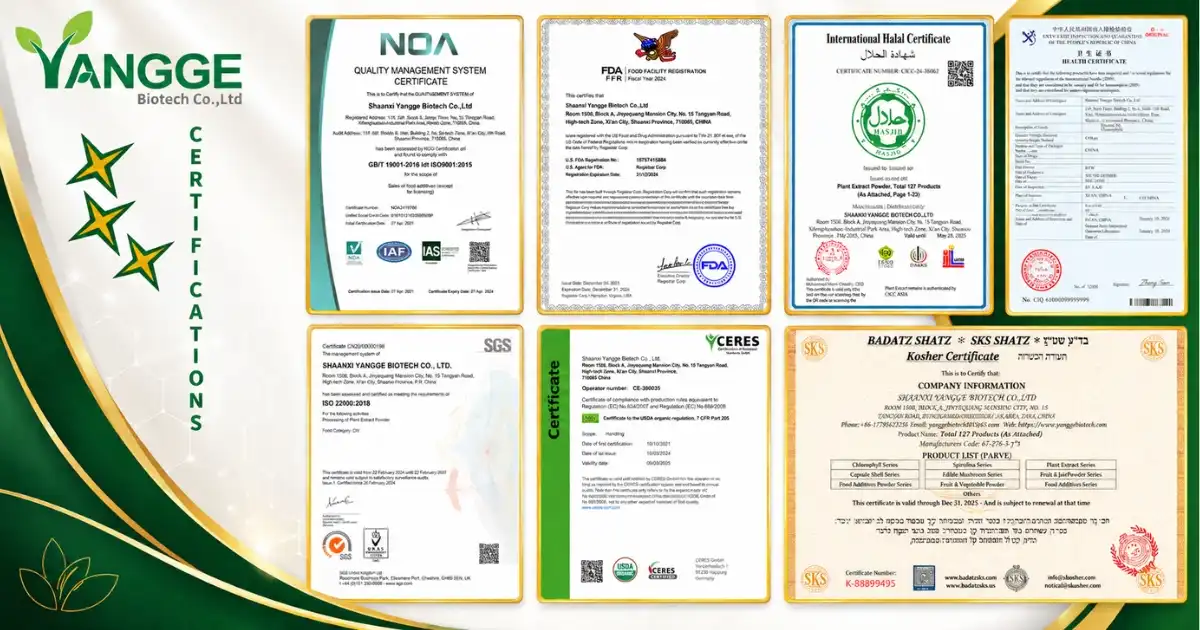
The E number shows the color value at 618 nm, so the grade you choose will depend on the shade you want, the dose, and the cost. We follow GMP guidelines when we make things and are certified as ISO, HACCP, Kosher, and Halal.
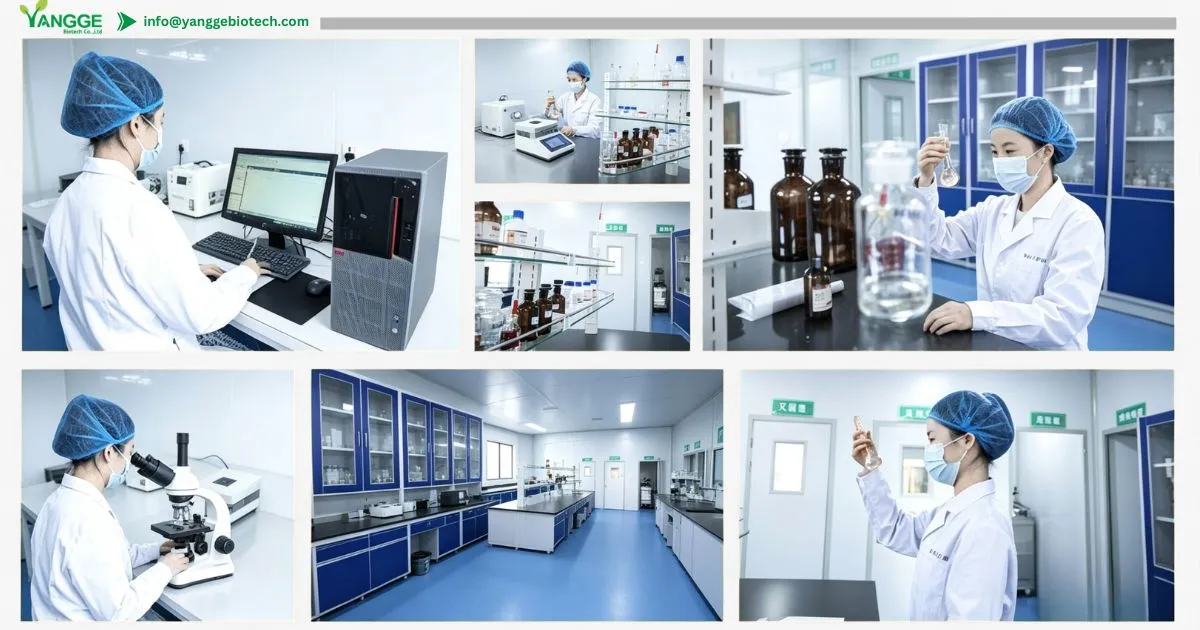
How to Choose a Stable Phycocyanin Supplier or Manufacturer?
What to Review Beyond Price per Kilogram?
A low price doesn't tell you much about how well the color stays on. Review the algae source, cultivation conditions, extraction and purification methods, drying capability, packaging systems, capacity, lead times, minimum order quantity, and supply continuity. The specification should list the color value, purity, moisture, solubility, shelf life, and what the product is meant to be used for. Check the price per unit of color value as well as the price per kilogram. This is because a stronger grade may need less of a dose to reach your desired shade. One market forecast says the phycocyanin market will reach $279.6 million by 2030, which is a 28.1% compound annual growth rate from 2023. This means that any manufacturer should be worried about the supply chain.
Documents and Certifications to Request
You should ask for a certificate of analysis for each lot, as well as allergen statements, microbiological and heavy-metal reports, records of traceability, and technical data sheets. Match certifications like ISO, HACCP, GMP, Kosher, and Halal to the people you want to sell to and the needs of your customers. Regulatory teams should check how the ingredient is labeled and used. For example, in the US, spirulina extract sold as a color follows FDA rules for color additives, but supplement use may have different rules. It's also important to have technical support for things like pH, heat, packaging, pilot tests, and OEM or private-label projects. Yangge Biotech is certified by ISO, HACCP, Kosher, and Halal, and it sends goods to many countries.
Common Mistakes and How to Avoid Them
Several mistakes that can be avoided hurt performance after the purchase. The ones I see most often are in this table.
| Mistake | Result | Fix |
|---|---|---|
| Assuming high purity resists heat | Color loss in hot steps | Add late, test heat |
| Clear packaging | Light fading | Opaque or foil pack |
| Skipping pH checks | Dull or clumped color | Test at final pH |
| Trusting claims alone | Hidden gaps | Review reports, retest |
| No retain samples | Hard to trace problems | Keep samples per lot |
Even if phycocyanin is very pure, it can still be damaged by heat, light, water, oxygen, or a low pH. In commercial production, protection is better when there is customer-side verification, clear quality agreements, and written deviation procedures.
A Practical Workflow and Checklist for Procurement and R&D
Five Steps From Factory to Finished Product
A structured workflow shows stability risks before they get bigger. Set the format, the pH level, the processing temperature, the shelf life, the packaging, and the conditions for distribution first. Second, use the same tests on the samples to check their color, purity, moisture, solubility, smell, and performance. Third, do tests in the lab that change the addition point, the amount of heat exposure, the pH, the packaging, and the storage, and then confirm in a pilot batch.
Fourth, agree to the requirements for the raw materials, the maximum amount of finished goods, the packaging system, the transport instructions, and the procedure for releasing each lot. Fifth, keep an eye on commercial batches by keeping samples, looking at stability results, getting feedback from customers, and reviewing suppliers. Make sure you give this a few weeks of your time and start testing samples early so that delays in the formulation process don't slow down your launch.
A Checklist for Raw Materials and Formulas
For raw materials, make sure you know where the algae comes from, what kind it is, how pure it is, how much water it has, how well it dissolves, whether it is food-grade, what allergens it contains, how to track it, and how long it will last. Check the formulas for pH compatibility, heat exposure, addition points, ingredient interactions, and the stability of the finished product. Light, oxygen, moisture, temperature, transport, opening procedures, and inventory rotation should all be looked at when it comes to packaging.
When looking for a supplier, make sure you look at their capacity, certifications, documentation, pilot support, OEM capabilities, lead times, and technical response. Before you approve the sample, share this list with your coworkers in procurement, R&D, quality, and regulatory. This way, everyone can see the different risks. Minerals, enzymes, preservatives, and plant extracts that are all in the same formula can change color, so you should never think they are safe.
Matching Phycocyanin to Your Product Type
Since low moisture protects color and flow, phycocyanin powder works best in capsules and dry powders. People who make gummies have to keep an eye on the temperature and add the color late. Check the pH, the amount of light, and the bottle choice first when making drinks. For cosmetic teams, emulsions need to be resistant to microbes and light. When supplement companies market their products as antioxidant-rich, they should keep in mind that most of the evidence for these effects comes from lab and animal studies. This means that claims about structure and function need to be reviewed by the government. A lower grade may work better for light shades, while a higher E-value gives more color per gram. Before you commit to a bigger order, test your formula on two or three grades.
Conclusion
The blue color of phycocyanin only stays when the whole chain protects the structure of its proteins. Fading is caused by heat, light, an incorrect pH level, oxygen, and water. Temperatures up to 45°C and a pH level between 5.5 and 6.0 have been found to be the most stable. Less food is lost when it is processed quickly and coolly, added late, packaged in foil or something opaque, and kept cool and dry. Visual checks are less reliable than testing in the real formula, which uses instruments to measure color and do real-time shelf life studies. In order to choose a supplier, you should look at more than just price. You should also look at color value, documents, certifications, and technical support. The procurement, R&D, quality, and regulatory teams can find problems before they get bigger with the help of a written workflow and checklist.
FAQ
Q1: Why does phycocyanin lose its blue color?
A: The structure of the pigment-protein can be harmed by heat, light, oxygen, moisture, and ingredients that don't mix well. Based on research, the blue shade is most stable below 45°C and close to pH 5.5 to 6.0. To protect it, it should be processed quickly and coolly, and it should be packed in opaque material.
Q2: Can I use phycocyanin in acidic drinks?
A: Yes, but first check it out. If the pH is too low, the protein may clump together and the color may fade. To find out how long your drink will last, test it with pH, heat, light, and different packaging. It might also help to add the color late in the process.
Q3: How should I store phycocyanin powder?
A: Keep it in a cool, dry place with the lid tightly on the original container. Keep it away from light. When you open a bulk bag, close it back up quickly because humid air makes things cake up and dissolve less well. Keep track of the lot numbers and rotate the stock so that the oldest items go out first.
Q4: Which phycocyanin grade should I choose?
A: We have powder in grades E3, E6, E18, E25, E30, and E40. Pick based on the shade you want, the dose, and the cost, then test two or three grades in your formula and packaging. Our team can help you look at all of your choices.
Request Phycocyanin Samples and Stability Support From Yangge
With a 1 kg minimum order, OEM packaging, and 50 kg to 100 kg in stock, Yangge Biotech Co., Ltd. offers phycocyanin in grades E3, E6, E18, E25, E30, and E40. We are a supplier of phycocyanin that is certified by ISO, HACCP, Kosher, and Halal. Please let us know about your pH, processing temperature, and format needs. To get a quote, email info@yanggebiotech.com.
References
1. Chaiklahan et al., Process Biochemistry, 2012. Stability of phycocyanin extracted from Spirulina sp.: Influence of temperature, pH and preservatives.
2. Eriksen, Applied Microbiology and Biotechnology, 2008. Production of phycocyanin: a pigment with applications in biology, biotechnology, foods and medicine.
3. Jespersen et al., European Food Research and Technology, 2005. Heat and light stability of three natural blue colorants for use in confectionery and beverages.
4. Romay et al., Current Protein and Peptide Science, 2003. C-phycocyanin: a biliprotein with antioxidant, anti-inflammatory and neuroprotective effects.
5. Martelli et al., Process Biochemistry, 2014. Thermal stability improvement of blue colorant C-Phycocyanin from Spirulina platensis for food industry applications.
6. U.S. Food and Drug Administration, Federal Register, 2013. Listing of Color Additives Exempt From Certification; Spirulina Extract.

Based on your location and order quantity, you will have the opportunity to receive a limited time free shipping promotion!
Who we are
Popular Blogs