Should everyone take lion's mane?
As useful mushroom ingredients become more popular, the question of whether or not everyone should take Lion's Mane has grown in importance. New study shows that Lion's Mane may help with brain function, but how well it works for everyone depends on their health, how it was made, and where it came from. For B2B procurement professionals evaluating lion's mane mushroom powder for product development, the solution lies not in general recommendations but in understanding bioactive composition, safety parameters, and strategic sourcing from verified suppliers who deliver consistent, standardized extracts suitable for diverse applications across nutraceuticals, functional beverages, and wellness formulations.
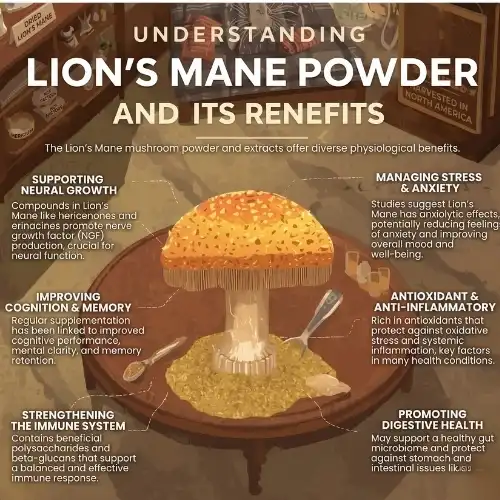
Understanding Lion's Mane Mushroom Powder and Its Benefits
Botanical Origins and Bioactive Composition
Lion's Mane extract comes from Hericium erinaceus, a medicinal fungus that has been used for a long time in Asian health systems and is now supported by modern brain study. The premium standard uses fruiting bodies instead of myceliated grain substrates. This makes sure that there are high levels of hericenones and erinacines, which are diterpenoid substances that have been scientifically linked to stimulating nerve growth factors. High-quality extracts come as a fine, yellow-brown powder with particles that are bigger than 80 mesh.
This makes it easier for the extracts to mix well in capsules and drinks. The bioactive profile is based on beta-(1,3)(1,6)-D-glucans levels higher than 25%. This makes real extracts different from grain-filler goods that are common in bulk markets. Formulation engineers who are making cognitive support stacks need to know about these compositional factors so that the strength of the ingredients can be directly linked to claims of clinical effectiveness.
Neuroprotective Mechanisms and Cognitive Applications
Researchers have found that some oils in Lion's Mane can cross the blood-brain barrier and help neurons grow and protect myelin sheaths. People who are suffering age-related cognitive decline have shown measurable improvements in their ability to remember things, think clearly, and process information quickly in clinical studies. These results put the ingredient in a good situation for use in nootropic products that aim to improve focus and clear up brain fog. For B2B clients making functional drinks or food supplements, the fact that properly extracted ingredients don't break down when heated means they can be added to coffee blends and RTDs without any problems.
The neurological benefits go beyond improving short-term cognitive performance. They may also have neuroprotective qualities that are useful for marketing products that focus on life. Professionals in procurement should know that the method of extraction directly affects how well the drug works. For example, dual extraction processes that use both water and alcohol solutions produce better solubility than simple grinding operations.
Quality Indicators and Standardization Requirements
Beyond simple polysaccharide testing, distinguishing pharmaceutical-grade lion's mane mushroom powder needs in-depth analytical proof. The Megazyme method for measuring beta-glucans is the best in the business because it keeps substrate pollution from giving false results. Premium standards require heavy metal limits below FDA guidelines, with arsenic levels below 1ppm and lead levels below 2ppm. This is to stop fungi from bioaccumulating. Having a moisture level below 7% keeps microbes stable during storage and shipping.
This is especially important for bulk packages that go through different climate zones. Third-party licenses from approved labs should show that there are no pesticide residues, mycotoxins, or irradiation exposure all of which are things that formulators looking to get a clean-label position are looking at more closely. Suppliers who offer COA paperwork with batch-specific HPLC fingerprinting show that they have the quality control systems that are needed for long-term business partnerships.
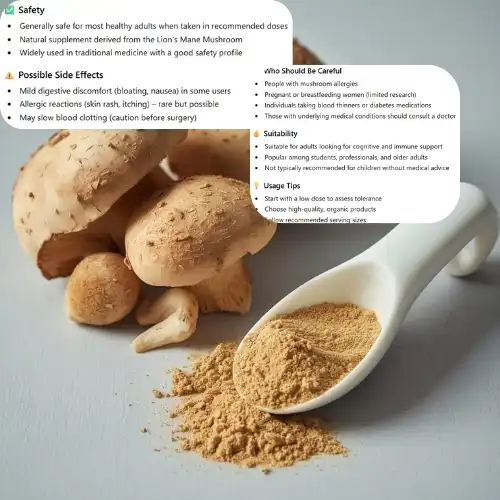
Assessing Safety, Side Effects, and Suitability for Everyone
Established Safety Profile and Regulatory Status
As a food supplement, lion's mane mushroom powder is generally thought to be safe. This is based on a long history of traditional use and recent toxicity studies. In clinical tests with daily doses ranging from 500 mg to 3000 mg, there were few negative effects, showing lower risks compared to synthetic nootropic options. There aren't any major drug interaction trends for this ingredient in the current literature. However, buying teams should tell downstream clients to talk to their doctors before mixing it with anticoagulant drugs.
Different places have different rules about how to follow them. For example, in North America and Europe, dietary supplements can use certain health claims words, but you have to be very careful to follow FDA and EFSA rules. For companies that want to make pharmaceutical-grade products or traditional Chinese medicine preparations, they may need to include more information about how they grow the plants and the chemicals they use for extraction in their regulatory submissions.
Population-Specific Considerations and Contraindications
While the safety of the general population seems to be proven, certain groups of people should be given more attention during the planning stages of product development. People who are pregnant or breastfeeding don't have a lot of safety information, so products that might reach these people should use more cautious labels. People who are allergic to mushrooms are a clear contraindication, which is why finished products need to have clear safety statements on the package. Patients with autoimmune conditions should be careful because the ingredient contains immune-modulating polysaccharides, but clinical proof is still not clear on specific side effects.
When it comes to B2B clients, these factors help with target market segmentation strategies. For example, workplace wellness programs for adults in general have lower risk profiles than specialized therapeutic uses. Procurement workers should ask suppliers for paperwork about the growing conditions, since the makeup of the substrate affects the potential for allergen cross-contamination that is important for claims of non-allergen certification.
Risk Management and Quality Assurance Protocols
Taking strong quality control methods can help reduce any safety issues that might come up when getting botanical ingredients. Reputable sellers keep full records from growing the mushrooms to extracting them, which helps with the problems of making sure the mushrooms are real in places where mushrooms are sold as commodities. Every production lot should come with a certificate from a third party that checks for heavy metals, microbial contamination, and pesticide leftovers. These certificates can be accessed through digital quality control systems.
For companies that sell their goods in Europe, meeting PAH4 standards with benzopyrene amounts below 10ppb is a must because EU rules are very strict. The verification process includes more than just inspecting the raw materials that come in. Accelerated stability testing shows any possible breakdown patterns that could shorten the shelf life of the mixture. Setting clear quality standards with suppliers, such as acceptable ranges for bioactive markers and acceptable reasons for analysis variations, protects the safety of both the ingredients and the people who use them throughout the entire distribution chain.
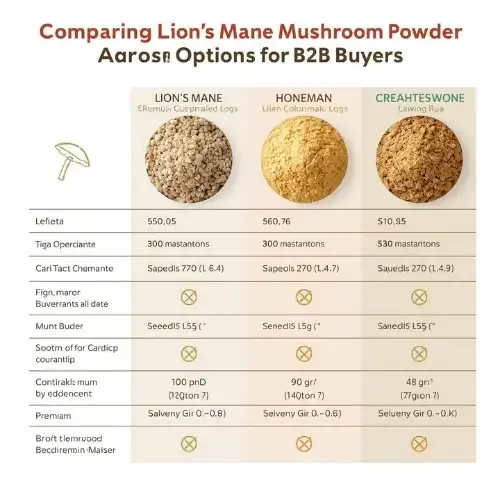
Comparing Lion's Mane Mushroom Powder Options for B2B Buyers
Form Selection: Extract Specifications Versus Whole Biomass
Before making a purchase choice, it's important to know the basic differences between whole mushroom powders and extraction grades. Concentrated extracts provide consistent bioactive levels in small doses, making therapeutic strength possible in normal tablet forms without adding too much weight to the pills. The extraction method breaks down chitin cell walls that can't be digested. This makes the bioavailability a lot higher than with raw fungus material. Dual-extraction methods that use both hot water and ethanol catch both polysaccharides that dissolve in water and terpenoids that dissolve in alcohol. This creates full-spectrum profiles that aren't possible with single-solvent processing.
On the other hand, whole fruiting body powders have full phytonutrient matrices that formulators who focus on minimal processing narratives like, but they need higher doses to have the same benefits. When doing a cost-benefit analysis, you should compare the concentration ratios of the extracts to the positioning of the end product. For example, premium nootropic lines may support investing in extracts, while mass-market functional foods may choose whole lion's mane mushroom powder because they are more cost-effective.
Certification Landscapes and Quality Differentiation
Organic approval makes a business stand out in the market, but it requires proof that the growing medium and processing center follow certain rules. Organic certifications from the USDA and the EU need proof that manmade pesticides are not used and that the base is not made from genetically modified organisms. Besides being organic, other certifications help reach new markets. For example, kosher and halal certifications reach more people, and vegan certification helps with issues with packaging components in finished goods.
People who like clean labels want non-irradiation statements, but suppliers need to make sure that their processes are controlled so that post-harvest microbes don't get on the food. The range of certifications a provider has shows how sophisticated they are and where they stand in the market. Partners who keep complete certification suites are good for makers who want to sell through premium channels, while cost-conscious applications may focus on GMP and ISO foundational standards. Verifying the validity of a license through the registrar stops greenwashing risks that could hurt a brand's image.
Supplier Technical Capabilities and Customization Options
Advanced sellers can customize more than just standard concentration grades. For example, they can use microencapsulation to make the product more stable and target the delivery rate. Particle size optimization allows smooth integration across different grids. For example, small mesh specs work well for compressing tablets, while coarser grades keep particles from sticking together in beverage applications. Flavor hiding technologies cover up the earthy taste of the ingredient. This is especially useful for practical foods that people eat and buy again and again because they like the taste.
Water-dispersible versions solve problems with solubility in clear drinking systems, which makes them more useful in a wider range of situations. OEM packaging options, such as bulk drums and consumer-ready bags, make supply chain operations easier for brands that don't have their own package infrastructure. There is a technical partnership dimension that separates commodity transactions from strategic supplier relationships. Vendors who offer formulation support, stability studies, and regulatory guidance speed up time-to-market while reducing the need for procurement teams to use R&D resources to navigate ingredient innovation.
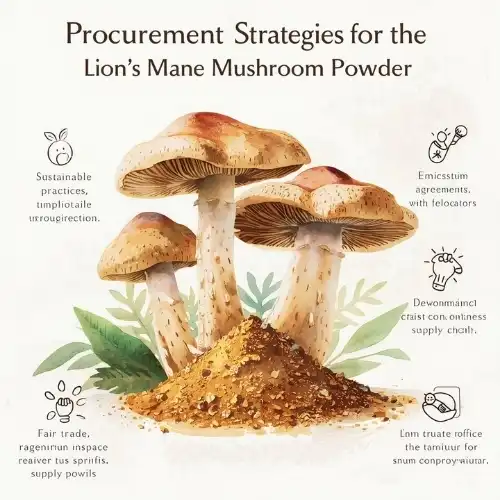
Procurement Strategies for Lion's Mane Mushroom Powder
Supplier Verification and Due Diligence Processes
Effective sourcing starts with fully qualifying suppliers, which includes looking at their factory facilities, quality systems, and how open their supply chain is. Site audits show production capacity facts, equipment upkeep standards, and contamination control measures that can't be seen from paperwork alone. By asking for customer examples from companies that use similar applications, you can learn about business performance, such as shipping reliability, technical responsiveness, and batch consistency track records.
Financial stability assessments protect against supply disruption risks. Suppliers with long-term business plans and a wide range of customers are more likely to be able to keep providing lion's mane mushroom powder than operations that aren't well-funded and are sensitive to changes in the market. As part of the qualification process, networks for getting raw materials should be looked into. This is because farming partnerships decide how ingredients can be tracked and how large a supply can be in the future. Setting up clear communication rules for handling expert questions, changes to regulations, and quality issues stops mistakes that could delay production.
Pricing Dynamics and Contract Negotiation Tactics
Understanding how costs work helps you negotiate more effectively. For example, solvent costs, extraction rates, and testing needs are some of the main cost drivers that go beyond the purchase of fresh mushrooms. Tiered price benefits can be unlocked by making volume promises, but they should be in line with realistic consumption estimates to keep goods from going out of date. Long-term supply deals keep prices stable and protect against changes in the commodity market. This is especially important for farming inputs that can be affected by seasonal changes and weather problems.
Talking about payment terms is a balance between optimizing cash flow and maintaining a good relationship with a seller. Longer payment windows may be worth a small price increase compared to cases where payments are made in advance. When looking at product launch dates and shelf life, minimum order numbers should be carefully thought through. Yangge Biotech's flexible 1 kg minimum order allows for the development of new formulations while keeping bulk prices cheap as projects grow. Sample provision policies should come before big promises. This way, analytical checks and prototype development can happen without putting money at risk due to design mismatches.
Inventory Management and Supply Chain Optimization
Strategic inventory placement strikes a balance between the need to save working capital and the need to keep output going. Just-in-time buying cuts down on keeping costs but makes it more likely that suppliers will be late or reject quality. When figuring out safety stock, you should take into account things like changing lead times, the length of testing, and the fact that supplement demand tends to change with the seasons. Established providers like Yangge keep an inventory of 50–100 kg, which lets them quickly fill orders for medium-sized production runs without having to wait for special manufacturing to finish.
Compliance with storage conditions is very important because Lion's mane mushroom powder needs to be kept away from light and moisture, which means it needs to be stored in climate-controlled facilities with the right closing procedures. Using first-in, first-out rotation methods helps keep ingredients fresh, since bioactive breakdown speeds up after 24 months of storage, even in the best conditions. Tracking patterns of usage, quality trends, and supplier performance measures with inventory analytics allows for ongoing procurement optimization, which helps with both cost management and quality assurance goals.
Conclusion
To figure out if everyone should take lion's mane mushroom powder, it needs to be carefully evaluated, going beyond general suggestions and looking at quality, safety, and fit for use in each particular situation. For people who work in B2B procurement, the strategic value is in getting standard, thoroughly tested extracts from providers who can show they have full quality processes, follow all the rules, and work with you technically. The ingredient is known to be safe, and more and more studies are supporting its use in a wide range of products that serve the brain health market.
For execution to go well, you need to pay attention to the factors that set premium products apart from cheaper options, such as extraction methods, bioactive standardization, and formulation compatibility. As the market for functional mushrooms grows older, the ability to stay ahead of the competition relies more on being honest about the ingredients you use, finding sustainable sources, and having relationships with suppliers that encourage innovation rather than just trading goods.
Partner With Yangge Biotech for Premium Lion's Mane Mushroom Powder Supply
Yangge Biotech provides pharmaceutical-grade Hericium erinaceus extract that is made in a way that is certified by ISO, HACCP, Kosher, and Halal. This meets the high quality standards of companies that make health supplements, functional drinks, and nutraceuticals in North American markets. Our fine yellow-brown powder only comes from fruiting bodies, so it has concentrated hericenones and erinacines that aren't found in the myceliated grain goods that are filling the market. A third party checks each production batch to make sure it meets European PAH4 standards, is non-GMO, and meets allergen-free standards, which are important for clean-label marketing.
We keep a dedicated store that lets us meet the needs of quick-turnaround orders for everything from 1 kg formulation trials to bulk production needs. The products are packed in light-blocking aluminum foil to keep their biological stability. As a seasoned provider of lion's mane mushroom powder, our technical team can help you with extraction, stability testing, and legal issues, which will shorten the time it takes to make your product. Get in touch with info@yanggebiotech.com to talk about unique concentration requirements, ask for analytical paperwork, or set up a sample evaluation to help you reach your goals for brain health innovation.
FAQ
Q: Can we get some samples to test before purchasing?
A: Of course, we can provide free samples of 20 to 100 grams, but the shipping cost is at the customer's expense. The shipping cost can be deducted from the next order, or the samples can be sent through your courier account.
Q: Do your products have relevant certifications?
A: Yes, our products are certified for HALAL, ISO, HACCP, Kosher, and other certifications.
Q: What is the minimum order quantity (MOQ)?
A: Small batches of samples can be customized according to your requirements.
Q: Do you offer OEM and ODM services? Can the formula be customized based on our own?
A: Of course, we provide ODM and OEM services to many customers. Our product range includes softgels, capsules, tablets, sachets, granules, and private label services. Simply contact us and let us know your requirements. Our experienced R&D team can also develop new products with specific formulas.
Please contact us to design your own branded products.
Q: How do you handle quality complaints?
A: First, we have a comprehensive quality control SOP. We provide authoritative third-party inspection reports for almost all products before shipment to minimize the possibility of quality issues. Second, we have a comprehensive return and exchange procedure. If there is a genuine quality dispute, we will strictly follow the SOP.
Q: How do you ship? How long does delivery take?
A: For small orders, we typically use DHL, UPS, EMS, FedEx, or TNT. Delivery typically takes 3-7 days. We also offer air and sea freight services. We have a strong freight forwarding team and can provide you with a one-stop service, including DDP and DDU.
Q: What are your payment terms?
A: 100% prepayment, payable by T/T, Western Union, MoneyGram, or PayPal.
Q: What is the shelf life of your products?
A: 2 years with proper storage.
Q: Is the packaging environmentally friendly?
A: We attach great importance to environmental protection and are constantly improving our product packaging. Some products are packaged in recyclable paper. Packaging materials are carefully selected to ensure product safety during transportation and storage, and to minimize environmental impact. We are committed to achieving a balance between environmental friendliness and practicality in our product packaging, and to contributing to sustainable development.
References
1. Friedman M. Chemistry, Nutrition, and Health-Promoting Properties of Hericium erinaceus (Lion's Mane) Mushroom Fruiting Bodies and Mycelia and Their Bioactive Compounds. Journal of Agricultural and Food Chemistry, 2015.
2. Mori K, Inatomi S, Ouchi K, Azumi Y, Tuchida T. Improving effects of the mushroom Yamabushitake (Hericium erinaceus) on mild cognitive impairment: a double-blind placebo-controlled clinical trial. Phytotherapy Research, 2009.
3. Lai PL, Naidu M, Sabaratnam V, Wong KH, David RP, Kuppusamy UR, Abdullah N, Malek SN. Neurotrophic properties of the Lion's mane medicinal mushroom, Hericium erinaceus (Higher Basidiomycetes) from Malaysia. International Journal of Medicinal Mushrooms, 2013.
4. Vigna L, Morelli F, Agnelli GM, Napolitano F, Ratto D, Occhinegro A, Di Iorio C, Savino E, Girometta C, Brandalise F, Rossi P. Hericium erinaceus Improves Mood and Sleep Disorders in Patients Affected by Overweight or Obesity: Could Circulating Pro-BDNF and BDNF Be Potential Biomarkers? Evidence-Based Complementary and Alternative Medicine, 2019.
5. Li IC, Lee LY, Tzeng TT, Chen WP, Chen YP, Shiao YJ, Chen CC. Neurohealth Properties of Hericium erinaceus Mycelia Enriched with Erinacines. Behavioural Neurology, 2018.
6. Staniszewska J, Szymański M, Ignatowicz E. Antioxidant and Anti-inflammatory Activity of Polysaccharides Isolated from Hericium erinaceus. International Journal of Biological Macromolecules, 2021.

Based on your location and order quantity, you will have the opportunity to receive a limited time free shipping promotion!
Who we are
Popular Blogs