Does zeaxanthin keep you awake?
The question of whether zeaxanthin powder disrupts sleep patterns comes up often among procurement professionals evaluating ingredients for health supplement formulations. Manufacturers want ingredients that deliver vision health benefits without introducing unwanted side effects that might limit product appeal. The straightforward answer is no—zeaxanthin does not keep you awake. This carotenoid antioxidant works through mechanisms entirely separate from the central nervous system pathways that influence alertness or wakefulness. Unlike stimulants such as caffeine that directly affect neurotransmitter activity, zeaxanthin powder functions primarily as a macular pigment and free radical scavenger, supporting visual function without interfering with your body's natural sleep-wake cycle.
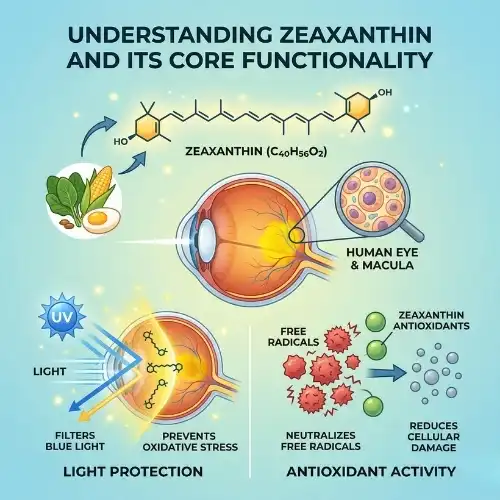
Understanding Zeaxanthin and Its Core Functionality
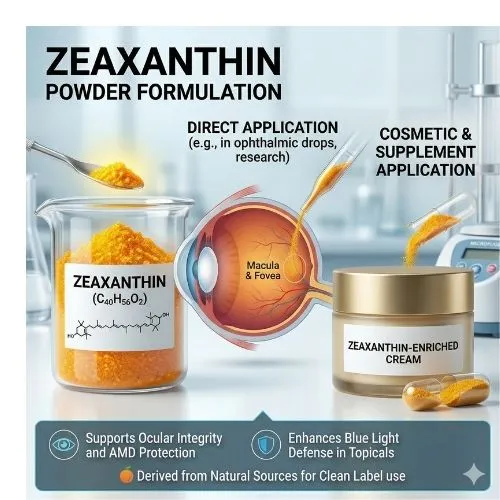
One of the most important xanthophyll carotenoids is zeaxanthin, which is taken from marigold flowers (Tagetes erecta L.). This naturally occurring chemical builds up only in the retina, mostly in the macula, where it protects against reactive damage very well. This carotenoid's main job in the body is to block high-energy blue light colors and get rid of reactive oxygen species that can damage retinal cells over time.
The Biochemical Profile of Zeaxanthin
Zeaxanthin's chemical structure has conjugated double bonds that make it a powerful antioxidant. By studying its biochemical features, we find that the molecule is very stable in eye tissues, where it forms the macular pigment optical density (MPOD) with lutein. This number is directly linked to how well you see and how well you protect yourself from age-related macular degeneration (AMD). Higher amounts of MPOD that come with taking zeaxanthin supplements have been linked to better contrast perception and less glare disability. The compound is useful as a medicine because it can stop photochemical processes before they hurt photoreceptor cells. This keeps the quality of eyesight even as people age.
Primary Health Applications in Product Development
Zeaxanthin is added by manufacturers to products that are meant to improve a number of important health results. The most well-known use is in eye health, where clinical studies show that it can slow the development of AMD and lower the risk of getting cataracts. New study is looking into how zeaxanthin might help improve brain function in addition to its benefits for the eyes. The chemical gets into the brain from the blood and builds up in brain tissue, where early research shows it may help with memory and thinking speed. Zeaxanthin is very appealing to product makers who are looking for multipurpose ingredients that will appeal to older people who are worried about both cognitive and visual loss.
Regulatory Status and Market Positioning
In most big markets, the rules about zeaxanthin are still beneficial. The ingredient is generally thought to be safe (GRAS) in the US, which means it can be used in a lot of different nutrition products and useful foods. In the same way, European laws allow its use, with set daily intake limits. Knowing these legal factors helps procurement teams meet compliance standards and place goods in the best way possible. There is a lot of demand in the market for products with confirmed amounts of zeaxanthin because there is more and more clinical proof that it works. This is in line with buyer trends toward supplementing with evidence.
Does Zeaxanthin Powder Keep You Awake?
A lot of R&D managers and recipe engineers are worried about putting ingredients in their goods that might have stimulant effects that they didn't expect. This worry makes sense, since a lot of what makes a customer happy is how well they know an item will work. Researchers have used clinical studies to look into the link between zeaxanthin and sleep design. These studies have given product makers clear answers.
The Neurophysiological Mechanism
Zeaxanthin doesn't change neurotransmitters; it works through antioxidant routes. The chemical does not work with dopamine systems, adenosine receptors, or other parts of the brain that drugs use to wake you up. When taken as a supplement, zeaxanthin goes through the digestive system, enters the bloodstream attached to lipoproteins, and finally builds up in tissues like the brain and eyes. During this process, the chemical keeps working as an antioxidant without making the body react. When comparing carotenoid supplementation to control groups in sleep quality tests, there were no changes in the time it took to fall asleep, the total amount of time spent sleeping, or how good people thought their sleep was.
Comparative Analysis with Other Supplements
Taking a look at the bigger group of supplements helps put zeaxanthin's effect on sleep into perspective. Lutein, which is structurally related to zeaxanthin and is often found in vision formulas, also has no effect on sleepiness, even when taken in amounts of up to 20 mg per day. Carotene antioxidants are different from other types of supplements, like B-vitamins or amino acids, that can sometimes change your energy levels if you take them in large amounts or at certain times. Because zeaxanthin's effects don't change during the day, formulation teams can suggest when to take it based only on solubility optimization, not on worries that it might interfere with sleep.
Clinical Evidence and Safety Data
Randomized controlled studies that look at zeaxanthin supplements usually check for safety by keeping a close eye on all bad events. Meta-analyses of these studies constantly show that there are no statistically significant differences between the placebo and zeaxanthin groups in the number of sleep complaints. In a six-month study with 120 people taking 10 mg of zeaxanthin every day, the quality of sleep results were the same in both treatment groups. This safety profile applies to a wide range of people, including older adults, who are more likely to have negative reactions to vitamins. Since zeaxanthin powder doesn't contain any stimulants, procurement experts can be sure that formulations can be used by a wide range of consumers without any special time advice or sleep-related warnings.
How to Use Zeaxanthin Powder in Your Product Formulation?
There are a lot of technical and legal things that need to be thought about when making a product with zeaxanthin. The formulation method affects not only how well the end product works, but also how efficiently it is made and how much it costs. When buying teams know about these factors, they can choose the right specs and partners.
Optimal Dosage Standards and Bioavailability
Zeaxanthin dosages that have been proven to work are usually between 2 mg and 10 mg per day, with 4-6 mg being the most beneficial for eye health. The exact amount chosen is based on the health claims that are being made and the mixtures of ingredients that work well together. Bioavailability is a big problem when it comes to preparation because zeaxanthin dissolves in fat and needs the right transport systems to be absorbed. When compared to raw solid material, micronization and microencapsulation methods greatly improve uptake. Cold water soluble (CWS) types are better for use in drinks and soft chews, where oil-based delivery can make the structure difficult.
When making vitamins for eye health, the amount of lutein to zeaxanthin is very important. The traditional 5:1 ratio is based on a lot of clinical evidence and is similar to how nutrients are distributed in food. Some recent formulas look at 10:2 ratios or include meso-zeaxanthin, which is a stereoisomer that naturally exists in the macula's middle. Yangge's meso zeaxanthin powder comes in a range of purity levels, from 5% to 80%. This means that the ratios can be precisely changed to fit different product ideas. Because of this, makers can make their goods stand out by making the carotene profiles better for certain groups of customers.
Stability Considerations in Different Matrices
Zeaxanthin breaks down during processing and storage, which makes it hard to make certain products and make sure that the claims on the labels are true. The substance reacts badly to air, heat, and light. Some ways to keep things safe are to use opaque or orange packing, nitrogen washing, and antioxidants like tocopherols or ascorbic acid. Powders that are exposed to air tend to lose their steadiness faster than tablets and capsules. To keep things from oxidizing in wet settings, beverage uses need special encapsulation.
Temperature exposure during production has a big effect on how much zeaxanthin is kept. Normal tableting methods that create friction heat can break down carotenoids that aren't protected, so low-temperature compression or protective coating technologies are needed. When properly sealed, soft gelatin pills containing zeaxanthin mixed with carrier oils show very good stability profiles. When buying teams understand these stability connections, they can choose standards that are in line with what can be made and how long the product needs to last.
Quality Verification and Supplier Standards
To tell the difference between quality types of zeaxanthin powder, you need to look at more than just the concentration number. The stereoisomer profile is an important quality indicator. For example, naturally extracted zeaxanthin from marigolds is mostly made up of the (3R,3'R)-isomer, which is biologically compatible with humans. Different stereoisomers with less biological action may be made through synthetic production. High-performance liquid chromatography (HPLC) research is the only way to positively identify and measure these types.
Yangge's zeaxanthin powder goes through strict quality control, which includes checking that it meets European standards for PAH4 and keeping benzopyrene levels below 10 ppb. The fact that it is non-GMO and non-irradiated follows clean label trends, and broad allergy testing gets rid of the risk of cross-contamination. Working with separate labs to do retests adds to the support that comes from internal quality assurance. These quality measures directly address buying problems related to batch consistency and following the rules. They also lower the chance of production delays or market exits because of quality problems.
Strategic Procurement of Zeaxanthin Powder for B2B Clients
Assessing providers in more than just unit price is an important part of effective zeaxanthin buying strategies. The total cost of ownership includes prices for quality control, keeping goods, following rules, and the chance that the supply will be cut off. A methodical approach to evaluating suppliers keeps makers from having to deal with problems and lowers total costs.
Supplier Certification and Manufacturing Standards
Teams in charge of buying things should give more weight to sellers who have well-known quality certifications that show they have a method for controlling the whole process. ISO 9001 certification means that quality management systems have been in place for a while, while ISO 22000 or HACCP certification is more focused on food safety. GMP compliance verification through third-party audits provides confidence in production hygiene and traceability systems. Halal and Kosher approvals help finished goods that are aimed at certain groups of people reach more customers. As they require frequent audits and methods for ongoing growth, these certifications are more than just paperwork; they are real practical commitments.
Yangge Biotech is fully certified to meet ISO, HACCP, Kosher, and Halal standards. This shows that we are committed to quality processes that meet the needs of a wide range of markets. Our factory follows GMP rules and has written processes for every step of the production process, from getting the raw materials to releasing the finished product. We keep up a traceability system that lets us keep track of everything from growing marigolds to extracting, cleaning, and finally packing them. This farm-to-table openness meets the needs of customers who want to know where their food comes from, especially as organic and natural standards become more important in the market.
Sample Testing and Technical Support
Before making large purchases, procurement workers benefit from thorough processes for evaluating samples. When checking samples, they should not only be checked for purity and concentration, but also for physical qualities that might affect how well the formulation works. The way particles are spread out affects how uniform the mix is and how pills compress. Flowability and steadiness during storage are affected by the amount of moisture present. The right transportation forms and processing needs are based on the solubility profiles.
Technical help from sources speeds up formulation development by giving advice on how to use the product and fixing problems. Technical data sheets with a lot of information should include suggested use rates, processing instructions, and details on how the substance works with common excipients. Studies of stability under fast conditions help guess how long something will last on the shelf in different types of packaging. Bioavailability data that compares different specs helps make the best choice for certain product forms. Yangge has a scientific team that is available 24 hours a day to answer questions about recipe and help customers get the most out of the ingredients they use in their products.
Logistics and Supply Chain Reliability
Getting plant extracts from other countries involves a lot of complicated details that need to be carefully coordinated. Lead times from placing an order to delivery usually last a few weeks. This means that accurate demand predictions and having enough safety stock is important. Minimum order amounts (MOQ) affect how much goods to keep on hand and how to handle cash flow. Yangge's ability to accept orders as little as 1 kg gives them the freedom to do initial trials and make small batches of specialty goods. This makes it easier to try new formulations or get into niche markets without spending a lot of money.
Shipping procedures affect both how much it costs and how well the quality is kept. For very sensitive requirements, temperature-controlled transport may be needed, especially in the summer. Different countries have different documentation needs for customs processing. Usually, certificates of analysis, phytosanitary certificates, and origin statements are needed. Suppliers with a lot of experience can easily meet these standards, which makes the work of buying teams easier. Knowing how much the seller has exported and how many foreign customers they have gives you an idea of how reliable they are for cross-border transactions and how well they can handle logistics.
Conclusion
Zeaxanthin powder has been shown to improve eye health without making people more alert or affecting their sleep. This makes it a great ingredient for health supplement companies that want to meet a wide range of customer needs. The chemical works by protecting against free radicals and blocking blue light in the eye's tissues. It does this without affecting the brain processes that control awareness. Because it is safe and has good clinical proof to back its effectiveness, zeaxanthin is a key ingredient in the growing eye health market segment. For strategic procurement to work, you need to pay more than just attention to unit prices.
You also need to look at quality specifications, supplier certifications, and technical support capabilities. When manufacturers work with suppliers who offer detailed quality paperwork, adjustable order amounts, and application knowledge, they gain a competitive edge by being able to develop new products faster and with fewer compliance risks. Because there are different purity grades, ranging from 5% to 99%, it is possible to precisely control the mixture for a range of product ideas and price points.
Partner with a Trusted Zeaxanthin Powder Manufacturer
Adding more health supplements to your line starts with getting reliable, high-quality ingredients from sources who are dedicated to doing the best job possible. Yangge Biotech is an expert in high-quality zeaxanthin powder that is made from marigold flowers. They offer specs ranging from 5% purity to 99% purity to meet your needs. You can choose from our meso zeaxanthin powders in amounts of 5%, 10%, 20%, 70%, and 80%, which gives you full control over the carotene profile of your product.
Each batch has to meet strict quality standards, such as ISO and HALAL approval, non-GMO proof, and European PAH4 standards. Our cold water soluble forms make it easier to use them in healthy foods and drinks while still being very stable. We give your R&D team the confidence to come up with new ideas by letting them place orders as little as 1 kg and offering full expert help around the clock. Send us an email at info@yanggebiotech.com to get samples and talk about how our services as a zeaxanthin powder provider can help you compete in the eye health market.
FAQ
Q: Can we get some samples to test before purchasing?
A: Of course, we can provide free samples of 20 to 100 grams, but the shipping cost is at the customer's expense. The shipping cost can be deducted from the next order, or the samples can be sent through your courier account.
Q: Do your products have relevant certifications?
A: Yes, our products are certified for HALAL, ISO, HACCP, Kosher, and other certifications.
Q: What is the minimum order quantity (MOQ)?
A: Small batches of samples can be customized according to your requirements.
Q: Do you offer OEM and ODM services? Can the formula be customized based on our own?
A: Of course, we provide ODM and OEM services to many customers. Our product range includes softgels, capsules, tablets, sachets, granules, and private label services. Simply contact us and let us know your requirements. Our experienced R&D team can also develop new products with specific formulas.
Please contact us to design your own branded products.
Q: How do you handle quality complaints?
A: First, we have a comprehensive quality control SOP. We provide authoritative third-party inspection reports for almost all products before shipment to minimize the possibility of quality issues. Second, we have a comprehensive return and exchange procedure. If there is a genuine quality dispute, we will strictly follow the SOP.
Q: How do you ship? How long does delivery take?
A: For small orders, we typically use DHL, UPS, EMS, FedEx, or TNT. Delivery typically takes 3-7 days. We also offer air and sea freight services. We have a strong freight forwarding team and can provide you with a one-stop service, including DDP and DDU.
Q: What are your payment terms?
A: 100% prepayment, payable by T/T, Western Union, MoneyGram, or PayPal.
Q: What is the shelf life of your products?
A: 2 years with proper storage.
Q: Is the packaging environmentally friendly?
A: We attach great importance to environmental protection and are constantly improving our product packaging. Some products are packaged in recyclable paper. Packaging materials are carefully selected to ensure product safety during transportation and storage, and to minimize environmental impact. We are committed to achieving a balance between environmental friendliness and practicality in our product packaging, and to contributing to sustainable development.
References
1. Bone, R.A., Landrum, J.T., Tarsis, S.L. (1985). "Preliminary identification of the human macular pigment." Vision Research, 25(11), 1531-1535.
2. Ma, L., Lin, X.M. (2010). "Effects of lutein and zeaxanthin on aspects of eye health." Journal of the Science of Food and Agriculture, 90(1), 2-12.
3. Age-Related Eye Disease Study 2 Research Group. (2013). "Lutein + zeaxanthin and omega-3 fatty acids for age-related macular degeneration." JAMA, 309(19), 2005-2015.
4. Stringham, J.M., Hammond, B.R. (2008). "Macular pigment and visual performance under glare conditions." Optometry and Vision Science, 85(2), 82-88.
5. Renzi, L.M., Johnson, E.J. (2007). "Relating cognitive performance to lutein and zeaxanthin brain concentrations in primates." Nutritional Neuroscience, 10(3-4), 119-126.
6. Bernstein, P.S., Li, B., Vachali, P.P., et al. (2016). "Lutein, zeaxanthin, and meso-zeaxanthin: The basic and clinical science underlying carotenoid-based nutritional interventions against ocular disease." Progress in Retinal and Eye Research, 50, 34-66.

Based on your location and order quantity, you will have the opportunity to receive a limited time free shipping promotion!
Who we are
Popular Blogs